
You’ve finished a great meal, the dessert menu arrives, and suddenly you feel a little lost. Choosing a wine to go with your final course can feel like a high-stakes decision, bringing on a wave of anxiety. What if you pick something that clashes with the chocolate cake or overwhelms the cheesecake?
Relax. That feeling is normal, and the answer is much simpler than you think. The most important rule for a perfect dessert pairing with wine is to choose a wine that is sweeter than your dessert. Sticking to this one simple guideline removes most of the stress and ensures both the wine and the dessert taste their best.
The Most Important Rule for Pairing Wine with Dessert
The one principle that will guide you to success every time is this: your wine must be sweeter than your dessert.
That's the secret. Following this rule prevents your wine from tasting flat or sour. When your dessert is sweeter, it dulls your taste for sweetness, making a less-sweet wine taste bitter and sharp. But when the wine is sweeter, the dessert actually tones down the wine's sweetness just enough to let its beautiful fruit and honey flavors shine through. It creates a perfect balance where both elements are improved.
Why This Simple Rule Works So Well
When you eat something sweet, your palate adapts. If you take a bite of rich chocolate cake and then a sip of a dry (not sweet) wine, the wine will taste shockingly tart. Its fruit flavors will disappear, leaving only a harsh, acidic taste.
But when the wine is sweeter, the opposite happens. The dessert's sugar lowers your perception of the wine's sweetness, allowing its other complex flavors (like ripe berries, honey, or spice) to come forward.This creates a harmonious experience instead of a jarring one.
If you’re curious about the difference, our guide on dry and sweet wine explains it in simple terms.
A 3-Step Framework for Confident Choices
Forget complicated charts. To confidently choose a dessert wine, all you need are three simple ideas. This quick mental checklist is designed to help you decide quickly and without stress.
The 3 Rules of Dessert Wine Pairing
This table breaks down the essentials for making a fast, confident decision when the dessert menu arrives.
| Rule | Why It Works | Quick Example |
|---|---|---|
| Wine Must Be Sweeter | Prevents the wine from tasting sour against the dessert's sugar. | Pair chocolate lava cake with a sweet Port, not a dry Cabernet. |
| Match the Weight | A light wine gets lost with a heavy dessert; a heavy wine crushes a delicate one. | A light lemon sorbet calls for a crisp Moscato d'Asti, not a thick Sauternes. |
| Find Flavor Friends | Flavors can either match (complement) or balance each other (contrast). | A nutty cheesecake is a perfect complement for a nutty Tawny Port. |
Keep these three rules in mind, and you'll always make a great choice.
It’s this kind of enjoyable experience that is driving a surge in interest. The global dessert wine market hit $35.7 billion in 2023 and is projected to reach $64.4 billion by 2033. Much of this growth is from millennials and Gen Z, who are behind a 70% increase in food-pairing events. People are rediscovering how amazing these combinations can be.
Matching Weight: A Simple Analogy
You've got the sweetness rule down. The next step is matching the "weight" or "body" of the wine and dessert. This sounds technical, but it’s actually very intuitive.
Think of it like milk. Some wines are light and refreshing like skim milk. Others have a fuller texture, more like whole milk. And some are rich and luxurious, like heavy cream. The goal is to match the feel of the wine with the feel of the dessert.

A Quick Guide to Weight and Balance
Matching weight is about balance, so one element doesn’t overwhelm the other. A delicate dessert needs a light wine, while a rich dessert needs a wine that can stand up to it.
Here’s how it works in practice:
- Light Desserts: For airy treats like lemon sorbet, angel food cake, or fresh berries, you need a light-bodied wine. Think of a bubbly Moscato d’Asti or a crisp German Riesling. These are the “skim milk” wines, bright and refreshing.
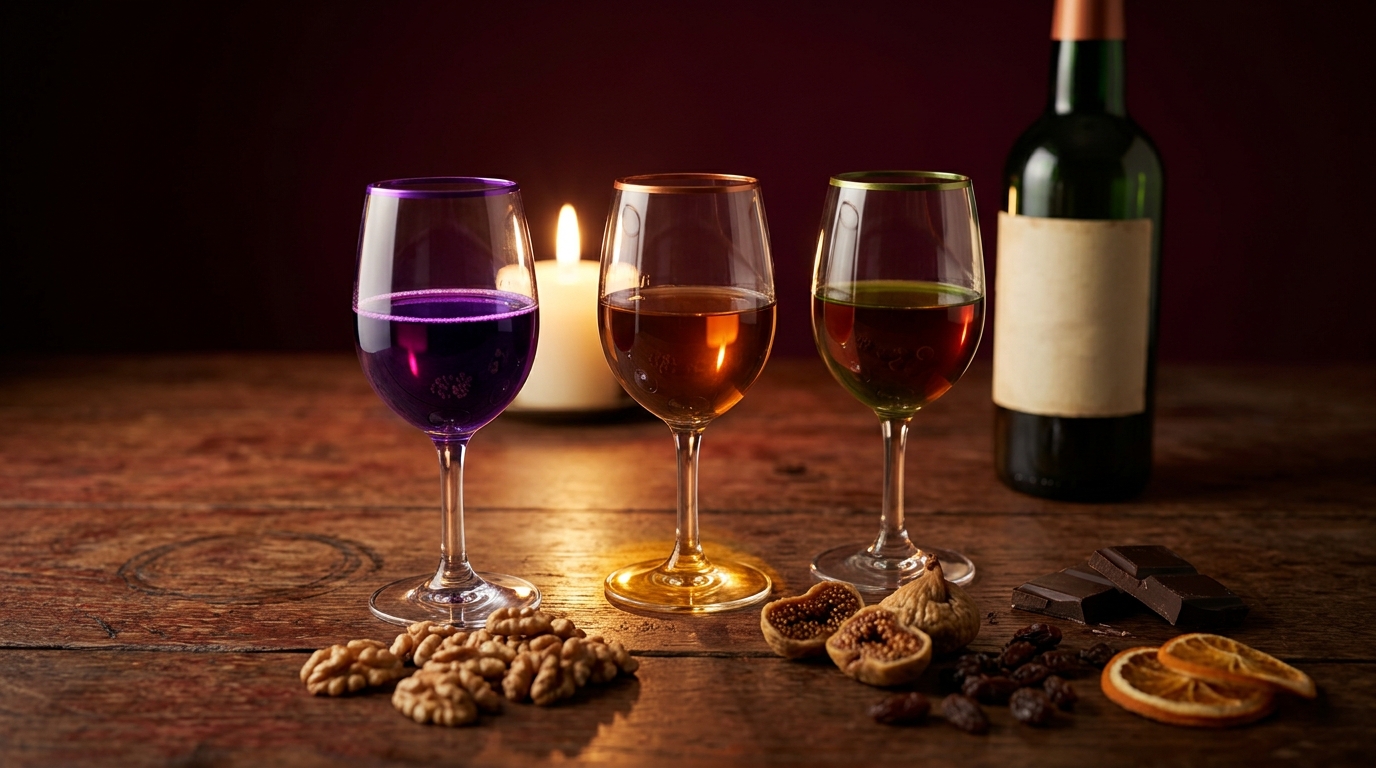
- Rich Desserts: For heavy hitters like a dense chocolate torte, sticky toffee pudding, or pecan pie, you need a full-bodied wine. This is where the “heavy cream” options like Port or a sweet Sherry come in. Their richness matches the dessert's intensity.
This simple idea helps you look at a dessert and know whether to look for a lighter or heavier wine. It makes the choice feel logical, not like a guess. For a broader look at wine styles, our beginner-friendly wine chart can help.
How Sommy Removes the Guesswork
This is exactly the kind of decision an AI wine assistant simplifies. An app like Sommy can scan a menu, see "tiramisu," and instantly suggest a Moscato d'Asti: a wine that leads its category with 35% market dominance.
The takeaway is simple: match light with light and rich with rich. A heavy wine will overpower a delicate dessert, and a light wine will disappear next to a rich one.
Finding Flavor Friends: Complement or Contrast
You've handled the two biggest rules: sweeter wine and balanced weight. Now for the fun part: flavor. Here, you have two simple paths, and both lead to a great pairing. You can either complement the dessert with similar flavors or create an exciting contrast with different ones.
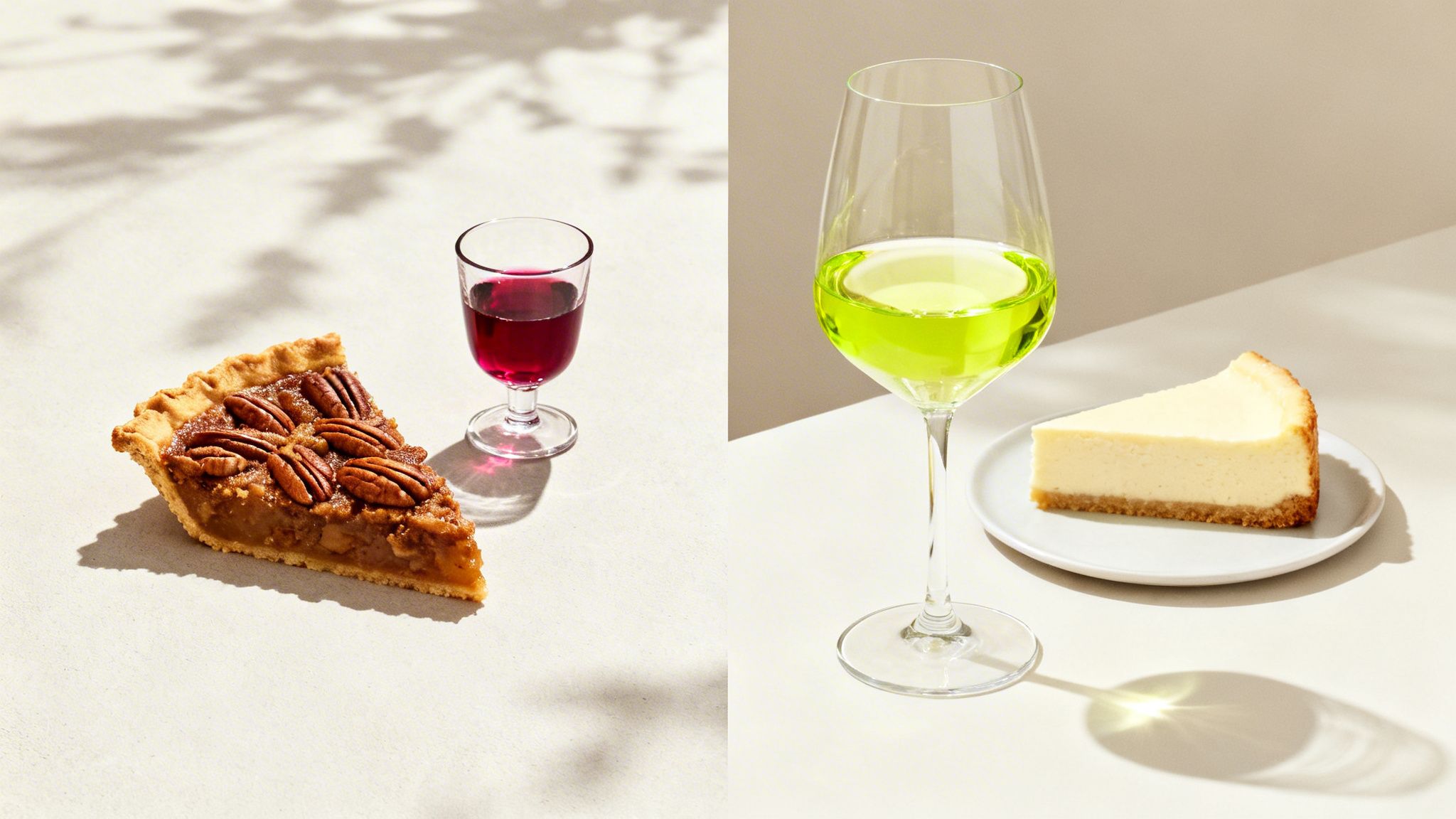
Complementary Pairings: Like with Like
A complementary pairing is the most straightforward approach. You match flavors in the wine with similar flavors in the dessert. This creates a seamless harmony where both the food and wine taste more like themselves. This strategy is explored more in our guide on how to match wine with food.
Here are a few classic examples:
- Pecan Pie with Tawny Port: The nutty, caramel notes in the Port mirror the toasted pecans and brown sugar in the pie.
- Apple Crumble with a Late-Harvest Riesling: The wine’s flavors of baked apple and honey blend perfectly with the warm, spiced fruit.
- Caramel Flan with a Cream Sherry: The rich, buttery caramel notes of the wine are a perfect partner for the creamy custard.
Contrasting Pairings: Opposites Attract
A contrasting pairing creates a more dynamic and refreshing experience. Here, you use the wine’s character to balance an element in the dessert, often using a wine with high acidity to cut through richness or creaminess. This approach prevents a heavy dessert from feeling overwhelming.
The goal of a contrast is to refresh your palate. The wine’s acidity cleanses the richness of the dessert, making the next bite taste just as good as the first.
- New York Cheesecake with a Sweet Riesling: The wine’s bright acidity slices through the cheesecake's dense creaminess, making the pairing feel lighter.
- Dark Chocolate Torte with a Raspberry Lambic: The tart fruitiness of this unique beverage provides a brilliant counterpoint to the deep, bittersweet chocolate.
- Crème Brûlée with Sauternes: The wine's vibrant acidity and notes of apricot cut through the rich custard, balancing its luxurious texture.
The choice is yours. Do you want a cozy, harmonious pairing or one with exciting energy? Trust your taste. You can’t go wrong.
A Quick Cheat Sheet for Perfect Pairings
When the menu is in your hand, you need answers fast. Use this guide to quickly find a great wine for the most popular desserts.
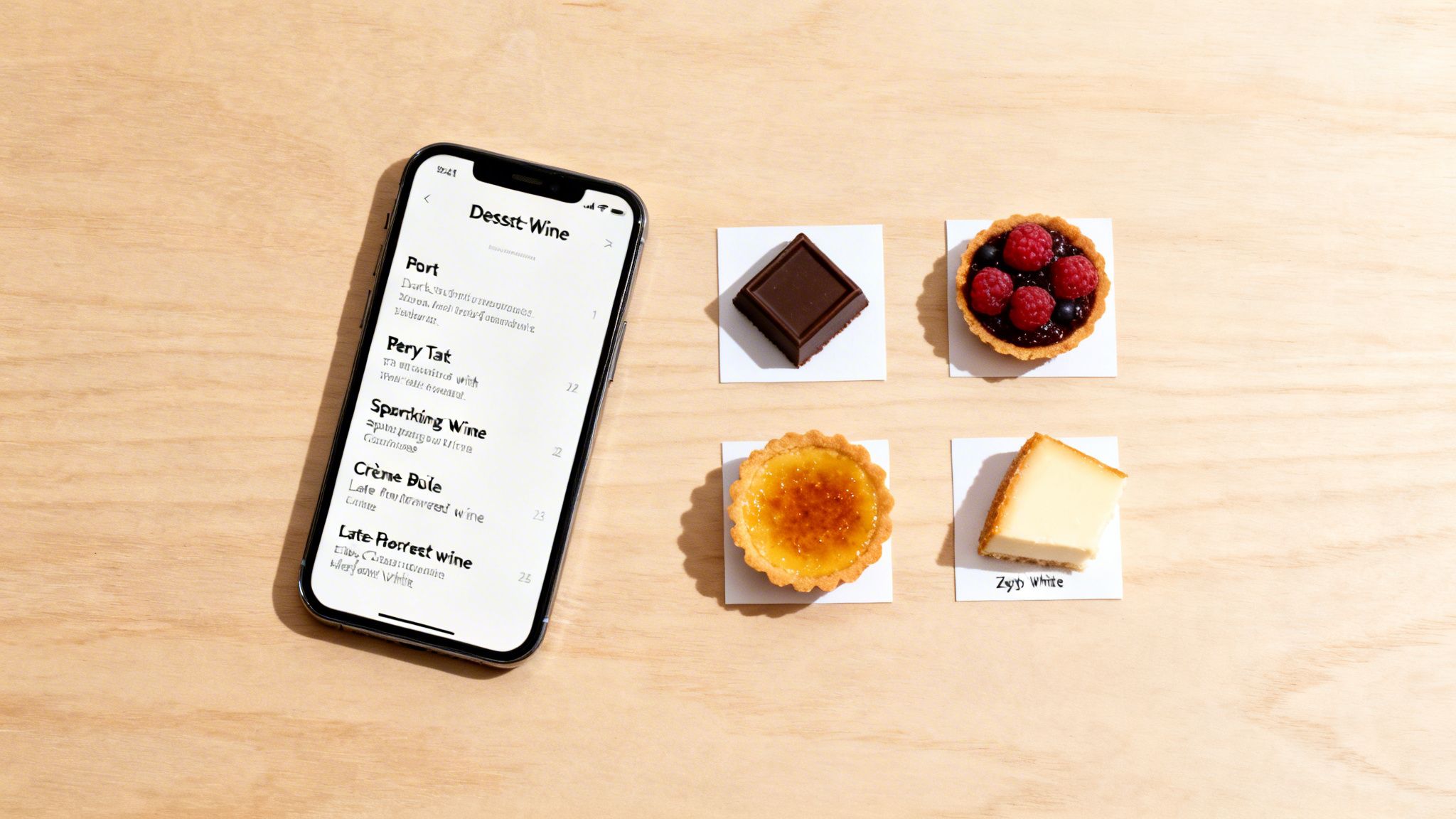
For Chocolate Desserts
Chocolate’s rich, and sometimes bitter, notes require a wine with enough sweetness and body to match its intensity.
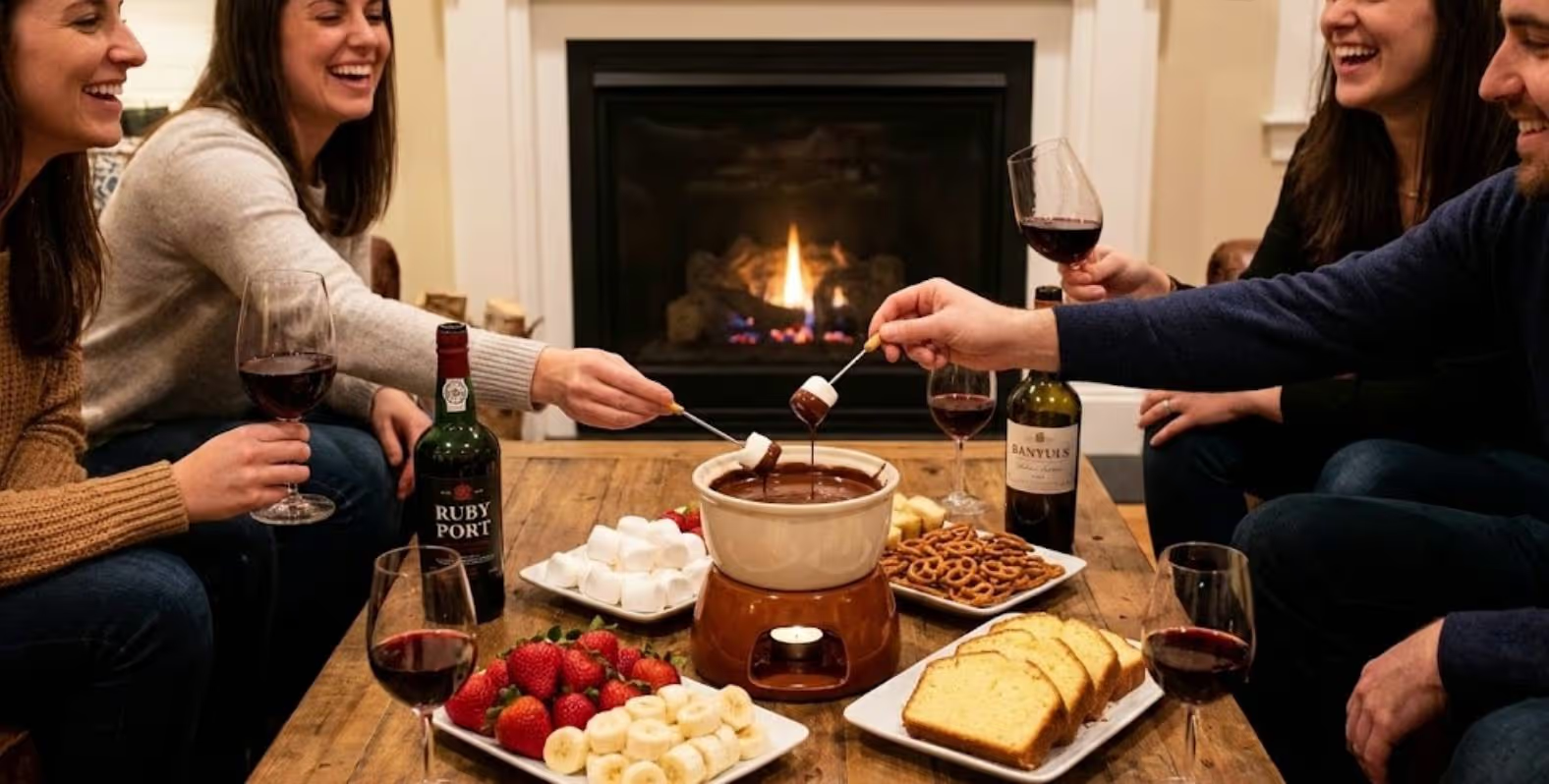
- Ruby Port: The best choice for dark or bittersweet chocolate. Its rich berry flavors are a perfect match.
- Banyuls: A French wine similar to Port, with notes of dark fruit and cocoa that work well with brownies or torte.
- Late Harvest Zinfandel: Great with milk chocolate, its jammy raspberry notes create a classic chocolate-and-berry combination.
For Fruit Tarts and Crumbles
Desserts focused on fruit, especially tart ones like apple or berries, pair well with wines that have a similar fruity profile and high acidity.
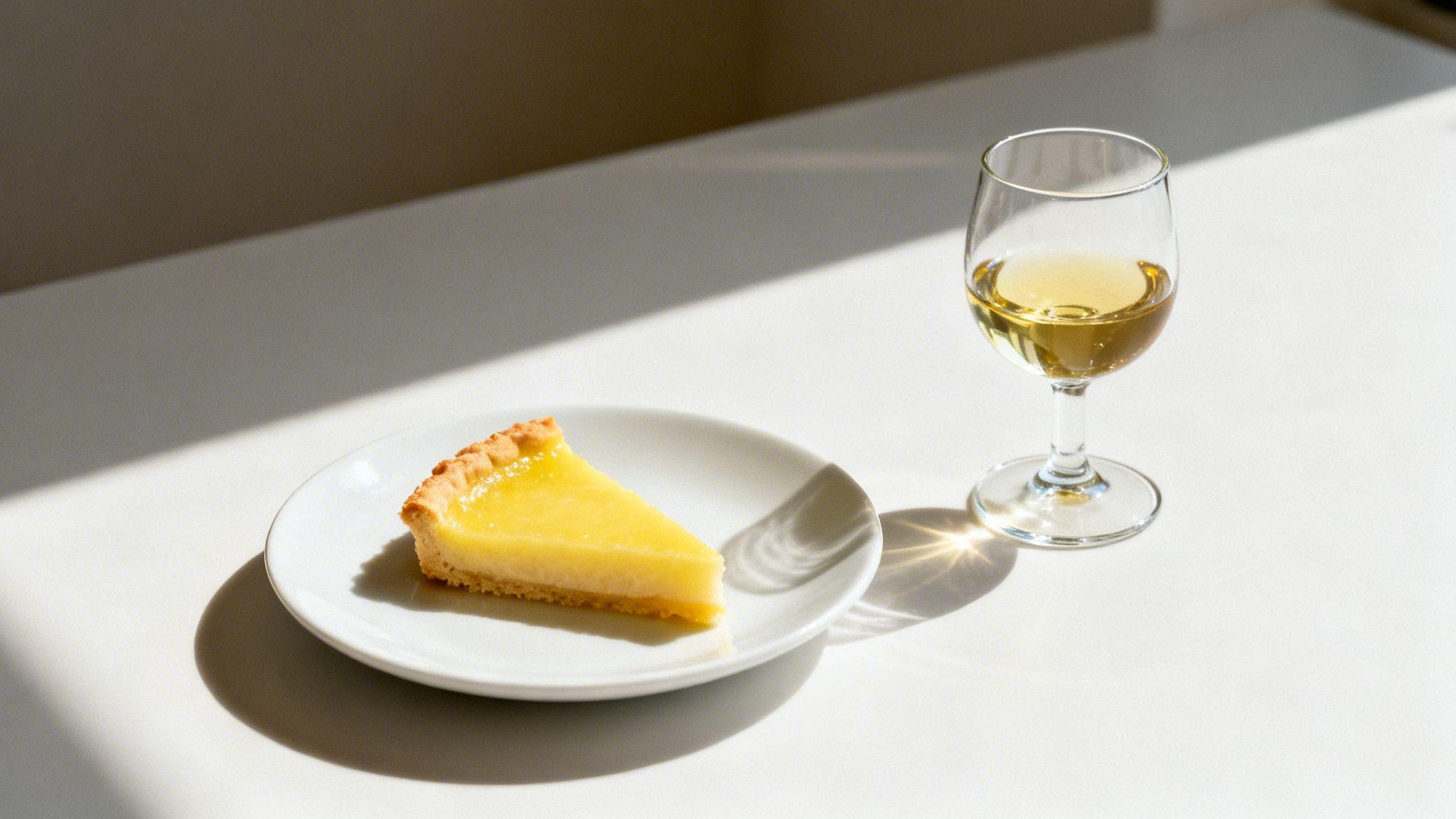
- Late-Harvest Riesling: A star with apple or peach tarts. Its notes of baked apple and honey meld perfectly.
- Sauternes: A classic French dessert wine with flavors of apricot, honey, and almond that are beautiful with fruit tarts.
- Moscato d'Asti: For lighter fruit desserts, its gentle fizz and notes of peach and orange blossom are refreshing. For more ideas, explore our guide on finding a good sweet wine you'll love.
For Creamy and Custard Desserts
Crème brûlée, panna cotta, and puddings are about rich, smooth texture. They need a wine with enough acidity to cut through the creaminess.
- Sauternes: The combination of intense sweetness and high acidity is a perfect foil for the richness of custard.
- Vin Santo: This Italian dessert wine has notes of toasted nuts and dried apricot, making it a great partner for panna cotta.
- Cream Sherry: Its nutty, caramelized profile complements the burnt-sugar crust of a classic crème brûlée.
For Cheesecakes
Cheesecake’s tangy creaminess loves a wine with bright, zippy acidity.
- Late-Harvest Riesling: Its zesty acidity and honeyed sweetness provide a perfect contrast to a classic cheesecake.
- Ice Wine (Vidal or Riesling): Intensely sweet yet balanced with incredible acidity, ice wine is a luxurious pairing for rich cheesecakes.
- Sparkling Rosé (Demi-Sec): If your cheesecake is topped with berries, a slightly sweet sparkling rosé is a fun, fruity, and bubbly choice.
Common Pairing Mistakes (and How to Avoid Them)
Knowing what not to do can be just as helpful. Most dessert pairing mistakes come from a few simple misunderstandings. Once you see them, the whole process becomes much less stressful.
The goal isn't to memorize rules but to avoid a pairing that falls flat. By sidestepping these common issues, you let both the dessert and the wine shine.
Mistake #1: Dry Wine with a Sweet Dessert
This is the most common mistake. Pairing a dry wine, like Cabernet Sauvignon or Brut Champagne, with a sweet dessert almost always creates a clash. The dessert's sweetness bulldozes the wine’s fruit, making it taste harsh and bitter.
- The Fix: Always remember the golden rule: the wine must be sweeter than the dessert. This one guideline solves the biggest pairing problem.
Mistake #2: Overpowering a Delicate Dessert
You wouldn't use a powerful Port with a light angel food cake. The wine’s intensity would completely overwhelm the cake’s delicate flavors.
- The Fix: Match the weight. Pair light-bodied desserts with light-bodied wines, and save the rich, powerful wines for desserts that can handle them.
A great pairing makes both the dessert and the wine taste better. It's a partnership, not a competition.
Let an AI Assistant Handle the Choice
Remembering these guidelines is a good start, but you don't have to become an expert overnight.
Instead of trying to recall the right wine for crème brûlée while the waiter waits, you can let an assistant handle the pressure. This is exactly what Sommy was built for.
Your Personal Wine Pairing Tool
Sommy is like having a calm, confident wine expert in your pocket. Scan the wine list with your phone, and it instantly highlights the best choices for your specific dessert. All the guesswork of a dessert pairing with wine disappears.
If you’ve enjoyed a certain sweet wine before, Sommy remembers and refines its suggestions for you. This means you can snap a photo of a wine list, ask for a pairing with panna cotta, and get a solid recommendation that fits your budget.
By using an AI wine assistant, you can apply all this advice effortlessly. It turns a moment of anxiety into one of easy confidence, ensuring you always love your final glass of the evening.
A Few Common Questions, Answered
Even with the rules down, a few tricky situations always come up. Here are answers to the most common questions.
What if my dessert isn't very sweet?
For desserts that are more fruity or tangy than sugary, like a simple fruit tart or fresh berries, you have more flexibility. The main goal is still to avoid making the wine taste sour. An off-dry wine like a German Riesling or even a dry Prosecco can work well. Just avoid a big, dry red wine, which will still taste harsh against even a little sweetness.
Can I pair red wine with dessert?
Absolutely, as long as it’s a sweet red wine. The mistake isn’t choosing red; it’s choosing a dry red. For chocolate, nothing beats a sweet, fortified red like a Ruby Port from Portugal or a Banyuls from France. These wines have the richness and sweetness to match a decadent dessert. A dry Cabernet, however, will taste bitter and unpleasant.
Does a cheese course count as a dessert pairing?
Yes, and it’s a fantastic way to end a meal! The contrast between salty, savory cheese and a rich, sweet wine is a classic and delicious combination.
- For Blue Cheeses: A rich, sweet Port is the perfect partner for a powerful Stilton or Roquefort.
- For Creamy Cheeses: A late-harvest Riesling or a golden Sauternes is heavenly with a creamy Brie or tangy goat cheese.
What is the most versatile dessert wine?
If you need one bottle that can handle almost anything, a late-harvest Riesling is your secret weapon. Its high acidity cuts through richness, while its sweetness can range from light to intense. This flexibility makes it a brilliant match for fruit tarts, custards, cheesecakes, and more. It's the Swiss Army knife of dessert wines.
Trying to juggle these details in a restaurant can be stressful. Instead of memorizing rules, let Sommy be your guide. Just scan the wine list, say what dessert you’re having, and get a smart recommendation in seconds.
You can see how Sommy works and skip the guesswork for good.