

The best wine with lasagna is Chianti or another Sangiovese when the dish is built on tomato and beef, with Barbera as the softer choice for a table that doesn't love tannin. A white lasagna made with béchamel, ricotta or mushrooms moves to a lightly oaked Chardonnay or a Pinot Noir, and a delicate vegetable one suits Soave or unoaked Chardonnay. The sauce decides all of this, so look at what's holding the layers together before you look at the filling.
That's a different starting point from most pairing charts, which ask whether the dish contains meat. The question sends you wrong in both directions, because a sausage lasagna in a cream sauce drinks more like a white lasagna than a beef one, and a tomato and zucchini tray with no meat in it still needs a wine with real acidity.
| Your lasagna | What to pour | Why it works |
|---|---|---|
| Beef ragù and tomato | Chianti, or another Sangiovese | Acidity to match the tomato, enough grip for the beef |
| Beef ragù, heavy on the béchamel and cheese | Barbera d'Asti or Barbera d'Alba | High acidity with low tannin, so the rich tray stays easy |
| Italian sausage in tomato | Montepulciano d'Abruzzo | Plummy fruit that loves fennel sausage |
| White lasagna with béchamel | Lightly oaked Chardonnay | Enough weight to meet the cream |
| Mushroom | Pinot Noir | Earthy notes that echo the mushrooms, with low tannin |
| Tomato and vegetable | Dry rosé or Barbera | Freshness for the tomato without burying the vegetables |
| Spinach and ricotta, or seafood | Soave or unoaked Chardonnay | Light, dry and crisp against a delicate filling |
What wine goes best with classic meat lasagna?
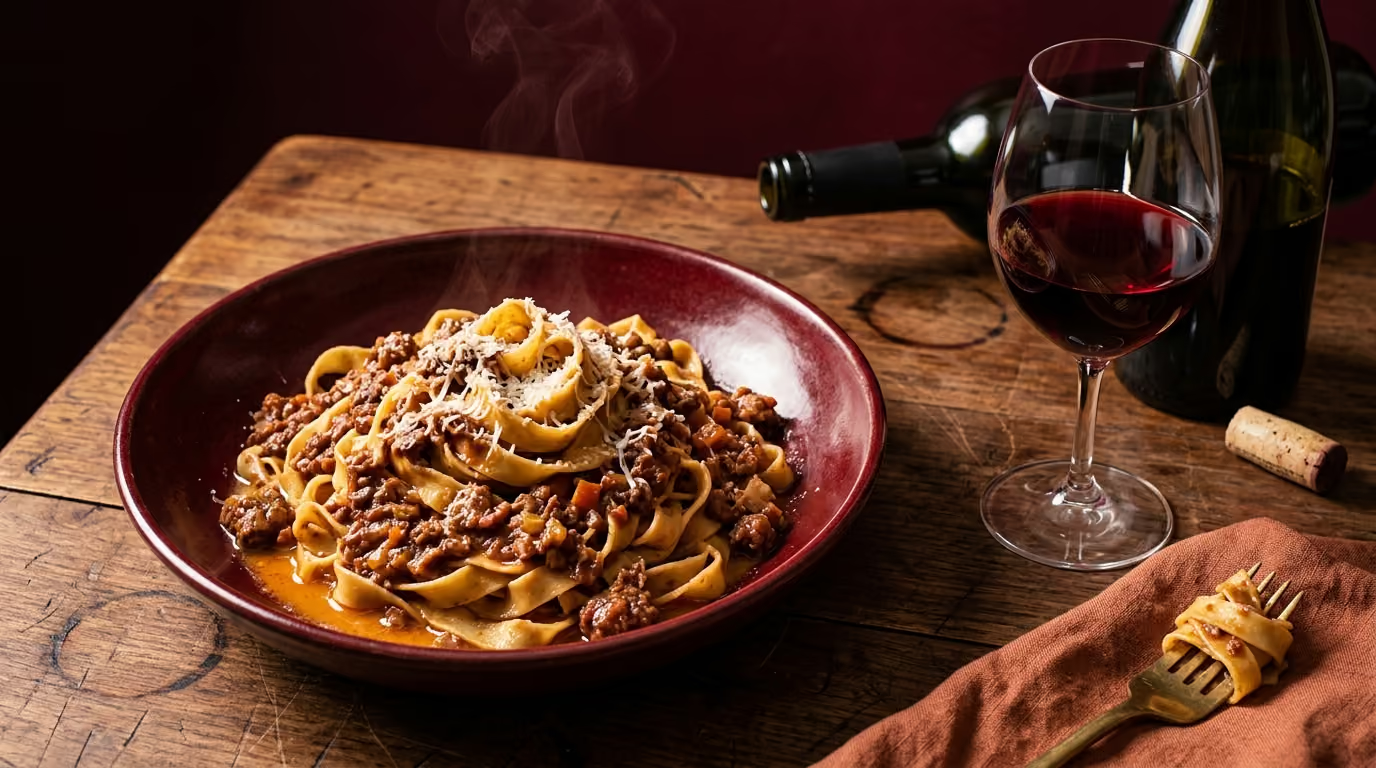
Chianti is the wine we'd buy first for a classic meat lasagna, because Sangiovese has the acidity a tomato sauce demands and enough tannin to handle beef and cheese. Wine Folly's profile of Sangiovese lists medium-high acidity and medium-high tannin, with cherry, roasted tomato and oregano among its main flavors, which reads a lot like a description of the sauce. Decanter's lasagne guide gets to the same place, quoting London sommelier Felix Paffard on why high-acid reds suit the tomato and noting that Sangiovese is planted across Emilia-Romagna, the part of Italy the dish comes from.

You'll find Chianti in nearly any American shop, and it's the easiest name on this page to act on. If you want a specific bottle, Peppoli Chianti Classico is Antinori's everyday version, bright rather than big, and our guide to how Chianti tastes will tell you what to expect from the category. A straight Sangiovese from elsewhere in Tuscany does the same job when the word Chianti isn't on the label.
Barbera is the better pick if your lasagna leans hard on béchamel and mozzarella, or if someone at the table finds Chianti too drying. Wine Folly rates Barbera as low in tannin and high in acidity, which is about the most useful combination a rich tray could ask for, since the acidity does the cleaning up and nothing grips your gums while it happens. Matthieu Longuère MS, quoted in the Decanter piece, names Barbera first among his picks, and our Barbera guide has more on what you'll taste.
If you want to go beyond Italy, Longuère also suggests a Gamay from Beaujolais or an Austrian Zweigelt, and fellow Master Sommelier Eric Zwiebel adds Blaufränkisch and Dolcetto to the list. Those are the wines we'd reach for when you've had a lot of Chianti lately and want the same freshness in a different accent.
Why does the sauce matter more than the meat?
Sauce matters more because tomato and béchamel ask opposite things of a wine: tomato needs high acidity to keep the wine from tasting flat, while a cream sauce needs body and very little tannin. Meat changes how much weight the bottle should carry, but the sauce decides what kind of wine you're shopping for. It's the same logic behind picking a wine for any pasta, and lasagna just stacks more layers on top of it.
The clearest example sits in that Decanter article. Alessandro Mannello of The Kitchen at Holmes serves a white lasagna with porcini and Italian sausage, so it has meat in it, and he pours an Italian Chardonnay from Piedmont or a Pinot Noir with it. He asks for low tannin and good acidity to cut through the richness, which is nothing like what a beef ragù wants. A "contains meat, so buy a big red" chart would have put the wrong bottle on that table.
It works in reverse as well. A vegetable lasagna built on tomato still has all that acidity to answer, so a soft white can taste thin next to it, while a dry rosé or a Barbera holds up and leaves the zucchini and eggplant room. So before you shop, ask what color the sauce is and how much of it there is, and only then ask what else is inside.
What wine goes with white lasagna?
A lightly oaked Chardonnay is the safest wine for a white lasagna, because it has the weight to stand next to béchamel and ricotta without turning the meal heavy. That's Longuère's recommendation in Decanter, and Mannello's advice adds a useful switch: choose oaked if you want to lean into the creaminess, and unoaked if you'd rather have brightness and lighter notes.
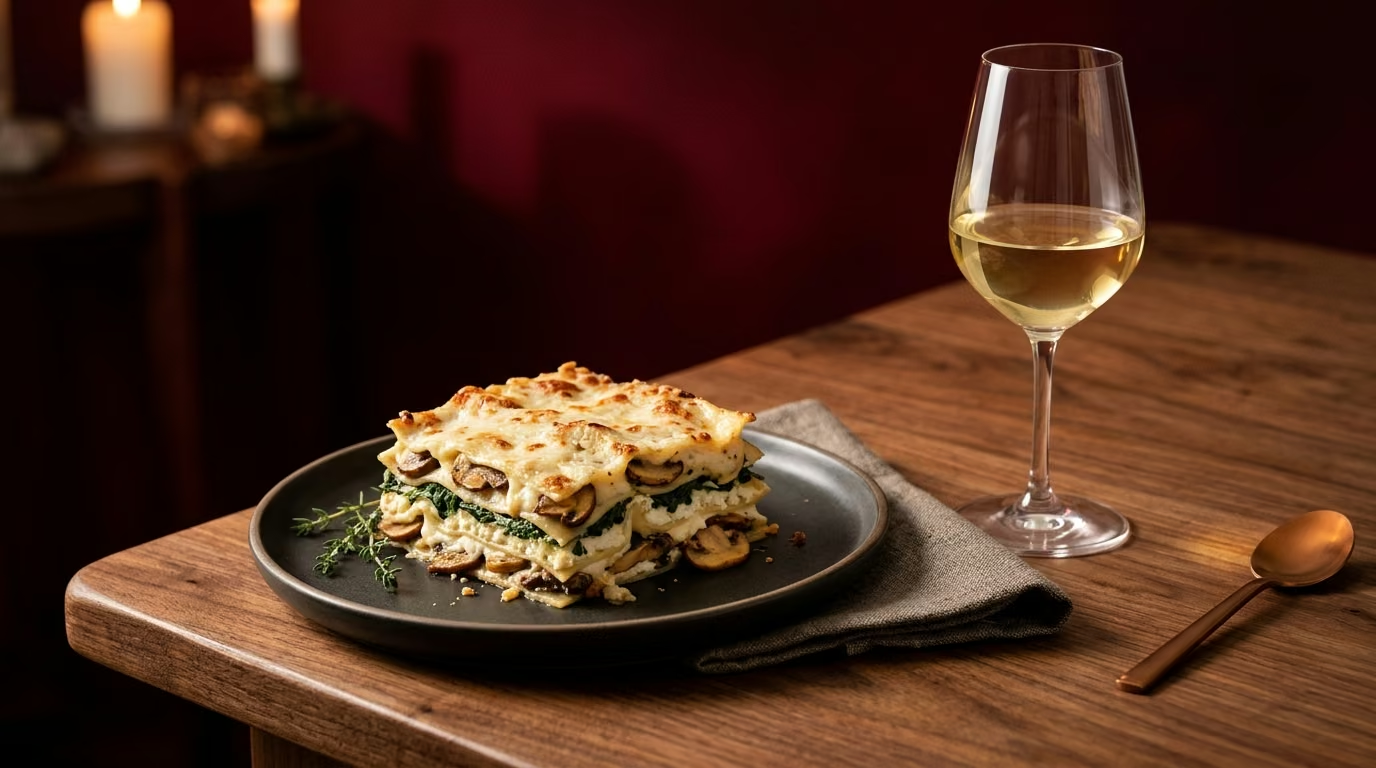
Pinot Noir is the red answer here, and it's the one we'd pick if there are mushrooms in the layers. Mannello's reasoning is that its earthy side flatters the mushrooms while its acidity cuts through the béchamel, and low tannin means nothing turns harsh against the cream. Our mushroom pairing guide goes further if the dish is mostly porcini or truffle.
What wine goes with vegetable or spinach lasagna?
Soave and unoaked Chardonnay are the wines for a delicate vegetable lasagna, particularly spinach and ricotta, since both stay dry and crisp without covering up the filling. Decanter recommends lighter dry whites here, naming food-friendly Italian whites and fresh unoaked Chardonnay. Soave is our pick from that Italian group, because Wine Folly describes Garganega, the main grape in Soave, as dry and medium-light with medium-high acidity, and points it toward citrus and aromatic green herbs. That also makes it a good match for a lasagna with pesto running through it.
For a tomato and vegetable tray, go back to red or pink. Zwiebel suggests rosé for anyone who wants something lighter, and a dry one handles tomato far better than most whites do. Roasted eggplant in the mix tips us toward Dolcetto, which Wine Folly lists as a classic match for roasted tomatoes, eggplant and garlic.
What should you pour with sausage or seafood lasagna?
Montepulciano d'Abruzzo is the bottle for a sausage lasagna in tomato sauce. Wine Folly calls it an excellent partner for sausages of all kinds, including sweet Italian sausage flavored with fennel, and its red plum and blackberry fruit give a spicier sauce something to lean on. Watch the name while you shop, though, because the words Montepulciano d'Abruzzo mean the grape, while Vino Nobile di Montepulciano is a wine from a Tuscan town, made primarily from Sangiovese. Either one will be good with your dinner, but they aren't the same wine.
Seafood lasagna, usually shrimp or scallops in a delicate cream sauce, is the one version where we'd skip red entirely. Soave or an unoaked Chardonnay keeps things clean, and Wine Folly's Garganega notes point to fish as a natural fit. The oakier bottles that work on a white chicken or mushroom lasagna are too heavy here, and they'd take over the shellfish.
Which wines should you avoid with lasagna?
Very oaky reds and very high-tannin reds are the two to skip, along with reds so light they disappear under the dish. Longuère warns against too much oak in the Decanter guide, and Zwiebel cautions against big tannins overwhelming the palate. That's the reason a young, heavily oaked Cabernet Sauvignon is a riskier choice than its reputation suggests, even with a beef ragù. If you do want to know more about that drying feeling, here's what tannin in wine actually is.
At the light end, Decanter names Lambrusco as a style that won't hold up to the richness, so if you're buying one bottle for a classic lasagna we'd take the Chianti instead. A sweet wine of any color is the other one to leave on the shelf, because a sugary wine and a sharp tomato sauce pull in opposite directions.
How should you serve wine with lasagna?
Serve Chianti and Barbera slightly cool, at the 60 to 68°F that Wine Folly gives for both grapes, which for most homes means about 20 minutes in the fridge. A warm red next to a hot, rich tray tastes boozy and soft, and that small chill brings back the freshness you bought the bottle for. Whites go the other way: Wine Folly lists 45 to 55°F for Garganega, so a Soave straight from a home fridge needs a little time on the counter. Our wine serving temperature guide covers the rest.
Both the Sangiovese and Barbera profiles suggest about 30 minutes of decanting, and pouring a young Chianti into glasses while the lasagna rests does nearly the same thing. That resting time matters for the food too, since a tray cut too early runs all over the plate, so you may as well use those minutes for the wine. Lasagna also feeds a crowd, and an easy-drinking red is the sensible way to buy several bottles without spending much.
Your own recipe might not fit any row in that table, especially if it's your grandmother's version with three kinds of cheese and a splash of cream in the ragù. That's where Pairing in Sommy earns its place, since it works from the recipe itself or a photo of the dish and recommends a wine for what's actually on your plate.
Questions people ask about wine with lasagna
What wine goes with lasagna?
Chianti or another Sangiovese is the best wine with a traditional beef and tomato lasagna, and Barbera is the softer alternative. For white lasagna, pour a lightly oaked Chardonnay or a Pinot Noir. For a delicate vegetable lasagna, pour Soave or unoaked Chardonnay.
Is red or white wine better with lasagna?
Red is better with any lasagna built on tomato and meat, because the wine needs acidity and some structure to match the sauce. White is better with béchamel, ricotta and seafood versions. If you only drink white and you're serving a meat lasagna, choose a fuller Chardonnay with some oak so the wine isn't lost.
Can you drink rosé with lasagna?
Yes, and a dry rosé is a good pick for a tomato and vegetable lasagna or for anyone who finds red too heavy. It has the freshness to handle the sauce and it's lighter on the palate than Chianti. Avoid the sweeter blush styles, which won't sit well next to the tomato.
What is the best cheap wine with lasagna?
Montepulciano d'Abruzzo and everyday Chianti are the best inexpensive choices, since lasagna needs freshness and fruit far more than it needs age or prestige. A saved-up Barolo is wasted on a tray this rich and this cheesy. Decanter's experts name Barolo as a workable match, but that's a bottle we'd rather open with something quieter.
What is the 20 minute rule for wine?
The 20 minute rule is a rule of thumb for serving temperature: put a red in the fridge about 20 minutes before dinner, and take a white out about 20 minutes before you pour. It's a rough guide rather than a measurement, but it fixes the most common mistake, which is drinking reds too warm and whites too cold.
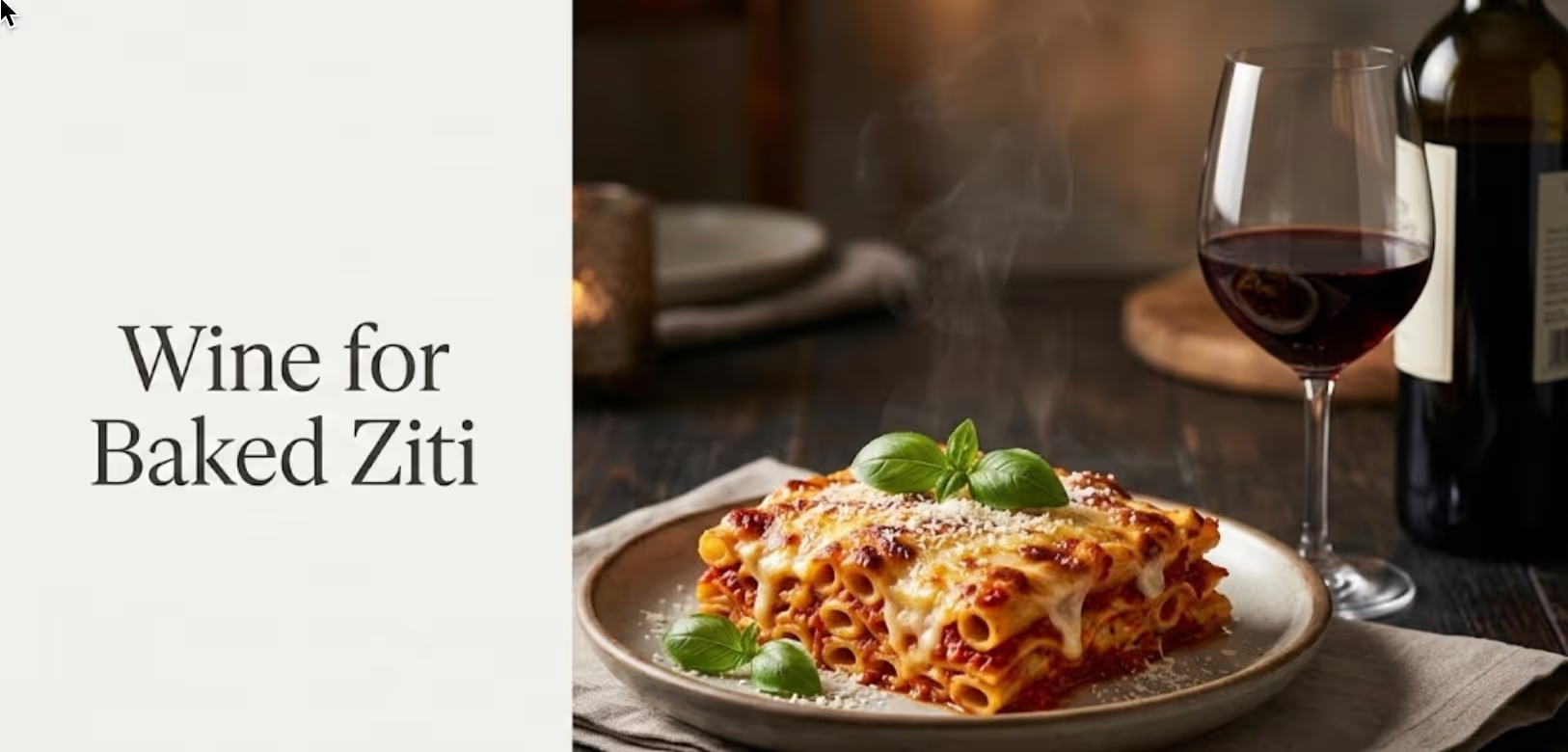
Does the same wine work for baked ziti or moussaka?
Baked ziti follows the same logic as a tomato lasagna, so Chianti and Barbera carry straight over, and our baked ziti pairing guide has the details. Moussaka looks similar but swaps in lamb, warm spice and eggplant, so it's worth reading our moussaka wine pairing before assuming the same bottle fits. For a wider view, try our guide to the best wine for Italian food.