
A good white wine is one whose style matches what you already enjoy, and for most people that means one of four: a crisp Marlborough Sauvignon Blanc like Kim Crawford or Oyster Bay, a round California Chardonnay like Kendall-Jackson Vintner's Reserve (listed at $17 by the winery), a dry Riesling like Chateau Ste. Michelle Dry Riesling, or, if you like a little sweetness, Chateau Ste. Michelle's regular Columbia Valley Riesling. Pick the style first and the bottle second, because a great Chardonnay is still the wrong wine for someone who wanted something zesty.
Most lists that rank for this question either walk through twenty grape names or hand you thirty bottles from tiny producers you'll never find in a supermarket. We've gone the other way: four styles, the widely stocked bottle for each, the step up when you want to spend a bit more, and the clues on the shelf that separate a good white from a flat one before you've paid for it.
What makes a white wine good?
A good white wine tastes fresh and balanced, which in practice means its acidity and its fruit feel in proportion, it isn't sweeter than the label led you to expect, and it finishes without a bitter or flabby aftertaste. Price helps less than you'd think, because almost every white you'll see in a supermarket is made to be drunk young and fresh.
That last point matters more for whites than reds. VinePair puts it simply: if a wine cost under $30, it's a pretty safe bet the winemaker intended it to be popped soon after you bought it, and that doesn't mean the wine is bad, only that it tastes best young. Wine Spectator's Dr. Vinny makes the same point, writing that most wines, red or white, are made to drink well upon release and are best enjoyed while they're still young and fresh. So a "good" $15 white is usually a recent vintage from a producer who makes a lot of it consistently, and a disappointing one is often just a bottle that's been sitting too long.
Acidity is the other half of the picture. It's the mouth-watering, lemony lift that makes a white wine feel refreshing rather than heavy, and it's why the same wine can taste lively with dinner and dull on its own. When people describe a white they love as "crisp" or "clean", they're almost always describing acidity, and when they call one "flabby" they mean it doesn't have enough. Our beginner wine chart lays out every style by body and sweetness if you want the vocabulary.
Which white wine style do you actually like?
Most white wines fall into one of four styles, and knowing which one you like does more for your next bottle than any ranking: crisp and zesty (Sauvignon Blanc, Albariño, Pinot Grigio), aromatic and dry (dry Riesling, Grüner Veltliner), round and rich (Chardonnay, especially oaked), and off-dry and fruity (most everyday Riesling and Moscato). If you aren't sure which camp you're in, think about the last white you finished happily and match it to the table.
| Style | Tastes like | Grapes to look for | Widely stocked bottle to try | When you want to spend more |
|---|---|---|---|---|
| Crisp and zesty | Lemon, lime, green apple, cut grass | Sauvignon Blanc, Albariño, Pinot Grigio, Vinho Verde | Kim Crawford or Oyster Bay Sauvignon Blanc | Sancerre, from the Loire Valley |
| Aromatic and dry | Peach, citrus, white flowers, a stony edge | Dry Riesling, Grüner Veltliner | Chateau Ste. Michelle Dry Riesling | Alsace or German Trocken Riesling |
| Round and rich | Ripe pear, tropical fruit, vanilla, butter | Chardonnay, Viognier | Kendall-Jackson Vintner's Reserve Chardonnay | La Crema Sonoma Coast Chardonnay |
| Off-dry and fruity | Juicy apple, white peach, a touch of sweetness | Riesling, Moscato d'Asti | Chateau Ste. Michelle Columbia Valley Riesling | Moscato d'Asti from Piedmont |
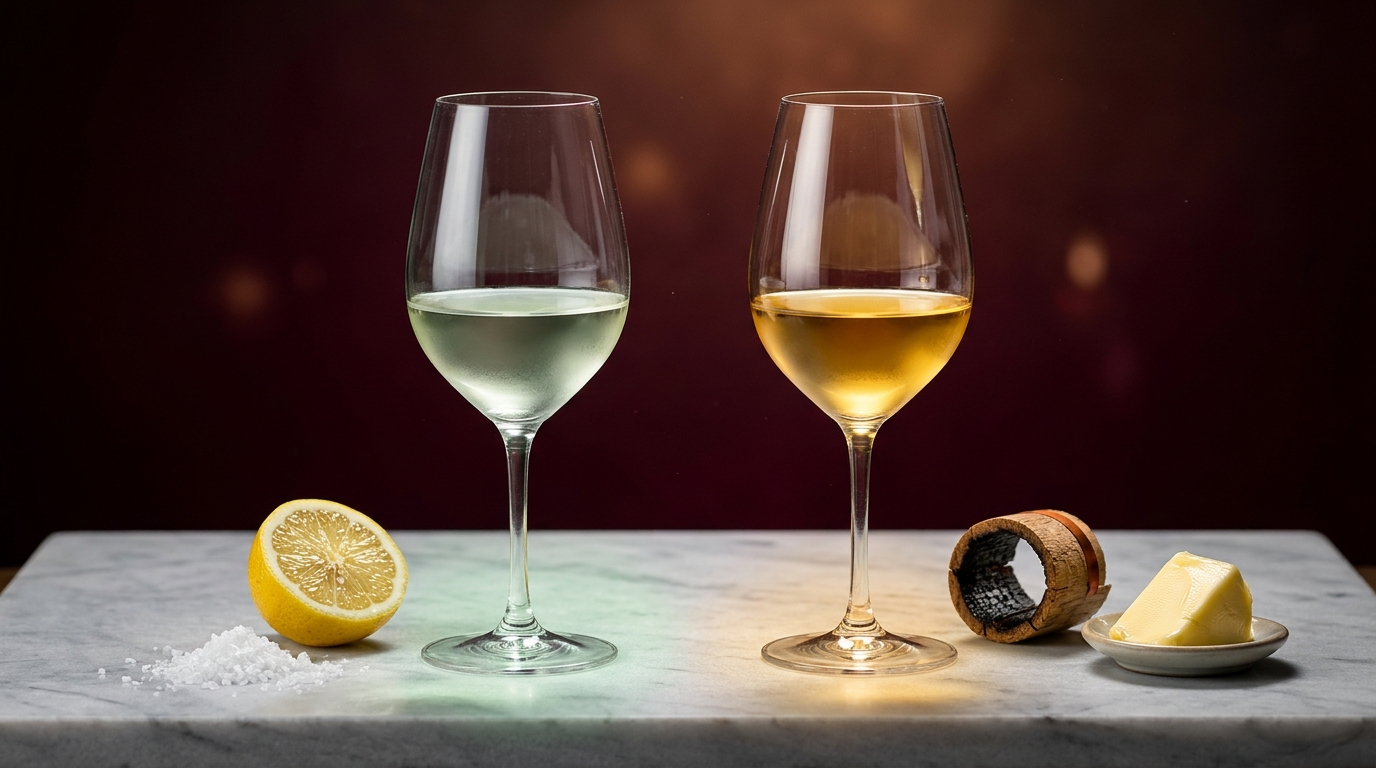
The color in the glass is a decent first clue. Crisp, unoaked whites tend to look pale, almost silvery green, while oak-aged Chardonnay pours a deeper gold, and that difference is a fair preview of how heavy each will feel. It isn't a rule, but it's right often enough to be useful.
If you already know you're a "Sauvignon Blanc person" or a "Pinot Grigio person", you're further along than you think, and our pages on wines similar to Sauvignon Blanc and wines similar to Pinot Grigio take that preference and turn it into a short list of next bottles.
What is a good crisp, dry white wine?
A Marlborough Sauvignon Blanc is the most reliable crisp, dry white you can buy, and Kim Crawford and Oyster Bay are the two you're most likely to find on any supermarket shelf in the US. Kim Crawford describes its wine as having lifted aromas of citrus, tropical fruit and crushed herbs, and Oyster Bay promises aromatic tropical fruits and bright citrus notes with a refreshingly zesty finish. Both are exactly what most people picture when they ask for "a crisp white".
If you like that bottle but want to know what else shares its zip, our page on wines like Kim Crawford goes deeper on the New Zealand style and its relatives. The step up, when you're ready to spend more, is Sancerre, which is also Sauvignon Blanc but grown in France's Loire Valley, and it trades some of the tropical fruit for a flinty, more restrained feel that a lot of people find more food-friendly.

Albariño from the Rías Baixas region in northwest Spain is our favorite alternative when Sauvignon Blanc starts to feel predictable. It's bright and citrusy with a faintly salty edge that makes it brilliant with shellfish, which is why it's the first bottle we'd open next to a pot of mussels in white wine sauce. Vinho Verde from northern Portugal sits in the same family but lighter and often a little spritzy, and our Vinho Verde explainer covers what to expect from a bottle that costs less than lunch.
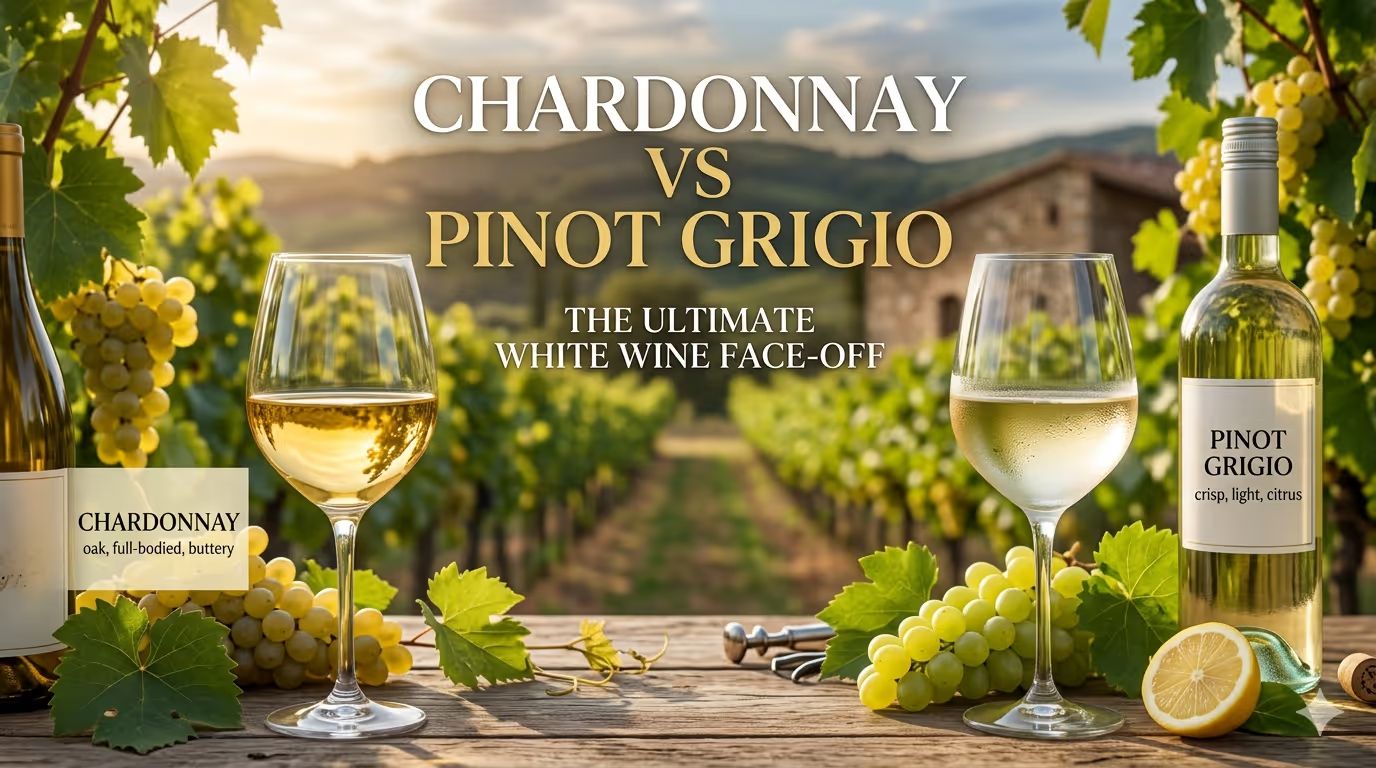
Pinot Grigio deserves an honest word, since it's one of the most familiar whites in America and also one of the most uneven. At its best it's light and appley, and Santa Margherita, which lists its bottle at $26.99 on the winery's own shop and at 12.5% alcohol, is the famous name. At its most generic it tastes of very little, so if you've found Pinot Grigio boring, the fix is usually a more specific region on the label rather than a different grape.
What is a good rich, full-bodied white wine?
Chardonnay is the go-to rich white wine, and Kendall-Jackson Vintner's Reserve Chardonnay is the easiest good one to find, at a $17 list price on the winery's site with 13.5% alcohol. Kendall-Jackson describes integrated tropical flavors followed by citrus and vanilla, and that vanilla is the oak talking, which is exactly what fans of the buttery California style are looking for. The same page calls it America's best-selling Chardonnay for more than 30 years, which is the winery's own claim rather than independent sales data, but it does tell you how widely it's stocked.
Bogle's Chardonnay is the other bottle we see everywhere, and the winery's own note promises green apple, juicy pear and warm baking spices, so it sits a little leaner and brighter than the Kendall-Jackson. When you want a step up, La Crema's Sonoma Coast Chardonnay, listed at $23 on the winery's site, leads with Meyer lemon, pear and white flowers with only subtle oak, which makes it a good bridge for someone who likes Chardonnay's weight but not a heavy dose of butter.
Not every Chardonnay is rich, and that's the single biggest source of confusion with this grape. Unoaked Chardonnay, especially from Chablis in northern Burgundy, is lean and mineral enough to sit in the first style rather than this one, and our page on Chablis and Chardonnay explains why the same grape can taste like two different wines. If buttery is exactly what you're after, we've also written about Rombauer Chardonnay alternatives for butter fans, which finds that style for less money.
What is a good aromatic white wine?
Dry Riesling is the aromatic white we'd point most people to first, and Chateau Ste. Michelle Dry Riesling from Washington's Columbia Valley is the easy one to find. The winery calls it a dry, refreshing style with beautiful fruit flavors, crisp acidity and an elegant finish, at 12.5% alcohol, and Decanter's reviewer, tasting the 2021 vintage, called it one of the best American wines at under $10. Prices move, so treat that as a 2023 snapshot rather than a promise, but it's still one of the best-value bottles in this whole article.
Aromatic whites smell bigger than they taste. You'll get peach, citrus blossom and sometimes a stony, almost wet-rock note in the glass, then a dry, bright finish, and that gap between a perfumed nose and a dry palate is what surprises people who assume every Riesling is sweet. Our page on wines similar to Riesling maps out where to go once you're hooked.
Grüner Veltliner, Austria's signature white, is the other one to know. It's crisp and zesty with green apple and a faint white-pepper bite, and it's a natural party wine because it goes with almost everything on a buffet table. If you're curious whether it's for you, our Grüner Veltliner taste guide is a quick read on what to expect.
What is a good white wine if you like it a little sweet?
Chateau Ste. Michelle's Columbia Valley Riesling is a good white wine for anyone who likes a touch of sweetness, since the winery describes it as a medium-dry style with crisp apple and white peach flavors and subtle mineral notes, at 12% alcohol. That "medium-dry" wording matters, because it tells you the sweetness is there on purpose and balanced by acidity rather than syrupy.
Riesling is the grape where the label does most to help you, if you know where to look. In 2010 the International Riesling Foundation introduced a taste profile with four categories, Dry, Medium Dry, Medium Sweet and Sweet, and Decanter reported that Washington's Pacific Rim winery had been printing the scale on its back labels since late 2008. Not every bottle carries it, but when one does, it's the fastest sweetness check in the aisle. Our page on off-dry white wine covers the other label words that signal a little residual sugar.
If you want sweeter still, Moscato d'Asti from Piedmont is lightly sparkling, low in alcohol and tastes of peach and orange blossom, and our guide to what makes a good sweet wine runs through the rest of the sweet end of the shelf.
What is the most popular white wine in the US?
Chardonnay is the most popular white wine in the US, and it's also the grape California grows the most of. The USDA and California Department of Food and Agriculture's 2025 Grape Crush Report found that Chardonnay accounted for the largest share of all tonnage crushed in the state, at 17.9%, more than any red or white variety. That's a measure of production rather than sales, but it's the clearest public number on the subject, and it matches what you see on any American wine shelf.
Sauvignon Blanc and Pinot Grigio are the other two whites you'll find everywhere, which is why we've built the crisp style above around them. Being popular doesn't make a wine right for you, of course, and if all three of the big names leave you cold, that's usually a sign you'd prefer the aromatic style, which most people simply never get offered.
Can a cheap white wine be good?
Yes, a cheap white wine can be genuinely good, and white is the color where your money goes furthest, because most whites are meant to be drunk young and don't need years of oak or aging to show well. Chateau Ste. Michelle's Dry Riesling, which Decanter's reviewer put among the best American wines under $10, is the clearest example in this article.
The trick with inexpensive whites is to buy the freshest vintage you can find and to favor grapes that are naturally crisp, like Sauvignon Blanc, Albariño, Vinho Verde and dry Riesling, over ones that rely on oak for their character. A $10 crisp white can be lovely, while a $10 "oaky" Chardonnay is more likely to taste of oak flavoring than of fruit. Our roundup of the best grocery store wines has more bottles that punch above their price.
Where spending more does pay off is in specificity. A wine labelled with a narrower place, like Sancerre instead of "French Sauvignon Blanc" or Sonoma Coast instead of "California", generally comes from a smaller, more distinctive area, and that tends to show up as more character in the glass. It's not a guarantee, but it's the most reliable way to trade up without guessing.
How do you spot a good white wine on the shelf?
Check three things on the label before you buy a white wine: the vintage, the place, and any sweetness clue.
The vintage is first because freshness is the whole game with everyday whites. A Sauvignon Blanc or Pinot Grigio from a recent harvest is what you want, while the same wine three or four years older has usually lost the bright, zesty edge that made it worth buying. Rich Chardonnay and good Riesling hold up longer, so you can relax a little with those.
The place comes next, and narrower is usually better, as we covered above. The sweetness clue is the last check, and it matters most for Riesling, where words like "dry" or "Trocken" on the label, or an International Riesling Foundation scale on the back, tell you what's inside. Our page on dry vs sweet wine has the actual sugar numbers if you want them.
All of that still tells you whether a wine is good in general, not whether it's good for you. That's the moment Fit Check is built for: you type, say or scan the bottle you're holding in the aisle, and Sommy gives you an instant verdict on whether it fits the taste you've built up from your ratings, before you've paid for it.
How cold should you serve a good white wine?
Serve crisp white wines like Sauvignon Blanc and Pinot Grigio properly cold, straight from the fridge, and let rich Chardonnay warm up for ten or fifteen minutes on the table before you pour. Too cold mutes the flavor of a fuller white, while too warm makes a light one taste flat and a bit alcoholic.
Our page on wine serving temperatures has the exact ranges for every style, and once a bottle is open, recork it and keep it in the fridge, where most whites stay pleasant for a few days.
Where should you start tonight?
Start with the style, not the ranking. If you want one bottle that pleases a table full of people, a Marlborough Sauvignon Blanc is the safest bet; if you love a creamy, round glass, go straight to Kendall-Jackson or La Crema Chardonnay; if you're curious, buy the Chateau Ste. Michelle Dry Riesling, because it's the bottle most likely to change your mind about what white wine can be.
Frequently Asked Questions
What is a good white wine for someone who doesn't usually drink wine?
A good white wine for a newcomer is something fresh and fruity with gentle acidity, like an off-dry Riesling or a Moscato d'Asti if they like sweetness, or a soft Pinot Grigio if they don't. Avoid heavily oaked Chardonnay and very tart Sauvignon Blanc at first, since both are acquired tastes for some people.
What is a good dry white wine?
A good dry white wine to start with is a Marlborough Sauvignon Blanc such as Kim Crawford or Oyster Bay, or Chateau Ste. Michelle Dry Riesling if you'd like something more aromatic. Albariño from Spain is a great choice when you want something a little different.
What is a good cheap white wine?
A good cheap white wine is usually a young, crisp one, and Chateau Ste. Michelle Dry Riesling is a standout, since Decanter's reviewer called it one of the best American wines under $10. Vinho Verde and many Sauvignon Blancs are also good value, as long as you buy a recent vintage.
Is Chardonnay a good white wine?
Chardonnay is a very good white wine and the most crushed grape in California, but its style varies enormously. Oaked versions like Kendall-Jackson Vintner's Reserve are rich and vanilla-scented, while unoaked Chablis is lean and crisp, so check which one you're buying.
What is the smoothest white wine?
The smoothest white wines are the rounder, lower-acid styles, such as a lightly oaked Chardonnay or a Viognier. If "smooth" to you means soft and a little sweet, an off-dry Riesling or a Moscato d'Asti will feel even gentler.
How long does an open bottle of white wine last?
An open bottle of white wine usually stays pleasant for three to five days if you recork it and keep it in the fridge. Sparkling and very light whites fade faster, and our guide to storing open wine explains how to stretch that.