
What Is Vinho Verde? Portugal's Fresh White, Explained
Vinho Verde is a wine region in the far north of Portugal, and the name points to the wine's youth rather than to any green color in the glass. Most bottles are pale, dry white wine with sharp acidity, a faint prickle of gas on the tongue, and lower alcohol than almost anything else on the shelf. If you already enjoy Sauvignon Blanc, Pinot Grigio or Albariño, you'll probably get along with it on the first sip. The region has been demarcated since 1908, and the official regulator lists nine sub-regions across the north-west, which is why two bottles wearing the same three words can taste quite different from one another.
That last part is the bit most guides skip, and it's the part that decides whether you like the bottle you carry home. We'll walk through what the name really means, why some bottles fizz, which grape names actually tell you something useful, and what to eat with the wine once it's open.
What does Vinho Verde actually mean?
The literal translation is "green wine", and it has almost nothing to do with color. The regulator is blunt about this on its own homepage, stating plainly that Vinhos Verdes are neither a color nor a stage of ripeness. Green here is closer to how we use it in English when we say someone is green at a new job, meaning young and fresh rather than seasoned. Bottles are typically released three to six months after harvest, and they're built to be drunk soon after that rather than put away.
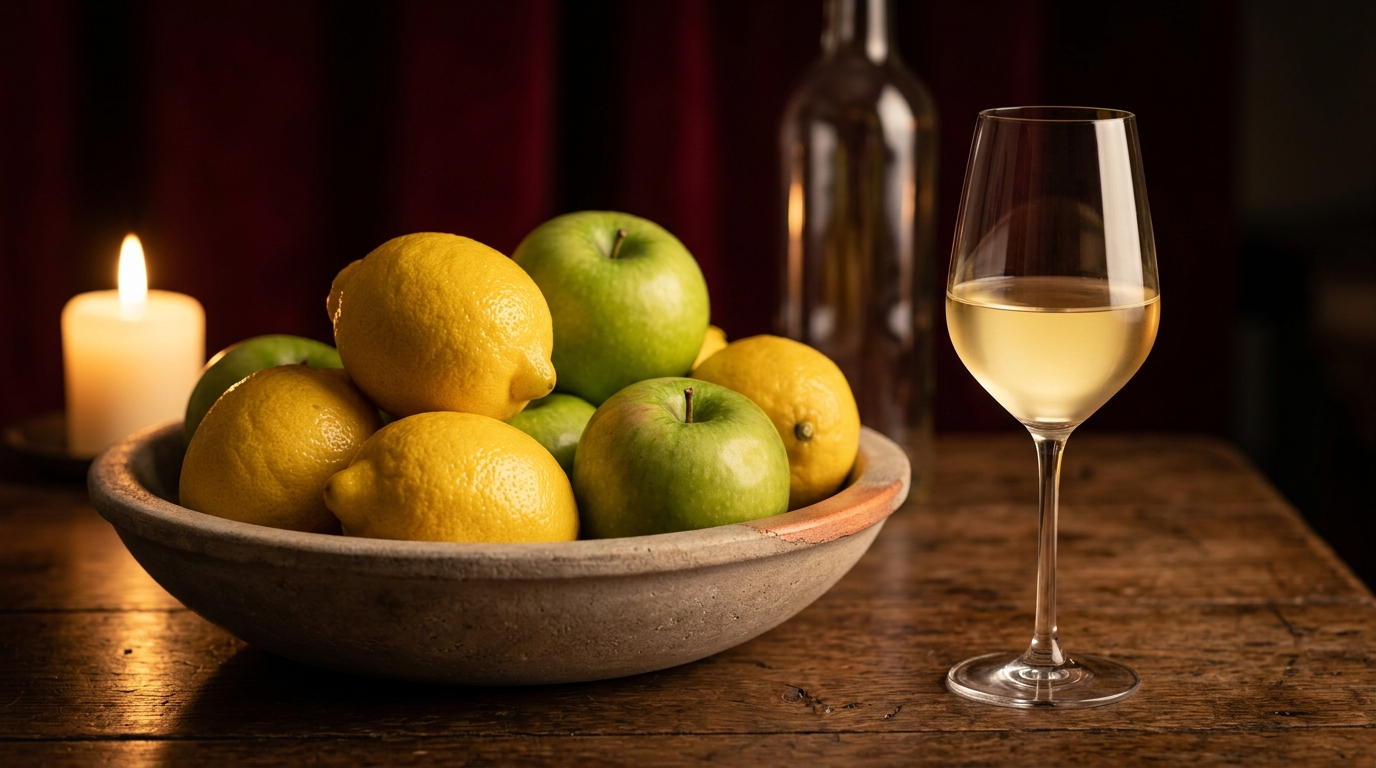
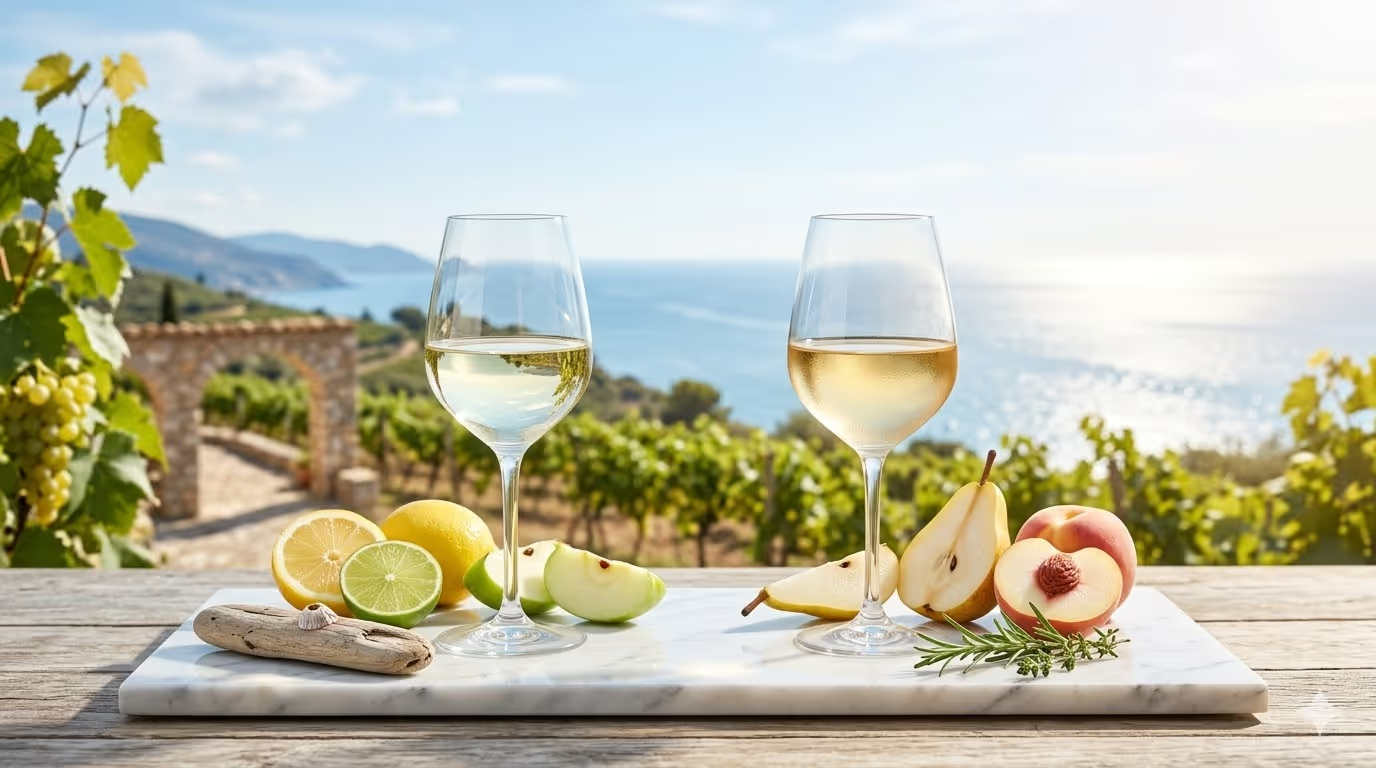
The wine in your glass will be pale lemon or pale straw, sometimes so light it looks almost like water against a white tablecloth. Expect lemon, green apple, lime peel, white flowers and occasionally a faint saline edge that people often describe as sea spray. The acidity is the signature, and it produces the same mouth-watering reaction you get from a squeeze of lemon over grilled fish. If tart wine has put you off before, our guide to wine acidity for people who find wine too tart is worth a read before you commit to a bottle.
It's a place, not a single recipe
Vinho Verde covers roughly 16,000 hectares of vineyard, which makes it the largest protected wine region in Portugal, and the regulator counts around nine distinct sub-regions inside it. Amarante, Ave, Baião, Basto, Cávado, Lima, Monção e Melgaço, Paiva and Sousa each sit in slightly different weather. The ones closest to the Atlantic stay cooler and produce leaner, more citrus-driven wine, while the sheltered inland valleys ripen fruit more fully and give you something rounder and weightier.
You don't need to memorize any of that. It's useful for one reason only, which is that a label saying Vinho Verde promises you freshness and nothing more specific than that. The grape name and the sub-region are where the real information lives, and both are usually printed somewhere on the bottle.
Why is Vinho Verde slightly fizzy?
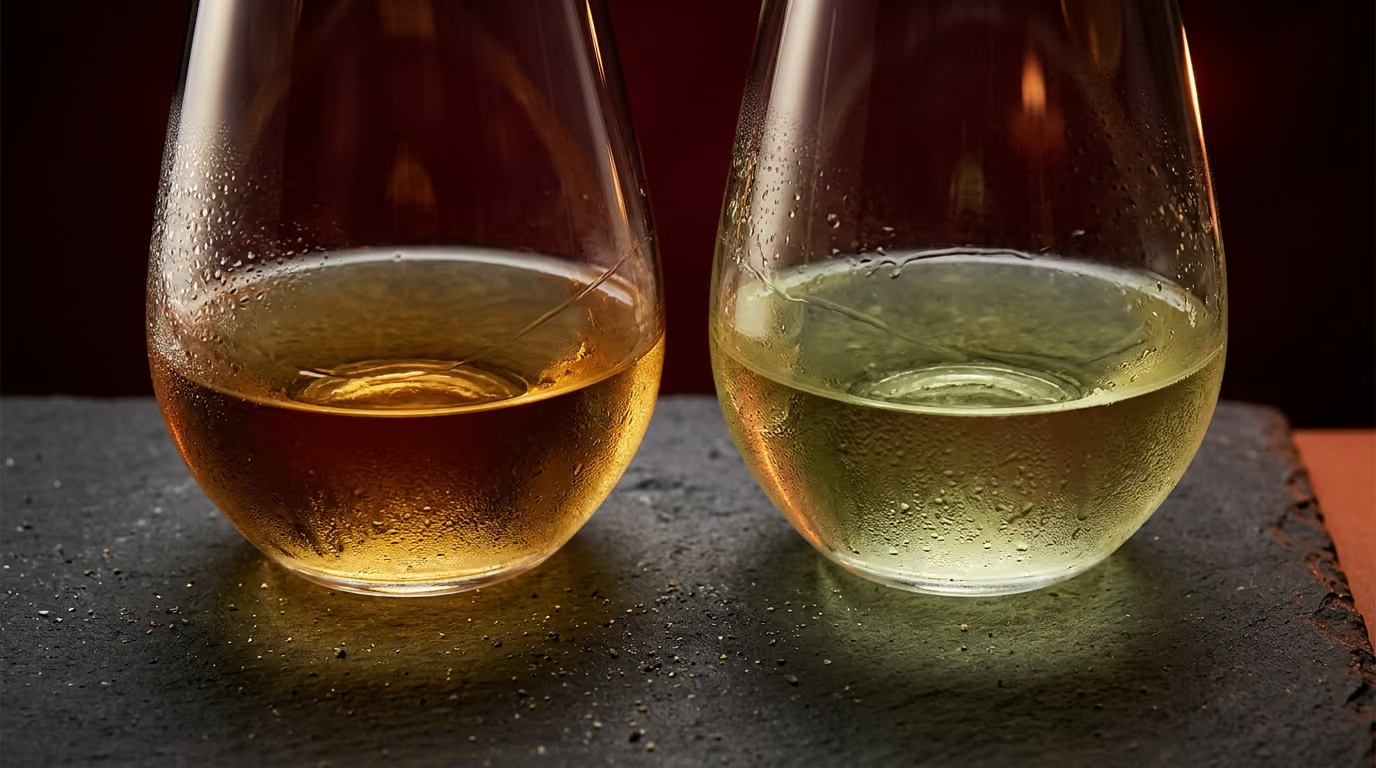
Some bottles arrive with a gentle spritz, and it's the single most confusing thing about the category for new drinkers. The fizz started out as an accident. In the region's early commercial years the slight effervescence came from malolactic fermentation finishing inside the sealed bottle, which winemaking generally treats as a fault, and producers had to use opaque glass to hide the cloudiness and sediment it left behind. Drinkers liked the tickle anyway, so the trait survived long after the fault was fixed. Most producers now add the carbonation deliberately, and the pressure sits below the threshold that would legally make the wine semi-sparkling.
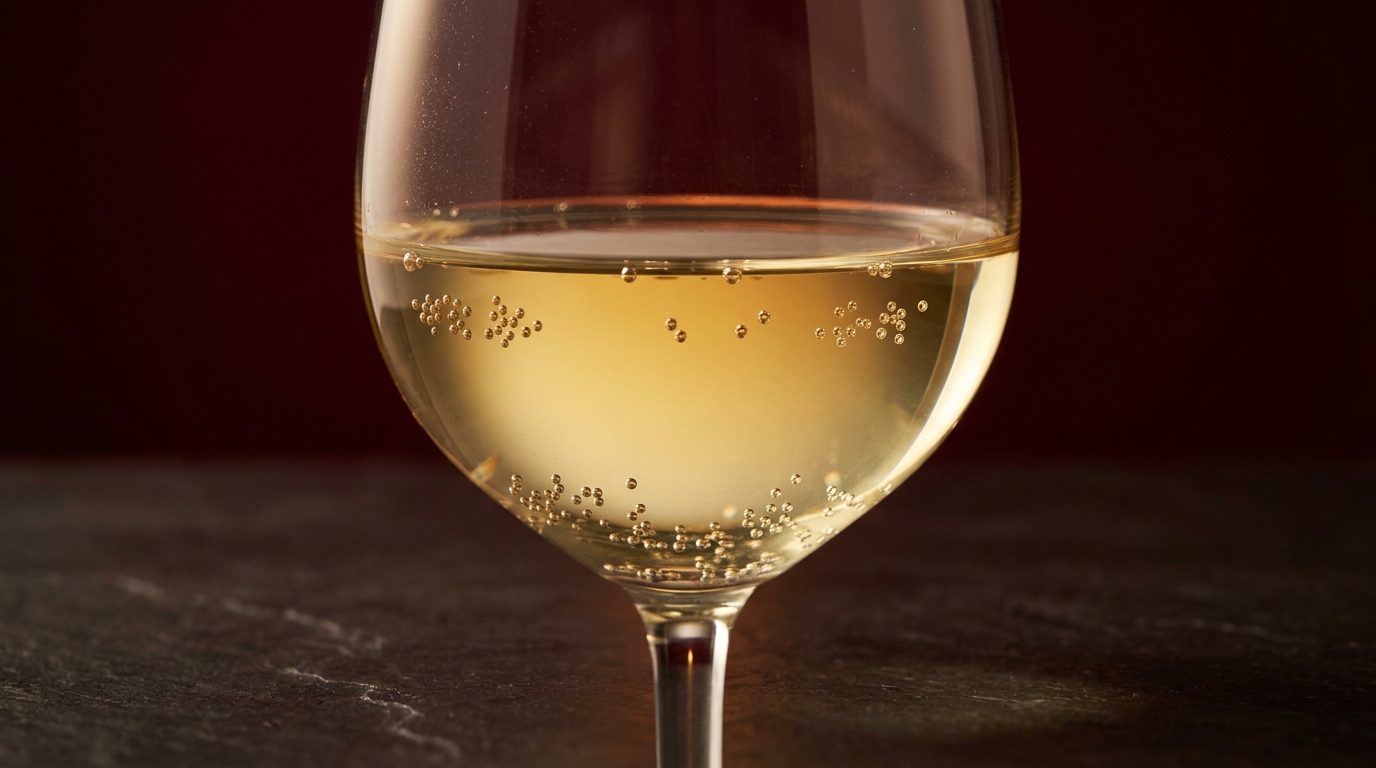
So the spritz isn't a quality signal in either direction. Plenty of serious bottles are completely still, and plenty of cheap ones fizz. If you want the tickle, look for an inexpensive blend from a large producer, since that's the style that leans into it. If you'd rather have a still white, a single-grape Alvarinho or a bottle from Monção e Melgaço is much more likely to be flat and calm. Genuine sparkling Vinho Verde also exists as a separate category with real, persistent bubbles, and it's labelled as espumante.
Which grapes should you look for on the label?
This is the shortcut that turns a confusing shelf into a decision you can make in about ten seconds. The region grows a long list of native grapes, but roughly six of them account for nearly everything you'll see exported, and each one tells you something concrete about how the wine will feel.
| Grape on the label | What to expect | Choose it when |
|---|---|---|
| Alvarinho | Citrus through to tropical fruit, real body, firm structure | You want the fullest, most serious style |
| Loureiro | Floral and perfumed, lemon, light and lifted | You like aromatic whites that stay delicate |
| Arinto (Pedernã) | Lemon, apple, orange blossom, mineral, very firm acidity | You want the driest, crispest finish available |
| Avesso | Peach, orange, pineapple, almond, fuller and deeper | You find lean whites thin or unsatisfying |
| Azal | Lemon peel, lime, grapefruit, green apple, very fresh | You want the sharpest, most refreshing pour |
| Trajadura | Soft, ripe, gentle fruit, usually a blending grape | You prefer rounder wine without much bite |
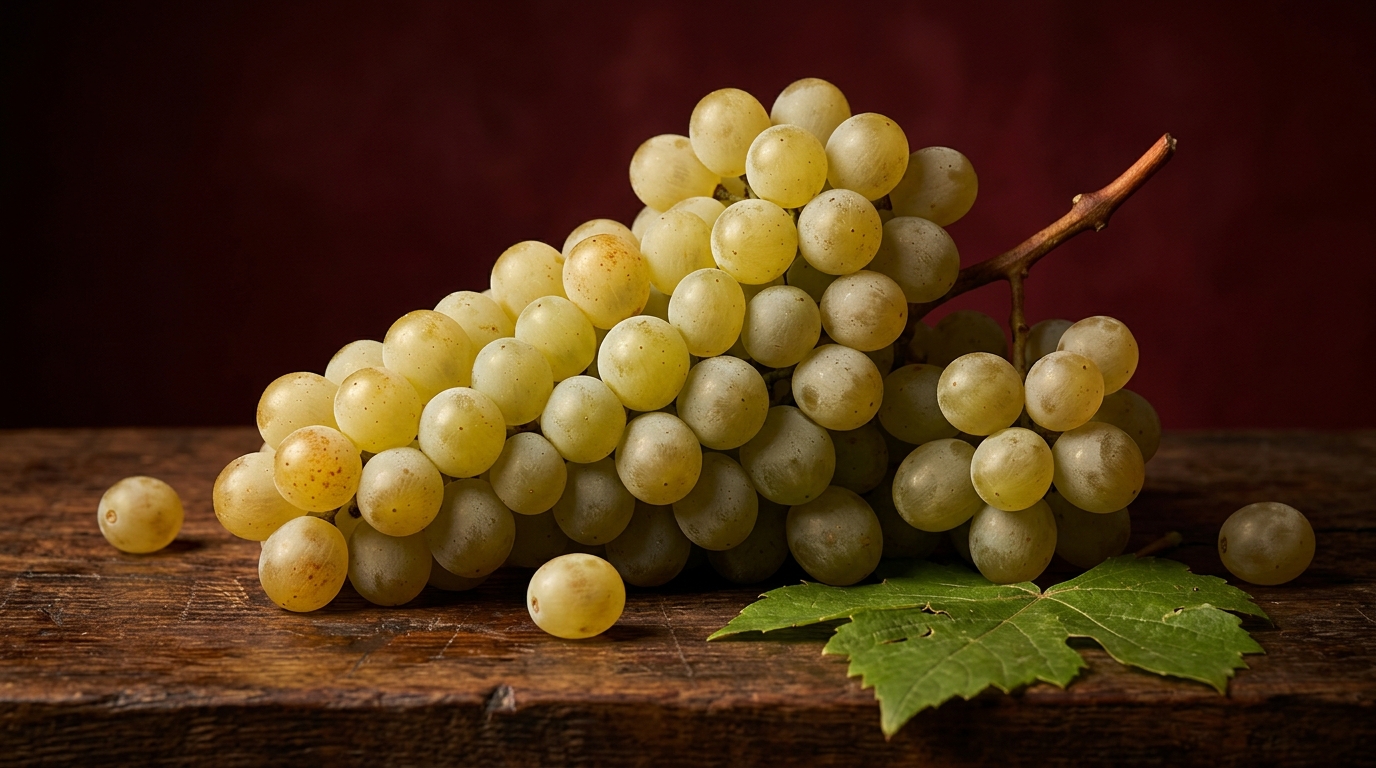
Alvarinho deserves a little extra attention because it behaves differently from the rest. It's the backbone of the Monção e Melgaço sub-region up on the Minho river, where the summers run warmer and drier than the coast, and the regulator describes the best examples as capable of developing in bottle for more than twenty years. That's an unusual claim for a region known for wine you drink young. You may also know this grape as Albariño, which is simply its name across the border in Spain, and we've written about how it compares with another coastal white in our guide to Albariño versus Vermentino.
Arinto goes by a second name too. Across much of the region it's called Pedernã, so don't treat the two words as different wines when you're comparing bottles. Many classic Vinho Verde whites are blends rather than single grapes, which means the label is a strong clue rather than a guarantee.
Is Vinho Verde sweet, dry, or low in alcohol?
Almost all white Vinho Verde is dry, and the confusion comes from how much ripe fruit these wines carry. Green apple and citrus can read as sweetness to a palate that isn't used to high-acid wine, even when the residual sugar is close to nothing. Lightly off-dry bottles do exist, particularly at the cheapest end where a touch of sugar softens the acidity for export markets, so it's worth a glance at the back label if sweetness genuinely bothers you. Our piece on how to spot an off-dry white covers the label cues that give it away.

The alcohol question has a clearer answer. Classic white blends generally land somewhere around 8.5 to 11 percent, which is meaningfully lower than the great majority of dry white wine sitting on the same shelf. That's a large part of why the wine suits a long lunch or a warm afternoon so well. Alvarinho breaks the pattern again, since the riper fruit of Monção e Melgaço pushes those wines up into the 11.5 to 14 percent range. If low alcohol is the reason you're buying, read the number on the bottle rather than trusting the category.
What food goes with Vinho Verde?
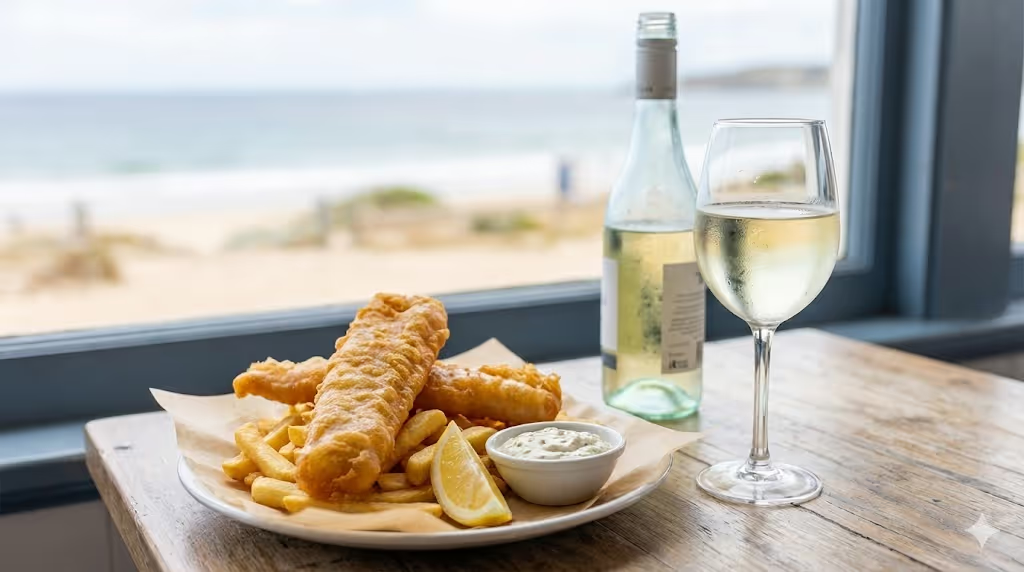
Salt, citrus, herbs and light heat are all natural partners, because the wine's acidity keeps resetting your palate between bites. Seafood is the obvious win and it's the pairing the region itself has eaten for centuries. Grilled sardines, oysters, prawns, salt cod, ceviche and fish tacos all work beautifully, and anything finished with olive oil, garlic or a wedge of lemon works better still. For a bigger spread along those lines, our seafood boil pairing guide covers how these whites handle butter and Old Bay together.
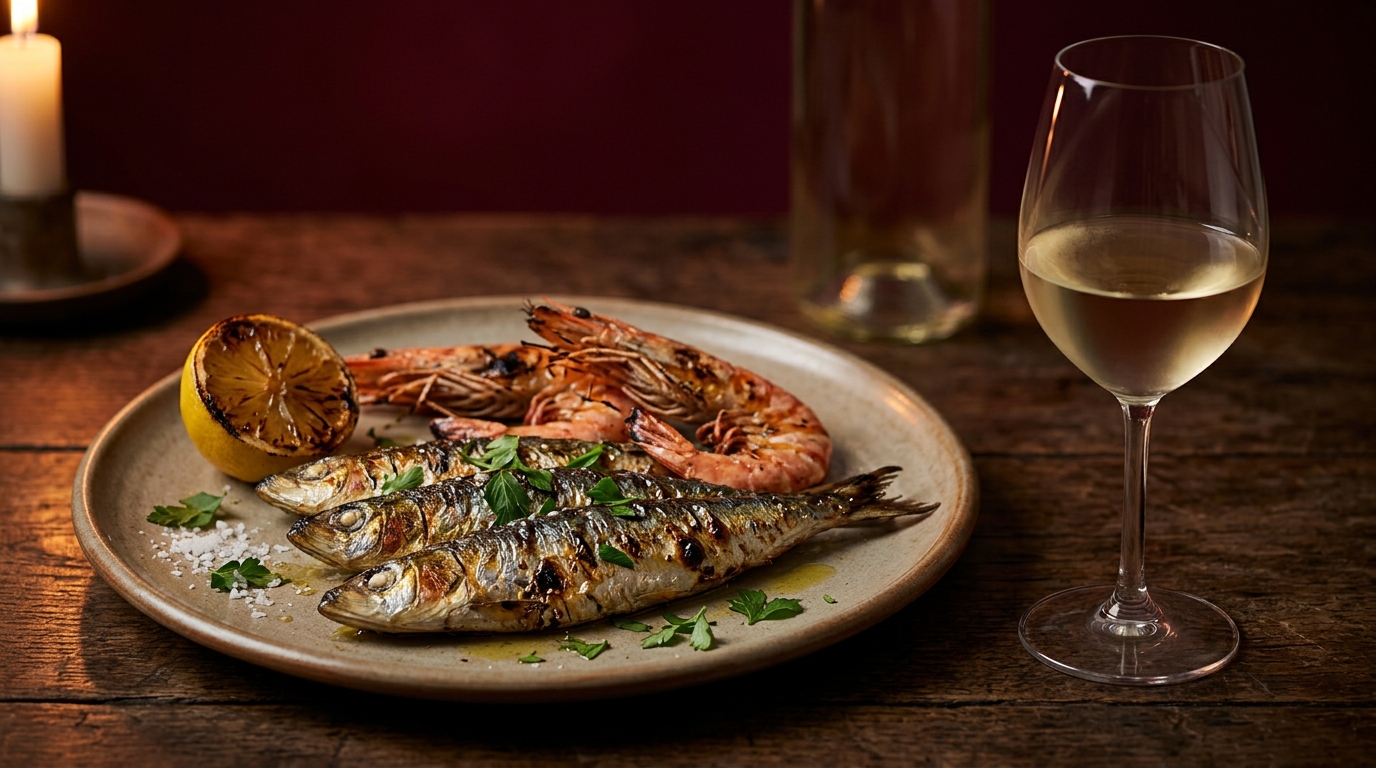
Match the weight of the wine to the weight of the plate and you'll rarely go wrong. A lean blend or an Azal is the right call for oysters, sushi and plain grilled white fish, where anything bigger would flatten the food. A fuller Alvarinho or Avesso has enough body for grilled octopus, scallops in butter or roast chicken with lemon. Goat cheese salads, basil pasta, Vietnamese herbs and a moderately spicy Thai curry all sit comfortably in the same range, since the wine's freshness cools the heat without fighting it.
The wine has real limits and it's more useful to know them than to pretend otherwise. Heavy red meat, sticky barbecue sauce and thick cream sauces will all make a light white taste watery and stripped. When dinner is that rich, reach for something with more weight rather than forcing the match.
How do you choose and serve a bottle without overthinking it?
At a shop, the decision comes down to a single question about texture. If you want something light, floral and thirst-quenching, pick a standard white blend or a bottle labelled Loureiro. If you want more fruit, more body and something that can stand up to a real dinner, look for Alvarinho or the words Monção e Melgaço on the front. Those two choices cover the overwhelming majority of what you'll find in an American store, and the category as a whole sits at the affordable end of the shelf.
That shelf moment is exactly where a second opinion helps, and it's the reason we built Fit Check into Sommy. You point your phone at a bottle you've never heard of, or simply type the name in, and you get a straight verdict on whether it suits the way your Taste Profile says you drink. Nobody wants to stand in an aisle running a comparison in their head while someone waits with a trolley behind them.
Restaurants are easier than they look, because you can describe the wine instead of naming it. Asking for "something dry and crisp, light-bodied, citrusy, with no oak" gives a server far more to work with than asking for a Portuguese white, and it works even when Vinho Verde isn't on the list at all. Our guide to ordering wine at a restaurant without the guesswork goes further into the phrasing that gets you a good glass.
Serve white Vinho Verde properly cold but not frozen, somewhere around 46 to 54 degrees Fahrenheit. Straight from the back of a cold refrigerator the aromatics go mute and the wine tastes like little more than acid, so give it five or ten minutes on the counter if the first sip seems blank. Lighter blends are happiest at the cooler end of that range, while a fuller Alvarinho shows more of itself a few degrees warmer. An ordinary white wine glass is completely fine, and there's no need to buy anything special.
Frequently asked questions
Is Vinho Verde always fizzy?
No, and the spritz varies a lot from bottle to bottle. Some whites carry a light prickle of gas, many are entirely still, and a separate sparkling category called espumante has proper persistent bubbles. Single-grape Alvarinho bottles are the least likely to fizz, while inexpensive blends from large producers are the most likely.
Is Vinho Verde sweet or dry?
The great majority of white Vinho Verde is dry with very little residual sugar. Ripe apple and citrus fruit can make a dry wine seem softer than it really is, which is where the sweet reputation comes from. Lightly off-dry examples exist at the budget end, so check the back label if you want to be certain.
Is Vinho Verde low in alcohol?
Classic white blends usually sit around 8.5 to 11 percent, which is low by modern standards and a genuine part of the appeal. Alvarinho-led wines from Monção e Melgaço run considerably higher, often between 11.5 and 14 percent. The label is the only reliable guide here.
Does Vinho Verde come in red or rosé?
Both exist, though they're much rarer than the whites and harder to find outside Portugal. Red Vinho Verde is usually built on the Vinhão grape and comes out dark, tangy and rustic, with notes of pepper and sour plum, and it wants a slight chill alongside grilled sausage or a bean stew. The rosés lean on Espadeiro and Padeiro, and they're fresh and berry-driven.
Can Vinho Verde age?
Most bottles are made for drinking young, while the fruit and acidity are at their brightest, and there's no reward for keeping them. Serious Alvarinho is the exception, and the region's own regulator describes the best examples as evolving in bottle for over two decades. For everyday drinking, buy the most recent vintage on the shelf.
A fresh bottle should be an easy call
Vinho Verde is one of the few categories where the cheap bottle and the good bottle are frequently the same bottle, which is a rare and genuinely useful thing on a crowded shelf. Start with a classic white blend if you want something bright and easy for a warm evening or a plate of shellfish, then move up to an Alvarinho when you want more texture and a wine that can carry a proper dinner. Both are made in a style that puts freshness ahead of everything else.
Where a guide like this one runs out of road is knowing whether the style suits you specifically, since high acidity delights some drinkers and tires others out completely. If you'd like a read on a particular bottle before you buy it, Sommy can tell you whether it fits your taste rather than leaving you to guess. Taste is personal, and that's rather the point. If you like Sauvignon Blanc and want more options in the same direction, our guide to wines similar to Sauvignon Blanc is a good next step.