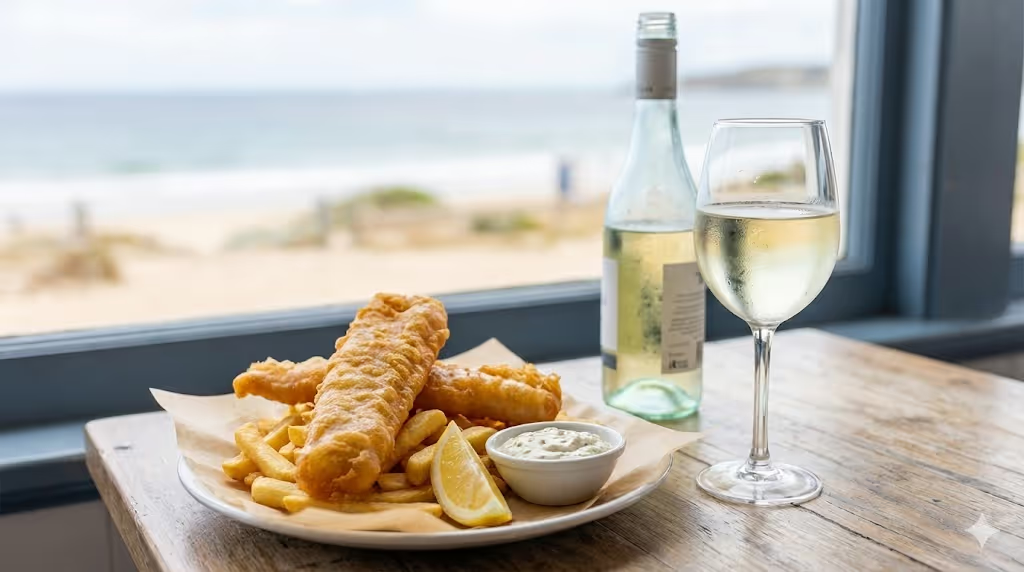

The best wine for fish and chips is a dry sparkling wine or a crisp white with enough texture to handle the batter, and the single best value pick is a Muscadet labelled "sur lie" at around $18. Cava and Crémant both work beautifully for roughly $15 to $25, and dry Manzanilla sherry is the sleeper choice that professional tasting panels keep putting at the top. What you want is high acidity plus a little bit of body, because the batter and the potatoes need something to hold onto.
The advice you'll usually see is to grab the sharpest, leanest white you can find and let the acidity do all the work. That's only half right, and it's the half that leads people to open a razor-thin bottle that disappears completely against a plate of fried food. The wine does need acidity to deal with the vinegar, but it also needs a bit of weight to deal with the chips.
Why is fish and chips harder to pair than plain fish?
Fish and chips is difficult because you're not really pairing with fish at all, you're pairing with three loud things sitting on top of it. The cod or haddock underneath is mild and sweet and would go with almost anything, so it barely factors into the decision.
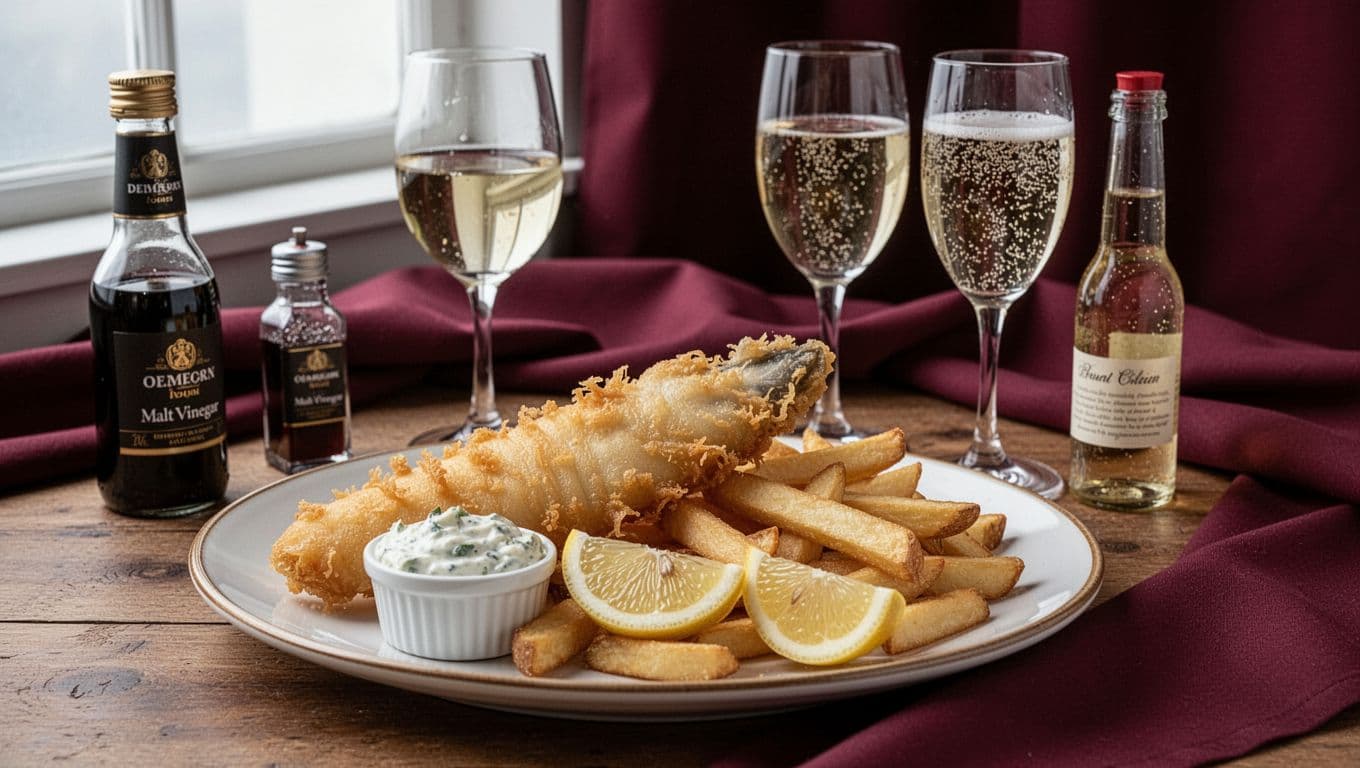
The first variable is fried batter, which coats your mouth in hot oil and flattens any wine that doesn't have the acidity to cut back through it. The second is tartar sauce, which brings mayonnaise fat plus the sharp tang of capers and pickle, so it pushes in two directions at once. The third is malt vinegar, and it's the one that ruins pairings, because a wine with gentle acidity tastes instantly sour and hollow next to it.
The part almost everyone misses is the chips themselves. Professional tasting panels judging this exact dish have found that the earthy, starchy weight of the potatoes dominates the plate more than the fish does, and that the wines scoring highest bring a touch of richness alongside the freshness rather than pure sharpness. That finding is why the standard advice to just buy the leanest white on the shelf produces so many disappointing dinners.
Should the wine be sharp, or does a little richness help?
You want both, and the wines that win with this dish deliver high acidity and a soft, slightly creamy texture at the same time. Acidity handles the vinegar and the fried oil, while texture gives the wine enough presence to stand next to the potatoes and the batter instead of vanishing underneath them.
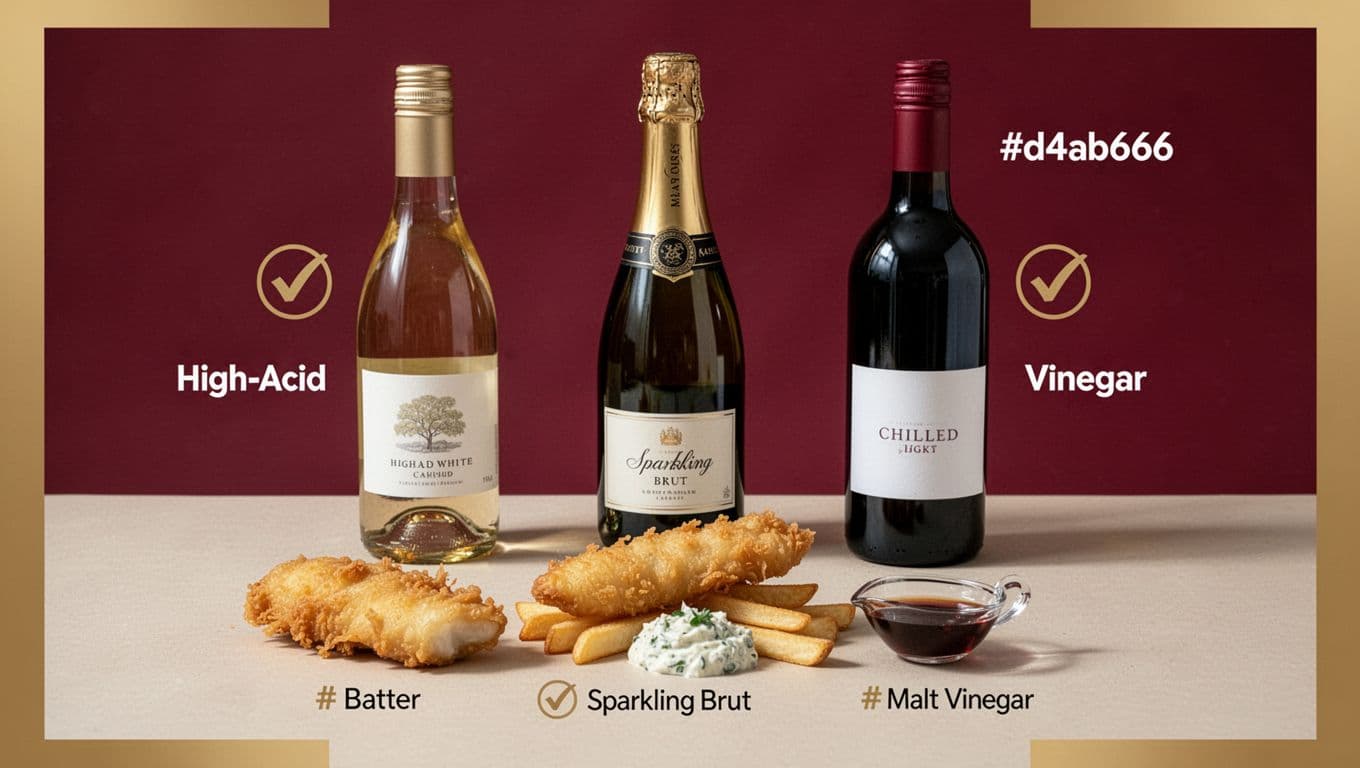
There's a specific way winemakers create that combination without using oak, and it has a name you can look for on the label. Leaving a finished wine to rest on its spent yeast for a few months, a process called ageing on the lees, gives it a rounder, faintly bready texture while leaving the acidity completely intact. On a French label this appears as "sur lie", and it's the most useful three-letter clue on this entire subject.
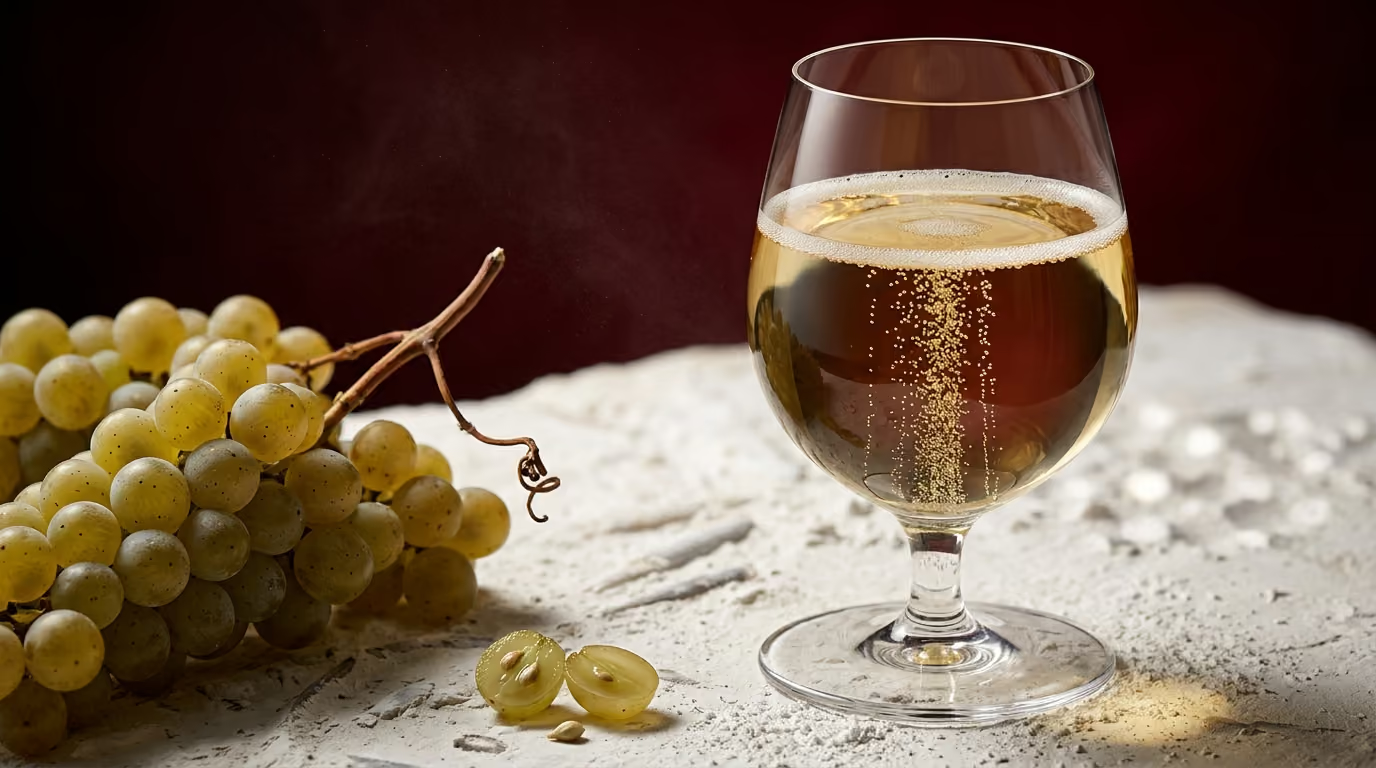
Sparkling wine gets to the same place by a different route. Traditional-method fizz like Cava, Crémant and Champagne spends time on its lees by design, which is where the bready, slightly nutty character in good sparkling wine comes from. That's why fizz and fried food is such a reliable combination, and why it isn't only about the bubbles scrubbing away grease. Our breakdown of Prosecco, Cava and Champagne covers which of them get that lees character and which don't.
Oak is the thing to avoid rather than richness in general. An oaked Chardonnay brings vanilla and butter that clash directly with malt vinegar, and it usually lacks the acidity to recover afterwards. Richness from lees ageing works, while richness from a barrel does not.
Which wines actually work, and what do they cost?
Muscadet from the Loire is the best value in this entire category, and the bottles marked "sur lie" are exactly the profile described above. Chéreau Carré Château de Chasseloir 2023 runs about $18 and Domaine Claude Branger Les Gras Moutons Sur Lie 2023 about $19, both checked on wine.com in August 2026. Spending up to roughly $32 for Domaine de la Pépière Clisson gets you noticeably more depth, though it isn't necessary for takeout on a Tuesday.
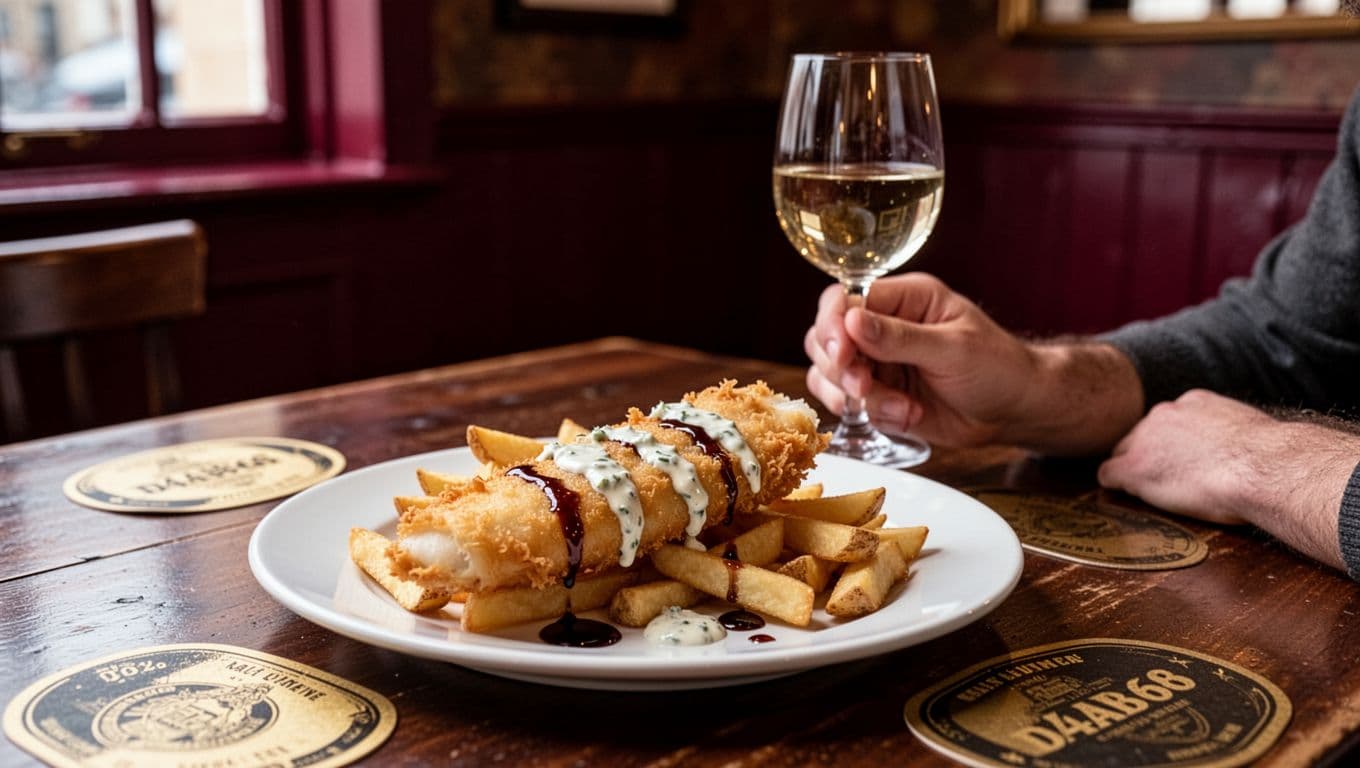
For sparkling, Cava is the cheapest way in and Blanchard Pérez Brut sits around $15, with Vins el Cep Kila Brut 2022 at about $16. Crémant costs a few dollars more and often tastes more refined, with M. Bonnamy Crémant de Loire around $20 and Pierre Sparr Crémant d'Alsace Réserve Brut around $25. Any of these will do the job better than a cheap Prosecco, which tends to be softer and a little sweeter than this plate wants.
Among still whites beyond Muscadet, Albariño is the standout because its natural salinity flatters fried seafood, and good bottles start around $14. Vermentino works for the same reasons with a slightly rounder texture, and our comparison of Albariño and Vermentino covers which of the two suits your palate. Picpoul de Pinet does something similar with more lemon and less salt.
Dry Riesling is genuinely excellent here despite its reputation, since the lime and green apple flavors stand up to vinegar better than almost anything else, though you have to check the label carefully because plenty of Riesling is off-dry, and our guide to spotting an off-dry white explains which words give it away. Chablis is the one Chardonnay worth considering, because it's made without oak and keeps the steely acidity the dish needs, though it costs more than the alternatives without doing the job any better. Vinho Verde from Portugal is the cheapest option that still works, usually under $12, with a faint spritz that behaves a little like sparkling wine.
Why is dry sherry the sleeper pick?
Dry Manzanilla sherry is the best match on this list and almost nobody orders it, largely because sherry still carries a reputation for being sweet and old-fashioned. Manzanilla is bone dry, low in alcohol for a fortified wine, and tastes of almonds, sea salt and fresh bread. Served properly chilled, it does everything fried fish needs at once.
The reason it works so well is that yeast character again, taken to its logical extreme. Manzanilla ages under a living layer of yeast called flor, which gives it a savoury, bready depth alongside a genuinely salty finish and firm acidity. Against batter, tartar sauce and vinegar it holds its shape completely, where a delicate white might get flattened.
Lustau Papirusa Manzanilla costs about $20 for a full bottle and La Cigarrera comes in a $11 half-bottle, which is a sensible way to try it without committing. Treat it like white wine rather than a digestif: chill it thoroughly, pour it in a normal wine glass, and drink it within a few days of opening because it fades faster than regular wine once air gets to it.
Fino sherry from Jerez does much the same job and tends to be a touch fuller, with Valdespino Inocente at around $27 if you want to compare the two styles. Anyone who already enjoys sherry with oysters will recognise the logic immediately, and our guide to choosing wine for oysters covers that pairing in more detail. The salt-and-yeast combination that suits raw shellfish turns out to suit fried fish just as well.
How much does the malt vinegar change the answer?
Malt vinegar is the variable that should drive your final choice, and the more of it you use, the more acidity your wine needs. Someone who drowns the plate is dealing with a completely different pairing problem from someone who has a squeeze of lemon and nothing else.
If you're heavy-handed with the vinegar, go for sparkling wine or Manzanilla, both of which have the structure to survive it. A moderate splash suits Muscadet sur lie, Albariño or Picpoul comfortably. If you skip the vinegar entirely and stick with lemon, the field opens up considerably and even a gentler wine like unoaked Chardonnay or a dry rosé becomes a reasonable option.
Tartar sauce pushes in the same direction, since the mayonnaise adds fat that needs cutting through. Mushy peas, curry sauce and gravy each change things again, and heavier brown sauces are the one case where a light chilled red like Gamay genuinely makes sense, served cold enough to taste refreshing rather than warm and jammy.
What should you order in a pub or pick up at the shop?
In a pub, ask for a dry sparkling wine by the glass first, since it's the option most likely to be both available and correct. If there's no sparkling, ask for the driest, crispest white on the list and specifically say you don't want anything oaked or buttery, which is enough information for most bartenders to point you at the right bottle. Our piece on reading a wine list without stress covers how these lists are usually organised if you'd rather work it out yourself.
In a shop, look for "sur lie" on Muscadet, "Brut" on anything sparkling, and the word "dry" on Riesling. Avoid back labels promising a rich, creamy or buttery experience, because that language nearly always signals oak. Buying the most recent vintage matters here too, as all of these wines are made to be drunk young and lose their edge after about three years.
Takeout night is where this gets awkward, because you're usually deciding on the way home with no time to research. You can photograph the meal in Sommy and use Pairing to get a recommendation built around what you're actually eating and what you've liked before, which is faster than trying to remember whether Picpoul was the one you enjoyed.
Which wines should you skip?
Skip oaked Chardonnay, big reds, and anything with noticeable sweetness, since each fails for a different reason. Oaked Chardonnay clashes with the vinegar and turns bitter, while Cabernet Sauvignon, Malbec and Syrah all have tannin that reacts badly with fried fish and leaves a metallic taste. Sweet wines make the fried batter taste cloying rather than crisp.
Very expensive wine is a waste here rather than a mistake. The dish is loud enough that subtle complexity gets lost entirely, so a $60 white Burgundy delivers nothing that a $20 Muscadet doesn't. Fried food is one of the few areas where spending more genuinely stops helping, which is a pleasant change.
Heavily oaked or aged sparkling wine falls into the same trap, since vintage Champagne with years of bottle age has developed flavors that fried fish simply steamrolls. A young, straightforward Brut does the job better and costs a fraction as much. If fried food pairings interest you generally, the same logic applies to our guide on wine with fried chicken.
Common questions about wine with fish and chips
What is the single best wine for fish and chips? A Muscadet Sèvre et Maine labelled "sur lie" is the best combination of quality and price at around $18, because it has the acidity for the vinegar and the lees texture for the batter and potatoes.
Does red wine ever work with fish and chips? A light red served cold can work, particularly Gamay or a simple Pinot Noir, and it makes most sense if you're eating with gravy or curry sauce. Anything tannic will taste metallic against fried fish.
Is Champagne worth it with fish and chips? Non-vintage Brut Champagne is excellent with this dish, though Cava and Crémant deliver most of the same effect for half the price. Save aged vintage Champagne for something quieter.
What wine goes with fish and chips and mushy peas? Mushy peas add a sweet, starchy weight that suits Muscadet sur lie or a dry Riesling particularly well. Both have enough acidity to stop the plate feeling heavy.
Can I drink Sauvignon Blanc with fish and chips? Sauvignon Blanc works well and has won blind tastings against this dish, especially riper New Zealand styles with a rounder texture. Very lean, grassy versions can taste thin next to the batter.
How cold should the wine be? Serve whites and sparkling between 45 and 50 degrees Fahrenheit, and chill Manzanilla sherry the same way. Wine that's too cold hides the texture that makes these pairings work in the first place.
What to pour tonight
Buy a Muscadet sur lie if you want one bottle that handles the whole plate without any thought, or a $15 Cava if you'd rather have bubbles and don't want to spend more. Both are easy to find, both cost less than the meal itself, and both deal with vinegar and fried batter far better than the expensive white sitting next to them on the shelf.
If you want to try the thing most people never do, spend $11 on a half-bottle of Manzanilla and drink it properly cold alongside the fish. It's the pairing that professional tasters keep rewarding and ordinary drinkers keep overlooking, and finding out whether you're in the group that loves it takes one dinner.
Sommy remembers which of these you got on with, so the next fried seafood night starts from what you already liked rather than from a list of styles. Scan the bottle or the wine list and the answer accounts for your taste instead of the dish alone.