

If you want a wine similar to Pinot Grigio, start with Soave from the Veneto or Muscadet from the Loire, because both give you the same light, dry, easygoing glass with a little more to say. If you've drunk Pinot Grigio for years and want more flavor without leaving the style, go to Albariño from Spain or Grüner Veltliner from Austria. And if you simply want a better Pinot Grigio, buy an Oregon Pinot Gris or an Alto Adige bottle, which is the same grape grown and picked with more ambition.
Which of those is right for you depends on why Pinot Grigio became your default in the first place, and that's worth thirty seconds of thought before you spend money on a replacement.
What are the closest wines to Pinot Grigio?
The closest wines to Pinot Grigio are Soave, Gavi, Muscadet, Vinho Verde, Albariño, Grüner Veltliner, Pinot Blanc and Pinot Gris itself, and they're close in different ways. Some match the lightness and the lack of fuss, some keep the shape but turn up the flavor, and one is literally the same grape wearing a different name.

Here's how they sort out, so you can find your row before reading the rest.
| Wine | Where it's from | What it shares with Pinot Grigio | What changes |
|---|---|---|---|
| Soave | Veneto, Italy | Light body, dry, gentle pear and citrus | A soft almond finish and a bit more texture |
| Gavi | Piedmont, Italy | Crisp, pale, food-friendly | Sharper acidity and a stony, mineral edge |
| Muscadet | Loire Valley, France | Very light, bone-dry, low in aroma | Saltier and leaner, built for oysters |
| Vinho Verde | Northern Portugal | Light, fresh, easy to drink cold | Often a faint prickle of bubbles, more lime |
| Albariño | Rías Baixas, Spain | Dry, bright, seafood-friendly | Peach, apricot and a salty finish, more aromatic |
| Grüner Veltliner | Austria | Crisp, dry, unoaked | A white pepper and green bean note |
| Pinot Blanc | Alsace, Alto Adige, Oregon | Gentle, round, quiet aromas | Slightly creamier, apple rather than lemon |
| Pinot Gris | Oregon, Alsace | The same grape | Riper fruit, fuller body, sometimes a touch sweet |
None of these is a copy, so what you're really choosing is which part of Pinot Grigio you want to keep.
Why do people reach for Pinot Grigio in the first place?
Most people drink Pinot Grigio because it's safe: it's dry, light, cold, rarely offensive, and it's on nearly every wine list and shelf in the country. That's not a criticism, because a wine that pleases a whole table is genuinely useful, but it does mean the reasons behind the habit vary more than the bottle does.
The scale explains part of it. The Pinot Grigio DOC delle Venezie, the appellation covering the Veneto, Friuli Venezia Giulia and the province of Trento, says it accounts for around 85 percent of Italy's Pinot Grigio production, and that Italy is already the world leader by volume (Consorzio DOC delle Venezie). A wine made in that quantity is built to be dependable rather than distinctive, and for a lot of drinkers that's exactly the appeal.
So before you buy anything, it helps to know which of three people you are. The first likes Pinot Grigio for its lightness and wants the same easy feel with a little more character. The second is honestly a bit bored and wants more flavor, more aroma, more of something, without jumping to a big oaky Chardonnay. The third likes one particular bottle, often Santa Margherita, and wants to know what else tastes like that. The sections below are organized around those three, and the answers barely overlap.
Which wines are as light and crisp as Pinot Grigio?
If lightness is the point, Soave is the first bottle we'd hand you, followed by Muscadet, Gavi and Vinho Verde. All four are dry, pale and lower in aroma than most whites, so the move feels like a sideways step rather than a leap.
Soave comes from the hills east of Verona, a short drive from a lot of the Pinot Grigio you've been drinking, and its production rules require at least 70 percent of a grape called Garganega, with most bottles made from Garganega alone (Consorzio Tutela Vini Soave). It tastes of pear, lemon and a soft almond note on the finish, and it has a little more weight in the mouth than a typical supermarket Pinot Grigio without being heavy. If you see "Soave Classico" on a label, it's worth the few extra dollars, because in our experience those bottles carry noticeably more flavor than the cheapest Soave.
Gavi, from Piedmont in the northwest of Italy, is made from a single grape, Cortese, which its official production rules require (Consorzio Tutela del Gavi). It's the sharper of the Italian options, with lemon, green apple and a stony finish, so it suits you if you like your Pinot Grigio ice cold and as crisp as possible. We've put both of these, along with Verdicchio and a few southern whites, in more depth in our look at the best white wines from Italy beyond Pinot Grigio.
Muscadet is the French answer, and it's probably the closest thing to Pinot Grigio in sheer quietness. It's made from Melon de Bourgogne near the mouth of the Loire around Nantes (Vins de Loire), and the versions we like best say "sur lie" on the label, which means the wine rested on its spent yeast before bottling (Wine Folly). That gives a faint creamy, bready edge that turns a very lean wine into a more satisfying one.
Vinho Verde from northern Portugal is the most refreshing of the group, made in the far north of the country mostly from Alvarinho, Arinto, Loureiro and a handful of other local grapes (Wines of Portugal). The entry-level blends are light, zippy and often lightly spritzy (Wine Folly), so it drinks like the Pinot Grigio you'd pour on a hot afternoon. Our guide to what Vinho Verde is and how to pick a good one covers the difference between the cheap spritzy style and the more serious single-grape bottles.
Which whites give you Pinot Grigio with more flavor?
If Pinot Grigio has started to taste like cold water to you, Albariño and Grüner Veltliner are the two best upgrades, with Pinot Blanc as the gentler middle step. Each keeps the dry, unoaked, food-friendly shape you're used to and adds a flavor you'll actually notice.
Albariño, from the Rías Baixas region in northwestern Galicia on Spain's Atlantic coast (Rías Baixas Wines), is the one we'd pick for most Pinot Grigio drinkers who want more. It smells of peach, apricot and citrus blossom, and it finishes with a salty, mouthwatering edge that makes it a natural with seafood. If you want to compare it with its Italian cousin, we line the two up in Albariño vs Vermentino.
Grüner Veltliner is Austria's most planted grape, covering 32.3 percent of the country's vineyards (Austrian Wine), and it's crisp and dry like Pinot Grigio but with a savory streak of white pepper, green bean and lentil that's unlike anything else in the white wine aisle. Some people love that note on the first sip and some don't, which is why our breakdown of what Grüner Veltliner tastes like spends time on who tends to enjoy it.
Pinot Blanc is the quiet option, and it's a relative rather than a stranger, because Pinot Blanc and Pinot Gris both arose as color mutations of Pinot Noir (UC Davis Foundation Plant Services). It has gentle apple and pear fruit with a slightly rounder, creamier texture than Pinot Grigio, and it's a good choice if you like how easy Pinot Grigio is but find the cheaper bottles thin. Alsace and Alto Adige make the most reliable versions, and Oregon makes a few good ones too.
Friulano is worth a mention for anyone who can find it, because it comes from the same northeastern corner of Italy as a lot of good Pinot Grigio, made from the grape once called Tocai Friulano (Consorzio Collio). It has a little more body, a pear and almond flavor, and a faintly bitter finish that makes it brilliant with prosciutto and other cured meats.
Is Pinot Gris the same as Pinot Grigio?
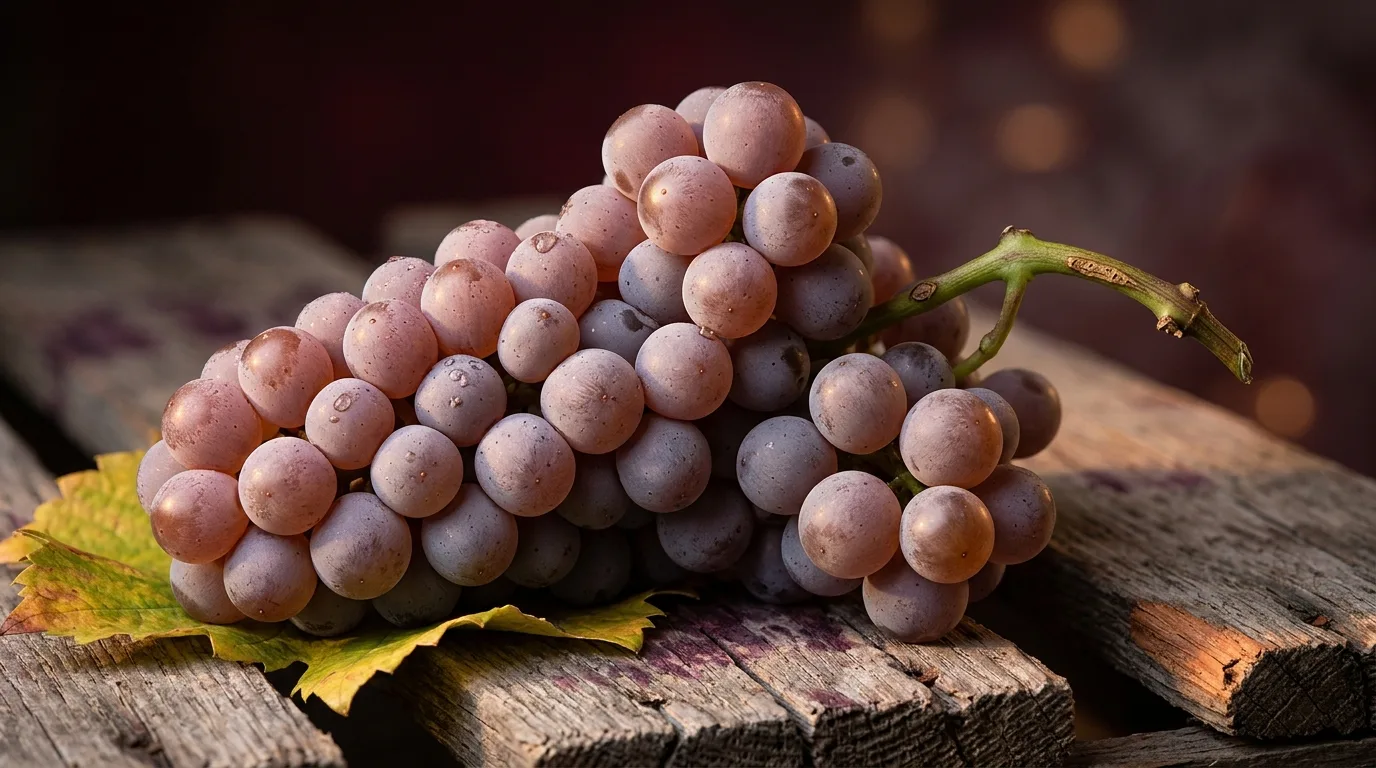
Yes, Pinot Gris and Pinot Grigio are the same grape, and the two names just mean "gray Pinot" in French and Italian. UC Davis's grape collection lists Pinot gris as "also known as Pinot grigio" and treats it as a color variant of Pinot Noir with the same genetic fingerprint (UC Davis Foundation Plant Services). The grape has a grayish pink skin, and the difference between the two wines comes from where it's grown and how ripe it's picked rather than from the vine itself.
The classic Italian style, especially from the cooler Alpine vineyards, keeps high acidity and comes out zippy and lean, while the riper style labelled Pinot Gris, from places like Oregon, is more fruit-driven with a slightly richer, oilier texture and less acidity (Wine Folly). So if you like Pinot Grigio but wish it tasted of more, an Oregon Pinot Gris is the most direct route, because you're drinking the same grape in a fuller style, and it's easy to find: Pinot Gris covers 6,735 acres in the state, second only to Pinot Noir and more than double Chardonnay (2025 Oregon Vineyard and Winery Census).
Alsace is the one to approach with a little care. The official Alsace wine body describes its Pinot Gris as rich, velvety and full-bodied (Vins d'Alsace), and producers there tend to make it slightly sweet (Wine Folly). Since the 2021 vintage, Alsace labels have had to state the sweetness as sec, demi-sec, moelleux or doux, or show it on a scale (Vitisphere), so if you dislike any sweetness, look for "sec" or choose Oregon. Our guide to telling whether an Alsatian Pinot Gris is dry shows where each label term sits. We go through the two styles side by side in Pinot Gris vs Pinot Grigio, including how to tell which one a restaurant is pouring.
There's also a copper-colored version you'll occasionally see called ramato, which is Pinot Grigio left in contact with those pink-gray skins, a historical style from Friuli Venezia Giulia whose name comes from the Italian word for copper (Decanter). It tastes a little fuller and more savory, and it looks like a pale rosé in the glass, which makes it a fun bottle to open for Pinot Grigio fans who think they've seen everything the grape can do.
What wine is similar to Santa Margherita Pinot Grigio?
The closest wines to Santa Margherita Pinot Grigio are other Pinot Grigios from the Adige valley and the Alto Adige just north of it, because that's where Santa Margherita's own bottle comes from. The producer labels it Pinot Grigio Valdadige DOC and describes it as bone dry with a flavor of Golden Delicious apples (Santa Margherita).
It's also, in a sense, the bottle that started the whole category. Santa Margherita says it was the first winery to make the pink-skinned Pinot Grigio grape into a white wine by keeping the juice off the skins, and that the style has sold continuously since 1961 (Santa Margherita). So what fans usually like is that crisp, clean, apple-and-citrus glass with a dry finish, and the cooperative wineries of the Alto Adige, on Italy's mountainous northern border, make Pinot Grigio in that same cool, bright register.
If you'd rather step away from the grape entirely, Gavi and Soave Classico are the Italian whites that land closest to the Santa Margherita style, and Albariño is the closest outside Italy. All three keep the clean, dry, citrusy finish that brand fans tend to come back for.
Is Sauvignon Blanc or Chardonnay similar to Pinot Grigio?
Neither is especially close, but unoaked Chardonnay is closer than most people expect, and Sauvignon Blanc is further away than it looks on a wine list. Both are dry white wines, which is where the resemblance mostly ends.
Sauvignon Blanc is much louder than Pinot Grigio: it's aromatic, often grassy or tropical, and higher in acidity, so a Pinot Grigio drinker can find it sharp, especially a New Zealand bottle. If you're choosing between the two, our piece on whether Pinot Grigio or Sauvignon Blanc is sweeter explains why one tastes softer even when both are bone dry, and our wines similar to Sauvignon Blanc page has the reverse map if a Sauvignon Blanc drinker in your house wants something calmer.
Chardonnay depends entirely on the oak. A buttery, oaked California Chardonnay is the opposite of Pinot Grigio in nearly every way, but an unoaked Chardonnay, including most Chablis, is lean, citrusy and quiet, and plenty of Pinot Grigio drinkers enjoy it without realizing what grape they're drinking.
Which Pinot Grigio alternative should you pour with dinner?
Pour Muscadet or Albariño with seafood, Soave or Gavi with pasta and vegetables, Grüner Veltliner with anything green or spicy, and Pinot Gris from Oregon with roast chicken or pork. Pinot Grigio is popular partly because it goes with almost everything, and each of these does that job slightly better for a specific kind of plate.
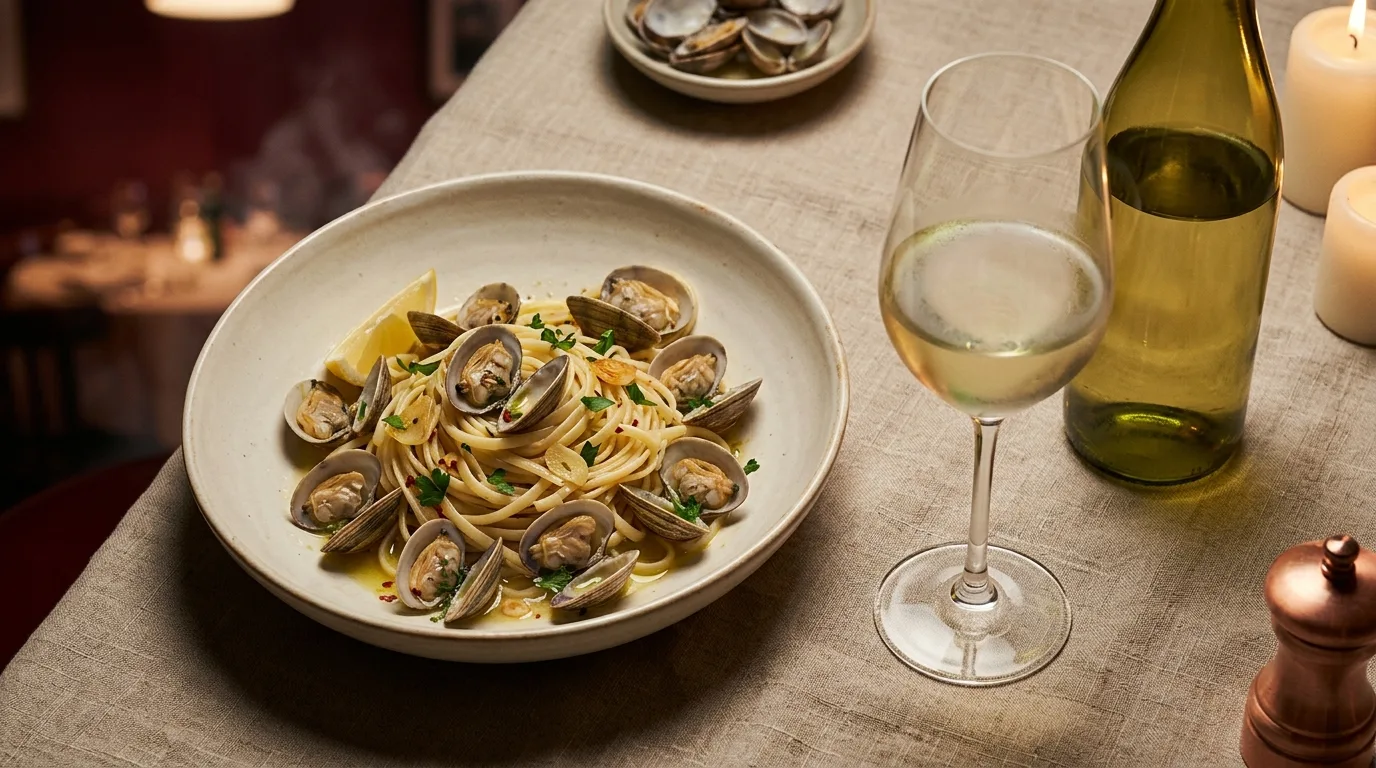
Shellfish is where the swaps shine brightest: Muscadet with oysters is a classic, Albariño with grilled shrimp or clams is close behind, and Vermentino or Gavi will carry a plate of linguine with clams better than most Pinot Grigio can. For garlic-and-butter shrimp in particular, our guide to the best white wine for shrimp scampi walks through which of these holds up to the sauce.
Spicy food is the one place to think twice, because chili heat can make a bone-dry, crisp white feel hot and sharp; Grüner Veltliner copes best of this group, but real heat calls for a slightly off-dry white.
Richer dishes, such as roast chicken, pork chops or creamy pasta, are where Pinot Gris earns its place. Its fuller body stands up to the weight of the food in a way a light Pinot Grigio can't, while staying in the same family of flavors.
How do you find these on a shelf or a wine list?
Look for the place name rather than the grape on European bottles, because Soave, Gavi, Muscadet, Vinho Verde and Rías Baixas are all regions, and the grape is often printed small or not at all. Grüner Veltliner, Albariño and Pinot Blanc are usually named outright, which makes them easier to spot.
On a restaurant list, these wines tend to sit in the same section as Pinot Grigio, so swapping is low risk. If the list is organized by country, check Italy for Soave and Gavi, Spain for Albariño, France for Muscadet, Portugal for Vinho Verde and Austria for Grüner Veltliner.
The harder case is standing in an aisle full of unfamiliar labels with no one to ask, trying to work out which of them will taste like the bottle you already know. That's the exact job we built Find Similar for in Sommy: you name the Pinot Grigio you like and it surfaces bottles close to it by grape, region and character, rather than handing you a generic list.
Frequently asked questions
What wine is most similar to Pinot Grigio?
Soave is the wine most similar to Pinot Grigio in feel, since both are light, dry, gently fruity Italian whites from the northeast of the country. Muscadet is the closest French match. If you want the same grape in a fuller style, choose Pinot Gris from Oregon.
What white wine is like Pinot Grigio but with more flavor?
Albariño is the best pick for more flavor, with peach, citrus and a salty finish while staying dry and unoaked. Grüner Veltliner is the next step, adding a peppery, savory note. Pinot Gris from Oregon gives you riper fruit from the same grape.
Are there wines similar to Pinot Grigio that aren't Italian?
Yes, Muscadet from France, Vinho Verde from Portugal, Albariño from Spain and Grüner Veltliner from Austria are all strong non-Italian wines similar to Pinot Grigio. Oregon Pinot Gris is the American option and uses the same grape.
Is Pinot Grigio sweet or dry?
Pinot Grigio is almost always dry, and the Italian style in particular is lean, crisp and high in acidity rather than sweet. Pinot Gris from Alsace is the version that can be off-dry or sweet.
What red wine is closest to Pinot Grigio?
A light, low-tannin red served slightly chilled is the closest, and Gamay from Beaujolais is our pick, with Pinot Noir and Italian Frappato close behind. All three are light in body and fresh in acidity, which is what Pinot Grigio drinkers usually enjoy in a white.
Which one should you try first?
We'd start you with a Soave Classico. It comes from the same part of Italy as most of the Pinot Grigio you've been drinking, and it gives you that familiar light, dry glass with a little more flavor and texture, which is the change most Pinot Grigio drinkers are quietly after. If it lands well, try an Albariño next, because that's the biggest step you can take while still recognizing what you're drinking.
And if you find yourself missing the Pinot Grigio the whole time, that's useful information rather than a failed experiment. It probably means you don't want an alternative at all, you want a better Pinot Grigio, in which case spend a few dollars more on one from Alto Adige or an Oregon Pinot Gris and see what the grape does when someone takes it seriously.