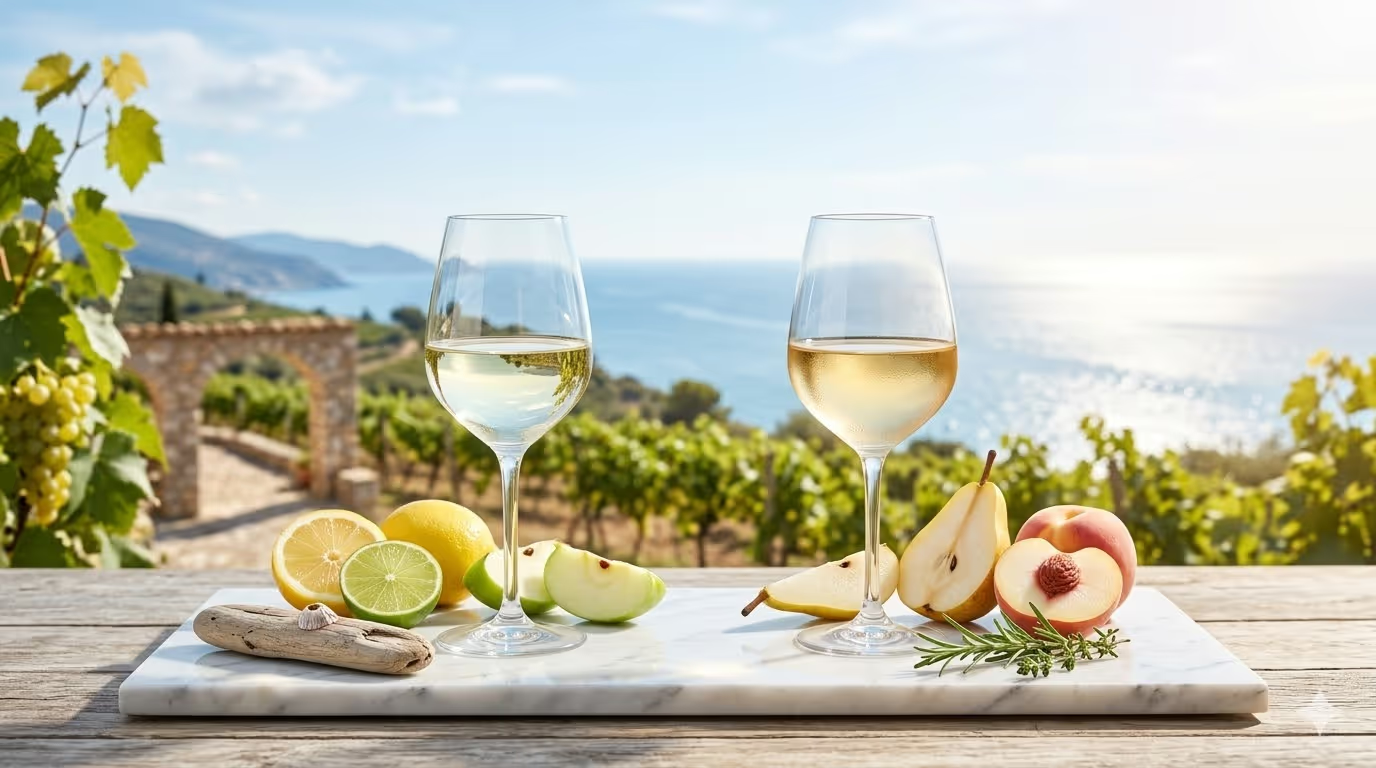

The best white wines from Italy fall into three styles, and picking one is easier if you choose the style before you choose the name. For crisp and refreshing, buy Soave from the Veneto or Grillo from Sicily, both around $16 to $23. For more aromatic and fruity, buy Fiano or Greco di Tufo from the south, roughly $28 to $30. For something richer that behaves like a Chardonnay, buy Verdicchio from the Marche at about $20 to $32.
Most people arrive at this question because they've been drinking Pinot Grigio and suspect there's more going on. There is, and it's a bigger gap than you'd expect: Italy grows several hundred white grape varieties, and only a handful ever reach American shelves. The good news is that the ones that do make it here are cheap, widely stocked, and considerably more interesting than the bottle you've been defaulting to.
Why does most exported Pinot Grigio disappoint?
Most Pinot Grigio sold abroad is made in enormous volumes to a deliberately neutral recipe, which is why it tastes inoffensive and forgettable rather than bad. It's picked early, fermented cool, and built to be inexpensive and consistent, and it succeeds at exactly that. The problem is that people mistake the style for the limit of Italian white wine.
Good Pinot Grigio genuinely exists, and the trick is to look north to Friuli, particularly the Collio zone near the Slovenian border. Bottles from there have real texture and a pear-and-almond depth that the mass-market versions don't attempt. They cost more, usually $20 and up rather than $9, which tells you most of what you need to know about why the cheap ones taste the way they do.
One convention explains a lot of the confusion on the shelf. Italian wines are frequently named after the place they come from rather than the grape in the bottle, so Soave is a town in the Veneto and the grape inside is Garganega, while Greco di Tufo names both a grape and a village. Pinot Grigio, being named after its grape, feels familiar for that reason alone rather than because it's better.
What are the three styles of Italian white wine?
Italian whites sort neatly into crisp, aromatic and rich, and knowing which of the three you want narrows hundreds of options down to a handful. This works better than trying to memorise regions, because the style is what you actually experience in the glass, and it maps onto wines you already know.
| If you usually drink | Try this Italian style | Look for these names | Typical US price |
|---|---|---|---|
| Sauvignon Blanc or Pinot Grigio | Crisp and zesty | Soave, Grillo, Vermentino | $16 to $23 |
| Dry Riesling or Viognier | Aromatic and fruity | Fiano, Greco di Tufo, Friulano | $25 to $32 |
| Chardonnay | Rich and textured | Verdicchio, Soave Classico Superiore | $20 to $34 |
None of these styles is better than the others, and the choice depends on the meal and your mood as much as anything. A crisp white suits a warm afternoon and simple food, while a rich one suits roast chicken in January. If you're still working out which end of that range you naturally prefer, our guide to building your wine profile without the jargon is a useful starting point.
Which crisp Italian whites should you buy?
Soave is the crisp Italian white to know, and it's the most reliable value on the shelf. Made from Garganega around the town of Soave in the Veneto, it tastes of green melon, pear and lemon with a chalky, mineral finish that makes it noticeably more interesting than Pinot Grigio at the same price. Suavia Soave Classico 2024 costs about $20 and Inama Soave Classico 2024 about $23, both checked on wine.com in August 2026.
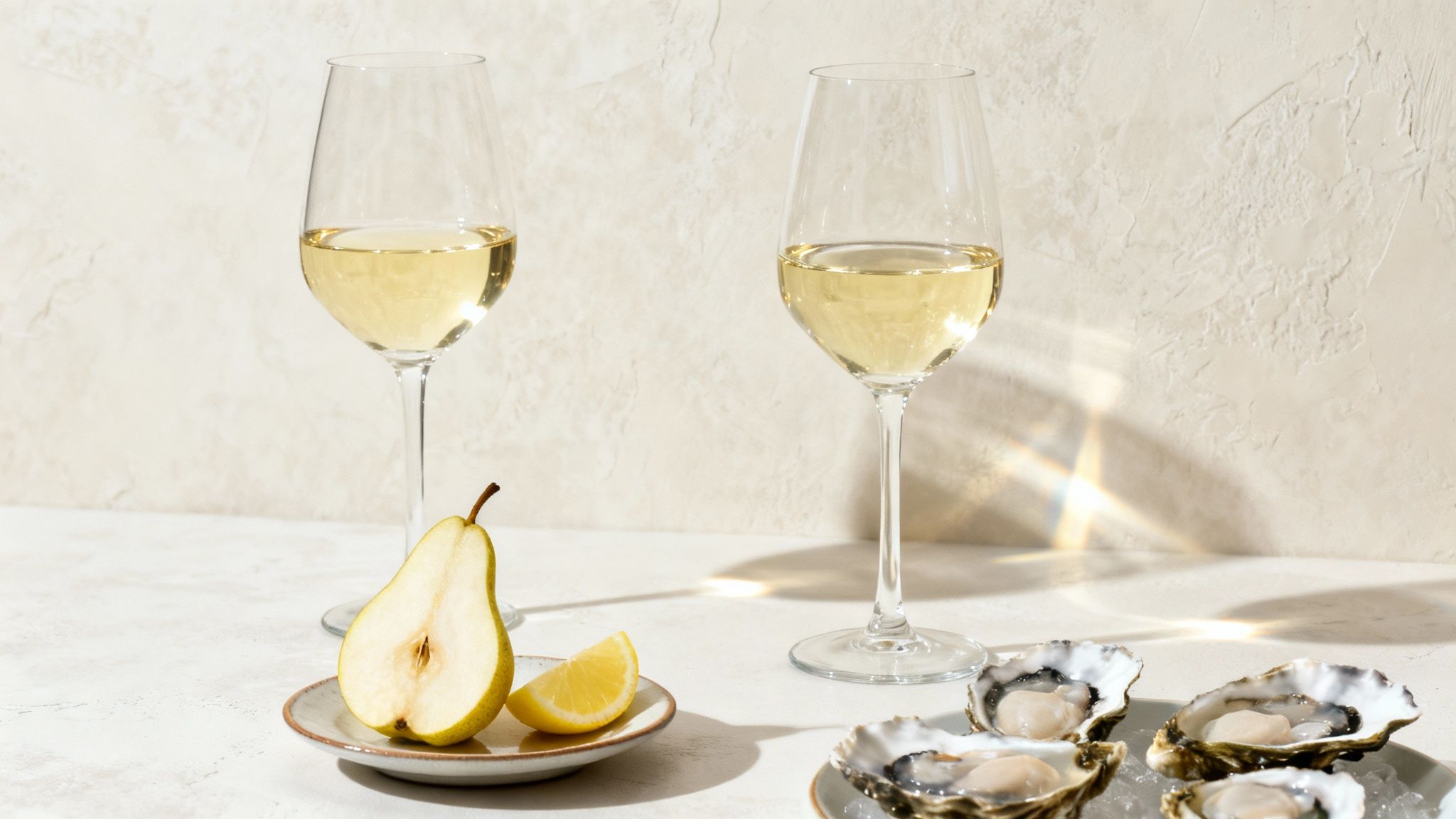
Grillo from Sicily is the other one worth seeking out, and it's the closest Italian equivalent to Sauvignon Blanc. It brings grapefruit, a little passionfruit and a herbal snap, with more energy than most northern Italian whites and usually a lower price, since Sicily remains underrated by American buyers. Anyone who finds Soave too gentle will probably prefer it.
Vermentino belongs in this group too, grown mostly on Sardinia and along the Tuscan and Ligurian coasts, and it sits somewhere between crisp and aromatic with a faintly bitter almond finish. Bottles start around $16 for Sella and Mosca La Cala from Sardinia. Our comparison of Albariño and Vermentino goes into how its regional versions differ, since a Ligurian bottle and a Tuscan one are not the same wine.
Which aromatic Italian whites have the most personality?
Southern Italy makes the aromatic whites, and Fiano from Campania is the best of them. It has a waxy, honeyed texture with notes of orange peel, melon and hazelnut, and it's one of very few Italian whites that genuinely improves for a few years in the bottle. Feudi di San Gregorio Fiano di Avellino 2022 runs about $29, and Clelia Romano Colli di Lapio 2024 about $30.
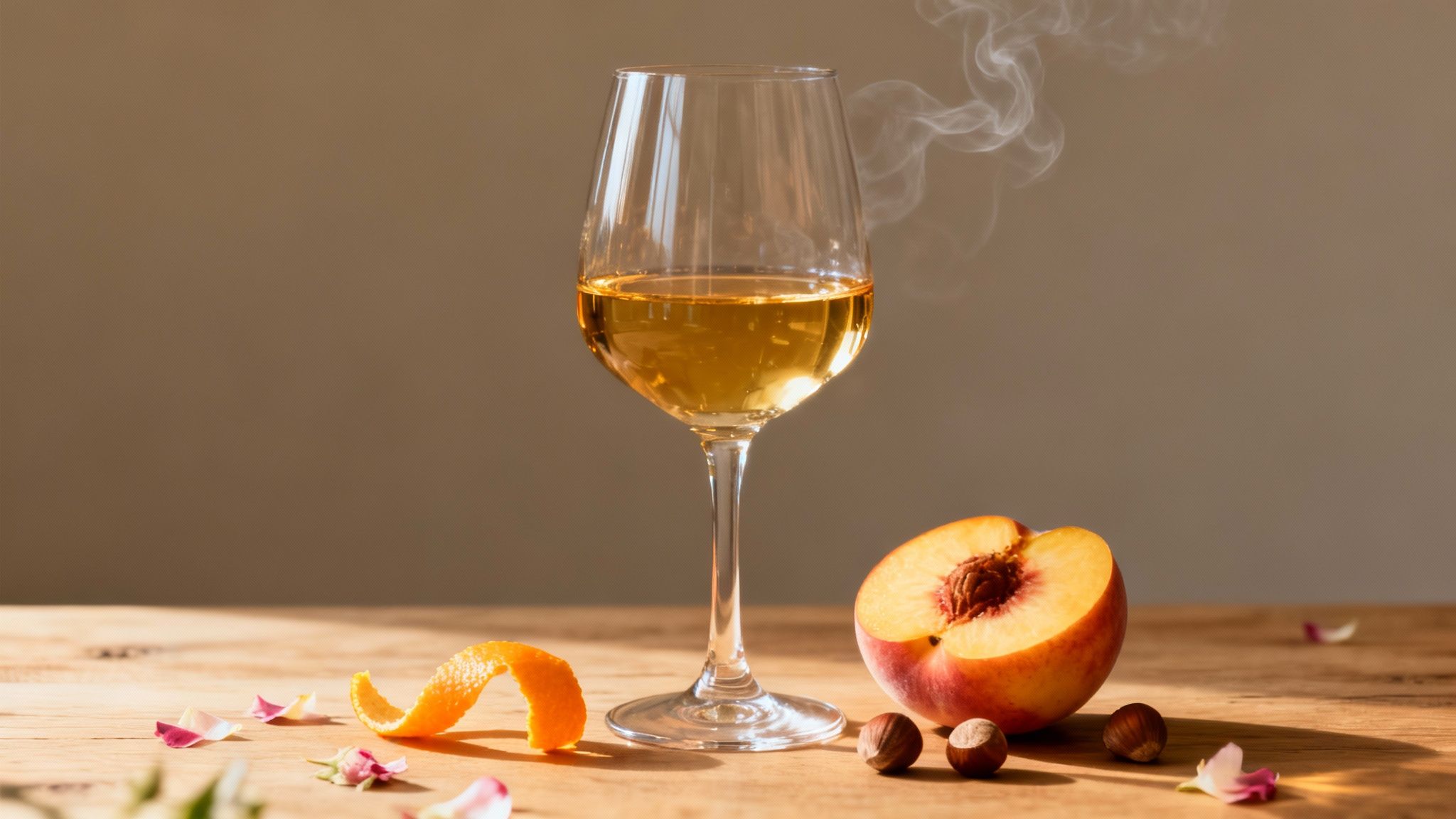
Greco di Tufo comes from the same corner of Campania and is the more mineral, structured sibling. It tastes of peach and lemon over something distinctly stony, and it has enough grip to handle richer food than most whites manage. Both of these grow on volcanic soil around Avellino, which is the common thread in their smoky, savoury edge.
Friulano from the northeast is the third name worth knowing, and it's the one most likely to convert a committed Pinot Grigio drinker. It's fuller and rounder with a signature bitter-almond note, and because Friuli is a cool region it keeps plenty of acidity alongside that weight. These wines suit meals where you want the wine to hold its own, which our guide to wine with Italian food covers dish by dish.
Which rich Italian whites work like a Chardonnay?
Verdicchio from the Marche is the Italian white for Chardonnay drinkers, and it's badly underappreciated. It has a full, slightly oily texture with baked apple, yellow pear and an almond finish, and the better examples age for a decade in a way almost no other Italian white does. Umani Ronchi CaSal di Serra 2024 costs about $20, Bisci Verdicchio di Matelica 2024 around $22, and Bucci Castelli di Jesi Classico 2023 about $32.
The two Verdicchio zones taste different enough to be worth distinguishing. Castelli di Jesi is the larger, warmer area near the coast and gives rounder, riper wines, while Matelica sits inland at higher altitude and produces something tighter and more mineral. Neither is oaked in the way a Californian Chardonnay would be, so the richness comes from the grape and the texture rather than from a barrel.
Soave Classico Superiore is the other route to a fuller Italian white, coming from the older hillside vineyards at the heart of the Soave zone with lower yields and more concentration. Suavia Monte Carbonare 2023 at about $32 shows what the region does at its most serious, and it bears very little resemblance to the cheap Soave sold in litre bottles.
What food suits each style?
Italian whites are built around food more deliberately than most, which is why several of them taste sharper on their own than they do at the table. The acidity that seems aggressive with an empty glass is exactly what makes the second forkful taste as good as the first, so judging one of these wines without food is slightly unfair to it.
The crisp group belongs with anything light and salty. Soave and Grillo both suit grilled fish, fried calamari, salads with lemon, prosciutto and simple pasta with olive oil, and they're the right call for an antipasto spread where nothing dominates. Vermentino handles the same territory and copes better with herbs and pesto, which is a Ligurian tradition rather than a coincidence.
The aromatic group can take on richer food. Fiano works with roast chicken, pork, mushroom risotto and hard cheeses like aged pecorino, and its honeyed weight means it doesn't disappear next to a sauce. Greco di Tufo is the one to pour with anything involving tomato and seafood together, since it has the acidity for the tomato and the body for the fish.
The rich group replaces Chardonnay at the table. Verdicchio suits creamy pasta, roast poultry, and vegetable dishes with butter or cheese, and a Verdicchio Riserva stands up to food most whites can't manage at all. Serve all three groups at about 45 to 50 degrees Fahrenheit, and let the richer bottles warm slightly, because serving them fridge-cold flattens the texture you paid for.
How do you read an Italian white wine label?
Four words on an Italian label carry almost all the useful information: Classico, Superiore, DOC and DOCG. Classico means the wine comes from the original, historic heart of the region rather than the expanded zone around it, and it's the single most reliable quality signal for a few extra dollars. Superiore usually means lower yields and a slightly higher minimum alcohol, which in practice means more concentration.
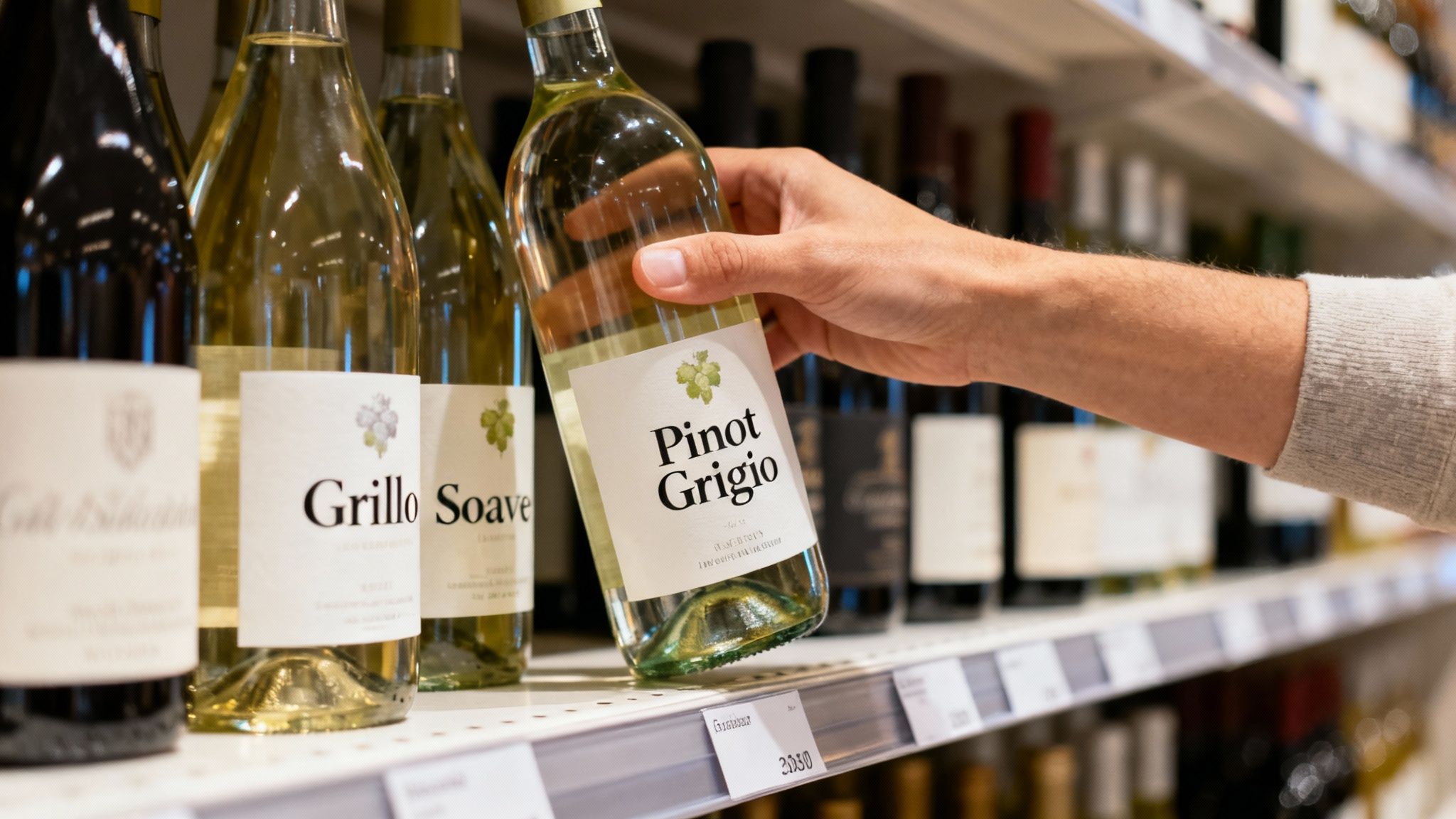
DOC and DOCG are Italy's quality classifications, with DOCG sitting at the top and carrying stricter rules on where the grapes grow and how the wine is made. Greco di Tufo and Fiano di Avellino both hold DOCG status, as does Verdicchio in its Riserva form. Our explainer on what DOCG means on a label and our guide to reading Italian wine labels cover how the whole system fits together.
Vintage matters less for Italian whites than for most wines, since nearly all of them are made to be drunk within two or three years. Buy the most recent year you can see on the shelf and you'll be right almost every time, with Fiano and top Verdicchio being the two exceptions that reward a little age.
How do you choose one in a shop or a restaurant?
Name the style rather than the wine, because it gets you a better answer from anyone working there. Asking for a crisp, dry Italian white, or a fuller one with some texture, tells a shop assistant or a server exactly what you want without requiring you to recognise a single label. It also protects you from being steered toward whatever they're trying to move that week.
In a shop, the Veneto section is the biggest and safest place to start, since that's where Soave and most Pinot Grigio live. The Sicilian and southern Italian shelves are usually where the value sits, because those regions still carry less prestige than the north despite making excellent wine. Anything from Campania, Sicily or the Marche tends to be underpriced relative to how good it is.
Standing in front of forty unfamiliar Italian labels is exactly the moment to get a second opinion rather than guess. You can point Sommy's Label Scan at a shelf and have it read the bottles in front of you, then tell you which ones fit the style you like, which is quicker than working through the back labels one at a time. Our walkthrough of picking a bottle in a crowded supermarket aisle shows how that works in practice.
Common questions about Italian white wine
What is the most popular Italian white wine? Pinot Grigio is by far the most widely sold, though Soave is the more interesting wine at the same price and comes from the same part of northern Italy. Both are dry, light and easy to find.
What should I drink instead of Pinot Grigio? Soave is the closest substitute and costs about the same, while Grillo from Sicily suits anyone who wants more citrus and herbal punch. If you want a genuine step up rather than a sideways move, try Fiano.
Are Italian white wines dry or sweet? Almost all of them are fully dry, including every wine named in this article. The well-known sweet exceptions are Moscato d'Asti and some passito dessert wines, which are labelled clearly.
Do I need to spend a lot on Italian white wine? No, and the $18 to $25 range covers nearly everything worth drinking. Italy's white wines are unusually good value because the famous regions are known for reds, which keeps demand for the whites low.
Which Italian white wine goes with seafood? Vermentino and Soave are the classic matches for most fish and shellfish, with Greco di Tufo suiting richer preparations. Coastal regions make coastal wines, so anything from Sardinia, Liguria or Sicily is a safe bet.
How long do Italian white wines keep? Drink most of them within two or three years of the vintage, since freshness is the point. Fiano, top Verdicchio and serious Soave Classico are the ones that reward five years or more.
Where to start this week
Buy a bottle of Soave Classico for around $20 and drink it next to whatever Pinot Grigio you normally buy, because the comparison makes the point faster than any description does. They cost roughly the same, they come from the same country, and one of them has considerably more to say.
After that, the honest recommendation is to work south. Grillo from Sicily and Fiano from Campania represent the best value in Italian white wine right now, largely because American buyers still associate quality with the north. Spending $30 in Campania buys you something that would cost double if the same wine were made in Burgundy.
Sommy keeps track of which of these styles you actually enjoy, so the next Italian white you're offered gets judged against your own taste rather than a general description. Scan a shelf or a wine list and the shortlist comes back built around what you've already liked.