

Loire Valley wine is easiest to choose by the place name on the label, because each part of the valley makes one or two styles very well. Pick Muscadet for oysters and anything briny, Vouvray or Savennières for a white with more weight, Sancerre or its cheaper neighbor Menetou-Salon for crisp Sauvignon Blanc, Chinon or Bourgueil for a light, savory red, and Crémant de Loire when you want bubbles that don't cost Champagne money. The one word to check before you pay is the sweetness term on a Chenin Blanc, since the same village can bottle bone-dry and dessert-sweet wine under one name.
What is Loire Valley wine, and why is it so confusing on the shelf?
Loire Valley wine is everything grown along France's longest river, from Muscadet near the Atlantic coast at Nantes all the way inland to the hills of the Auvergne. According to InterLoire, the region's own wine council, the vineyards cover some 42,000 hectares (roughly 104,000 acres) across 14 départements, which makes the Loire the third-largest wine region in France.
The confusion comes from the label rather than the wine. French bottles usually name the place and leave the grape off, so a shelf of Loire wine reads like a list of towns you've never visited. A bottle that says "Vouvray" is Chenin Blanc, "Sancerre" is Sauvignon Blanc (or Pinot Noir if it's red), and "Chinon" is almost always Cabernet Franc, but nothing on the front tells you that. Our explainer on what AOC means on French wine labels covers why the system works this way.
The good news is that the Loire only leans on a handful of grapes. Learn five of them and you can read most of the shelf: Melon de Bourgogne (sold as Muscadet), Chenin Blanc, Sauvignon Blanc, Cabernet Franc and Gamay. Everything else is a supporting player you can safely ignore on a first visit.
Which Loire region makes which wine?
The Loire splits into four stretches, and each one has a signature bottle you'll actually find in an American wine shop. Read the table from the coast inland, which is also roughly the order the river flows in reverse.
| Region | Names on the label | Main grape | What it tastes like | Best with |
|---|---|---|---|---|
| Pays Nantais (near the coast) | Muscadet Sèvre-et-Maine | Melon de Bourgogne | Lean, dry, lemony, a little salty | Oysters, mussels, simple white fish |
| Anjou and Saumur | Savennières, Anjou Blanc, Saumur, Coteaux du Layon, Quarts de Chaume | Chenin Blanc, Cabernet Franc | Dry to very sweet whites, fresh reds, sparkling | Roast chicken, pork, blue cheese, fruit tarts |
| Touraine | Vouvray, Montlouis, Chinon, Bourgueil, Touraine | Chenin Blanc, Cabernet Franc, Sauvignon Blanc | Apple and honey whites, herbal light reds | Scallops, mushrooms, herb-roast chicken |
| Centre-Loire | Sancerre, Pouilly-Fumé, Menetou-Salon, Quincy, Reuilly | Sauvignon Blanc, Pinot Noir | Crisp, citrusy, chalky whites, light reds | Goat cheese, asparagus, lemony fish |
If you remember one thing from that grid, make it this: the west is about seafood whites, the middle is about Chenin Blanc and Cabernet Franc, and the east is about Sauvignon Blanc. The fourth stretch, the inland vineyards around the Auvergne, is real and worth exploring, but its bottles are rare enough in the US that they rarely decide a shopping trip.
Is Muscadet the right Loire wine for seafood?
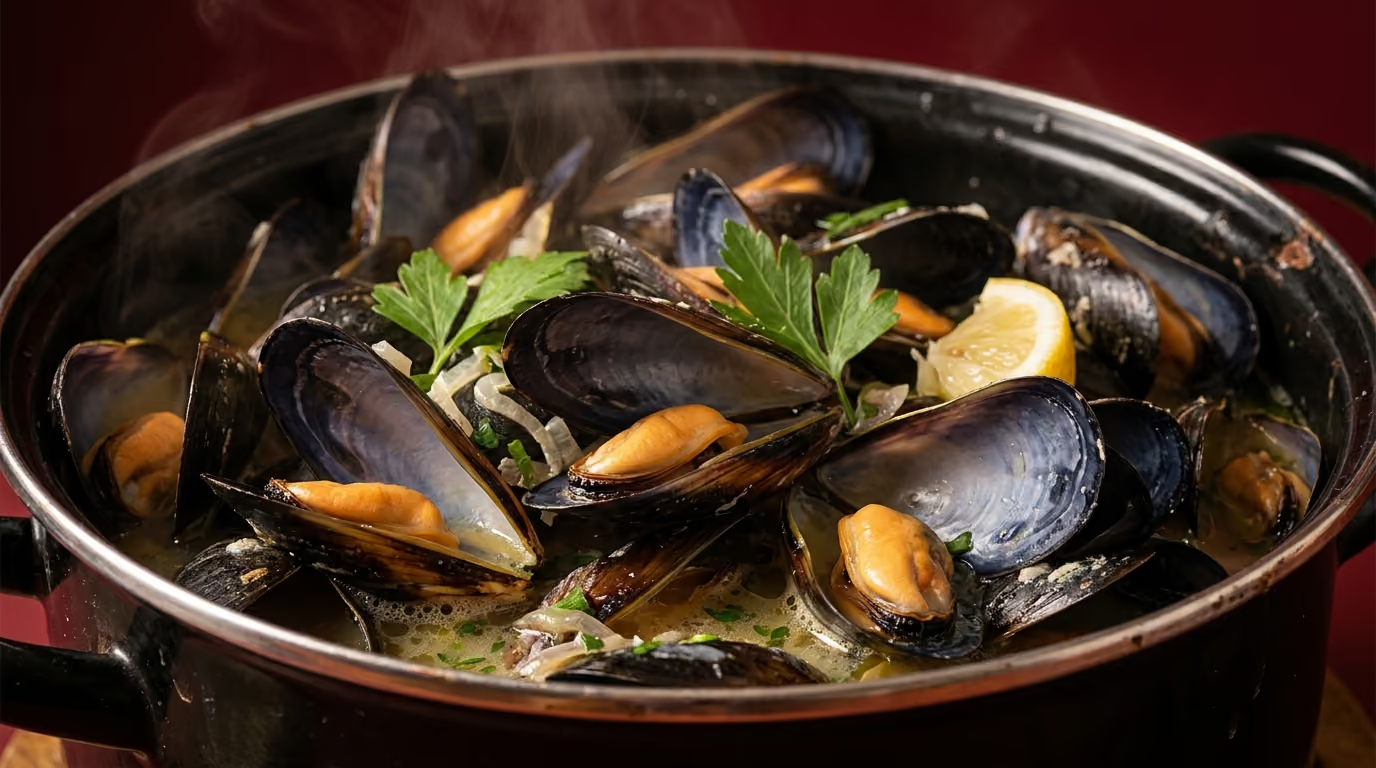
Muscadet is the Loire wine to buy for oysters, clams, mussels and any plate of simply cooked white fish. It's made from a grape called Melon de Bourgogne, which has nothing to do with Muscat despite the name, and it comes out dry, light and lemony with a faint salty edge that makes shellfish taste sweeter.

The words to look for are "sur lie", which you'll see on most good Muscadet. InterLoire describes it as a wine often matured on its lees, the spent yeast left over from fermentation, which gives it a rounder texture than you'd expect from such a light white. That extra texture keeps a light wine from tasting thin, and it adds no sweetness at all. Muscadet Sèvre-et-Maine is the subregion name you'll see most often, and Domaine de la Pépière's "La Pépie" is a widely imported bottle that shows the style cleanly.
We think Muscadet is one of the most underpriced whites in France, partly because nobody knows how to pronounce it (it's moos-kah-DAY). It's also the wine to grab when a recipe already has plenty of lemon, because a richer white tends to taste flabby next to that much acid. For a full rundown of shellfish matches, our page on the best wine for oysters goes plate by plate.
Where Muscadet stops working is anything with cream or butter in the sauce. A delicate wine gets flattened by a rich sauce, so for a creamy seafood pasta or scallops in beurre blanc, slide one region upriver and pick a dry Chenin Blanc instead.
How do you know if a Vouvray or other Loire Chenin Blanc is dry or sweet?
You check the sweetness term on the label, because Chenin Blanc from the Middle Loire is made in every style from bone-dry to syrupy and the village name alone won't tell you which. Vouvray, Montlouis, Anjou Blanc and Saumur can all be dry, while Coteaux du Layon and Quarts de Chaume are sweet by design.

The terms come from EU labelling rules, and the regulation spells out the numbers. "Sec" means dry and allows up to 4 grams of sugar per liter, or up to 9 grams if the wine's acidity is high enough to balance it. "Demi-sec" is off-dry and runs up to 12 grams (18 with enough acid). "Moelleux" covers anything above that up to 45 grams, and "doux" means 45 grams or more. If a Vouvray has no sweetness word at all, the shop staff or the producer's website is your best bet, because Chenin Blanc can taste drier than its sugar suggests.
Here's a real example of why the acid clause matters. Domaine Huet's Le Haut-Lieu Sec, one of the best-known dry Vouvrays, carries 5.6 grams per liter of residual sugar against 4 grams of acidity, according to the 2022 technical sheet from its UK importer. That's above the plain 4-gram line, yet it's still legally and genuinely dry, because the acidity keeps it tasting crisp. So "sec" on a Chenin Blanc means a wine that drinks dry, even when a few grams of sugar are hiding behind the acid.
If you want the numbers behind sweetness for every style, our dry vs sweet wine explainer lays them out side by side. And if you've never tried the grape, our page on whether you'll like Chenin Blanc is a quick way to find out before you buy a bottle.
Which Loire wine should you choose with richer food?
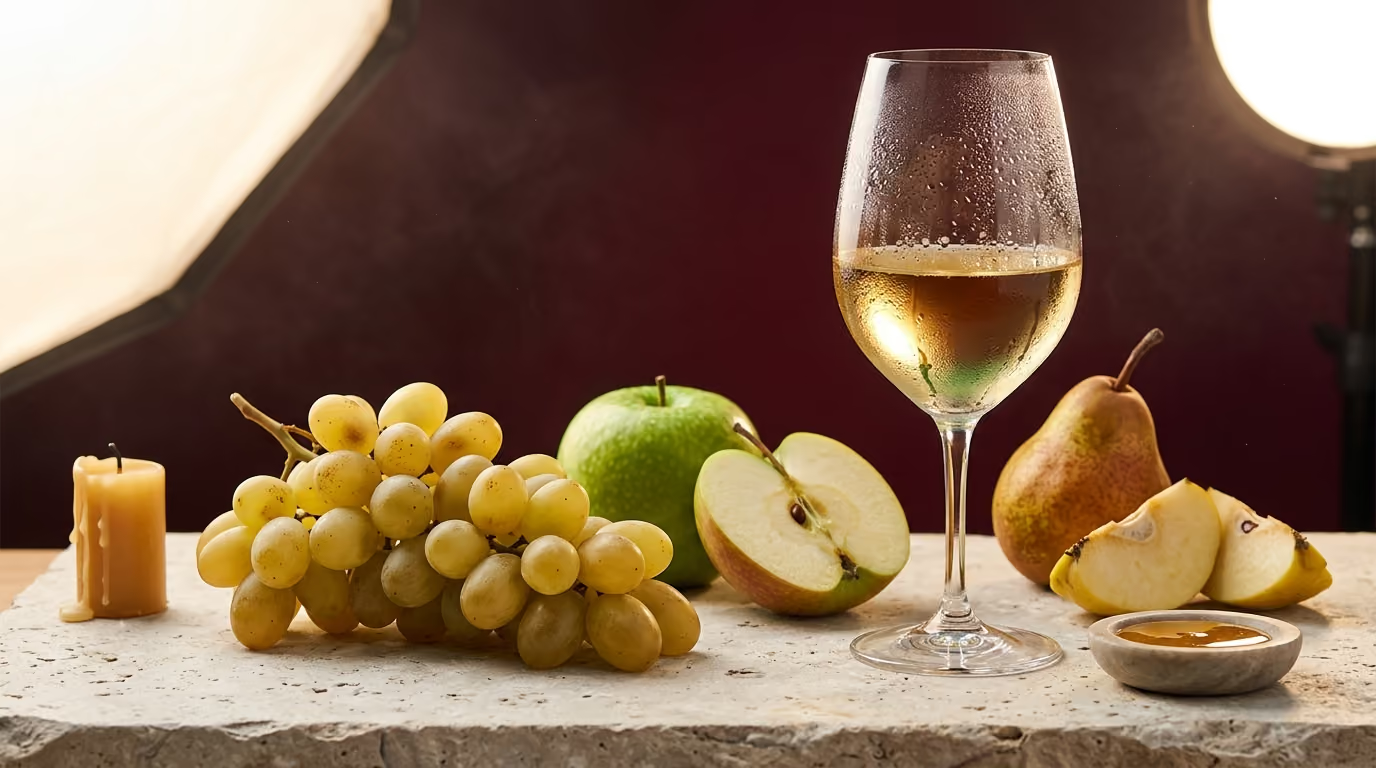
Choose a dry Chenin Blanc from Vouvray, Montlouis or Savennières when the food has butter, cream or roast-chicken richness. Chenin Blanc tastes of apple, pear and sometimes honey, and its acidity is high enough to cut through a sauce without disappearing under it, which is exactly what Muscadet can't do.
Savennières is the fullest of the dry styles, and InterLoire's Anjou-Saumur page notes that a dry Savennières is one of the Loire whites that can age for several decades. That's a clue to its weight: it's firmer and more serious than a young Vouvray and it shows best with pork, roast chicken or a mushroom risotto. Vouvray sec is the friendlier entry point and the one most US shops actually stock.
For scallops in particular, the right Chenin is close to a perfect match. The sweetness of the scallop meets the apple fruit of the wine, and the acid handles the butter. Our page on wine for scallops in butter and lemon sauce walks through that pairing in more detail.
What is the best Loire red wine for dinner?
Chinon and Bourgueil are the Loire reds to start with, and both are made from Cabernet Franc grown in Touraine. InterLoire's Touraine page names Chinon and Bourgueil as the appellations "renowned for their reds", and Saumur-Champigny, just over the line in Saumur, is the third name worth knowing.

Loire Cabernet Franc is lighter than most Cabernet you'll know from California. Expect tart red cherry, raspberry, a herbal note some people describe as green pepper, and a dusty, savory finish rather than big oak and dark fruit. It's the red to choose for roast chicken, pork chops, mushroom dishes or a charcuterie board, and it's better a little cool: give the bottle 15 to 20 minutes in the fridge before you open it.
Bernard Baudry's Chinon "Les Granges" is a widely imported example of the everyday, drink-it-young style. If you've read about Cabernet Franc and still aren't sure whether you'd like it, our Cabernet Franc taste guide explains how the Loire version differs from warmer-climate bottles.
The other Loire red to know is Gamay, the Beaujolais grape. You'll see it on Touraine labels, where InterLoire lists it among the area's emblematic grapes, and it's even lighter and juicier than Cabernet Franc. Our page on what Gamay tastes like covers it if you love light reds.
Is Sancerre worth the price, or is there a cheaper Loire Sauvignon Blanc?
Sancerre is worth it when the wine is the point of the evening, but Menetou-Salon and Quincy give you the same grape from the same corner of the Loire for noticeably less. All three are Sauvignon Blanc, all three are crisp and citrusy with a chalky edge, and all three are lighter on tropical fruit than a New Zealand Sauvignon Blanc.
The price gap is real and measurable. When we checked US averages on Wine-Searcher on September 30, 2026, mainstream bottles on its Sancerre listing ran $36 to $54, while the bottles we checked on the Menetou-Salon listing averaged $20 to $32 and those on the Quincy listing averaged $22 to $30. Our full comparison of Sancerre vs Sauvignon Blanc breaks down where that premium comes from and which producers sit where.
One detail trips up a lot of shoppers. Sancerre isn't white-only: the INAO product sheet, from France's appellation authority, lists the wines as made from two grapes, Sauvignon Blanc and Pinot Noir. White Sancerre is the Sauvignon, and the red and rosé are Pinot Noir. The same sheet notes the vineyard was mostly Pinot Noir before phylloxera wiped it out in the late 1800s, and Sauvignon Blanc took over in the replanting.
Pouilly-Fumé, just across the river from Sancerre, is also made from Sauvignon Blanc. If you're comparing it with other whites from the same valley, our Chenin Blanc vs Sauvignon Blanc comparison shows how differently the Loire's two main white grapes behave at the table.
What about Loire rosé and sparkling wine?
Loire sparkling wine is one of the best values in France, and InterLoire calls the Loire the second-largest sparkling wine-producing region in the country after Champagne. Crémant de Loire, Saumur and Vouvray all make traditional-method bubbles, with the second fermentation in the bottle, which is the same method Champagne uses.
Crémant de Loire is the name you'll see most often in the US, and Saumur houses such as Bouvet-Ladubay also ship plenty of their brut across the Atlantic. Look for "brut" on the label if you want it dry; our page on what brut means on sparkling wine labels explains the full sweetness scale for bubbles, which is different from the scale for still wine.
Rosé needs one extra check, because the Loire makes two very different kinds. InterLoire sorts its rosés into dry and "tender" styles, and it names Rosé d'Anjou and Cabernet d'Anjou as the two appellations making the semi-dry kind. Rosé de Loire, by contrast, sits in its dry rosé list. If you want a crisp, dry pink for a summer salad, buy Rosé de Loire, and if you like a touch of sweetness with mildly spicy food, Cabernet d'Anjou is the one.
Which Loire wines are sweet enough for dessert?
Coteaux du Layon and Quarts de Chaume are the Loire's classic dessert wines, both made from Chenin Blanc in Anjou. Quarts de Chaume is the most serious of them: its appellation rules require more than 85 grams of residual sugar per liter, and the wines have been allowed to add "grand cru" to the name from the 2010 harvest onward.
What makes these wines special is that Chenin Blanc keeps its acidity even when it's very sweet, so they taste rich without becoming syrupy. InterLoire's sweet-wine page suggests them with blue cheeses such as Roquefort, with fruit tarts and caramelized pears, and even as an aperitif next to foie gras. A half bottle goes a long way, and it'll keep in the fridge for several days once opened.
Coteaux du Layon is the easier one to find and usually the gentler price. If you're new to sweet wine, start there before spending on a Quarts de Chaume.
How do you pick a Loire wine at the store without studying the map?
Start with what you're eating, choose the region that suits it, and then check one word on the label before you pay. That's genuinely all you need, and it works whether you're in a big wine shop or picking from a short restaurant list.
Seafood with lemon points to Muscadet. Creamy sauces, scallops or roast chicken point to dry Chenin Blanc, so look for Vouvray or Montlouis with "sec" on the label. Goat cheese, asparagus or a lemony fish point to Sauvignon Blanc, and Menetou-Salon is where we'd look first if Sancerre feels pricey. Mushrooms, pork or a light red for chicken point to Chinon. Celebrations point to Crémant de Loire, one of the best Champagne alternatives for a celebration, and dessert points to Coteaux du Layon.
The trickiest moment is a Chenin Blanc with no sweetness word, sitting next to two others that do have one. That's where Fit Check helps: snap or type the bottle and Sommy tells you whether it fits the way you actually drink, based on the wines you've rated, rather than leaving you to guess from a village name.
Vintage matters a little more in the Loire than in sunnier regions, because it's a cool place and the weather swings from year to year. InterLoire's own 2024 vintage report describes a year of heavy rain and mildew pressure that still produced fresh whites, so a cool year here usually means crisper and leaner wine rather than bad wine. If you like softer, rounder whites, a warmer vintage will suit you better; if you like them sharp, the cool years are your friend.
Frequently asked questions about Loire Valley wine
What is the most famous Loire Valley wine?
Sancerre is the Loire name most shoppers recognize first, with Vouvray and Muscadet the next two you're likely to meet on a US shelf. Each one is named after its place rather than its grape, so a white Sancerre is Sauvignon Blanc, a Vouvray is Chenin Blanc and a Muscadet is Melon de Bourgogne.
What are the best wines from the Loire region for a beginner?
A dry Vouvray, a Muscadet sur lie and a Chinon make a good first trio, since together they cover a rich white, a crisp seafood white and a light red. Add a Crémant de Loire if you want bubbles, and you've tasted most of what the region does well.
Is Loire Valley wine expensive?
Most everyday Loire wine isn't, and Sancerre is the name that pushes the price up, averaging $36 to $54 in the US when we checked, while Menetou-Salon and Quincy, made from the same grape nearby, averaged $20 to $32.
Are Loire wines dry or sweet?
Most Loire wines are dry, but Chenin Blanc is made in every style, so always check the label. "Sec" means dry, "demi-sec" is off-dry, "moelleux" is sweet, and Coteaux du Layon or Quarts de Chaume are dessert wines.
What food goes with Loire Valley white wine?
Muscadet goes with oysters and shellfish, dry Chenin Blanc with roast chicken, pork and scallops, and Sancerre or Menetou-Salon with goat cheese, asparagus and lemony fish. Sweet Chenin Blanc is the match for blue cheese and fruit desserts.
Is Sancerre a Loire Valley wine?
Yes, Sancerre is one appellation in the Centre-Loire, the eastern end of the Loire Valley wine region. Its whites are Sauvignon Blanc and its reds and rosés are Pinot Noir.
Which Loire bottle should you open first?
Open the one that matches tonight's dinner, because the Loire rewards that approach better than almost any other French region. Its wines are built around freshness and acidity, which is why they sit so comfortably next to food and why a well-chosen $20 Loire bottle can outperform a famous name that doesn't suit the plate.
If you're only buying one, we'd make it a dry Vouvray. It shows off Chenin Blanc, the grape the Loire does better than anywhere else, it handles everything from scallops to roast chicken, and it teaches you to read the one label word that matters most in the region. Once you've found the Chenin you like, the rest of the valley gets a lot easier to shop.