AOC stands for Appellation d'Origine Contrôlée, and on a French wine label it tells you two things: the wine comes from one specific, legally defined place, and the producer followed that place's rules about which grapes to grow and how to make the wine. It's a guarantee about origin and method, not about quality or your enjoyment. A wine can be perfectly authentic AOC and still not be a bottle you'd want to drink twice.
Once you know that, French labels stop being a memory test. The place name printed largest on the bottle is doing the work that a grape name does on an American label, and the rest of this explains how to read it.
What does AOC actually mean on a bottle?
It means the wine is legally tied to a named area and made to that area's specification. The rules behind an appellation typically cover which grape varieties are permitted, where exactly the vines can be planted, how many grapes each vine may carry, minimum alcohol levels and often the winemaking and aging methods.
The system sits inside the European Union's wider framework of geographical indications. The European Commission describes a protected designation of origin as covering products whose qualities are specifically linked to the area of production, with the distinction between the tighter and looser categories coming down to how much of the raw material must come from the area and how much of the production must happen there. AOC is France's national expression of that idea, and it predates the EU version by decades.
The practical consequence is that a French label often doesn't tell you the grape at all. A bottle of Chablis says Chablis, not Chardonnay, because within that appellation the wine must be Chardonnay and everyone involved considers that settled. Sancerre almost always means Sauvignon Blanc. Côtes du Rhône means a blend built mostly on Grenache and Syrah. The place name is a shorthand for the grape and the style together.
That's a genuinely efficient system once you've learned a handful of names, and it's completely opaque until you have. Our companion guide on how to read wine labels covers the same problem across other countries.
Where do you find AOC on the label?
Look just beneath the place name, usually in smaller type, for the words "Appellation" and "Contrôlée" with the region's name printed between them. The formula reads "Appellation Chablis Contrôlée" or "Appellation Côtes du Rhône Contrôlée", and it often sits near the bottom edge of the front label or wraps around the neck.

Some producers abbreviate it to AOC after the region name, and increasingly you'll see AOP instead, standing for Appellation d'Origine Protégée. That's the EU-harmonized version of the same designation and it means the same thing in practice. France began the changeover years ago and both forms remain in circulation, so treat AOC and AOP as interchangeable when you're shopping.
The other detail worth spotting is how specific the appellation is, because the range is enormous. A regional appellation like Bordeaux or Côtes du Rhône covers a vast area and permits considerable variation. A village appellation like Chablis, Sancerre or Pommard covers a much smaller area with tighter rules. At the top, a single-vineyard appellation may cover a few dozen acres.
As a rough guide, the longer and more specific the appellation name, the smaller the area and the tighter the rules. "Bordeaux" is broad, "Margaux" is narrow, and the price usually follows.
What is the difference between AOC, IGP and Vin de France?
They're three tiers of the same system, distinguished by how strictly origin is controlled. AOC has the tightest geographic and production rules, IGP covers larger regions with more freedom for the producer, and Vin de France has essentially no geographic restriction at all.

| Tier | What it controls | What you can expect |
|---|---|---|
| AOC or AOP | Small defined area, permitted grapes, yields, methods | Consistent regional style, grape usually implied by place |
| IGP | Larger region, wider grape list, looser rules | Regional character, grape variety often named on the label |
| Vin de France | No geographic restriction | Anything from cheap blends to experimental bottles |
Here's where a lot of guides mislead people. This is a hierarchy of regulation, not a hierarchy of quality, and the bottom tier contains some genuinely interesting wine. A producer who wants to plant a grape their appellation doesn't allow, or blend across regions, has to drop down to IGP or Vin de France to do it legally. Some excellent, deliberately unconventional wines carry the lowest classification for exactly that reason.
What the tiers reliably predict is consistency rather than excellence. An AOC bottle from a region you know will taste broadly like that region, which is genuinely useful when you're buying something unfamiliar. An IGP will usually name its grape on the label, which is helpful in a different way. The Italian system works on the same logic if you'd like to compare, and our explainers on DOCG on Italian labels and IGT wines cover that side.
What does AOC not tell you?
It tells you nothing about sweetness, oak, body, price or whether you'll like the wine, and it makes no promise about how good the producer is. Two bottles from the same appellation and the same vintage can taste substantially different because the winemaker's choices sit well inside what the rules permit.
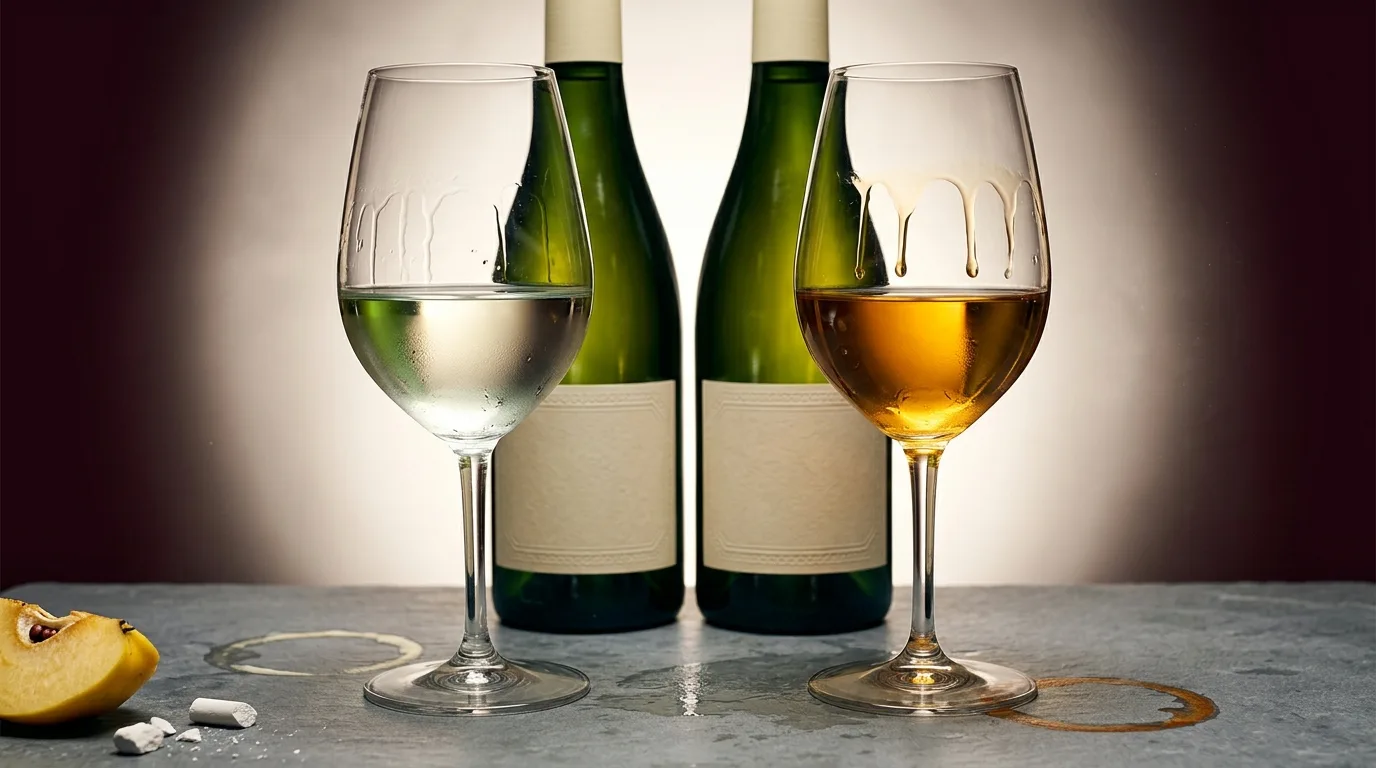
Vouvray is the clearest illustration of the gap. The appellation guarantees Chenin Blanc from a defined part of the Loire, and says nothing whatsoever about sweetness, so a Vouvray can be bone dry, off-dry or a full dessert wine. Two bottles carrying identical AOC text can be completely different propositions at the dinner table. You need the French sweetness terms or the alcohol level to tell them apart.
The other thing the letters don't carry is price information. Plenty of AOC wine sells for under fifteen dollars, since most French wine of any description qualifies for some appellation. Treating AOC as a marker of expense or prestige leads people to overlook exactly the bottles worth buying.
Producer and vintage do more work than most shoppers expect, and the appellation cannot speak for either. If a French wine ever disappoints you, the appellation is rarely the reason, and the same appellation from a different grower may be excellent. Reserve is another label word that promises less than people assume, and our note on what reserve means explains why.
Vintage variation is the other thing the classification quietly makes room for. French appellations sit in marginal climates where the weather genuinely differs year to year, and the rules were written to accommodate that rather than to erase it. A cool, wet year in Bordeaux produces leaner, more tart wine than a hot one, and both are legitimately AOC Bordeaux. This is why the year on the bottle carries more meaning in France than it does in consistently warm regions, and why a grower's reputation matters most in the difficult years.
How do you use AOC to buy better wine?
Treat the appellation as a filter for style rather than a verdict on quality, then let food and price make the final call. If you know one thing about a region, the appellation on the label transfers that knowledge to a bottle you've never seen before.
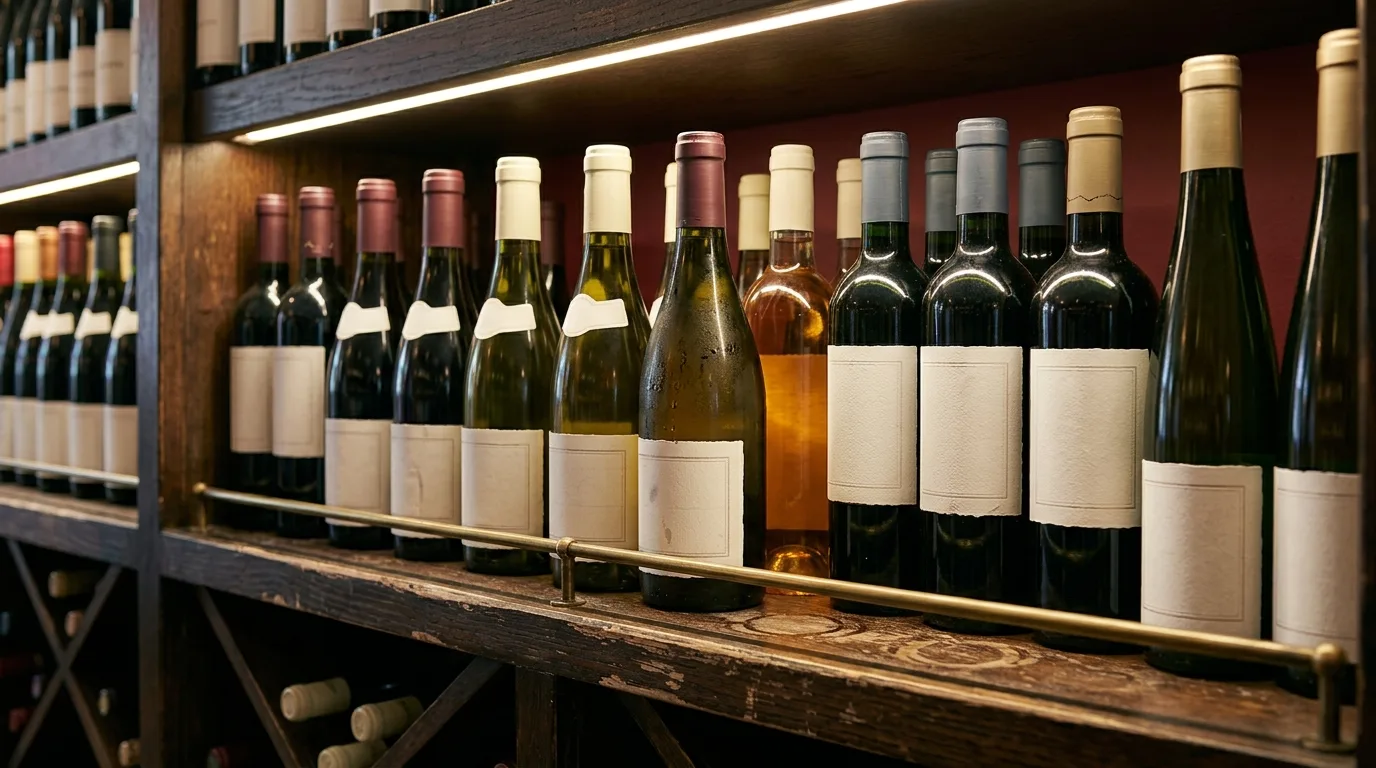
A handful of names carries most of the value in a supermarket. Chablis means dry, mineral, unoaked Chardonnay that suits oysters and white fish. Sancerre and Pouilly-Fumé mean crisp Sauvignon Blanc for goat cheese and salads. Côtes du Rhône means a warm, peppery red blend for roast meat and stews, usually at a friendly price. Beaujolais means light, juicy red worth chilling slightly. Muscadet means bracingly dry white built for shellfish. Learning those five will cover most French bottles you meet.
The method that works in the aisle is to start from dinner, use the appellation to find the right style, then let your budget settle which bottle. That sequence keeps the decision small, and it works identically in a restaurant where the list is organized by region rather than grape. If choosing generally trips you up, our walkthrough on how to choose wine reduces it to three questions.
Sommy's Vision label scan is useful precisely at this point, since the appellation tells you the rules but not whether the wine inside suits you. You can photograph the label and get a read on how that specific bottle maps to your taste, which closes the gap the classification system deliberately leaves open.
One habit makes all of this stick faster than reading about it. When you finish a French bottle you enjoyed, note the appellation rather than the producer, because the appellation is the part that will repeat. Producers come and go from any given shop, but Chablis will be on the shelf next month and next year, and it will taste recognizably like the Chablis you liked. Building a short personal list of appellations that suit you is the whole payoff of the system, and it takes about four bottles to start.
Frequently asked questions
What does AOC mean on a wine bottle?
AOC is short for Appellation d'Origine Contrôlée, and it certifies that the wine comes from a specific legally defined French region and was produced according to that region's rules on permitted grapes, vineyard location, yields and winemaking methods.
Is AOC wine better quality than other wine?
Not necessarily, and this is the most common misreading. AOC guarantees origin and adherence to regional rules rather than quality, so an AOC wine can be ordinary while an IGP or Vin de France bottle can be excellent. Producer and vintage influence quality far more than classification does.
What is the difference between AOC and AOP?
They mean effectively the same thing. AOP is the European Union's harmonized term, Appellation d'Origine Protégée, which France adopted alongside its older national AOC designation. Both appear on bottles today and you can read them interchangeably.
Does AOC tell you which grape is in the bottle?
It tells you indirectly rather than plainly. Each appellation permits only certain grapes, so the place name implies the variety once you know the region. Chablis means Chardonnay and Sancerre usually means Sauvignon Blanc, though the label itself rarely prints the grape.
Is AOC wine always more expensive?
Appellation status has very little to do with price. Most French wine carries some appellation, and plenty of AOC bottles sell for under fifteen dollars. The specificity of the appellation influences price far more than the letters themselves, so a regional Côtes du Rhône costs much less than a village Burgundy.
What does IGP mean compared to AOC?
IGP stands for Indication Géographique Protégée and covers larger areas with looser rules than AOC. IGP wines usually name their grape variety on the label, which makes them easier to read for anyone used to American or Australian bottles.
Reading French labels with less effort
The letters do one job, which is telling you where the wine is from and that the producer followed local rules. That's a real piece of information and it's worth using, particularly for predicting style in a region you've met before.
What it can't do is tell you whether this bottle, tonight, is right for you. Combine the appellation with the alcohol level, the vintage and what you're eating, and French labels turn from an obstacle into the most informative labels on the shelf. Five region names and that habit will get you further than memorizing the whole map ever would.