An AVA is an American Viticultural Area, a grape-growing region of the United States with a boundary drawn and approved by the federal government. When a bottle says Napa Valley, Willamette Valley or Finger Lakes, that name is an AVA, and printing it means at least 85 percent of the grapes were grown inside that line. It tells you where the fruit came from. It does not tell you the wine is any good, and knowing the difference is most of what an AVA is worth to you.
That last point is the one every official explanation leaves out, so this piece starts with what the rule actually guarantees, then covers what you can genuinely do with it while standing in a store.
What does AVA mean on a wine label?
AVA stands for American Viticultural Area. The Alcohol and Tobacco Tax and Trade Bureau, the federal agency that approves US wine labels, defines it as a delimited grape-growing region with geographic or climatic features that set it apart from the land around it and affect how grapes grow there.
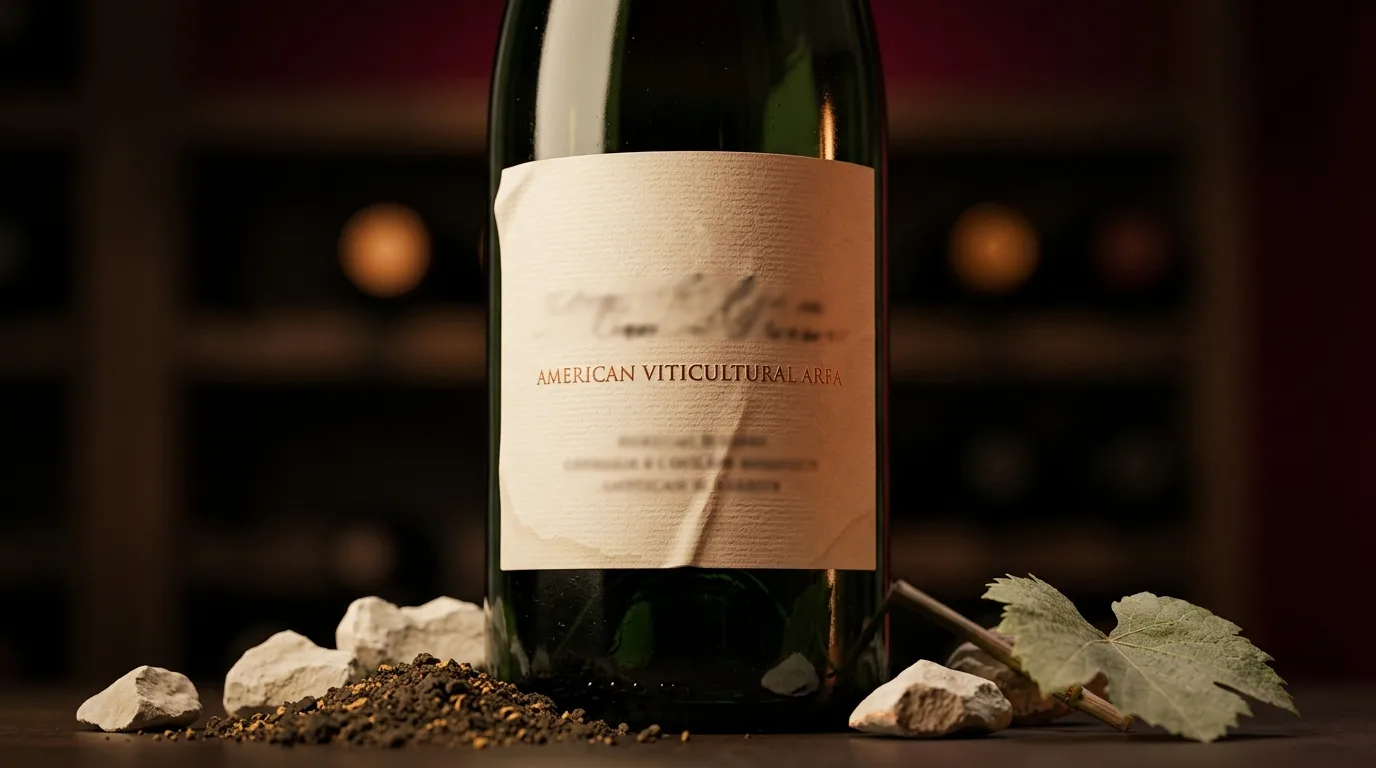
In everyday terms, an AVA is an address with legal force. Anyone can call a wine "California red", but only a wine that meets the rules can call itself Russian River Valley. Every AVA's exact boundary is written into federal regulation, in 27 CFR part 9, and a new one only exists after someone petitions the TTB and the agency approves it.
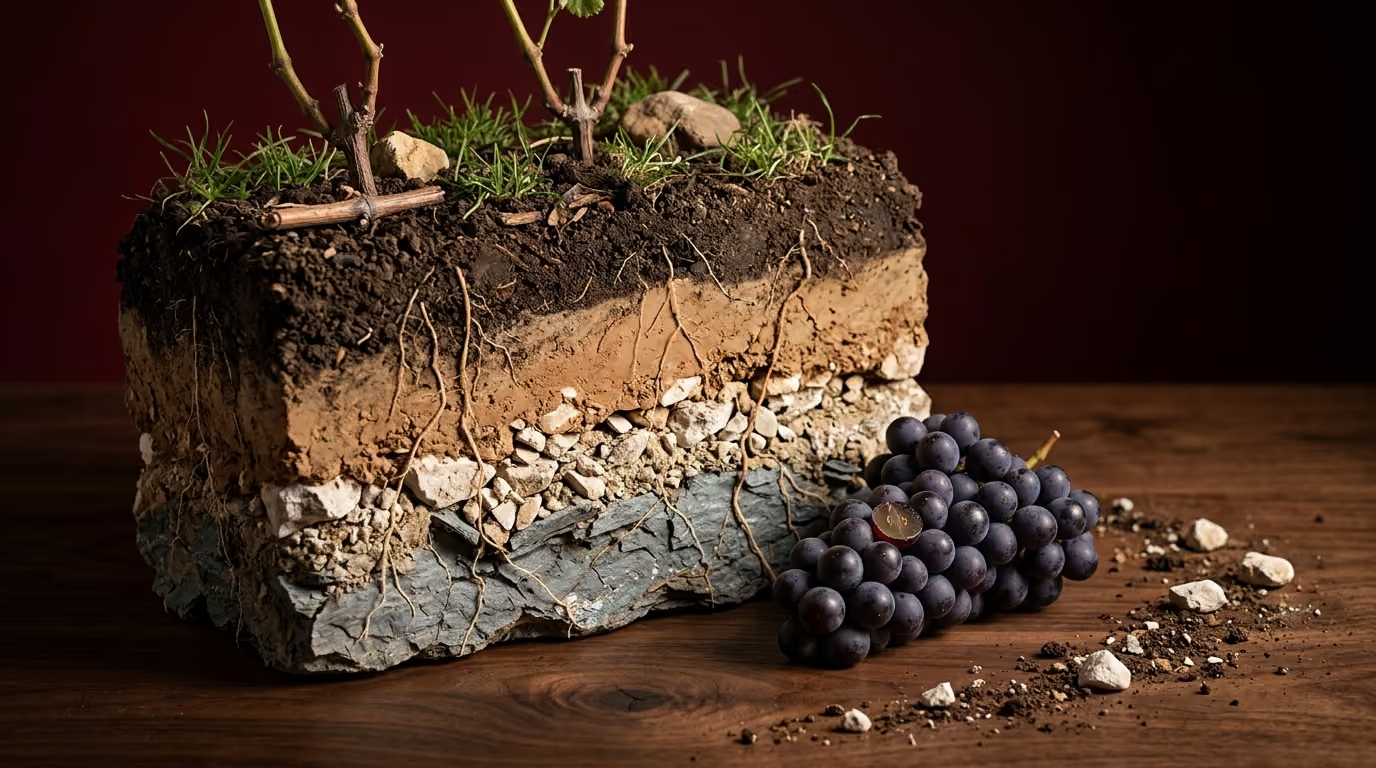
That petition process matters more than it sounds. AVAs aren't handed down by a tasting panel or awarded for excellence. Any interested party can propose one, and the case they have to make is geographic: this area has soils, elevation, rainfall or temperature that genuinely differ from its neighbors. The question being answered is "is this place distinct", never "is this place good". If you want the wider picture of how growing conditions change a wine, our guide to reading wine labels covers the other words sharing space with the region name.
The US approach differs from Europe's on exactly this point. French and Italian systems bundle a place name together with rules about permitted grapes, maximum yields and minimum aging, so the name carries a whole recipe. An AVA carries a map and nothing else. Our explainers on AOC on French labels and DOCG on Italian labels show how much more those systems are promising.
How much of the wine actually has to come from that AVA?
At least 85 percent of it has to, and the figure is written into federal law. Under 27 CFR 4.25, a wine may only be labeled with a viticultural area if not less than 85 percent of it was made from grapes grown within that area's boundaries, and for an American wine it must also have been fully finished in the state where the AVA sits.
The interesting part is what happens when you compare that to the looser options. A wine labeled with a county or a state name only needs 75 percent of its grapes from that area. So the moment a producer swaps "California" for a specific AVA, they've tightened their own sourcing promise by ten points and given up the freedom to blend in a quarter of the wine from anywhere else in the state.
There's a second promise most people never hear about, and it rides along with the first. Under 27 CFR 4.27, a vintage year on a wine labeled with an AVA requires at least 95 percent of the wine to come from that harvest. Put a vintage on a wine labeled with a broader appellation instead and the requirement drops to 85 percent. Naming a smaller place quietly tightens the year on the label too.
| What the label names | Minimum grapes from that place | Minimum from the stated vintage |
|---|---|---|
| An AVA, such as Napa Valley | 85 percent | 95 percent |
| A county, such as Sonoma County | 75 percent | 85 percent |
| A state, such as California | 75 percent | 85 percent |
| Two overlapping AVAs together | 85 percent from the overlap | 95 percent |
Read that table once and the shelf changes shape. Two bottles at the same price, one saying California and one naming a specific valley, are making measurably different commitments about where their fruit came from and how much of it shares a growing season.
Does an AVA tell you anything about quality?
No, and this is the single most common misreading of the term. Nothing in the regulation that creates AVAs sets a standard for how the wine must taste, how the vines must be farmed, which grapes may be planted, how much fruit a vineyard may carry, or how long anything has to age.
A famous AVA guarantees that the grapes grew in a well-regarded place, which is genuinely different from guaranteeing a well-made wine. Napa Valley produces some superb bottles and some ordinary ones, and both are equally entitled to the name. Reputation also gets priced in long before the wine reaches you, which is why a bottle from a lesser-known AVA next door can share much of the climate at a fraction of the cost.
What an AVA does give you is a narrower range of likely styles, because the boundaries were drawn around real differences in growing conditions. A cool coastal area tends toward fresher, higher-acid wines. A warm inland valley tends toward riper, fuller ones. That's a useful prediction about style, and it's still silent on whether that style is one you enjoy. If you're holding a specific bottle and want a straight answer about that bottle rather than about its region's reputation, Fit Check in Sommy reads it against your own Taste Profile and tells you whether it fits, which is the question the appellation was never designed to answer.
Why do some labels name two regions at once?
Because AVAs nest inside one another, and producers often print both the small one and the large one. Rutherford sits inside Napa Valley, Dundee Hills sits inside the Willamette Valley, and a label may carry the specific area, the broad one, or both together.
As a rule of thumb, the smaller and more specific the named area, the tighter the sourcing and usually the more the producer is staking on that particular ground. A wine labeled with a sub-area has committed 85 percent of its fruit to a much smaller patch of land than one labeled with the large parent region, even though both statements are equally true and equally legal.
The regulation also handles a genuinely awkward case. Where two viticultural areas overlap, a wine can be labeled with the combined appellation as long as at least 85 percent of it came from grapes grown in the overlapping zone itself, rather than 85 percent from the two areas loosely combined. It's a small detail that shows how carefully the boundaries are policed once they exist.
None of this makes the smaller name automatically better. It makes the claim more specific, and a more specific claim is easier to judge once you've tried a few bottles from that area and know whether you like what it does.
How many AVAs are there, and do you need to learn them?
There are 280 established AVAs in the United States, and California alone accounts for 154 of them. You don't need to learn any of them by heart, and trying to is a poor use of your attention.
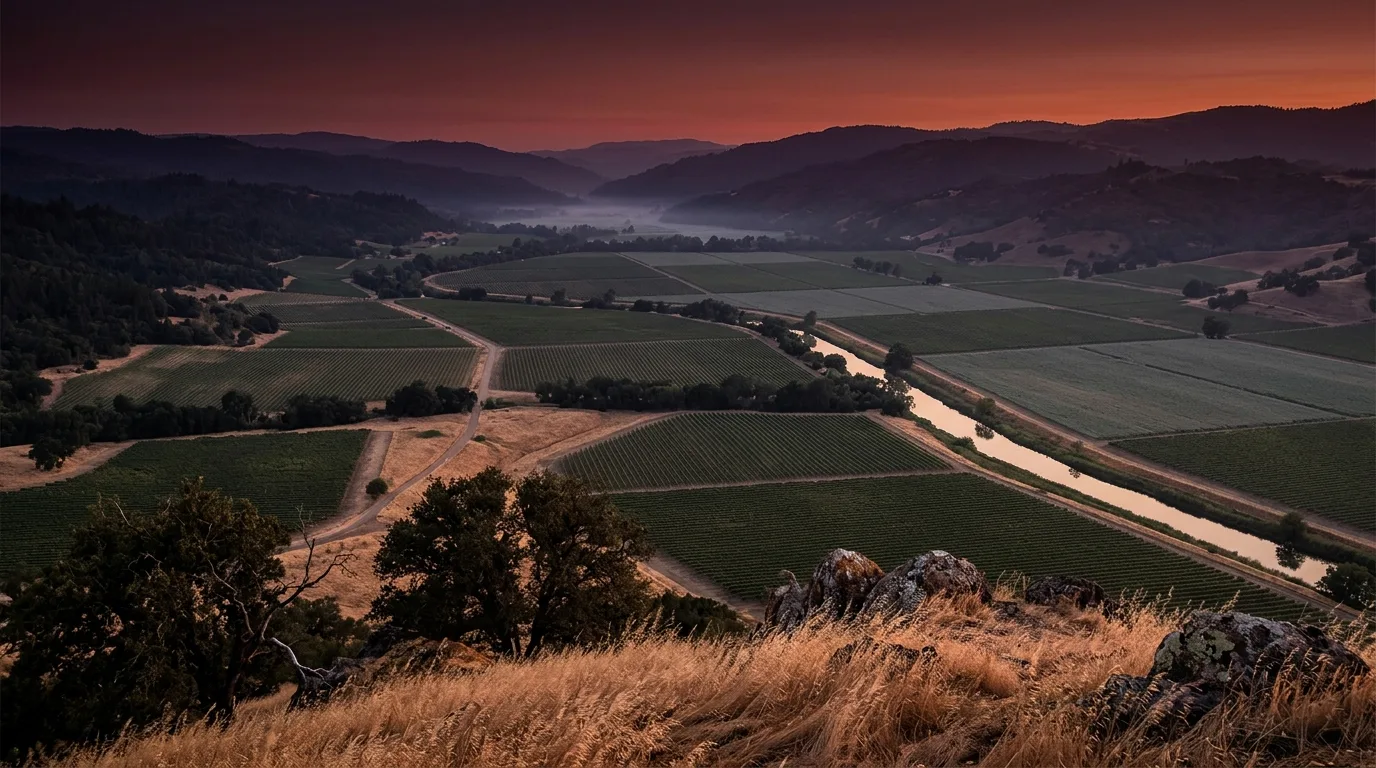
The count keeps rising because the petition process stays open, so a list memorized this year will be short next year. More usefully, the vast majority of those 280 will never appear on a bottle in front of you, since a handful of large, widely distributed areas dominate what actually reaches shelves outside their home states.
The practical approach is to learn the two or three areas whose wines you keep enjoying and treat everything else as unexplored. When a bottle from an unfamiliar AVA appeals to you, the useful question isn't whether the name is prestigious, it's whether the growing conditions resemble somewhere you've already liked. Cool and coastal behaves like cool and coastal whether the name on the front is famous or not. Our guides to white wines of California and the Old World and New World split are good places to start building that mental shortlist.
How do you actually use an AVA while you're shopping?
Use it as a tie-breaker between bottles you're already considering, not as the first filter you apply. Grape, style and price narrow the shelf far faster, and the region name earns its keep at the end, when two plausible bottles are left and you need something to choose between them.
Three habits make that work in practice. First, when you enjoy a bottle, write down its AVA rather than just the producer, because the area is the part that repeats across brands and vintages. Second, when you see a specific area named instead of a broad state, read it as a producer choosing to make a tighter claim about their fruit. Third, when a bottle from a celebrated region costs noticeably more than a neighboring one, check whether you're paying for the wine or for the name on the front.
Scanning a shelf full of unfamiliar region names is exactly the moment Label Scan in Sommy is built for, since pointing your phone at a bottle gets you a read on what's actually inside without needing to recognize the appellation at all.
The habit that pays off most is the simplest one. Keep a short record of what you drank and where it came from, and within a few months the region names on the shelf stop being trivia and start being a map of your own taste. Our wine tasting notes template gives you a structure for that if you'd rather not invent one.
Frequently asked questions about AVAs on wine labels
What does AVA stand for on a bottle of wine?
It stands for American Viticultural Area, a federally approved grape-growing region in the United States. Seeing one on a label means at least 85 percent of the grapes were grown inside that region's boundary.
Is an AVA the same as an appellation?
An AVA is one type of American appellation of origin. The category also includes country, state and county names, and those carry a lower sourcing requirement of 75 percent rather than 85 percent.
Does an AVA mean the wine is higher quality?
No, because the rules behind AVAs govern geography and sourcing percentages only, with nothing about winemaking, grape variety, yields, aging or taste. A well-known area signals a likely style and a likely price, never a guaranteed standard.
Which state has the most AVAs?
California, with 154 of the 280 established American Viticultural Areas. That concentration is why so many US labels you encounter name a Californian region.
Can a wine name more than one AVA?
Yes, and it happens often, because smaller areas nest inside larger ones, so a label can carry both, and where two areas overlap a wine can use the combined name if at least 85 percent of it came from the overlapping zone.
Why do some American wines just say California?
Because a state appellation only requires 75 percent of the grapes from that state, which gives producers much more freedom to blend across regions. It's a broader claim, common on large-volume wines, and it isn't a flaw in itself.
Does an AVA affect the vintage date on the label?
Yes, and this surprises most people. A vintage year on an AVA-labeled wine requires 95 percent of the wine to come from that harvest, against 85 percent for a wine labeled with a state or county.
Reading a region name for what it really says
An AVA is one of the more honest things printed on a wine bottle, as long as you hold it to what it claims. It says the fruit grew inside a specific boundary, that at least 85 percent of it did, and that the growing conditions there differ enough from the surrounding area for the federal government to have drawn a line around them. Those are real, checkable statements, and they're worth more than most of the adjectives sharing the label.
What no AVA will do is rank anything or predict your reaction. The regulation contains no standard for quality because it was never trying to set one, which means a prestigious region on the front of a bottle is a description of geography carrying a price premium. Use the region to guess the style, use your own record of what you've enjoyed to guess the pleasure, and let the two questions stay separate. That habit turns 280 unfamiliar names into a handful you actually care about.