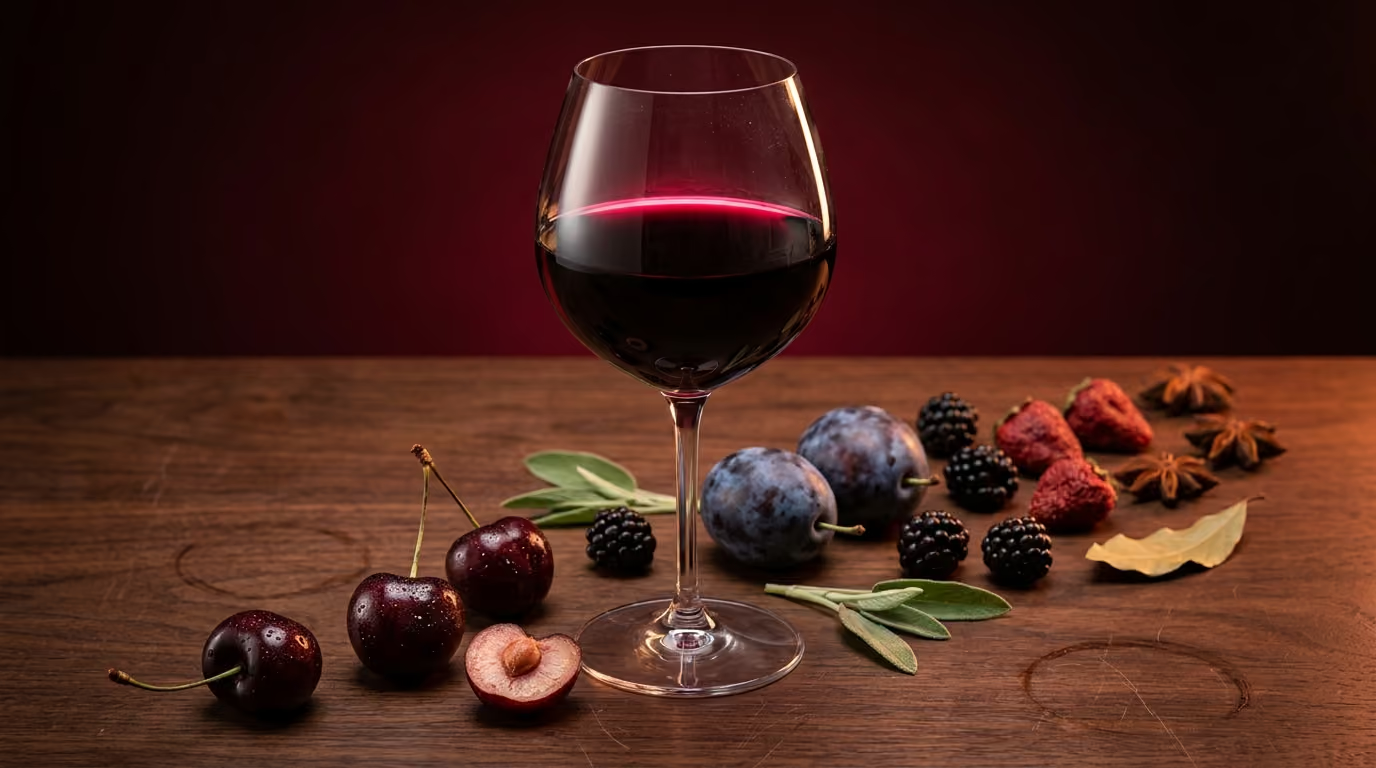
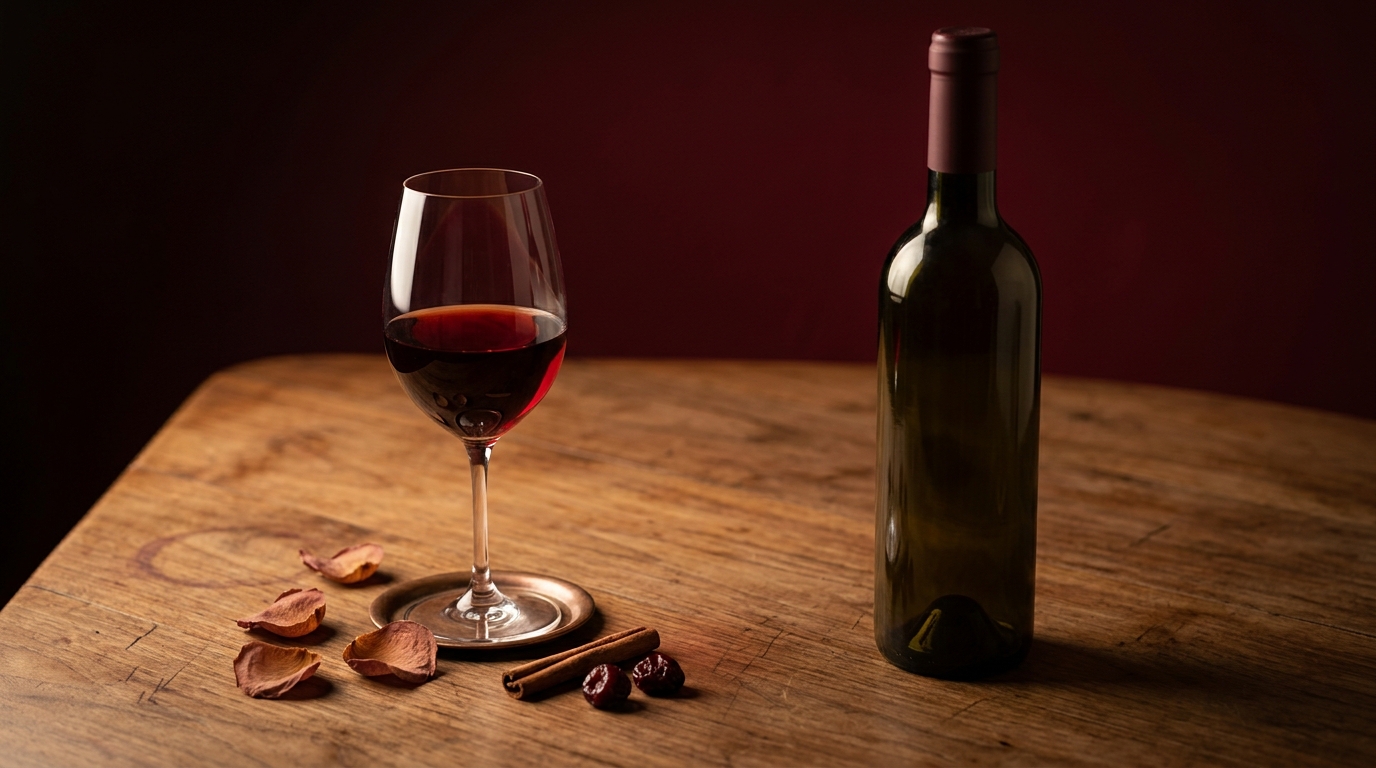

Barolo is a dry red wine from the Langhe hills of Piedmont, in northwest Italy, made entirely from Nebbiolo grapes and held back for years before it goes on sale. It looks pale and almost fragile in the glass, then arrives with high acidity and a grip of tannin that surprises most people the first time. Bottles from well-known producers start around $64 in the United States and the famous ones run past $1,000. That gap between what it looks like and what it costs is the reason so many people meet this grape through a completely different wine.
What is Barolo wine, exactly?
Barolo is a place before it's anything else, and the wine takes the name of the village at its center. The Consorzio that governs the region describes it as a DOCG wine made from 100% Nebbiolo grapes, grown across 11 municipalities in the Langhe hills a short drive south of the city of Alba. Three of those communes sit entirely inside the zone, which are Barolo itself, Serralunga d'Alba and Castiglione Falletto, and the other eight are only partly included.
That single-grape rule matters more than it sounds. Plenty of famous Italian reds are blends, so a label can tell you the region without telling you what's actually in the bottle. With Barolo there's no ambiguity at all, and every bottle is Nebbiolo grown on those hills. If Italian labels generally leave you squinting, our guide to reading an Italian wine label walks through what DOCG, DOC and IGT each promise you.
The other half of the definition is time. A Barolo can't legally be sold young, and the rules the Consorzio publishes require at least three years of aging beyond the two months following harvest, of which a year and a half has to happen in oak. Only after five years can a bottle carry the word Riserva. A wine you buy this autumn was picked and pressed while most other regions were still selling the vintage after it, and somebody paid to store it for every month in between.
What does Barolo taste like?
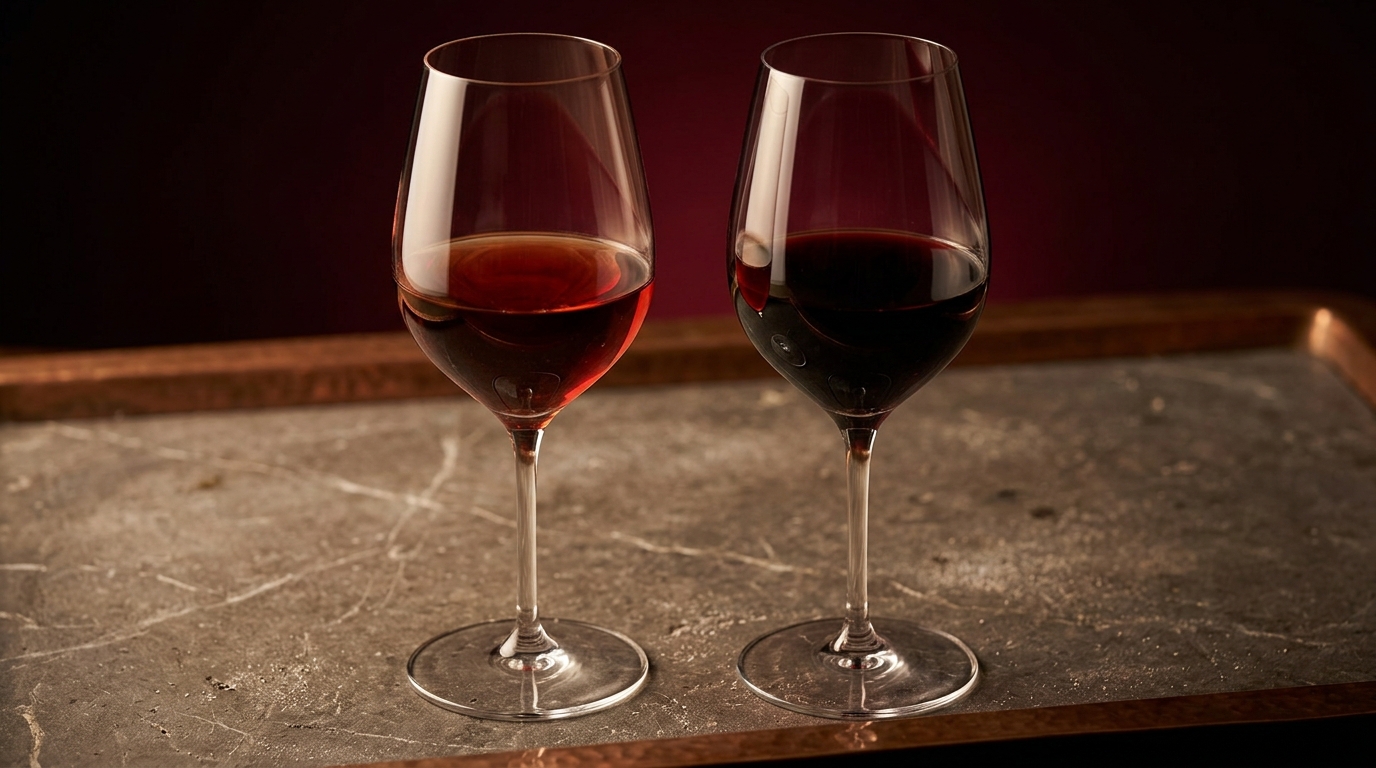
Barolo tastes like tension, and the color will mislead you if you let it. The wine pours a light garnet rather than the opaque purple people associate with a serious red, and it usually gets lighter and browner at the rim as it ages. Someone expecting a big inky Cabernet pours a glass, sees something closer to a Pinot Noir, and braces for a gentle wine that never arrives.
The Consorzio's own tasting description runs through small red fruits, cherries in spirit and in jam, rose and withered violet, cinnamon and pepper, nutmeg and vanilla, and sometimes licorice, cocoa, tobacco and leather. Read that list and you can see why people get attached to the wine, because very few grapes give you flowers and tar in the same mouthful. What the list doesn't capture is the structure underneath it, which is where Nebbiolo genuinely separates itself from almost everything else on the shelf.
The tannin is what decides whether you'll enjoy a bottle. Nebbiolo carries a great deal of it, and unlike the soft rounded tannin of a warm-climate red it lands high and dry across the roof of your mouth and the insides of your cheeks. Pair that with acidity that stays bright even in a hot vintage and you get a wine that feels far bigger than it looks and asks for food more insistently than most reds do. If the word tannin has always been vague to you, we've written a plain explanation of what tannins actually do in your mouth, because it's the single most useful thing to understand before you spend real money here.
Barolo is also dry, despite what the fruit and the perfume suggest. There's no meaningful sugar left in it after fermentation, and the sweetness people sometimes report is the smell of ripe cherry and dried rose arriving a beat before the taste does. That confusion between aroma and sugar shows up across the whole wine aisle, and we untangled it in our piece on dry versus sweet wine.
Is a Barolo like a Pinot Noir?
They look like siblings in the glass and behave nothing alike once you drink them. Both pour pale, both keep high acidity, and both lean aromatic rather than heavy, so on appearance alone the comparison is a fair one. It's the shorthand most wine lists and most shop staff reach for when somebody asks what Nebbiolo is, and as a starting point it's reasonable enough.
The split is tannin, and it's a wide one. A good Pinot Noir feels silky and soft-edged, and you can drink it happily on its own with nothing on the table. Barolo doesn't do soft, and the same paleness that promises a gentle wine sits on top of a tannic frame closer to a young Bordeaux. Somebody who loves Pinot Noir for its lightness can find Barolo genuinely unpleasant, while somebody who loves it for its perfume and its acidity often falls straight into Nebbiolo without a second thought. Our Pinot Noir taste guide covers which of those two camps you're likely to be in.
Why is Barolo so expensive?
Barolo is expensive because the rules force producers to fund years of storage before they earn anything back, and because the land those grapes come from is both finite and famous. Neither reason is marketing, and both of them show up in the shelf price.
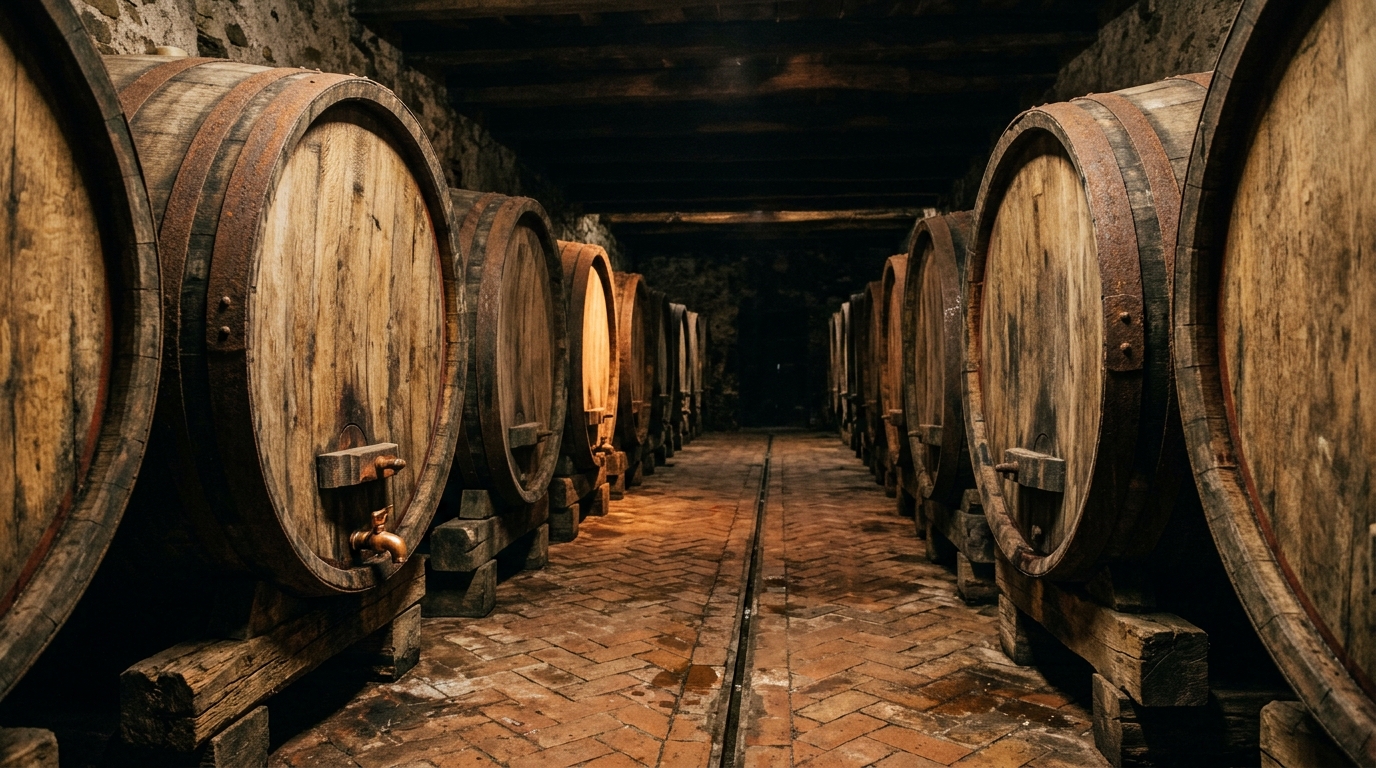
Start with the time the law demands. Three years and two months of mandatory aging, with eighteen months of it in wood, means a producer buys barrels, pays for a temperature-stable cellar, insures the stock and waits, all before a single case ships, and a Riserva stretches that to five years. None of that money is recoverable if the vintage disappoints, and every year of holding cost lands in the price of the bottle you eventually pick up. Compare it to a wine released the spring after harvest, where the same money turns over several times in the period one Barolo sits in a cellar, and the arithmetic becomes obvious.
Then there's the land itself, which nobody can make more of. Eleven communes on a single range of hills is not a lot of vineyard, and the best-known slopes inside them have been mapped and named for generations, so a bottle from a celebrated site carries the cost of that reputation before anyone has tasted it. Demand has climbed steadily for decades while the acreage has stayed exactly where it was, and the scarce parts get bid up first with the rest of the zone rising along behind them.
That's the theory, and this is what it looks like on a shelf in the United States. The figures below are listings on Wine-Searcher in September 2026, and the spread within one small region is the point of showing them.
Two things jump out of that table. The first is that the spread inside a single appellation runs more than twentyfold, from $64 up to $1,348, so "the price of Barolo" isn't really a number you can quote. The second is more immediately useful to you, and it's that several of those producers appear on the list twice.
What's the difference between Barolo and Barbaresco?
Barbaresco is the same grape from neighboring hills under a shorter aging requirement, and it usually costs less. The same Consorzio protects both names, and its description of Barbaresco DOCG sets the rules out plainly: 100% Nebbiolo again, grown in the municipalities of Barbaresco, Neive and Treiso in the province of Cuneo, aged at least two years with nine months of that in oak, and eligible for the Riserva label after four.
Set the two side by side and the aging gap explains much of the reputation. Barolo asks for three years and two months with eighteen of them in wood, while Barbaresco asks for two years with nine in wood. That's more than a year of extra holding cost on every Barolo bottle, plus a longer wait before the tannin starts to soften. The Consorzio says Barbaresco reaches its best between five and ten years while remaining capable of living a great deal longer, which is exactly why it has a reputation as the friendlier of the pair.
The old shorthand calls Barolo masculine and Barbaresco feminine, and you can safely ignore it. The honest version is that Barbaresco generally comes from slightly warmer sites, ripens a little earlier and spends less time in wood, so it tends to arrive in your glass a touch more approachable. Individual producers and individual vineyards override that tendency constantly, and a traditionalist Barbaresco can easily outlast a modern Barolo. On price, the clearest comparison in that table is Produttori del Barbaresco at $51 against Vietti Castiglione at $64, both of them benchmark bottles from long-established houses.
How can you drink Nebbiolo without paying Barolo prices?
Buy Langhe Nebbiolo from a producer whose Barolo you can't afford. It's the same grape from the same corner of Piedmont, often from younger vines or from parcels lying just outside the Barolo boundary, and it's released earlier because the Langhe rules don't demand those extra years in the cellar.
Go back to the table and look at the pairs. Vietti sells Perbacco Langhe Nebbiolo at $32 and its Castiglione Barolo at $64, so the same winemaking team working the same hills costs you half as much. Produttori del Barbaresco lists a Langhe Nebbiolo at $29 against its Barbaresco at $51. G.B. Burlotto, whose Barolo sits at $122, puts a Langhe Nebbiolo on the shelf at $43. You're not buying a lesser imitation of Nebbiolo in any of those cases, you're buying Nebbiolo with less time on it.
What you give up is worth stating honestly. A Langhe Nebbiolo generally has less concentration, a shorter finish and less capacity to improve across a decade, and it won't deliver the tar-and-roses complexity that makes people obsessive about mature Barolo. What it keeps is everything that tells you whether this grape is for you, which is the pale color, the high acid, the rose and cherry perfume and that firm drying tannin. Spend $30 finding that out rather than $64.
This is also the moment where the label stops being any help. Standing in a shop holding two bottles from the same producer at two very different prices, the real question isn't which wine is better, it's whether the style suits you at all. Fit Check exists for exactly that, and it gives you a straight verdict on whether a specific bottle matches the taste Sommy has learned from what you've rated, before you commit the money.
When should you open a Barolo, and what goes with it?
Give it age and give it food, because a young Barolo on its own is a hard drink. The Consorzio's five-to-ten-year window for Barbaresco is a fair guide for the friendlier bottles, and a traditional Barolo often wants longer than that before it stops feeling severe. If you've bought something young and you don't want to wait, decanting helps here more than with almost any other wine, and our guide on when to decant and when to leave it alone covers how much air to give it.
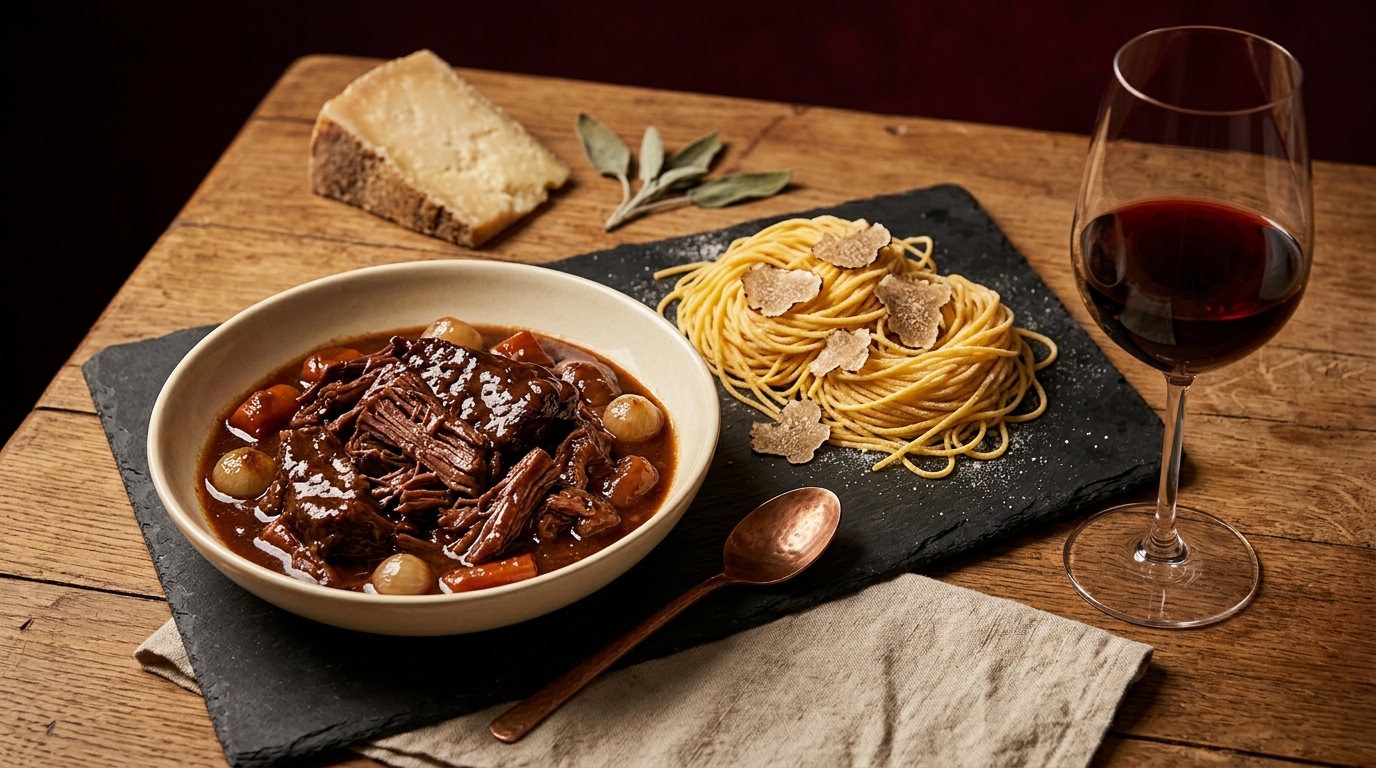
Food does the rest of the work. Tannin that feels aggressive against an empty palate turns pliable against fat and protein, so braised beef, a slow-cooked shank, a rich meat sauce over egg pasta or a well-aged hard cheese will all soften the wine considerably. The regional answer is mushrooms and truffle, and it isn't only local pride, because the earthy savory notes in mature Nebbiolo meet them halfway. We went into that combination in more depth in our guide to wine pairing with mushrooms. Serve it a little below room temperature, somewhere around 60 to 64 degrees Fahrenheit, since warmth pushes the alcohol forward and makes the tannin feel coarser than it is.
Frequently asked questions
Is Barolo wine sweet or dry?
Barolo wine is dry, and it's fermented to almost no residual sugar at all. The ripe cherry and dried rose aromas can still read as sweetness on the nose before you taste it, which is where the confusion comes from. On the palate the impression runs the other way, since high acidity and firm tannin make it one of the drier-feeling reds you can buy.
What is so special about Barolo wine?
Barolo wine comes from a single grape grown across 11 small communes in the Langhe hills, and the law requires more than three years of aging before any of it can be released. That combination produces a wine that's pale in color yet powerfully structured, with an aromatic range covering red fruit, dried roses, spice, tar and leather that very few other grapes manage at once.
Is Barolo good for a beginner?
Not as a first serious red, honestly. The tannin and the acidity are both demanding, and the price of entry makes an unlucky first bottle an expensive disappointment. A $30 Langhe Nebbiolo from a good Barolo producer gives you the same grape and much of the same character at a fraction of the risk.
How long does Barolo wine last once you open it?
A day or two longer than most reds, because the tannin and acid that make it tough when young also protect it against oxygen. Recork it and keep it somewhere cool and it will often taste better on the second evening than it did on the first, since the air has done some of the work a decanter would have.
Does Barolo need to be decanted?
A young one usually benefits, and an hour in a decanter takes the sharpest edge off the tannin. Older bottles throw sediment and need a gentler approach, so stand the bottle upright for a day beforehand and pour carefully rather than moving it about.
What's the cheapest real Barolo worth buying?
Benchmark bottles from established houses start around $64 in the United States, with Vietti's Castiglione a common reference point. Below roughly $45 you're usually looking at large-volume cooperative wine, which can be perfectly pleasant without showing you why the region has the reputation it does.
So should you buy a bottle of Barolo?
Buy the $30 Langhe Nebbiolo first and treat it as the test. Drink it with a proper meal rather than on its own, and pay attention to what the tannin does in the twenty seconds after you swallow. If that drying grip is the part you enjoyed, you'll almost certainly love what the extra years in oak do to a real Barolo and the $64 bottle is money well spent. If you spent the evening wishing the wine were softer, no amount of aging or expense is going to change your mind, and there are plenty of other Italian reds that will suit you far better.
Nebbiolo rewards people who like structure, perfume and a wine that argues back a little. It frustrates people who want pure comfort in a glass, and neither of those preferences is the wrong one to have. Chianti, which we broke down in our guide to what Chianti tastes like, sits in gentler territory if that sounds more like you, and Sangiovese in general asks less of the drinker. The point of tasting your way up the price ladder instead of starting at the top is that you find out which of those two people you are for the cost of a decent weeknight bottle.