Barbera tastes like tart red cherry and plum with a fresh, mouthwatering finish and very little of the drying grip that makes some reds feel stern. It's dark in the glass but light on its feet, which is why it works with tomato sauce, pizza and roast chicken better than most reds at the same price. The name after the word Barbera matters more than the vintage does, because Barbera d'Asti, Barbera d'Alba and Nizza follow different rules and taste noticeably different because of them.
That last part is the piece most Barbera explainers leave out, and it's the one you actually need while you're standing in front of four bottles that all say Barbera on the front.
What does Barbera taste like?
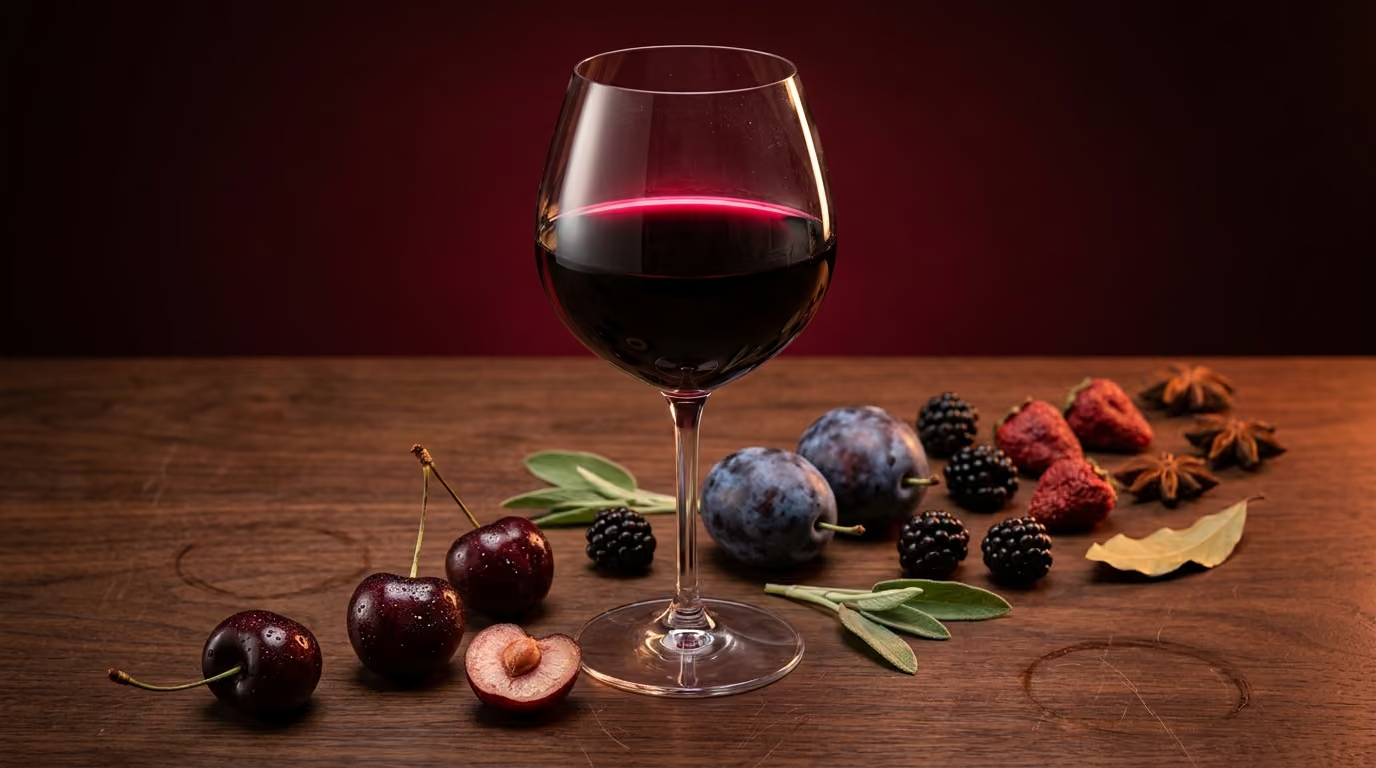
Barbera leads with red and dark fruit, then finishes clean and juicy rather than heavy. Cherry and plum show up in nearly every bottle. Blackberry, dried strawberry and a little dried-herb or anise note turn up often enough that you'll start recognizing them, and Wine Folly's Barbera wine profile lists that same fruit set alongside violet, vanilla and nutmeg from oak.

Two structural traits do most of the work, and they explain why the wine feels the way it does. Acidity is high, which in plain terms means the wine makes your mouth water and keeps each sip feeling fresh instead of flat or syrupy. Tannin is low, so you don't get that dry, chalky, tea-bag sensation across your gums that a young Cabernet can leave behind. If tannin is the trait that's put you off reds before, our explainer on what tannins actually do in red wine covers why some reds grip and others don't.
The combination is a little unusual and it's worth understanding, because it's what makes Barbera hard to guess from the color. The wine stains the glass deep ruby to near-black, which your eye reads as heavy. Then it arrives bright and tart, which your palate reads as light. Wine Folly describes the same contradiction as tasting both rich and light-bodied at once, and that gap between how it looks and how it drinks is the single most common surprise for first-time buyers.
Style does shift with where the wine was grown and how it was aged. Italian Barbera generally stays fresher and more tart, with more herb and less sweetness of fruit. Barbera from warmer places, including California's Sierra Foothills and Argentina's Mendoza, tends to come out rounder and more fruit-forward, and producers there often use more new oak, which adds vanilla and baking spice and softens the edges. Neither version is the correct one. One is brighter, the other is plusher, and which you prefer is a matter of your own taste rather than quality.
Almost all of it is dry. Sweetness is not part of the Barbera picture in any of its main appellations, so if a bottle tastes sweet to you, that's usually ripe fruit and oak vanilla reading as sweetness rather than actual residual sugar.
Will you like Barbera if you already drink Pinot Noir or Chianti?
Probably, and those two are the most useful reference points you can start from. People who reach for Pinot Noir because they want a red that stays lively rather than heavy usually get on well with Barbera, since both are low in tannin and high in energy. Barbera brings darker fruit and a bit more weight, so it reads as a slightly fuller version of the same idea.
Chianti drinkers are the other easy match, and for a more specific reason. Chianti is built on Sangiovese, which is also high in acid, so the tart, food-friendly shape is familiar territory. The difference between them is grip, because Sangiovese carries real tannin and often finishes a little firm and savory, while Barbera finishes softer and fruitier. If you've been drinking Chianti and quietly wishing it were less drying, Barbera is the obvious next bottle, and our guide to Sangiovese and what it tastes like is worth reading alongside this one if you want the comparison in both directions.
The people who tend not to click with Barbera are the ones who want a red to feel thick and velvety. If your favorite bottles are big Napa Cabernets, Australian Shiraz or heavily oaked Malbec, Barbera can come across as thin or sour rather than fresh, because you're expecting weight and getting lift instead. That's not a flaw in the wine, and it isn't a flaw in your palate either. High acidity is genuinely polarizing, and it reads as refreshing to some people and as sharp to others.
Gamay sits in similar territory if you want to triangulate further, and our look at Gamay for people who like light reds covers the lighter end of the same bright-red family.
If you're holding an unfamiliar bottle in a shop and want a straight answer on whether it suits how you drink, Fit Check gives you a verdict on that specific wine rather than a general profile of the grape.
What do Barbera d'Asti, d'Alba, Superiore and Nizza mean on the label?
These four names are the most useful information on a Barbera bottle, and each one changes what's legally allowed inside. Almost no grape guide explains them, which is why so many people buy Barbera twice and get two wines that taste unrelated.
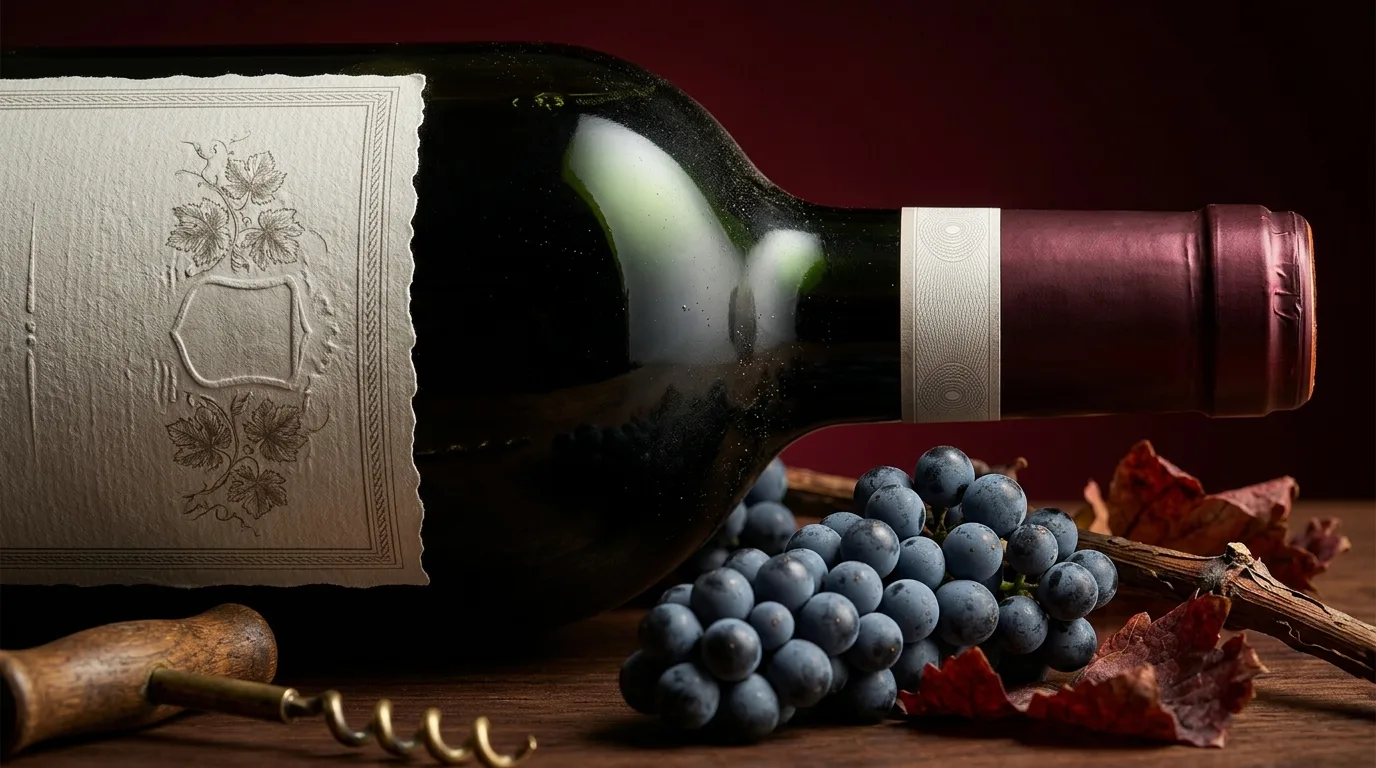
The short version is that Asti is the classic heartland and keeps the wine nearly pure Barbera, Alba allows a splash of Nebbiolo that firms the wine up, Superiore means extra time including time in wood, and Nizza is the top tier with the strictest rules of all. Here's how the production rules compare, drawn from the current denomination rules published by Italian Wine Central.
| What the label says | Grape rules | Minimum aging | What it usually means in the glass |
|---|---|---|---|
| Barbera d'Asti DOCG | At least 90% Barbera | 4 months | The everyday benchmark style, tart and fruit-driven |
| Barbera d'Alba DOC | At least 85% Barbera, up to 15% Nebbiolo | None for the base wine | A firmer, slightly more structured take, with more grip |
| Barbera d'Asti Superiore | At least 90% Barbera | 14 months, of which 6 in barrel | Rounder and more oak-influenced, less overtly tart |
| Nizza DOCG | 100% Barbera | 18 months, of which 6 in barrel | The most serious tier, denser and built to age |
The Nebbiolo allowance in Barbera d'Alba is the detail worth carrying with you, because it's the one that explains a difference you can actually taste. Nebbiolo is high in tannin, so up to 15% of it in the blend adds structure and a savory edge that a Barbera d'Asti simply can't have under its own rules. Italian Wine Central's entry for Barbera d'Alba DOC records that maximum, and it's why Alba bottlings often feel a shade more serious next to an Asti at the same price.
Nizza deserves a note of its own. It started life as a subzone of Barbera d'Asti and became a separate DOCG in 2014, covering 18 communes around Nizza Monferrato, and its production rules require 100% Barbera, a minimum 13% alcohol and at least 18 months of aging with 6 of those in barrel. Nizza Riserva goes further at 30 months with 12 in barrel. These are the bottles that prove Barbera can be a wine you cellar rather than only a wine you open on a Tuesday.
For scale, Barbera d'Asti DOCG covered 3,560 hectares of vineyard in 2021, which is roughly 8,793 acres, while Barbera d'Alba covered 1,296 hectares. Asti is the bigger and more widely exported name, so it's the one you're most likely to meet in a US store. If Italian classification tiers in general still feel opaque, our walkthrough of how to read an Italian wine label covers DOCG, DOC and IGT in one pass.
What food goes with Barbera?
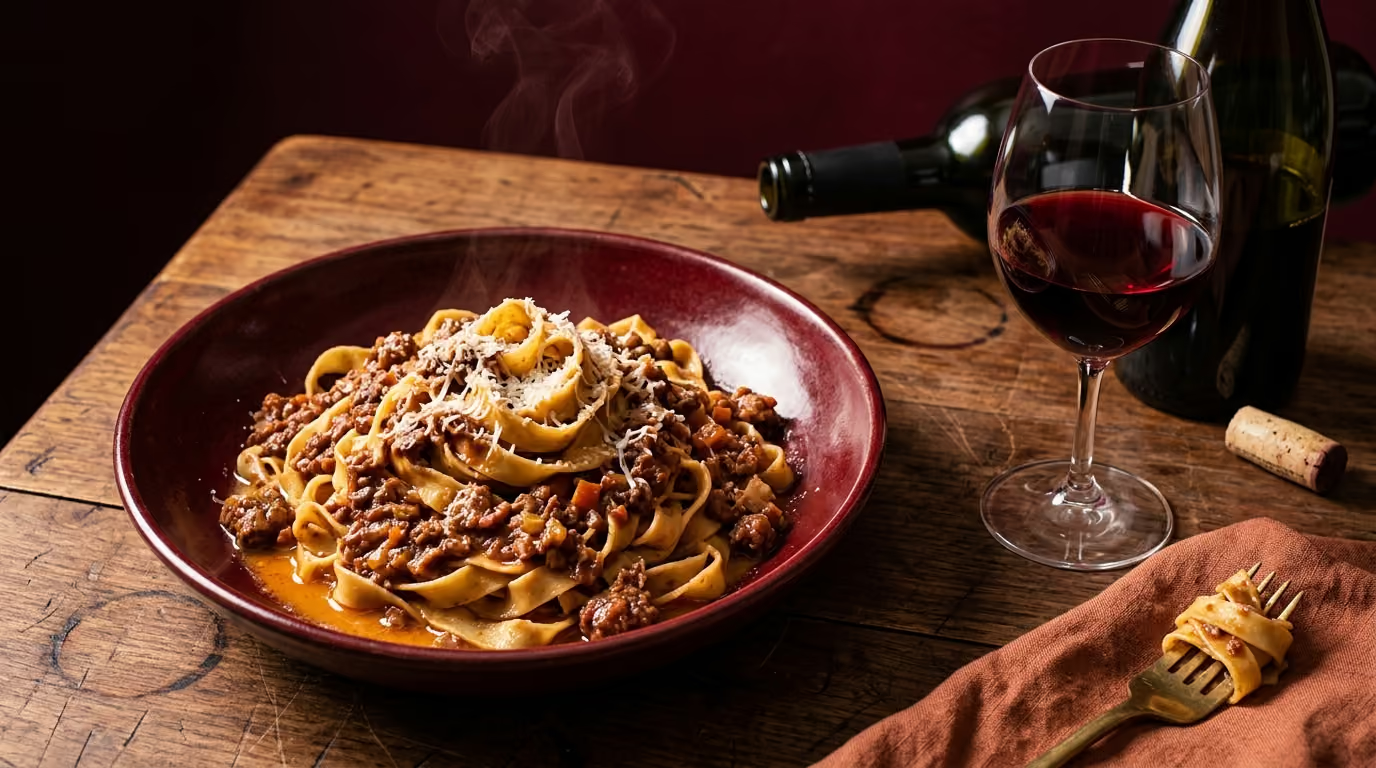
Barbera handles tomato, salt and fat better than almost any red at its price, because its acidity meets acidic food head-on instead of being flattened by it. Tomato-based pasta is the classic pairing for exactly that reason, and it holds up whether the sauce is a simple marinara or a long-simmered ragu.
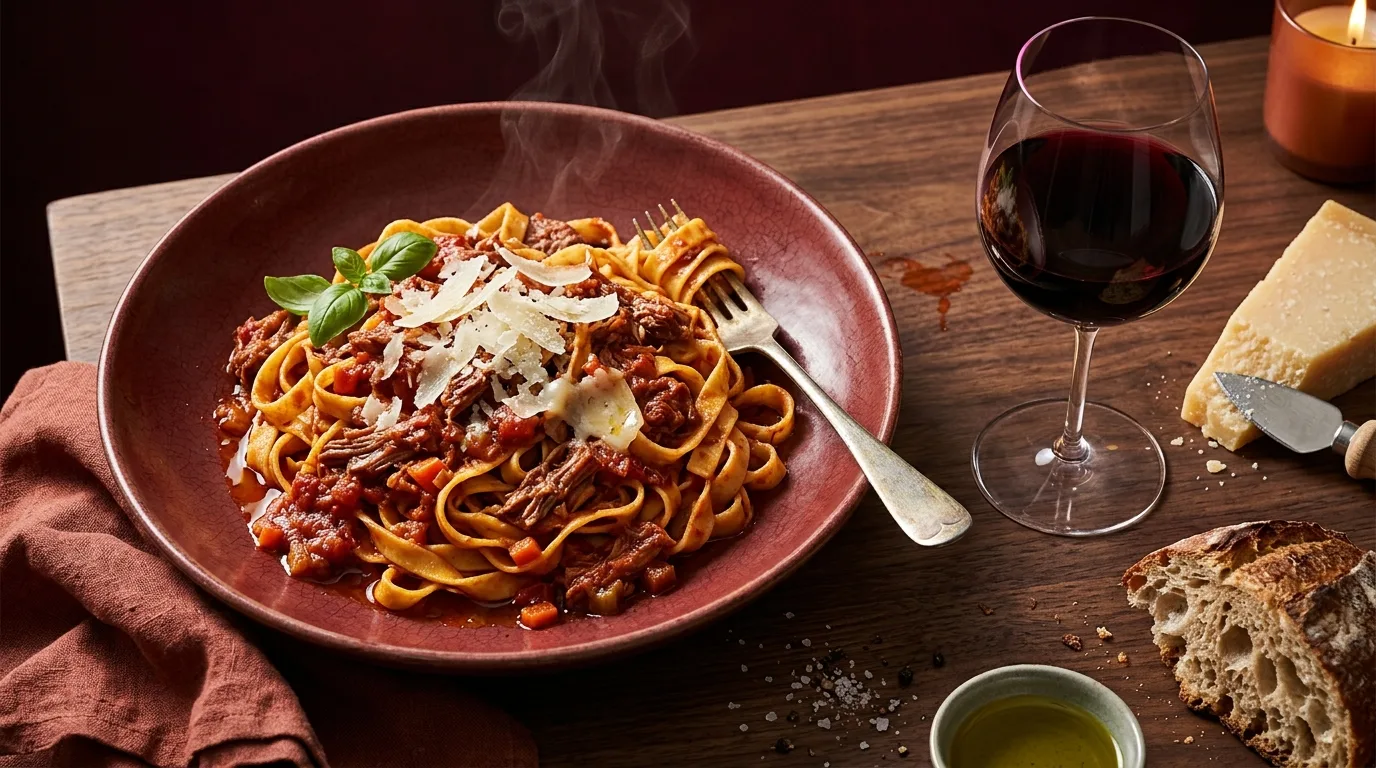
Pizza is the other easy win, especially anything with sausage, pepperoni or mushrooms. Lasagna, meatballs, braised pork, roast chicken with herbs, burgers and mushroom risotto all sit comfortably in the same range. Hard aged cheeses like Parmigiano and pecorino work beautifully, since the salt in the cheese and the acid in the wine sharpen each other. Wine Folly makes the same point from a different angle, suggesting rich dark meats, mushrooms and herbaceous cheeses on the grounds that the wine's brightness completes a fatty dish.
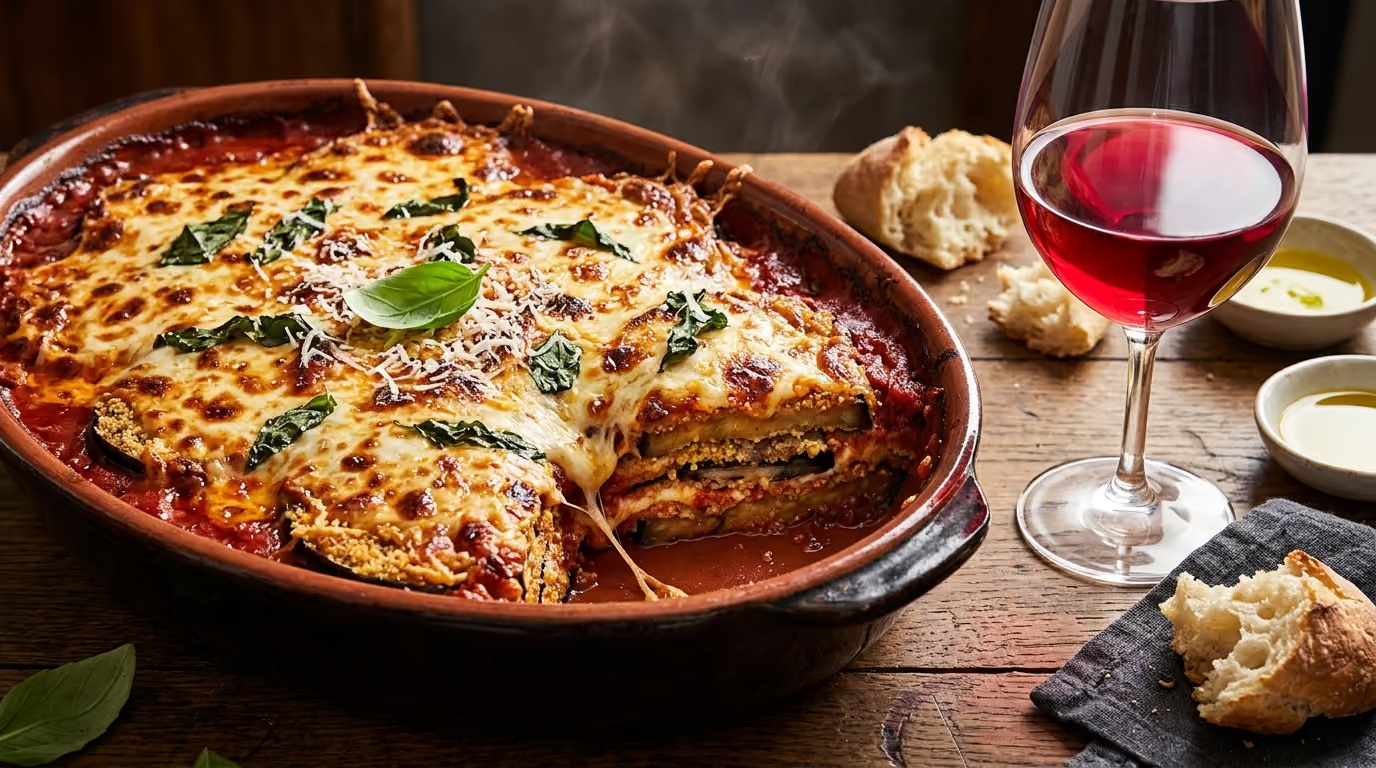
Barbera is also unusually forgiving with vegetables, which most reds are not. Roasted mushrooms, charred broccolini, eggplant and anything finished with olive oil and herbs all get along with it, so it's a genuinely useful bottle when half the table is eating meat and half isn't.
Two situations call for something else. Delicate white fish tends to get buried under the dark fruit, and a big, heavily marbled steak usually wants more tannin to cut through the fat than Barbera can offer. Very spicy food can also make the acidity feel sharper than it is, though that varies a lot from person to person. If you want a broader framework rather than a list, our guide to pairing wine with food explains the weight-matching idea this all rests on, and our rundown of wine for Italian food covers the rest of the menu.
How should you serve Barbera, and how long does it keep?
Serve Barbera slightly cool, somewhere around 60 to 65 degrees Fahrenheit, rather than at room temperature. Twenty minutes in the fridge before you open it makes a real difference, because warmth exaggerates alcohol and flattens exactly the freshness you bought the wine for. Our notes on wine serving temperatures cover the same idea across other styles.
Decanting is optional for most bottles and genuinely useful for Nizza and for Superiore wines that have spent a year or more in barrel. Half an hour in a decanter, or even just in the glass, lets the oak settle back and the fruit come forward. An everyday Barbera d'Asti needs none of that and is ready the moment you pour it.
Most Barbera is made to be enjoyed young, within a few years of the vintage, and that's part of its appeal rather than a limitation. The exceptions are the wines with real aging requirements behind them, since Nizza and the Colli Astiani and Tinella subzones are built with enough structure to reward keeping. Once you've opened a bottle, the high acidity works in your favor, and a re-corked Barbera in the fridge usually holds up better on day two than a softer, oakier red would.
On price, Barbera has stayed one of the better values in Italian wine, largely because it grew up in Piedmont's shadow behind Nebbiolo and never picked up a prestige premium. The everyday Asti bottlings sit well below what a comparable Barolo costs, and Nizza asks more without approaching Nebbiolo territory.
Frequently asked questions
Is Barbera a dry wine?
Yes, Barbera is made dry across all of its main appellations, and any sweetness you notice comes from ripe fruit or oak vanilla rather than sugar left in the wine.
Is Barbera a light or full-bodied wine?
It sits in the middle and confuses people because of it. The color is deep and dark, which suggests a full-bodied wine, while the low tannin and high acidity make it drink lighter and fresher than it looks.
What's the difference between Barbera d'Asti and Barbera d'Alba?
Barbera d'Asti must be at least 90% Barbera, and Barbera d'Alba may include up to 15% Nebbiolo. That Nebbiolo allowance usually gives Alba bottlings a firmer, more structured feel, while Asti stays purer and more tart.
Is Barbera similar to Pinot Noir?
They share low tannin and high acidity, so both feel bright rather than heavy, and people who enjoy one often enjoy the other. Barbera brings darker fruit and a little more weight, and it typically costs less.
Should Barbera be chilled?
A short chill genuinely helps here. Around 60 to 65 degrees Fahrenheit keeps the freshness intact, and twenty minutes in the fridge before serving gets most bottles into that range.
What does Nizza mean on a Barbera label?
Nizza is a separate DOCG created in 2014 for the top tier of the Barbera d'Asti area. It requires 100% Barbera and at least 18 months of aging, 6 of them in barrel, so these are the denser, longer-lived bottles.
Does Barbera age well?
Everyday bottlings are made to drink young, within a few years of the vintage. Nizza and the Superiore subzone wines carry enough structure to age for a decade or more.
Where Barbera earns its place on your shelf
Barbera is the red to reach for when you want fruit and energy without the drying grip, and it's one of the few reds under $25 that genuinely improves a plate of tomato pasta rather than fighting it. Learn the four names on the label and you can steer between the tart everyday version and the denser, oak-aged one on purpose instead of by accident.
Whether its acidity lands as refreshing or as sharp is the one thing a guide can't settle for you, and that's the honest limit of any grape explainer. The only way to find out is to open a bottle of Barbera d'Asti alongside dinner and pay attention to what you think.