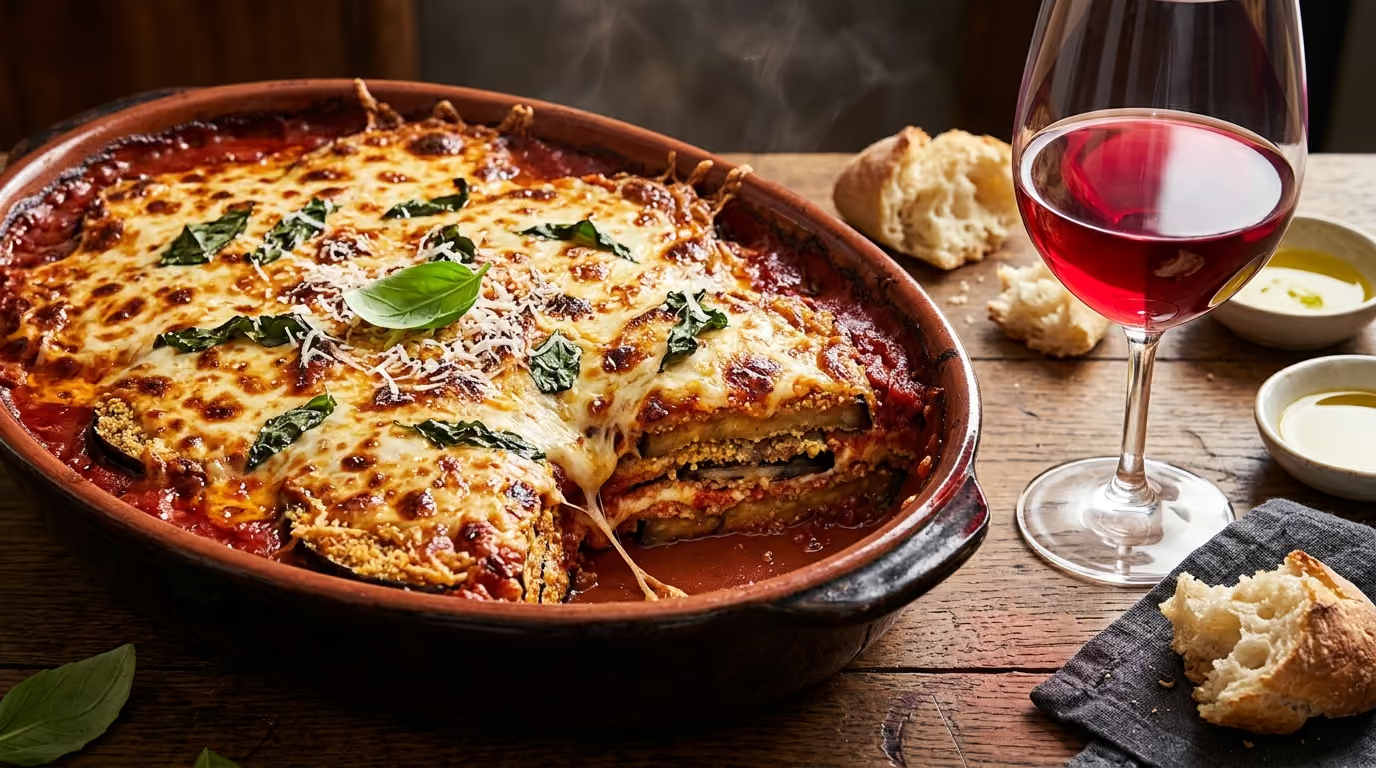
The best wine for eggplant parmesan is a red with high acidity and modest tannin, which means Barbera, Chianti or Montepulciano d'Abruzzo rather than Cabernet Sauvignon. Bitterness in the glass almost always comes from pairing a heavily tannic red with a dish that combines tomato acid, salt and slightly bitter fried eggplant. Swap the grape and the problem disappears.
If you want one bottle to grab without thinking about it, buy a Barbera d'Asti. It has the acidity to keep up with marinara and so little tannin that the eggplant has nothing to clash with.
Why does wine taste bitter with eggplant parmesan?
Tannin is the culprit, and this dish puts three things on the plate that make tannin taste harsher than it would on its own. Salt from the melted cheese, acid from the tomato sauce and the naturally slightly bitter compounds in fried eggplant all sharpen the drying, astringent sensation that tannin creates.

Tannin is the compound that makes your mouth feel dry and grippy, the same sensation you get from over-steeped black tea. It comes from grape skins, seeds and oak barrels, and big reds have plenty of it. On its own with a steak it's wonderful, because the protein and fat in the meat bind to the tannin and soften it. Eggplant parmesan has very little of either, so nothing tames it.
Acidity in the wine does the opposite job. It refreshes your palate between bites, cuts through melted cheese and mirrors the tomato sauce rather than fighting it. When a wine and a sauce have similar acidity, the wine tastes smooth. When the wine has less acidity than the sauce, the wine suddenly tastes flat and hollow, which is the other common failure with tomato dishes.
Eggplant deserves its own mention because it behaves differently from the chicken version of this dish. Eggplant contains bitter compounds that concentrate when it's salted, breaded and fried, and it soaks up far more oil than chicken does. That combination of bitterness and oil is precisely what a tannic wine amplifies. Our explainer on what tannin actually does covers the mechanism in more detail.
Which red wines work best with eggplant parmesan?
Italian reds built on high acidity and moderate tannin are the natural fit, because they evolved alongside exactly this kind of food. Barbera, Sangiovese from Chianti, Montepulciano d'Abruzzo and lighter Pinot Noir all handle the dish without turning bitter.
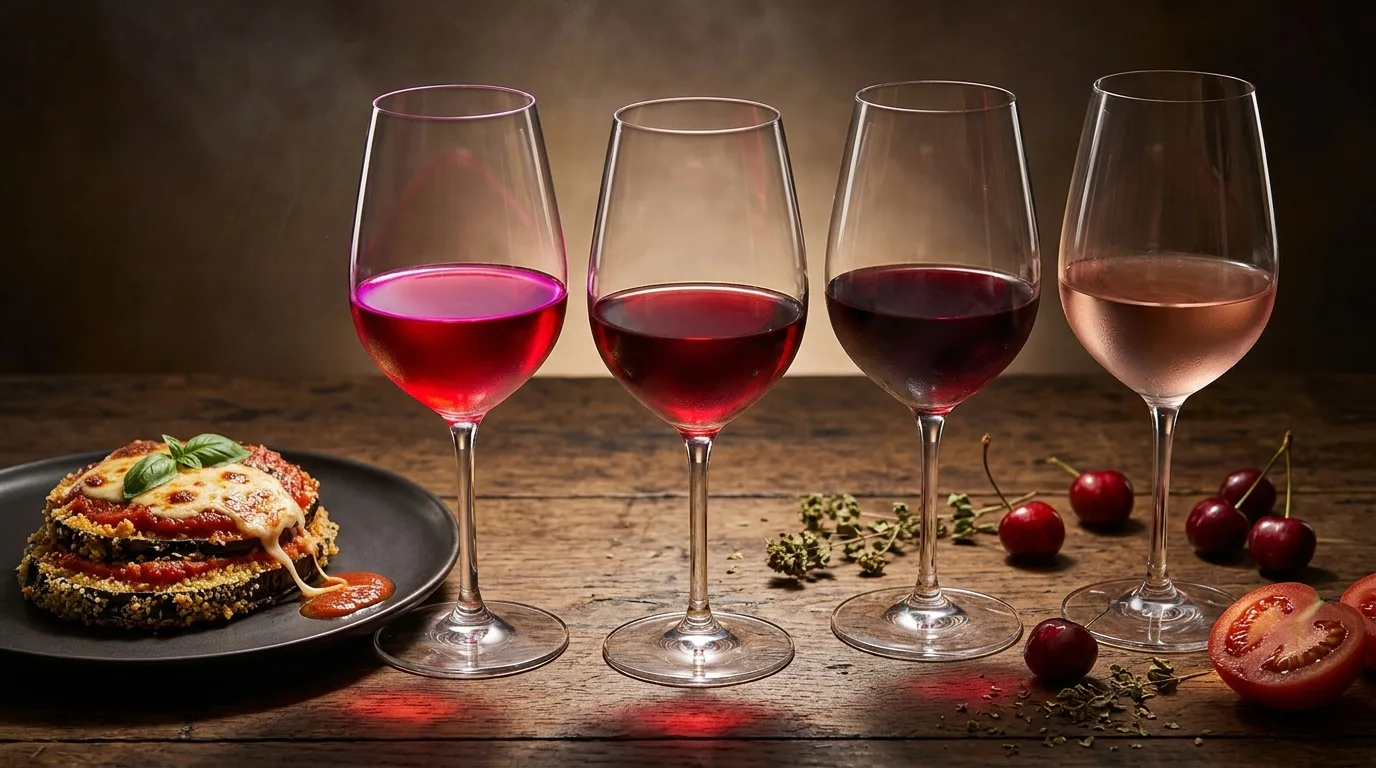
| Wine | Why it works | How it tastes |
|---|---|---|
| Barbera | Very high acidity, unusually low tannin | Juicy dark cherry, bright, smooth |
| Chianti (Sangiovese) | Tomato-friendly acidity, medium tannin | Sour cherry, dried herbs, savory finish |
| Montepulciano d'Abruzzo | Soft tannin, rounder texture | Dark plum, mild spice, easy |
| Valpolicella | Light body, low tannin, fresh | Red cherry, almond, gentle |
| Pinot Noir (unoaked) | Gentle tannin, high acidity | Red fruit, silky, light |
Barbera is the standout and it's genuinely under-appreciated. The grape naturally produces wines with striking acidity and remarkably little tannin, which is the exact combination this dish wants. Look for Barbera d'Asti or Barbera d'Alba from Piedmont, usually in the fifteen to twenty-five dollar range.
Chianti is the traditional answer and it works for good reason, since Sangiovese has the sour-cherry acidity and savory, herbal edge that meets tomato sauce halfway. It carries more tannin than Barbera, so choose a straightforward Chianti or Chianti Classico rather than a heavily oaked Riserva if bitterness is your worry. Our Sangiovese guide covers the range.
What to avoid is easier to state. Cabernet Sauvignon, Petite Sirah, Nebbiolo, young Bordeaux and anything described as bold, structured or heavily oaked will all fight this dish. They're excellent wines that happen to be wrong here, and no amount of decanting fixes the mismatch. If low tannin is what you're after generally, our roundup of low-tannin red wines is a useful shortlist.
Can you drink white wine with eggplant parmesan?
Yes, and a crisp white is arguably the safer choice if bitterness has burned you before, since white wine has virtually no tannin to cause the problem in the first place. It also refreshes the palate more effectively against all that fried breading and melted cheese.
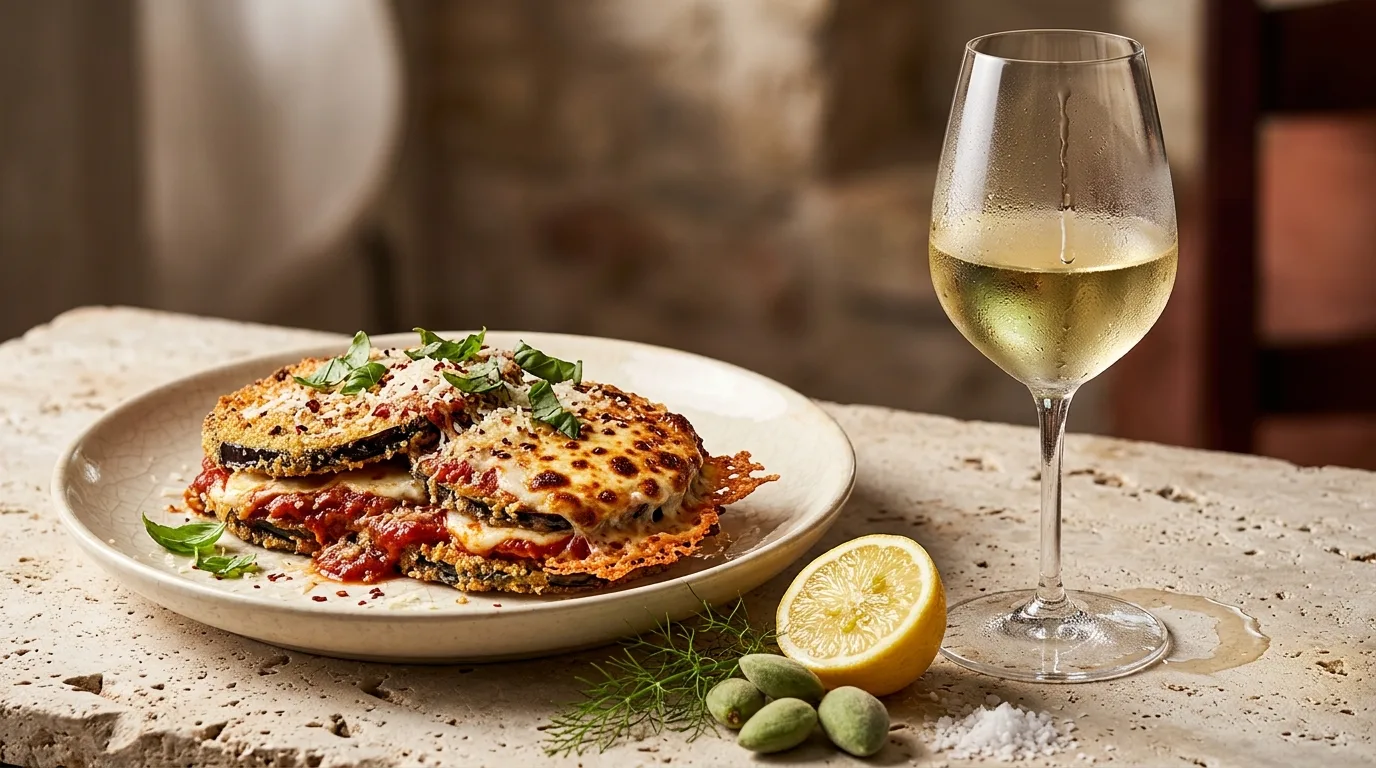
Vermentino is the best of them. It's a coastal Italian white with real texture, a saline edge and enough acidity to cut through the richness, and it has the body to stand up to a substantial baked dish rather than getting lost. Soave from the Veneto does a similar job with a softer, more almond-scented character.
Dry rosé deserves more attention here than it usually gets. It sits between the two camps, offering red-fruit character that echoes the tomato without any tannin at all, and it handles the cheese comfortably. A dry Italian rosato or a Provence-style bottle both work.
Sparkling wine is the choice if the eggplant is fried rather than baked, because carbonation scrubs oil off your palate in a way still wine can't manage. A dry Lambrusco keeps the red-fruit character while adding that scrubbing effect, and it's the traditional pairing for rich food across Emilia-Romagna. Prosecco works too if you'd rather stay white.
How does eggplant parmesan differ from chicken parmesan for pairing?
Eggplant needs a gentler wine than chicken does, and the difference is real rather than pedantic. Chicken parmesan brings protein and fat that bind tannin and soften it, so a fuller red works. Eggplant has almost no protein, absorbs considerably more oil, and carries its own bitter edge, so tannin has nothing to bind to and stays sharp.
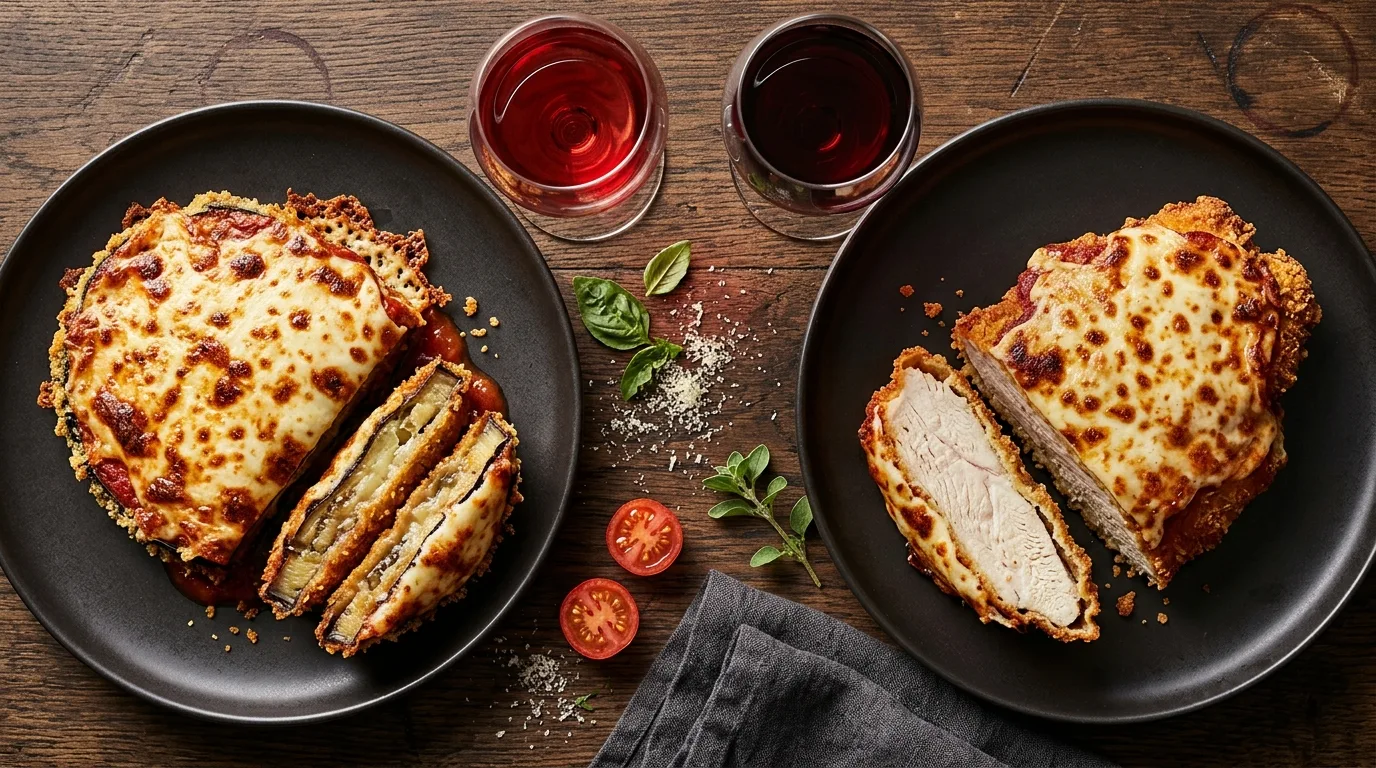
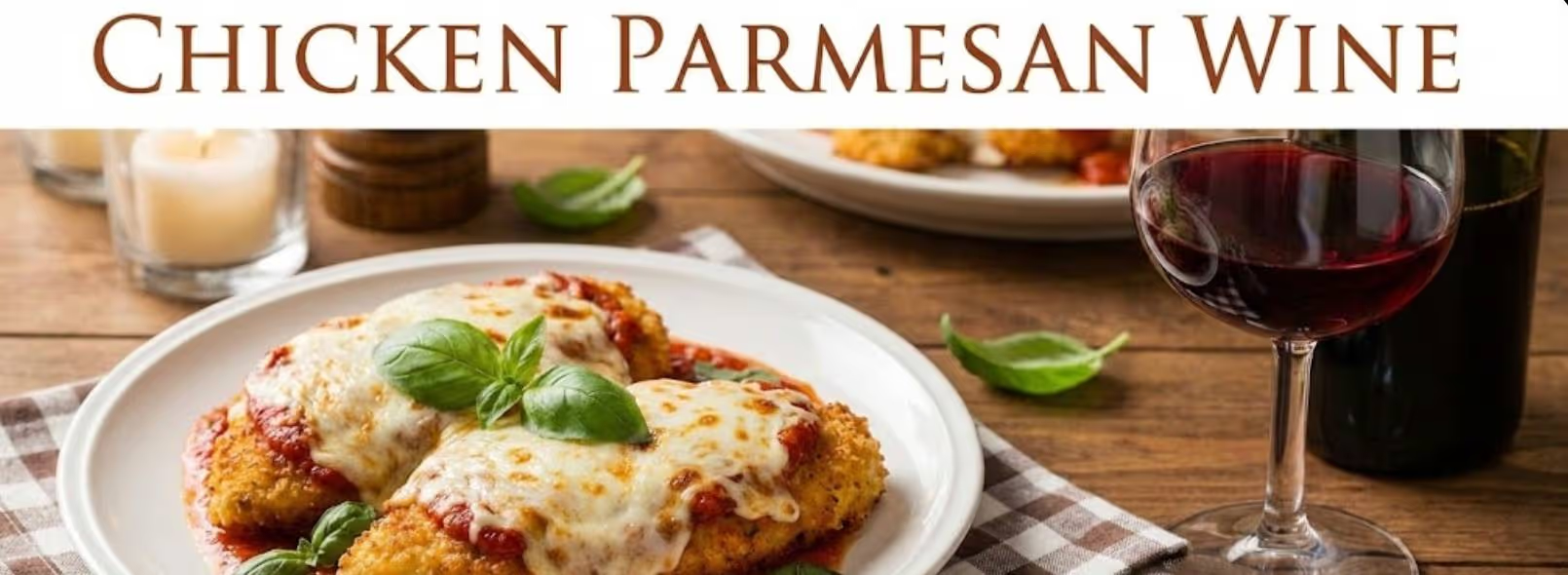
That means you can step up in weight for the chicken version and should step down for eggplant. If a Chianti Classico Riserva is comfortable with chicken parmesan, a straight Chianti or a Barbera is the better call with eggplant. Our notes on the best wine for chicken parmesan cover the fuller end of that range.
How the eggplant is cooked shifts things further. Deep-fried and breaded slices are the richest version and lean hardest toward high acidity or bubbles. Grilled or roasted eggplant is far less oily and slightly sweeter from the caramelization, which opens the door to a rounder red like Montepulciano. A baked casserole version sits in between.
The sauce matters as much as the eggplant. A long-simmered sauce with a touch of sugar is rounder and more forgiving, while a quick bright marinara is sharper and demands more acidity from the wine. Extra garlic and chile push you further toward fresher, lighter bottles.
Cheese is the variable people forget, and it changes the target more than the eggplant does. A dish built mostly on fresh mozzarella is milder, wetter and gentler on the wine, so a lighter red like Valpolicella has room to work. Pile on aged parmesan and pecorino and the dish becomes considerably saltier and more savory, which asks for a wine with more acidity and a bit more grip, putting Chianti Classico ahead of the softer options. Taste the dish before you decide if you can, because the cheese blend tells you more about which bottle to open than the recipe title does.
What should you buy for dinner tonight?
Pick a Barbera if you want the safest bet, a Chianti if you want the classic, or a Vermentino if you'd rather drink white. All three sit comfortably under twenty-five dollars in most shops, and any of them will beat an expensive Cabernet with this particular dish.

In a shop, the fastest route is to head to the Italian section and look for those region names on the label rather than reading descriptions. Italian reds are organized by place rather than grape, so Barbera d'Asti, Chianti and Montepulciano d'Abruzzo are all findable in about thirty seconds. Skip anything labeled Riserva if you're worried about bitterness, since that usually signals more oak and more structure.
In a restaurant, describing the sensation you want works better than naming a grape. Asking for "a bright, medium-bodied red that isn't too drying" gets you exactly where you need to be, and any server will understand it immediately. If they suggest something big and structured, mention the eggplant and they'll usually redirect.
Serving temperature is the free improvement almost nobody makes. These reds taste considerably better around 60°F than at room temperature, and twenty minutes in the fridge before pouring sharpens the fruit and makes the acidity feel cleaner against the sauce. Warm red wine tastes both heavier and more alcoholic, which works against everything you're trying to achieve here.
This is a reasonable moment for Sommy's Pairing feature, since you can photograph the dish or the recipe and get a recommendation matched to how you actually like wine rather than to the average palate. The general answer above is Barbera, and whether Barbera is right for you is a slightly different question.
Leftovers deserve a footnote because they behave differently. Eggplant parmesan reheated the next day is softer, sweeter and less oily, since the breading has given up its crispness and the sauce has had a night to settle and mellow. A wine that felt slightly too sharp alongside the fresh dish often sits perfectly with the leftovers, so if you opened a bottle that seemed a touch aggressive on the night, save the rest rather than writing it off. The same wine can genuinely improve against the same dish twenty-four hours later.
Frequently asked questions
What is the best wine for eggplant parmesan?
Barbera is the strongest all-round choice, thanks to its very high acidity and unusually low tannin. Chianti and Montepulciano d'Abruzzo are excellent alternatives, and Vermentino is the best white option if you'd rather avoid red entirely.
Why does my red wine taste bitter with eggplant parmesan?
The wine most likely has high tannin. Tomato acid, salty cheese and the natural bitterness of fried eggplant all intensify how tannin feels, and the dish contains too little protein and fat to soften it, so the wine reads as dry and bitter.
Can you drink Cabernet Sauvignon with eggplant parmesan?
It isn't a good match for this dish. Cabernet Sauvignon's firm tannin and low relative acidity clash with the tomato sauce and amplify the eggplant's bitter edge, which produces exactly the harsh finish most people are trying to avoid.
Does white wine go with eggplant parmesan?
White wine works very well, particularly Vermentino or Soave. Having no tannin at all, white wine cannot produce the bitterness problem, and its acidity cuts cleanly through the fried breading and melted cheese.
Should red wine be chilled for eggplant parmesan?
A short chill genuinely helps this pairing. Around 60°F, roughly twenty minutes in the fridge, sharpens the fruit and makes the acidity feel fresher against tomato sauce, while a warm bottle tastes heavier and more alcoholic.
Is Chianti or Barbera better with eggplant parmesan?
Barbera is the safer choice because it carries less tannin, while Chianti is the more traditional pairing and brings a savory, herbal quality that suits the dish. If a previous bottle tasted bitter, choose Barbera.
Getting it right without overthinking it
The rule underneath all of this is short enough to remember at the shop. Match the tomato sauce with acidity, and keep tannin low so it has nothing to grip against the eggplant.
Barbera, Chianti, Montepulciano, Vermentino and dry Lambrusco all satisfy that rule, cost sensible money and are stocked almost everywhere. Chill whichever one you choose for twenty minutes, and the bitterness that ruined the last attempt simply won't show up. If Italian food is a regular fixture, our broader guide to the best wine for Italian food applies the same logic across the rest of the menu.