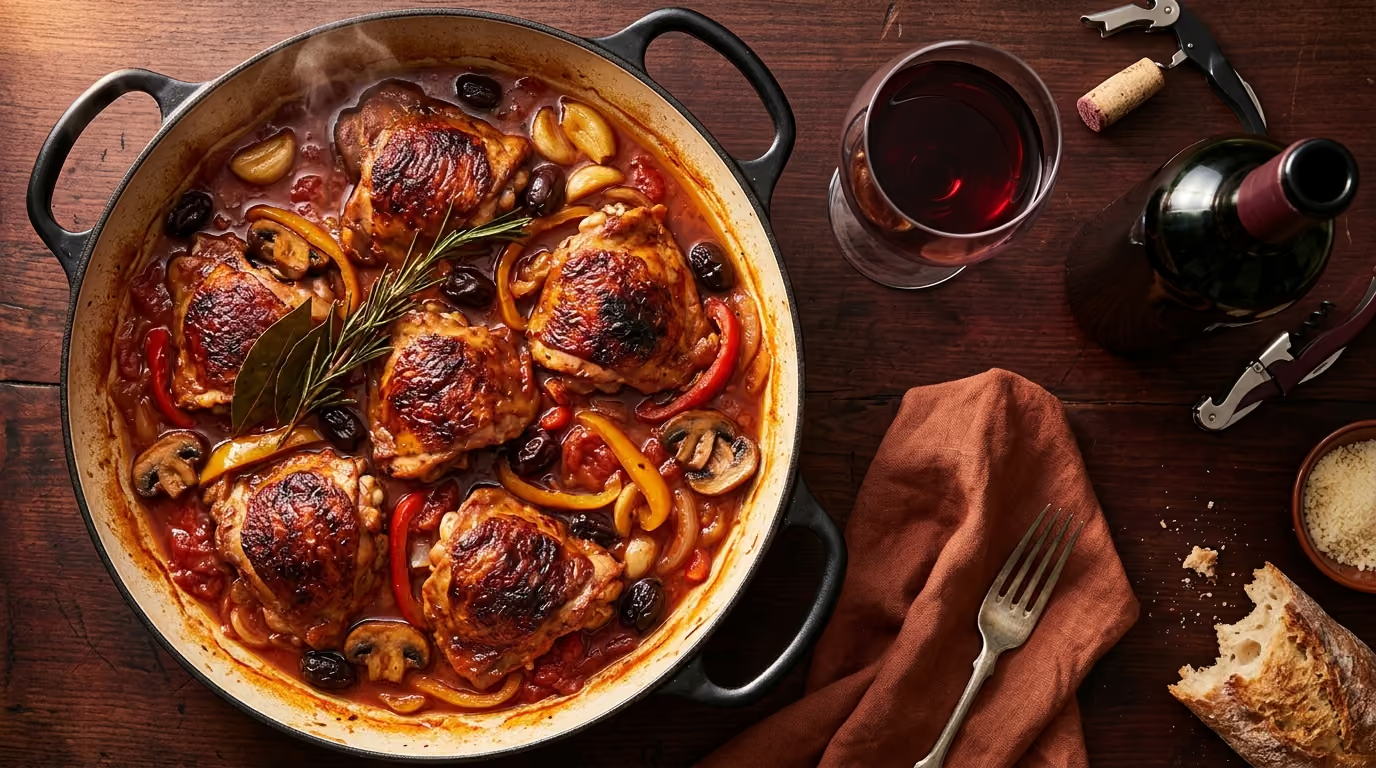
Open a Chianti with chicken cacciatore and you'll be right most nights. Barbera and Montepulciano d'Abruzzo are just as good and often cheaper, and a light Pinot Noir works when mushrooms are doing most of the talking. What all of them share is high acidity and modest tannin, which is exactly what a tomato-braised dish needs.
The mistake almost everyone makes here is pairing to the chicken. Chicken is mild and it isn't the thing your wine has to answer to, because cacciatore buries it under tomatoes, peppers, herbs and long slow heat. Pair to the sauce and the choice stops being a guess.
What wine goes with chicken cacciatore?
Sangiovese-based reds are the default answer, and Chianti is the easiest one to find. Sangiovese carries very high natural acidity, bright sour-cherry fruit and a dried-herb, faintly earthy edge, and those three things line up with a tomato braise almost perfectly. It's also what gets poured with this dish across central Italy, where the recipe comes from.
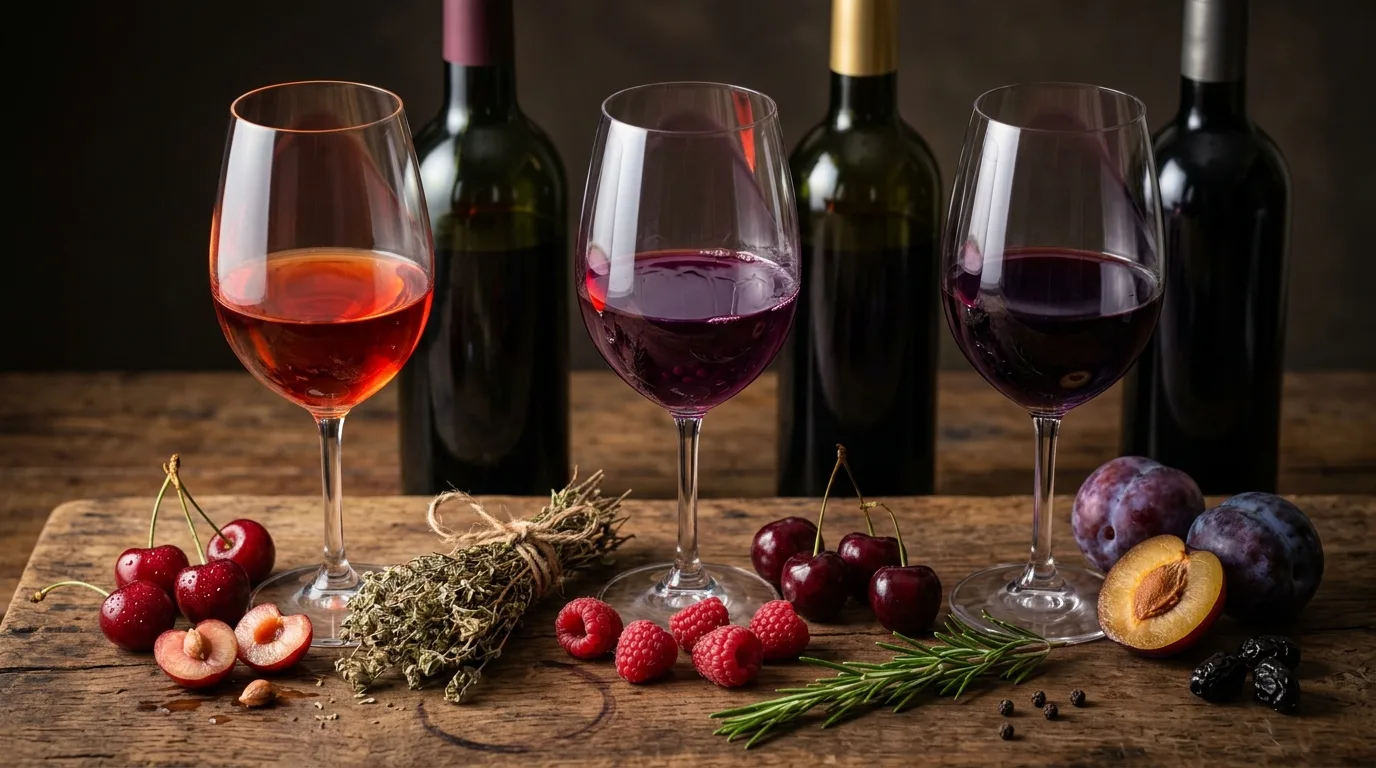
Barbera is the alternative we'd reach for just as often, and for a lot of dinners it's actually the safer bet. It's grown mostly in Piedmont, it has acidity as high as Sangiovese with noticeably softer tannin, and its fruit runs toward ripe cherry and raspberry rather than sour cherry. That softness matters when the sauce is heavy on garlic or when someone at the table finds firmer reds drying.
Montepulciano d'Abruzzo is the value pick and it belongs in this conversation more than most guides admit. It's plummy, smooth, low in tannin and usually inexpensive, and it handles a rustic tomato braise without any fuss at all. If you're feeding a group and don't want to think hard about it, this is the bottle.
Pinot Noir earns its place when your version of the dish leans mushroom-heavy, which plenty of them do. It's lighter and more savory than the Italian reds above, with an earthy quality that runs alongside cooked mushrooms rather than covering them. Keep it away from obvious oak and vanilla, because those fight the tomato.
Why does the tomato decide everything?
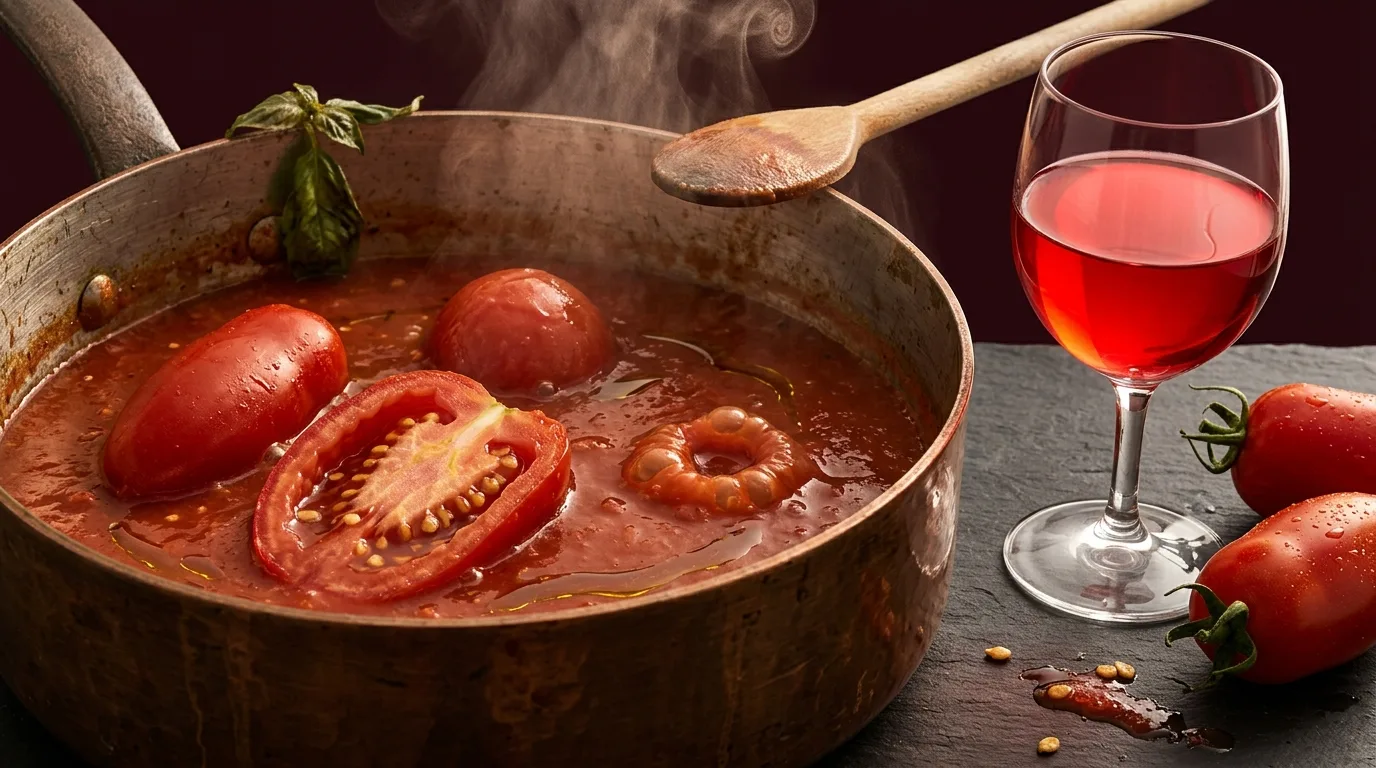
Tomatoes are acidic, and acidity in food is the single strongest force in any pairing. A wine with less acidity than the dish will taste flat and slightly metallic beside it, its fruit stripped out, while a wine with matching acidity stays bright and tastes like itself. That's the whole mechanism, and it explains almost every cacciatore pairing success and failure.
Tannin is the second variable and the one that ruins more dinners. Tannin is the drying, grippy sensation you get from a big Cabernet, and it needs fat or protein on the plate to soften against. A tomato braise gives it very little to work with, so the tannin lands unbuffered on your tongue, and combined with the acid in the sauce it reads as harsh and faintly bitter. Braised chicken thighs help a little, and they aren't nearly enough to rescue a serious Bordeaux.
Oak causes a quieter version of the same problem. Vanilla, toast and coconut are flavors that come from a barrel rather than from grapes, and none of them has any relationship to tomato, garlic, rosemary and bay. The wine ends up tasting like it's from a different meal, which is why an expensive oaky red can perform worse here than a cheap Italian one. Our broader guide to pairing wine with food works through how acid, tannin and weight interact if you want the general version of this rule.
Weight is the last consideration and the easiest to get right. Cacciatore is substantial without being heavy, so you want a medium-bodied wine rather than a light one or a blockbuster. A very light red disappears under the sauce and a very big one flattens it, and almost everything in between works. The same reasoning drives our spaghetti and meatballs pairing, which is the closest relative to this dish on the site.
Which bottles should you actually buy?
Here's the short list, sorted by the version of the dish you're cooking, because cacciatore varies enormously from one family recipe to the next.

| Your version of the dish | Reach for | Why it fits |
|---|---|---|
| Classic tomato, peppers, herbs | Chianti Classico | Sour cherry and dried herbs meet the sauce head on |
| Rich, garlicky, olive-heavy | Barbera d'Asti | Same acidity, softer tannin, riper fruit |
| Weeknight version, feeding a crowd | Montepulciano d'Abruzzo | Plummy and smooth, cheap, hard to get wrong |
| Mushroom-forward | Pinot Noir or Valpolicella | Earthy and light enough to sit with mushrooms |
| Served in high summer | Dry Italian rosato | Keeps a heavy braise feeling fresh |
| Very long braise, deep and dark | Chianti Rufina or Rosso di Montalcino | More structure for a more concentrated sauce |
Valpolicella deserves a note, since it gets overlooked and it's genuinely good here. It's a light, tart, cherry-driven blend from the Veneto, lower in alcohol than most of the alternatives, and it does the same job as a Pinot Noir at a friendlier price. Skip Amarone, which is made from dried grapes and is far too rich and sweet for this.
The wines to leave on the shelf are the ones people most often reach for. Cabernet Sauvignon, Malbec, Australian Shiraz, Napa red blends and anything described as full-bodied, velvety, jammy or heavily oaked will all bully the dish. A neutral light white does the opposite and simply vanishes, which is why a cheap Pinot Grigio isn't the safe compromise it looks like. For the wider Italian picture, our best wine for Italian food guide maps the same logic across pasta, pizza and everything else.
What if you make cacciatore without tomatoes?
Then everything above changes, and you want a white. The Roman version, cacciatore in bianco, skips the tomatoes entirely and builds the braise on white wine, vinegar, garlic, rosemary and sometimes olives, which produces a completely different dish that happens to share a name.
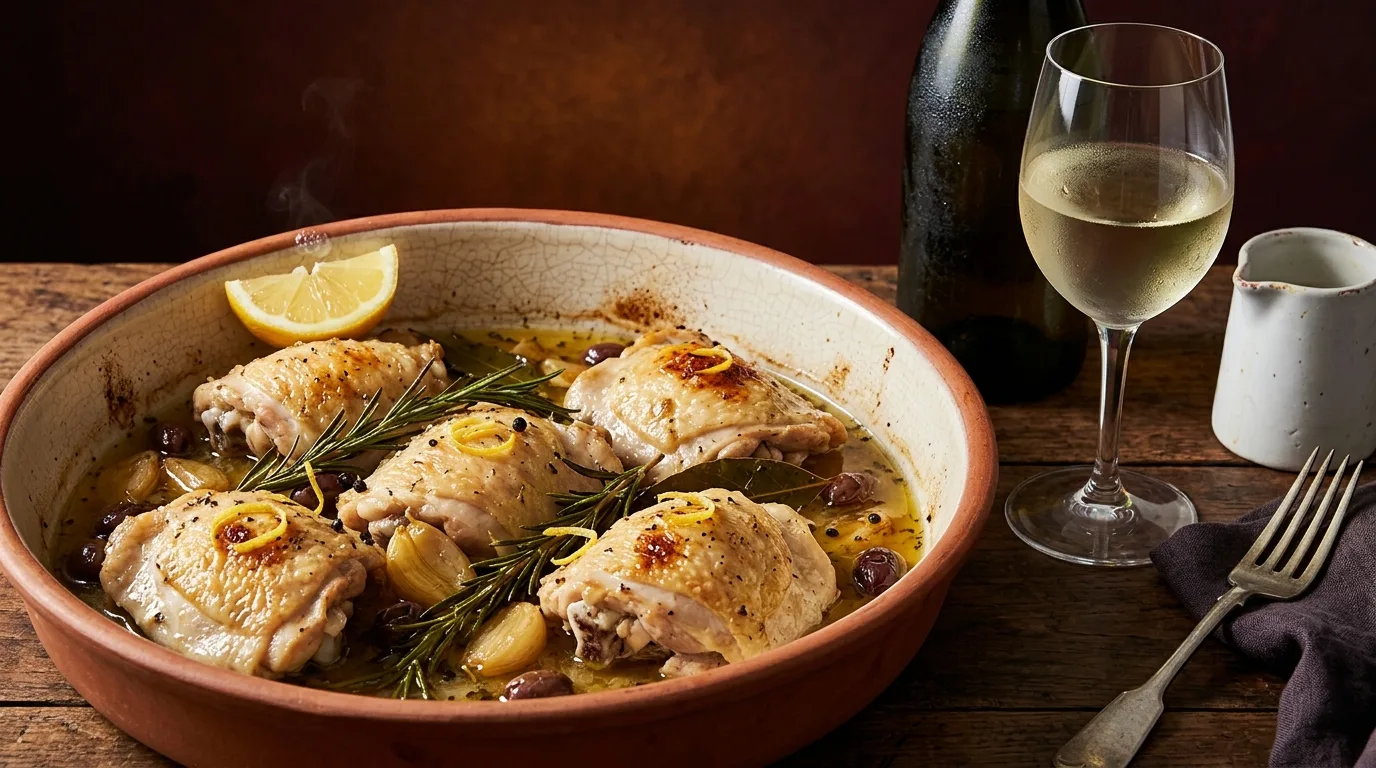
Without tomato acidity in the sauce, the vinegar becomes the sharp element and the herbs step forward, so a crisp Italian white is the natural match. Vermentino is the one we'd buy first, since it's dry, faintly saline and has enough herbal character to run alongside the rosemary. A Verdicchio or a decent Soave does the same job, and a Sicilian Grillo works if you want a little more weight. Our Albariño against Vermentino comparison covers how that coastal freshness behaves at the table.
You can still drink red with the white version if you'd rather, and the red should get lighter. A chilled Frappato from Sicily or a light Valpolicella keeps enough freshness to work against vinegar, where a Chianti can start to taste austere without the tomato to meet it. Northern Italian versions built on onion and herbs rather than garlic and vinegar sit somewhere between the two, and either a textured white or a light red will do.
The variation is not a technicality. Recipes for this dish differ region by region and family by family, and the difference between a tomato-heavy Tuscan braise and a Roman white one is bigger than the difference between two grape varieties. Look at your own pot before you look at any pairing chart.
Should you cook with the same wine you drink?
Cook with something drinkable but not the good bottle, and pick the same style you plan to pour. Most cacciatore recipes call for wine in the braise, usually red in central Italy and white in the Roman version, and that splash concentrates as it reduces, so whatever character it has ends up amplified on the plate.
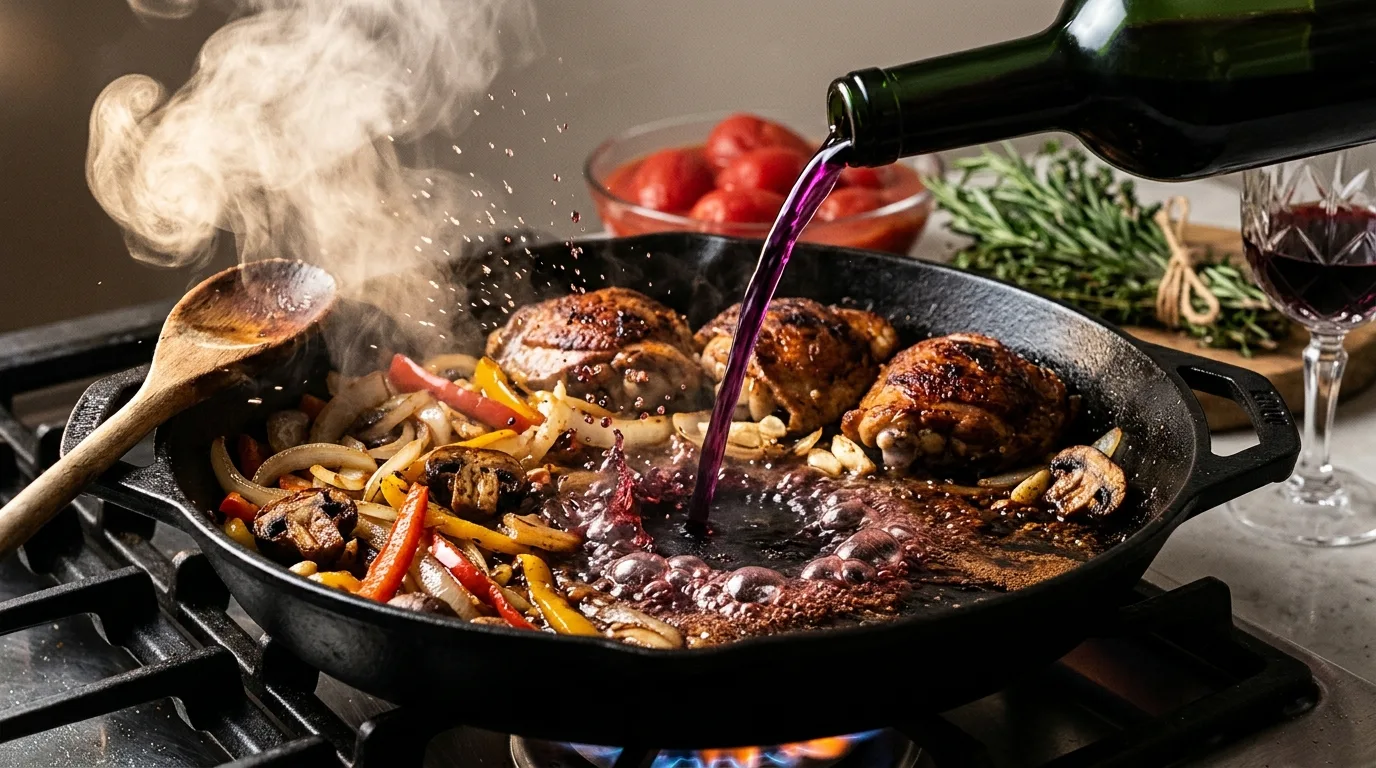
An inexpensive Chianti, Montepulciano or Sangiovese blend is ideal for the pot. Avoid anything sweet, anything heavily oaked and anything labeled cooking wine, which is usually salted and will throw the seasoning of the whole dish. A dry white for deglazing works even in a tomato version, and quite a few Italian cooks prefer it, since it brightens the sauce without adding another layer of dark fruit.
Buying for the table is easier once you stop reading the front label. Region is the fastest filter in the shop: Tuscany for Chianti, Piedmont for Barbera, Abruzzo for Montepulciano, and Veneto for Valpolicella will all land you in the right neighborhood. Words worth trusting on a back label are fresh, cherry, red fruit, herbal, savory and food-friendly, and words worth avoiding are jammy, velvety, chocolate, vanilla and full-bodied.
At the point you're holding an unfamiliar Italian bottle and can't tell whether it's the bright kind or the big oaky kind, a Label Scan in Sommy will read it and tell you where it actually sits, along with whether it matches how you've rated reds before. Italian labels are unusually bad at signaling style, since the region and the producer carry information the front of the bottle never spells out, so this is one of the few shelves where scanning genuinely beats squinting.
In a restaurant, the useful sentence is short. Ask for a medium-bodied Italian red with good acidity and not much oak, mention the tomato braise, and any competent server will find you something. Serve it around 60 to 65 degrees Fahrenheit rather than at room temperature, because a red served too warm tastes soupy and loses the freshness this dish depends on.
Frequently Asked Questions
What is the best wine for chicken cacciatore?
Chianti is the classic and most reliable choice, because Sangiovese's high acidity and sour-cherry fruit match a tomato braise directly. Barbera and Montepulciano d'Abruzzo are equally good and usually cheaper, and a light Pinot Noir suits mushroom-heavy versions.
Can you drink white wine with chicken cacciatore?
With the standard tomato version, a white generally gets lost, though a textured Italian white like Vermentino can hold its own. With the Roman cacciatore in bianco, which uses white wine and vinegar instead of tomatoes, a crisp Italian white is the better pairing outright.
Why do heavy red wines taste bad with cacciatore?
Tomato sauce is acidic and offers very little fat to soften tannin, so the tannin in a big red lands unbuffered and reads as harsh or metallic. Heavy oak adds vanilla and toast flavors that have nothing in common with tomato, garlic and rosemary.
What wine should I cook chicken cacciatore with?
Use an inexpensive dry red in the same style you plan to drink, such as a basic Chianti or Montepulciano, or a dry white if your recipe calls for one. Skip anything sweet, heavily oaked or sold as cooking wine, since salted cooking wine will unbalance the seasoning.
Does chicken cacciatore go with rosé?
A dry Italian rosato works well, particularly in warm weather or with a lighter version of the dish. Look for something from Abruzzo or Sicily with real acidity rather than a soft, faintly sweet style.
What temperature should the red wine be?
Serve these reds around 60 to 65 degrees Fahrenheit, which is cooler than most rooms. Twenty minutes in the fridge before dinner keeps the acidity lively and stops the wine tasting heavy next to a hot braise.
What to open tonight
Chicken cacciatore asks for brightness rather than power, and every good pairing for it comes back to the same two numbers: high acidity and moderate tannin. Chianti, Barbera and Montepulciano d'Abruzzo all deliver both, and any of them will make the sauce taste more like itself instead of less.
Check your own pot before you commit, because a tomato-heavy Tuscan braise and a Roman white version want opposite bottles. If there are tomatoes in the pan, pour an Italian red with some snap to it, serve it a little cool, and save the big Cabernet for a steak.