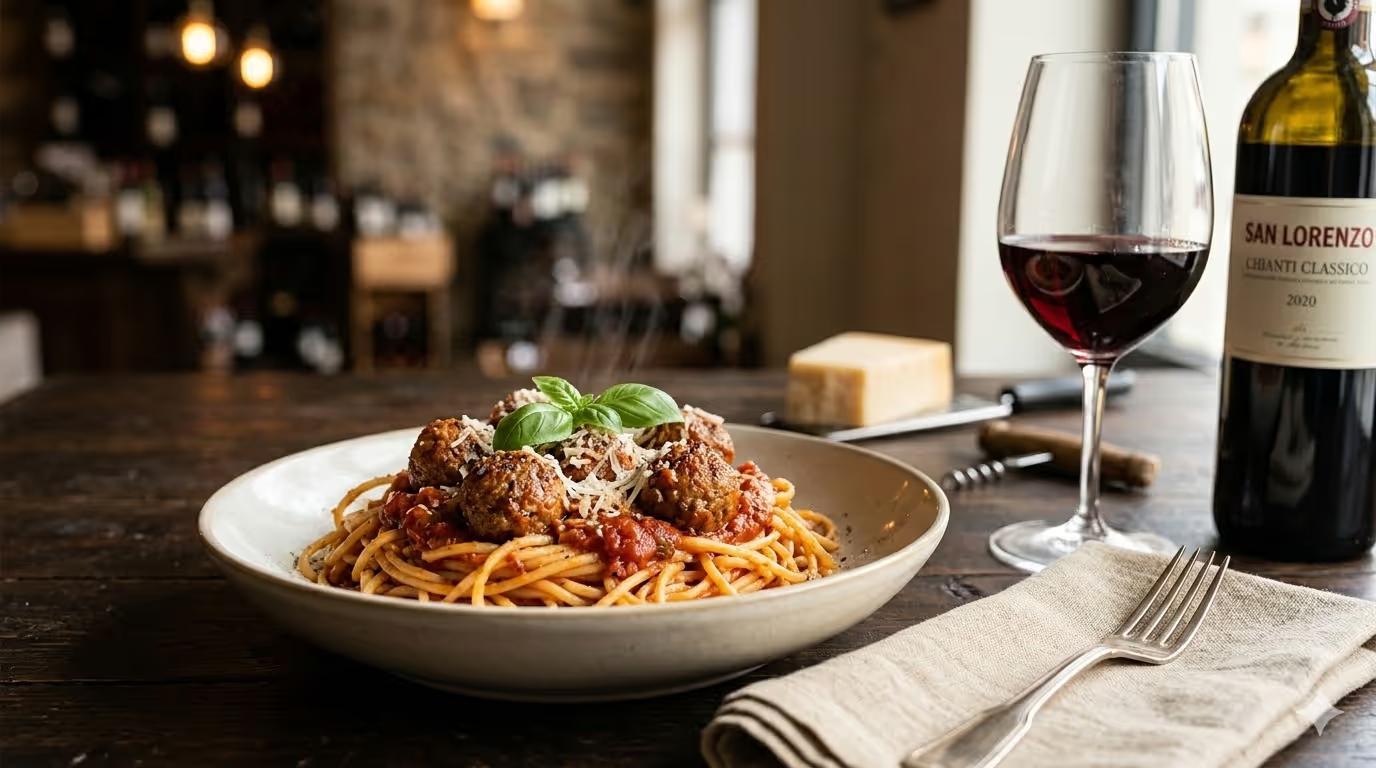

The best answer for wine spaghetti meatballs is simple: choose a medium-bodied red with high acidity, like Chianti (Sangiovese) or Barbera. That kind of wine keeps up with tangy marinara, doesn't fight Parmesan, and won't feel heavy next to meatballs. If you don't want red, grab a dry rosé or dry bubbles, they stay fresh and make each bite feel new.
Think of tonight's spaghetti and meatballs in Italian-American cuisine as comfort food with bright red sauce. Your wine should feel just as lively. Consider this wine explained simply, with friendly wine advice you can use in a store aisle or at a table.
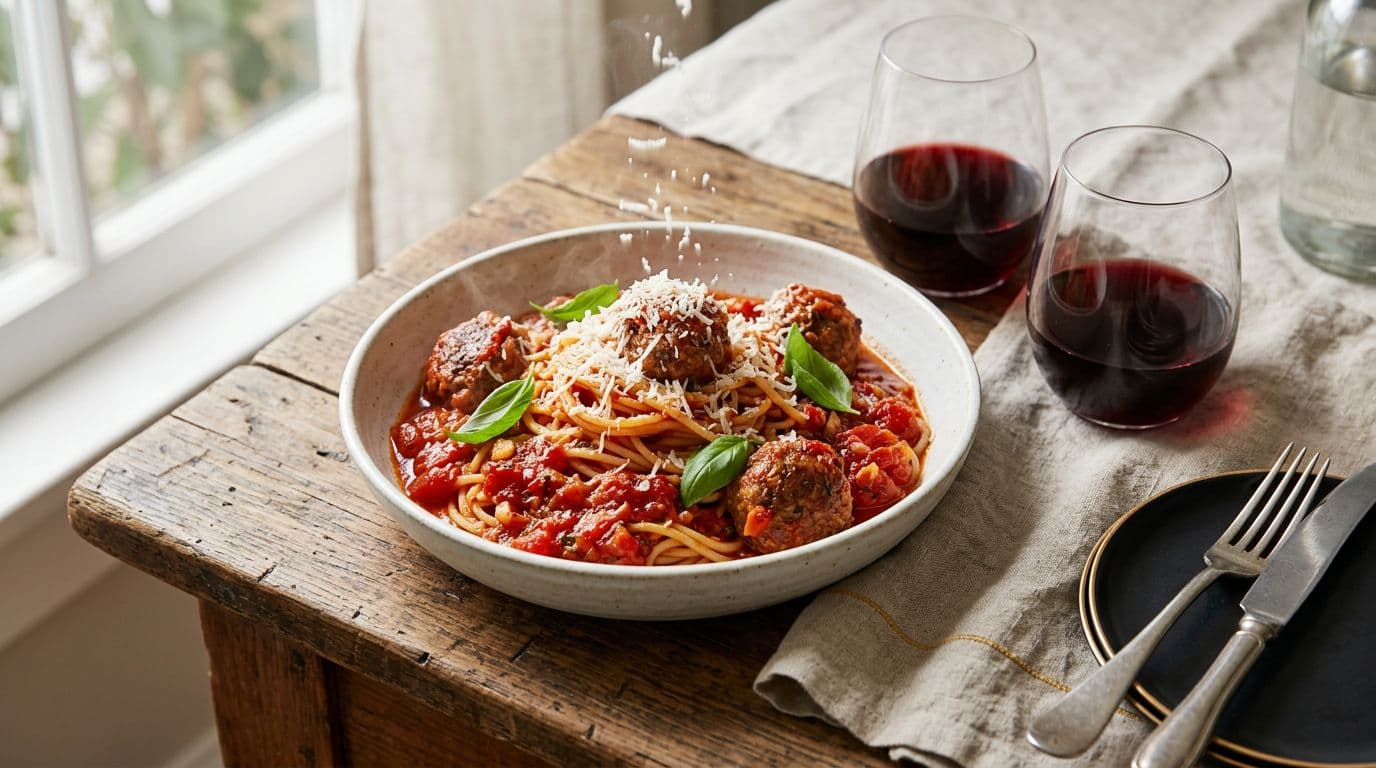
The 10-second pairing rule for marinara and Parmesan
Here's the shortcut: tomato sauce acidity chemically refreshes the wine by matching its tartness note for note. Marinara is bright and tangy, so a flat, soft wine can taste sleepy next to it. Meanwhile, Parmesan cheese adds salty richness, which can make very tannic wines feel rough and dry.
So when you're thinking about how to choose wine for wine pairing, focus on three traits in an Italian red wine:
- High acidity to match the tomatoes.
- Medium tannin so the cheese doesn't turn the wine harsh.
- Medium body so the wine doesn't bully the pasta.
If the wine feels "fresh" when you sip it alone, it usually behaves well with marinara.
This is also where wine tasting notes explained helps, without homework. On a menu or shelf tag:
- "Bright" and "crisp" usually mean higher acidity.
- "Grippy" or "firm" often points to tannin (fine in moderation here).
- "Jammy" can mean lower acidity, which often struggles with tomato sauce.
If you want a bigger picture beyond this one dish, Sommy's food and wine pairing principles build the same idea into a simple framework you can reuse.
For a quick reality check, these Italian-American pairing instincts show up in mainstream food writing too, for example pairing advice for Italian-American classics.
Best red wine picks for spaghetti and meatballs
Most nights, you don't need a "perfect" bottle. You need a bottle that won't disappoint. These are clear wine recommendations that work again and again with red wine tomato sauce made from San Marzano tomatoes and crushed tomatoes, homemade meatballs using ground beef and ground pork, and Parmesan cheese.
Here's a fast comparison table for your personal wine pairing guide (and an easy way to give wine recommendations to friends without sounding intense):
| Wine style to look for | Why it works here | What it tastes like (plain words) |
|---|---|---|
| Chianti, Chianti Classico (Sangiovese) | High acidity meets tomato, medium tannin handles meat | Tart cherry, dried herbs, savory finish |
| Barbera | Bright and juicy, usually low tannin for the cheese | Red fruit, lively, easygoing |
| Montepulciano d'Abruzzo | Slightly fuller, still sauce-friendly | Dark cherry, soft spice, smooth |
| Nero d'Avola | Medium body with lift, good with meaty sauces | Plum, gentle smoke, round texture |
| Pinot Noir (less oaky) | Softer structure if you want a lighter red | Raspberry, light earth, silky |
The takeaway: Chianti and Barbera are the safest. They're built for red sauce nights. Push that same tomato base toward olives, capers and anchovies and a crisp white can beat the red, which is where our guide to wine for pasta puttanesca picks up.
A small warning, because it saves real frustration:
Avoid super-oaky, super-tannic reds for marinara. If it tastes like drying black tea on its own, it'll feel even drier with Parmesan cheese or Pecorino Romano.
Want more "Italian food first" logic in one place? This guide to Italian food wine matches keeps the focus on what you're eating, not memorizing grapes.
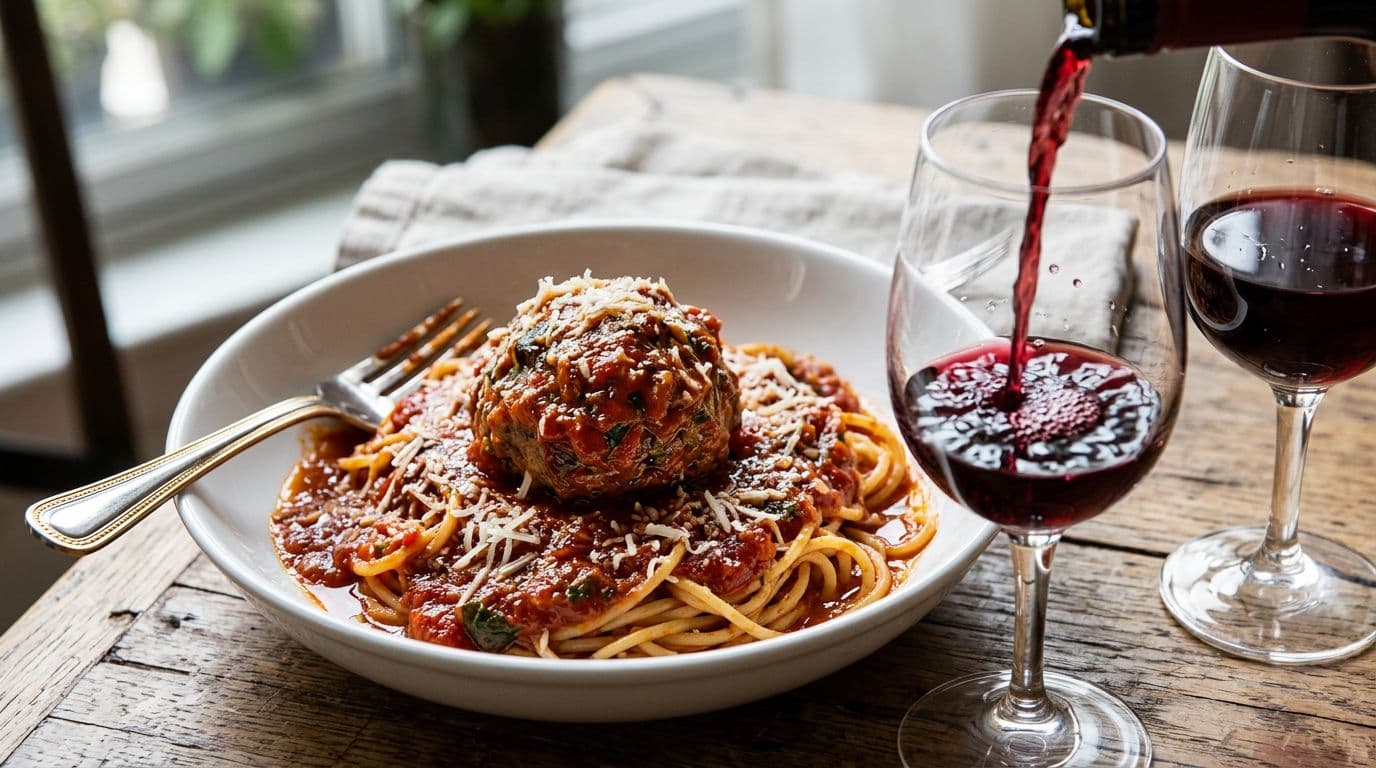
White, rosé, bubbles, plus restaurant and grocery shortcuts
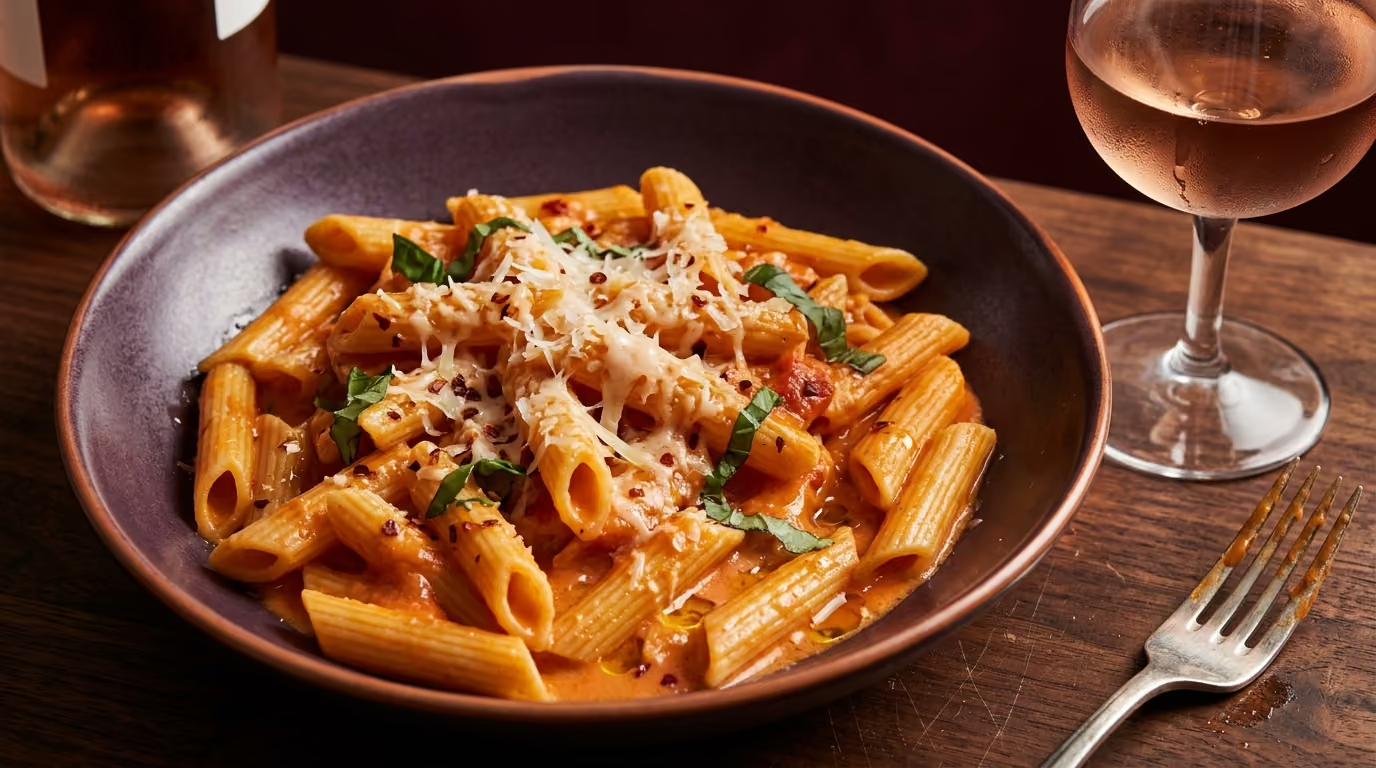
Red is the default, but it's not a rule. If you'd rather drink white, go for refreshment, not creaminess. A dry rosé is often the easiest "non-red" answer because it has enough fruit to feel right with tomato, plus enough snap for the cheese. A dry white wine works well here too. Dry rosé is also the first answer once cream goes into the tomato, which is what happens with penne alla vodka.
Use these simple wine tips as your on-the-spot filter:
- If you want white: choose "dry," "crisp," "citrus," not "buttery."
- If you want bubbles: pick a dry sparkling wine, the bubbles cut richness like a squeeze of lemon.
- If you want rosé: dry rosé beats sweet rosé with marinara almost every time.
Now for the real-life moment: the menu, or the aisle. These restaurant wine tips and wine list tips keep you calm when pairing wines that complement al dente pasta and a simmering sauce likely containing minced garlic and extra virgin olive oil:
- Say what you want in normal words: "Something bright, medium-bodied, not too dry."
- If the list is long, start with by-the-glass reds. They're chosen to be flexible.
- When in doubt, order the Chianti-style red. It's the least awkward fit.
At the store, your goal isn't a treasure hunt. It's a quick win. For grocery store wine picks, stay in this lane: Italian reds around medium body, described as bright or food-friendly. These wines are robust enough even if the recipe used a Dutch oven for the sauce or panko crumbs and ricotta cheese for tender meatballs. If the back label mentions pasta, tomatoes, or pizza, that's usually a good sign.
For an Italian perspective that lines up with this sauce-first thinking, see Italian guidance on meatballs in tomato sauce pairings.
Finally, if you want the decision to take 15 seconds instead of 15 minutes, use an AI wine assistant. Sommy is built for smart wine recommendations in the moment, with personalized wine picks based on your taste, budget, and meal, leaving more time for cooking pasta. If you've been hunting for wine app suggestions, this is the kind of tool that offers personalized wine recommendations and smart wine picks without the lecture. That's the point of a modern wine guide: simple wine explanations, less second-guessing, and more dinner.
If you want help choosing wine right where you are, visit https://www.sommy.ai.
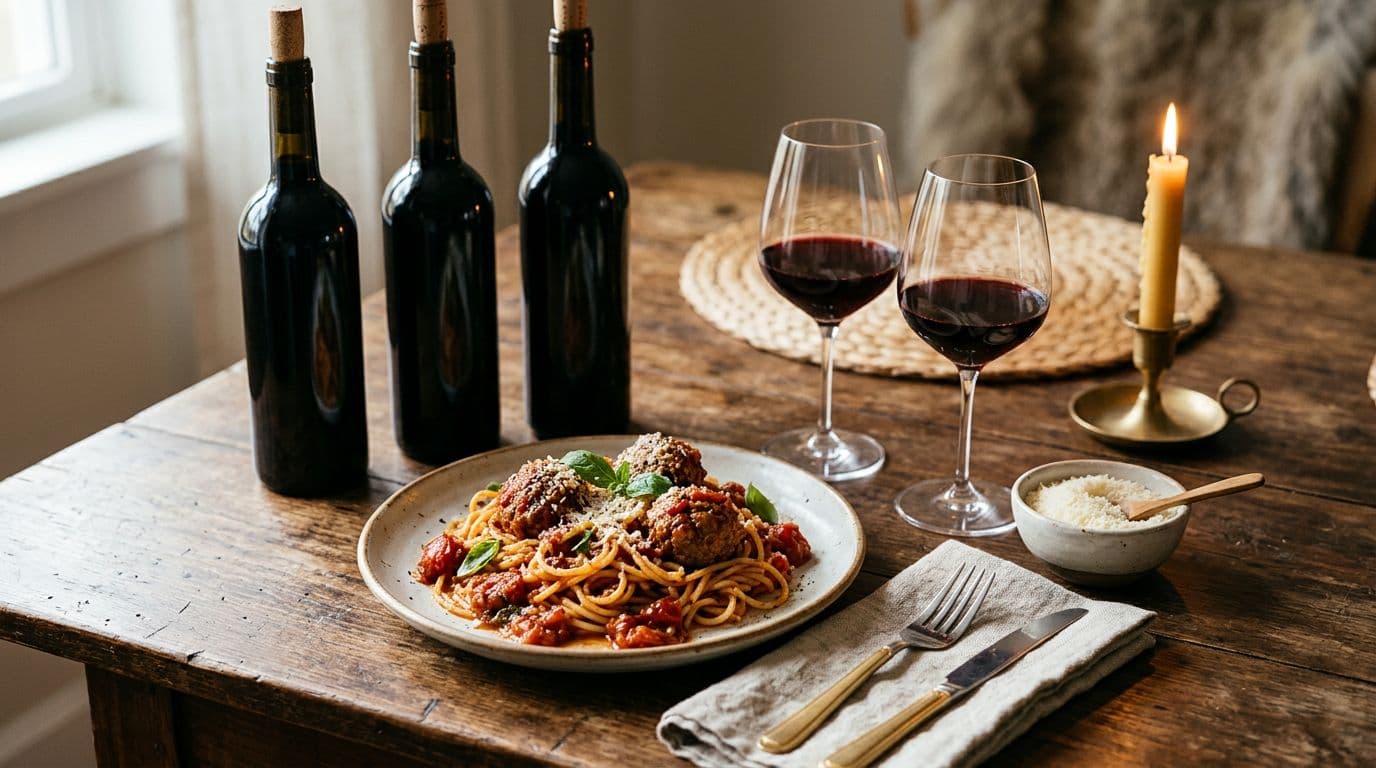
Conclusion: pick bright, stay medium, enjoy dinner
Spaghetti and meatballs doesn't need a wine expert. Whether you're cooking pasta, simmering sauce with minced garlic and a red wine tomato sauce base, or shaping meatballs from ground beef and bread crumbs, it needs a wine that stays bright next to marinara finished with fresh basil, kosher salt, and red pepper flakes, and steady next to Parmesan. Start with Chianti (Sangiovese) or Barbera, then move to Montepulciano or Nero d'Avola when you want more depth. When you'd rather skip red, dry rosé or dry sparkling still delivers.
Keep this as everyday wine advice: match tomato with acidity enhanced by fresh basil and kosher salt, avoid heavy tannin, and trust your own taste.