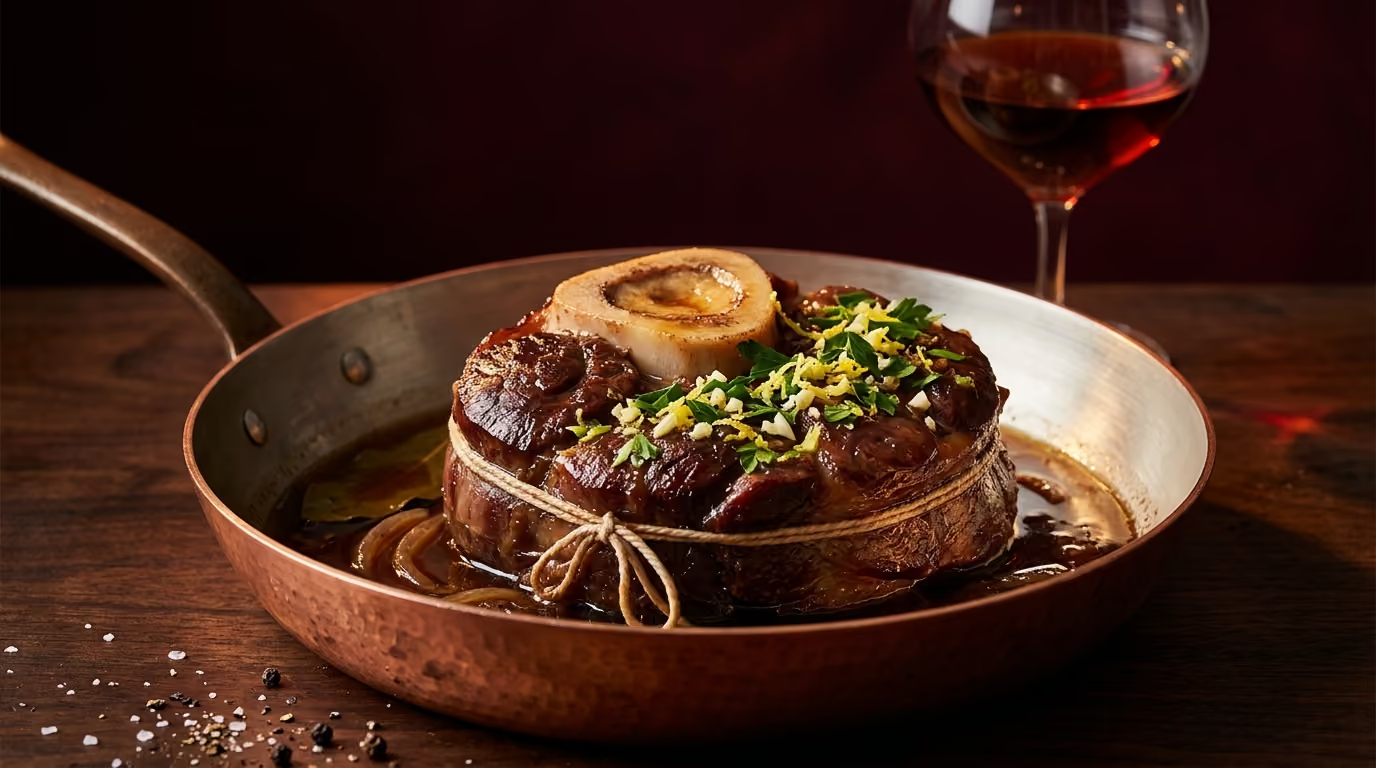
The best wine for osso buco is a red with bright acidity and firm but unheavy tannin, which in practice means Nebbiolo from Barolo or Barbaresco, a Barbera from Piedmont, or a Chianti Classico. Braised veal shank is rich without being powerful, and the marrow plus the reduced braising liquid coat your palate in a way that only acidity clears. The saffron risotto beside it and the lemon gremolata on top both push in the same direction, toward a red that stays lifted rather than one that stays big.
Osso buco is the dish people cook when they want to impress somebody, so it tends to attract the most expensive bottle in the house. That instinct usually costs you the pairing. Veal is the mildest red meat on the butcher's counter, and three hours of slow braising makes it tender rather than assertive, so a wall of young tannin has nothing to grip and simply sits on top of the food. The bottles that suit this dish best are often the ones sitting a shelf below the ones you were reaching for.
What's the best wine for osso buco?
Nebbiolo is the classic answer and it earns the title, because its combination of high acidity, savory dried-rose and tar aromatics, and tannin that grips without weighing anything down is almost purpose-built for a Milanese braise. Wine Spectator's own osso buco with Barolo pairing lands on the same grape for the same reasons. Barbera is the everyday version of that logic, and Sangiovese in the form of Chianti Classico works whenever there's tomato in the pot.
| Wine | Why it works with osso buco | Best when |
|---|---|---|
| Nebbiolo: Barolo, Barbaresco or Langhe Nebbiolo | High acid and savory dried-flower aromatics that meet marrow and saffron head on | You want the traditional Milanese pairing and you have a bottle worth opening |
| Barbera d'Alba or Barbera d'Asti | Nearly all of Nebbiolo's acidity with a fraction of the tannin and the price | It's a weeknight version, or the sauce is light and buttery |
| Chianti Classico or Rosso di Montalcino | Sangiovese's sour-cherry acidity mirrors tomato directly | Your recipe includes tomatoes, which most modern ones do |
| Valpolicella Superiore or Ripasso | Bitter-cherry lift and gentle body that never crowds the veal | You want something soft and generous without any oak |
| Etna Rosso from Nerello Mascalese | Pale, high-acid and faintly smoky, closer to Nebbiolo than its color suggests | You want the Barolo experience for considerably less money |
| Soave Classico or Fiano di Avellino | Texture and citrus acidity for the version braised in white wine and stock | You made it in bianco, with no tomato in the pot |
Weight matching is the shortcut worth carrying in your head, and osso buco sits lower on that scale than people assume. It's heavier than roast chicken and noticeably lighter than a charred ribeye, so the wine should land in the same middle band. Our broader guide to pairing wine with food works through that logic across other dishes, and a long braise is one of the clearest places to see it in action. The same reasoning is why our wine for short ribs and polenta picks lean toward acidity rather than raw power, even though beef short rib is a considerably bigger animal than a veal shank.
Why does the saffron risotto change what you pour?
Because risotto alla milanese is a fattier partner than the meat is, and it's the part of the plate most likely to fight your wine. The classic accompaniment is built on butter, Parmigiano, often bone marrow, and a generous pinch of saffron, which means the starch beside the shank carries more dairy fat than the shank itself. Fat like that coats your tongue, and acidity is the only thing on a wine label that reliably cuts through it.
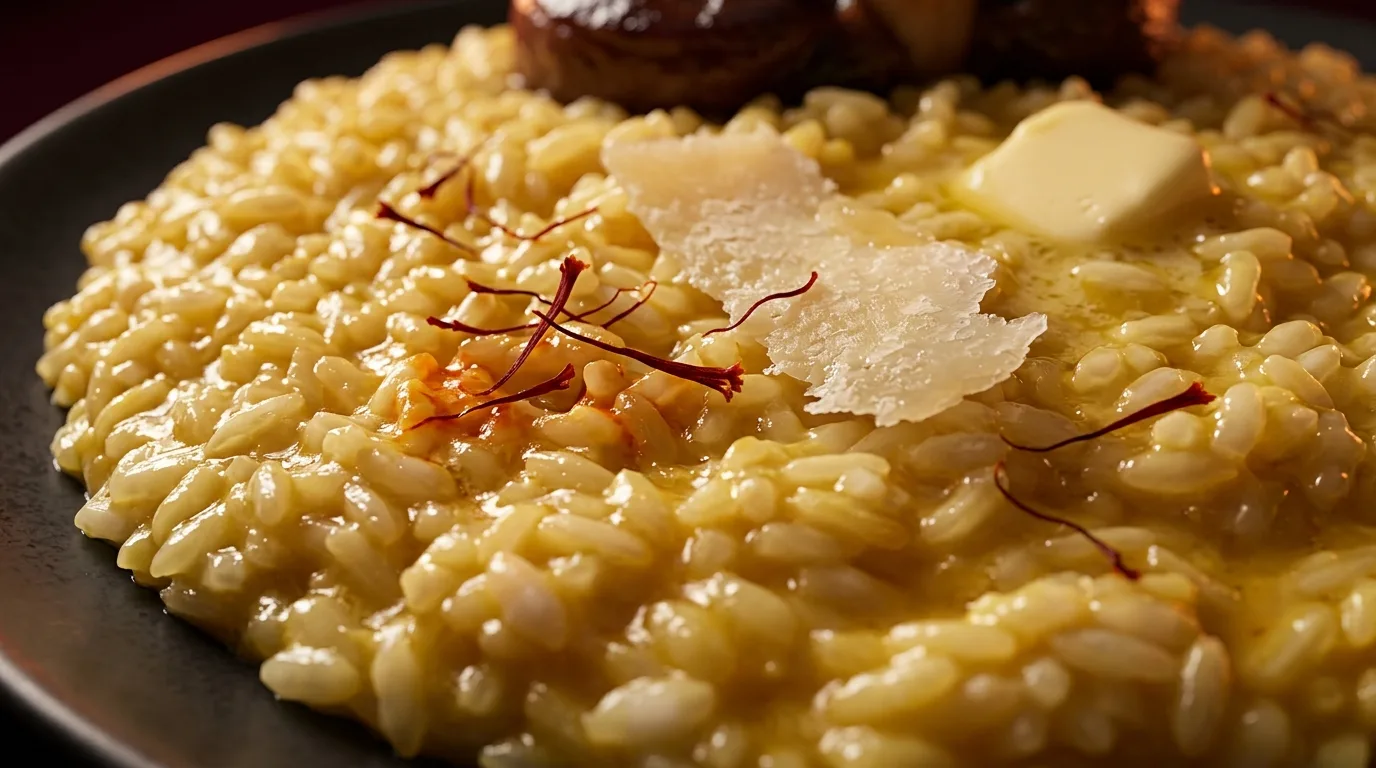
Saffron does something more specific and more interesting than adding color. It brings a honeyed, faintly bitter, almost medicinal edge that reads as savory rather than sweet, and it turns hostile against two things in particular: obvious oak, and jammy ripe fruit. A red that tastes of vanilla and toasted coconut from new barrels will taste sticky next to saffron, and a red that tastes of blackberry jam will taste cloying. Both combinations surprise people, because each half is perfectly pleasant alone.
That's the practical reason our best risotto wine picks keep landing on high-acid, low-oak bottles regardless of what's stirred into the rice. Osso buco doesn't change that rule, it just adds meat to the equation. So you're looking for a red that satisfies the risotto's demand for acidity and the veal's demand for a bit of grip, and Nebbiolo happens to be the grape that does both without compromise.
Does gremolata change the pairing?
It changes it more than the meat does, which is the single most useful thing to know about this dish. Gremolata is raw lemon zest, finely minced garlic and chopped parsley, stirred into the sauce right at the end of cooking, and it exists specifically to cut through everything that came before it. La Cucina Italiana's traditional method adds it to the reducing sauce rather than sprinkling it on top, so it perfumes the whole dish rather than sitting as a garnish.
Raw citrus zest resets your palate between bites, and a wine that felt balanced before the gremolata arrived can suddenly taste flat and slightly sweet beside it. Wines with low acidity are the casualties here, because the dish keeps out-brightening them until they read as flabby. This is the same effect you get squeezing lemon over fish, and it's why a soft, warm-climate red is a worse choice for osso buco than the meat alone would suggest.
Tannin has a second problem with gremolata. Lemon zest and garlic sharpen your perception of bitterness, so a young, grippy, heavily extracted red tastes noticeably more astringent alongside the finished dish than it does on its own. If you're deciding between two reds and one of them is younger and more tannic, the older or softer bottle is almost always the safer pour here. Our explainer on how tannins shape a food pairing covers why that happens across other dishes.
Should you pour differently for osso buco in bianco?
Yes, and this is where most pairing advice quietly goes wrong, because it assumes a tomato-based braise. The original Milanese osso buco is made in bianco, meaning with no tomato at all, built instead on white wine, stock, butter and aromatics, and finished with gremolata. La Cucina Italiana and other Italian sources treat the tomato version as the modern variation rather than the traditional one, since tomatoes reached Europe centuries after the dish first appeared.

That distinction moves the pairing several steps. A tomato braise brings its own acidity and a sweet-savory depth, which is exactly what Sangiovese is built to mirror, so Chianti Classico becomes the natural pick and our Sangiovese guide explains why that sour-cherry profile locks in so cleanly. Take the tomato out and the dish becomes paler, creamier and more delicate, and a big Sangiovese starts to overpower it.
For the in bianco version, a white wine is a genuinely good answer rather than a novelty, especially a white with texture and real acidity. Soave Classico, Fiano di Avellino, an unoaked white Burgundy or a Vermentino from the Tuscan coast all work, because they echo the white wine already in the pot and stay light enough not to bury the veal. If you'd rather stay with red, go paler still: Langhe Nebbiolo, a lighter Valpolicella, or a cool-climate Pinot Noir will all sit beside a white braise without flattening it.
Which reds go wrong with osso buco?
Anything young, tannic, oaky and high in alcohol, which unfortunately describes most of the bottles people buy for special occasions. A young Napa Cabernet, a heavily oaked Malbec, a big Australian Shiraz or a high-alcohol Zinfandel will all read as sweet and heavy next to saffron and lemon zest, and their tannin finds nothing to bind to in soft braised veal. Save those for something with a hard char on it, where the crust does the work the tannin needs.
Heavy oak deserves its own warning, separate from tannin. Vanilla, coconut and toast from new barrels are the flavors that clash hardest with saffron, so an expensive, generously oaked red can perform worse here than a much cheaper unoaked one. If a bottle's tasting note leads with oak, it's probably not the bottle for this dinner, whatever it cost.
The other direction is worth naming too. A very old and fragile red gets lost under a dish with this much marrow, butter and cheese in it, which is an expensive way to taste almost nothing. If you have something mature and delicate you've been saving, pour it beforehand with something plain, then bring a sturdier bottle to the table when the shanks come out. Both wines show better that way.
How do you pick one in a shop or on a wine list?
Work backward from your own recipe rather than from the word veal, because the braising liquid decides more than the meat does. Ask yourself whether there's tomato in the pot, whether the risotto is going alongside, and whether you're finishing with gremolata. Tomato points you at Sangiovese, no tomato points you at Nebbiolo or a textured white, and gremolata pushes both answers toward higher acidity and away from oak.
In an Italian restaurant this gets easier, because the list is usually built around the same regions as the kitchen. Ask for something from Piedmont if the osso buco is the Milanese version, and don't assume the most expensive Barolo on the list beats the Barbera two lines below it. Our roundup of the best wine for Italian food covers how to read those lists by region rather than by price.
If you'd rather not hold all of that in your head at the shop, Sommy's Pairing reads the actual recipe or a photo of the dish and works from what's really in it, tomato or no tomato, gremolata or not. That's the part a printed pairing chart can't do, because a chart only ever sees the word osso buco and never sees your version of it.
Frequently asked questions
What is the best wine for osso buco if I only want one bottle?
Barbera d'Alba is the most reliable single answer for most versions of the dish. It has the acidity that saffron, butter and gremolata all demand, enough fruit to sit happily beside braised veal, and far less tannin than a young Barolo, so it works whether or not there's tomato in your braise.
Can you serve white wine with osso buco?
Yes, particularly with the traditional in bianco version made without tomato. Soave Classico, Fiano di Avellino and Vermentino all have the texture and acidity to hold up, and they echo the white wine already in the braising liquid rather than fighting it.
Does Barolo really go with osso buco?
It does, and it's the classic Milanese pairing for good reason, since Nebbiolo's high acidity and savory aromatics meet the marrow and saffron better than almost anything else. Choose a bottle with a few years on it if you can, because very young Barolo can taste austere next to the softness of the meat.
What wine goes with osso buco and risotto alla milanese together?
Look for high acidity and minimal oak, which is what the saffron risotto demands. Nebbiolo, Barbera and Etna Rosso all satisfy the risotto and the veal at the same time, while a heavily oaked red will clash with the saffron even if it suits the meat.
Should I cook osso buco with the same wine I drink with it?
You don't need to open your good bottle for the pot, but the style should roughly match. Braise it in a dry red or white with decent acidity and no oak, then pour something of the same character at the table, so the sauce and the glass are pulling in one direction.
Is Cabernet Sauvignon a bad choice for osso buco?
It's usually the wrong choice rather than a disaster. Young Cabernet's firm tannin and dark, ripe fruit overwhelm mild veal and clash with lemon gremolata, though an older, softer bottle with some savory development can work if that's genuinely what you have open.
What to open tonight
Read your own pot before you read a pairing chart. A tomato braise served with saffron risotto and finished with gremolata wants Sangiovese or Barbera, an in bianco version wants Nebbiolo or a textured Italian white, and neither version wants new oak or a young, heavily tannic red. Everything else about this pairing follows from those two questions.
The safest bottle to buy blind, if you're standing in a shop with no idea which version you're making, is a Barbera d'Alba. It survives both recipes, it costs less than the wines it competes with, and it does the one thing this dish genuinely requires, which is bringing enough acidity to the table to keep up with lemon zest, marrow and butter all arriving at once.