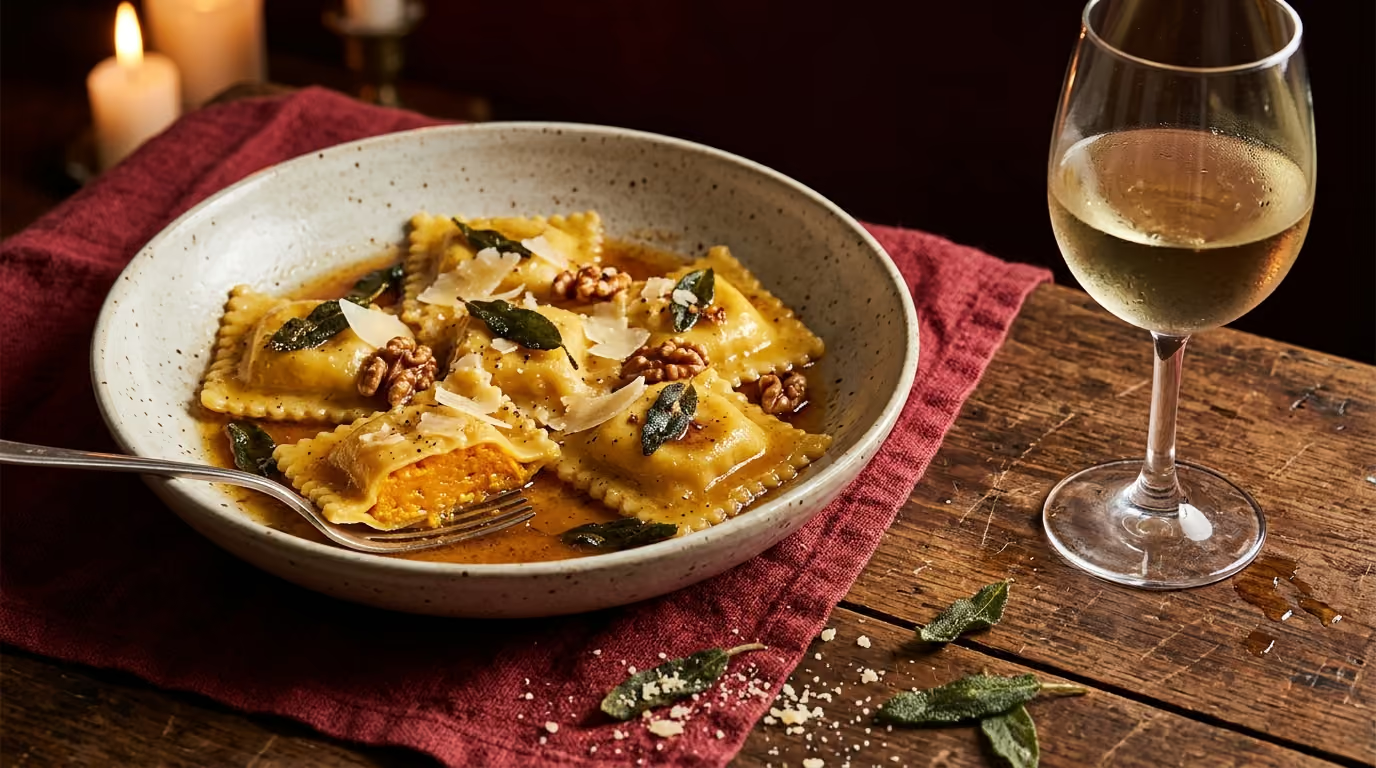
Butternut squash ravioli is sweet, buttery, and soft, so the wine needs freshness and a little fruit rather than power. An off-dry Riesling is the most reliable pick, with Pinot Gris, a lightly oaked Chardonnay, and dry Lambrusco all working beautifully depending on the sauce. Bone-dry, high-acid whites tend to backfire here, because the sweetness of the squash makes them taste sour. If you want red, keep it light and low in tannin, and serve it cool.
The reason this dish trips people up is that it breaks the usual pasta rules. Most pasta pairing advice starts from the sauce and works outward, which is sound until the filling itself is sweet. Roasted squash carries real sugar, and sugar in food quietly changes how every wine beside it tastes. Once you account for that one fact, the rest of the choices get straightforward.
What wine goes with butternut squash ravioli?
An off-dry Riesling is the answer we give most often, because it meets the squash's sweetness instead of fighting it. German Kabinett, a feinherb bottle, or an Alsatian Riesling all have the acidity to cut through butter while carrying just enough fruit sweetness to sit level with the filling. The result is a pairing where neither side is trying to win.
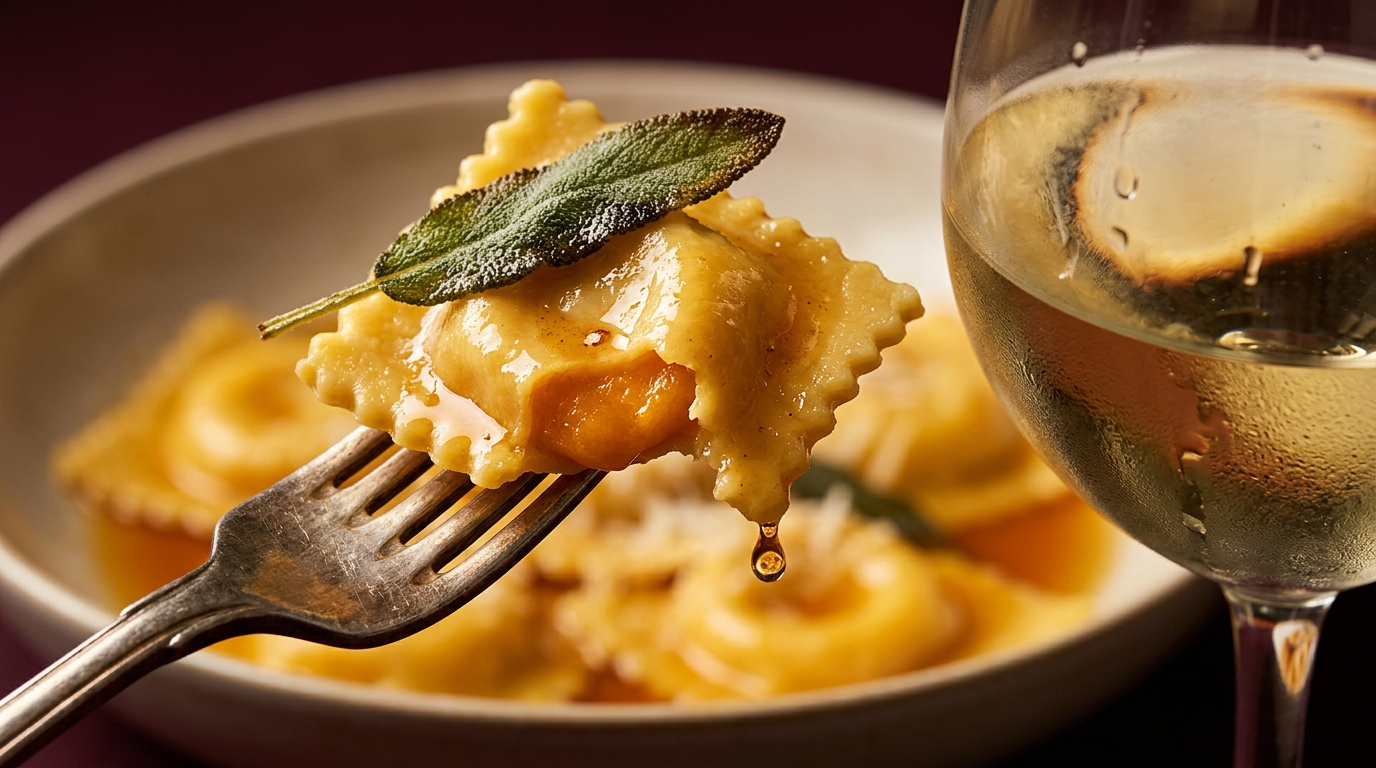
Pinot Gris is the alternative when you'd rather stay dry, particularly the richer Alsatian style with its pear and honeyed weight, which has enough body to match the buttery texture. Viognier does something similar with more apricot and floral character, and it's an underrated match for anything involving squash or sage.
A lightly oaked Chardonnay works when the dish is creamy rather than sweet, since the wine's rounder texture mirrors the sauce. Keep it restrained though, because a heavily oaked, buttery Chardonnay stacked on top of brown butter is simply too much of the same thing. Our picks for creamy pasta nights run through where that line sits.
The bottle to avoid is the crisp, bone-dry white most people reach for with pasta. A lean Pinot Grigio or a sharp Sancerre next to sweet squash will taste thin and sour, because food sweetness strips the fruit out of a dry wine and leaves the acid exposed.
Why does the squash's sweetness change everything?
Because sugar in the food resets your palate before the wine arrives, and any wine less sweet than the plate tastes more acidic than it really is. This is the single most reliable rule in food and wine pairing, and butternut squash ravioli is one of the clearest demonstrations of it on any menu.
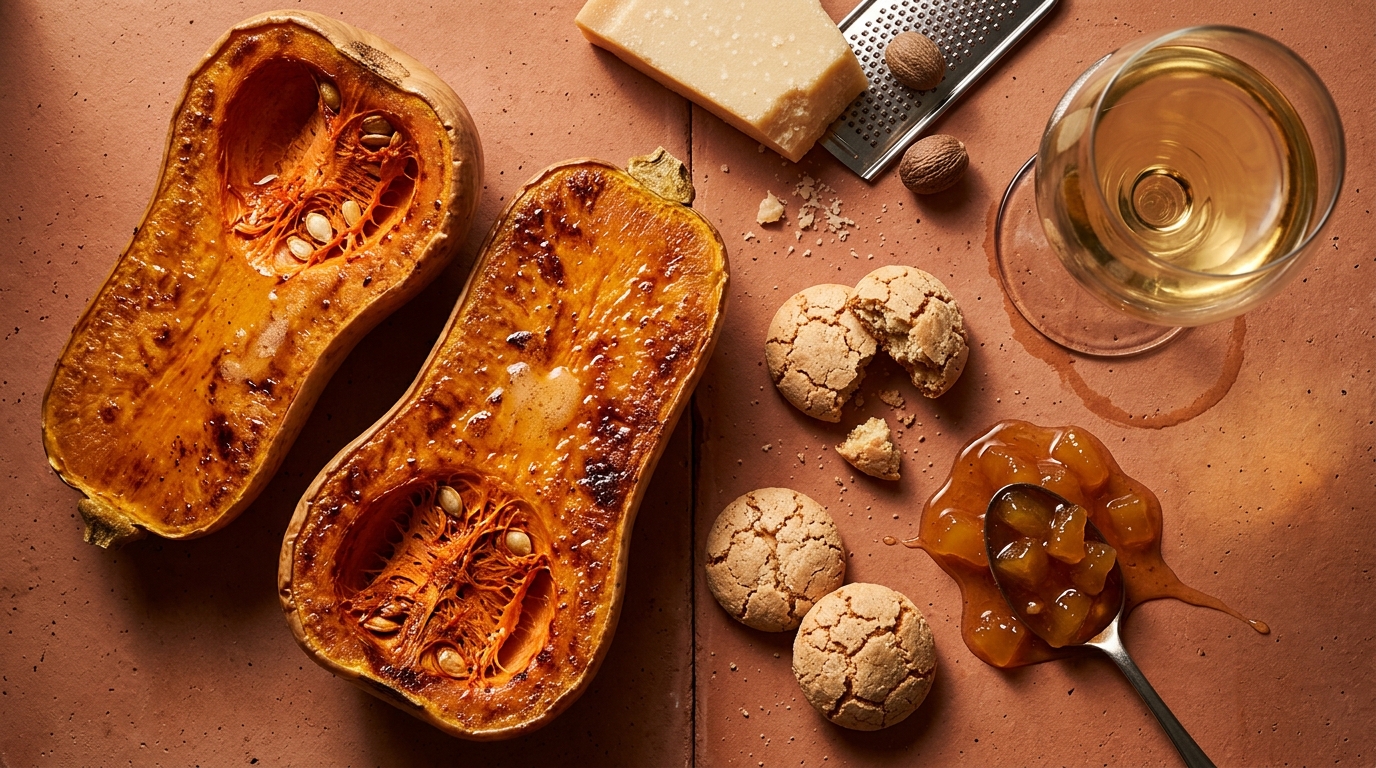
Roasting concentrates the natural sugars in squash, and most ravioli fillings lean into that with nutmeg, brown sugar, or amaretti crumbs. By the time it reaches the plate, the filling is genuinely sweet in a way that carrot or pumpkin soup rarely is. Put a bone-dry wine against it and the wine loses its fruit and reads as tart, which is why so many people conclude they simply don't like wine with this dish.
The fix isn't a sweet wine, which would flatten the whole plate. What you want is a wine with a small amount of residual sugar, enough to meet the filling without going past it, plus enough acidity to handle the butter. Off-dry is the technical description and it's a genuinely narrow, useful target.
Acidity still matters as much as it does anywhere else, because butter and cheese coat your mouth and need cutting through. That combination of freshness with a trace of sweetness is what makes Riesling so hard to beat here, and it's the same reasoning behind our picks for gnocchi in butter and gorgonzola.
How does the sauce change the pairing?
The sauce decides the final choice once the filling has set the baseline, and the four common treatments pull in genuinely different directions. Brown butter and sage is the classic, cream makes it richer, pancetta or mushrooms make it savory, and a balsamic reduction adds acid and sweetness at once.
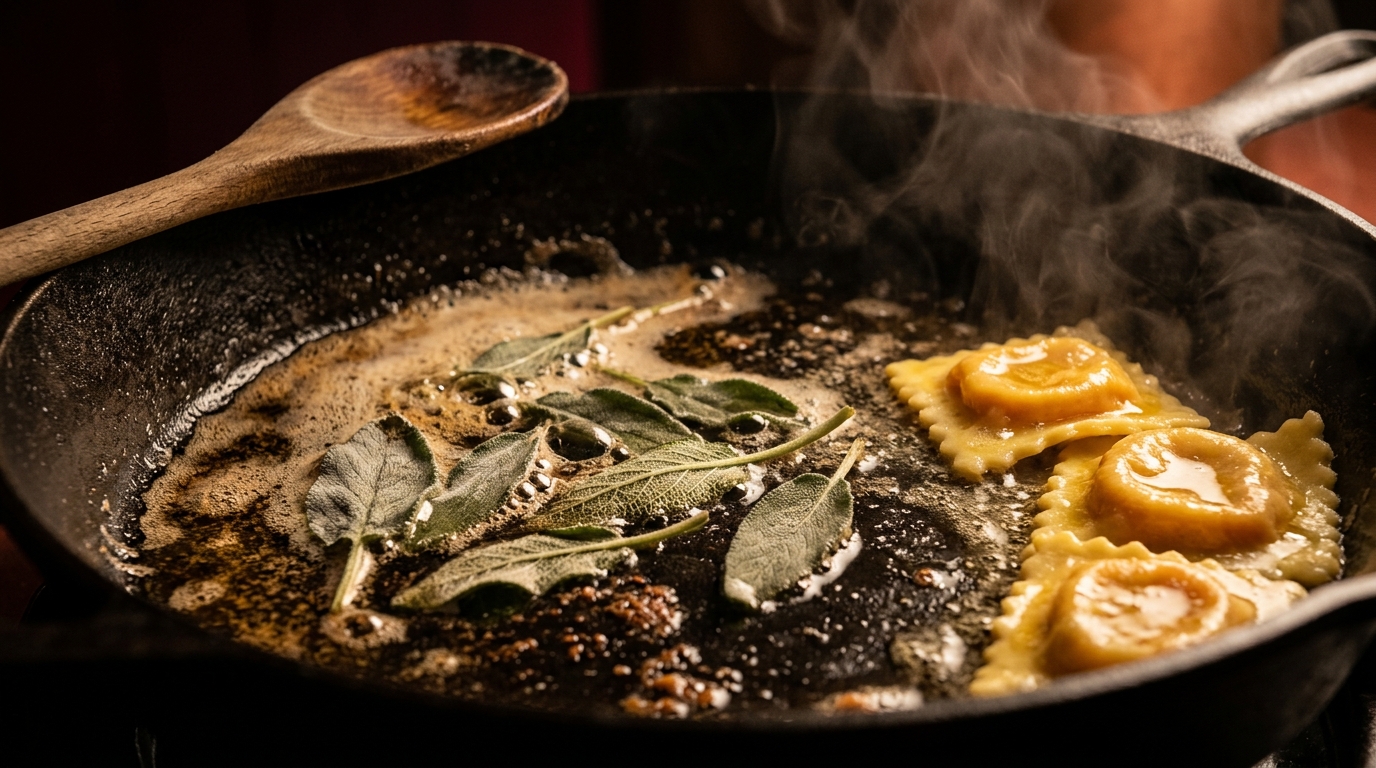
Brown butter and sage is the version most people cook, and it adds toasted, nutty depth plus sage's slightly bitter, resinous edge. Off-dry Riesling handles it, and so does an Alsatian Pinot Gris, whose weight matches the butter. This is also the one sauce where a lightly oaked Chardonnay genuinely shines, since the toasted notes in the wine echo the browned butter.
Cream and Parmesan sauces make the plate heavier and less sweet, which opens the door to a fuller white. A white Burgundy, a good Soave Classico, or a Chardonnay with modest oak all work, and the extra salt from the Parmesan makes the wine taste fruitier.
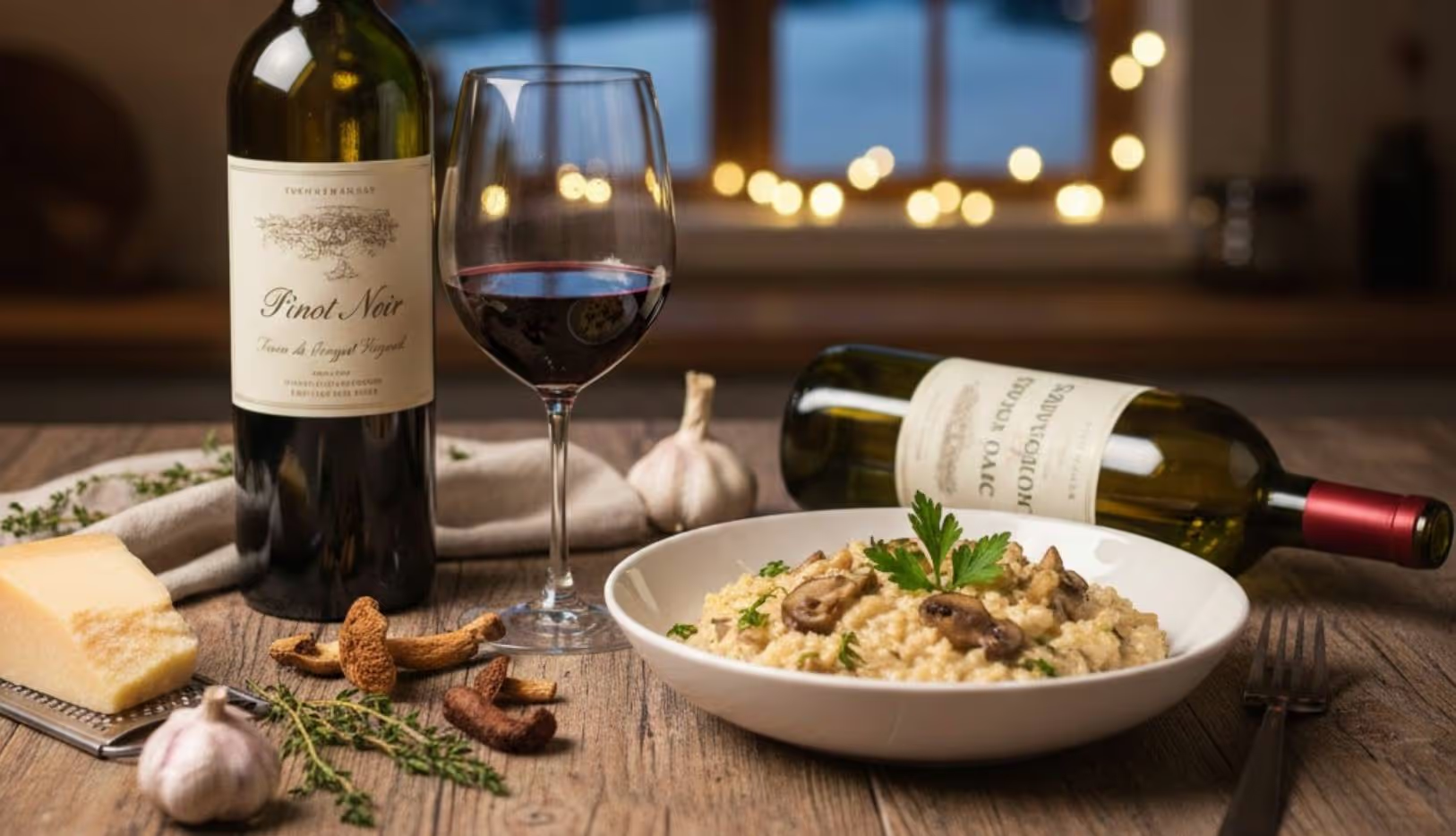
Pancetta, mushrooms, or toasted walnuts push the dish savory, and this is where red wine finally makes sense. A light Pinot Noir or a young Barbera has the acidity for the butter and the earthiness for the mushrooms without bringing tannin that would clash. If mushrooms are doing the heavy lifting, our guide to pairing wine with mushrooms goes deeper on why earthy flavors and light reds get along.
A balsamic glaze is the trickiest, since it brings sharp acidity and its own sweetness. Dry Lambrusco is our pick, because the bubbles and the slightly bitter red fruit stand up to balsamic in a way still wine struggles to.
| Sauce on the plate | Bottle to open | Why it works |
|---|---|---|
| Brown butter and sage | Off-dry Riesling | Acidity cuts the butter while a trace of sugar meets the squash |
| Cream and Parmesan | Lightly oaked Chardonnay | Rounder texture mirrors the sauce, and the salt lifts the fruit |
| Pancetta, mushrooms, or walnuts | Light Pinot Noir | Earthy savory flavors finally justify a red, with no tannin to clash |
| Balsamic reduction | Dry Lambrusco | Bubbles and tart red fruit stand up to the vinegar's sharpness |
| Amaretti and mostarda filling | Lugana | Lemon and almond character shadows the amaretti in the filling |
The broader lesson carries across the whole category, since filled pasta behaves differently from pasta with sauce poured over it. The filling is sealed inside and hits your palate first, so it sets the terms before the sauce gets a say, which is close to the opposite of how our general pasta pairing guide works for spaghetti or penne.
Can you drink red wine with butternut squash ravioli?
You can, provided the red is light, low in tannin, and preferably served cool. The obstacle isn't the color of the wine, it's that tannin and sweetness bring out the worst in each other, turning the wine bitter and the squash cloying.
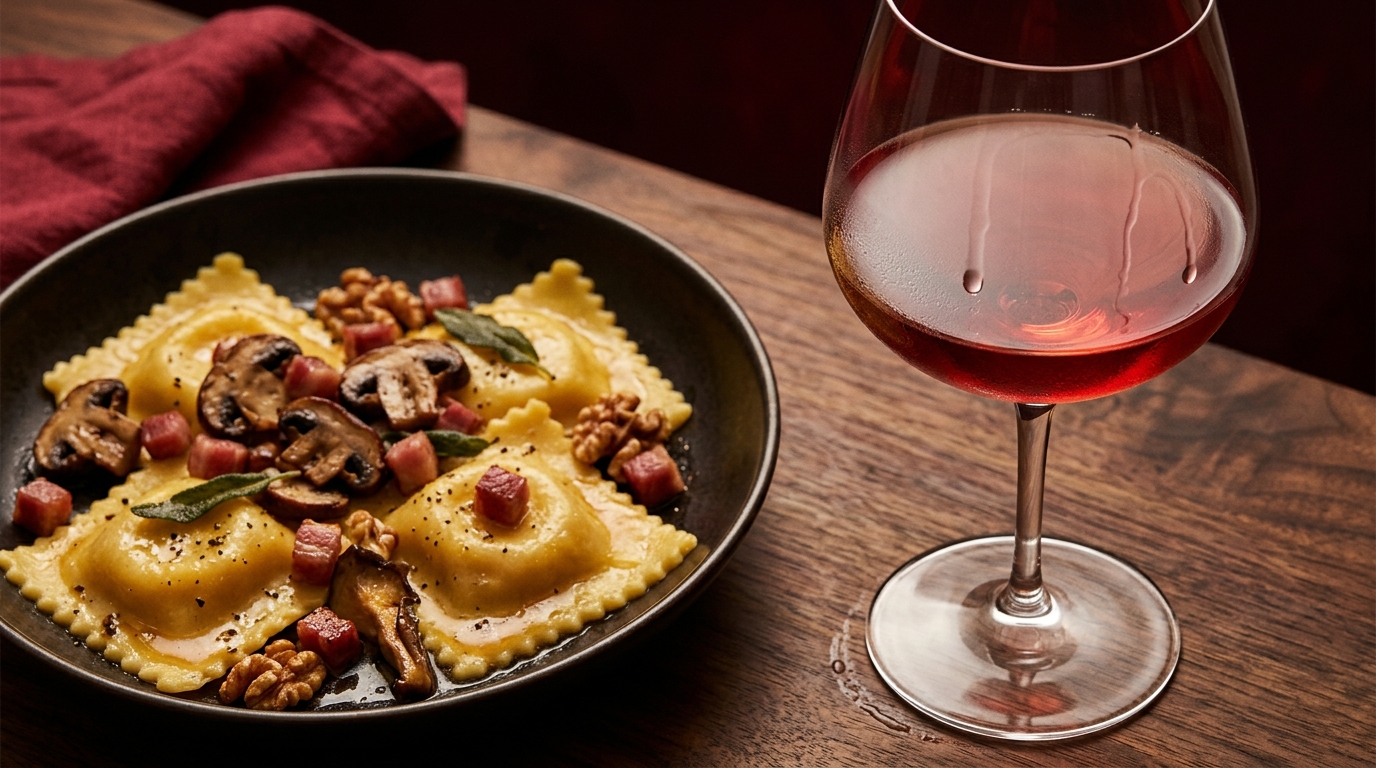
Pinot Noir is the safest red by a wide margin, especially a lighter bottling from Burgundy, Oregon, or Alto Adige. Its red-berry fruit flatters the squash and it carries almost no grip. Barbera works for the same reason with more acidity, which is welcome against butter, and Schiava from northern Italy is a lovely, obscure choice if your shop happens to stock it.
Frappato from Sicily and a cool-served Gamay from Beaujolais both belong on the list too, since both are fragrant, light, and built on fruit rather than structure. Twenty minutes in the fridge helps all of these, and our guide to serving temperatures by style explains why a cool light red tastes so much fresher than a warm one.
Cabernet Sauvignon, Nebbiolo, and big Syrah are the reds to leave alone. All three have the tannin and weight to flatten a delicate filled pasta, and against a sweet filling their tannin turns hard and slightly metallic. A rich red here doesn't make the dish taste bigger, it makes it taste dull.
What do they drink with it in Mantua?
Lambrusco, and the answer is worth knowing because the Italians got to this dish several centuries before the rest of us. Tortelli di zucca is the traditional squash-filled pasta of Mantova in Lombardy, and its local pairing has been settled for a very long time.
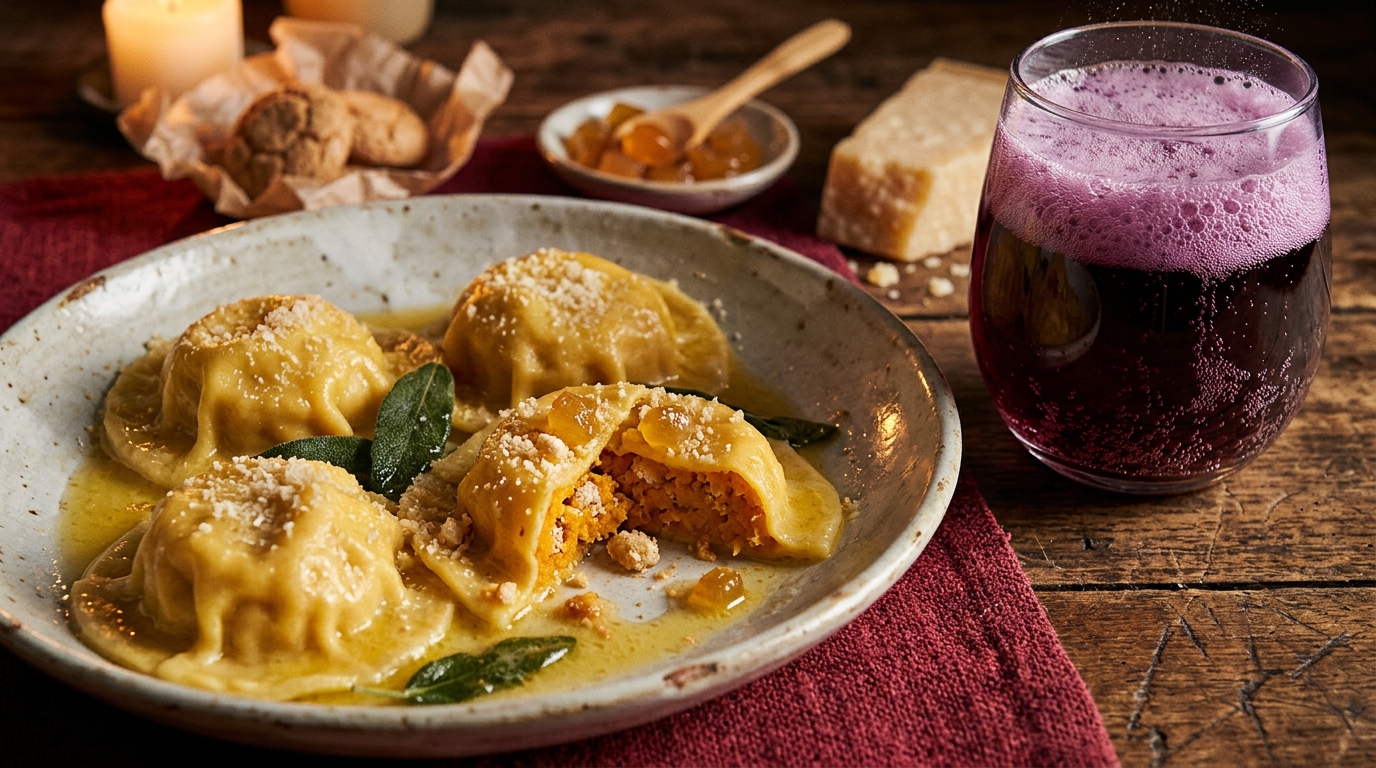
The Mantovan original is more interesting than the version most restaurants serve. The filling combines roasted squash with crushed amaretti biscuits, apple mostarda, and Parmigiano Reggiano, which means it's sweet, faintly bitter from the almond, and mustardy all at once. It's dressed simply with melted butter and sage, letting that contrast between sweet filling and savory sauce carry the plate. The recipe traces back to the Gonzaga court, and a version appears in Cristoforo Messisbugo's cookbook published in 1544.
Lambrusco Mantovano is the classic partner, and dry versions of it are genuinely excellent rather than the sweet, mass-market style that damaged the name decades ago. Look for secco on the label. The bubbles cut the butter, the light tannin and tart red fruit handle the sweetness, and the wine's low weight leaves the delicate pasta intact.
Two other regional bottles come up locally as well, a Lugana from the southern shore of Lake Garda and the local white from the Colli Morenici hills. Lugana in particular is worth seeking out, since its lemon and almond character suits amaretti in the filling almost uncannily.
If you're cooking from a recipe and want a straight answer for your specific version, this is the moment Sommy's Pairing feature is genuinely handy. Share the recipe or photograph the finished plate, and it reads what's actually in your sauce and matches it against what you already like drinking, which matters when the difference between brown butter and balsamic changes the answer completely.
Frequently asked questions
What is the best wine for butternut squash ravioli?
An off-dry Riesling, because it has the acidity to cut butter and just enough sweetness to match the squash filling. Alsatian Pinot Gris and a lightly oaked Chardonnay are the strongest alternatives if you'd rather stay dry.
Does red wine work with butternut squash ravioli?
Yes, as long as it's light and low in tannin, which makes Pinot Noir, Barbera, Schiava, and Gamay the sensible picks. Avoid Cabernet Sauvignon and Nebbiolo, since their tannin turns bitter against the sweet filling.
What wine goes with brown butter and sage sauce?
Off-dry Riesling and Alsatian Pinot Gris both handle the nutty richness well, and this is the one version where lightly oaked Chardonnay genuinely shines. The toasted notes in the wine echo the browned butter rather than competing with it.
Why does dry white wine taste sour with squash ravioli?
Because sweetness in food makes any less-sweet wine taste more acidic than it is, so a bone-dry Pinot Grigio loses its fruit and reads as tart. A wine with a small amount of residual sugar solves it without making the plate taste sweet.
Is Chardonnay good with butternut squash ravioli?
It works well when the sauce is creamy and the filling isn't especially sweet, where its rounder texture mirrors the cream. Keep the oak restrained, since a heavily oaked Chardonnay on top of brown butter piles the same flavor twice.
What sparkling wine goes with squash ravioli?
Dry Lambrusco is the traditional and still the best answer, particularly with a balsamic glaze or the classic Mantovan filling. A dry Prosecco Superiore also works if you want something lighter and more floral.
Getting this one right on a weeknight
Butternut squash ravioli rewards a bottle with freshness and a touch of fruit sweetness, and it punishes anything bone-dry or heavily tannic. Start with an off-dry Riesling if you're cooking the classic brown butter and sage version, move to a fuller white when cream and Parmesan are involved, and pour a light red only once pancetta or mushrooms have made the plate savory.
If you want the answer the dish was built around, open a bottle of dry Lambrusco and see what a few hundred years of practice in Mantua produced. It costs very little, it works with almost every version of this dish, and it's a far better bottle than its reputation suggests.