

The best wine for a rich, creamy plate of pasta Alfredo is a crisp, dry white wine like an unoaked Chardonnay or a zesty Pinot Grigio. These wines have bright acidity that cuts through the buttery, cheesy sauce, keeping every bite tasting fresh and delicious. Think of it like a squeeze of lemon over a rich dish. It creates the perfect balance.
Making the Perfect Wine Choice for Alfredo
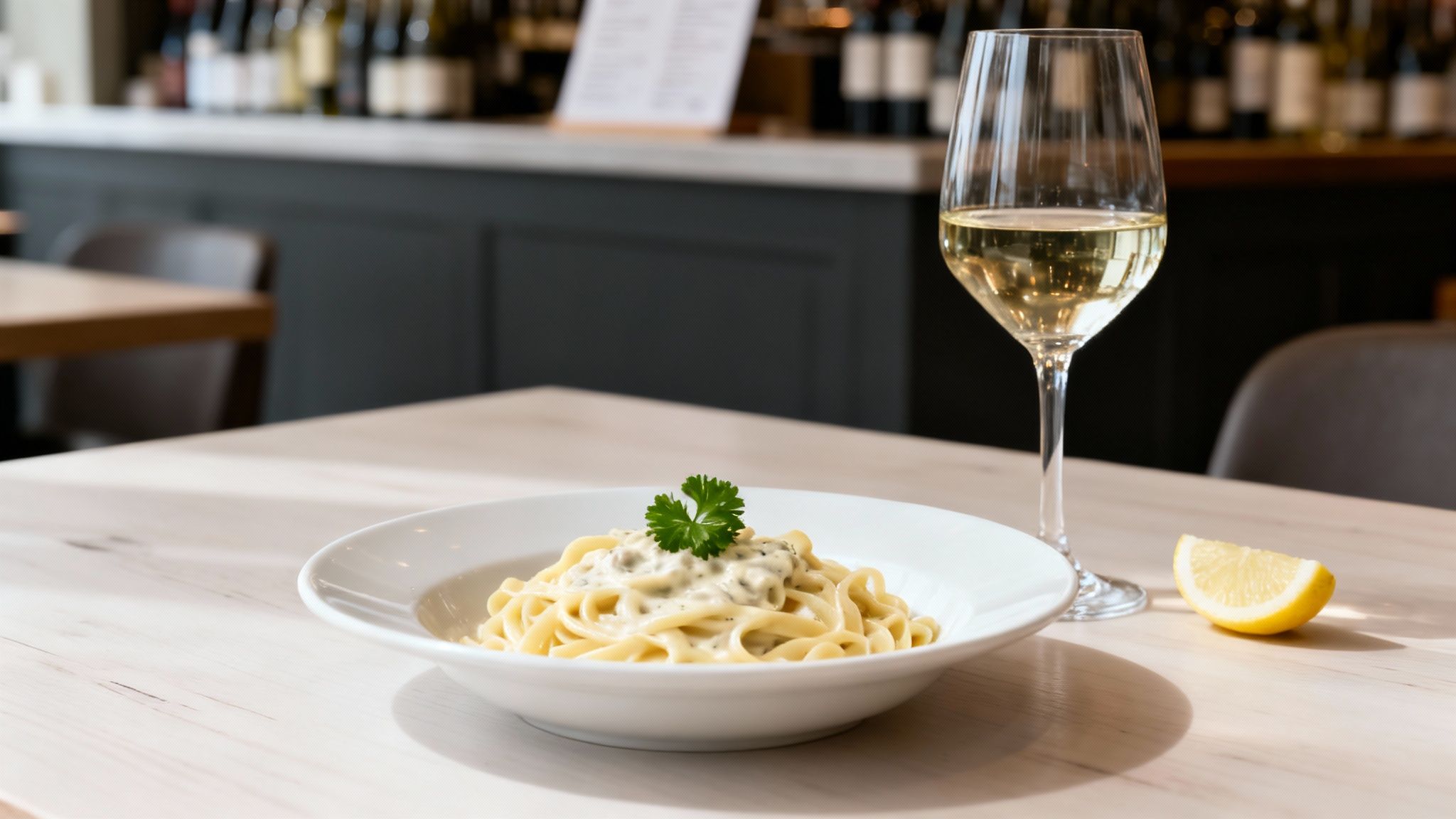
You’re staring at a restaurant menu or standing in the wine aisle, and the decision suddenly feels bigger than it should. What wine actually goes with pasta Alfredo? All you want is something that makes the rich, creamy, cheesy goodness of the sauce taste even better, without any guesswork.
Good news: this is one of the easiest food and wine pairings to get right.
That feeling of not wanting to choose the "wrong" wine is completely normal. Our goal here is to get rid of that anxiety and give you a simple, confident starting point. You don't need to know anything about obscure wine regions or complex growing techniques. You just need to know what kind of sensation you're looking for.
Your Simple Decision Framework
For a dish as decadent as Alfredo, your wine needs to provide a refreshing contrast. The acidity in a crisp white wine acts as a palate cleanser, cutting through the buttery, creamy sauce so your last bite tastes just as incredible as your first. It’s all about creating balance.
To make things easy, here are the three most reliable styles to look for:
- For a Classic Match: A lightly oaked or unoaked Chardonnay is a can't-miss choice. Its subtle buttery notes can echo the sauce, while its acidity keeps the whole experience feeling fresh and clean.
- For a Zesty Kick: A bright Pinot Grigio is like a burst of citrus. It’s clean, light, and zippy, creating a fantastic contrast that lifts the entire dish. Learn more about the best white wines from Italy, where this style is king.
- For an Aromatic Twist: A Sauvignon Blanc offers bright, sometimes grassy notes that slice through the richness beautifully, adding an interesting and vibrant layer of flavor.
Choosing a wine for Alfredo isn't about finding a single "correct" bottle. It's about picking a style that provides a refreshing balance to a rich dish. Any of these options will create a delicious meal.
To simplify it even further, here's a quick guide you can use anytime.
Quick Guide to Alfredo Wine Pairings
Choose your style for a perfect pairing every time.
| If You Like | Try This Wine Style | Why It Works |
|---|---|---|
| Creamy & Smooth | Unoaked Chardonnay | Matches the texture of the sauce while its acidity keeps it from feeling heavy. A perfect complement. |
| Bright & Zesty | Pinot Grigio | Its high acidity and citrus notes act like a squeeze of lemon, cutting through the richness effortlessly. |
| Herbal & Aromatic | Sauvignon Blanc | The wine's green, herbal character adds a fascinating contrast that livens up the creamy dish. |
This simple framework gives you a clear and reliable starting point. Instead of feeling overwhelmed by dozens of options, you can confidently narrow your focus to these styles, knowing any of them will be a guaranteed win.
This is exactly the kind of in-the-moment decision the Sommy app was designed for. Instead of guessing, you can just scan the wine list with your phone. Sommy will instantly highlight great options that match your meal and your taste.
Why Crisp Wines Work with Creamy Sauces
Ever wonder what makes a food and wine pairing just click? When it comes to a rich dish like pasta Alfredo, the secret isn’t some obscure wine term or a pricey bottle. It’s all about one simple thing: acidity.
The creamy, buttery Parmesan sauce is so good because it’s decadent. But that same richness can start to feel a little heavy after a few bites, coating your palate and making every mouthful taste a bit less exciting than the last. This is where the right wine swoops in to save the day.
A wine with bright, zippy acidity is the perfect partner.
The Balancing Act of Acidity
Think of a crisp wine like a squeeze of fresh lemon over a piece of rich fish, or a sharp vinaigrette on a salad. That zesty quality cuts right through the fat and instantly resets your taste buds.
With every sip, the wine cleanses your palate, making you ready for the next creamy, delicious bite of pasta. This stops that feeling of "flavor fatigue" from setting in. Instead of the dish becoming overwhelmingly heavy, the wine keeps the whole experience feeling lively and balanced from the first bite to the last. It’s a simple game of contrasts, crisp cutting through creamy, that creates a pairing you'll remember.
The goal when pairing wine with a sauce like Alfredo is to create balance. A crisp, acidic wine offers a refreshing contrast that keeps the rich dish from overwhelming your palate.
Why Creaminess Needs a Counterpart
If you pair a creamy wine with a creamy sauce, it can feel like too much of a good thing. The textures just blend together, and the meal can feel weighed down and monotonous. By choosing a wine that provides a sharp counterpoint, you actually make both the food and the drink taste better.
Here’s the breakdown:
- The Sauce: Alfredo delivers rich, fatty, and savory flavors from butter, heavy cream, and Parmesan cheese.
- The Wine: A crisp white wine brings bright, sharp notes: think citrus, green apple, or a flinty minerality.
- The Result: The wine’s acidity lifts the sauce’s flavors instead of fighting with them, making the whole dish feel more vibrant and less filling.
This one concept is one of the most powerful tools in food and wine pairing. To get a better handle on these fundamentals, check out our simple guide on how to pair wine with food. Once you grasp this idea, choosing a wine for any creamy dish goes from a confusing decision to a simple one. It’s not about following strict rules; it's about making the meal more enjoyable.
The Classic Choice: A Perfect Chardonnay

If there's one go-to, can't-miss answer for what wine goes with Alfredo, it’s Chardonnay. It's a reliable and delicious choice that almost always gets the job done. You don’t need to guess; you just need to figure out which style of Chardonnay you’re in the mood for.
That decision is simpler than you think. It really just comes down to whether you want a wine that's more crisp and clean, or one that's a little richer and creamier. Both are fantastic with Alfredo, but they create slightly different experiences at the table.
Unoaked Chardonnay: A Crisp and Clean Partner
Think of an unoaked Chardonnay as the zesty, refreshing version of the grape. Because it’s aged in stainless steel tanks instead of oak barrels, it holds onto its bright, fruit-forward flavors. You'll often get clean notes of green apple, lemon, and pear.
This style is perfect if you want your wine to slice right through the richness of the Alfredo sauce. Its sharp acidity acts like a palate cleanser, making each bite feel fresh and light. It provides a beautiful contrast that prevents the whole meal from feeling too heavy.
Lightly Oaked Chardonnay: A Richer Complement
A lightly oaked Chardonnay offers a different, but equally wonderful, experience. When a wine spends a little time in oak barrels, it picks up subtle flavors of vanilla, toast, and even a little butter. These warmer, creamier notes are a natural match for the buttery, cheesy sauce.
Instead of cutting against the dish, this style complements it. The wine's smooth texture mirrors the creaminess of the Alfredo, creating a harmonious and deeply satisfying combination. It’s a great choice if you want to lean into the decadent, comforting nature of the meal.
The "right" Chardonnay for your Alfredo is purely a matter of personal preference. Go for unoaked if you want a crisp, refreshing contrast, or pick lightly oaked for a richer, more complementary pairing.
Whether you're at a restaurant or browsing a wine shop, you can feel confident asking for either style. For a deeper dive into what makes these two styles so different, you might find our guide comparing Chablis and Chardonnay helpful. It’s another way to build your confidence without having to memorize a bunch of complicated details.
Don't Like Chardonnay? Here Are Lighter, Crisper Alternatives
What if Chardonnay just isn't your thing? No problem. The best wine for any meal is always one you actually want to drink. Luckily, there are some fantastic lighter, crisper alternatives that play just as beautifully with a rich, creamy Alfredo sauce.
Choosing a wine you already like is the most important rule of food pairing. There’s no single “right” answer, and your personal preference for a zesty, refreshing white is a perfect match for this decadent pasta. You don’t have to force yourself to drink Chardonnay just because it’s the classic choice.
Pinot Grigio: The Zesty Choice
If you're after a wine that feels exceptionally bright and clean, Pinot Grigio is your answer. Its zesty citrus and crisp green apple notes offer a sharp, clean contrast that lifts the entire dish.
Think of it as the ultimate palate cleanser. Its bright acidity cuts right through the heaviness of the cream and cheese, making every bite feel fresh and new. This wine’s crispness is such a refreshing counterpoint to Alfredo's indulgent creaminess that it's a top choice for many. You can learn more about how Pinot Grigio excels in food pairings and why it's such a staple.
Sauvignon Blanc: The Aromatic Option
Another fantastic alternative is Sauvignon Blanc. This wine is famous for its bright, sometimes grassy or herbal, character that slices through richness with absolute ease. Its vibrant acidity and distinctive aromatic profile add an exciting new dimension to your meal.
If you find Pinot Grigio a little too straightforward, Sauvignon Blanc brings a bit more complexity without being overpowering. Its zippy, sometimes tropical, notes provide a beautiful contrast to the savory Parmesan and butter, creating a lively and memorable pairing.
The key takeaway is simple: your taste matters most. If you love crisp, light-bodied wines, you have excellent, foolproof options for pasta Alfredo. Trust your palate.
Choosing a lighter alternative like Pinot Grigio or Sauvignon Blanc isn't a compromise; it's just a different way to achieve that same delicious balance.
And if you're ever curious about stepping outside of white wines entirely, you can explore our guide to easy-to-drink red wines for other food pairing ideas. But for Alfredo, these crisp whites are a guaranteed success.
Surprising Pairings That Work Wonders
Ready to step outside the usual white wine comfort zone? While a classic Chardonnay or Pinot Grigio is a guaranteed win with Alfredo, sometimes you just want to shake things up. The pairings below might seem a little unexpected at first, but they work beautifully with a rich, creamy sauce.
These choices are fun, a bit adventurous, and still completely foolproof. They’re proof that you can confidently sidestep the obvious recommendations and still have a fantastic meal. There’s zero risk here: just a new, exciting way to enjoy a favorite dish.
Bubbles Bring Balance
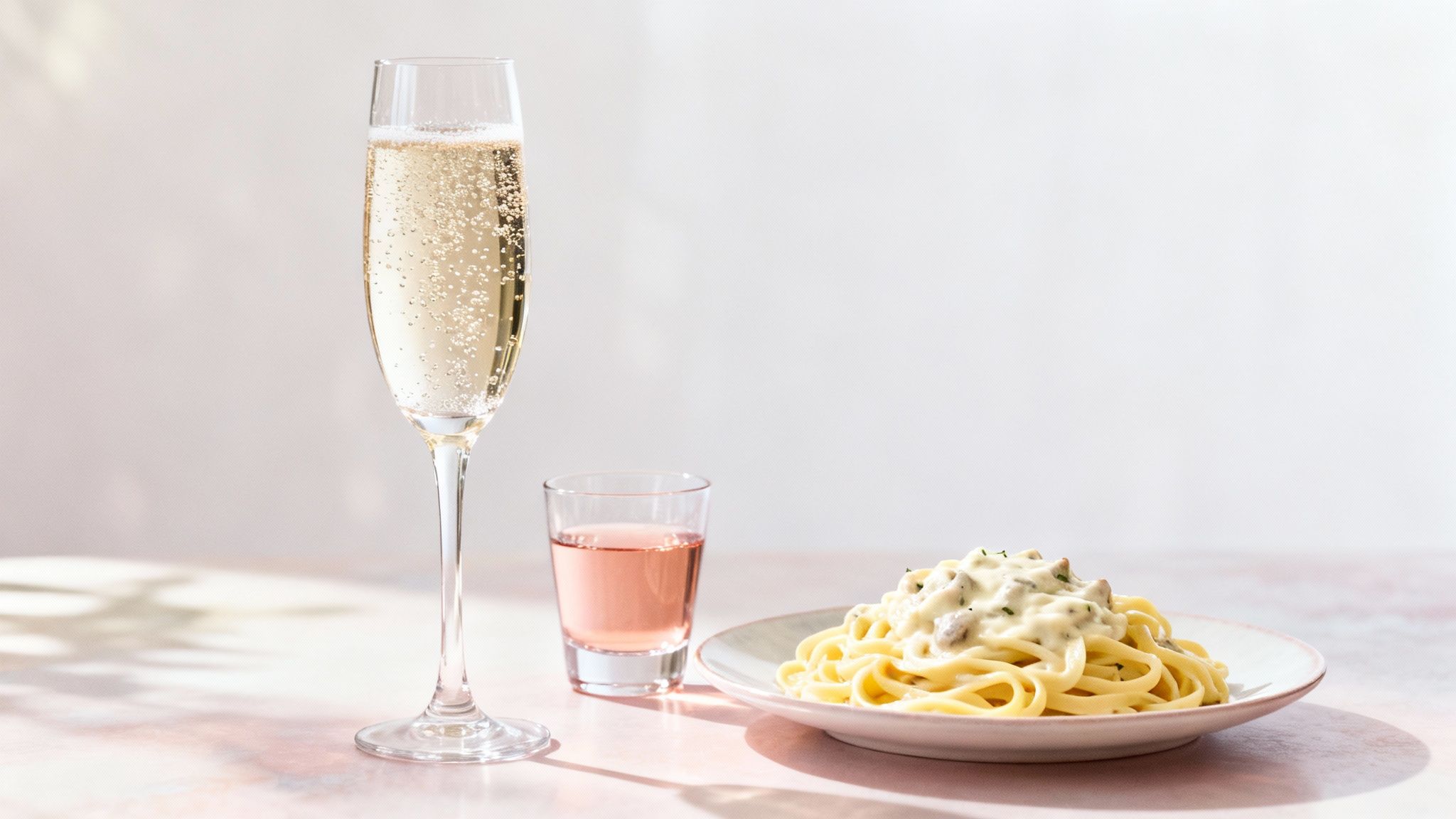
A dry sparkling wine is a brilliant, almost magical, match for pasta Alfredo. All those tiny bubbles in a glass of Prosecco or Franciacorta act like little scrubbers for your palate. They lift the heavy sauce right off your tongue, making each bite feel surprisingly light and fresh.
It’s an incredibly effective trick for keeping the richness in check. The combination of bubbles and high acidity slices straight through the butter and cheese, turning a simple meal into a small celebration. You can discover more insights about pairing sparkling wine with Alfredo and learn more about why it works so well.
Think Pink with Dry Rosé
Another fantastic option is a dry Rosé. Don’t let the pink color fool you into thinking it’s sweet. A good dry Rosé has all the crisp, refreshing acidity of a great white wine but often adds a subtle hint of red fruit, like strawberry or wild raspberry.
That little touch of fruitiness adds a wonderful new dimension to the meal without ever overpowering the creamy sauce. It's the perfect middle ground, light and refreshing but with just enough character to keep things interesting. It’s a stylish, modern choice that’s also incredibly versatile.
How to Choose Your Wine in the Moment
Knowing the right wine styles for pasta Alfredo is one thing. Standing in a restaurant, staring down a long list of unfamiliar names, is another. That's when the pop quiz feeling creeps in, along with the fear of picking the "wrong" bottle.
Let's make this simple. You don't need to be a wine expert to pick a great wine on the spot. All it takes is a quick, stress-free process to land on a confident decision.
A Simple Three-Step Decision
This little framework helps you zero in on what truly matters: your personal taste and what you're comfortable spending.
- Choose Your Style First: Before you even glance at brands or prices, just ask yourself what you're in the mood for. Do you feel like something classic and a bit rich to match the sauce, like a Chardonnay? Or maybe something zesty and light to cut through the creaminess, like a Pinot Grigio? Making this single decision first will instantly shrink that overwhelming list by more than half.
- Set Your Budget Next: Now, scan the aisle or the menu for wines in your chosen style, but only within a price range you’re comfortable with. You can find fantastic, refreshing wines for Alfredo at every price point. Remember, a great pairing is about finding the right style, not a high price tag.
- Ask for Help with Simple Language: If you’re still stuck between a few options, don’t be afraid to ask for a recommendation. You don't need fancy wine jargon. Just say something clear and direct like, “I’m looking for a crisp white wine to go with the Alfredo, something like a Pinot Grigio under $40.” This gives the staff exactly what they need to help you find a winner.
The most important part of choosing a wine is feeling good about your decision. This simple process removes the guesswork and puts you in control, focusing on your taste and budget above all else.
This is exactly the kind of in-the-moment decision the Sommy app was designed for. Instead of guessing, you can just scan the wine list with your phone. Sommy will instantly highlight great options that match your meal, your taste, and your budget.
For more tips on building this skill, check out our guide on how to choose wine with confidence every time.
Your Top Questions, Answered
Let's clear up a few common questions that come up when picking a wine for pasta Alfredo. I'll keep the answers straightforward so you can feel totally confident in your choice.
Can I Drink Red Wine with Pasta Alfredo?
It's a risky move, but not totally out of the question. The main problem is that most red wines have tannins: that grippy, drying feeling you get on your tongue. When tannins meet a cream sauce, they can clash badly, making the wine taste bitter or even metallic.
If your heart is set on red, you absolutely must find one with very low tannins and plenty of bright acidity. Think of a light-bodied Pinot Noir or a Gamay. Even then, it's a gamble. For a pairing that’s pretty much guaranteed to be delicious, a crisp white wine is a much safer, and usually more enjoyable, bet.
What if My Alfredo Has Chicken or Shrimp?
Honestly? It doesn’t change a thing. The rich, creamy, buttery sauce is still the star of the show. That means all the white wines we've talked about, from Chardonnay to Pinot Grigio to Sauvignon Blanc, will still work beautifully.
The wine's acidity is the key player here, cutting through the richness of the sauce while complementing the lighter protein. So whether you’ve added chicken or shrimp, you can stick to the plan with total confidence. The pairing will be a success.
Does the Price of the Wine Matter?
Not nearly as much as you'd think. When it comes to a great pairing, the magic is in the wine's style, not its price tag. You can absolutely find a fantastic, refreshing wine for your Alfredo for under $15 that will hit all the right notes, just as well as a more expensive bottle.
This simple decision tree breaks it down, showing you how to focus on what really matters for your pasta Alfredo wine pairing.
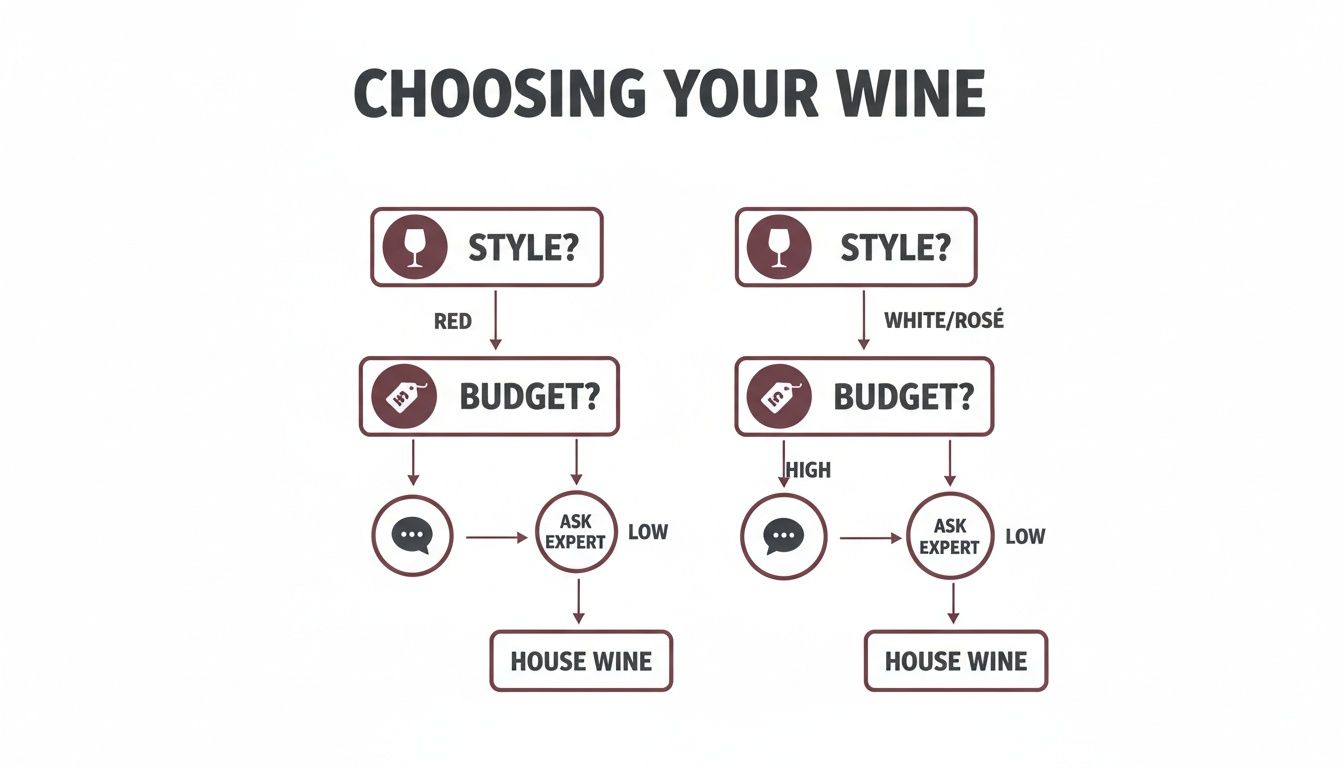
The big takeaway here is to start with your preferred style and budget. That's the quickest way to narrow down your options and find a bottle you'll love.
If you want to make confident wine choices like this in the moment, without having to remember all the rules, that's exactly why we built Sommy. Instead of guessing at a restaurant or in a store, you can just scan the menu or shelf with the app. You'll get a clear, smart recommendation based on your meal, your taste, and your budget. You can learn more about how Sommy works.