
If you're making gnocchi tonight, here's the quick answer: brown butter sage loves a light red like Pinot Noir (or dry bubbles), tomato basil loves a high-acid red like Chianti, and gorgonzola cream loves a white with freshness, often Riesling or Chardonnay. That's the core of a confident gnocchi wine pairing.
If you've ever frozen in the wine aisle or stared at a restaurant list like it's a math test, you're not alone. The good news is you don't need wine knowledge. These rules apply whether you are serving soft "potato gnocchi" or light "ricotta gnocchi". You just need to pair to the sauce, then match the "weight" (light, medium, rich). The rest is personal taste.
A simple wine gnocchi pairing rule that works
Gnocchi, a favorite fresh pasta dish, is soft, cozy, and a little chewy, like a good pillow. The sauce is the loud part. So when you're wondering how to choose wine, don't start with the pasta. Start with what's coating it.
Here's the clean framework from this wine pairing guide idea:
- Buttery and nutty sauces, including mushroom sauce, want wines that feel smooth, not sharp.
- Tomato sauces want wines with brightness (so the wine doesn't taste flat).
- Creamy blue-cheese sauces want wines that refresh your mouth between bites.
- Pesto sauce wants crisp, herbal whites.
This is also where "tasting notes" finally make sense. Consider this "wine tasting notes explained" in normal words:
- Bright / crisp means its acidity wakes up rich food, especially tomato dishes.
- Smooth / soft means it won't fight butter or cheese.
- Juicy / fruity means it plays well with tomato sweetness.
To go deeper without getting technical, Sommy's how to pair wine with food is a helpful reference. It's a modern wine guide approach, focused on decisions, not trivia.
One quick table makes the choices feel smaller (in a good way):
| Your gnocchi sauce | What to look for in the wine | Easy direction | If you don't like that… |
|---|---|---|---|
| Brown butter sage | Smooth, medium weight | Pinot Noir, dry sparkling | Try a richer white |
| Tomato basil | High acidity, not too heavy | Chianti (Sangiovese), Barbera | Try dry rosé |
| Gorgonzola cream | Refreshing, sometimes a touch of sweetness | Riesling (often off-dry), Chardonnay | Try a crisp Italian white |
These are simple wine tips, not rules. Think of them as simple wine explanations that keep you moving.
Pair to the sauce first. Then match the weight. That's wine explained simply.
Wine picks for brown butter and sage, tomato basil, and gorgonzola cream
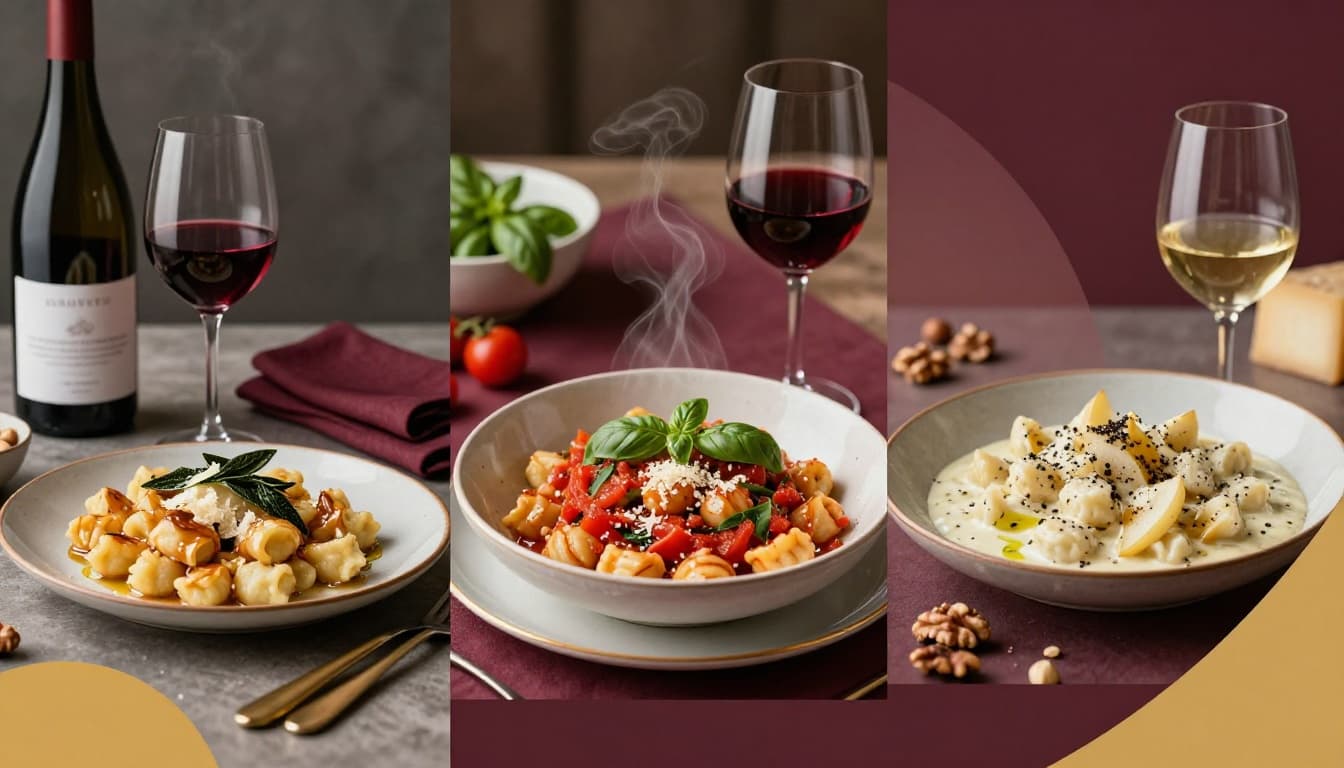
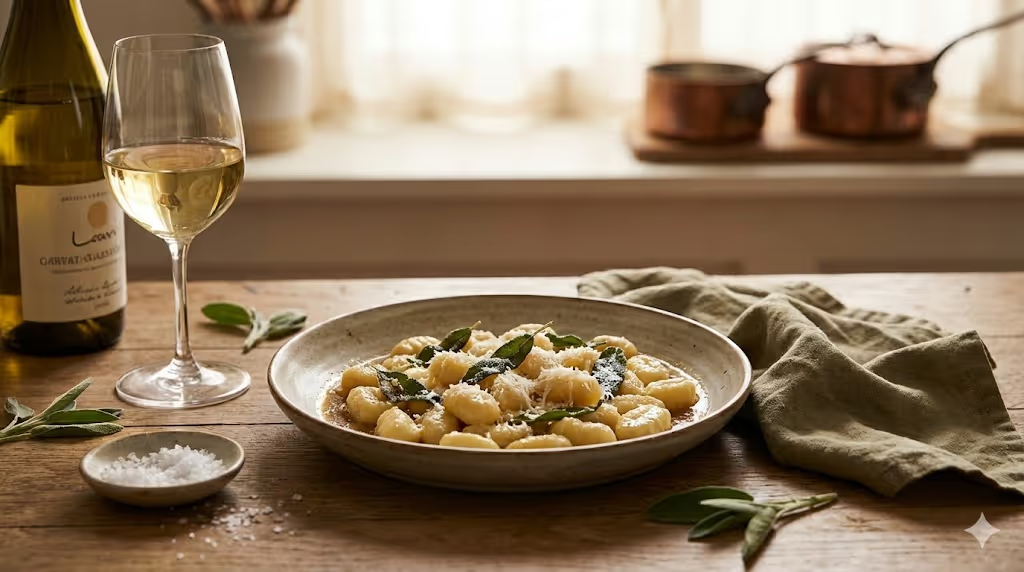
Brown butter and sage gnocchi: Pinot Noir, or dry bubbles
Brown butter and sage tastes toasted, warm, and a little nutty. Often topped with Parmesan cheese, it's rich, but not heavy like cream. So you want a wine that feels silky, not loud.
Clear wine recommendations for this sauce:
- Pinot Noir (especially lighter styles): It's gentle, and it echoes the earthy sage.
- sparkling wine (like Crémant): The bubbles lift the butter, so each bite feels new again.
- Richer white option (if you don't want red): Look for a white that feels rounded, not sour.
For extra context on why buttery, savory dishes often love fall-friendly wines, see Taste France's roundup of French wine pairings for cozy foods.
Practical label clue: if the bottle says "light-bodied," "fresh," or "silky," you're in the right neighborhood. Avoid full-bodied reds; if it screams "big," "oaky," or "powerful," it may steamroll the dish.
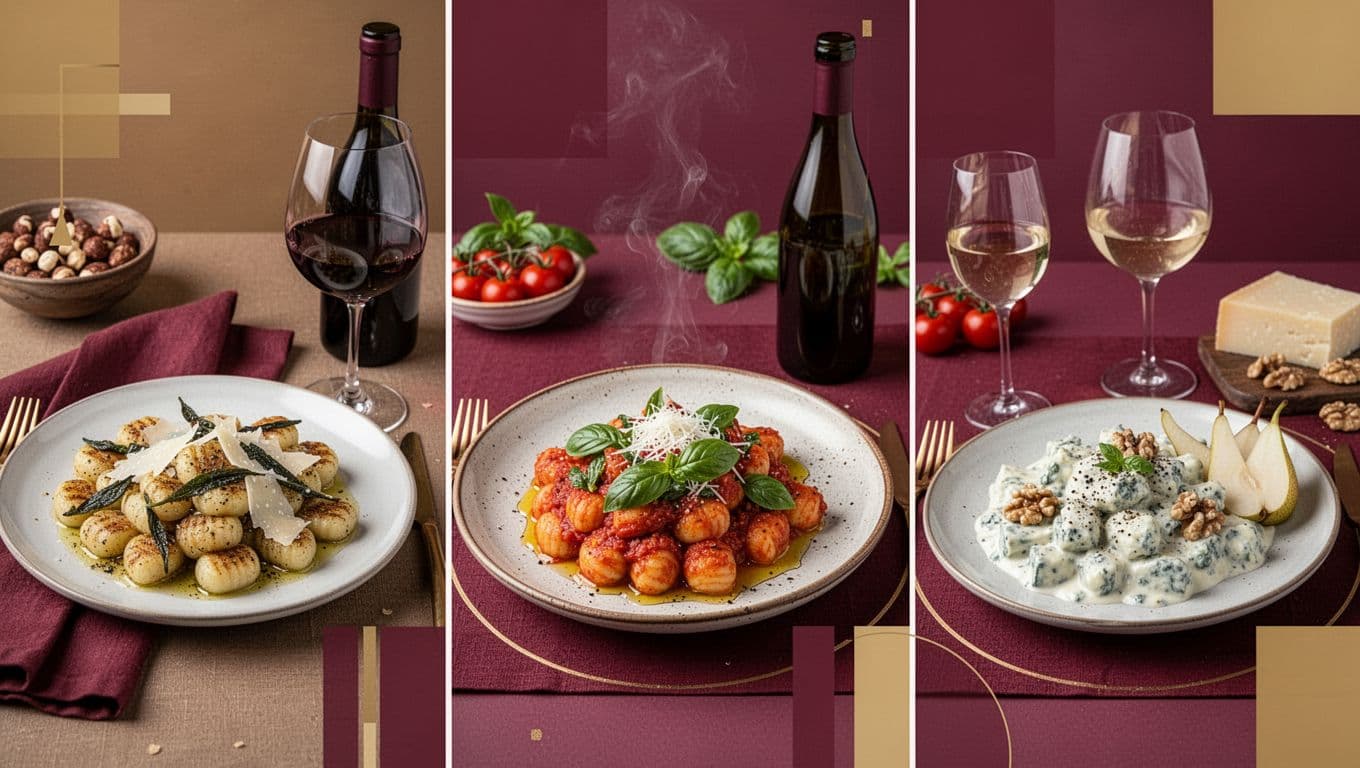
Tomato basil gnocchi: Chianti (Sangiovese) is the safest bet
Tomato sauce has natural acidity. If your wine can't keep up, the wine tastes dull. Tomato basil gnocchi, perhaps with fresh mozzarella, clicks instantly with Italian reds thanks to that tomato sauce brightness.
Wine recommendations that usually land well:
- Chianti (Sangiovese): Bright, cherry-like, and made for tomato sauce nights.
- Nebbiolo: A sophisticated alternative with high acid.
- Barbera: Another high-acid red that stays friendly at the table.
- Dry rosé: Great when you want something lighter but still "tomato-ready."
For more Italian-dinner direction, Sommy's best wines for Italian food keeps it simple and sauce-first.
Quick call for grocery store wine picks: if the shelf has "Chianti" and you're unsure, grab a bottle in your budget and move on. The odds are in your favor.
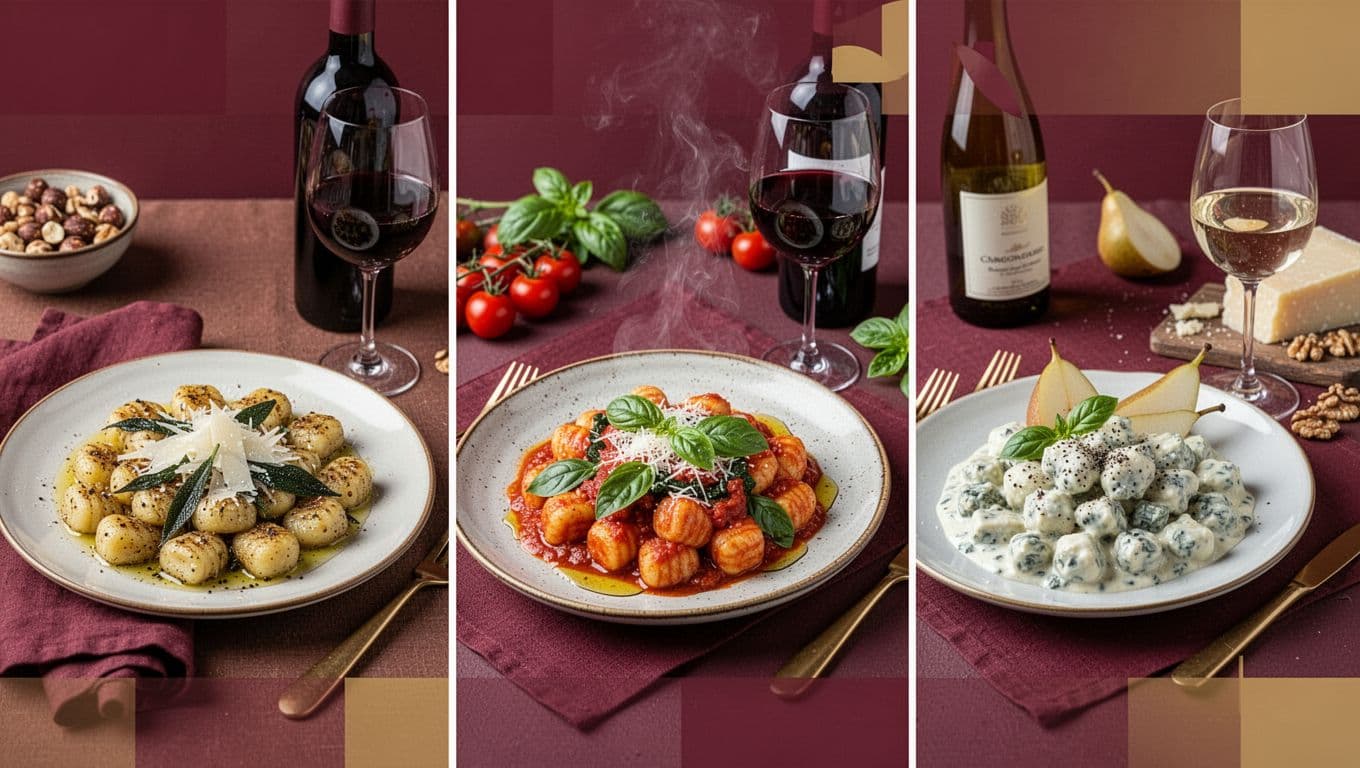
Creamy sauces: Gorgonzola cream gnocchi with Riesling (often off-dry) or Chardonnay
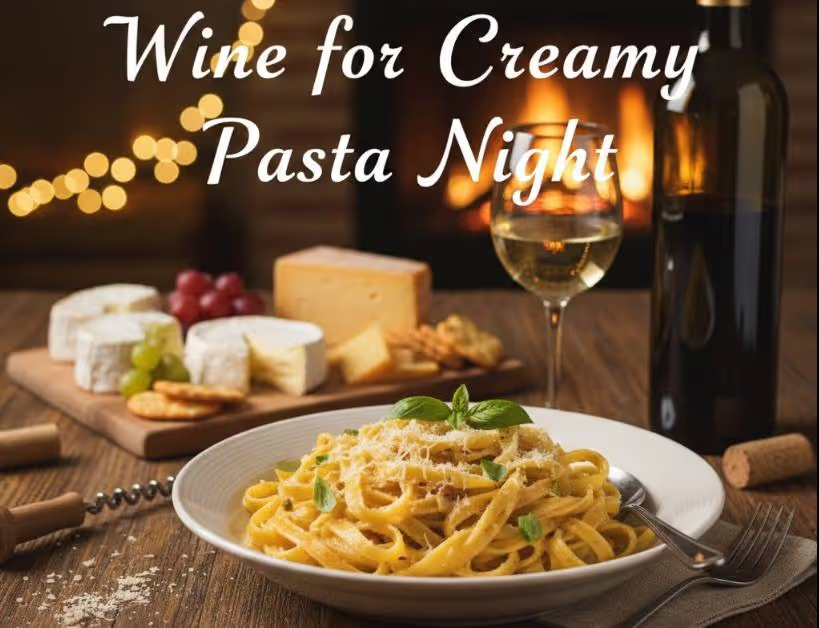
Gorgonzola cream is salty, tangy, and rich. It can make some reds taste harsh. A white wine pairing usually feels calmer here, like a cool cloth on your forehead.
Two smart directions:
- Riesling (often off-dry): That tiny touch of sweetness can soften blue-cheese bite. It's a top white wine pairing.
- Chardonnay: Choose one that feels balanced (not aggressively oaky) so it doesn't turn heavy. Chardonnay makes another excellent white wine pairing.
If you want another perspective on cheese-heavy pasta, Wine Enthusiast has a useful overview of cheesy pasta wine pairings.
Real-world tip: if the sauce feels intense, order the wine that feels refreshing. You're not trying to "match" the cheese, you're trying to enjoy the next bite.
Restaurant and store choices that feel low-stress
At a restaurant, the best restaurant wine tips are about speaking in simple targets. You don't need regions or fancy words. You need one sentence the server can act on.
Try this script (it works because it's clear):
"I'm having the gnocchi with brown butter sage, a butter sauce, and I'd like an Italian white wine that's smooth and not too heavy. For tomato-based dishes, ask for Italian red wines instead."
That's also the heart of good wine list tips. You're not asking for the "best" bottle. You're asking for a style.
In a store, reduce the aisle fast:
- Pick the sauce family (butter, tomato, or cream).
- Consider grapes like Sauvignon Blanc for pesto or Chenin Blanc for cream sauces.
- Pick the color you want (red, white, bubbles).
- Pick a price you won't regret.
If you want a simple refresher that applies to any meal, Sommy's how to match wine with food lays it out without the lecture.
Conclusion: pick the sauce, then pick your comfort zone
A great gnocchi wine pairing doesn't require expertise, it requires a calm decision. Pair to the sauce, match the weight, then choose what sounds good to you. That's everyday wine advice you can reuse for years, perfect for enhancing your gnocchi dinner.
If you want help choosing in the moment, this is exactly what an AI wine assistant is good for: smart wine recommendations, personalized wine picks, and clear wine recommendations based on your meal and your taste. When you're stuck between two bottles, wine app suggestions from Sommy can turn guessing into smart wine picks, with personalized wine recommendations and friendly wine advice you can trust. Learn more at https://www.sommy.ai.