
Chianti tastes of tart red cherry, dried herbs and something faintly savory like tomato leaf, carried on high acidity that makes your mouth water and a firm, slightly grippy finish. It's a dry red, medium bodied rather than heavy, and it's built to be drunk with food instead of on its own. The flavor comes from Sangiovese, the Tuscan grape that every bottle of Chianti is mostly made from.
That's the short version, and it covers a basic bottle from the supermarket well enough. It doesn't explain why the Chianti you loved at an Italian restaurant tasted nothing like the one you brought home for twelve dollars. That difference isn't your palate playing tricks, and it isn't really about price either. Two wines can both say Chianti on the front and be made to two different legal recipes.
What does Chianti actually taste like in the glass?
Chianti leads with sour cherry rather than sweet cherry, and the distinction matters more than it sounds. Think of the flavor of a fresh morello or a dried cherry rather than cherry candy. Around that you'll usually find red plum, sometimes strawberry, and a savory streak that reads as dried oregano, tomato leaf or dusty earth.
The Consorzio Vino Chianti, the growers' body for the denomination, describes its own wine as ruby red tending to garnet with age, dry, savory and lightly tannic, with an intense and elegant nose that frequently recalls sweet violet and small red fruits. The violet note is the one most tasting guides leave out, and once you've noticed it in a good bottle it's hard to miss again.
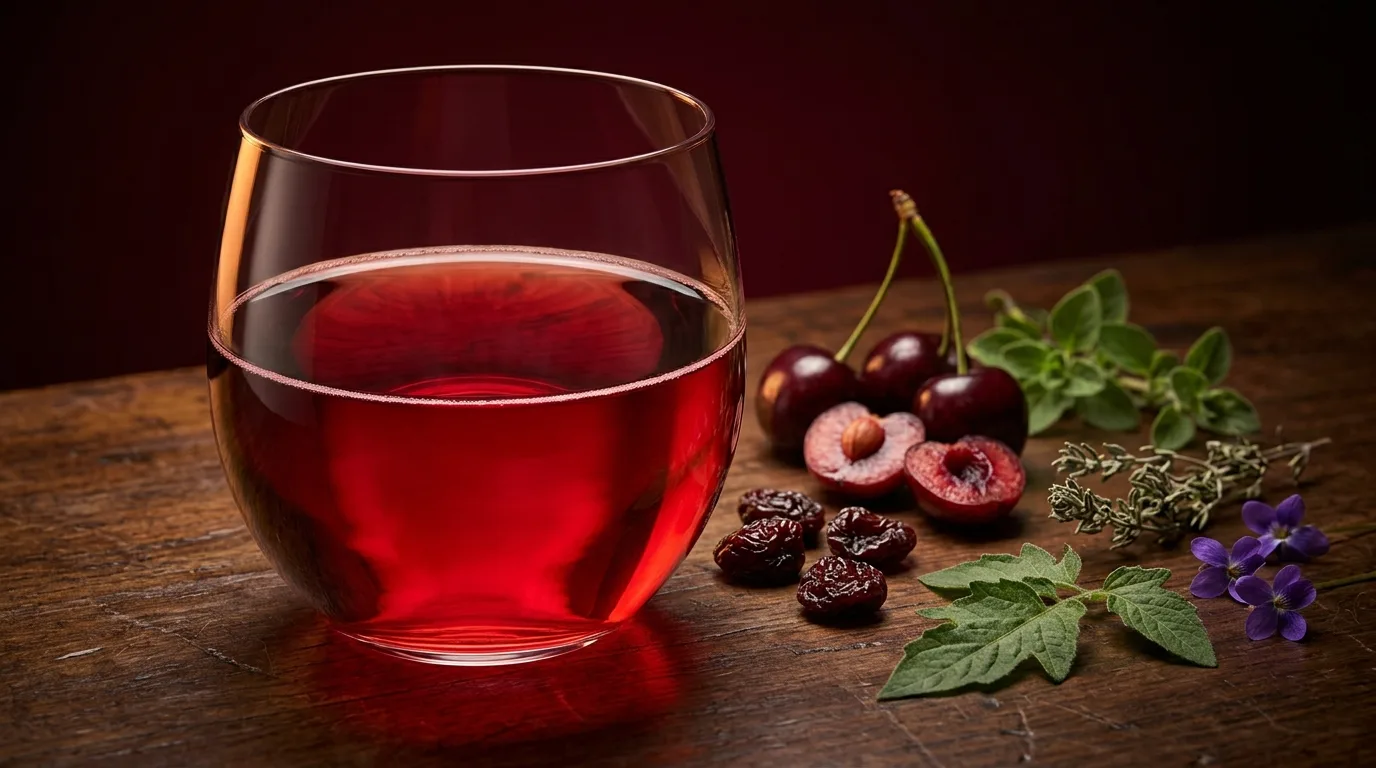
Two structural things define the experience more than any individual flavor. The first is acidity, which is the mouth-watering, slightly tart quality that makes a wine feel refreshing rather than heavy. Chianti has a lot of it, and that's the single biggest reason it works so well at the table. The second is tannin, the drying grip you feel on your gums after strong black tea. In Chianti it's firm without being aggressive, and it gives the wine a savory finish instead of letting it fade away sweetly. If the drying sensation is new to you, our explainer on what tannins actually do to a red wine walks through it in plain terms.
What Chianti is not is jammy, soft or sweet. If you've been drinking rich California reds and you expect that plush, ripe fruit, your first Chianti can taste austere or even sour by comparison. That's the style working as intended rather than a fault in the bottle.
Why do two bottles both labelled Chianti taste so different?
Because Chianti and Chianti Classico are two separate denominations with two different legal recipes, and almost nobody explains this on the shelf. Chianti Classico isn't the premium version of Chianti or a sub-zone of it. It's its own DOCG, with its own governing body, its own boundaries between Florence and Siena, and stricter rules about what can go in the bottle.
The gap between those rulebooks is wide enough to taste. Chianti DOCG can be made from a minimum of 60% Sangiovese, with up to 40% of other grapes approved for Tuscany making up the rest. White grapes are still legal there, up to 10% of the blend. Chianti Classico requires a minimum of 80% Sangiovese, and since 2006 it can only be produced from red grape varieties at all.
So a legally faultless bottle of Chianti can be 60% Sangiovese with a slug of white grapes in it, and a bottle of Chianti Classico cannot. That's the mechanism behind the pale, thin, faintly watery Chianti that gave the wine its reputation problem in the straw-covered flask era, when white Trebbiano was routinely blended in to soften and stretch it. Diluting a red with white grapes lightens the color and cuts the structure, which is exactly what those old bottles tasted like.
| Chianti DOCG | Chianti Classico DOCG | |
|---|---|---|
| Minimum Sangiovese | 60% | 80% |
| White grapes allowed | Yes, up to 10% | No, banned since 2006 |
| Where the grapes grow | A large stretch of Tuscany plus eight named sub-zones | The historic zone between Florence and Siena only |
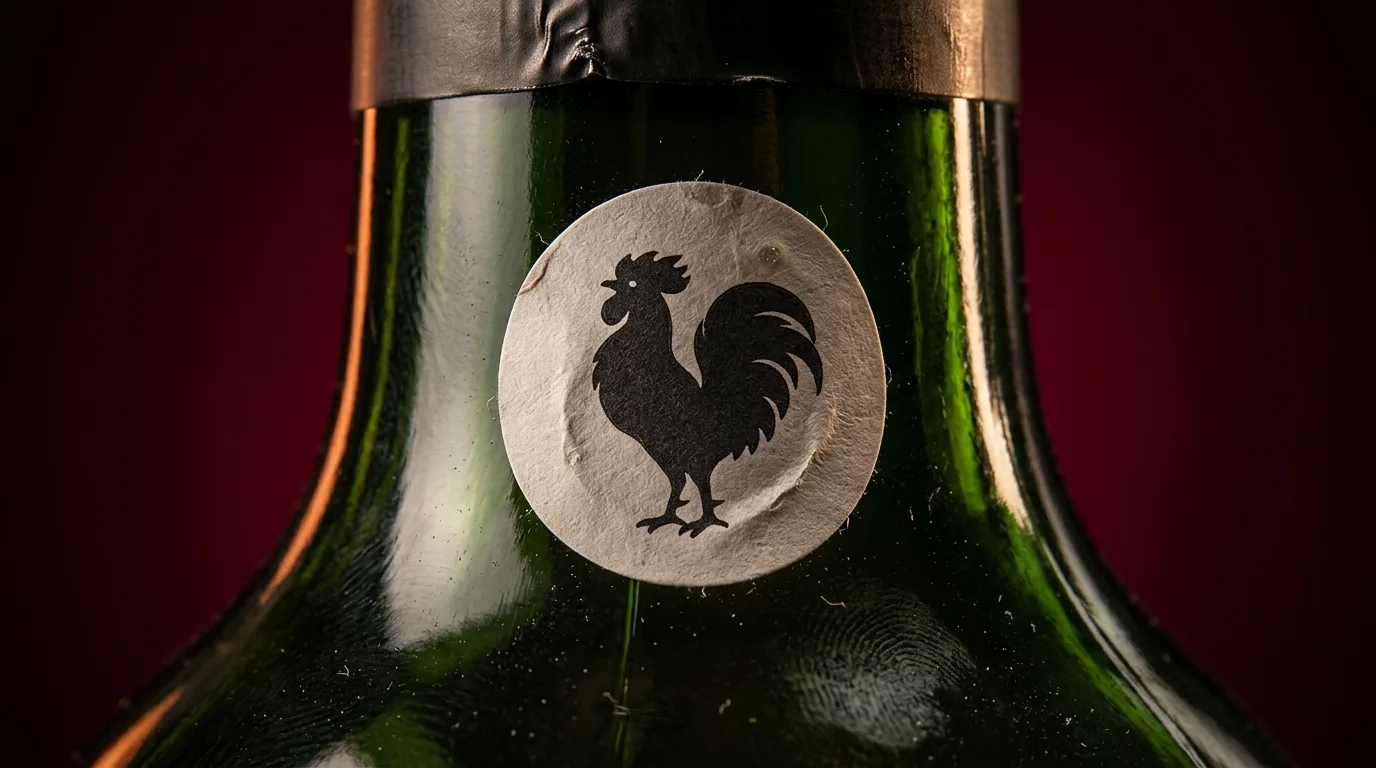
| Neck seal | None | Black Rooster (Gallo Nero) |
| Typical style | Lighter, softer, easier, cheaper | More concentrated, firmer, more savory |
The practical shortcut is the seal. Every bottle of Chianti Classico carries the Black Rooster on the neck or the back label, and no bottle of ordinary Chianti does. If you're standing in the aisle deciding between two bottles at similar prices, that little rooster is the most reliable single piece of information on either label. Sommy's Label Scan reads the whole front and back for you and tells you which denomination you're actually holding, which saves squinting at small print in bad supermarket lighting.
Chianti DOCG also has eight named sub-zones that can appear on the label: Colli Aretini, Colli Fiorentini, Colli Senesi, Colline Pisane, Montalbano, Rufina, Montespertoli and Terre di Vinci. Rufina is the one worth remembering, because its cooler hills north east of Florence tend to give tighter, more structured wines that age longer than the Chianti average.
What do Classico, Riserva and Gran Selezione mean on a label?
They're aging and quality tiers, and inside Chianti Classico they're defined precisely enough that you can predict the style before you open the bottle. The Consorzio Vino Chianti Classico publishes the requirements for all three, and they stack in a sensible order.
Chianti Classico Annata is the entry level, minimum 80% Sangiovese, at least 12 months of maturation and a minimum of 12% alcohol. This is the bright, cherry-driven, food-friendly one, and for most weeknight purposes it's the bottle to buy. Antinori's Peppoli is a widely sold example at around $20. Riserva keeps the same 80% minimum but doubles the maturation to 24 months including three months in bottle, at a minimum 12.5% alcohol. That extra time rounds the tannins and pushes the fruit toward dried cherry, leather and tobacco.
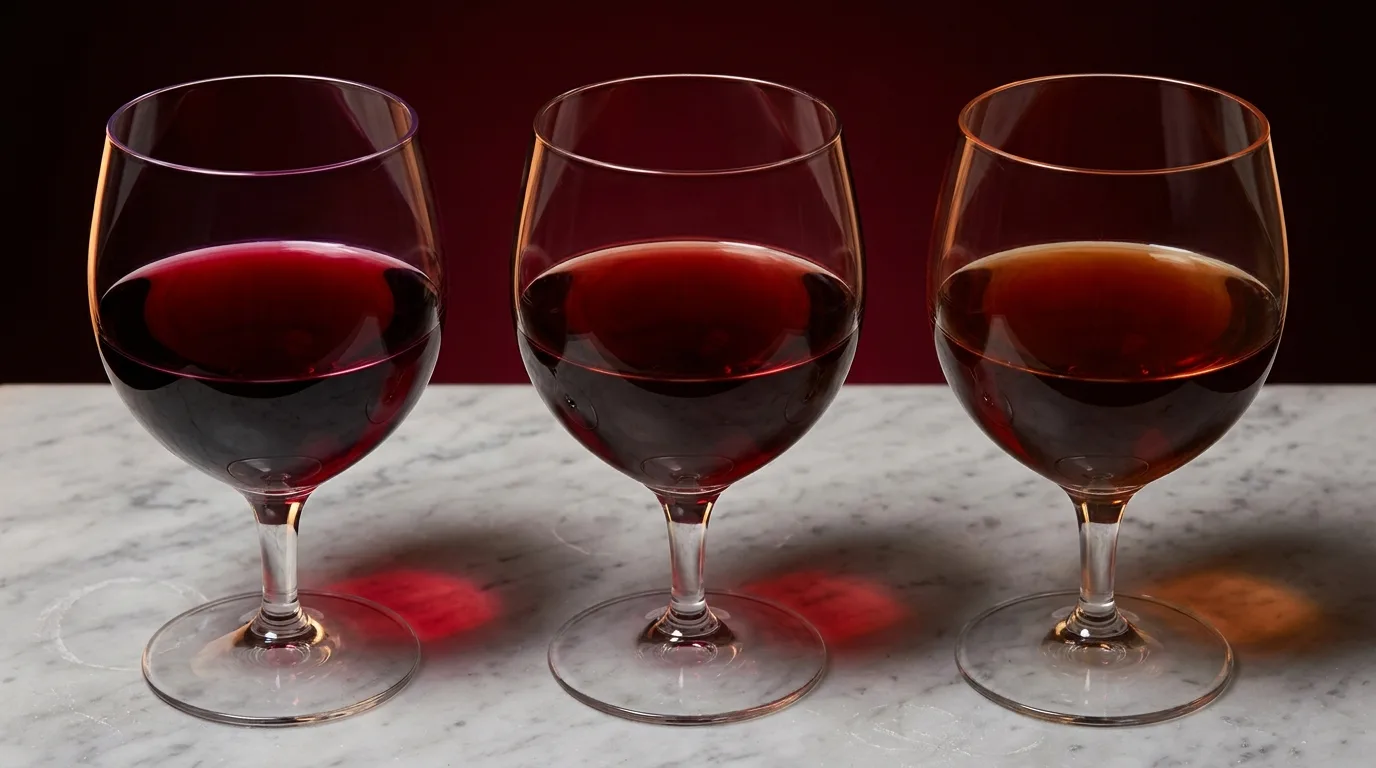
Gran Selezione sits on top and was introduced in 2014. It demands a minimum of 90% Sangiovese with only indigenous red grapes allowed in the remaining 10%, it must come from the estate's own fruit, and it needs at least 30 months of maturation at a minimum 13% alcohol. It's also the only tier that can print one of the eleven Additional Geographical Units on the label, names like Panzano, Lamole, Radda or Gaiole that tie the wine to a specific patch of the zone.
Plain Chianti has a Riserva too, but it's a weaker signal, because the underlying wine can still be 60% Sangiovese with white grapes in it. A Chianti Classico Riserva and a Chianti Riserva are not comparable objects despite the near-identical wording, and this is the single most common way people overpay on a Tuscan shelf. If label vocabulary is something you keep running into, we've covered a related trap in what estate bottled really means on a wine label.
Is Chianti sweet, and how strong is it?
Chianti is dry, with no perceptible sweetness at all. The confusion comes from fruit, because a wine can taste of ripe cherry while containing almost no sugar, and plenty of people read that fruitiness as sweetness. The high acidity and the savory, earthy notes pull firmly in the other direction, which is why the finish comes across as clean and slightly tart rather than round.
On strength, the legal minimums give you a floor rather than a typical number. Chianti Classico Annata must reach at least 12% alcohol, Riserva 12.5% and Gran Selezione 13%. Real bottles usually land a little above their minimum, so most Chianti you'll meet sits somewhere in the low to middle thirteens. That's moderate for a modern red, and it's part of why the wine stays drinkable across a long dinner.
What food does Chianti go with?
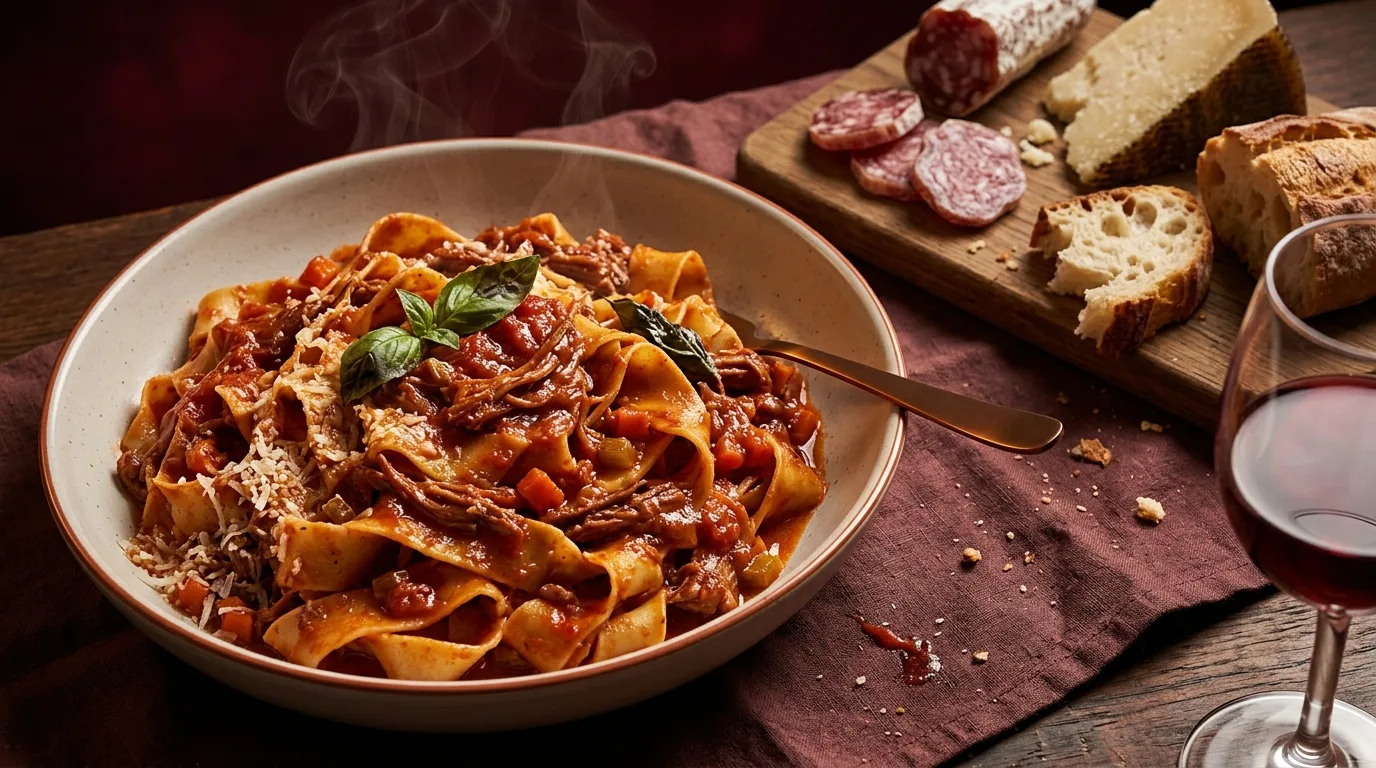
Anything with tomato in it, first and foremost, and the reason is chemical rather than traditional. Tomato sauce is unusually acidic, and an acidic food makes a low-acid wine taste flat and flabby. Chianti's acidity matches it instead of losing to it, so the wine still tastes like itself alongside a plate of ragu. That's also why a soft, ripe, low-acid red so often disappoints against pasta.
The same acidity cuts through fat, which brings cheese, cured meat and grilled food into range. A basic Chianti handles pizza, spaghetti and meatballs, lasagne and a weeknight burger without any thought required. Step up to a Classico or a Riserva when the food gets heavier, so steak, roast lamb, wild boar ragu or a long-cooked stew. We go deeper on the whole category in our guide to choosing wine for Italian food, and there's a dish-specific walkthrough in what to drink with bolognese.
Serving temperature does more work here than people expect. Chianti shows best somewhere around 60 to 65°F, which is cooler than most heated rooms and warmer than a fridge. Twenty minutes in the refrigerator before you pour gets a room-temperature bottle roughly there. Served too warm, the alcohol becomes obvious and the fruit turns muddled and soupy, which is a genuinely common way to have a bad time with a perfectly good bottle.
If you like Chianti, what should you try next?
Work from the two things Chianti gave you rather than from the name on the label. If what you enjoyed was the high acidity and the savory, herbal edge, that combination is the house style of a lot of Italian reds, and Barbera from Piedmont is the easiest next step. If it was the tart red-cherry fruit with light body, Gamay from Beaujolais lands in similar territory from a completely different country, and our Gamay taste guide covers where it differs.
Staying inside Tuscany, the same Sangiovese grape makes Rosso di Montalcino, which is riper and rounder, and Brunello di Montalcino, which is the serious long-aging version at a serious price. Vino Nobile di Montepulciano sits between the two. All three are recognisably related to Chianti, and moving between them is the fastest way to work out whether it's the grape you like or the particular Chianti style. Our guide to wines similar to Chianti takes this further, with named bottles sorted by which part of Chianti you're after.
The honest limit of any guide like this one is that it describes an average bottle to an average reader. Two people can drink the same Chianti Classico and reach opposite conclusions about it, and both of them are right about their own glass.
Common questions about Chianti wine taste
Is Chianti a heavy red wine?
No, Chianti is medium bodied rather than heavy. It has firm tannin and high acidity, which can read as intensity, but it carries less weight and less alcohol than a typical Cabernet Sauvignon or Shiraz. Most people find it easier to drink across a whole meal than a big, ripe red.
What's the difference between Chianti and Chianti Classico?
They're two separate DOCG denominations rather than two grades of one wine. Chianti Classico comes only from the historic zone between Florence and Siena, needs at least 80% Sangiovese, and cannot contain white grapes. Chianti covers a much larger area, needs only 60% Sangiovese, and still permits up to 10% white grapes.
Why does cheap Chianti taste thin and sour?
Usually because there's less Sangiovese in it and more of everything else. At the 60% legal minimum, with white grapes permitted up to a tenth of the blend, a budget bottle can be genuinely diluted compared with a Classico. High acidity with too little fruit behind it is what registers as thin and sour.
Should Chianti be chilled before serving?
Yes, but only lightly. Aim for roughly 60 to 65°F, which usually means about twenty minutes in the fridge for a bottle sitting at room temperature. Serving it warm makes the alcohol stand out and blurs the cherry and herb notes that make the wine worth drinking.
How long does Chianti last after opening?
A basic Chianti holds up for about three days in the fridge with the cork pushed back in, and a Classico or Riserva often improves on the second day before fading. The acidity that makes it good with food also helps it survive contact with air better than a soft, low-acid red.
Does Chianti need to be decanted?
An everyday Chianti doesn't need it. A Riserva or Gran Selezione benefits from thirty minutes of air, which softens the tannin and lets the fruit come forward. Pouring it into any wide vessel works fine if you don't own a decanter.