
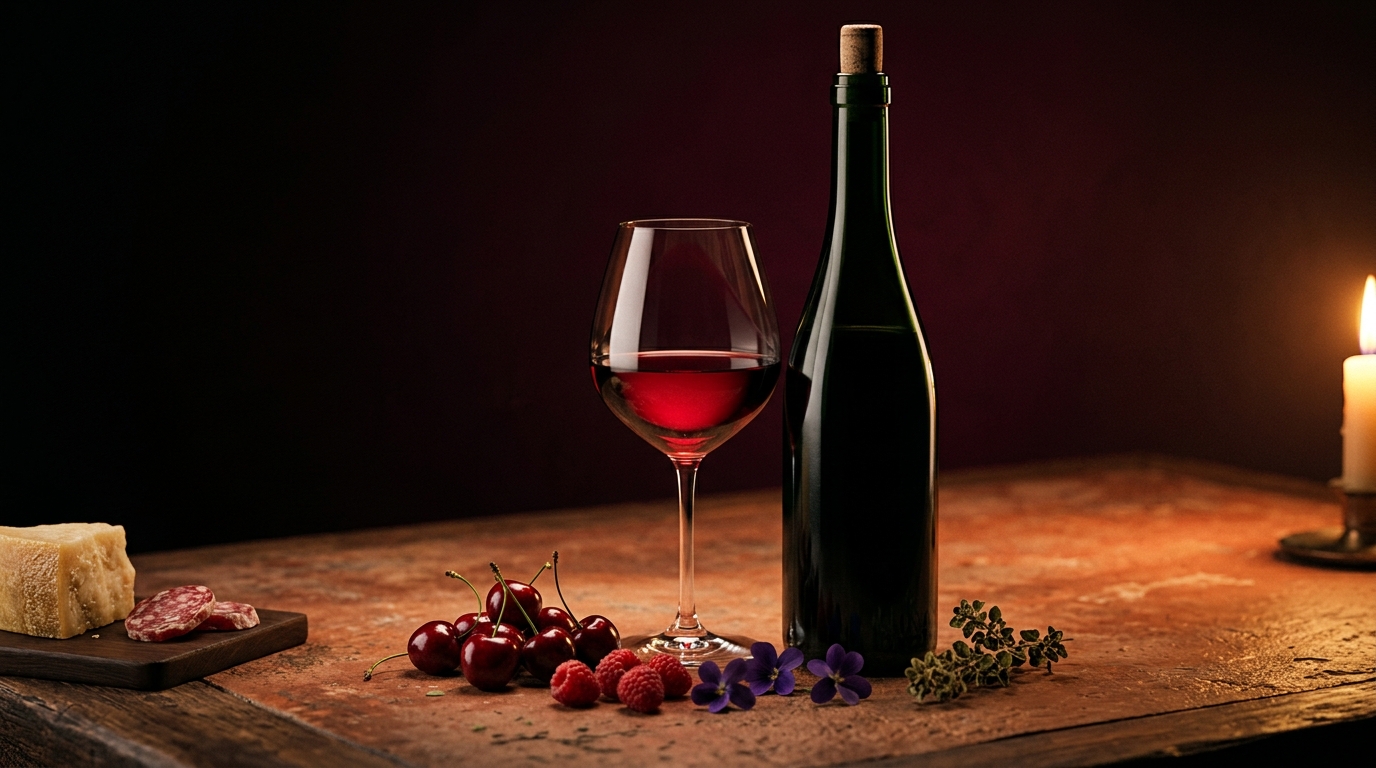

Peppoli is Antinori's everyday Chianti Classico, and it tastes bright rather than big: red cherry and raspberry, a floral lift, fresh acidity, and tannins that stay soft enough to drink on a weeknight. It usually sells for $18 to $25, and Costco has carried it closer to $17. If you're holding the bottle and wondering whether it suits the dinner you're cooking, the short answer is that it's built for tomato, and it is not built to be the biggest wine on the table.
That last part is the bit the shelf talkers leave out. Plenty of people buy a Chianti Classico expecting something dark and powerful, get a fresh red-fruited wine instead, and conclude the bottle was disappointing when it was simply a different style than they were picturing. Knowing which one you're buying is most of the decision.
What does Peppoli Chianti Classico taste like?
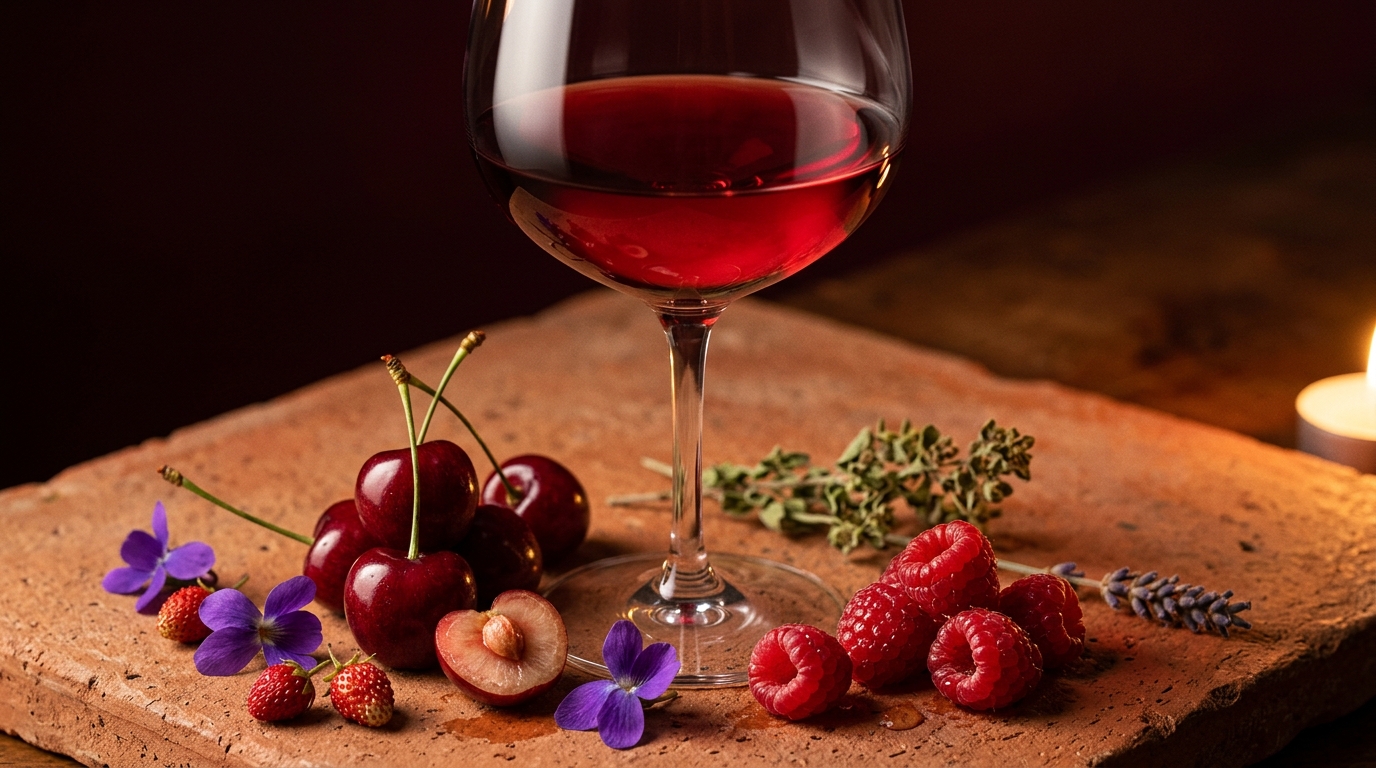
Bright red fruit leads, every year. Antinori's own note for the 2024 Pèppoli describes a bright ruby color with cherries, raspberry jelly and pomegranate juice, floral notes of violets and geraniums, and a long savory finish with soft tannins. Their 2023 note runs along the same lines with violets, dog rose and lavender over currants, wild strawberries and raspberry purée.
Read those two together and the house style comes into focus. This is a red-fruited, floral, medium-bodied wine with real acidity and a savory finish, not a dark, jammy, oak-heavy one. In the glass it's translucent ruby rather than opaque purple, and the tannins are present without being the point. It runs around 13% alcohol, which is modest by modern red-wine standards and part of why it drinks easily.
The savory side deserves a mention because it's what makes the wine useful. There's a dried-herb, faintly earthy quality under the fruit that stops it tasting like fruit juice, and it's the same quality that lets it sit next to a tomato sauce without either one winning. If you want the full picture of what the grape behind it does, our Sangiovese guide covers the range.
One honest caveat about the acidity. Chianti Classico is a medium-high to high acid wine by design, and that's a feature at the dinner table and a liability without food. Poured on its own at a party, a bottle of Peppoli can read as sharp to someone whose usual red is a soft Californian blend.
What does the Chianti Classico label actually guarantee?
More than most people assume, and less than the marketing implies. Three things are worth knowing before you compare two bottles on the shelf.
First comes the zone on the label. Chianti Classico is the original Chianti heartland, roughly 100 square miles between Florence and Siena, and it's a separate DOCG from the broader Chianti that surrounds it. A bottle labeled simply Chianti can come from any of several outlying sub-areas. Second, the grape: any wine calling itself Chianti has to be at least 80% Sangiovese, and Chianti Classico is held to the tighter rules of the smaller zone.
Third, and most useful in a shop, the black rooster. Only Chianti Classico bottles may carry the gallo nero seal on the neck, and it marks the producer as a member of the Chianti Classico Consortium. If you're standing in front of a wall of Italian reds, that little black bird is the fastest visual filter you have.
| On the label | What it tells you |
|---|---|
| Chianti | At least 80% Sangiovese, from the broader Chianti area |
| Chianti Classico | From the original heartland zone, tighter rules, black rooster seal |
| Riserva | Aged at least 6 months in barrel plus 3 more in bottle |
| Gran Selezione | Estate-grown fruit only, stricter rules, tasting panel approval |
Peppoli is a straight Chianti Classico, which is the entry rung. That's not a criticism of it. Riserva and Gran Selezione are generally fuller, oakier and pricier, and if what you want is a fresh red for a Tuesday, the entry rung is the right rung. Our guide to what Chianti tastes like goes further into why two bottles with the same word on them can be so different.
Who makes it, and where does it sit in the Antinori range?
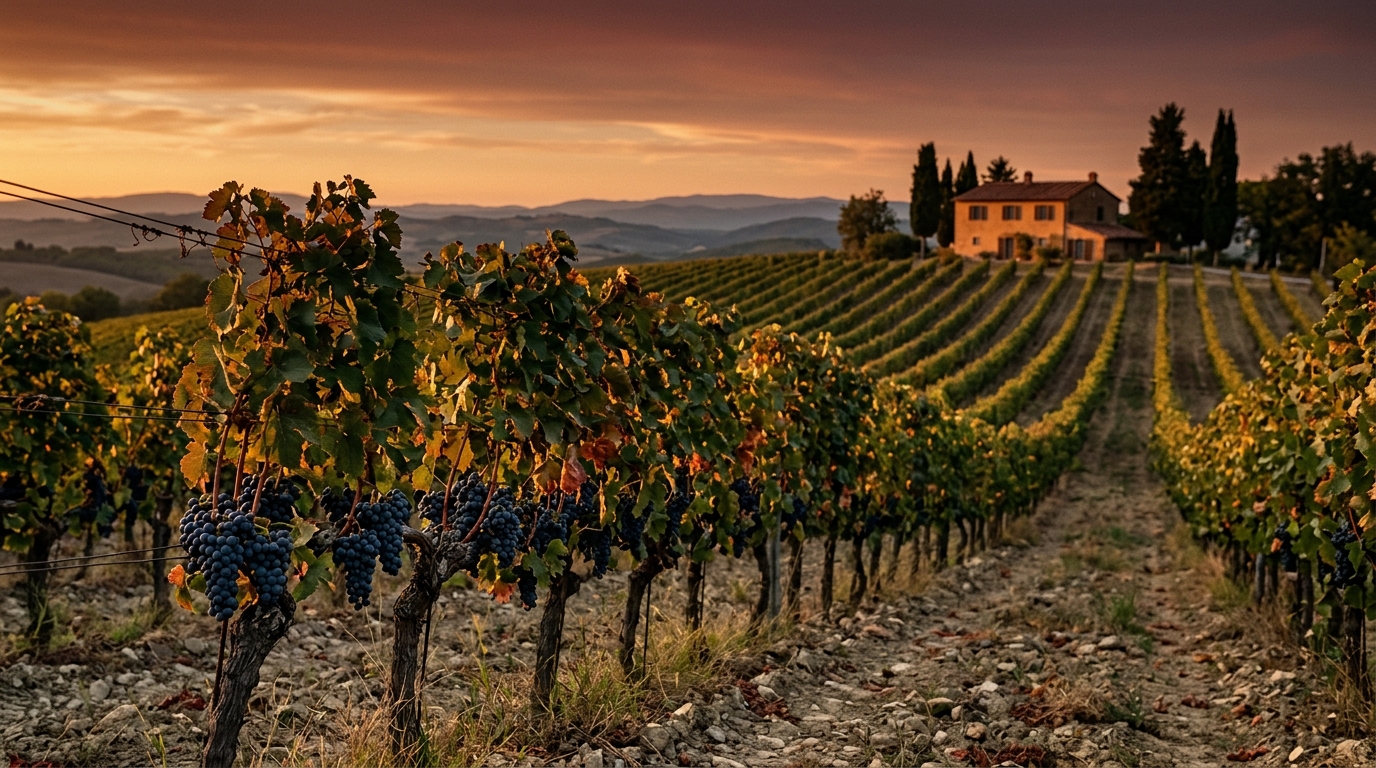
The Antinori family has been making wine since 1385, when Giovanni di Piero Antinori joined Florence's guild of winemakers. Their own history page counts more than six hundred years across 26 generations, which is an unusual thing to be able to say and genuinely relevant to the bottle, because a family that size and age tends to prize consistency over drama.
The Pèppoli estate itself is a much younger project. Antinori first produced it in 1985, from an estate of 100 hectares, of which 50 are planted to vineyard, sitting about 5 kilometers northeast of their Tignanello property. The same estate makes an extra virgin olive oil and a red wine vinegar, which tells you something about how it's farmed.
Within the Antinori lineup, Peppoli is the approachable Chianti Classico. Tignanello and Badia a Passignano are the serious, expensive expressions of the same part of Tuscany. Peppoli is the one meant to be opened rather than saved, and the winemaking reflects that: it rests mostly in large Slavonian oak casks, with only a small portion in small barriques and stainless steel. Large old casks let the fruit stay in front instead of layering on vanilla and toast.
Geography backs up what you taste. The Chianti Classico zone runs cooler in its northern reaches near Florence and warmer toward the south, and Peppoli's bright, red-fruited, floral profile is exactly what the cooler end of a Sangiovese zone tends to produce. That's consistent with the style in the glass rather than proof of it, but it's a more useful explanation than "the family is famous."
What should you eat with Peppoli Chianti Classico?
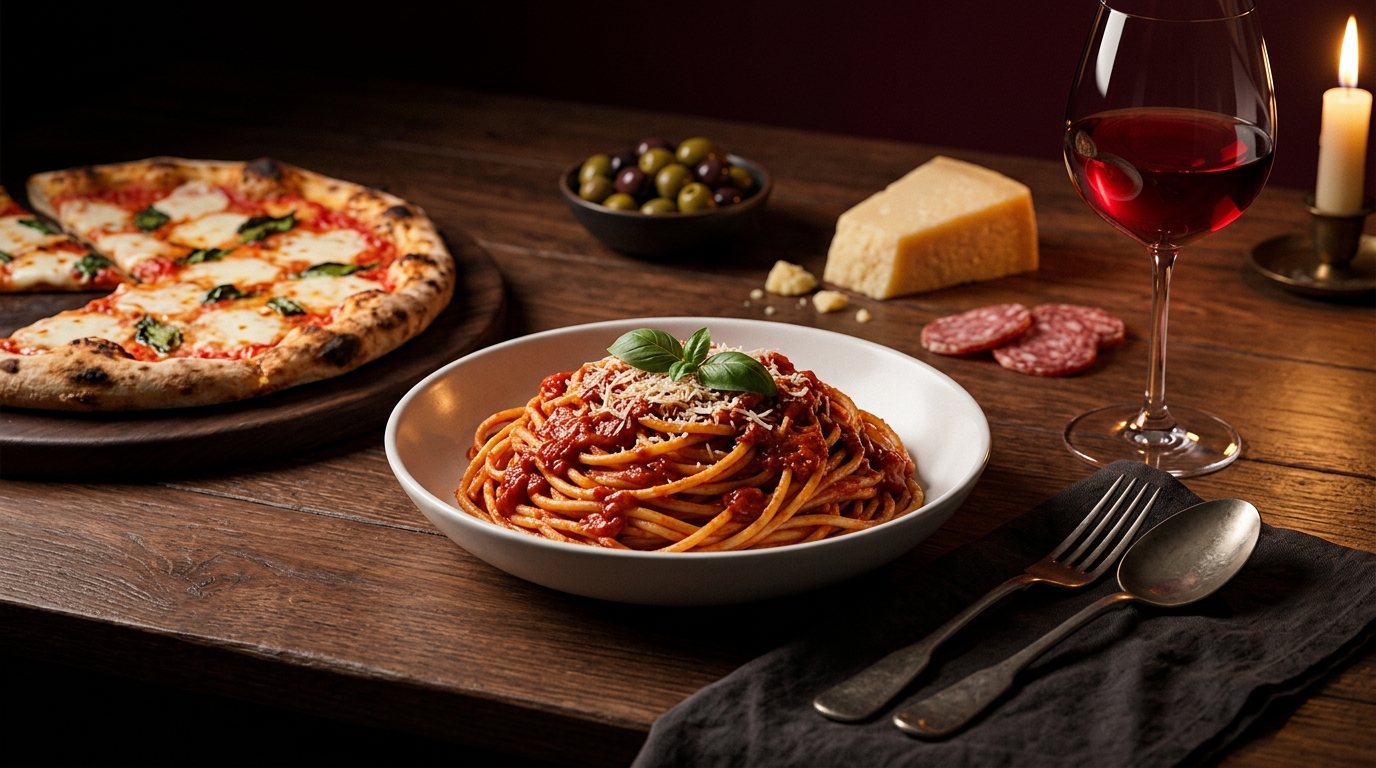
Tomato, first and last. High-acid wine and high-acid sauce meet as equals, and this is the single most reliable pairing in Italian food. Spaghetti with a long-simmered ragù, penne all'arrabbiata, eggplant parmesan, a baked ziti: all of them work, and none of them require any thought.
Pizza is the other obvious one, and Peppoli handles most styles without complaint. A margherita is the natural match, and pepperoni is fine because the wine's acidity cuts the fat. Our guide to wine with pizza breaks that down by style if you want to go further than "red wine, pizza, done."
Beyond tomato, aim for savory and salty rather than sweet and rich.
- Roast chicken or pork loin with rosemary, where the herbs meet the wine's savory side.
- Cured meat and hard cheese, meaning prosciutto, salami, Pecorino, Parmigiano. Salt and acidity flatter each other reliably.
- Mushroom risotto or lentils, where the earthy note in the wine has something to answer.
- A simple grilled steak, though a bigger red would handle a heavily charred one better.
There are two things worth avoiding here. Anything with a sweet glaze will make the wine taste thin and sour by comparison, so barbecue sauce and teriyaki are poor company. And a very rich cream sauce leaves the wine with nothing to cut through, which sounds like a small problem and is actually the most common way a good bottle gets wasted. Our broader guide to wine for Italian food and the one on wine and lasagna cover the rest of the weeknight repertoire.
Does the vintage matter, and how would you check?
Less than it would on an expensive bottle, and you can check it in thirty seconds anyway.
Antinori publishes a vintage note for every year of Peppoli going back to 2011, which is unusual generosity for a wine at this price and far more useful than any generic review. Search the year printed on your bottle and read what they wrote about it. That's the producer describing the actual wine in your hand, rather than a taster describing a different year.
Recent years have run close together. The 2024 harvest began on September 10 after a mild winter and a cool, rainy spring, with a stable summer and no extreme heat. The 2023 harvest started on September 12, after a hot, dry summer that also avoided heat spikes. Both were bottled the following summer, and both notes describe the same bright, floral, red-fruited style. That consistency is the whole design brief for a wine like this.
On drinking window, treat it as a wine for now. The style is built on freshness, and freshness is the first thing to fade. A bottle within three or four years of its vintage will show what the winemakers intended. An older one won't be spoiled, but the fruit softens and the savory, earthy side takes over, which some people prefer and most people didn't buy it for.
How much should you pay?
Around $20 is normal, and roughly $18 to $25 covers most of what you'll see in a US shop. Costco has listed it at $17.49, which is the low end and a reasonable benchmark for whether the price in front of you is fair.
Whether that's good value depends on what you're comparing it to. Against a $10 supermarket Chianti in a straw flask, Peppoli is a serious step up in precision and freshness. Against other $20 Chianti Classico bottles, it's a competitive rather than dominant option, because that price band has become genuinely crowded with good wine from smaller estates. What Antinori reliably sells you is consistency: the bottle you buy in March tastes like the one you bought in November.
If the shop doesn't stock it, the substitution rule is simple. Look for another Chianti Classico with the black rooster, or reach for Barbera d'Asti, which shares the bright sour-cherry fruit and high acidity from a different corner of Italy. If you're shopping the supermarket aisle rather than a wine shop, our guide to grocery store wines covers what else tends to be worth picking up.
That substitution question is the one Sommy's Find Similar feature exists for. You already know one bottle you like, so you don't need a lecture on Tuscan geography, you need the next bottle. Name Peppoli and you get wines that share its actual character, matched against what you've rated before rather than against a general popularity ranking.
Common questions about Peppoli Chianti Classico
Is Peppoli Chianti Classico sweet or dry?
Peppoli is a dry red wine. The cherry and raspberry flavors are the natural fruit character of Sangiovese rather than residual sugar, and ripe fruit often reads as sweetness even in a wine with none. If a red tasting genuinely sweet is what you're after, this is the wrong bottle.
What grape is Peppoli made from?
Mostly Sangiovese, with a small share of complementary varieties, which is the standard structure for Chianti Classico. Antinori describes the blend that way rather than naming exact percentages, and the proportions shift a little year to year.
Should I decant it?
There's no real need to decant it. This is a medium-bodied wine made to be drunk young, so pouring it half an hour before dinner is plenty. Serving it slightly cool, around 60 to 65°F, does more for it than a decanter will.
Is Peppoli a good bottle to bring to someone's house?
It's a sensible choice for that job. The producer is recognizable, the price sits in the comfortable range for a gift, and the style is food-friendly enough to work with whatever's being served. The caveat is the one that applies to any gift wine: you're guessing at someone else's taste.
How does it compare to a regular Chianti?
It comes from the smaller, original zone rather than the wider Chianti area, and it carries the black rooster seal. In practice that usually means more precision and a longer finish than a basic Chianti at half the price, though the gap narrows once you're comparing good producers on both sides.
How long does an open bottle last?
Two or three days with a stopper in the fridge, taken out twenty minutes before you pour. The fruit fades before anything goes wrong with it, so the second night is usually fine and the fourth is a different wine.
Deciding on the bottle in your hand
Peppoli is a well-made, consistent, food-first Chianti Classico at a price that makes it an easy weeknight decision. Buy it for tomato-based cooking, roast chicken, a pizza night or a cheese board, and drink it within a few years of the vintage on the label.
What no guide can tell you is whether the bright, high-acid, red-fruited style is the one you actually enjoy. Some people taste this wine and find it lively and refreshing, others find it tart and want something rounder, and both reactions are perfectly reasonable responses to the same glass. Your own palate settles that, and one bottle is a cheap way to find out.
