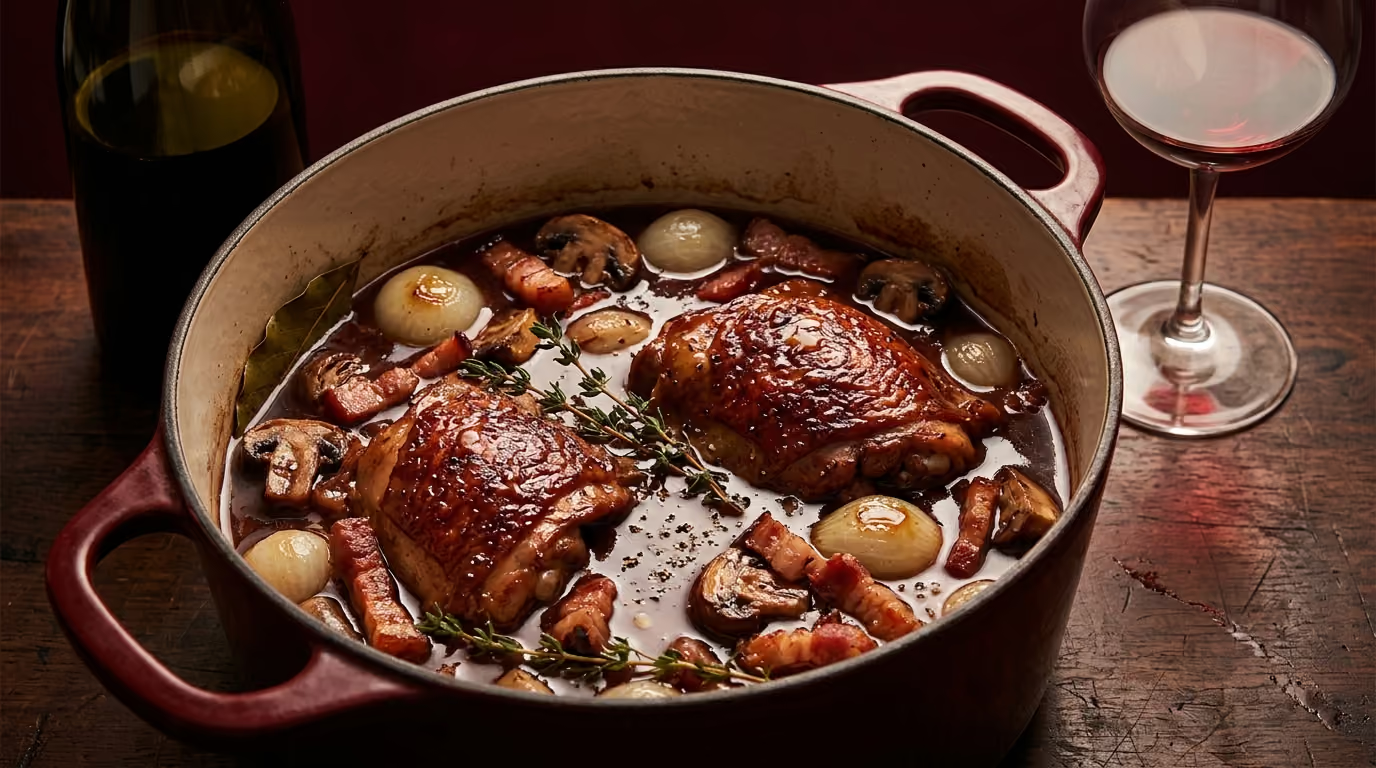

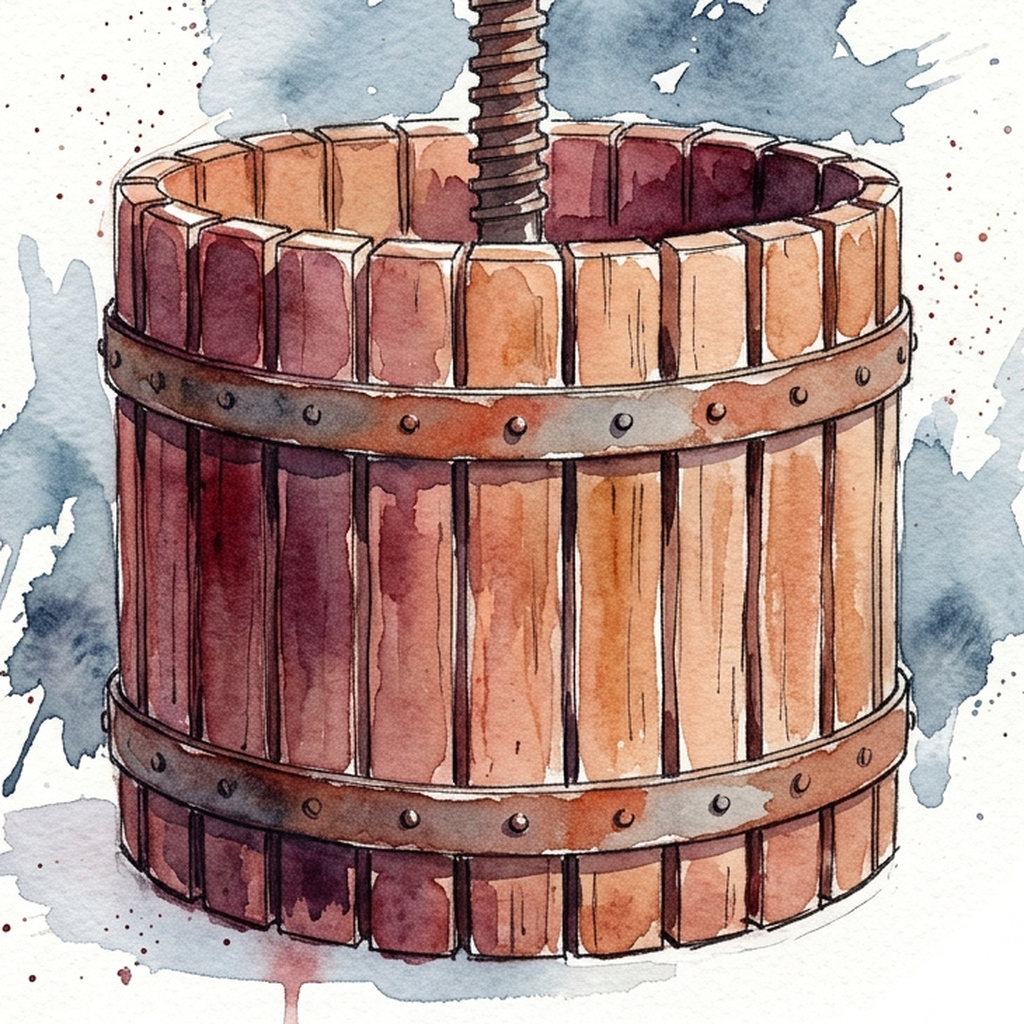
Red wine and white wine come from the same starting point, fermented grape juice, and the split happens in the cellar. Red wine ferments with the grape skins left in, which pulls out color, tannin, and darker fruit flavors, while white wine has the skins taken out early, so it stays lighter, crisper, and more about fresh fruit and acidity. That one choice shapes almost everything you taste. Which one is right for you comes down to the flavors you already enjoy, what you're eating, and the mood you're in, and this guide walks you through all three so you can pour with confidence.
What's the real difference between red and white wine?
The real difference between red and white wine is the grape skins, not just the grape color. Red wine is made by letting the juice sit and ferment together with the skins and seeds, and white wine is made by pressing the juice off the skins right away so only the clear liquid ferments. Everything people associate with red versus white flows from that single fork in the process.
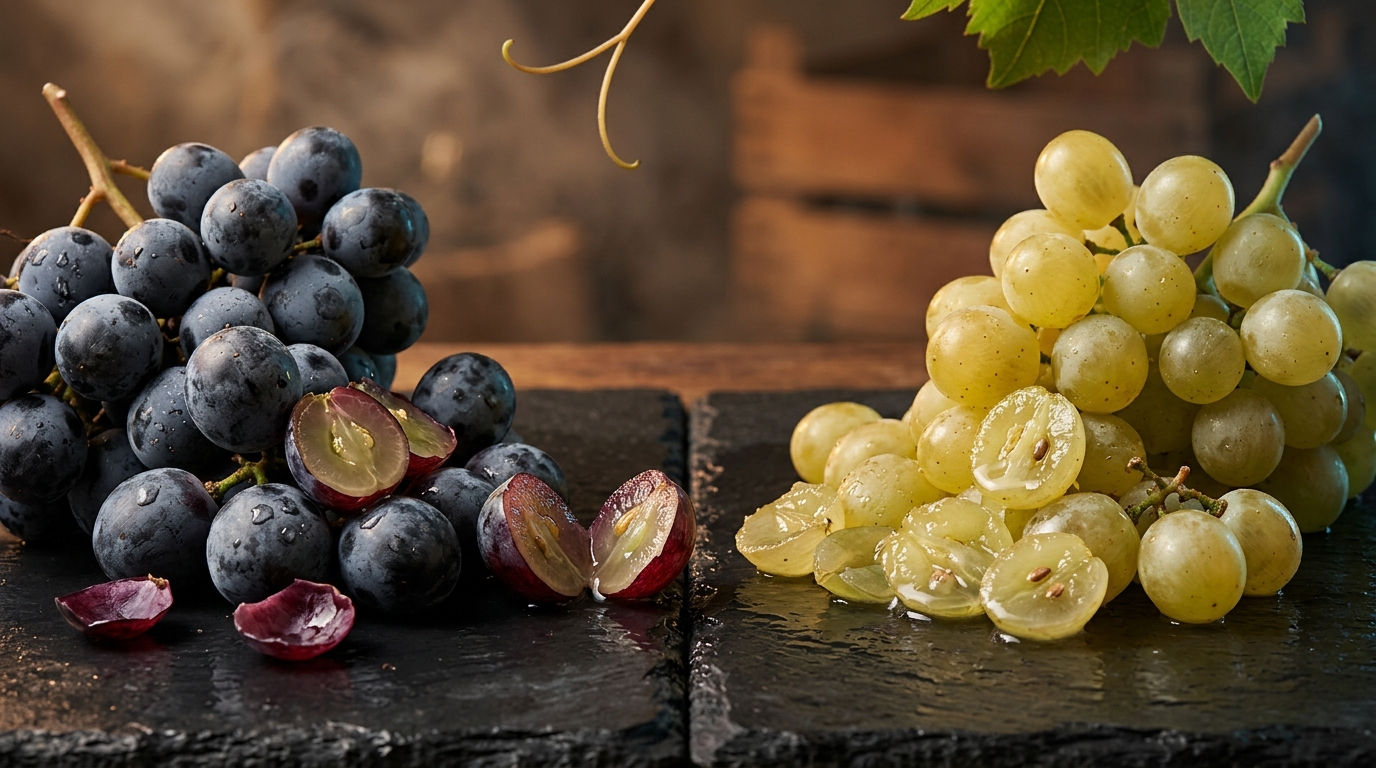
Because red wine stays in contact with the skins, it picks up three things at once. It gets its color, from bright ruby to almost black, since all of that pigment lives in the skins. It picks up tannin, the compound that gives red wine its slight grip, and it takes on deeper aromas of dark fruit, spice, and earth. White wine skips the skins, so it keeps a pale gold or greenish tint, carries little to no tannin, and leans toward citrus, orchard fruit, and floral notes with fresh acidity holding it together.
Grape choice matters too, though it follows the same logic. Reds come from darker-skinned grapes like Cabernet Sauvignon, Pinot Noir, Merlot, Syrah, and Sangiovese, while whites come from pale grapes like Chardonnay, Sauvignon Blanc, Pinot Grigio, and Riesling. Winemakers then steer the style further with the vessel they use, aging in oak barrels for rounder, richer texture or in stainless steel tanks for a crisper, fruit-forward result. None of that changes the core idea, though. Skins in means red, skins out means white.
What does each one actually taste like?
Red wine tends to taste fuller, warmer, and more savory, while white wine tends to taste lighter, brighter, and more refreshing. If you sipped them side by side, the red would feel like it has more weight and structure on your tongue, and the white would feel cleaner and zippier, the way cold lemonade does on a hot afternoon.
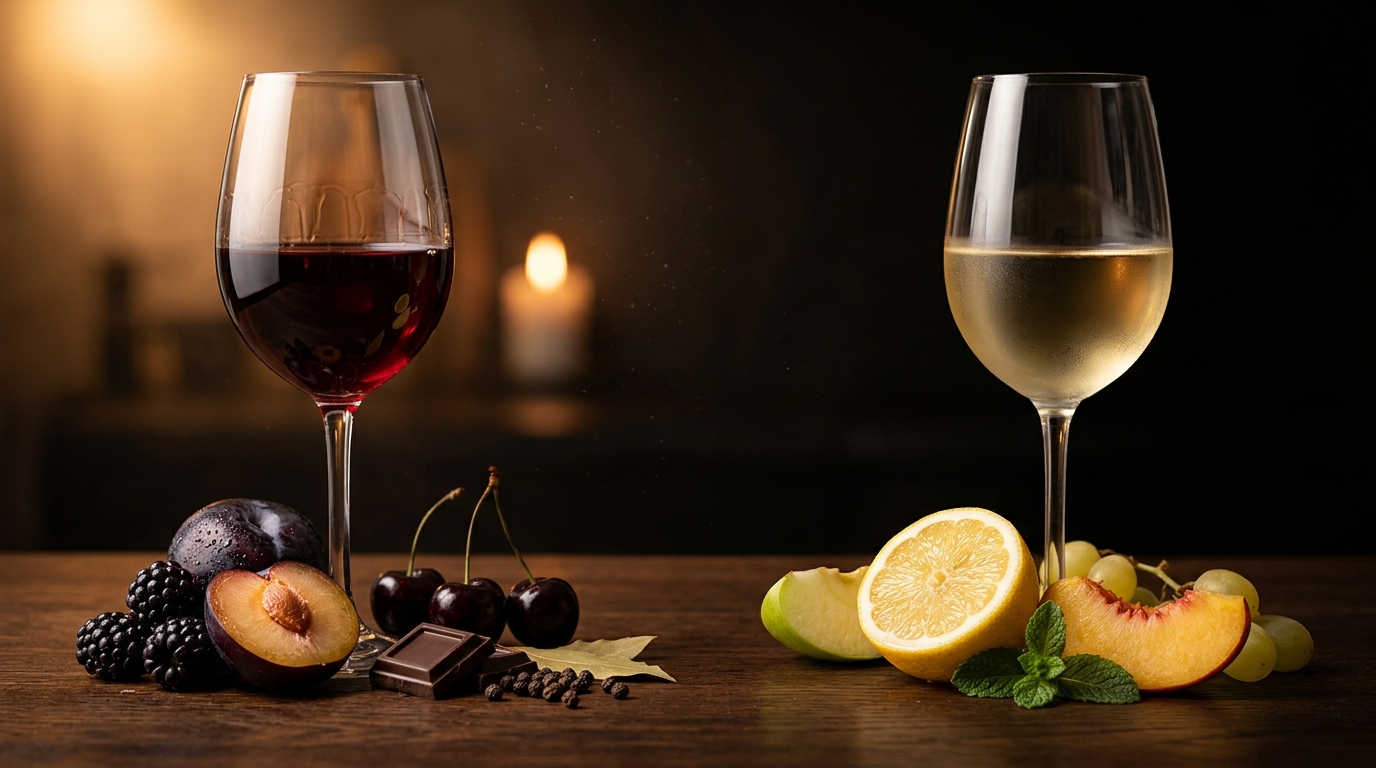
With red wine, you're usually tasting darker fruit like blackberry, black cherry, and plum, often wrapped in notes of cocoa, pepper, dried herbs, or a little smoke from oak aging. The other thing you feel in red is tannin, that faintly drying, textured sensation on your gums, a bit like the last sip of over-steeped black tea. Tannin isn't a flavor so much as a feeling, and it's what makes a bold red stand up to a steak. If that grip is new to you, our explainer on what tannin in wine actually is breaks it down without the jargon.
White wine trades tannin for acidity, and acidity is what makes your mouth water and keeps the wine feeling lively. The flavors run toward lemon and lime, green apple and pear, peach, and sometimes tropical fruit or honeysuckle, depending on the grape. A crisp Sauvignon Blanc tastes bright and grassy, an unoaked Pinot Grigio tastes light and easygoing, and a barrel-aged Chardonnay tastes rounder and creamier, closer in weight to a light red. If that fresh, mouthwatering quality appeals to you, it's worth understanding how acidity in wine shapes what you like, since it's the backbone of nearly every white.
How do you know if you'll like red or white wine?
The fastest way to guess whether you'll prefer red or white is to look at the flavors you already reach for in everyday life. Your palate has been telling you what it likes for years, long before wine entered the picture, and you can read those signals to point yourself in the right direction before you ever open a bottle.
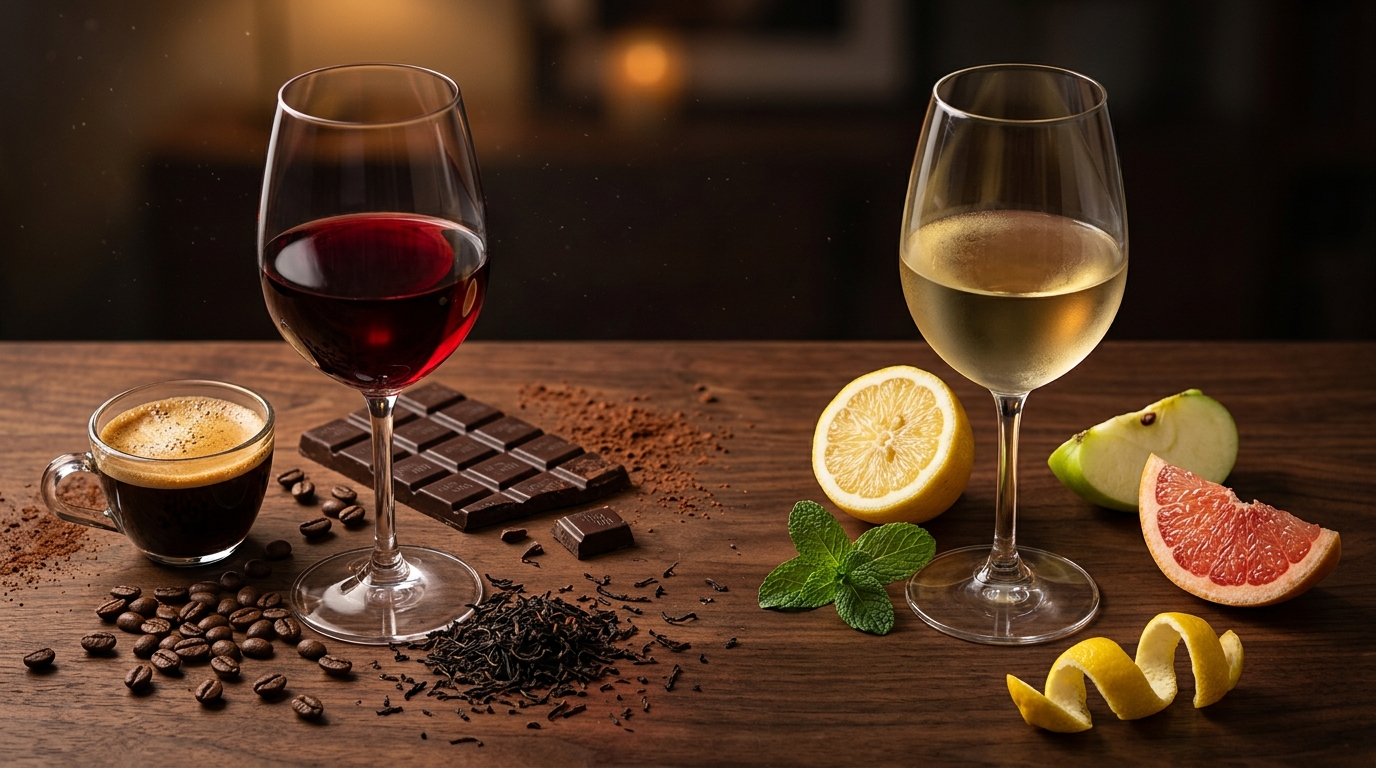
If you love strong black coffee, dark chocolate, black tea, or a well-seared steak, you probably have a friendly relationship with bitterness and texture, which means tannic reds like Cabernet Sauvignon or Syrah will feel right at home. If you gravitate toward citrus, green apple, grapefruit soda, or a squeeze of lime on everything, your palate likes acidity and freshness, so crisp whites like Sauvignon Blanc or Pinot Grigio are a natural starting point. And if you have a sweet tooth and find most wines a little harsh, you're not doing anything wrong, you just want an off-dry style, and a slightly sweet Riesling or Moscato will treat you far better than a dry red. Our guide to dry versus sweet wine helps you spot which is which on a label.
Taste is personal in the end, and the only real test is actually drinking the wine, so treat these as starting bets rather than firm rules. This is exactly the problem Sommy's Taste Profile is built to solve, since it learns the specific flavors and styles you rate highly and turns them into recommendations that fit you, and Fit Check gives you a quick read on whether one particular bottle suits your style before you commit. Think of your everyday flavors as the first clue and your own ratings as the confirmation. Together they narrow red versus white from a coin flip to a confident pick.
Which one should you pour with dinner?
The simplest rule for pairing is to match the weight of the wine to the weight of the food, so lighter dishes go with lighter wines and richer dishes go with fuller ones. That single idea gets you a good match far more often than memorizing which grape belongs with which protein, and it works whether you're pouring red or white.
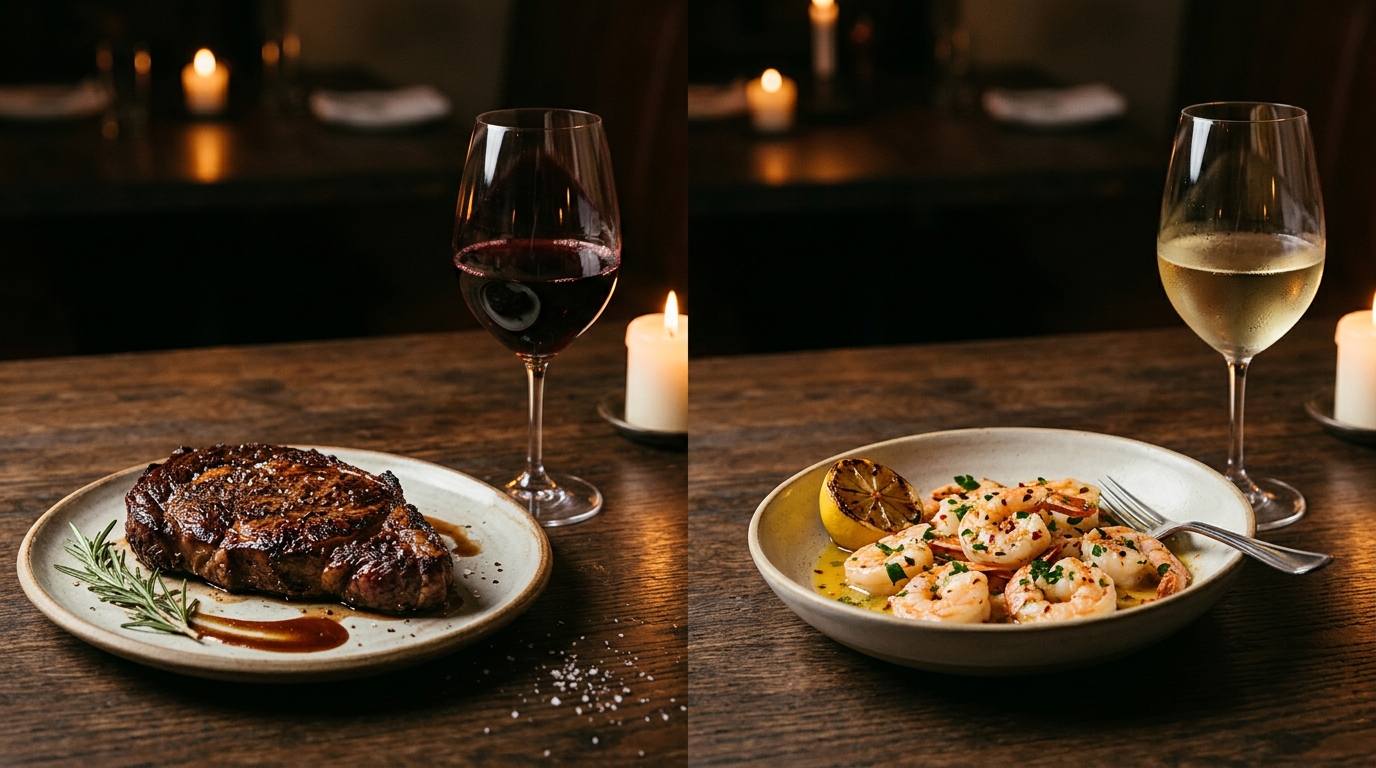
Red wine shines next to hearty, savory food, because its tannin and body have something to push against. Steak, lamb, braised short ribs, mushroom dishes, aged hard cheeses, and tomato-sauce pastas all sing with a red, since the fat and protein soften the tannin and let the fruit come forward. White wine, with its brighter acidity, is the friend of lighter and richer-but-delicate food, so it works beautifully with seafood, roast chicken, creamy pasta, fresh salads, goat cheese, and anything with lemon or herbs. That same acidity cuts through cream and butter the way a squeeze of lemon does, which is why a crisp white and a bowl of buttery scampi feel made for each other.
The old line about red with meat and white with fish holds up most of the time, but don't treat it as law. A chilled light red like Gamay is lovely with salmon, and a rich oaked Chardonnay can stand up to pork or even a mild curry. When you're not sure, lean on the weight rule first and your own taste second. If you want to go deeper on building matches from scratch, our full walkthrough on how to pair wine with food covers the moves that work across almost any meal.
What about rosé, orange wine, and chilled reds?
Not every bottle sits neatly on the red or white side, and the wines that blur the line are some of the most useful ones to know, because they give you the best of both worlds. They all come back to the same skin-contact idea, just dialed to a different setting, which is a nice reminder that red and white are really two ends of one spectrum rather than separate species.
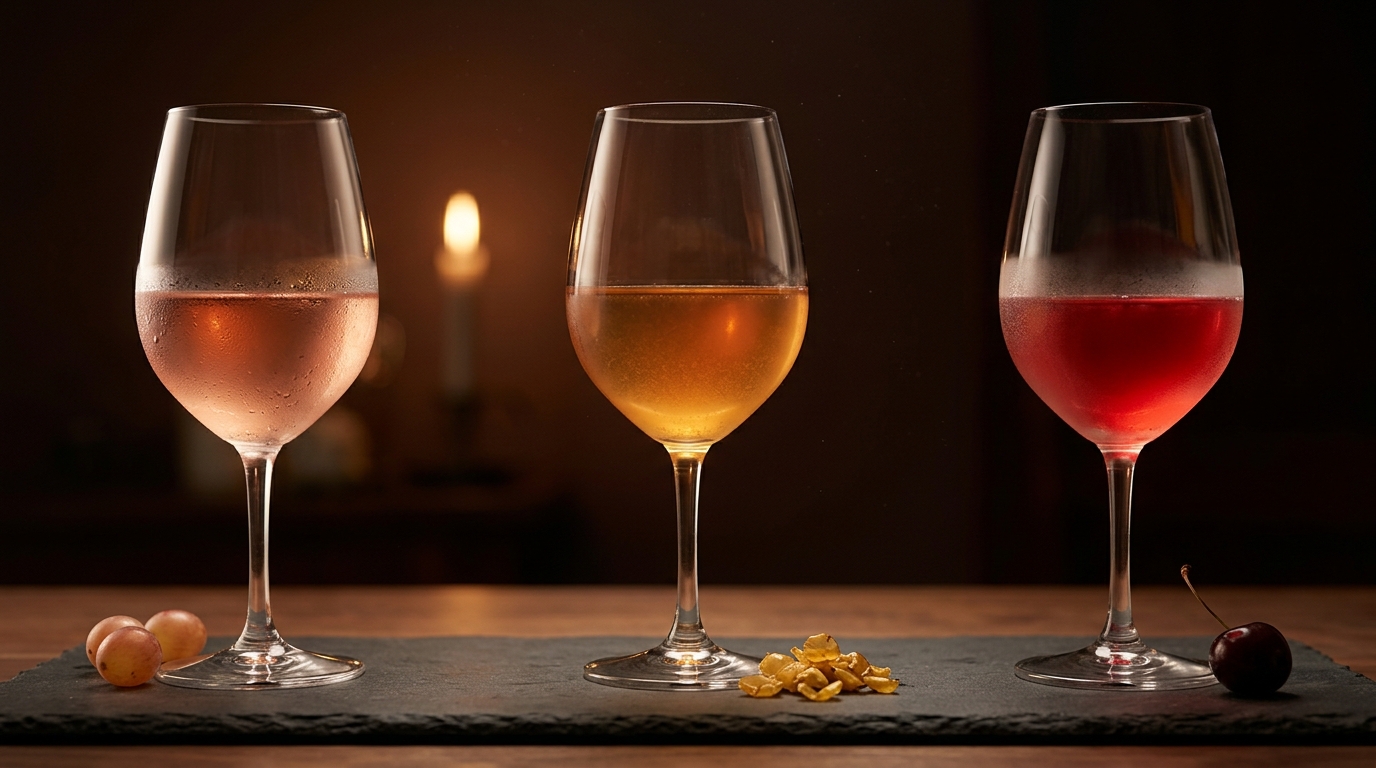
Rosé is made from red grapes, but the juice touches the skins for only a short time, just long enough to pick up a blush of color and a whisper of structure before the skins come out. That's why rosé drinks with the fresh, chillable ease of a white while carrying a hint of red-fruit flavor. Orange wine flips the recipe, taking white grapes and fermenting them on their skins the way a red is made, which gives a golden, tannic, and surprisingly grippy wine that plays by red-wine rules despite starting white. If it sounds intriguing, our piece on what orange wine is and how it tastes is a friendly place to start.
Then there are light reds meant to be served cool, like Gamay, many Pinot Noirs, and chilled Lambrusco, which have so little tannin that a short spell in the fridge makes them taste bright and refreshing rather than heavy. There's even Blanc de Noirs, a white-looking Champagne pressed gently from black grapes so no color transfers. The lesson in all of these is worth holding onto. The label category matters less than the actual weight and texture in the glass, and once you feel that, you stop being boxed in by red or white.
How should you serve and pour each one?
Temperature changes how a wine tastes more than almost anything else you can control at home, and most people serve their reds too warm and their whites too cold. Getting it right takes nothing more than a thermometer or a bit of timing, and it's the single easiest upgrade to any bottle you already own.

White wine and rosé taste best cool but not frozen, roughly 45 to 55 degrees Fahrenheit, which means about an hour and a half in the fridge or a quick 20 minutes in an ice bucket from room temperature. Sparkling and very light whites like to go a touch colder, closer to 40 to 45 degrees, to keep the bubbles and freshness crisp. Red wine is where the famous "room temperature" advice steers people wrong, since that phrase comes from cool European cellars, not a modern 72-degree living room. Serve light reds around 55 to 60 degrees and bold reds around 60 to 68 degrees, which usually means giving a red 20 minutes in the fridge before dinner rather than pouring it warm. If you want the full breakdown by style, our wine serving temperature guide lays it out bottle by bottle.
Glassware helps too, and the difference between a red and a white glass is real rather than fussy. Red wine glasses have a wider, rounder bowl, which gives those bigger aromas room to open up and directs the wine toward the middle of your tongue. White wine glasses have a narrower, smaller bowl, which preserves delicate aromas and helps the wine stay cool in your hand a little longer. You don't need a cabinet full of shapes to enjoy wine, and one all-purpose glass is genuinely fine, but if you're choosing, a bigger bowl for reds and a slimmer one for whites is the whole rule.
Red or white: how do you decide in the moment?
When you're standing in the shop or scanning a menu, the fastest way to decide is to start with the situation in front of you rather than a favorite grape. Three quick questions, what you're eating, who you're pouring for, and the weather or mood, will land you on red or white almost every time, and you can always follow your gut from there.
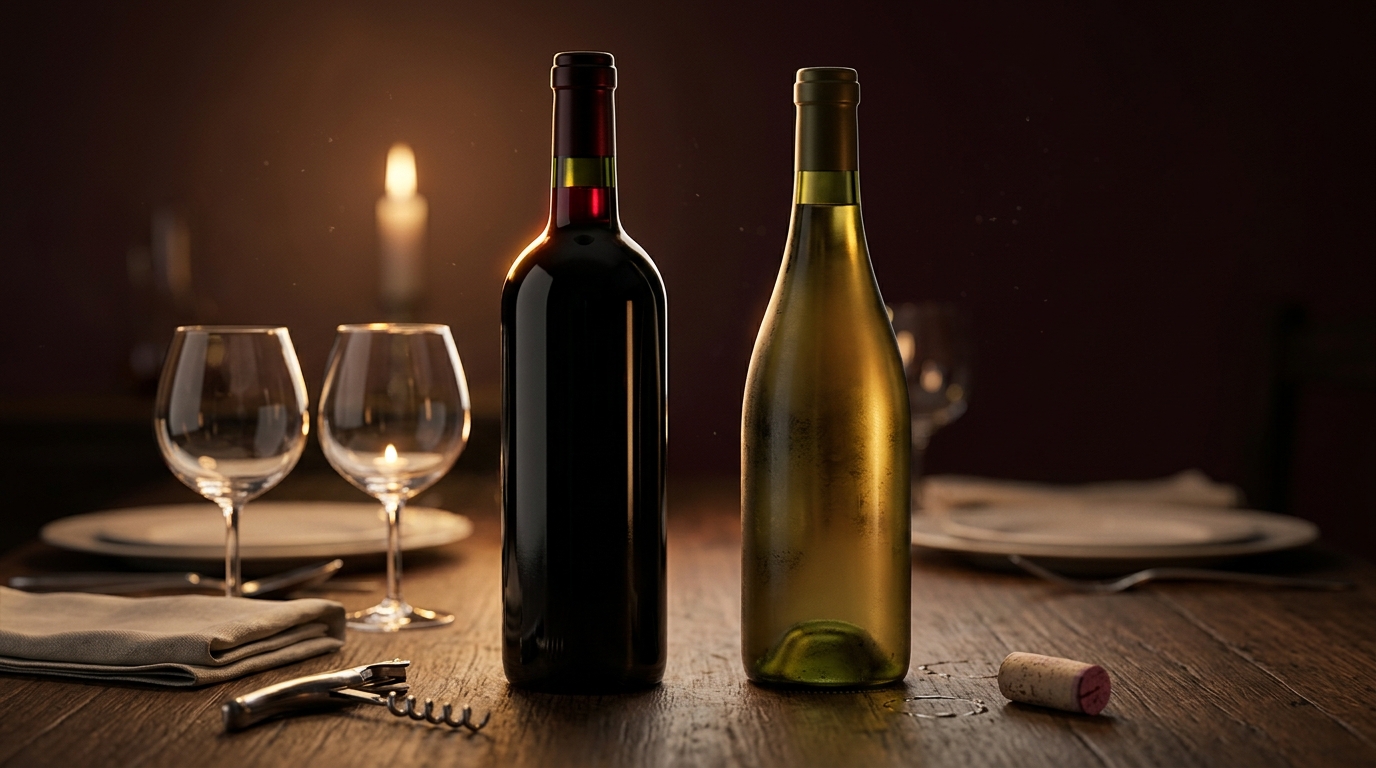
Start with the food, since it does most of the deciding for you. A steak night or a slow-cooked stew points straight at a red, while a plate of seafood, a summer salad, or roast chicken leans white, and the weight rule from earlier settles anything in between. Next, think about who's drinking, because a crisp, gentle white or a fruit-forward, low-tannin red pleases a mixed group more reliably than a big, tannic bottle that only red diehards will love. Finally, read the room and the weather. A warm evening on the patio wants something chilled and refreshing, and a cold night in wants something warmer and richer, which is why white and rosé dominate summer while reds get more play in winter.
Price rarely needs to drive the choice, since both colors offer plenty of good bottles in the same everyday range. You can find a genuinely enjoyable red or white for around 12 to 20 dollars, and stepping up to the 25 to 40 dollar range buys more depth and polish rather than a different color entirely. If you're newer to all this and want a soft landing, our roundup of the best wine for beginners suggests approachable picks on both sides. The real secret is that there's no wrong answer, only the wine that fits the night, so make your best call and pour.
Frequently asked questions about red and white wine
Is red wine or white wine healthier?
Neither red nor white wine is a health food, and the healthiest choice is the one you enjoy in moderation. Red wine gets more attention because compounds from the grape skins end up in the glass, but the amounts are small and no wine is something to drink for your health. If you like red better, drink red, and if you like white better, drink white, and keep the pour sensible either way.
Is red wine or white wine sweeter?
Neither color is automatically sweeter, because sweetness comes from how much sugar is left after fermentation, not from red versus white. Most reds you'll meet are dry, and whites span the full range from bone dry to dessert sweet, so a dry Cabernet and a sweet Riesling are both common. If sweetness is what you're after, look for words like off-dry, semi-sweet, or late harvest on the label rather than choosing by color.
Does red or white wine have more alcohol?
Red wine often lands a little higher in alcohol than a typical crisp white, since riper grapes and warmer regions tend to produce bolder reds, but it varies a lot from bottle to bottle. Many everyday reds sit around 13.5 to 15 percent, while many light, fresh whites sit closer to 11 to 12.5 percent. The number is printed on every label, so if alcohol matters to you, it's an easy thing to check before you buy.
Should you chill red wine before serving?
Yes, most red wine tastes better with a short chill, which surprises people raised on the "room temperature" rule. Twenty minutes in the fridge brings a bold red down to around 60 to 65 degrees, where its fruit shows clearly and the alcohol stops feeling hot. Light reds like Gamay and Pinot Noir can take an even longer chill and drink wonderfully cool, so don't be shy with the fridge.
Can beginners start with red or white?
Beginners can start with either, and the easiest entry point is a wine with a little sweetness or soft, low-tannin fruit. On the white side, an off-dry Riesling or an easy Pinot Grigio goes down smoothly, and on the red side, a fruity, gentle Merlot or Pinot Noir avoids the drying grip that can put newcomers off. Try one of each over a couple of nights and pay attention to which you reach for again.
Pour with a little more confidence
Red versus white really comes down to grape skins, which shape the color, the tannin, and whether a wine tastes bold and savory or bright and fresh. Once you know that, the rest falls into place, since you can read your own everyday flavors to guess your side, match the weight of the wine to your dinner, serve each at the right temperature, and pick by the situation in front of you. Neither color is better, and the fun is in bouncing between them as the meal and the mood change.
If you'd rather not guess, Sommy learns your taste as you rate wines and points you to bottles you'll actually like, red or white, and you can ask Sommy how to choose a wine for any night or any meal. Pour something tonight, notice what you love about it, and let that guide the next bottle.