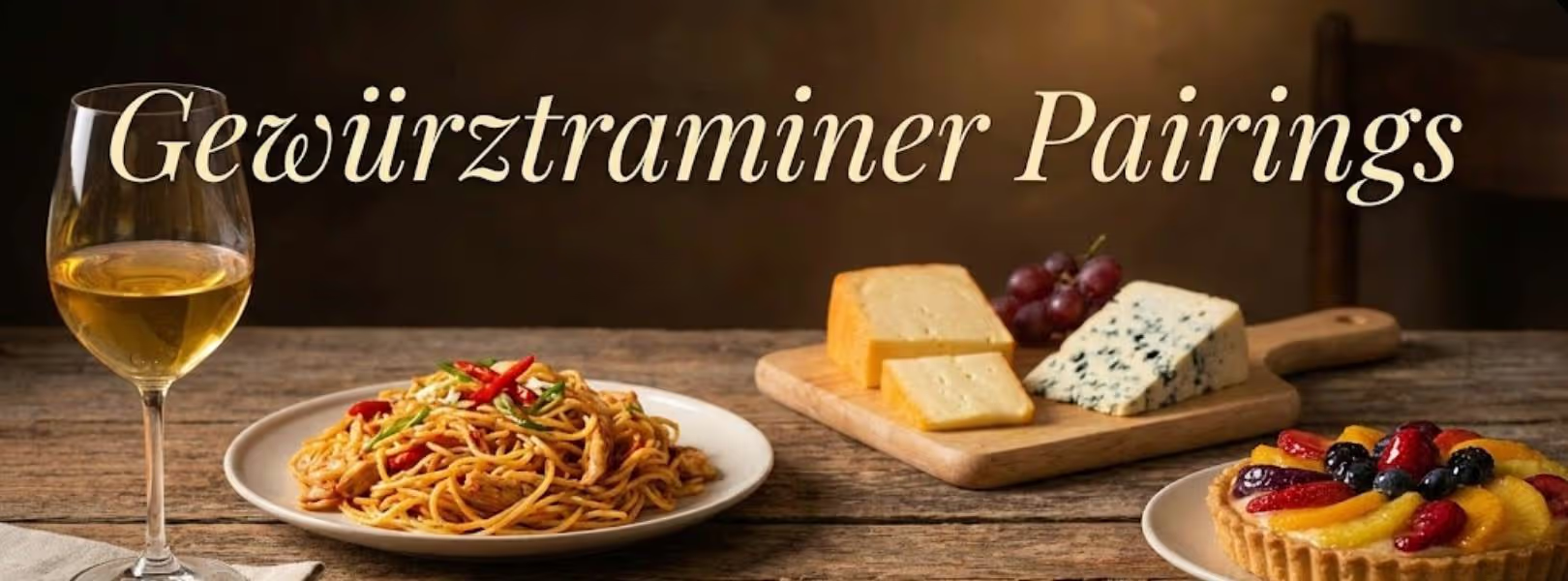

The short answer is that Gewürztraminer pairs best with food that is spiced, aromatic, rich or faintly sweet, which is why it lands so well with Thai curry, Indian food, roast duck, pork and pungent washed rind cheese. The longer answer starts with the bottle rather than the plate. Gewürztraminer is made anywhere from bone dry to properly sweet, and that single difference changes the right dish more than the cuisine does. Read the label first, then pick the food.
Most pairing lists skip that step and hand you fifteen dishes as though every bottle behaved the same way. This one works in the other direction. We'll start with how to tell which style you're holding, then go through the pairings that suit each one, including the cheese question that a lot of guides answer backwards.
Should you buy a dry or an off-dry Gewürztraminer?
Most Gewürztraminer on a shop shelf is dry to off-dry, carrying only a gram or two of residual sugar, and it still tastes sweeter than that because of its heavy perfume, its low acidity and its high alcohol, as Wine Folly's guide to the grape sets out. Your palate reads all three of those as sweetness even when the sugar isn't there, which is why so many people describe a technically dry bottle as a sweet wine.
Three label clues settle it in the aisle:
- Alsace with no other wording: dry to off-dry, intense, the benchmark style.
- Vendange Tardive or late harvest: genuinely sweet, made for dessert.
- New World, often labeled dry: lighter perfume, more ginger and cinnamon.
Alcohol is the useful backup clue, since Gewürztraminer runs higher than most white wines and the riper the fruit was at harvest, the rounder and sweeter the finished wine tends to read. Whether an off-dry bottle strikes you as balanced or as sweet is personal, and it's the one thing a pairing article can't decide on your behalf. If you're standing in front of a bottle and genuinely can't tell, Sommy's Fit Check gives you a verdict on that specific wine against your own taste before you commit to it.
What does Gewürztraminer actually taste like?
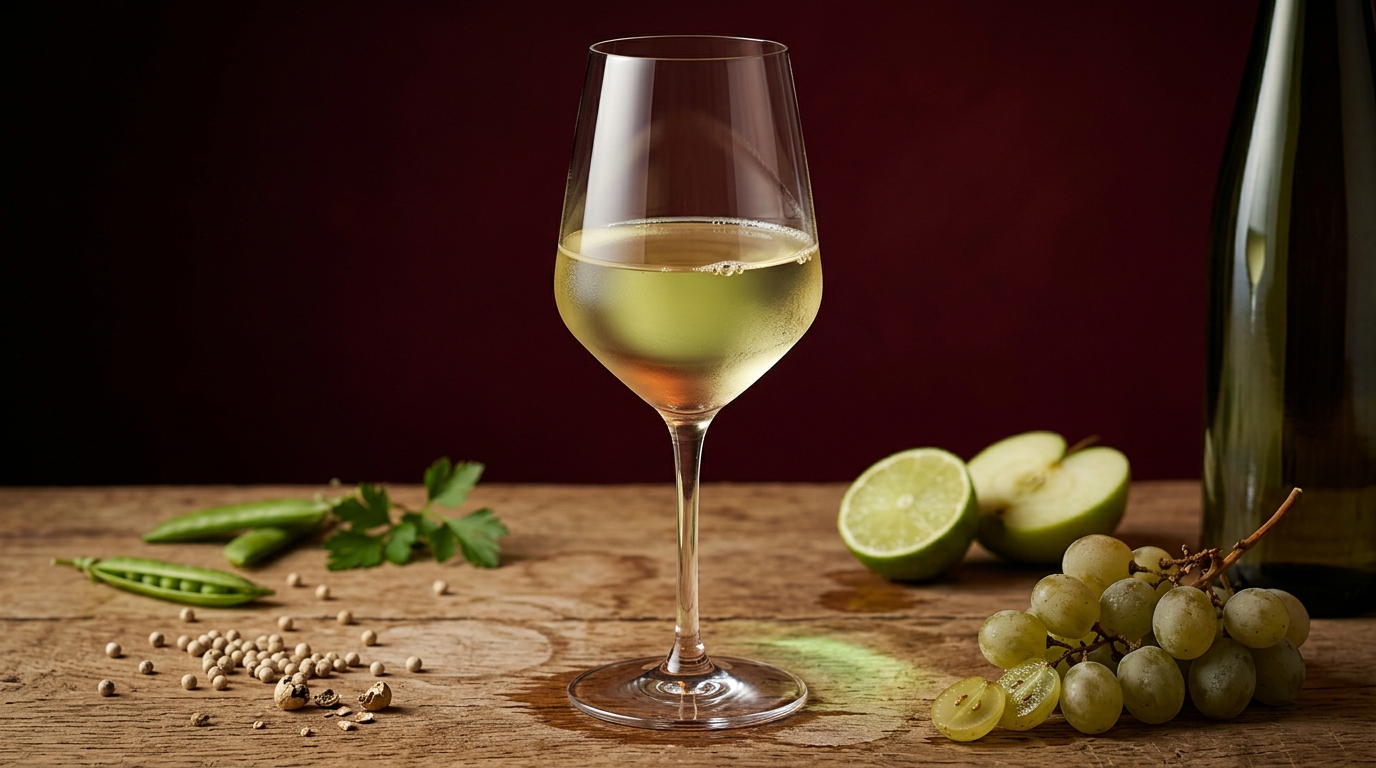
Lychee comes first and it's the giveaway, so much so that it identifies this grape in a blind tasting more reliably than anything else in the glass. Around it sit rose petal, ruby grapefruit, ginger and a smoky note closer to incense than to oak, with peach, apricot and cantaloupe filling in behind. Wine Folly lists that same set and adds honey, allspice and cinnamon to the aromatic side.
Texture matters as much as flavor here. Gewürztraminer is full bodied with medium to low acidity, which is the reverse of what most aromatic whites offer you. Riesling carries a similar perfume on a spine of sharp acid, so it cuts through fat, while Gewürztraminer coats instead and cushions heat rather than slicing through richness. If you're weighing up the two, our Riesling food pairing guide covers the dishes where the sharper option wins.
It's also a pink skinned grape, in the same way Pinot Gris is, which is part of why the wine pours a deeper gold than most whites and feels weightier in the mouth than its color suggests.
Why does Gewürztraminer work so well with spicy food?
Because it meets aromatic heat on its own level instead of fighting it. Chili heat is amplified by alcohol and softened by sugar, so a bone dry high alcohol white makes a hot dish hotter while an off-dry one cools it down, and Gewürztraminer's ginger, clove and cinnamon notes then echo the actual spices in the pan rather than sitting awkwardly beside them.
Thai food is the classic test and the results are not uniform across the menu. Fiona Beckett of Matching Food and Wine rates it as excellent with a Thai red duck curry or a yellow curry, and reaches for a lighter Pinot Gris with a green curry instead, with coconut milk being the common thread in the dishes that work. Our guide to pairing wine with Thai food goes through the rest of the menu.
Indian cooking suits it for the same reason. Cumin, coriander, cardamom and turmeric in a butter chicken or a tandoori marinade run parallel to the wine's own spice register, and the touch of residual sugar handles the chili. Richer, creamier curries take the off-dry style best, while a drier bottle holds its shape against a charred tandoori plate. If butter chicken is the dish actually in front of you, here is the best wine for butter chicken and tikka masala, and our guide to wine pairing with Indian food takes the rest of the menu dish by dish. Sichuan cooking is the harder case and it still works, provided the wine has some sweetness left in it, because numbing peppercorn and chili oil will flatten a bone dry white completely.
What do they actually eat with it in Alsace?
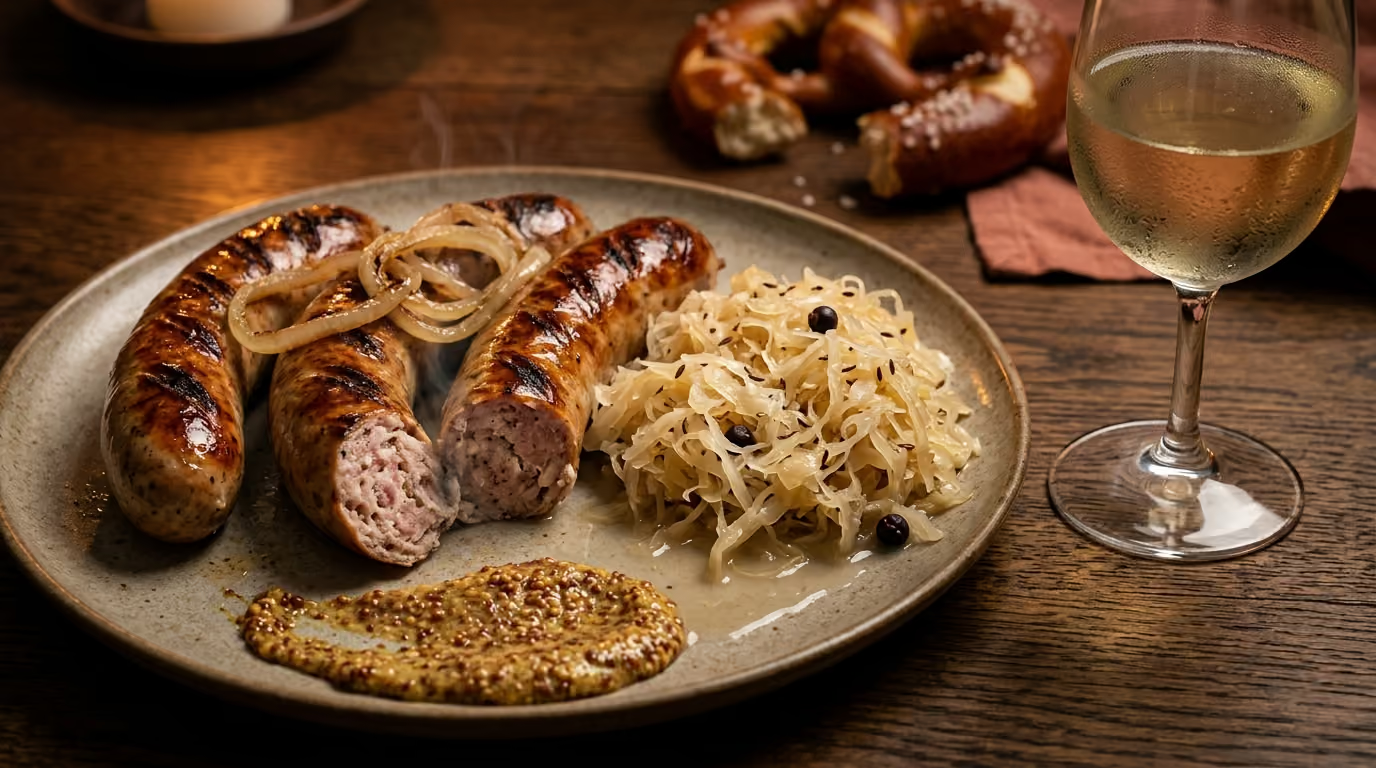
Pork, onion tart and stinky cheese, which is worth knowing because Alsace grows more Gewürztraminer than anywhere else and has had a few hundred years to work the question out. Wine Folly puts Alsace at roughly 7,000 acres of the world's 20,000 or so, and names Gewürztraminer as one of the four Grand Cru grapes of the region.
Tarte flambée, the thin Alsatian tart of crème fraîche, onion and bacon, is the everyday match, and the wine's perfume lifts what is otherwise a plain combination of salt, fat and dough. Choucroute garnie, the regional pile of sauerkraut and cured pork, works on the same logic. Schnitzel, rillettes on toast and pork chops with an apple or fruit sauce all belong in this group, and our guide to wine with pork chops covers where a sweeter style earns its keep.
The "what grows together goes together" line gets repeated so often that it usually means nothing, but in this case the local cooking really was built alongside the local wine, and you can taste the arrangement working.
Which cheeses actually work with Gewürztraminer?
Pungent washed rind cheese, which is close to the opposite of the advice most pairing pages give. The Alsace wine council's own cheese pairing guidance names Munster, Maroilles and Livarot as the cheeses that call for a Gewurztraminer d'Alsace, on the grounds that a wine this aromatic and well structured is exactly what those strong flavors need.
The competing advice, that you should stick to mild soft cow's milk cheeses, isn't wrong so much as timid. Brie, a fresh goat cheese with honey or a young Gouda will all sit happily beside the wine without much happening between them. Munster is the pairing people actually remember afterwards, and Fiona Beckett described that combination at an Alsace producer's dinner, served with toasted rosehip bread and a Gewürztraminer jelly.
There are two cautions worth carrying to the cheese counter. Heavily salted cheeses tend to clash, and for the blues, Roquefort and Fourme d'Ambert in particular, the Alsace recommendation switches to a sweet Vendanges Tardives rather than the dry wine, so the sugar can meet the salt. Our wider wine and cheese pairing guide maps the rest of the counter.
Which meats and rich dishes suit it best?
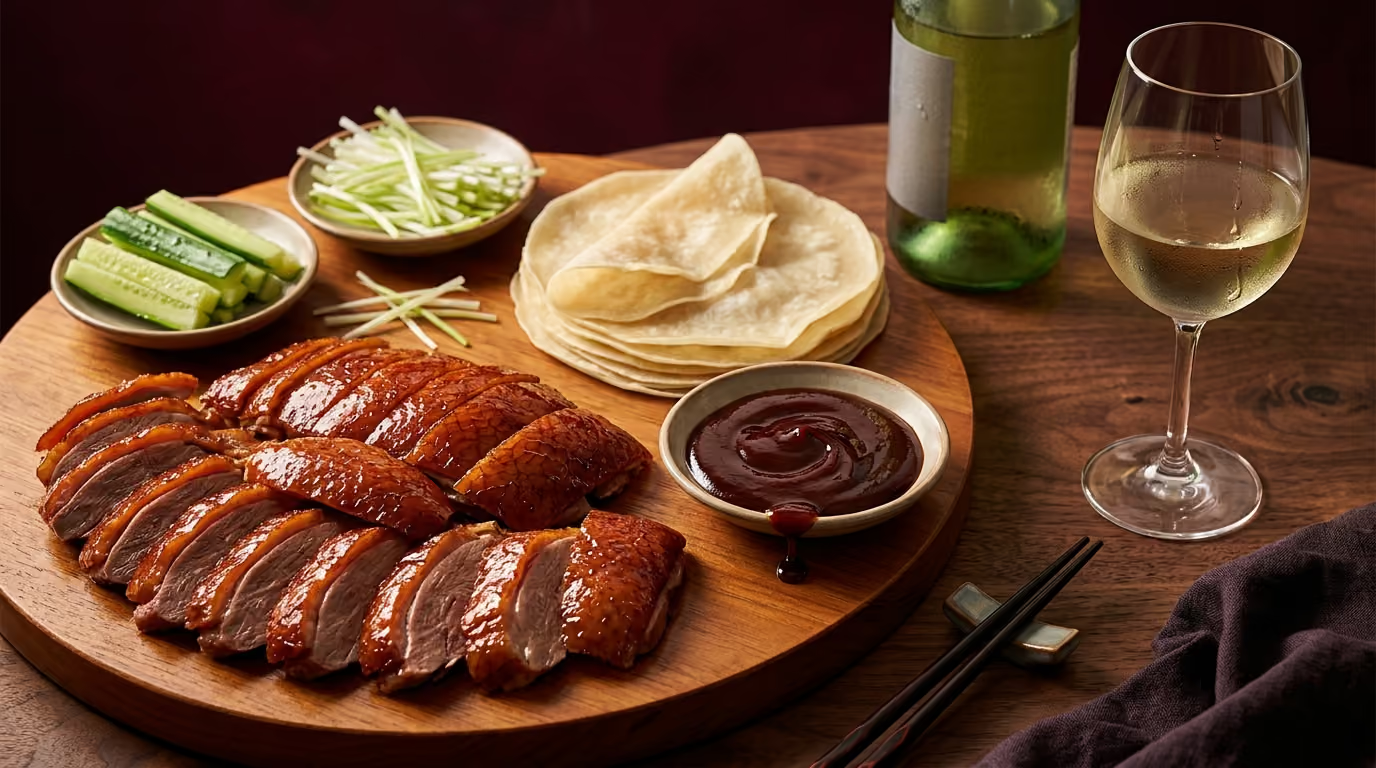
Duck is the standout, followed by pork, and then anything roasted with fruit or warm spice in the sauce. Wine Folly's meat list for the grape runs duck, chicken, pork, bacon, shrimp and crab, which reads as a fair summary of where this wine earns its place at the table.
Duck breast with a cherry or orange sauce, spiced duck leg and duck confit all work, because the wine's perfume matches the sauce while its weight matches the meat. Chicken in a cream or mushroom sauce is the quieter weeknight version of the same idea, and the pairing survives a heavy hand with the cream in a way that a leaner white wouldn't.
Thanksgiving is where it surprises people. Turkey, cranberry sauce, sweet potato and most of the sweeter side dishes fit Gewürztraminer's cinnamon and ginger register better than the whites that usually get poured, and we make that case in full in our guide to wine pairings for turkey. Moroccan and Middle Eastern cooking is the other reliable lane, since a lamb and apricot tagine puts sweet dried fruit, roasted meat and warm spice on a single plate, which is this grape's exact brief.
Does Gewürztraminer work with sushi and seafood?
It works with both, although it suits the accompaniments better than it suits the fish itself. The wine's ginger note connects straight to the pickled ginger on the plate, and a little residual sugar takes the edge off wasabi, which is where most whites come unstuck. Against plain sashimi it can be too loud, so a drier bottle is the safer call there, and our sushi wine pairing guide runs through the alternatives.
Smoked fish is the stronger seafood match by some distance. Smoked trout and smoked salmon both carry enough sweetness and enough weight to stand alongside the wine, and the smoky note in the glass picks up the smoke on the plate.
Shellfish holds up better than you might expect. Scallops seared in lemon butter, crab and shrimp all have a natural sweetness that meets the wine halfway, and richer preparations such as a chowder or oysters baked with parmesan don't get flattened by it the way a delicate raw oyster would.
Is Gewürztraminer any good with vegetarian food?
It's one of the better white wines for vegetable-led cooking, because it has enough presence to stand up to roasted and caramelized flavors without needing meat to lean on. Wine Folly's vegetable list for the grape covers coconut, red onion, bell pepper, eggplant, tempeh, squash and carrot, which is a group united by natural sweetness rather than by anything botanical.
Roasting is what turns most of those into a match. A tray of squash, carrot and red onion comes out of the oven sweeter and darker than it went in, and that sweetness is what gives the wine something to hold on to, where the same vegetables steamed would leave it stranded. Miso glazed eggplant works for the same reason, with the umami and the sugar in the glaze both pulling in the wine's direction.
Artichoke deserves a mention on its own, because it has a long reputation as one of the hardest things on any plate to put a wine next to. Wine Folly names it anyway as something you can enjoy with this grape, and the reason is much the same as everywhere else on this page, which is that a wine already this aromatic and this round doesn't get knocked off course by a difficult ingredient.
Which foods should you avoid with Gewürztraminer?
Anything delicate, anything very salty and anything sharply acidic, because the wine has the volume to bury the first and too little acidity of its own to survive the other two. This is a wine with a narrow miss radius rather than a wide one, so knowing the handful of misses is more useful than another twenty hits.
- Plain grilled white fish and green salads, which it simply drowns out.
- Salty cured fish, anchovies and heavily brined cheese.
- Tomato sauces and vinaigrettes, where the acid leaves the wine tasting flabby.
- Tannic red meat dishes, which want a red wine instead.
Dessert is a conditional yes rather than a no. A dry Gewürztraminer next to a sweet pudding tastes thin and slightly sour, but a Vendange Tardive alongside apple strudel, pumpkin pie or a mango dessert is one of the grape's real highlights. The rule that keeps it working is simple enough, which is that the wine has to be sweeter than the plate.
How should you serve Gewürztraminer?
Cold, though not ice cold, and Wine Folly puts the target at fridge temperature of around 43F (6C). Take the bottle out ten minutes or so before you pour and the perfume opens up as it warms slightly in the glass, whereas serving it straight from the coldest shelf shuts down the lychee and rose aromas that are the entire reason to open it.
A standard white wine glass with a reasonable bowl beats anything narrow, since these aromatics need room to collect. Gewürztraminer doesn't need decanting, and the dry styles are happiest young, while a good Alsace Grand Cru and the late harvest wines both reward a few years in the bottle before you pull the cork.
One bottle also covers a lot of ground at a table where everyone is eating something different, which is the practical argument for opening it at a dinner party or on a takeout night with four competing curries in the middle of the table.
Frequently asked questions
Is Gewürztraminer dry or sweet?
Most of it is dry to off-dry, usually carrying a gram or two of residual sugar, and it still tastes sweeter than that because the intense perfume, the low acidity and the high alcohol all register as sweetness. Genuinely sweet Gewürztraminer does exist and it's labeled Vendange Tardive or late harvest.
Is Gewürztraminer like Pinot Grigio?
They're related in the vineyard, since both are pink skinned grapes, but they taste nothing alike in the glass. Pinot Grigio is neutral, light and crisp, while Gewürztraminer is loudly aromatic, full bodied and low in acid, so swapping one for the other at the table rarely goes well.
How should you drink Gewürztraminer wine?
Chill it to around 43F (6C), pour it into a normal white wine glass rather than a narrow one, and drink it with food that's spiced, rich or faintly sweet. The dry styles are best young, while Alsace Grand Cru bottlings and late harvest wines both improve with a few years of age.
What kind of cheese pairs well with Gewürztraminer wine?
Washed rind cheeses such as Munster, Maroilles and Livarot, which is the pairing the Alsace wine council itself recommends. Mild soft cow's milk cheeses work too without being especially memorable, and for blues like Roquefort you want the sweet Vendanges Tardives style rather than the dry wine.
How do you pronounce Gewürztraminer?
Say it as guh-VERTS-trah-mee-ner, and the first half is simply the German word for spice, which is where the name came from. Nobody in a wine shop will mind if you shorten it to Gewürz, which is what most of the people who drink it regularly call it anyway.
Gewürztraminer or Riesling with spicy food?
Both of them work and they solve the problem in different ways. An off-dry Riesling brings sharp acidity that cuts through fat and resets your palate between bites, while Gewürztraminer brings weight and perfume that match the spices themselves, so Riesling suits fried and fatty heat while Gewürztraminer suits fragrant, coconut-rich or dried-fruit heat.
Picking a bottle without overthinking it
The whole question reduces to two decisions. Work out whether your bottle is dry, off-dry or late harvest, then match it to food that's aromatic, spiced, rich or gently sweet rather than delicate, salty or sharp. Alsace built its own cooking around this wine, so pork, onion tart and Munster are the safest place to begin, while Thai, Indian and Moroccan dishes are where it does something no other white quite manages.
Everything beyond that is your own preference, and particularly where you personally sit on sweetness, which is the line no pairing guide can draw on your behalf.