
The best wine for clam chowder is a bright, dry white with real acidity, and Muscadet, Albarino or Sauvignon Blanc is the answer for the creamy New England bowl most people mean. Dry sparkling wine is the other safe pick. Skip sweet bottles and heavy oak.
That answer covers one chowder out of three. There are three, and they are not the same pairing problem: Manhattan chowder is tomato based with no dairy at all, and Rhode Island chowder is a clear broth. A wine chosen for cream is the wrong wine for a tomato broth. This page sorts it by which bowl is actually in front of you.

Which wine goes with which chowder?
Start here, then read the section for your bowl if you want the reasoning.
| Chowder style | What is in the bowl | Pour this | Why |
|---|---|---|---|
| New England (cream) | Cream or milk, potato, salt pork or bacon, quahogs | Muscadet, Albarino, Sauvignon Blanc, dry sparkling | Acidity cuts the cream and keeps the clam flavor readable |
| New England, the richer read | Same bowl, heavy on butter and cream | Lightly oaked Chardonnay, white Burgundy | Matches weight instead of cutting it, a different strategy that also works |
| Manhattan (tomato) | Tomato broth, celery, carrot, herbs, no dairy | Dry rose, Vermentino, or a light red such as Valpolicella | Tomato acidity needs a wine that can meet it, and cream is not there to soften anything |
| Rhode Island (clear) | Clear clam broth, potato, onion, no dairy or tomato | Muscadet, Picpoul de Pinet, Chablis | The leanest, saltiest bowl wants the leanest, most mineral wine |
| Any style, bacon heavy | Smoke and extra fat | Dry sparkling wine | Bubbles plus acidity handle smoke and fat together |
What wine goes with New England clam chowder?
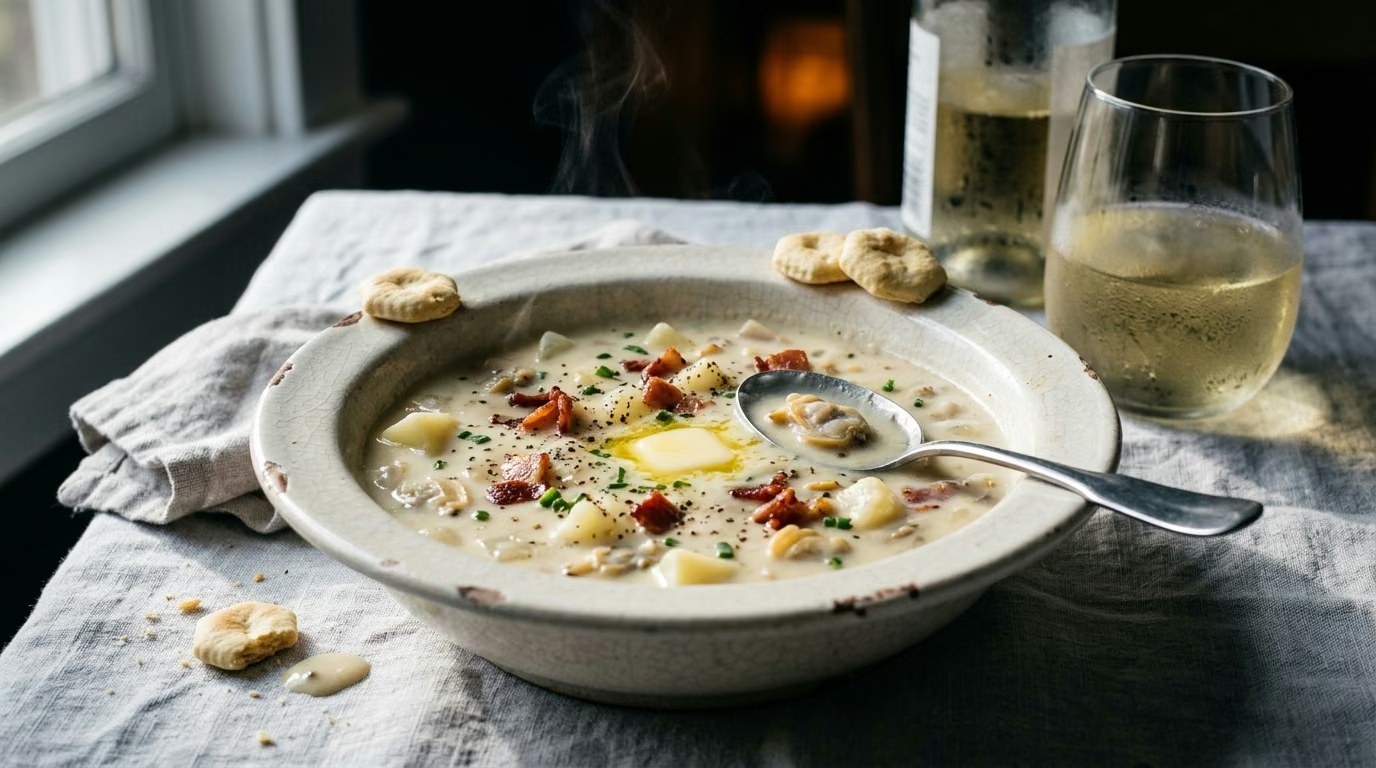
New England chowder is cream or milk, potato, salt pork or bacon and clams, so the bowl is soft, salty and rich with a gentle taste of the sea underneath. There are two defensible wine strategies here, and most pages only tell you about one.
The contrast strategy is the one we would pick first. A lean, high acid white works like a squeeze of lemon over fried seafood, because acidity cuts through fat and resets your palate between spoonfuls. The practical effect is that the chowder keeps tasting of clams rather than sliding into an undifferentiated creaminess halfway down the bowl. Muscadet is the specialist pick, since it is bracingly lean and grows on the Atlantic coast beside its own shellfish. Albarino brings a salty, faintly peachy edge that flatters clams. Sauvignon Blanc is the easiest bottle to actually find.
The matching strategy goes the other way and pairs richness with richness. A lightly oaked Chardonnay or a white Burgundy has a round, creamy texture of its own, and next to a velvety chowder it reads as harmony rather than contrast. Google's own summary of this question recommends exactly this, and it is not wrong. It is simply aiming at a different goal.
So which one do you want? Contrast keeps the meal feeling lively and is the safer bet if the chowder is very heavy or you are eating a large bowl. Matching makes for a plusher, more indulgent pairing and suits a small cup of chowder as a first course. The failure case is only at the extreme: a big, buttery, heavily oaked Chardonnay stacked on top of a heavy cream soup gives you two rich things and nothing to cut them, and that is the pairing most people remember as a mistake.
What wine goes with Manhattan clam chowder?
Manhattan chowder swaps the dairy for a tomato broth with celery, carrot and herbs, so almost everything that made the New England advice true stops applying. There is no cream to cut, and there is tomato acidity to match instead.
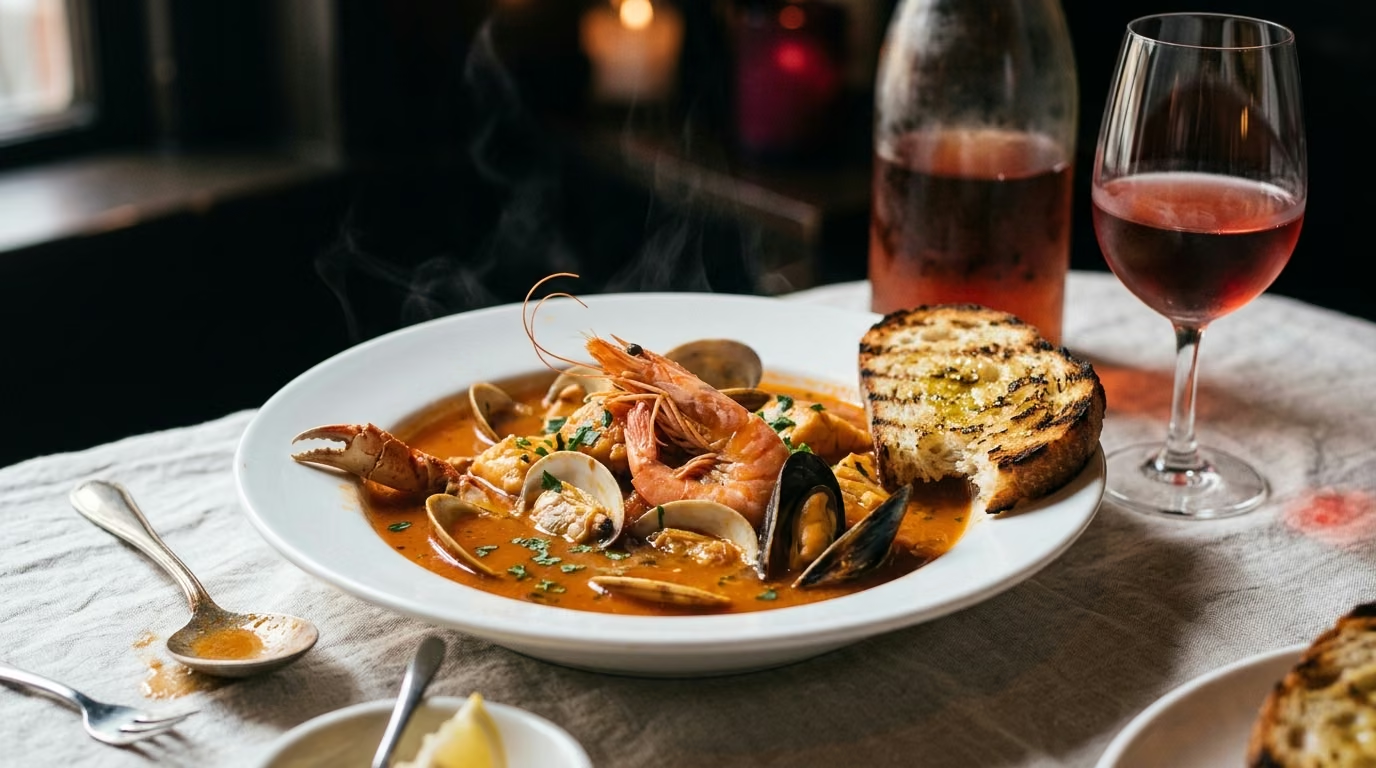
That shifts the answer toward wines built for tomato. A dry rose is the most flexible single bottle, because it has the fruit to meet the tomato and enough freshness to stay out of the clams' way. Vermentino works well for the same reason and brings a coastal, herbal note that suits the vegetables. A light, low tannin red is genuinely on the table here, which it never is with the cream version, so a Valpolicella or a chilled Gamay is a reasonable order. When that same tomato broth holds a whole catch of fish and shellfish instead of just clams, you're closer to cioppino, and our guide to wine for cioppino also starts from Vermentino.
Avoid a big oaked white entirely with this one. Oak and tomato is an awkward combination, and without cream in the bowl there is nothing to soften it.

What wine goes with Rhode Island clear chowder?
Rhode Island chowder is clam broth, potato and onion with neither dairy nor tomato, which makes it the leanest and saltiest of the three. It is also the easiest to pair, because there is no fat and no tomato to work around, only clean salinity.
Go as lean and mineral as you can. Muscadet is close to a perfect match, and Picpoul de Pinet or a village Chablis do the same job. The rule here is simply that the wine should not be richer than the soup, and the soup is not rich at all.
What is the best white wine to use for clam sauce, and is it the same one you drink?
These are two different questions and they have two different answers, which is worth separating because the cooking version is what many people are actually searching for.
For cooking, use a dry, unoaked white with decent acidity that you would be content to drink: Pinot Grigio, Muscadet, a basic Sauvignon Blanc or a dry Vermentino. Simmering concentrates whatever is in the bottle, so oak turns bitter, sweetness turns syrupy and anything labelled cooking wine adds salt you cannot then control. Price is close to irrelevant, because the delicate character you pay for in a good bottle boils off.
For drinking, the pick depends on the dish as described above. The convenient overlap is that Muscadet and unoaked Sauvignon Blanc do both jobs, so one inexpensive bottle can go into the pot and into the glass. That is the practical answer for a weeknight.
What alcohol goes best with clam chowder if not wine?
Two things work about as well as a good white, and both follow the same logic.
- Dry sparkling wine is arguably the strongest pairing on this whole page for a creamy chowder, because carbonation and acidity scrub fat together. A dry Cremant, a brut Champagne or a decent Cava all work, and this is the pick when bacon or extra butter is involved.
- Beer is the traditional New England answer and it holds up. A crisp lager or pilsner does the cutting job that acidity does in wine, and a dry stout is the classic pairing with oysters for related reasons.
What does not work is anything sweet, and anything high in alcohol and low in acid. Both leave the bowl tasting heavier than when you started.
What are the common mistakes when pairing wine with chowder?
Four come up repeatedly, and three of them are the same error in different clothes.
- Choosing a wine richer than the soup is the big one, and a heavily oaked Chardonnay with a cream chowder is the usual version.
- Reaching for sweetness because the dish is mild, which leaves a savory, salty bowl tasting oddly sugary.
- Serving the white too cold, straight from the fridge at around 38F, which mutes the aroma you chose the bottle for. Let it sit out for about 20 minutes, since the useful range for a crisp white is nearer 45 to 55F.
- Treating all chowder as one dish, which is the mistake this page exists to fix, since the tomato and clear versions want different wines from the cream one.

How do you choose fast at a restaurant or in the wine aisle?
Neither moment needs much thought once you know which chowder you are eating.
At a restaurant, say what you want in plain words: "a crisp, dry white to go with the chowder, nothing oaky." That single sentence gives a server everything they need. On a coastal menu, the house white by the glass is usually chosen for exactly this dish.
In a store, read the shelf tag rather than the label art. The words to look for are crisp, dry, mineral, citrus and unoaked, and the words to avoid are buttery, creamy, vanilla and oaked. Muscadet, Picpoul, Albarino and Vinho Verde are reliably in the right style and rarely expensive. Our guide to wine with shellfish covers the wider seafood case, and buttery lobster follows related logic in our lobster roll pairings.
All of that is still the average answer, because a shelf tag does not know whether you like a wine that sharp. If you want to check a specific bottle against your own taste rather than against a rule, Sommy's Fit Check gives you a verdict on the bottle in your hand.
Frequently asked questions
Does red wine ever work with clam chowder?
With Manhattan chowder, yes, and a light, low tannin red such as Valpolicella or a chilled Gamay suits the tomato broth well. With the creamy New England version it is a poor fit, because tannin and dairy tend to make each other taste metallic.
Is Chardonnay good with clam chowder?
Unoaked Chardonnay such as Chablis is very good with any of the three styles. Heavily oaked, buttery Chardonnay is the one to be careful with, and it only works as a deliberate richness match with a small cup of cream chowder rather than a large bowl.
What is the single safest bottle if I do not know which chowder is coming?
Dry sparkling wine, or a dry rose if you would rather have a still bottle. Both handle cream, tomato and clear broth without being wrong for any of them.
Does bacon in the chowder change the wine?
It adds smoke and fat, which pushes the choice toward dry sparkling wine or a slightly fuller white such as Albarino. A very lean Muscadet can start to feel overmatched once there is a lot of bacon in the bowl.
What temperature should the wine be?
Around 45 to 55F for a crisp white, which is warmer than a domestic fridge. Taking the bottle out about 20 minutes before you serve it is enough, and the aroma opens up noticeably.
Match the wine to the bowl, not to the word chowder
Almost all the confusion here comes from treating three different soups as one. For creamy New England chowder, choose acidity first and reach for Muscadet, Albarino, Sauvignon Blanc or dry bubbles, with a lightly oaked Chardonnay as the richer alternative if you would rather match than cut. For Manhattan, pour a dry rose, a Vermentino or a light red. For Rhode Island, go as lean and mineral as the shelf allows.
Every one of those is the answer for the average palate. Whether you prefer the bracing Muscadet or the rounder Chardonnay is the part the bowl cannot tell you.