
Indian takeout isn’t always curry; its vibrant spices bring complexity, and wine pairing indian food doesn’t have to be a brain teaser. The simple move is to pick wines that cool spice, handle yogurt, and don’t fight tangy chutneys.
This wine guide focuses on three common orders that trip people up, tandoori chicken, saag paneer, and chaat, plus “raita-safe” picks that won’t turn weird next to yogurt. If your order is a rice dish instead, wine pairing for biryani follows the same raita-safe logic, with a bit more grip when the meat is lamb. You’ll get clear wine recommendations you can use in a store aisle or on a wine list, fast.
How to choose wine for Indian takeout (without guessing)
If you only remember one thing, remember this, Indian food often stacks heat + acidity + dairy in the same meal. That combo punishes big, dry, tannic reds. It rewards wines that are refreshing, lightly fruity, or bubbly.
Here’s a quick “how to choose wine” framework that works even when your order is a mixed bag:
First, decide what’s doing the most work: spice, char, greens, or sweet-tang. Tandoori leans char, saag leans creamy greens, chaat leans sweet-tang.
Second, protect your mouth from heat. A little sweetness (even just “not bone-dry”) can feel like a cold glass of water on a hot day. That’s why off-dry whites show up so often in any good wine pairing guide.
Third, respect yogurt. Raita and yogurt-based sauces can make high-tannin reds taste bitter or metallic. For a successful red wine pairing, “Raita-safe” usually means low tannin and high freshness (sparkling, crisp whites, light reds served slightly chilled).
Fourth, use this tiny translator, it’s wine tasting notes explained in plain terms: “crisp” means lemony and refreshing, “juicy” means fruit-forward and easy, “dry” means not sweet, “off-dry” means a small cushion of sweetness. That’s wine explained simply, no extra homework.
If you want a broader reference point, Wine Enthusiast’s Indian food pairing basics line up with the same idea, keep it fresh, keep tannins in check, and don’t force heavy reds.
Pairings for tandoori chicken, saag paneer, and chaat
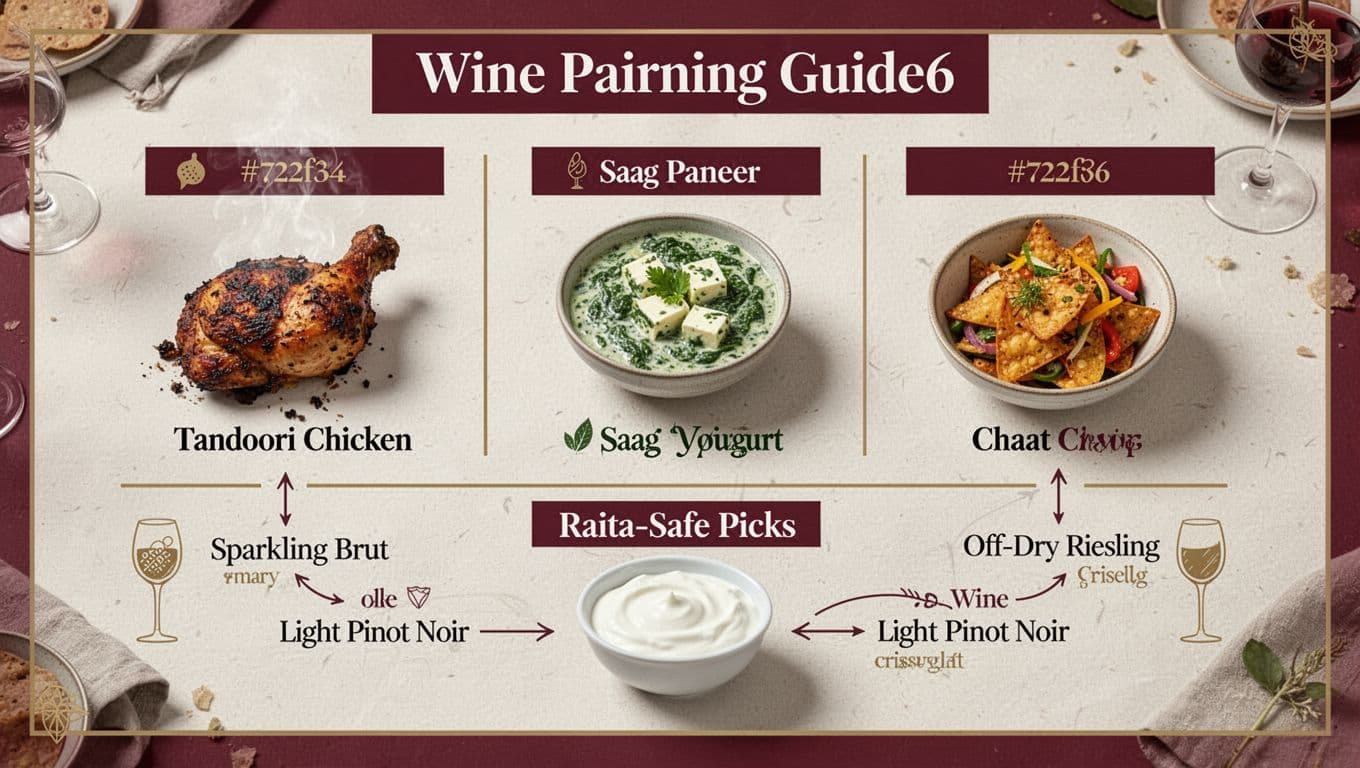
Think of these as “safe lanes.” They’re not rare bottles, they’re grocery store wine picks and by-the-glass friendly choices that keep dinner relaxed.
| Dish | Best wine styles | Why it works |
|---|---|---|
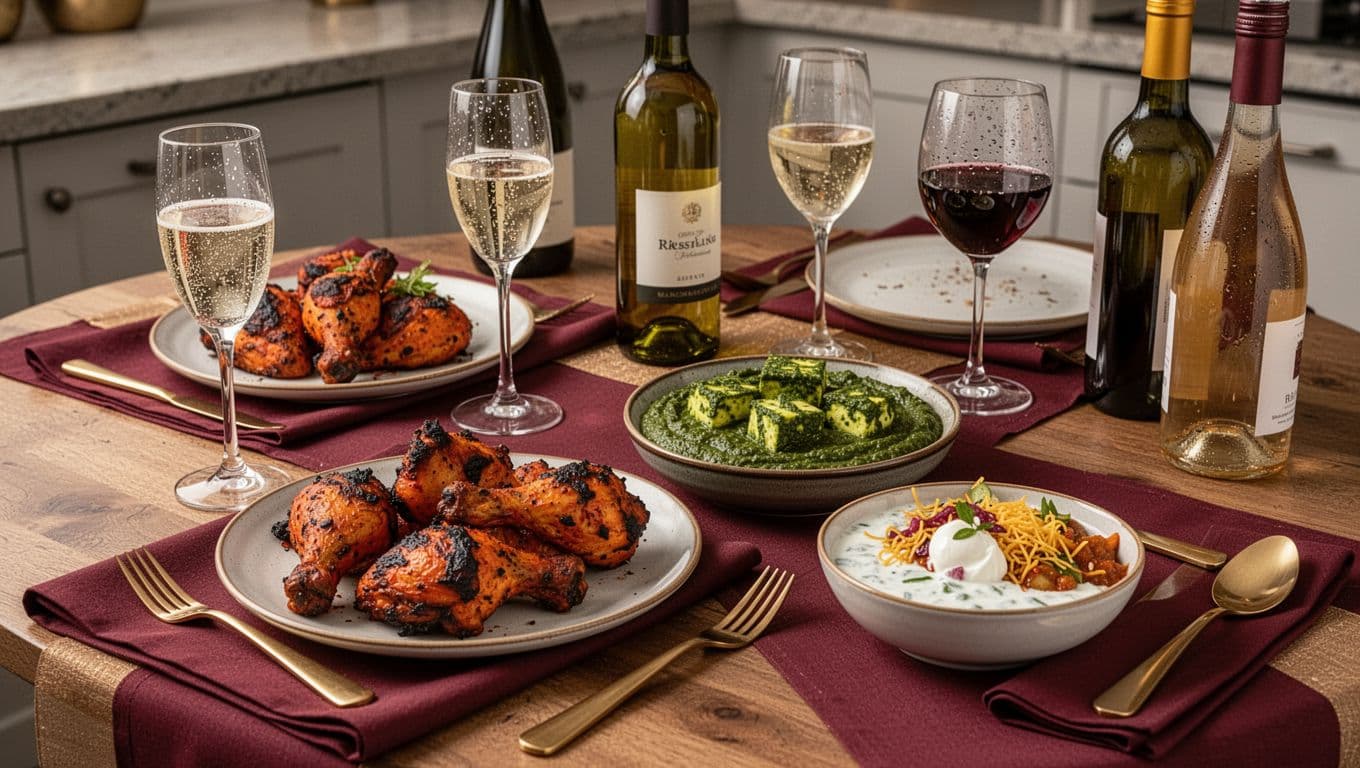
| Tandoori chicken | Sparkling brut, dry rosé, light red (Pinot-style) | Bubbles and bright fruit handle char and spice |
| Saag paneer | Crisp white (Riesling-style), Chenin-style white, sparkling | Freshness lifts creamy greens and cheese |
| Chaat | Off-dry Riesling-style white, sparkling, lightly sweet bubbly | Sweet-tang chutneys need fruit and a little softness |
Tandoori chicken: go bright, not heavy
Tandoori chicken tastes like smoke, lemon, and spice rubbed into juicy meat. The easiest match is sparkling brut because bubbles cut through fat and char, like a squeeze of lime over grilled food.
If you want still wine, choose dry rosé (crisp, not sugary) or a light red you can chill for 15 minutes. A “Pinot-style” red is a simple way to order without getting technical. Skip thick, oaky reds here, they can taste bitter next to spice.
The same rules apply to tomato-based dishes like Chicken Tikka Masala or Butter Chicken. For more pairing context across a full Indian spread, Food & Wine’s Diwali wine pairing article reinforces the same pattern, aromatic whites and lively sparklers shine with tandoori flavors.
Saag Paneer: creamy greens love lift
Saag Paneer is rich and soothing, but it’s still green and earthy. Similar to Palak Paneer, it's excellent for vegetarian proteins. You want a wine that acts like a fresh spoonful of yogurt or a spritz of lemon, something that lifts.
Pick a crisp, aromatic white, Chenin Blanc, or sparkling. If you only drink red, choose a light red like Gamay or Pinot Noir from Beaujolais and keep it cool. Think “juicy,” not “grippy.”
This is a good spot for simple wine explanations when you’re scanning labels: look for “fresh,” “citrus,” or “green apple,” and avoid “extra oaky” or “big tannins.”
Chaat: match sweet-tang with fruit and bubbles
Chaat is chaos in the best way, crunchy bits, tamarind sweetness, yogurt tang, herbs, and heat. If your wine is too dry and stern, the chutneys can make it taste flat.
Choose something fruit-forward with energy: off-dry Riesling-style white, sparkling, or a lightly sweet bubbly like Sparkling Rosé. The goal isn’t to “make it sweet,” it’s to keep it friendly next to tamarind and yogurt.
Raita-safe picks, restaurant wine tips, and one calm next step
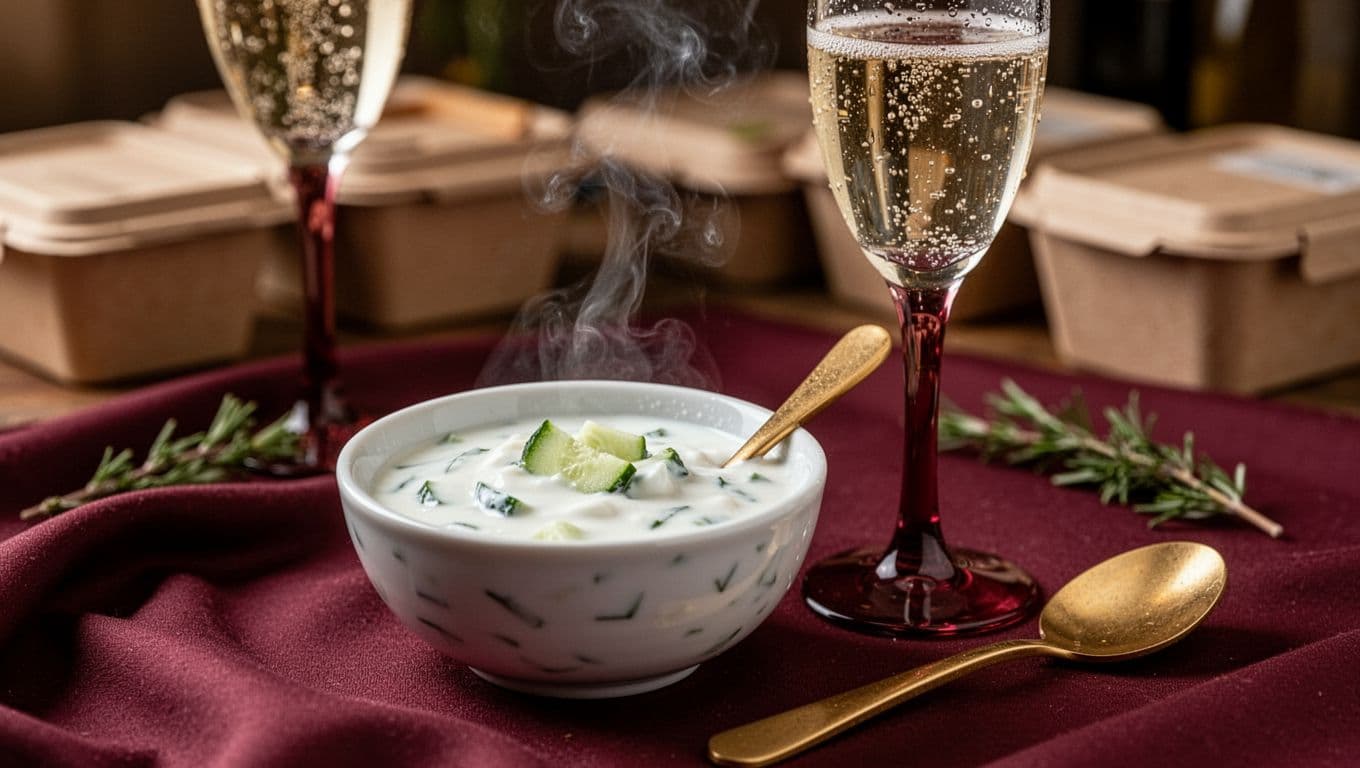
Raita is the sneaky factor. It cools spice, but it can also make some reds taste sharp or bitter. When raita is on the table, these raita-safe picks keep things smooth: sparkling brut like Prosecco, Alsatian Pinot Gris as a low alcohol option, crisp aromatic whites, dry rosé, and light reds with low tannin (served slightly chilled).
For ordering out, keep your script short. These restaurant wine tips work in almost any Indian restaurant: ask for “sparkling brut,” “a crisp white that’s not too sweet,” “Gewürztraminer for creamy sauce dishes like Chicken Korma or Lamb Vindaloo,” or “a light red, not too tannic.” If you want more help reading menus without stress, this pairs well with Sommy’s guide on selecting wine at a restaurant with confidence.
In a store, simplify the mission. Your grocery store wine picks for Indian takeout can be one bottle that covers most plates: sparkling brut is the safest, off-dry Riesling-style with residual sugar is the most forgiving with spice thanks to its sweetness balance, dry rosé is the easiest crowd-pleaser (serve as chilled wine).
If you want help choosing in the moment, this is exactly what an AI wine assistant is good for. Sommy gives smart wine recommendations from a shelf photo or wine list, then turns them into personalized wine picks based on what you like. It’s a modern wine guide that aims for clear wine recommendations, wine explained simply, and everyday wine advice, not a lecture. Consider it friendly wine advice and wine app suggestions when you’re tired and hungry and don’t want to guess.
Conclusion
Good wine pairing indian food is mostly about avoiding the few things that clash, then choosing freshness on purpose. Keep tannins low around yogurt, use bubbles or crisp whites for spice, and reach for light reds when you want red. Finding the right sweetness balance and maintaining acidity are the secrets to a great meal.
Save these simple wine tips for your next order, then pick one “house style” you trust, sparkling brut, fruit-forward off-dry German Riesling, or dry rosé. That’s the whole point of smart wine picks and personalized wine recommendations, less stress, more dinner.