
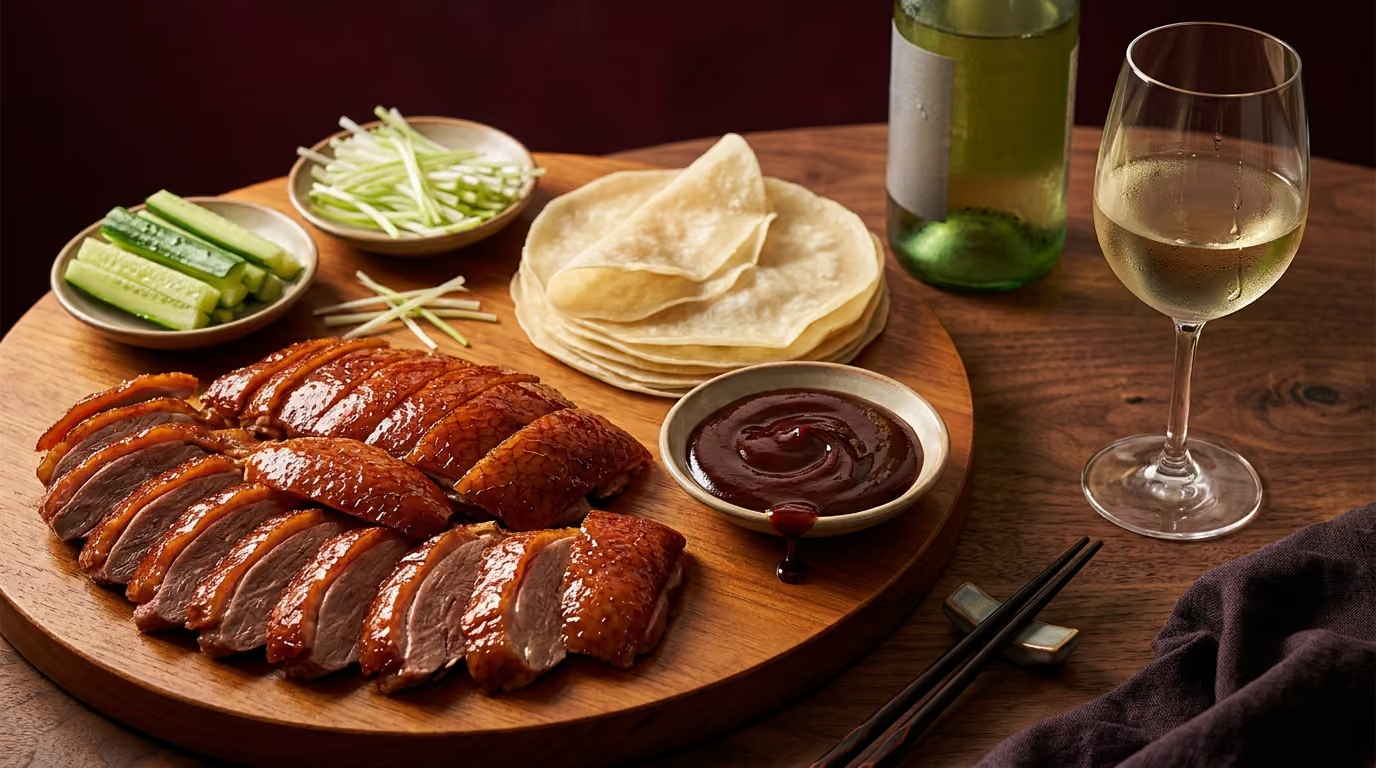
Off-dry Riesling is the safest bottle for Peking duck, and a German Spätlese is the version to look for. Its acidity handles the fat under that lacquered skin, and its touch of residual sugar meets the hoisin instead of arguing with it. A light Pinot Noir, a Gamay from Beaujolais or a dry sparkling rosé will all work too, and a big tannic red almost certainly won't.
Roast duck looks like a red-wine dish, which is why so many people order the wrong thing. The duck is only half of what you're eating though, because every bite arrives wrapped in a pancake with a smear of sweet fermented bean sauce, and that sauce is what your wine has to get along with.
What is the best wine for Peking duck?
An off-dry Riesling with real acidity is the answer we'd give without hesitating. It's the one style that solves both halves of the dish at once: the acidity slices through duck fat and rendered skin, and the small amount of sugar left in the wine sits comfortably beside a sweet glaze rather than being flattened by it.
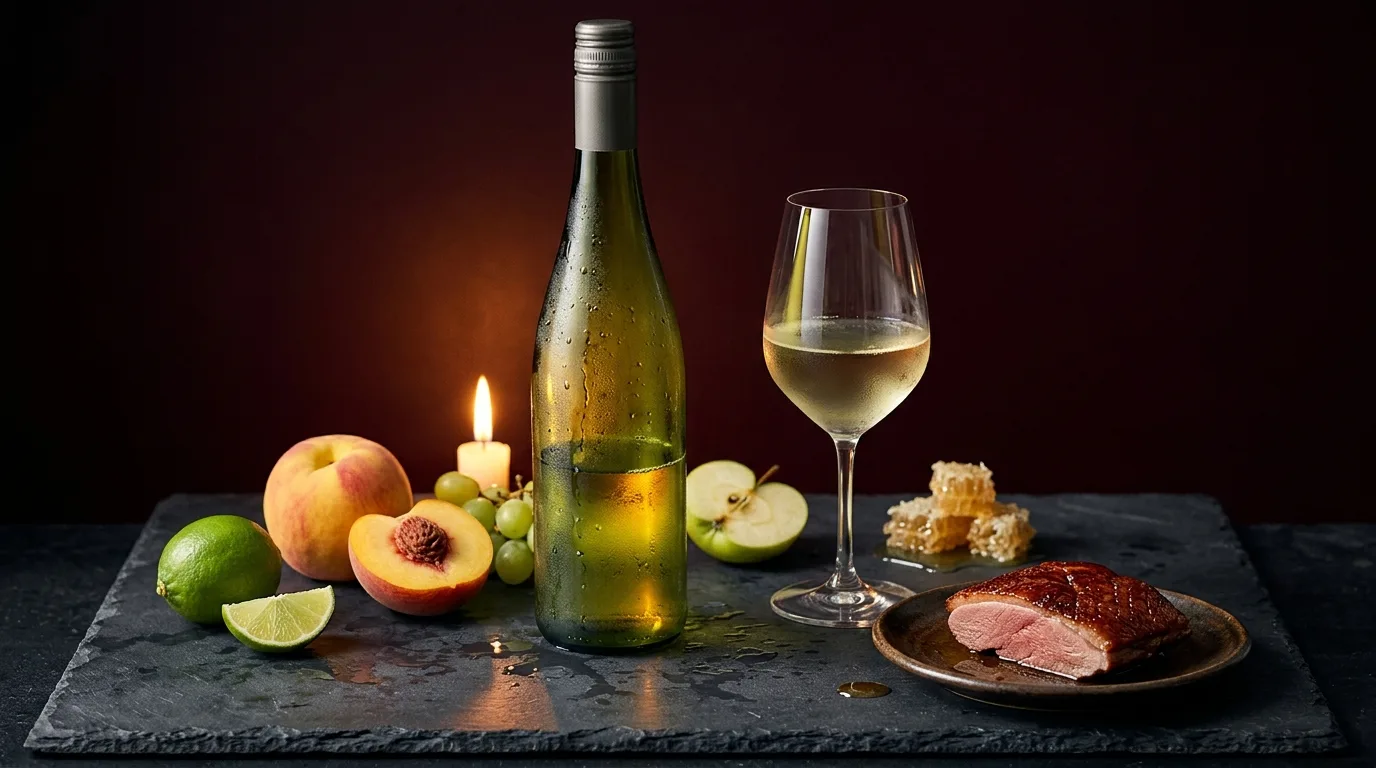
Look for a German Riesling labeled Spätlese, or Kabinett if you want something lighter. Jennifer Docherty, a Master of Wine who grew up with this food, named Spätlese Riesling her top pick for Peking duck in Decanter, on the grounds that good acidity plus more residual sugar suits both the duck and the sauce. That's the same reasoning arrived at from the other direction, and it's the strongest endorsement this pairing has.
Gewurztraminer is the other white worth knowing about, especially from Alsace. It's aromatic in a lychee and rose-petal way, usually a little off-dry, and low enough in acidity that it works better with the sweeter, richer end of the meal than with the plain duck. It's a bolder choice than Riesling and it either delights people or doesn't, so pour it when you already know the table likes aromatic whites. Our Gewurztraminer food pairing guide covers where it shines and where it overreaches.
Bone-dry whites are the trap here. A Sancerre or a lean Chablis has the acidity but nothing to meet the sugar in the hoisin, so the wine ends up tasting sharp and hollow, stripped of its fruit. If you only remember one thing from this article, make it that a completely dry wine is a harder match than a slightly sweet one.
Why does hoisin decide the pairing?
Hoisin is built on fermented soybean paste plus a large amount of sugar, and that combination of sweet, salty and deeply savory is the loudest thing on the plate. Sugar content in a typical hoisin runs somewhere around a third of the sauce by weight, which is why it reads as unmistakably sweet before anything else registers.

Sweetness in food does something specific to wine, and it's worth understanding because it explains almost every failure. A sweet dish makes a dry wine taste thinner, more acidic and more bitter than it is, because your palate recalibrates around the sugar it just received. The fix is to pour a wine with at least as much sweetness as the food, which is why off-dry works and bone-dry struggles.
Salt and umami from the fermented bean paste pull in the same direction. They soften your perception of tannin's bitterness in some cases, and they amplify the impression of alcohol heat in others, so a high-alcohol red beside hoisin can taste hot and slightly rough. Add the vinegar tang in the sauce and you have a dish that rewards freshness far more than power.
Then there's the duck itself, which is genuinely rich. The skin is the point of Peking duck, air-dried and roasted until it shatters, and it carries a lot of rendered fat. Fat wants acidity to cut it, the same way a squeeze of lemon works on fried food. A wine that's both fresh and faintly sweet handles the glaze and the fat together, and that narrow description is why Riesling keeps coming up.
Can you drink red wine with Peking duck?
Yes, as long as the red is light, low in tannin and not oaky. Tannin is the problem, because the sweet-salty glaze makes tannin taste harder and more bitter than it would on its own, so the same Cabernet that's fine with a steak turns astringent here.
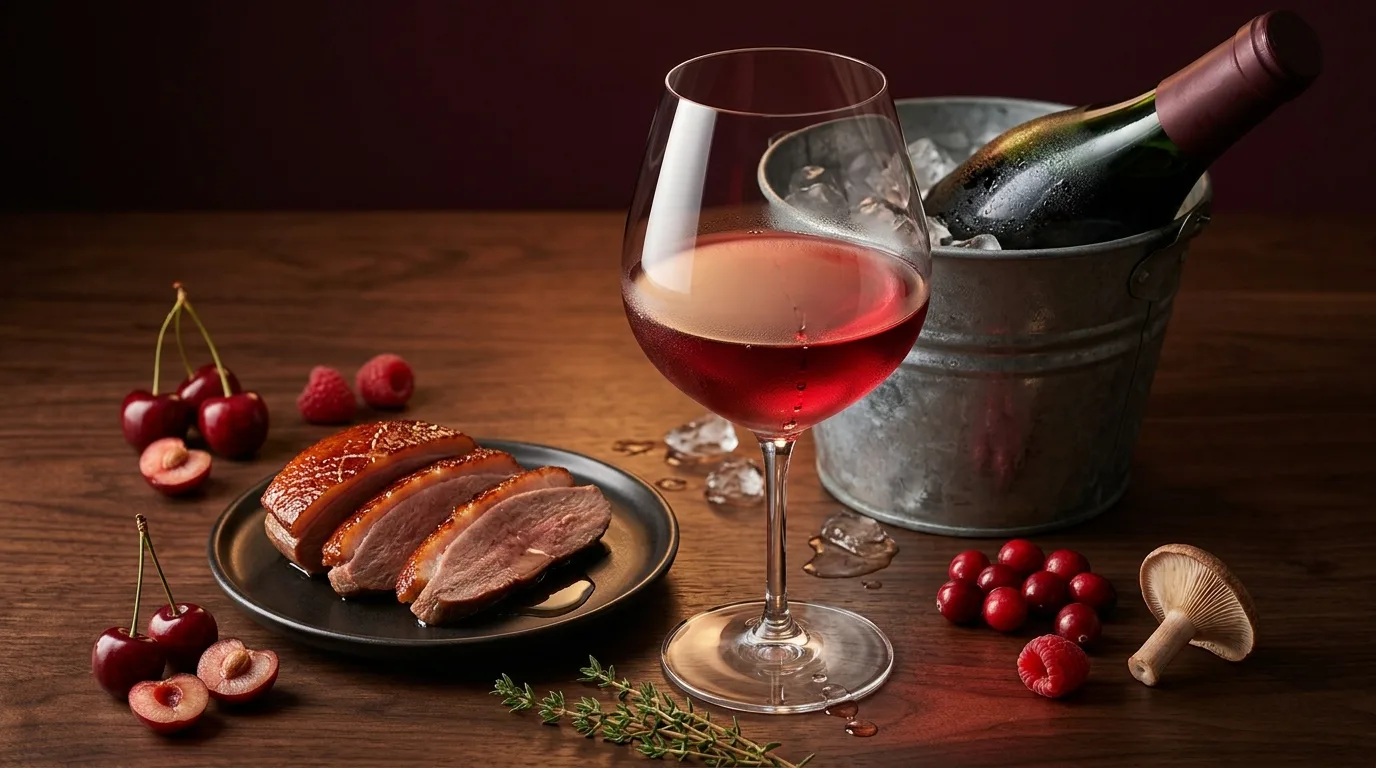
Pinot Noir is the first red to try and the most reliable. Keep it light to medium in body with red cherry and cranberry fruit and a savory, earthy edge, and avoid anything showing obvious vanilla or toast from new oak. Burgundy works, Oregon works, and a cool-climate New Zealand bottle works, and the shared requirement is restraint rather than region. Our comparison of Pinot Noir against Gamay is useful here since both are on this list.
Gamay from Beaujolais is the more forgiving option and often the more fun one. It has almost no tannin, plenty of juicy red fruit and bright acidity, and it takes a chill beautifully. Fifteen minutes in the fridge before pouring sharpens the fruit and makes the whole pairing livelier, which matters when the food is warm and rich. A Beaujolais-Villages or a bottle from one of the named crus like Fleurie or Morgon will both do the job.
Two reds get recommended by sommeliers that look surprising on this list. A ripe Australian Shiraz and a balanced Crozes-Hermitage Syrah both come up, and the logic is that Syrah's own peppery, savory character echoes five-spice while ripe fruit meets the glaze. Those work when the tannins are genuinely fine and the wine isn't hot with alcohol, which is a narrower target than the grape name suggests. If you want to try it, taste before you commit the table.
What to leave alone is straightforward. Cabernet Sauvignon, Malbec, Nebbiolo, Bordeaux blends and anything heavily oaked will all fight the sauce. So will a big buttery Chardonnay, for the same reason it fails with most Chinese food. Our guide to wine with Chinese takeout applies the same rules across General Tso's, lo mein and dumplings, which is handy since Peking duck rarely arrives alone.
Does sparkling wine work, and what about the second course?
Dry sparkling rosé is the smartest single bottle for a shared Peking duck table, and it's the choice we'd make when more than two people are eating. Bubbles and acidity scrub fat off your palate between bites, red-berry fruit keeps up with the hoisin, and a sparkling wine sits happily beside every other dish that arrives alongside.

Rosé Champagne is the luxurious version and cava rosado or a crémant is the sensible one, with the same structure at a fraction of the price. Look for brut rather than extra brut, since a touch of dosage helps against the sauce, and skip anything labeled brut nature, which is bone dry and runs into the problem described earlier. A dry English or Californian sparkling rosé does the same job if that's what your shop stocks.
The courses matter more than most pairing advice acknowledges. A proper Peking duck service gives you the skin and pancakes first, then often a stir-fry of the remaining meat with vegetables, and sometimes a soup made from the carcass to finish. Those three plates want different things, and one bottle has to cover all of them, which is another argument for something fresh and adaptable rather than a red chosen for the duck alone.
If the second course arrives with chili or Sichuan pepper, the off-dry wines pull further ahead. Sweetness cools capsaicin heat while alcohol amplifies it, so a low-alcohol off-dry Riesling is close to ideal and a 15 percent Shiraz is close to the worst option available. Our guide to picking wine for spicy food goes into that trade-off properly.
How do you order this at a restaurant?
Describe the sauce, not the bird, and you'll get better help than any wine list gives you on its own. Telling a server you're having Peking duck with hoisin and want something fresh with a hint of sweetness and soft tannins is far more useful than asking for a red, and it works even at a restaurant whose list is four bottles long.
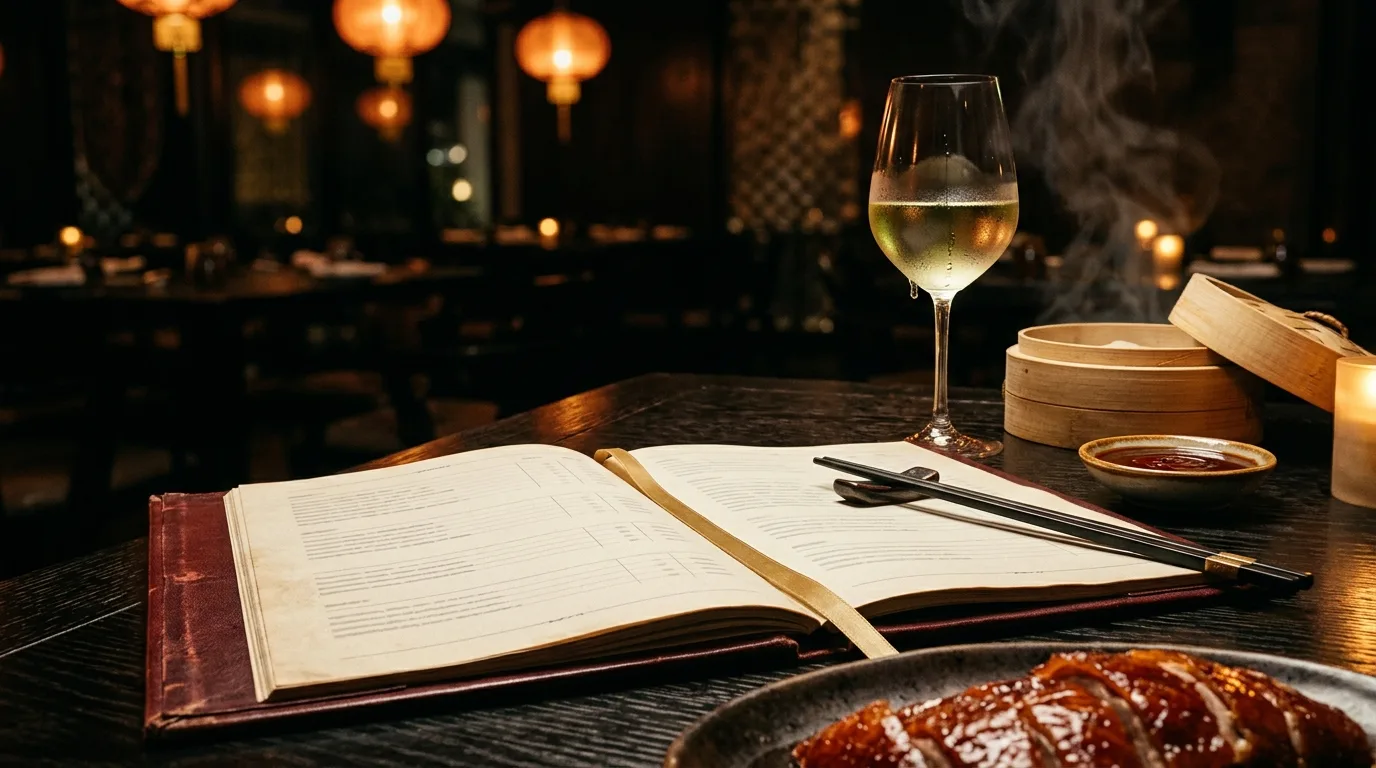
Many Chinese restaurants keep short, functional wine lists, so plan on flexibility. If there's no Riesling, ask for the least oaky white with some fruit to it, or a light red they'd be happy to chill briefly. Most kitchens will bring an ice bucket for a red if you ask, and a lightly chilled Pinot Noir beats a warm one here by a wide margin. If nothing on the list fits, a dry sparkling wine is nearly always the safest fallback.
Sommy's Current Venue feature is built for this exact situation, where you're sitting down, the list is unfamiliar and the food is already ordered. It filters the restaurant's actual list against your taste rather than handing you a general rule about duck, which is the difference between advice and an answer when there are eleven bottles in front of you and one of them is right.
Buying for a duck you're roasting at home is easier. German Riesling from the Mosel or Rheingau, Alsace Pinot Gris or Gewurztraminer, Beaujolais, and Oregon or Burgundian Pinot Noir are all safe shelves to shop from. Serve the whites properly cold at around 45 to 50 degrees Fahrenheit, and give the light reds fifteen minutes in the fridge so they land closer to 55 than to room temperature. Our Riesling food pairing guide covers the rest of the table if duck is only one of several dishes.
Frequently Asked Questions
What is the best wine for Peking duck?
Off-dry Riesling, particularly a German Spätlese, is the most reliable choice, because its acidity cuts the fat in the skin while its residual sugar meets the sweetness of hoisin. Light Pinot Noir, Gamay and dry sparkling rosé are all strong alternatives.
Why doesn't Cabernet Sauvignon work with Peking duck?
The sweet, salty glaze makes tannin taste harder and more bitter than it does on its own, so a firmly tannic red turns astringent against hoisin. Cabernet's oak-derived vanilla and toast flavors also have nothing to connect with in the dish.
Should the wine be sweet?
It should be slightly sweet rather than properly sweet. A wine with a little residual sugar avoids the hollowed-out, over-acidic impression that a bone-dry wine gets next to a sugary sauce, but a genuinely sweet dessert wine would overwhelm the savory side of the meal.
Does hoisin sauce ruin wine pairings?
It makes them harder rather than impossible. Hoisin is roughly a third sugar with a strong fermented-soybean umami base, so it needs a wine with freshness and a touch of sweetness, and it punishes tannin, oak and high alcohol.
What about serving red wine chilled with duck?
Chilling a light red is a good idea here. Fifteen minutes in the fridge takes a Gamay or Pinot Noir to around 55 degrees Fahrenheit, which sharpens the fruit and stops the alcohol feeling warm next to a rich dish.
What wine works for the whole Peking duck meal?
Dry sparkling rosé is the best single bottle when the duck arrives as several courses, since it handles the pancakes, a stir-fry and a soup equally well. An off-dry Riesling is the close second and pulls ahead if any of the later dishes bring chili heat.
The bottle to order
Peking duck rewards a wine that's fresh, gentle and slightly sweet, and it punishes anything built for power. Off-dry Riesling covers the fat and the hoisin better than anything else on a normal wine list, and dry sparkling rosé is the pick when several dishes are coming and one bottle has to handle them all.
If the table wants red, keep it light and give it a short chill, since a cold Beaujolais will do more for the meal than a serious Bordeaux ever could. Order for the sauce, not the bird, and the rest sorts itself out.

.avif)