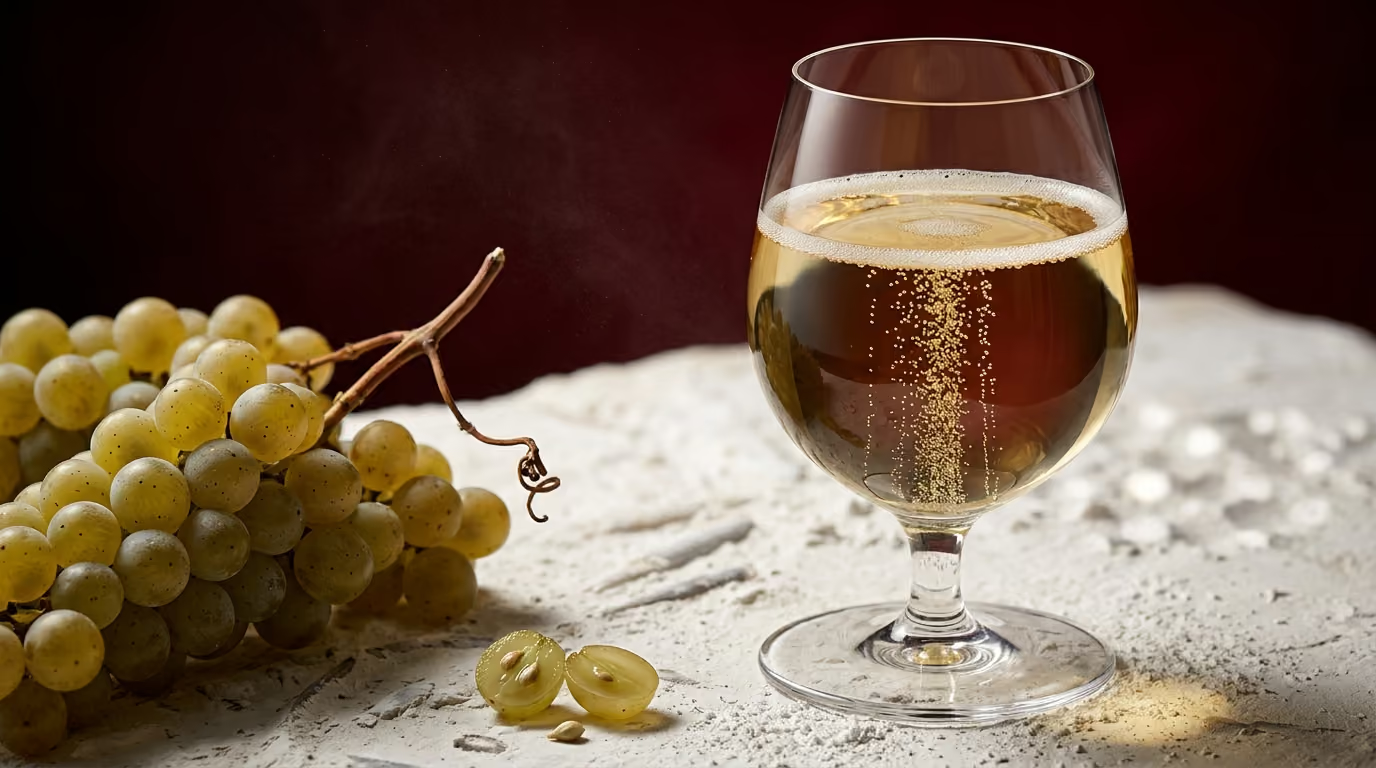
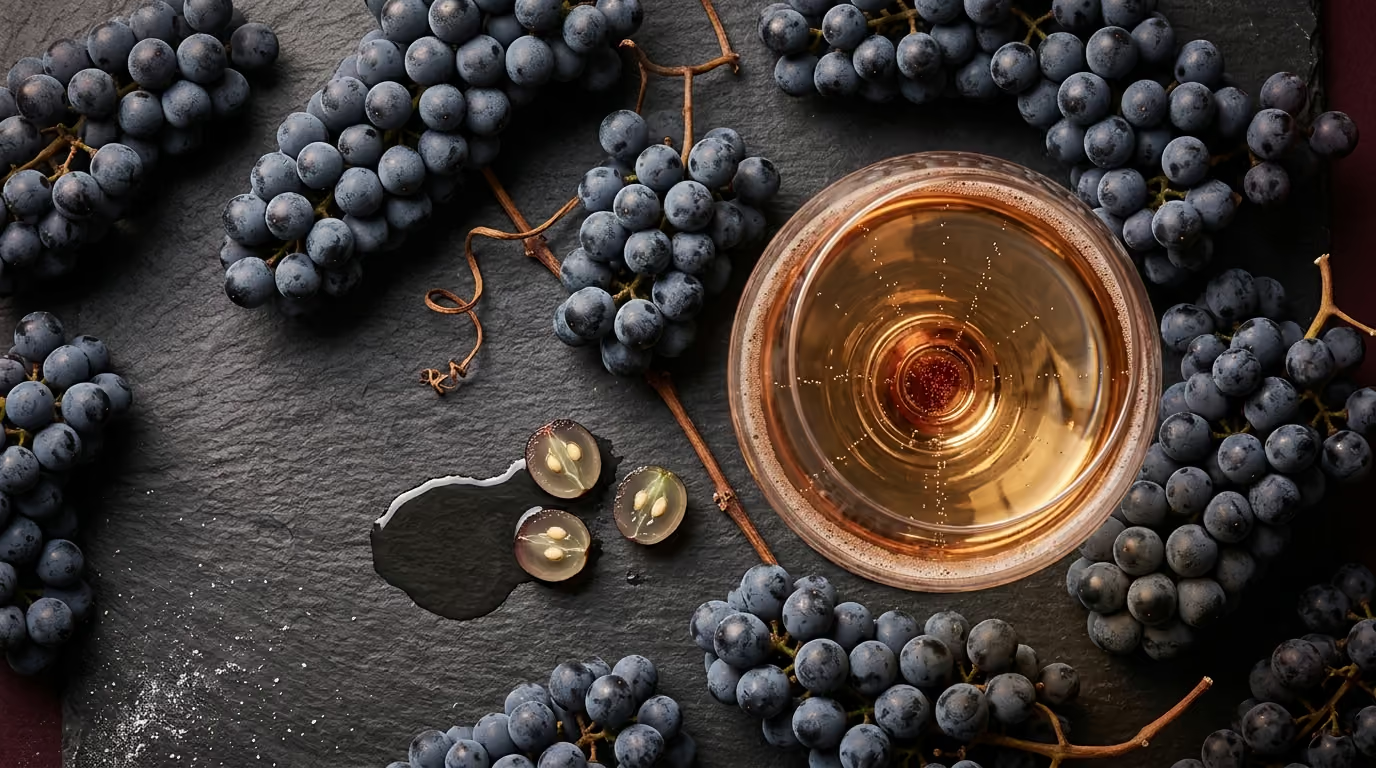
Blanc de noirs means a white wine made entirely from dark-skinned grapes, which in Champagne and most English sparkling wine means Pinot Noir, Meunier, or both together. The French translates as "white from blacks", and it works because grape juice is clear no matter what color the skin is. Press the fruit gently, get the juice away from the skins quickly, and you get a pale wine from red grapes. What you taste is a sparkling wine with more weight and more red-fruit character than one built on Chardonnay.
The phrase confuses more people than any other term on a sparkling label, and the confusion is reasonable. Everything most of us learn about wine says red grapes make red wine, so a bottle announcing that it's white and made from black grapes reads like a contradiction. It isn't one, and understanding why explains a surprising amount about how rosé, white wine and Champagne all get made.
What does blanc de noirs mean on a wine label?
It means the producer used dark-skinned grapes and nothing else. In Champagne that's Pinot Noir and Meunier, the two red varieties permitted in the appellation, and Decanter's explainer on the term notes that English sparkling producers use the same two grapes for the same style. Outside those regions the grape changes, and you'll see the phrase on Pinot Noir from Carneros in California, on German sparkling wine, and increasingly on still wines from further afield.
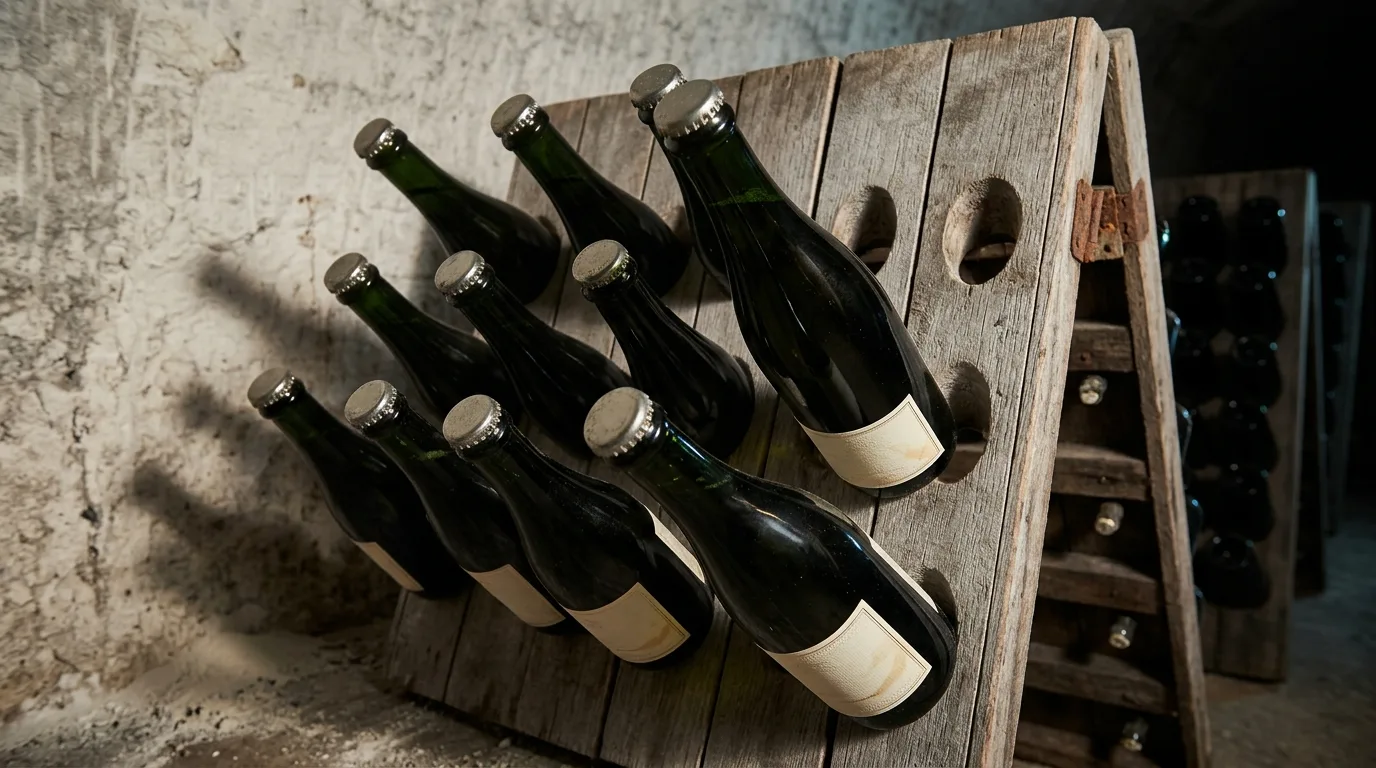
This is the majority style hiding behind a rare-sounding phrase. According to the Comite Champagne, Pinot Noir covers 38% of the area under vine in Champagne and Meunier another 31%, so dark-skinned grapes account for just over two thirds of the region's plantings. Almost every bottle of Champagne you've ever drunk was mostly made from red grapes. Blanc de noirs simply removes the Chardonnay from the blend and tells you about it.
The term sits alongside the other clues that share the front of a sparkling bottle, and it answers a different question from each of them. Our guide to reading a wine label works through the rest of the phrases, and the one to check straight after this one is the sweetness word, because these two terms are frequently mistaken for each other.
How do you make a white wine from dark-skinned grapes?
By keeping the juice away from the skins. The Comite Champagne puts it plainly on its own grape varieties page: even when the grape is black-skinned, its juice is always white, and the juice only takes on color when the skins are left to macerate in it. Color in wine is a skin extraction, not a property of the fruit inside, so a winemaker who presses whole clusters gently and runs the juice off immediately never gives the pigment a chance to transfer.
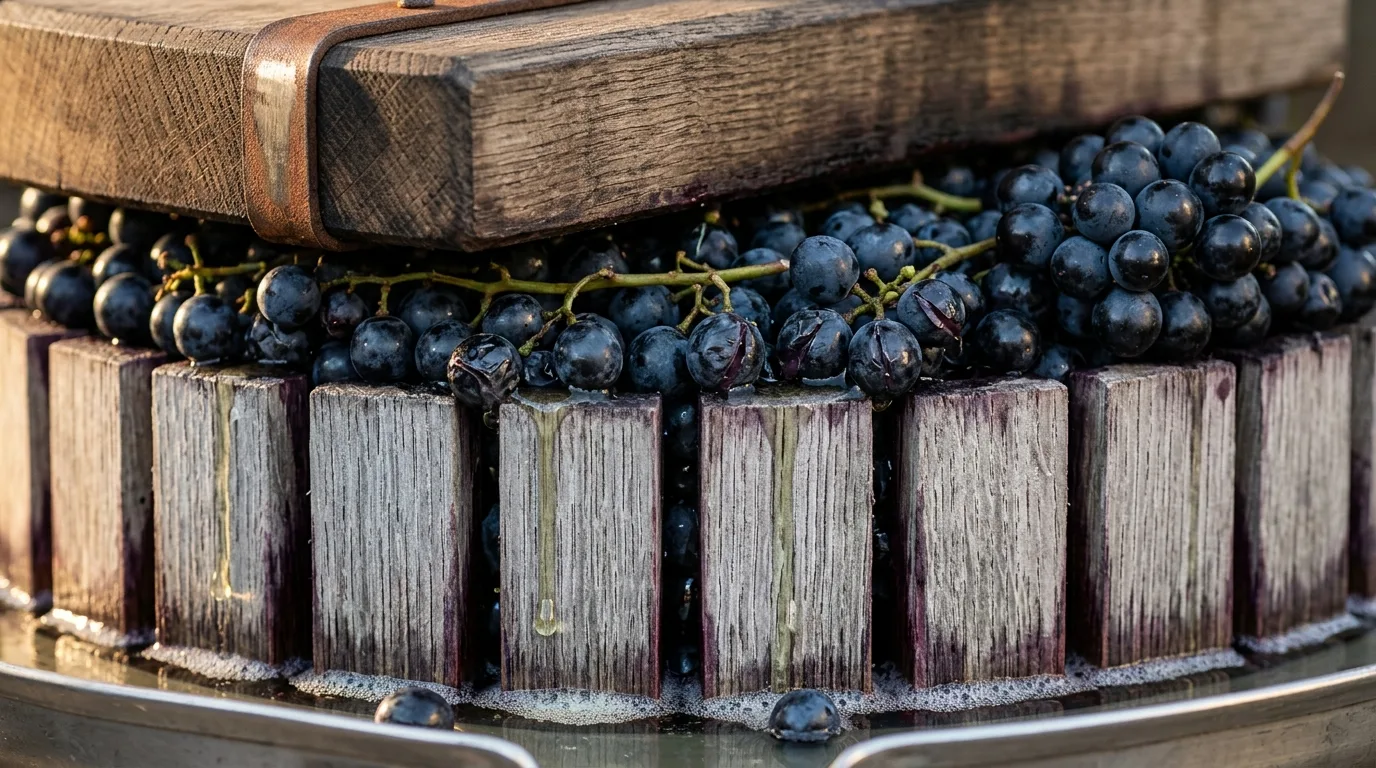
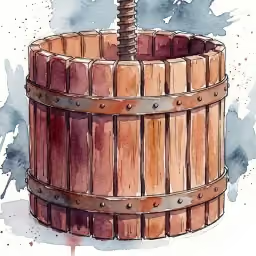
That's also why the pressing matters more here than it does for a white grape. A hard press breaks skins and pulls color and coarse tannin into the juice, so producers making a blanc de noirs work with gentler pressure and take only the earliest, cleanest fractions of juice. Decanter describes the result as being made in a similar way to white wine, with skin contact minimized from the start of the process. The skins still go somewhere, and in most cellars they head off to a rosé or a still red.
Rosé is the useful comparison, because it's the same fruit with the opposite decision. The Comite Champagne describes two routes to a pink Champagne, either macerating the must with the skins until the juice takes on color, or blending a still red Champagne wine into the base wines before the second fermentation. A blanc de noirs takes neither route. Some do come out with a faint gold or copper tint, which Decanter notes is normal for the style, and that hint of color is the only visual clue you'll get.
What does a blanc de noirs taste like?
Broader and rounder than a Chardonnay-based sparkling wine, with red fruit where the other has citrus. Decanter's explainer describes critics reaching for strawberry, red cherry and summer berries when the wine is young, along with a more solid structure and a fuller mouthfeel. That extra weight is the point, and producers who choose the style argue that dark-skinned grapes bring body, texture and aromatic complexity while the wine still drinks like a white.
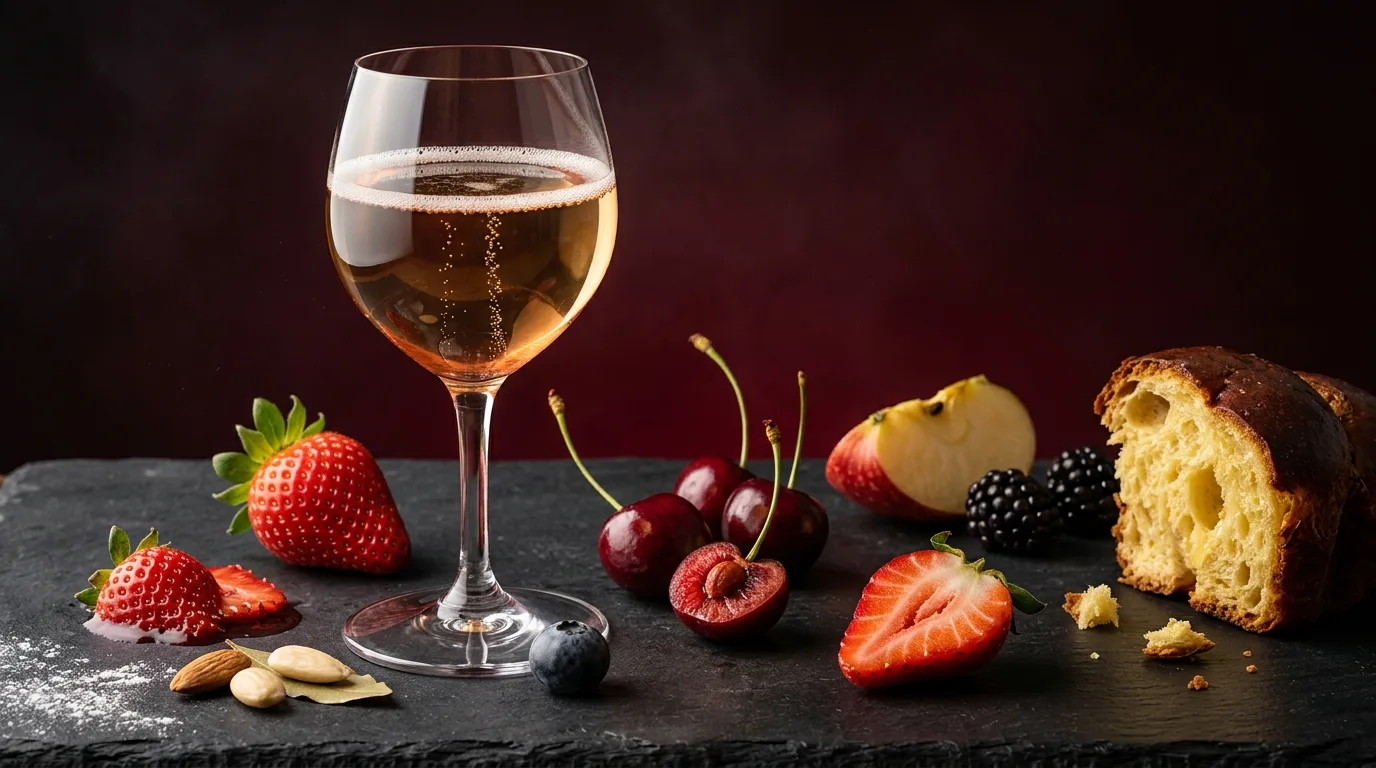
There's a savory edge to many of these wines that people notice before they can name it. Pinot Noir picked early enough for sparkling wine keeps its acidity but not much of its perfume, so what comes through is red apple skin, a faintly bready warmth from the lees, and something closer to a baked orchard fruit than a fresh one. Meunier adds a softer, rounder fruitiness and tends to make the wine approachable sooner, which is why houses that use a lot of it produce bottles that taste good young.
The caveat applies here as it does anywhere. Decanter is careful to say that vintage, vineyard site, harvest timing, fermentation and lees ageing all shift the flavor profile, so two blanc de noirs made from the same grape in the same region can taste quite different. If Pinot Noir as a still wine is unfamiliar territory, our Pinot Noir taste guide covers what the grape does before anyone turns it into bubbles.
Serving temperature is worth getting right with these bottles specifically. A blanc de noirs poured at fridge-door cold shuts down the red fruit that you chose the style for, and it needs a few degrees more warmth than a lean Chardonnay-based sparkling wine to show what it has. Ten to fifteen minutes out of the fridge before you open it usually does the job, and a normal white wine glass rather than a narrow flute gives the aromas somewhere to collect. Our guide to wine serving temperatures has the numbers for the rest of the fridge.
Where does blanc de noirs come from, and are there still versions?
Champagne is the reference point, and California is the other place you'll meet the style regularly, particularly Carneros and the cooler parts of Sonoma where Pinot Noir ripens slowly enough to keep its acid. German producers make a good deal of it too, since Spatburgunder is the country's most planted red grape and the sparkling category there is enormous. English sparkling wine has become a genuine third home for the style, growing the same Pinot Noir and Meunier on the same chalk that runs under Champagne.

Still blanc de noirs is the newer development and it's growing quickly. Decanter reports that four of the award-winning still wines at the 2024 Decanter World Wine Awards were made in the blanc de noirs style, including a Silver medal Blanc de Noir Cabernet Sauvignon from Changyu Longyu Estate in Ningxia, China. A still white wine pressed from Cabernet Sauvignon sounds like a novelty and mostly reads as a lean, faintly savory white with an odd depth to it, which is a fair description of what happens when you take a thick-skinned red grape and treat it like a white one.
Price sits at a different place from the one people expect. In Champagne a blanc de blancs usually costs more, because Chardonnay covers less of the region and the best sites for it are expensive, so a blanc de noirs from a good house is often the better value of the two. In California and Germany the style is priced as ordinary quality sparkling wine, and English sparkling wine is expensive across the board for reasons that have nothing to do with which grape went in. None of that is a quality signal in either direction, and a blanc de noirs is not a budget version of anything.
If you want to compare the two ends of the sparkling spectrum, the opposite term is blanc de blancs, made only from white grapes and usually Chardonnay. Those wines run lighter, sharper and more citrus-driven, and a bottle carrying neither phrase is almost always a blend of both kinds of fruit. Our comparison of Champagne and Prosecco covers a different axis of the same question, which is how the production method rather than the grape changes what lands in the glass.
What should you eat with a blanc de noirs?
Richer food than you'd normally put next to sparkling wine, because the extra body and red fruit give it something to push against. Roast chicken with the skin crisped, duck, mushrooms, aged hard cheese and charcuterie all work, and this is the sparkling style that can genuinely handle a main course rather than only the first ten minutes of a meal. Our guide to wine with charcuterie has the salami and prosciutto end of that covered.
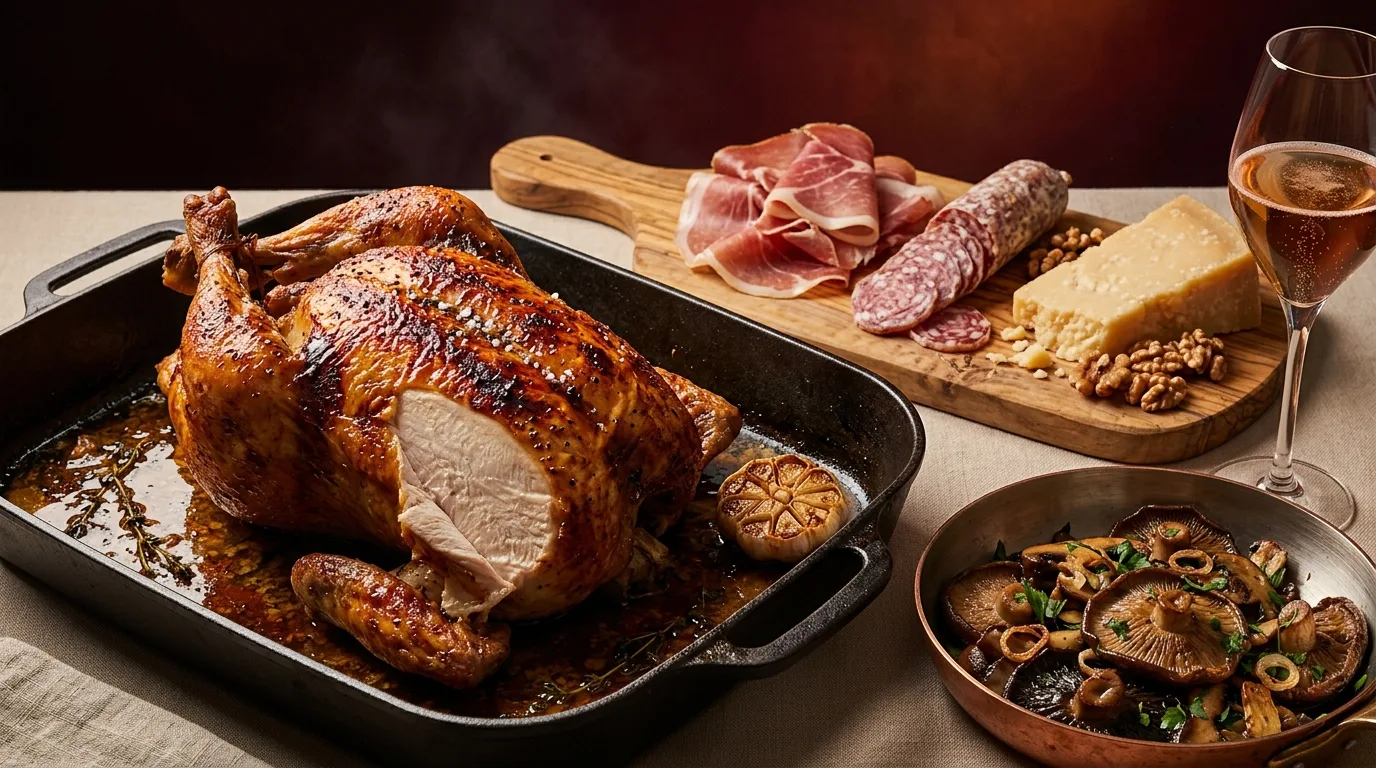
Fried food is still a strong match, since the bubbles and acidity do the same fat-clearing job they do with any sparkling wine, and a blanc de noirs holds up to heavier batter and richer sauces better than a lean bottle would. Mushrooms are the pairing worth trying deliberately, because the savory, forest-floor character that Pinot Noir develops meets them halfway, and our wine pairing with mushrooms guide explains why earthy dishes are so particular about their wine.
Choosing between the two styles is easier than it sounds once you stop thinking about grapes. Reach for a blanc de noirs when the food has weight, when the weather is cold, or when you find most sparkling wine too sharp and want something with more fruit underneath the bubbles. Reach for a blanc de blancs when you want lift and precision, with oysters, sushi or anything salty and fried. Then check the sweetness word before you buy either, because brut, extra dry and demi-sec carry the sugar levels and blanc de noirs tells you nothing about them.
Common questions about blanc de noirs
Is blanc de noirs a rosé?
No, though it comes from the same grapes. A rosé gets its color from deliberate skin contact or from red wine blended in, while a blanc de noirs is pressed so the juice leaves the skins immediately. Some bottles show a faint gold or copper tint, and that's as close to pink as the style gets.
What grapes are used in blanc de noirs?
Pinot Noir and Meunier in Champagne and in English sparkling wine, since those are the dark-skinned grapes the appellation permits. Elsewhere the answer depends on what grows locally, so California leans on Pinot Noir, Germany uses Spatburgunder, and a handful of producers now make still versions from other red varieties.
Is blanc de noirs sweet?
The term says nothing about sweetness. Look for brut, extra brut, extra dry or demi-sec elsewhere on the label, since those are the words that carry the actual sugar levels. Most blanc de noirs sold in the United States is labelled brut and tastes dry.
Is blanc de noirs better than blanc de blancs?
Neither is better and both describe a style rather than a grade. Blanc de noirs runs fuller with red-fruit character, blanc de blancs runs leaner with citrus, and the right answer depends on your palate and what's on the plate.
Why is my blanc de noirs slightly pink?
Because a little pigment made it into the juice during pressing, which happens easily with thin-skinned Pinot Noir. It isn't a fault and it doesn't mean the wine is a rosé. A faint gold, copper or salmon tint is a recognized part of the style.
Can a still wine be a blanc de noirs?
Yes, and it's becoming more common. Producers press red grapes as if they were white ones and bottle the result without bubbles, and Decanter noted four such wines among the award winners at the 2024 Decanter World Wine Awards. The label term is used the same way it is on sparkling wine.
How should you serve a blanc de noirs?
Cold but not ice cold, since too much chill flattens the red fruit that makes the style worth choosing. Take it out of the fridge ten or fifteen minutes before opening, and pour it into a white wine glass rather than a narrow flute so the aromas have room. It also holds up better than most sparkling wine as it warms in the glass.
What that phrase is really telling you
Blanc de noirs answers one question, which is what kind of grape the winemaker started with. Dark-skinned fruit pushes a sparkling wine toward red apple, berries and weight, and it does that without adding any color, because color has always come from skins rather than juice. That's the whole trick, and it's the same piece of knowledge that explains how rosé gets made and why a white wine can carry a red grape's name. Check the sweetness term next, look at where the bottle came from after that, and treat the rest as producer style, which is the part no label will ever print for you.