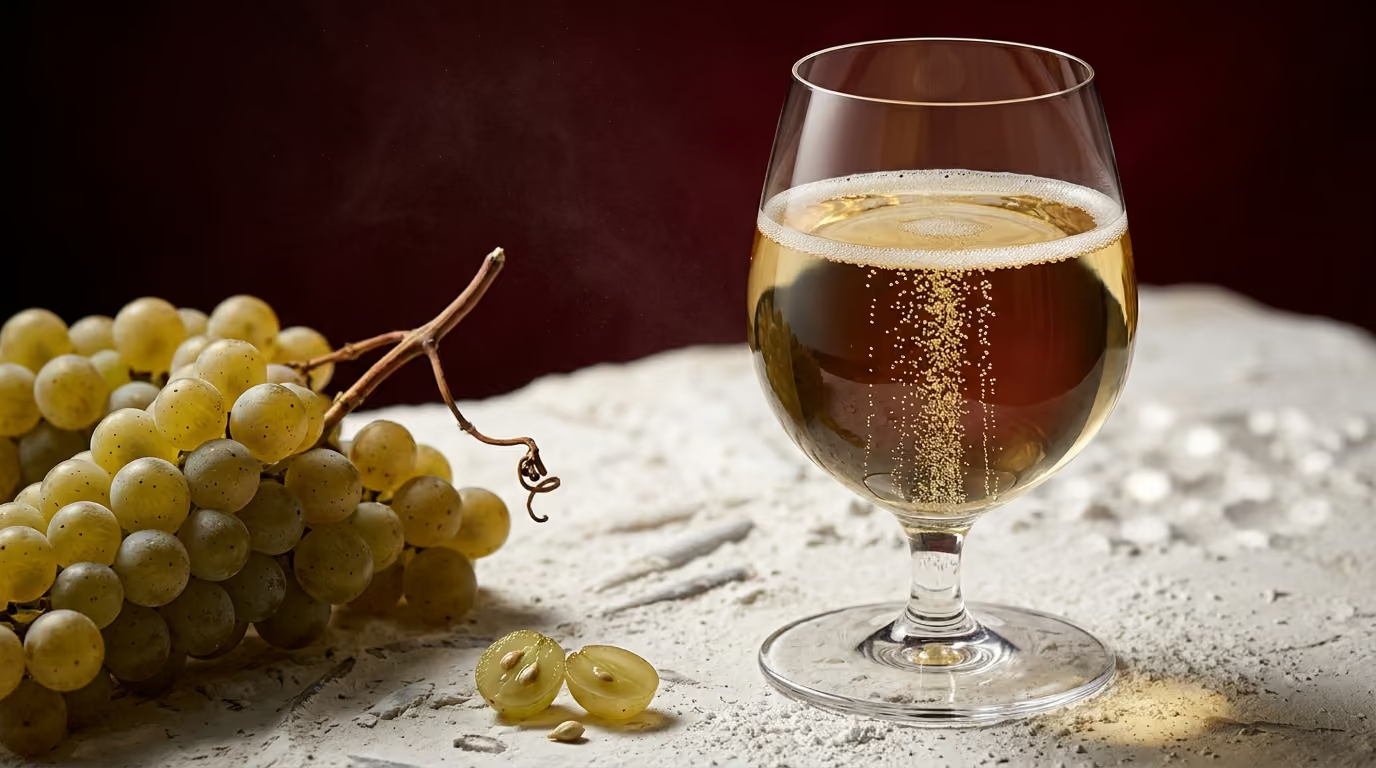
Blanc de blancs means the sparkling wine in the bottle was made only from white grapes, and in Champagne that almost always means Chardonnay. The phrase is French for "white from whites", so it describes the fruit that went in rather than the color of what ends up in your glass. It's a style clue and nothing more, because it says nothing about sweetness, quality, age or price. What it does reliably signal is a lighter, brighter, more citrus-driven sparkling wine than one built on dark-skinned grapes.
That one phrase does a surprising amount of work on a shelf full of bubbles. Sparkling labels carry more French than almost any other category of wine, and most of the words on them are decorative. This one isn't, because it points at a real decision the winemaker made, and that decision changes how the wine feels to drink. Once you know where blanc de blancs sits, you can walk past two thirds of a sparkling aisle without a second thought.
What does blanc de blancs mean on a sparkling wine label?
It means every grape in the bottle was a white grape. Wine gets its color from grape skins rather than from the juice, and dark-skinned grapes can be pressed gently enough to make a pale wine, so a white sparkling wine tells you nothing about the fruit on its own. Blanc de blancs is the producer telling you they used white grapes exclusively, which they wouldn't bother printing if it were the default.
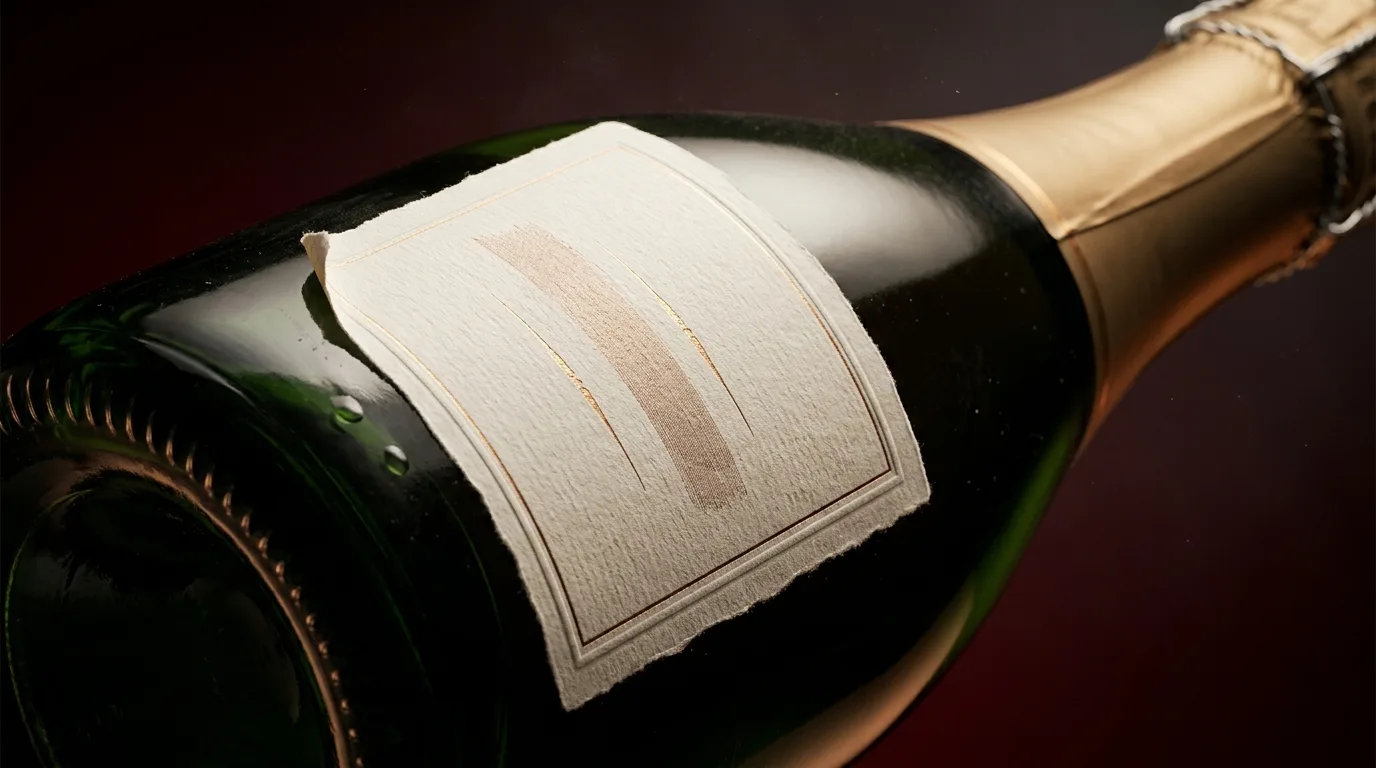
You'll find the phrase on Champagne, on Cremant from every other French region, on Cava from Spain, on English sparkling wine, and on bottles from California, Oregon and Australia. It carries the same meaning everywhere, though the grape behind it changes once you leave Champagne. It sits alongside the other front-label terms worth learning, and our piece on how to read wine labels covers the rest of the phrases that share that space.
One small confusion is worth clearing up, because you'll see the term spelled both ways. Some producers and writers treat "blanc de blanc" in the singular as a wine from one white variety and the plural as a wine from several, and Wine Enthusiast's guide to the term describes exactly that reading. You can't lean on it in a shop, though, since Ruinart's Blanc de Blancs is Chardonnay alone and still carries the plural. Treat the two spellings as the same term and look at the back label if you want the grape breakdown.
Which grapes can go into a blanc de blancs?
Chardonnay, in nearly every bottle you'll ever pick up, though Champagne law allows more white varieties than most people realize and the rest of the world uses entirely different ones. In Champagne the four rare additions are Arbane, Petit Meslier, Pinot Blanc and Pinot Gris, all permitted and all planted in tiny quantities, and the same Wine Enthusiast guide names them as the technically legal alternatives to Chardonnay.

There's a popular idea that Champagne is essentially a Chardonnay region, and the appellation's own numbers say otherwise. According to the Comite Champagne, Chardonnay accounts for 31% of the area under vine, against 38% for Pinot Noir and 31% for Meunier. Dark-skinned grapes cover just over two thirds of the region, which is the real reason blanc de blancs stands out enough to be worth printing on a label. It's the minority style in the place it's most associated with.
Where the Chardonnay does concentrate is the Cote des Blancs, the stretch of chalk south of Epernay that the Comite Champagne calls the grape's star terroir. Bottles from there tend to be the reference point for the style, and producers say the chalk is a large part of why. Outside Champagne, Cava labelled blanc de blancs is usually built on Macabeo, Xarel-lo and Parellada rather than Chardonnay, and Cremant de Bourgogne goes back to Chardonnay because Burgundy grows so much of it. If you want the wider picture of how the same grape behaves in still wine, we compared Chablis and Chardonnay and the chalk argument shows up there too.
What does a blanc de blancs taste like?
Lighter and sharper than a sparkling wine made from dark grapes, with lemon, green apple and pear leading, and a finish that stays taut rather than rounding off. Chardonnay brings high acidity and very little weight to a base wine, and there's no red fruit underneath to soften it, so the whole thing reads as clean and vertical. People reach for words like chalky and mineral with these wines, and while that's a hard sensation to define, it usually points at a dry, faintly saline finish rather than an actual flavor.
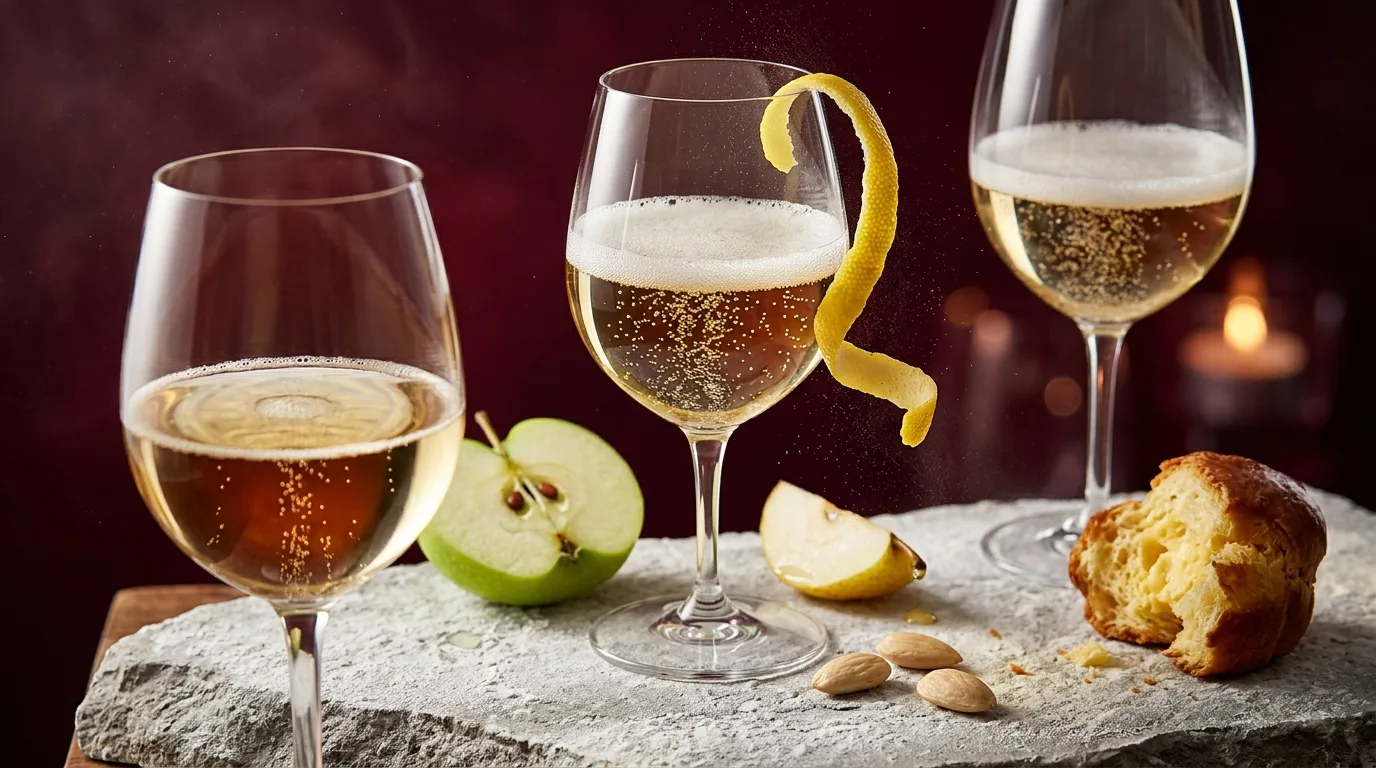
Age changes it more than almost any other factor. A young blanc de blancs can feel austere, even a little unforgiving, and the same wine after five or six years on its lees picks up brioche, toasted almond and a creamy texture while keeping the acidity underneath. That combination of richness and tension is why so many people who drink a lot of Champagne end up preferring this style, and it's why blanc de blancs bottles are often the ones worth putting away for a while rather than opening on the way home.
The honest caveat is that the label term is a starting lane rather than a promise. Dosage, the amount of time the wine rested on its lees, the vintage and the producer's own house style all move a bottle further than the grape does. Two blanc de blancs from the same village can taste genuinely different, and both are behaving normally. Serving temperature moves it too, and a bottle poured too cold loses most of the detail you paid for, which our guide to wine serving temperatures gets into properly.
How is blanc de blancs different from blanc de noirs?
Blanc de noirs is the mirror image, a white sparkling wine made only from dark-skinned grapes, which in Champagne means Pinot Noir and Meunier. Both wines end up pale in the glass, because the juice is separated from the skins fast enough that no color transfers. What changes is the shape of the wine, since dark grapes bring more body, more red-fruit character and a broader mouthfeel while white grapes bring lift and citrus.
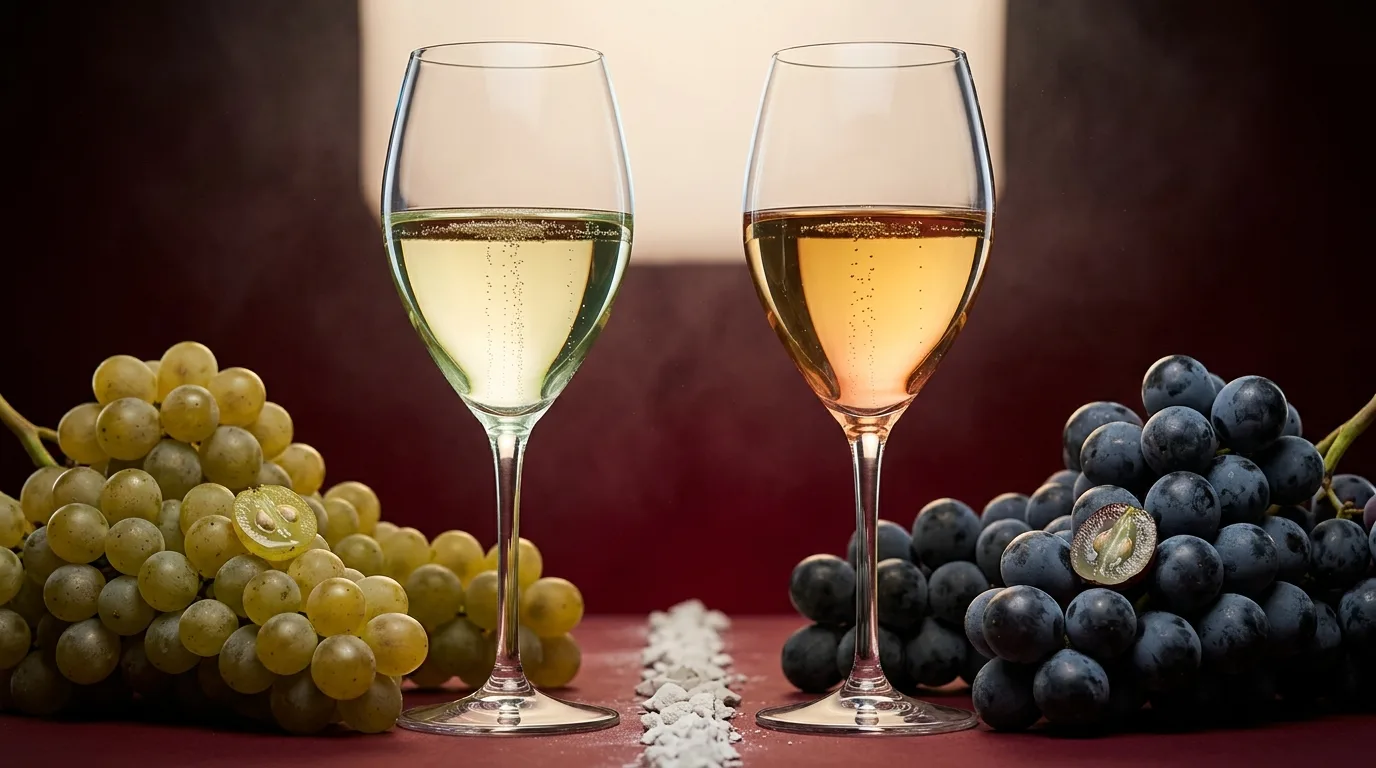
| Label term | What went in | How it usually reads |
|---|---|---|
| Blanc de Blancs | White grapes only, usually Chardonnay | Citrus, green apple, chalky, lean and lifted |
| Blanc de Noirs | Dark-skinned grapes only, Pinot Noir and Meunier in Champagne | Red apple, strawberry, broader and fuller |
| No term on the label | Usually a blend of the region's main grapes | The house middle ground, fruit with freshness |
| Rose | Same grapes, with skin contact or a splash of red wine | Pink, with obvious red berry fruit |
Neither term tells you how sweet the wine is, and that trips people up constantly. Sweetness lives in a separate word further along the label, and brut, extra brut, extra dry and demi-sec are the terms that carry the actual sugar numbers. We broke down what brut means on a sparkling wine label including why extra dry is sweeter than brut, which is the single most confusing thing printed on a bottle of bubbles. Neither term tells you about quality either, and a supermarket Cava and a grand cru Champagne can both legitimately print blanc de blancs on the front.
What should you eat with a blanc de blancs, and how do you choose one?
Anything salty, fried or briny, because the acidity and the bubbles work on the same problem from two directions and clear fat and salt off your palate between bites. Oysters are the classic answer and they deserve the reputation, and our guide to wine for oysters explains why the match holds up across different sauces. Sushi works for the same reason, and we went deeper on sushi wine pairing if raw fish is the plan.
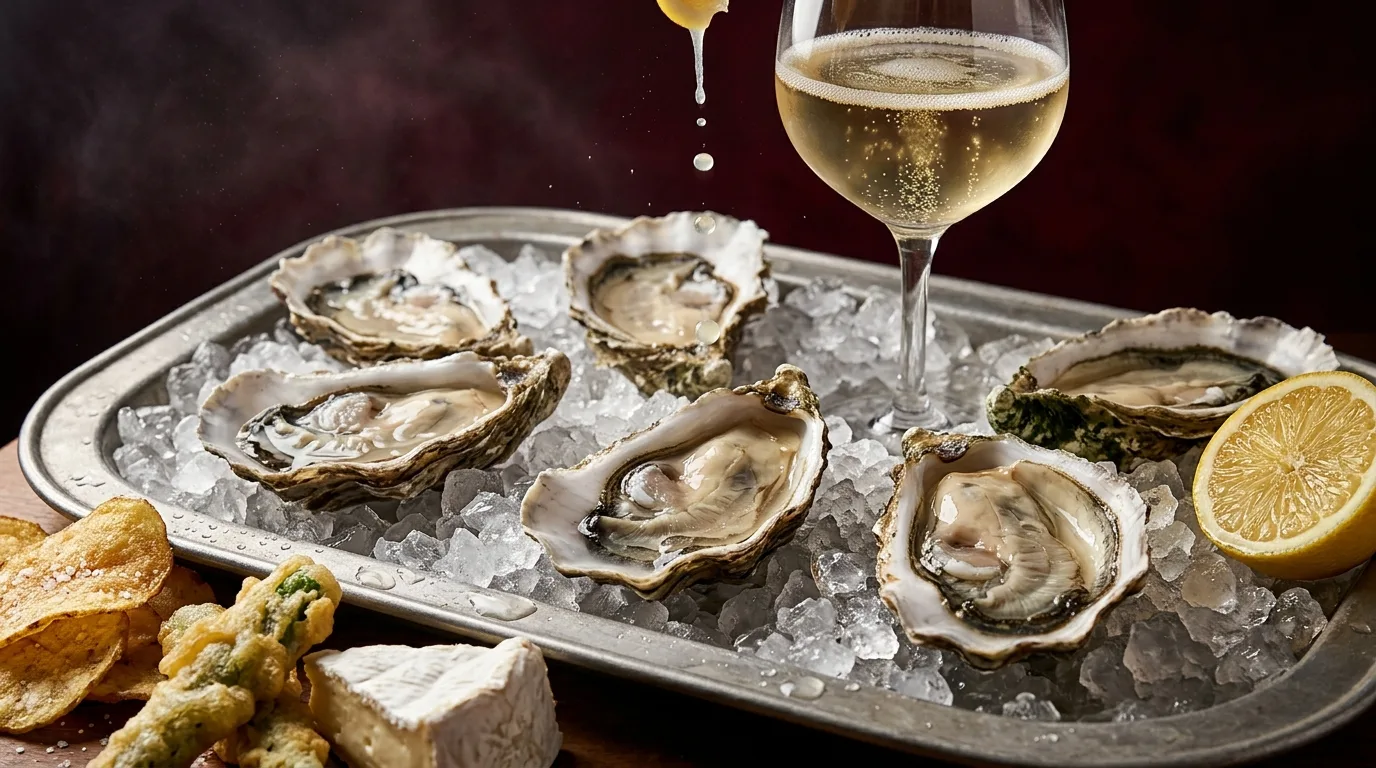
Fried food is the pairing people underrate. Potato chips, tempura, salt and vinegar anything, and fried chicken all sit brilliantly next to a lean sparkling wine, and it's a much better use of a good bottle than saving it for a toast where nobody tastes it. We wrote about wine with fried chicken separately because the match is more reliable than it sounds. Soft cheese and a blanc de blancs also work well, though blue cheese fights it, and our wine and cheese pairing guide sorts out which end of the cheese board to aim at.
Choosing one comes down to two questions and neither is about the grape. First, check the sweetness word, because a blanc de blancs labelled demi-sec is a completely different drink from one labelled brut. Second, decide how much structure you want, since a Cremant or a Cava in this style costs a fraction of Champagne and delivers the same clean, citrus-driven shape without the depth that comes from long lees ageing. If you want that depth, Champagne is where you pay for it, and a bottle with a few years behind it is where the style makes its best case.
What the label can't do is tell you whether this particular bottle suits you, and that gap is the whole reason people stand in front of a sparkling shelf for ten minutes. That moment is what Sommy's Label Scan is built for, because you can point your phone at a bottle or a whole shelf and get a read on it against your own taste rather than against a general description of the style. It's most useful when four bottles all carry the same French phrase and nothing on the front tells you which one is for you.
Common questions about blanc de blancs
Is blanc de blancs always Champagne?
No, and plenty of it isn't. Champagne is the most famous source, but Cremant from other French regions, Cava from Spain, English sparkling wine and bottles from California, Oregon and Australia all use the term. It only means Champagne when the word Champagne also appears on the label.
Is blanc de blancs sweet or dry?
The term says nothing about sweetness at all. Look for brut, extra brut, extra dry or demi-sec elsewhere on the label, since those words carry the sugar levels. Most blanc de blancs you'll meet are labelled brut, which means under 12 grams of sugar per liter and reads as dry.
Is blanc de blancs better than blanc de noirs?
Neither is better, and both terms describe a style rather than a quality tier. Blanc de blancs tends to be leaner and more citrus-driven, blanc de noirs tends to be broader with more red-fruit character, and which one you prefer depends on your own palate and what you're eating.
Why is blanc de blancs more expensive?
It often is in Champagne, mostly because Chardonnay covers less of the region than dark-skinned grapes do and the best Chardonnay sites in the Cote des Blancs command high prices. Outside Champagne the premium largely disappears, and a Cremant or Cava blanc de blancs sits at ordinary sparkling wine money.
What is the difference between blanc de blancs and Chardonnay?
Bubbles, in most cases. A bottle labelled Chardonnay is usually a still wine made from the grape, while blanc de blancs is a sparkling wine made only from white grapes and normally that same Chardonnay. The grape can be identical and the wine is a different drink.
How long can you keep a blanc de blancs?
Longer than most people assume, since the high acidity that makes these wines feel lean when young is also what carries them. A good Champagne in this style will usually improve for several years, picking up toast and almond, while an inexpensive Cava or Cremant is built to drink now.
What to check next time you see it on a bottle
Blanc de blancs answers one question and one question only, which is what kind of grape went into the wine. That answer is genuinely useful, because white grapes push a sparkling wine toward citrus, apple and a lean finish while dark grapes push it toward berries and body. Read the sweetness word next, since that decides more about the drink than the grape does, and then look at where the bottle came from, because a Cava, a Cremant and a Champagne with the same phrase on the front sit at three different prices for real reasons. Everything after that is producer style and your own taste, and no label prints either of those.