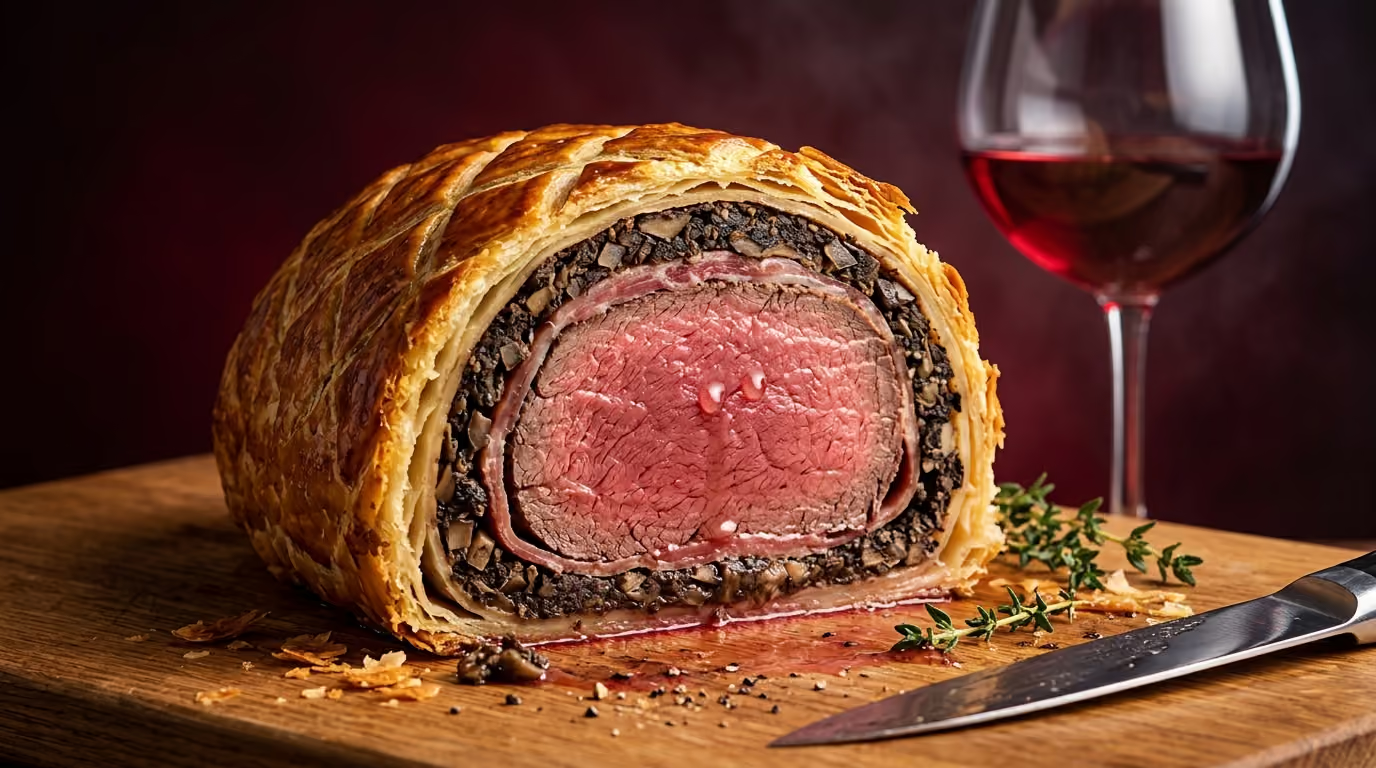

You're standing in a wine shop or staring at a restaurant list. Dinner is beef tenderloin, and suddenly the easy part is over. The wine choice feels loaded because tenderloin sounds fancy, and nobody wants to pick the wrong bottle.
Relax.
Wine pairing with beef tenderloin is much easier than people make it sound. The fastest way to get it right is simple: don't focus only on the meat. Focus on the sauce, seasoning, and sides.
Choosing Wine for Beef Tenderloin Without Stress
A lot of people treat beef tenderloin like a test. Special dinner, special bottle, high stakes. You want something good, but the wine aisle starts throwing names and regions at you, and now you're worried about wasting money or disappointing your guests.
That stress is normal.
Beef tenderloin often shows up on nights that already carry pressure. Date night. Holiday dinner. Parents visiting. A meal where you want things to feel polished. So when someone says, “What wine should we open?” it can feel bigger than it should.
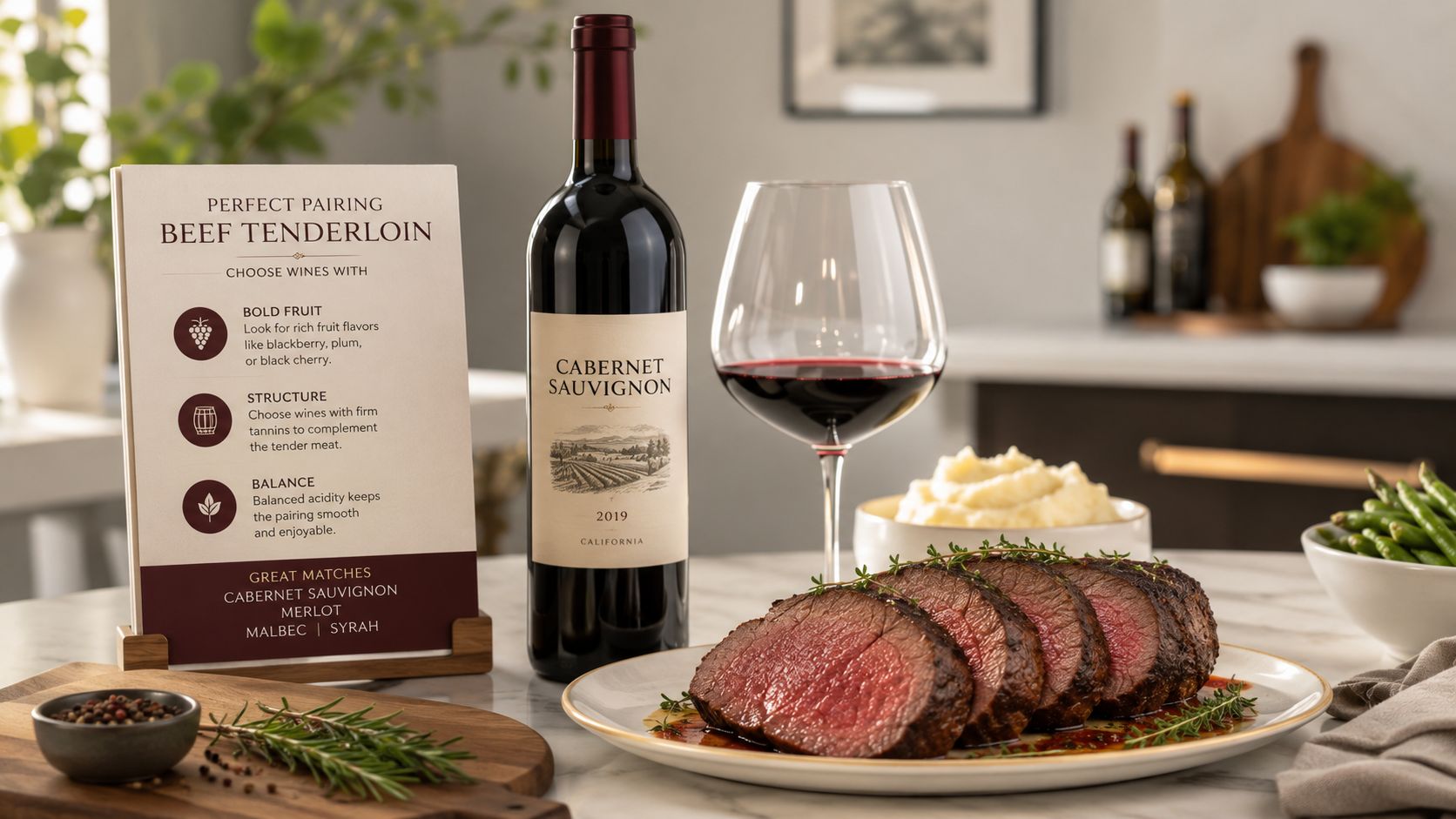
Start with the plate, not the label
Most guides make the decision harder by throwing out a generic red wine list. Cabernet. Bordeaux. Syrah. Pinot Noir. That's not useless, but it skips the fundamental question.
What's on the plate tonight?
- Plain roasted tenderloin needs a different wine than pepper-crusted tenderloin.
- Mushroom sauce points you one way.
- Béarnaise or hollandaise points you another.
- Tomato-based or olive-heavy sides can change the answer completely.
Practical rule: If you know the sauce, you're already most of the way to a good choice.
That's why wine feels confusing. People think they need wine knowledge, but what they really need is a decision rule. If you want a calmer way to think about it, Sommy's guide on how to choose wine is a useful starting point.
The goal isn't perfection
You don't need the one magical bottle. You need a wine that makes dinner taste better and makes you feel confident serving it.
That's a much easier target.
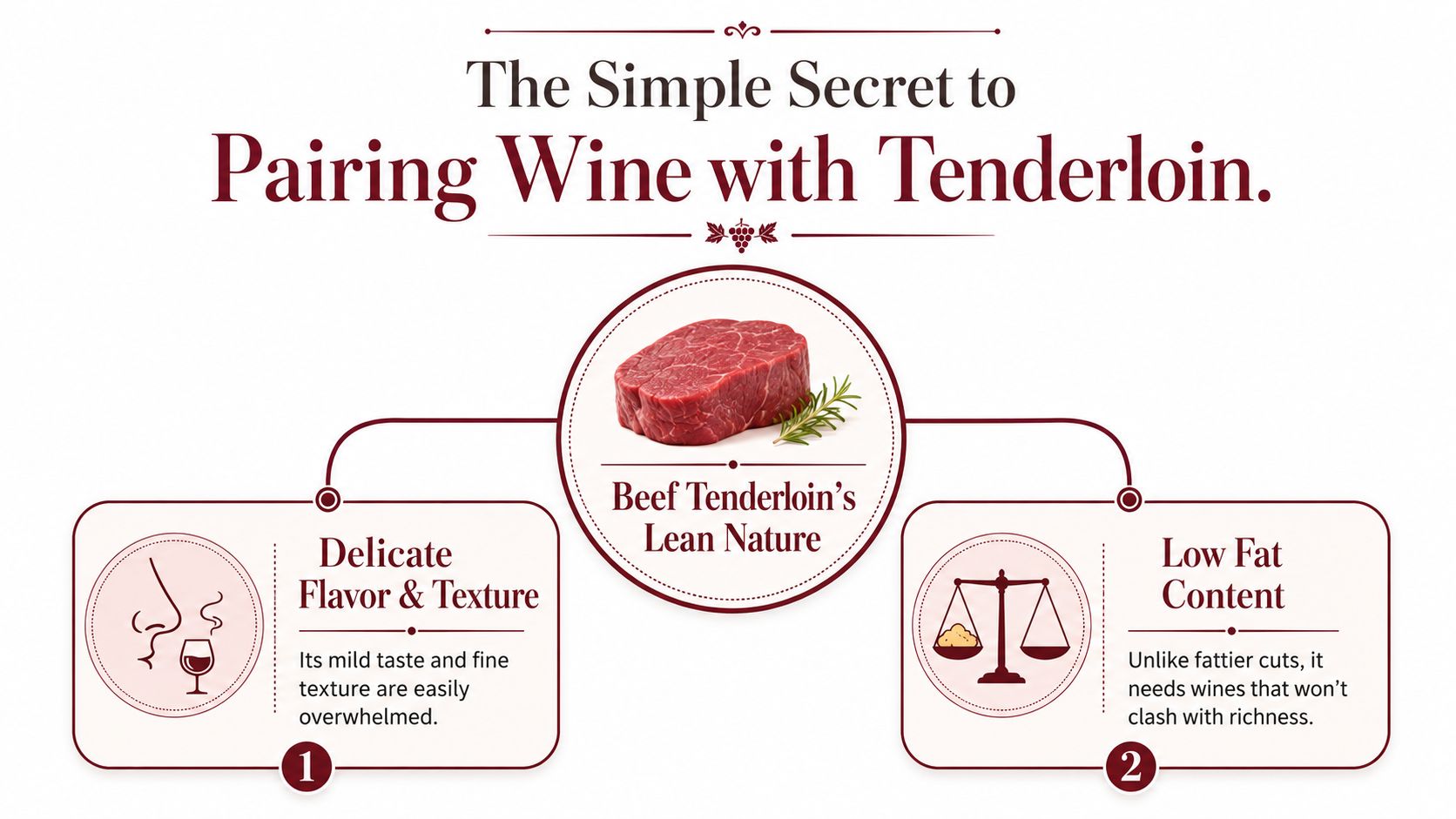
The Simple Secret to Pairing Wine with Tenderloin
Beef tenderloin is leaner and less flavorful than fattier steaks, so it usually works better with wines that have softer, more mellow tannins.
Why big red wines can miss the mark
People hear “beef” and reach for the biggest bottle they can find. That works better for fattier cuts like prime rib. Tenderloin is different.
It's elegant. Tender. Less rich on its own.
A very aggressive red can flatten the whole meal. The wine starts shouting, and the food disappears. You want some structure, yes, but not a wine that dries out your mouth and makes the meat seem dull.
Tenderloin needs balance, not brute force.
Your easiest decision filter
Use this quick filter when you're choosing:
- If the tenderloin is simple, pick a red with a smoother feel.
- If the sauce is rich or intense, let the sauce lead the pairing.
- If the wine seems young and hard-edged, skip it.
- If you're unsure, choose a softer red over a harsher one.
That's the whole idea.
What “balance” looks like in real life
Think of the wine as support, not the star. Good wine pairing with beef tenderloin should do three things:
- Add shape to the meal without overpowering it
- Handle the protein without turning harsh
- Fit the preparation, especially the sauce
Once you understand that, a lot of bad choices fall away on their own. The biggest, youngest, most intense bottle is usually not the smartest move here.
Your Go-To Red Wine List for Beef Tenderloin
You don't need a huge master list. You need a short set of reliable answers you can use.
Go with mature Bordeaux-style reds first
If you want the safest classic move, choose a Bordeaux blend, especially one in the Saint-Émilion or Pomerol style. Those are well-known examples for tenderloin, and they fit the cut because they tend to feel more integrated and less aggressive than a huge young red.
Older bottles are often a smart pick because softened tannins are helpful here. Avenue des Vins also points to classic options such as red Burgundy, a ten-year-old Morgon or Moulin-à-Vent from Beaujolais, and Châteauneuf-du-Pape for a peppery sauce in its tenderloin guide at Avenue des Vins.
If you're scanning a shelf and need the practical version, look for:
- Bordeaux blend for classic roast tenderloin
- Saint-Émilion or Pomerol when you want a polished, traditional feel
- Merlot-led red if you want something softer and easy to like
Pick Pinot Noir for a gentler dinner
Pinot Noir is a strong choice when the preparation is simple, delicate, or earthy.
Think:
- roast tenderloin with herbs
- mushroom side dishes
- lighter seasoning
- dinner where you want the wine to feel graceful, not heavy
Pinot Noir is also one of the easiest answers when you know you don't want a dense, forceful red.
Best bet: If the meal feels elegant rather than rich, Pinot Noir is usually a better call than Cabernet Sauvignon.
Use Syrah when pepper or char is involved
Syrah earns its place when the tenderloin has stronger seasoning. Pepper crust, grilled edges, or olive-based flavors all make Syrah more useful.
That's because it can handle savory intensity without always feeling too hard for the meat. It's a better fit than many people expect.
A short list you can actually shop from
If you want a simple store or restaurant cheat sheet, use this:
- For classic tenderloin dinner
Ask for a Bordeaux blend or a softer Merlot-led red. - For delicate or mushroom-based plates
Order Pinot Noir or red Burgundy. - For peppered or grilled tenderloin
Choose Syrah or Châteauneuf-du-Pape. - For a fruitier red
Try Morgon or Moulin-à-Vent with some bottle age.
If you usually default to Cabernet and want help thinking beyond that habit, Sommy's article on Cabernet wines best for different moments is a helpful next read.
Match the Wine to Your Sauce Not Just the Meat
Here's the rule that saves people from bad pairings: the sauce matters more than the steak. Wine Spectator puts it plainly: “it's not the steak, it's the sauce that really matters”, and gives examples such as white Burgundy or oaked Chardonnay with Béarnaise, Syrah with olive tapenade, and Chianti with tomato-based preparations in its steak pairing advice.
That's the smartest way to approach wine pairing with beef tenderloin because tenderloin itself is mild compared with what often lands on top of it.
Quick Pairing Guide Based on Sauce
| Sauce or Flavor Profile | Try This Wine Style |
|---|---|
| Béarnaise or hollandaise | White Burgundy or oaked Chardonnay |
| Mushroom sauce | Pinot Noir |
| Pepper sauce or au poivre | Châteauneuf-du-Pape or ruby Port |
| Tomato-based sauce | Sangiovese or Chianti |
| Olive tapenade or puttanesca-style flavors | Syrah |
| Simply roasted with light seasoning | Bordeaux blend or Merlot-led red |
A better way to think at the table
Don't ask, “What goes with beef?”
Ask, “What tastes strongest on the plate?”
That shift fixes most pairing mistakes.
A tenderloin with Béarnaise doesn't behave like a tenderloin with pepper sauce. A tomato-led plate doesn't want the same wine as a butter-led one. If your sides are loud, they count too. Creamy potatoes, mushrooms, tomatoes, olives, herbs, and pepper all push the pairing in a direction.
Three common dinner scenarios
- Restaurant filet with Béarnaise and fries
Skip the automatic Cabernet. A white Burgundy or oaked Chardonnay makes more sense than many reds. - Holiday tenderloin with mushroom sauce and potatoes
Go with Pinot Noir. It fits the earthiness and won't bully the meat. - Pepper-crusted tenderloin with a bold pan sauce
Reach for Syrah or Châteauneuf-du-Pape.
When the sauce changes, the answer changes.
If you want more examples like that, Sommy's guide on how to match wine with food keeps the thinking simple.
Can You Pair White Wine or Rosé with Tenderloin
Yes. Absolutely.
The “red wine only” rule is too rigid for beef tenderloin, especially because tenderloin is a leaner cut. Some wine professionals now recommend options like rosé Champagne and Alsatian Riesling for leaner beef, arguing that acidity and freshness can work better than heavy tannin when the meat is tender and not heavily marbled, as noted by Crystal Palate's beef tenderloin pairing discussion.

When white or sparkling makes more sense
White wine isn't a stunt pairing here. It can be the better pairing.
Choose it when the plate leans buttery, creamy, or lighter in seasoning. That's especially true with sauces like Béarnaise, hollandaise, or beurre blanc.
Good options include:
- White Burgundy
- Oaked Chardonnay
- Meursault with richer preparations
- Rosé Champagne
- Alsatian Riesling
A lot of people enjoy these pairings more because they feel fresher and less heavy through the meal.
If you've ever wondered why some wines feel bright and energizing while others feel dense, Sommy's plain-English piece on what acidity in wine means is useful.
A quick visual can help if you want to see how people think about non-red pairings in practice.
If you already know you prefer white
Then order white.
You're not breaking a rule. You're choosing a pairing that can fit a lean cut very well. The only mistake is choosing something too delicate. Go for whites and sparkling wines with enough body, texture, or energy to stay present next to the meal.
How to Ask for the Perfect Bottle
Knowing what to say matters almost as much as knowing what to order. You don't need fancy language. Short, clear requests work better.
Use one of these simple scripts
- At a restaurant
“We're having the beef tenderloin with mushroom sauce. I'd like a Pinot Noir or something similar.” - If the dish has Béarnaise
“I'm open to white. Do you have a white Burgundy or an oaked Chardonnay that works with this?” - At a wine shop
“I need a bottle for beef tenderloin. The sauce is peppery, so I want something with flavor but not too harsh.”
The more clearly you describe the sauce, the easier it is for someone to help you.
If wine lists still make you freeze, Sommy's article on how to read a wine list can make that moment feel much less intimidating.
The good news is that you don't need to sound like a wine expert. You just need one calm sentence and a basic direction.
If you want help choosing wine in the moment, Sommy.ai is built for exactly this kind of decision. It helps you match a bottle to your meal, taste, and budget without overthinking it, so you can stop guessing and feel good about what you order.