
The best Cabernet Sauvignon is simply the one that tastes good to you right now. Finding it comes down to one easy question: are you in the mood for a bold, fruity wine or something more savory and complex? Answering that is the only "expert" knowledge you need to confidently choose a bottle you’ll love, whether you’re at a restaurant or in a busy wine aisle.
Your Simple Guide to Choosing Cabernet
Standing in front of a wall of wine bottles can be overwhelming. That feeling of not wanting to choose the "wrong" one is completely normal, but you don't need to know about regions or winemaking to pick a great Cabernet. The goal is to feel relieved, not stressed.
Let’s keep it simple. Think of Cabernet Sauvignon as having two main personalities. Your only job is to decide which one sounds better for your mood.
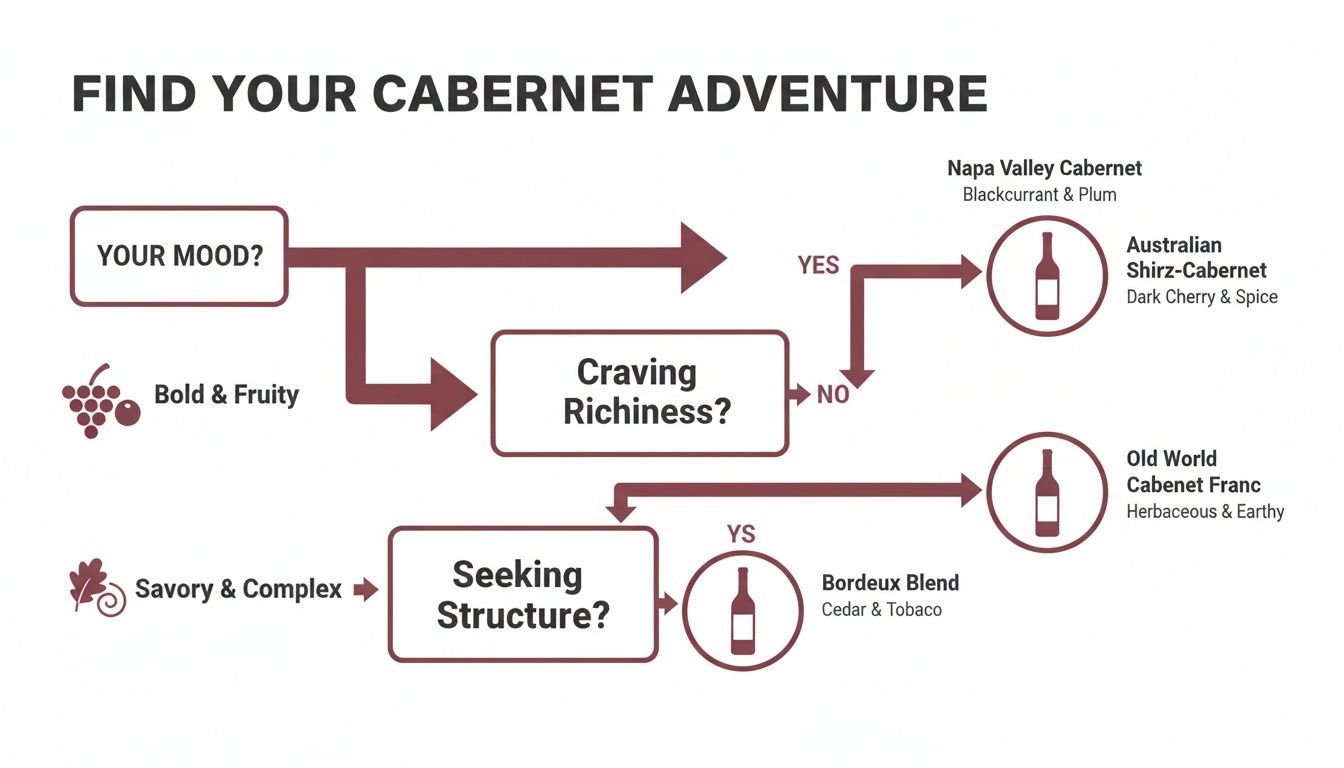
This flowchart shows how your preference is the clearest path to the right bottle, guiding you toward a style that matches what you actually want to drink.
It’s not about memorizing facts; it's about knowing what you like.
The Two Personalities of Cabernet
Let's break down the two styles in simple terms. This is all you really need to know.
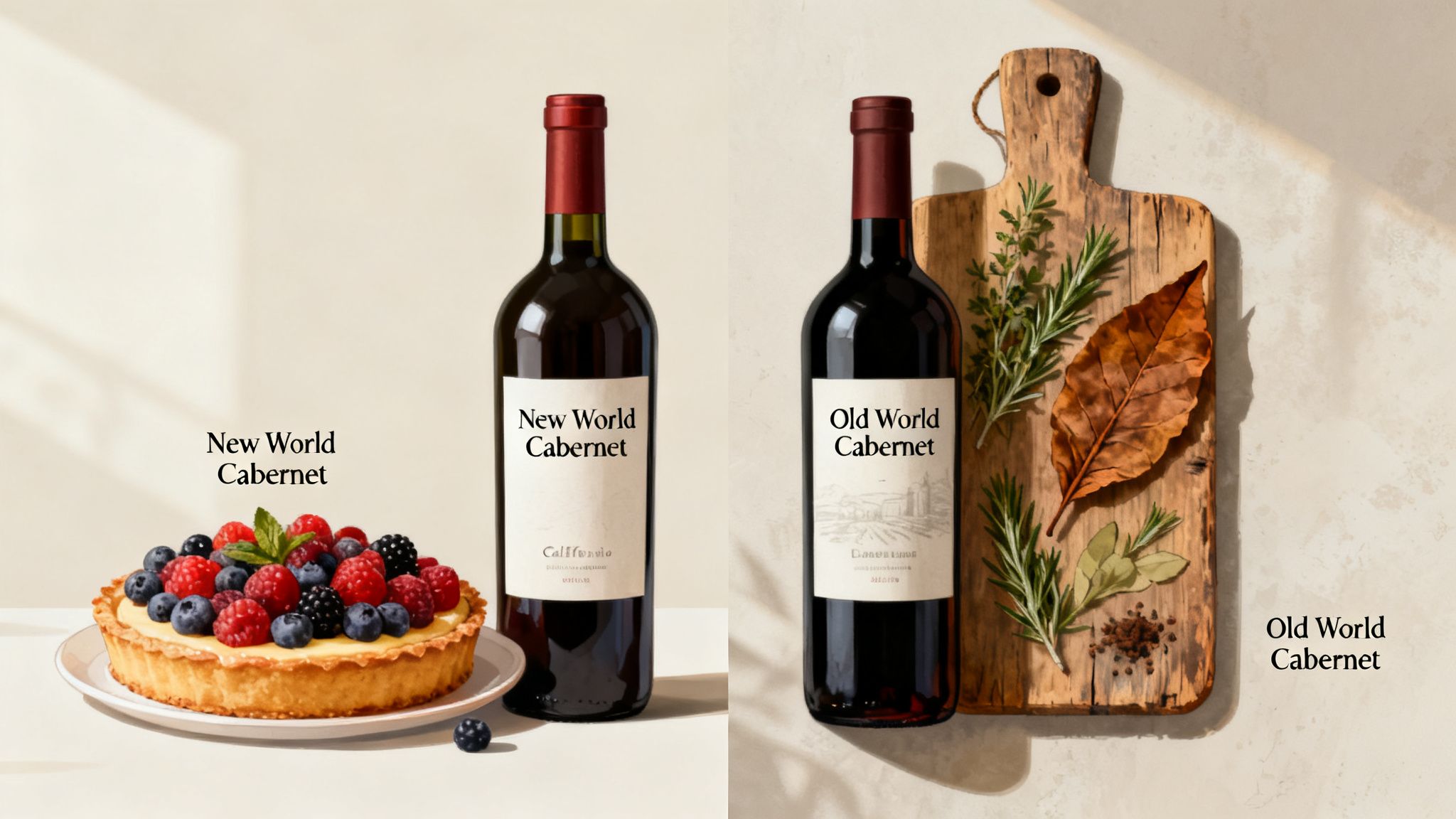
- Bold & Fruity: Think of a warm berry pie. These Cabernets are full of rich, ripe fruit flavors like blackberry, dark cherry, and plum. They feel smooth and are easy to enjoy, perfect for when you want a wine that is simply delicious.
- Savory & Complex: These are more like a sophisticated, earthy dish. Instead of fruit, you might notice flavors of tobacco, leather, dried herbs, or dark chocolate. They feel more structured, making them a great choice when you want a wine that makes you think a little.
Just by deciding which profile sounds better, you’ve made the decision much easier. This simple framework gives you a clear idea of what to look for. If you want help identifying your preferences, you can build your personal wine profile without any fancy jargon.
A Quick Cheat Sheet for Cabernet Styles
This table connects your taste preferences to a style, making it even easier to find the right Cabernet for any occasion.
| Style Profile | Common Flavors | You Might Like This If You Prefer... | Often From |
|---|---|---|---|
| Bold & Fruity | Blackberry, plum, dark cherry, vanilla, mocha | Smooth, rich textures and straightforward, juicy flavors | Napa Valley, Paso Robles (California), Australia, Argentina |
| Savory & Complex | Blackcurrant, tobacco leaf, cedar, graphite, bell pepper | Earthy, herbal notes and a more structured, tannic feel | Bordeaux (France), Washington State, Tuscany (Italy) |
Whether you want something jammy or something earthy, this guide points you in the right direction without getting lost in the details.
The best Cabernet isn't the most expensive one. It's the one that confidently answers the question, "What do I feel like drinking tonight?"
This shift in thinking is liberating. It removes the pressure to know everything and puts the focus back on your enjoyment. This is exactly the kind of in-the-moment decision Sommy helps with, using your preferences to recommend the perfect bottle every time.
Understand Cabernet Styles Without the Jargon
To find a Cabernet you'll love, you don’t need a wine dictionary. Just think of it as having two "personalities." One is like a warm, juicy fruit pie; the other is more like a savory, earthy dish.
Figuring out which of those two styles you’re in the mood for is the secret to choosing a bottle with confidence. Let's use simple analogies to make sense of what's inside the bottle, turning an overwhelming wine list into a set of clear choices.
The Two Personalities of Cabernet
Think of these styles as two different playlists. One is upbeat and crowd-pleasing, while the other is more mellow and atmospheric. Your only job is to decide on the vibe you want.
Style One: The Bold and Fruity Crowd-Pleaser
This is the Cabernet that’s open, friendly, and bursting with rich fruit flavors you can easily recognize.
- What it tastes like: Imagine blackberry jam, black cherry, and plum. You might also notice hints of vanilla or mocha from the oak barrels where it was aged.
- How it feels: These wines are often described as smooth, lush, or full-bodied. They have a satisfying richness that makes them easy to enjoy.
- Simple analogy: This style is like a perfectly cooked, juicy burger. It’s straightforward, satisfying, and always a hit.
Style Two: The Savory and Earthy Thinker
This Cabernet is more reserved, offering a deeper, more layered experience that makes you think.
- What it tastes like: The flavors are savory and earthy. You might notice notes of tobacco, cedar, dried herbs, or even dark chocolate and graphite.
- How it feels: These wines often feel more structured and elegant. They typically have more noticeable tannins—that slightly drying sensation in your mouth that pairs so well with rich foods.
- Simple analogy: Think of this style as a slow-cooked beef stew. It’s complex, comforting, and has layers of flavor.
Your preference isn't right or wrong—it's just your taste. Knowing whether you prefer a "fruit pie" or an "earthy dish" is the most powerful information you can have.
This simple distinction helps you describe what you enjoy and turns a stressful choice into a confident one. If you enjoy richer red wines, you might also want to explore our guide on other bold red wines.
Sommy is designed to help with these choices, learning your unique taste to recommend the perfect bottle every time.
How to Choose at the Store or a Restaurant
This is where the decision happens. Whether you’re in a crowded wine shop or staring at a restaurant menu, that feeling of pressure is normal. But choosing a great Cabernet doesn't have to be a guessing game. A few simple steps can turn anxiety into a quick, confident choice.
The goal is to feel empowered, not overwhelmed. Let's walk through what to do in both situations.
A 3-Step Plan for the Wine Store
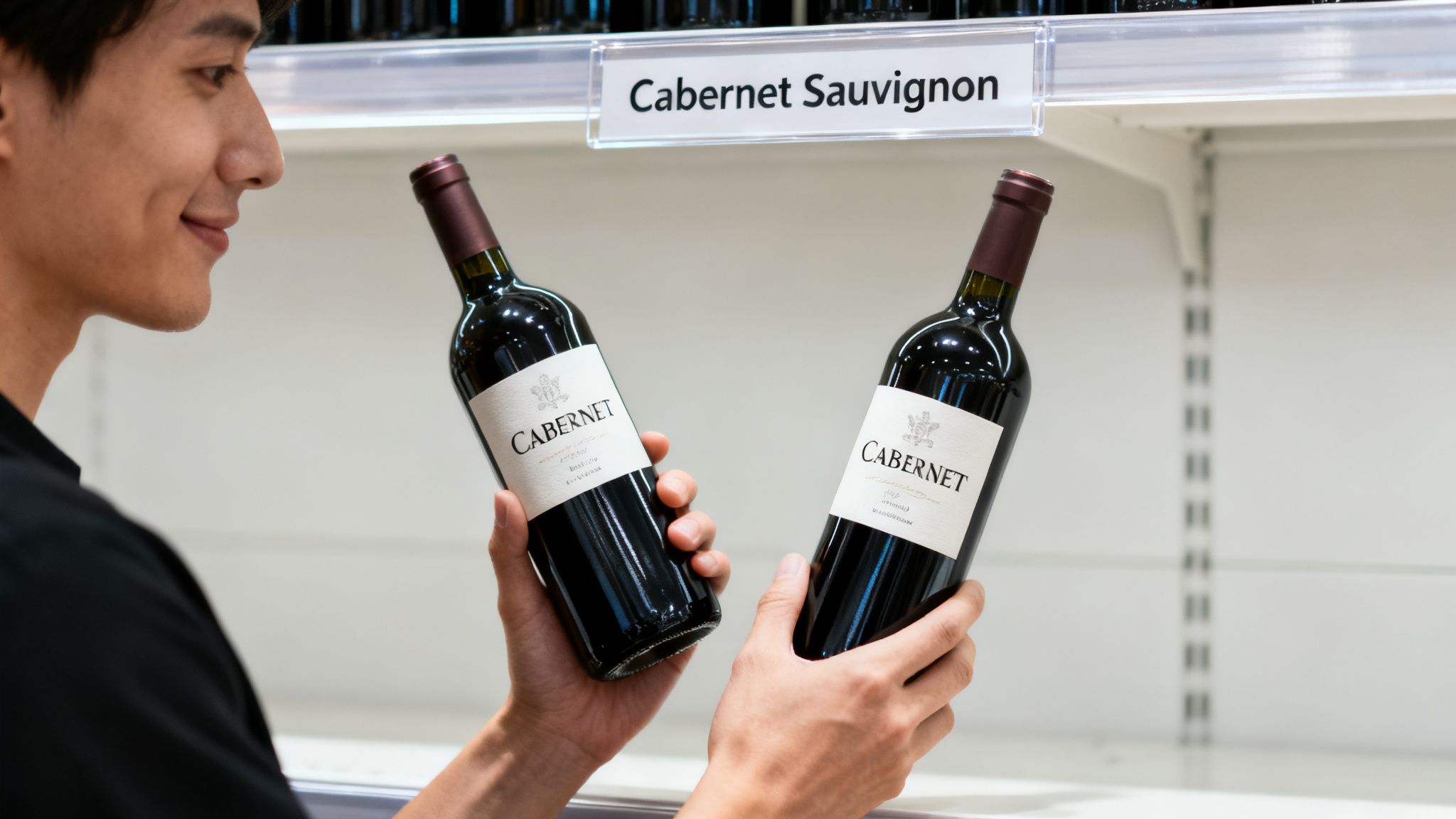
That wall of bottles can feel intimidating, but finding a great Cabernet is simpler than it looks.
- Set Your Budget: Decide what you're willing to spend before you start looking. This one move instantly narrows the field and makes the decision manageable. A price in mind is the fastest way to filter the noise.
- Pick Your Style: Think back to the two personalities. Are you in the mood for something bold and fruity, or something more savory and complex? This decision points you to the right section of the aisle.
- Look for Clues on the Label: You don't need to be an expert to get useful info from the bottle. If you want that big, fruit-forward style, a label that says "Napa Valley" or "Paso Robles" is a great clue. Leaning toward savory and earthy? "Bordeaux" or "Washington State" can point you in the right direction. For a quick refresher, see our guide on how to read wine labels.
This process takes the guesswork out of it. You’re making a deliberate choice based on what you actually like.
How to Order Confidently at a Restaurant
Ordering wine at a restaurant can feel like a performance, but it doesn't have to be. The secret is to communicate your preferences.
Your server or sommelier wants to help you find a winner. A little bit of information goes a long way.
Your Goal: Give the server just enough information to be your personal wine shopper for 30 seconds. A simple description of your taste is all they need.
Here are a few lines you can use:
- "I'm looking for a smooth, full-bodied Cabernet that's not too dry."
- "We're having the steak, so I’d love a big, bold Cabernet to go with it."
- "I usually enjoy Cabernets from California. Do you have anything similar?"
- "Could you recommend a Cabernet that’s more on the earthy and savory side?"
These sentences are clear and confident. They give the server everything they need to point you toward a great option, making the final decision quick and painless.
This is exactly the kind of decision Sommy was built for. Instead of asking for help, you can discreetly scan the wine list with your phone. Sommy learns your taste and can instantly suggest the cabernet wines best suited to your palate, giving you a quiet, confident recommendation so you never have to guess again.
How Price Relates to Cabernet Quality
Does a higher price tag mean a better Cabernet? Not at all. The price on a bottle often has more to do with the cost of oak barrels or a famous region than how much you’ll actually enjoy drinking it.
None of those factors guarantee the wine inside is a perfect match for your palate. Sometimes, the best bottle for dinner is a bright, fruity $20 Cabernet, not a complex $100 bottle meant to be aged for another decade.
What to Expect at Different Price Points
Think of price as a guide to a wine's style, not a rule of quality. This mindset helps you spend wisely. Here’s a simple breakdown of what you can generally expect.
- Under $25: These Cabernets are all about immediate enjoyment. They’re typically bright, fruity, and made to be opened and loved right away. You’ll find tons of delicious, crowd-pleasing wines in this range.
- $25 to $50: In this sweet spot, you start to see more complexity. The wines might have spent more time in oak, picking up hints of vanilla, spice, or cedar. They often have a richer texture.
- Over $50: These are often "special occasion" bottles built to age, meaning their flavors will soften and evolve over time. You'll find powerful, structured wines from top-tier vineyards.
The key is to match the price point to the occasion. A high price doesn't make a wine better; it just makes it different. You can find some of the best value at your local store. Our guide to the best grocery store wines can help you spot hidden gems.
Why 'Best' Is About Your Taste, Not Your Wallet
The global appetite for Cabernet Sauvignon is massive. The market was valued at approximately $320.3 billion and is expected to keep growing. This growth is driven by people wanting enjoyable wines for all sorts of occasions, not just expensive collector bottles. You can discover more insights about the global Cabernet market on GlobeNewswire.
The smartest way to approach price is to see it as an indicator of style, not a measure of enjoyment. The best value is always the wine you love at a price you feel good about.
Ultimately, the goal is to feel confident you’re making a great choice for you. Whether you’re spending $15 or $150, the "best" Cabernet is the one that brings you the most enjoyment. This is where Sommy comes in, recommending bottles that fit both your taste and your budget.
A Smarter Way to Choose Your Next Cabernet
Trying to remember all the different regions and styles in a crowded wine aisle is stressful. It can feel like a pop quiz you didn’t study for.
But what if you had a quiet assistant who already knew what you liked?
That’s Sommy. Think of it as your personal wine decision assistant—a tool that learns your unique taste and does the heavy lifting, so you only have to remember what you enjoy drinking.
Your Personal Taste Profile
Sommy works by building a personal taste profile just for you. It quickly learns whether you prefer big, fruity Cabs from California or something more savory and earthy.
This profile becomes your guide, filtering out all the irrelevant bottles. Instead of guessing, you get a calm, confident suggestion tailored to what you already love. It's a much smarter way to find the cabernet wines best suited to you.
The best tool isn't a perfect memory; it's one that removes the need to memorize anything at all. Sommy remembers your preferences so you can focus on enjoying the moment.
How It Works in the Real World
Picture yourself at a restaurant with a long wine list. Instead of feeling that familiar anxiety, you just use Sommy to scan it. Instantly, it highlights the top Cabernets that are a perfect match for your taste and budget. No guesswork, no awkward conversations—just a great pick.
This is the kind of in-the-moment problem Sommy was built to solve. It gets right to the heart of the issue: the fear of choosing wrong. The process is simple:
- Scan: Point your phone at any wine list, menu, or store shelf.
- Match: Sommy cross-references the options with your personal taste profile.
- Choose: You get a short, clear list of recommendations picked just for you.
This simple system removes the friction, turning a stressful choice into an easy one. It’s a practical tool for anyone who wants to drink better wine without becoming an expert.
Curious about how it works? You can learn how AI taste profiles create personalized wine picks.
By focusing on what you personally enjoy, Sommy gives you the power to choose with confidence every single time.
Perfect Pairings Made Simple
You don't need a complicated chart to pair food with Cabernet. There's just one rule to remember: bold wine loves bold food. That’s it. Get that one idea down, and you can make confident choices every time.
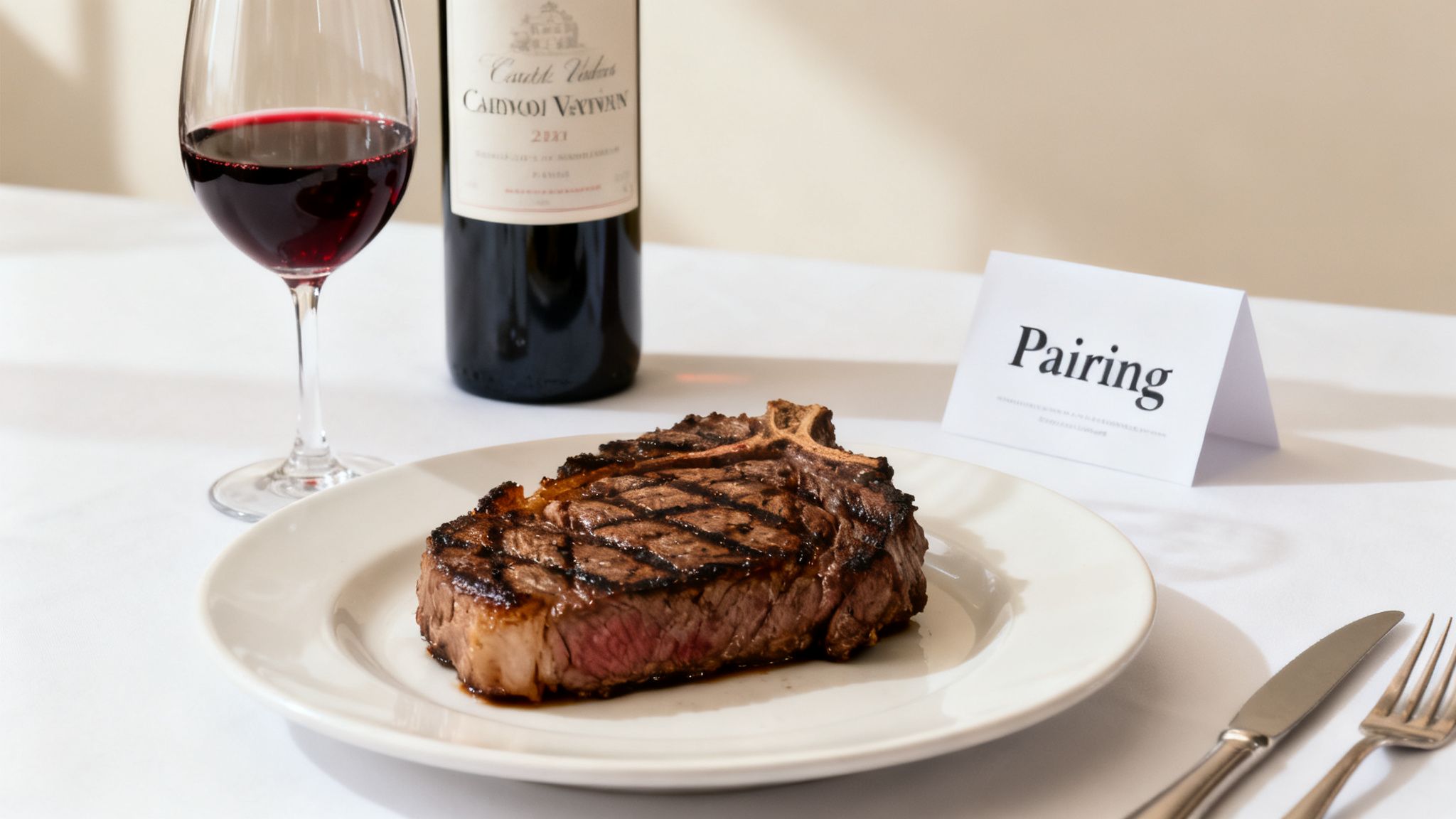
Cabernet Sauvignon is a big, structured wine, so it's a natural fit for flavorful, hearty dishes. The proteins and fats in food like grilled steak or rich pasta soften the wine’s tannins—that slightly grippy feeling in your mouth. This makes the Cabernet taste even smoother.
Why It Just Works
Think of it like this: a powerful wine will talk over a delicate dish. Cabernet needs a partner that can stand up to its bold personality.
Simple, satisfying pairings are your best bet:
- Grilled Meats: A T-bone steak, a juicy burger, or short ribs are a home run.
- Hearty Pastas: Any dish with a rich meat sauce will work beautifully.
- Roasted Vegetables: Think roasted Brussels sprouts, mushrooms, or eggplant.
- Hard Cheeses: Aged cheddar, Gouda, or Parmesan can easily hold their own.
By sticking to this one principle, you take the guesswork out of the equation. If your meal is big and savory, a Cabernet is a fantastic choice.
A Global Favorite for a Reason
This natural chemistry with bold food is a huge reason Cabernet Sauvignon is so popular. It’s grown on roughly 850,000 acres globally, making up about 5% of the world's total vineyard area. That massive footprint shows how well it adapts to different climates. You can dig into the numbers with this report from Wine Data Researcher.
Choosing a food pairing shouldn't add stress. Is the food rich and flavorful? If yes, a Cabernet is one of your safest and most delicious bets.
This practical approach lets you make great decisions on the fly. It's about finding a combination that tastes great to you, not about following stuffy rules. This is the kind of confident decision-making Sommy is designed to help with.
Your Cabernet Questions, Answered
A few questions always come up when you start exploring Cabernet Sauvignon. Here are straightforward answers to help you feel more confident next time you're picking a bottle.
What's the easiest way to know if a Cabernet is good?
The only real test is: "Do I like how this tastes?" Your enjoyment is the only metric that matters. Expert scores are just opinions. The fastest way to find the cabernet wines best for you is to trust your own palate. Just pay attention to whether you prefer fruitier or earthier flavors, and let that be your guide.
Should I worry about the year on the bottle?
For most Cabs you're buying to drink soon, the year—or vintage—isn't something to stress over. Good wineries work to make a consistent wine year after year. For a bottle you're opening this week, focusing on the style and region will get you much closer to a flavor you'll love.
Trust your taste, not the price tag. The best Cabernet is the one that fits your budget and makes you happy.
How do I describe the Cabernet I like?
You don’t need fancy wine jargon. Use simple, everyday words.
Try clear phrases like these:
- "I'm looking for a smooth, fruity Cabernet that's not too dry."
- "I’d love a big, bold red wine to go with my steak."
- "I usually enjoy California Cabernets. Can you recommend something similar?"
Mentioning a specific wine you've liked before is also incredibly helpful. It gives a clear picture of your preferences and helps them point you to a bottle you're almost guaranteed to enjoy.
Of course, finding the right words in the moment can still feel like pressure. This is exactly what Sommy was designed for. Instead of describing your taste, Sommy learns what you like and can scan any wine list to give you a quiet, confident recommendation in seconds. Find out how it can help you at https://www.sommy.ai.