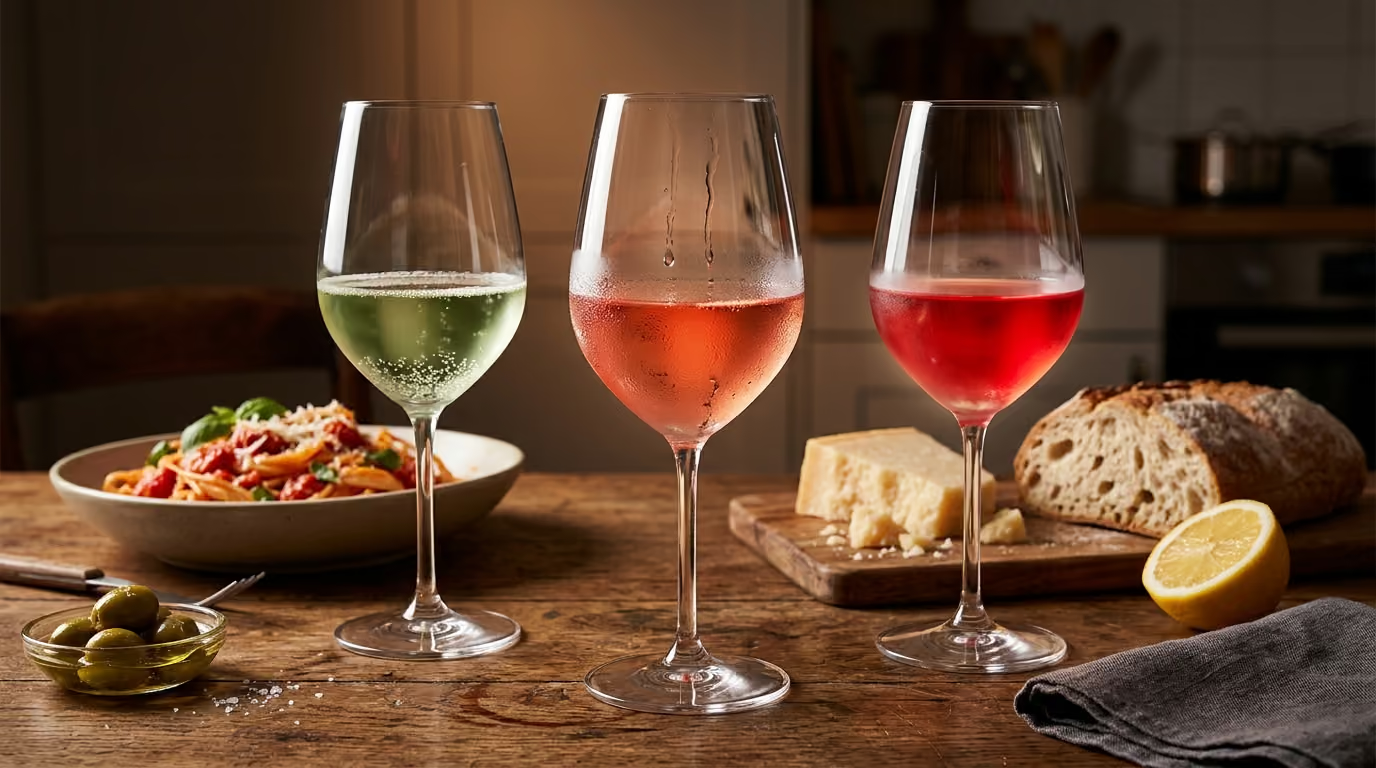
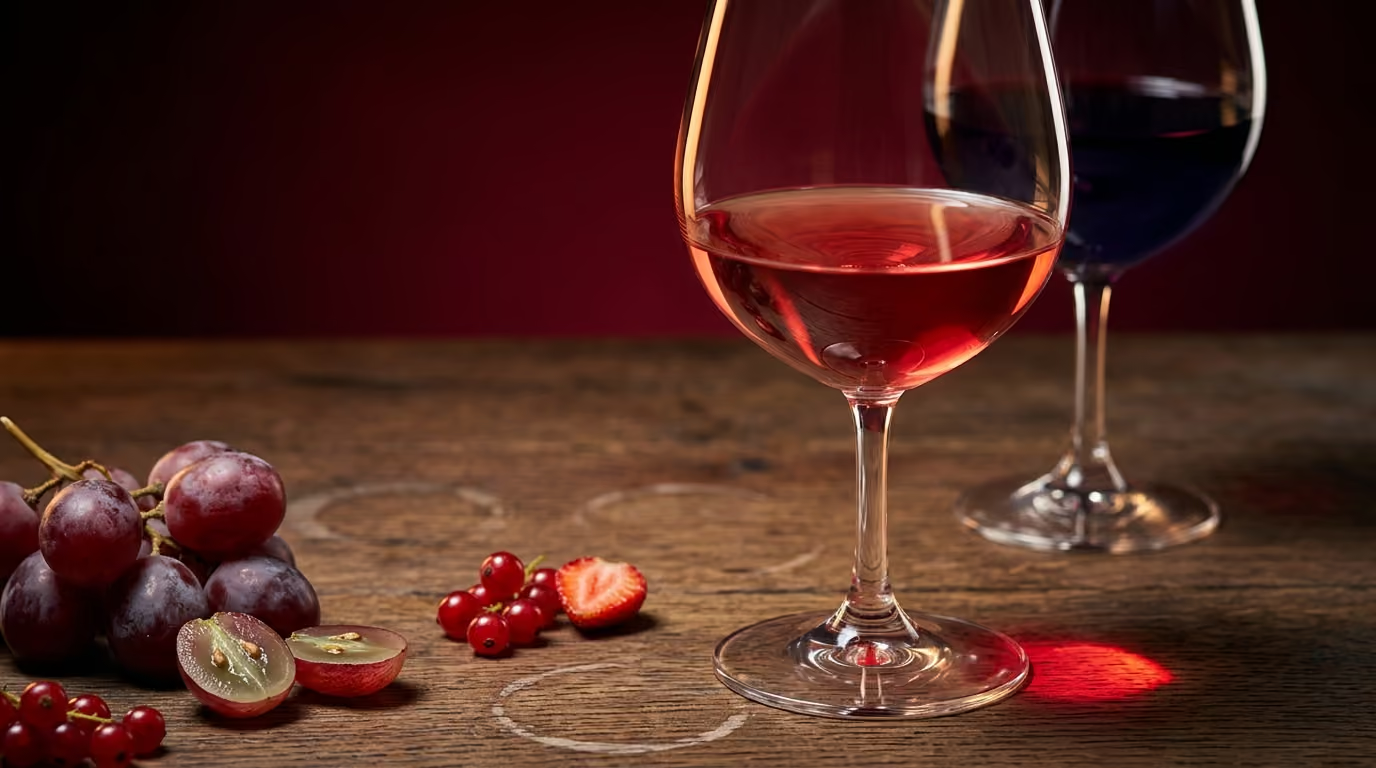
A light red wine is one that feels thin and mobile in your mouth rather than thick and coating, usually with low tannin, bright acidity and a translucent colour you can almost read through. Gamay, Pinot Noir, Schiava, Frappato and Cinsault are the classic examples. They're the reds to reach for if big Cabernet and Shiraz have always felt like too much work, and most of them are better with a slight chill on them.
The word doing the heavy lifting there is body, and it isn't a flavour. Body is the physical weight of the liquid, the difference between skim milk and cream, and it's the single most useful thing to understand about red wine if you've been buying by grape name and hoping.
What actually makes a red wine light?
Three things, and they mostly happen in the vineyard rather than the cellar. Thin-skinned grapes grown somewhere cool produce less colour, less tannin and less sugar, and less sugar at harvest means less alcohol after fermentation. Every one of those pushes toward a lighter wine.
Tannin is the biggest single lever. It's the compound from grape skins, seeds and oak that dries your gums the way strong tea does, and a light red has very little of it. That's why a light red rarely tastes harsh even when it's young, and why it doesn't need years in a cellar to become drinkable. Our explainer on what tannins actually do goes further if the sensation is new to you.
Alcohol is the second lever, because ethanol carries real viscosity and warmth. A red at 12% simply feels lighter across your tongue than the same wine at 15%, before you've considered a single flavour. Acidity is the third, and it works by contrast: a high-acid wine feels brisk and mobile, which reads as lighter even when the alcohol is identical.
What none of this means is weak, watery or lacking flavour. Some of the most aromatic reds made anywhere are light bodied, and a good Beaujolais can be more intensely perfumed than a Cabernet three times its weight. Light describes the texture rather than the intensity.
How can you tell a red is light before you open it?
Read the alcohol percentage, because it's the only number on the bottle that reliably tracks body, and it's on nearly every label. As a working rule, reds at 12.5% or below are usually light, 13% to 13.5% is the medium middle, and anything from 14% up is going to feel substantial. That single number will steer you better than the tasting notes on the back label.
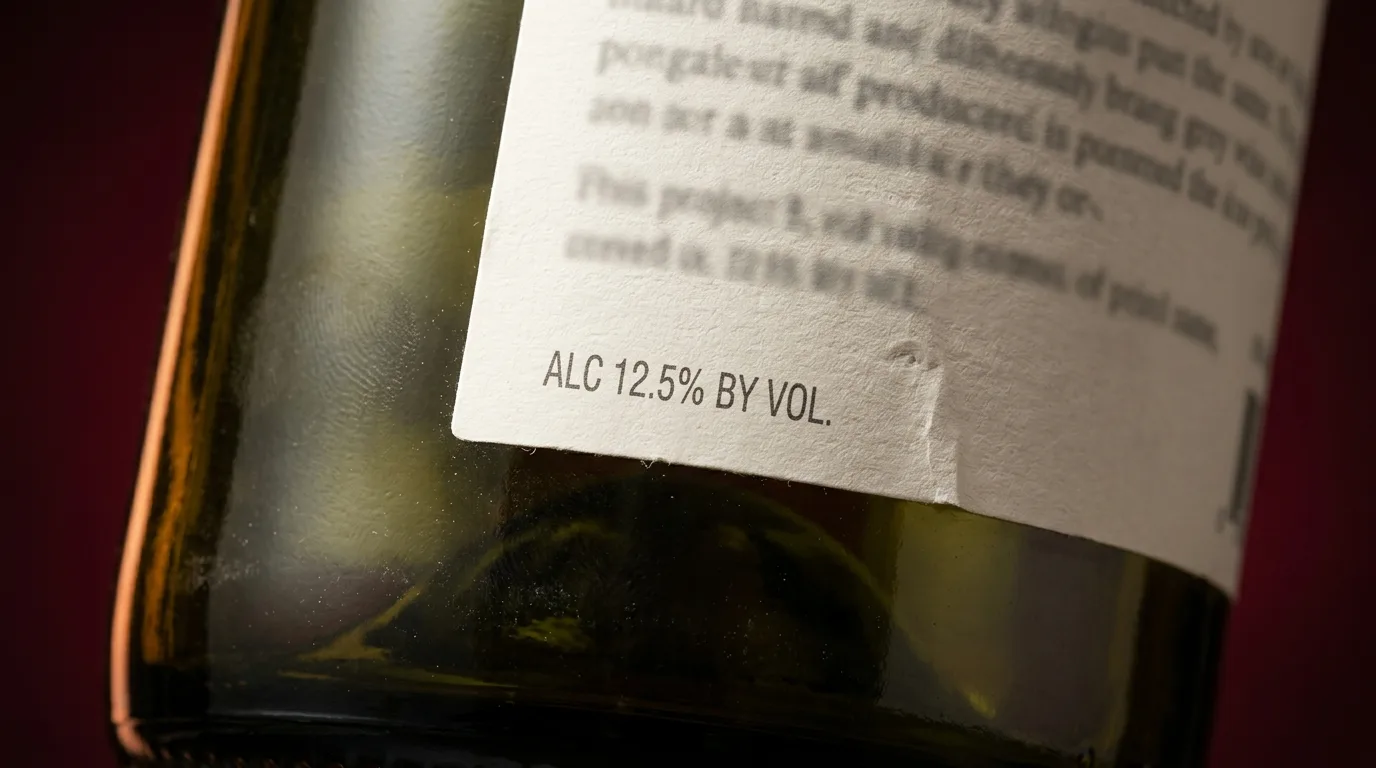
There's a catch worth knowing, and no page competing for this search seems to mention it. US labelling law doesn't require that number to be exact. Under 27 CFR 4.36, a stated alcohol percentage carries a tolerance of 1.5 percentage points either way for wines at 14% or below, and 1 percentage point for wines above 14%. So a bottle printed at 12.5% can legally contain anything from 11% to 14%, which covers most of the range between genuinely light and clearly medium. Producers can also state a range rather than a figure, up to 3 percentage points wide on wines at or under 14%.
The same regulation contains a second trap. Alcohol content only has to be stated at all when a wine is above 14%, and a producer can leave the number off entirely if the label carries the type designation "table wine" or "light wine" instead. Those words are a federal alcohol class tied to the 14% threshold, and they say nothing whatsoever about how the wine feels to drink. A bottle labelled light wine can be a dense, chewy red.
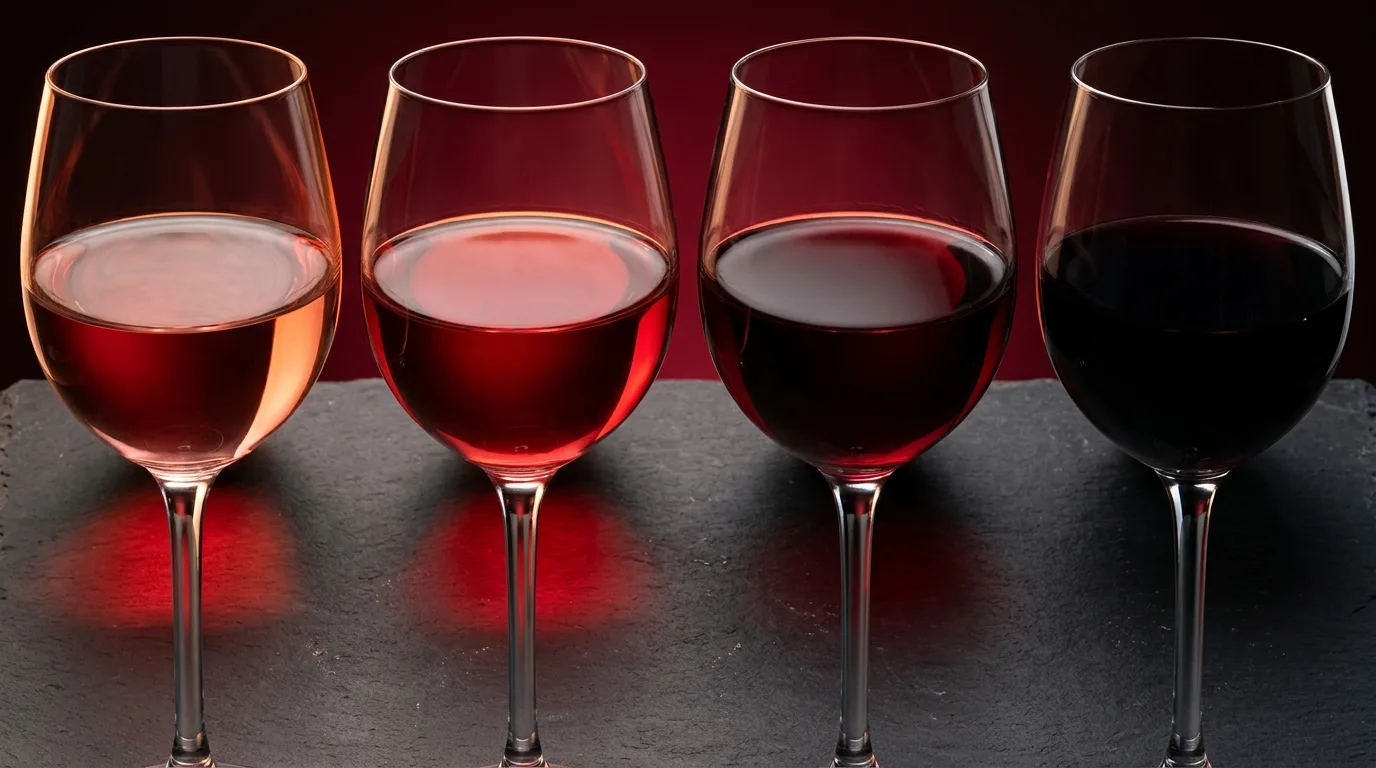
Colour is the useful backup, and it costs nothing to check. Tilt the glass and look at the edge against something white. A light red is genuinely see-through, closer to cranberry juice than ink, and a wine you can't see your fingers through is not going to be light no matter what the label says. Sommy's Fit Check does this part for you at the shelf by reading the bottle and telling you whether that specific wine sits in the weight range you already like, which is more useful than a rule of thumb when you're holding something unfamiliar.
Which red wines are reliably light?
Start with Gamay, because it's the most consistent answer to this question. Grown in Beaujolais in southern Burgundy, it gives a pale, juicy, red-fruited wine with almost no grip, and the village bottlings labelled with a name like Fleurie, Morgon or Brouilly are a large step up from generic Beaujolais for a few dollars more. Our Gamay taste guide covers the range in detail.
Pinot Noir is the famous one, though it's less predictable than its reputation suggests. Burgundy, Germany, the Loire and cooler parts of Oregon and New Zealand give properly light versions, while warmer California Pinot Noir can arrive at 14.5% and feel nothing like light, so check the alcohol before assuming. There's a fuller walkthrough in our Pinot Noir taste guide, and a direct comparison of the two grapes in Pinot Noir versus Gamay.
Beyond those two sit the wines that genuinely surprise people, and they're usually cheaper because nobody's heard of them.
| Grape | Where it's from | What it tastes like | Typical alcohol |
|---|---|---|---|
| Gamay | Beaujolais, France | Raspberry, violet, crushed stone | 12% to 13% |
| Pinot Noir | Burgundy, Germany, Loire | Red cherry, forest floor, rose | 12% to 13.5% |
| Schiava | Alto Adige, Italy | Strawberry, almond, very pale | 11% to 12.5% |
| Frappato | Sicily, Italy | Wild strawberry, herbs, lifted | 12% to 13% |
| Cinsault | Southern France, South Africa | Redcurrant, pepper, soft | 12% to 13.5% |
| Trousseau | Jura, France | Cranberry, orange peel, savory | 12% to 13% |
| Zweigelt | Austria | Sour cherry, black pepper | 12% to 13% |
Schiava is the one to try if you want to understand how light a red can get. It's so pale that people mistake it for a dark rosé, and it drinks beautifully cold. Frappato and Trousseau both carry a savory, herbal edge that keeps them interesting rather than simple. Lambrusco belongs in this conversation too, and the genuinely dry versions from Emilia-Romagna are light, fizzy and excellent with rich food, which is nothing like the sweet supermarket version that ruined the name in the 1980s.
Are light red wines lower in alcohol and calories?
Usually yes on both counts, and the two are the same fact. Alcohol is the main source of calories in dry wine, so a red at 12% carries meaningfully fewer than one at 15% for the same pour. The gap over a couple of glasses is real without being dramatic.
The honest caveat is that light bodied does not guarantee low alcohol. Body comes from tannin, acidity and alcohol together, and a wine can feel light because it's high in acid and low in tannin while still sitting at 13.5%. If lower alcohol is specifically what you're after, read the number rather than trusting the texture, keeping the legal tolerance above in mind.
Should you chill a light red wine?
Yes, and this is the change that converts most people. Light reds are built on fresh red fruit and acidity, and warmth flattens both while making the alcohol more obvious. Thirty to forty minutes in the fridge, or about fifteen in an ice bucket, brings a light red to somewhere around 55°F, where the aromatics tighten up and the wine tastes brighter and more defined.
Cold suits low-tannin wines in particular, which is the part the usual advice leaves out. Chilling a tannic Cabernet makes the tannin taste harder and more bitter, which is why the general advice against cold reds exists at all. With almost no tannin to harden, a Gamay or a Schiava only gains. If you want it cold in a hurry, we've timed the methods in how to chill wine fast.

What food goes with light reds?
Food that would lose to a heavier red, which is a longer list than it sounds. The absence of tannin means a light red doesn't fight delicate protein the way a big red does, so salmon, tuna, roast chicken and pork all work comfortably. Acidity handles anything with tomato or vinegar in it.
Light reds are also the most reliable answer to genuinely awkward pairing problems. Charcuterie, mushroom dishes, a cheese board with a mix of styles, Thanksgiving turkey with six competing side dishes, or a table where half the guests want white and half want red. A chilled Gamay handles every one of those better than a specialist would. There's more on the general method in our guide to pairing wine with food.
Where should you start if you've never bought one?
Buy a village Beaujolais and drink it lightly chilled with roast chicken, and you'll understand the entire category in one evening. If that lands, the next step is a Schiava from Alto Adige to see how far the style goes, then a decent Pinot Noir once you know what weight you actually want. If big reds have never worked for you, our list of easy-drinking red wines is a gentler on-ramp.
Body is worth learning as a preference in its own right, separately from grape names. Someone who knows they want a light red can walk into any shop in any country and find something good, while someone who only knows they like one particular label is stuck the moment it isn't stocked. The label tells you the weight and the region. Whether that weight is the one you want is the part you have to find out by drinking.
Common questions about light red wines
What is the lightest red wine you can buy?
Schiava from Alto Adige in northern Italy is usually the lightest widely available red, so pale and delicate that it's often mistaken for a dark rosé. Frappato from Sicily and a light Trousseau from the Jura sit close behind it. All three are genuinely red wines rather than rosés, and all three are best served cold.
Is Pinot Noir always a light red wine?
No, and this catches people out regularly. Pinot Noir from Burgundy, Germany or the Loire is generally light, but warmer regions produce versions at 14% or more that feel medium bodied. The alcohol percentage on the label is a better guide than the grape name on its own.
Is Merlot a light red wine?
Merlot is soft rather than light, which is a different thing. It has low to moderate tannin, so it feels smooth and easy, but it usually carries more weight and more alcohol than a Gamay or a Schiava. If someone recommends Merlot because you want something light, they've answered a slightly different question.
Do light red wines age well?
Most of them aren't designed to, and they're at their best within two or three years of the vintage. The tannin and concentration that let a Barolo improve for decades are exactly what a light red doesn't have. Cru Beaujolais from a good producer is the main exception and can develop nicely for five to ten years.
What temperature should a light red be served at?
Around 55°F suits most of them, which is cooler than a heated room and warmer than a fridge set for white wine. Roughly thirty to forty minutes in the refrigerator gets a room-temperature bottle there. If it warms past about 65°F in the glass, the fruit goes soft and the alcohol starts to show.
Are light red wines a good choice for someone new to red wine?
They're the best starting point, because the thing most people dislike about red wine is tannin, and light reds have very little of it. Beginning with a chilled Gamay or a Schiava removes the drying, bitter sensation that puts people off, while still giving a proper red wine experience rather than a compromise.