Chardonnay tastes like green apple, lemon and pear when it's made in stainless steel, and like butter, vanilla and baked apple when it's made in oak barrels, and both of those wines are legally the same grape. That's why one person calls Chardonnay crisp and refreshing while the next one calls it heavy and buttery, and why the word on the front label is close to useless on its own. Almost all of it is dry, whatever your tongue tells you. Two winemaking decisions do nearly all the work here, and once you know their names you can predict which wine is in the bottle before you pay for it.
What does Chardonnay taste like in the glass?
Chardonnay tastes of orchard and citrus fruit carried on a medium to full body, with lower acidity than Sauvignon Blanc and no tannin to speak of. Green apple, lemon, pear and white peach are the flavors people name most often on the lighter versions. In warmer places the fruit ripens further and moves toward pineapple, mango and yellow apple, so a bottle from Australia or central California usually tastes rounder and riper than one from northern France.
The texture is the part that surprises people who are used to other whites. Chardonnay has real weight in the mouth, closer to whole milk than to water, and that fullness is why it stands up to butter sauces and roast chicken when a lighter white would disappear. If you want the general version of that idea, we've written about what full-bodied actually means in a wine across every style.
Then there's the second flavor set, the one that starts arguments: butter, cream, vanilla, toast, caramel and toasted nuts. None of that comes from the grape. Every bit of it is added by a person in a winery making choices, and a Chardonnay grown in the same vineyard can arrive with all of it or none of it depending on what happened after the grapes came in.
Why does one Chardonnay taste like butter and another like lemon?
Two decisions separate them, malolactic fermentation and oak, and each one contributes a specific compound you can name. This is the part almost no wine page explains, and it's the only thing that reliably predicts whether you'll like the bottle in your hand.
The butter is a molecule called diacetyl, and it appears during a second fermentation in which bacteria convert the sharp malic acid in the wine into softer lactic acid. Researchers at Poznań University of Life Sciences measured exactly how much of it that decision produces, using Chardonnay grapes from a single cool-climate vineyard so nothing else varied. Three months after bottling, the Chardonnay that went through alcoholic fermentation alone held 1.13 mg/L of diacetyl, a level the authors describe as "too low to have an impact on the wine aroma". The same Chardonnay put through a controlled malolactic fermentation came in at 2.19 and 3.42 mg/L depending on timing, and tasters found "light, pleasant buttery and nutty aromas" in those wines. The version left to ferment spontaneously reached 7.44 mg/L, and wines at that level were "characterized as an intensive and unacceptable buttery aroma" (Molecules, 2018).
Read that range again, because it's the whole article in four numbers. Same grape, same vineyard, same year, and the buttery compound moved from a level nobody can smell to a level a trained panel found offensive, purely on a winemaking call.
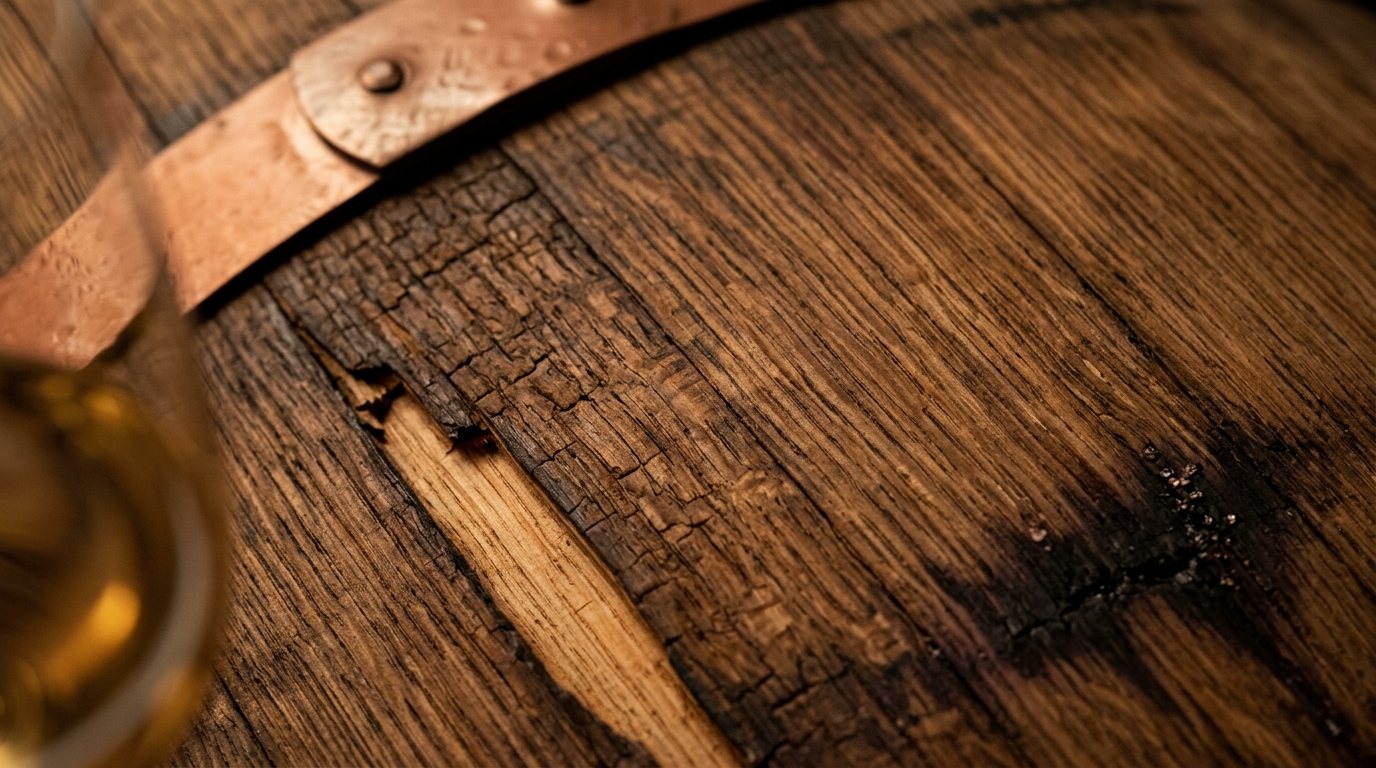
The vanilla comes from somewhere else entirely, from the barrel rather than the bacteria. Oak staves are toasted over fire during coopering, and that heat breaks down lignin in the wood into a set of aromatic phenols, one of which is vanillin. It's the same compound that makes vanilla smell like vanilla, and a 2026 review of wood-derived compounds in alcoholic drinks puts its perception threshold at 1 mg/L with the descriptor "vanilla" (Molecules, 2026). The wine picks it up by sitting in contact with charred wood, so a wine fermented and aged in a steel tank can't have it at all.
Put those together and the four flavor families make sense. Steel plus no malolactic gives you lemon and green apple. Barrel plus malolactic gives you butter, vanilla and toast. Most bottles land somewhere between the two, because winemakers routinely put part of a batch through each route and blend them back together.
Is Chardonnay sweet or dry?
Chardonnay is dry, and it's one of the most reliably dry white wines you can buy. Sweet Chardonnay exists as a rarity, mostly in late-harvest bottlings that say so on the label, but the ordinary bottle in a supermarket or on a restaurant list has had essentially all its grape sugar fermented into alcohol.
People taste sweetness in it anyway, and they're not imagining things. Ripe tropical fruit aroma reads as sugar to the brain even when there's none left in the glass, and the vanilla and caramel notes from an oak barrel push in the same direction because we associate those smells with dessert. Add the soft, rounded texture that malolactic fermentation creates and a completely dry wine can come across as sweet. If you want to see how the actual numbers work across styles, we've laid out what dry and sweet mean on a label.
This matters when you're shopping, because a lot of people who say they want a sweet white actually want a rounded one, and a rich California Chardonnay gives them that without any sugar at all. It also runs the other way. If you found a Chardonnay cloying, the culprit was probably oak and butter rather than sugar, and the fix is a leaner bottle rather than a drier one.
How can you tell which Chardonnay you're getting before you open it?
The label tells you, as long as you read the region and the winemaking words instead of the grape name. Four signals do the job, and any two of them agreeing is usually enough.

Region comes first, because it's the strongest single predictor. Chablis is the clearest case in the wine world: the official Chablis producers' body describes the appellation as "one color (white), one varietal (Chardonnay), four levels of appellation, and a single exceptional terroir" (Chablis Wines), and the house style there is lean, high-acid and mineral rather than buttery. Mâcon and Pouilly-Fuissé from southern Burgundy sit slightly rounder. Meursault and Puligny-Montrachet are the rich, barrel-aged end of France. California, Australia and Chile skew riper and oakier, though every one of them also makes unoaked bottlings now. Our fuller comparison of Chablis and Chardonnay covers why the two names confuse so many people.
Winemaking words on the back label are the second signal and the most direct one. "Unoaked", "stainless steel" and "no malolactic" all promise the lemon-and-apple version. "Barrel fermented", "barrel aged", "French oak", "new oak" and "sur lie" all promise weight, and "buttery" or "creamy" in a producer's own tasting note means malolactic fermentation happened. We've written a shortcut for each end of that: how to spot a buttery Chardonnay and how to spot an unoaked one.
Color is the third signal and it works once the wine is in your glass. Lean, steel-fermented Chardonnay is pale straw with a green tint at the rim. Barrel-aged Chardonnay is noticeably deeper, a full gold that leans toward amber with age, because oxygen reaches the wine slowly through the wood while it sits in barrel.
| What you see on the bottle | What's usually in the glass | Flavors to expect |
|---|---|---|
| Chablis, Petit Chablis | Lean, high acid, unoaked or lightly oaked | Green apple, lemon, chalk, oyster shell |
| Mâcon-Villages, Pouilly-Fuissé | Medium body, restrained oak | Pear, white peach, light hazelnut |
| Meursault, Puligny-Montrachet | Full body, barrel aged | Baked apple, hazelnut, toast, cream |
| California, labeled buttery or barrel aged | Full body, oak plus malolactic | Butter, vanilla, pineapple, caramel |
| Anything labeled unoaked or stainless | Light to medium, crisp | Lemon, green apple, citrus pith |
| Blanc de Blancs Champagne | Sparkling, bone dry | Green apple, citrus, brioche |
Price is the fourth signal, and it works because of how the fruit itself is bought rather than because expensive wine tastes better. Barrels, hand-picking and long aging all cost money that a nine dollar bottle doesn't have, so cheap Chardonnay that tastes oaky usually got there with oak chips or staves rather than barrels, which tends to read as sweeter and more one-note.
Is Chardonnay a cheap wine?
Chardonnay covers a wider price range than almost any other white, and most of what gets sold sits at the inexpensive end. It was the single largest variety in California's 2025 harvest, accounting for 17.9% of every ton of grapes crushed in the state, with 493,046.7 tons picked (USDA and CDFA Grape Crush Report, Final 2025).
The interesting number is what growers were paid, because it shows where the price of a bottle actually comes from. In that same report, Chardonnay grown in District 4, which is Napa County, returned an average of $3,682.79 per ton. Chardonnay grown in District 13, the inland San Joaquin Valley, returned $415.55 per ton. Same grape, same state, same harvest, and the fruit cost the winery almost nine times as much in one place as the other. The statewide weighted average was $1,011.25 per ton, and District 13 alone supplied 89,892.5 tons against Napa's 18,467.9 (Grape Crush Report, Final 2025).
Those are prices paid to growers for fruit, not bottle prices, but they explain the shelf perfectly. The cheap Chardonnay is cheap because the grapes were farmed at volume in a hot valley, and the expensive Chardonnay is expensive because the grapes weren't. What that means practically is that Chardonnay rewards spending a little more than most whites do. The jump in quality between an eight dollar bottle and an eighteen dollar bottle is larger here than it is with, say, Pinot Grigio, because the cheap end leans hard on oak flavoring to cover thin fruit.
Is Chardonnay a good wine for beginners?
Chardonnay is a good beginner wine, with one caveat about which bottle you start on. It has no tannin, so none of the drying grip that puts new drinkers off red wine, and its flavors are familiar orchard fruit rather than anything that needs explaining. It's also on every wine list in the country, so learning it is useful in a way that learning an obscure grape isn't.
The caveat is that starting on a heavily oaked bottle is how people decide they hate Chardonnay for a decade. That style is an acquired taste, and it's a lot to meet first. Start with an unoaked Chardonnay or a Chablis, find out whether you like the fruit and the acidity underneath, then try an oaked bottle and see whether the butter and vanilla are something you want. Doing it in that order tells you what you actually think, and doing it in the other order usually just tells you that oak is loud.
What food goes with Chardonnay?
Chardonnay is one of the most useful food wines there is, because you can pick the style to match the richness of the dish. The rule is simple enough to remember at a shop counter: match lean wine to lean food, and rich wine to rich food.

Unoaked Chardonnay and Chablis work with oysters, sushi, grilled white fish, goat cheese, salads and anything with lemon in it. The high acidity does the same job a squeeze of lemon does, cutting through and refreshing the palate between bites. This is the version to buy when the food is delicate.
Oaked Chardonnay is built for butter and cream, which is a happy accident of chemistry, since the wine's own buttery compound comes from the same lactic reaction that makes butter taste like butter. Roast chicken, lobster with drawn butter, crab cakes, pasta in cream sauce, corn, pumpkin and mushrooms all work. It also handles smoked fish and roast pork better than most whites, and it's the white wine most likely to satisfy someone at the table who normally drinks red. Compared with the other supermarket white everyone knows, our Chardonnay and Sauvignon Blanc comparison covers which one to reach for by dish.
Why do so many people say they hate Chardonnay?
They tried the oaky version and assumed that was the grape. Through the 1990s a great deal of Chardonnay was made in a big, buttery, heavily oaked style, enough of it badly that a backlash formed around the phrase "anything but Chardonnay". Drinkers who lived through that shelf still associate the name with the flavor of a specific fashion rather than with the grape itself.
The honest answer to who drinks Chardonnay today is that almost everyone does, including people who say they don't, because it's the grape behind most Blanc de Blancs Champagne and a large share of white Burgundy. Someone who orders Chablis with oysters and someone who orders a buttery California bottle with roast chicken are drinking the same variety, made two different ways.
You genuinely won't like Chardonnay if what you want from a white is loud aromatic zing, in which case Sauvignon Blanc, Grüner Veltliner or Albariño will serve you better. That's a real preference and not a failure to appreciate anything. It's still worth separating the two styles before deciding, because plenty of people who reject Chardonnay have only ever met one of them.
If you'd rather not run that experiment at your own expense, that's the moment Fit Check is built for. You type a bottle name, say it out loud or scan the label, and Sommy tells you whether that specific wine matches the taste it has learned from what you've rated, which is a different question from whether the wine is any good.
Frequently asked questions
What does Chardonnay taste like compared to Sauvignon Blanc?
Chardonnay tastes rounder, fuller and less aromatic, with orchard fruit rather than the grapefruit and cut-grass punch of Sauvignon Blanc. Sauvignon Blanc has higher acidity and a sharper, greener nose, and it's almost never oaked. Chardonnay has more weight in the mouth and can carry butter and vanilla notes that Sauvignon Blanc never shows.
What does buttery Chardonnay taste like?
Buttery Chardonnay tastes of melted butter, cream, vanilla and toasted nuts over baked apple or pineapple, with a soft, rounded texture and low apparent acidity. The butter note is a compound called diacetyl created during malolactic fermentation, and researchers measured it rising from 1.13 mg/L in a Chardonnay without that fermentation to 7.44 mg/L in one that fermented spontaneously (Molecules, 2018).
Is Chardonnay sweet or dry?
Chardonnay is dry in nearly every bottle you'll meet. What people read as sweetness is ripe tropical fruit aroma plus the vanilla and caramel notes that come from oak barrels, all of which the brain associates with sugar. Genuinely sweet Chardonnay is a rarity and says so on the label.
What does Chardonnay smell like?
Unoaked Chardonnay smells of lemon, green apple, pear and wet stone. Oaked Chardonnay smells of vanilla, butter, toast, caramel and baked apple, because toasting an oak barrel breaks down lignin into aromatic compounds including vanillin, which has a perception threshold of about 1 mg/L (Molecules, 2026).
Is Chardonnay a cheap wine?
Most Chardonnay sold is inexpensive, but the range is enormous. In California's 2025 harvest, growers in Napa averaged $3,682.79 per ton for Chardonnay fruit while growers in the inland San Joaquin Valley averaged $415.55 (Grape Crush Report, Final 2025). Spending a little more moves you further with this grape than with most whites.
Should Chardonnay be served cold?
Serve it cool rather than ice cold, and take an oaked bottle out of the fridge about fifteen minutes before you pour it. Very cold temperatures mute the butter and vanilla notes and make the wine taste hollow, while a lean unoaked bottle or a Chablis is fine straight from the fridge. If a Chardonnay tastes flat and heavy, it's usually too warm rather than badly made.
Does Chardonnay age well?
Good Chardonnay ages better than most white wine, and white Burgundy is one of the longest-lived dry whites in the world. Inexpensive supermarket bottles aren't built for it and are best drunk within a year or two of the vintage on the label. As Chardonnay ages, the color deepens toward gold and the fruit gives way to nut and honey notes.
Picking your next bottle of Chardonnay
If you're buying one bottle and you don't know which camp you're in, buy a Chablis or something labeled unoaked and see what you think of the fruit without the makeup on it. That's the grape at its plainest, and it gives you a reference point for everything else.
If it tastes thin to you, the next bottle should be a barrel-aged Chardonnay from California or a Mâcon from southern Burgundy, and you'll almost certainly prefer it. If it tastes clean and lively and you want more of that, stay in Chablis or look for unoaked bottlings from cooler places like Sonoma Coast and New Zealand.
The habit worth taking away is ignoring the grape name and reading the two words next to it. Chardonnay is a grape that does whatever it's told, which is exactly why the name predicts so little and why the region and the winemaking notes predict so much.

I have spent four decades building software. Wine was the one thing I never quite cracked: an ocean of possibility with no reliable way in. I wanted a tool that could tell me whether I'd like a bottle, not whether a critic did, and waited years for the technology to make it possible. Sommy is that tool. I write about wine from the data side. What 150,000 bottles look like when you try to predict a single person's palate.