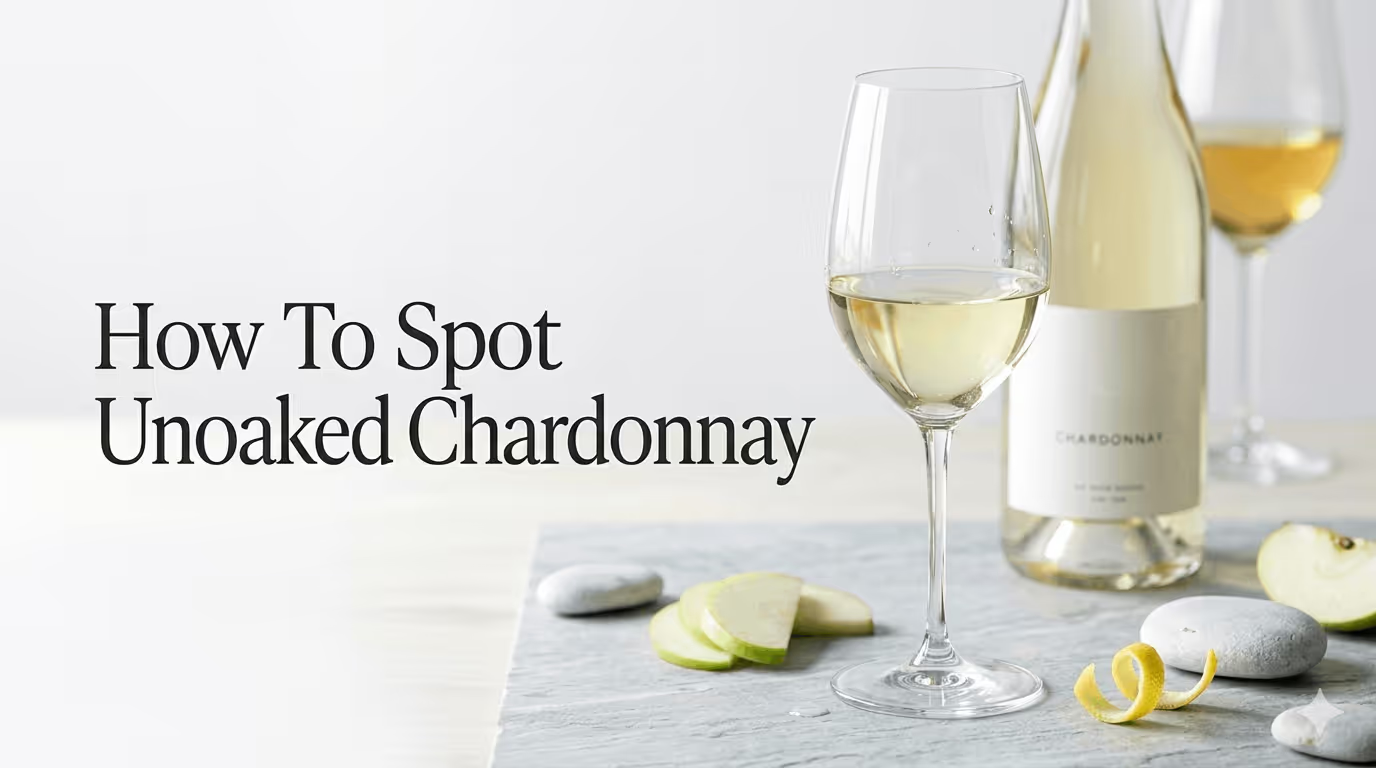

To spot an unoaked Chardonnay, look for the words "unoaked", "unwooded", "stainless steel" or "naked" on the label, or pick a Petit Chablis, a basic Chablis or a Mâcon-Villages from Burgundy. In the glass it'll be pale straw rather than gold, and it smells of lemon, green apple and wet stone instead of vanilla, toast or butter. Bottles like Kendall-Jackson Avant, Louis Jadot Mâcon-Villages and Mer Soleil Silver are reliably made without oak and cost roughly $13 to $22.
The catch is that none of those label words is regulated, a few popular bottles that look unoaked aren't, and one or two terms that sound like oak have nothing to do with barrels. This page sorts the clues by how far you can trust them, so you can buy the crisp style on purpose instead of by luck.
How do you tell if a Chardonnay is unoaked from the label?
The word "unoaked" on the front label is the strongest single clue, followed by "unwooded", "stainless steel fermented" and "naked". Wine Spectator lists the whole family in its explainer on what "naked" means on a Chardonnay label: unoaked, unwooded, oak-free, pure, virgin, stainless and inox, which is short for the French word for stainless steel. The same piece points out that none of these terms is regulated or universally agreed on, so treat them as a winery describing its own style rather than as a legal promise.
The back label is where the useful detail usually lives. Kendall-Jackson's guide to oaked vs. unoaked Chardonnay says words like "barrel fermented", "barrel aged" and "toasted" point to oak, while "stainless steel", "bright", "crisp" and "pure" usually signal an unoaked wine. Here's how we'd rank the words you'll actually meet on a shelf:
| Label word | What it usually means | How much to trust it |
|---|---|---|
| Unoaked, unwooded, oak-free | No barrels at all | High, it's the winery saying so directly |
| Stainless steel, inox, tank fermented | Made in steel tanks | High if it covers fermentation and aging |
| Naked, pure, virgin | A fresh, no-barrel style | Medium, these are marketing words |
| Petit Chablis, Chablis | Mostly steel tanks, occasionally barrels | Medium to high |
| Chablis Premier Cru or Grand Cru | Oak is more common here | Low, check the producer |
| Mâcon-Villages, Mâcon plus a village name | Varies by producer, Jadot's is unoaked | Medium, read the back label |
| Neutral oak, lightly oaked, a hint of oak | Barrels were used, just gently | This is not unoaked |
| Barrel fermented, barrel aged, toasted | Oak played a real part | This is not unoaked |
One more thing that helps: price and region don't tell you much on their own. A $12 California bottle can be completely unoaked and a $60 one can taste like a vanilla cake, so trust the words over the price tag.
Is all Chablis unoaked?
Most Chablis is unoaked or close to it, but not all of it, and the exceptions cluster at the top of the range. The Chablis wine board explains in its notes on how Chablis is made and aged that the juice goes into either oak barrels or stainless steel vats, that barrels are used only sparingly, and that they turn up chiefly in Chablis Premier Cru and Chablis Grand Cru, "although not always". It adds that the share of new barrels is often quite low, because there's no tradition of new oak in the region.
That gives you a simple ladder. The region has four levels, and the two at the bottom, Petit Chablis and plain Chablis, are where you're most likely to find a wine that never touched a barrel. Premier Cru and Grand Cru bottles can still be crisp and stony, but some producers age them in old barrels for texture, so if you want zero oak at that level, look the specific wine up before you pay for it. For the bigger picture on the region versus the grape, we break it down in Chablis vs. Chardonnay.
Chablis labels also won't say "Chardonnay" anywhere on the front, because in France the place name does that job. If you're standing in front of a French shelf looking for the grape, look for the village names instead.
Which label words look unoaked but aren't?
"Lightly oaked", "neutral oak" and "a hint of oak" are the three phrases that most often fool people, because they sound like the crisp style but describe a wine that spent time in barrels. Neutral oak means older barrels that give little wood flavor, and the wine can taste fresh, but if you're avoiding oak on principle it doesn't qualify.
Josh Cellars Chardonnay is a good example of a bottle people assume is unoaked. The winery's own page for Josh Cellars Chardonnay describes it as bright citrus, honey and juicy peach "rounded with a hint of oak", so it sits in the middle of the range rather than at the unoaked end. Kim Crawford is the other one that catches shoppers, since retail listings still carry an "Unoaked Chardonnay" name next to the current bottle, which the producer describes as having a touch of oak; we untangle that in our Kim Crawford Chardonnay breakdown.
Then there's the opposite trap, a word that sounds like oak but isn't. "Sur lie" means the wine rested on its spent yeast after fermentation, which adds a softer, rounder feel, and Kendall-Jackson lists it among the terms that often point to an oaked style. It can happen in steel too, though. La Chablisienne's importer sheet for its Pas si Petit Petit Chablis lists primary and malolactic fermentation in stainless steel tanks and six months on fine lees in tank, so that wine has lees contact and no barrel at all.
The same sheet clears up a related myth. Malolactic fermentation is the step that turns sharp, green-apple acid into softer acid, and Kendall-Jackson's guide explains that it's the source of the creamy, buttery feel people blame on oak. Plenty of unoaked wines skip it to stay crisp, but some, like that Petit Chablis, go through it in steel, which is why an unoaked Chardonnay can still feel a little round without tasting of vanilla.
What does unoaked Chardonnay look and taste like?
Unoaked Chardonnay is usually pale straw or light lemon in the glass and tastes of lemon, green apple and pear, often with a salty or stony edge, while oaked Chardonnay leans deeper gold and brings vanilla, toast and baked fruit. Kendall-Jackson's guide puts the color difference down to the gentle oxidation and toasted wood a barrel adds, and the paler shade to time spent in neutral, non-porous steel.

Color is a hint rather than a verdict, because age and warmer vineyards can darken a wine too. Once it's poured, your nose settles the question faster than your eyes. If the first thing you notice is lemon peel, green apple, white flowers or wet stone, you're very likely holding an unoaked wine. If it's butter, vanilla, coconut or toast, oak or malolactic fermentation shaped it.
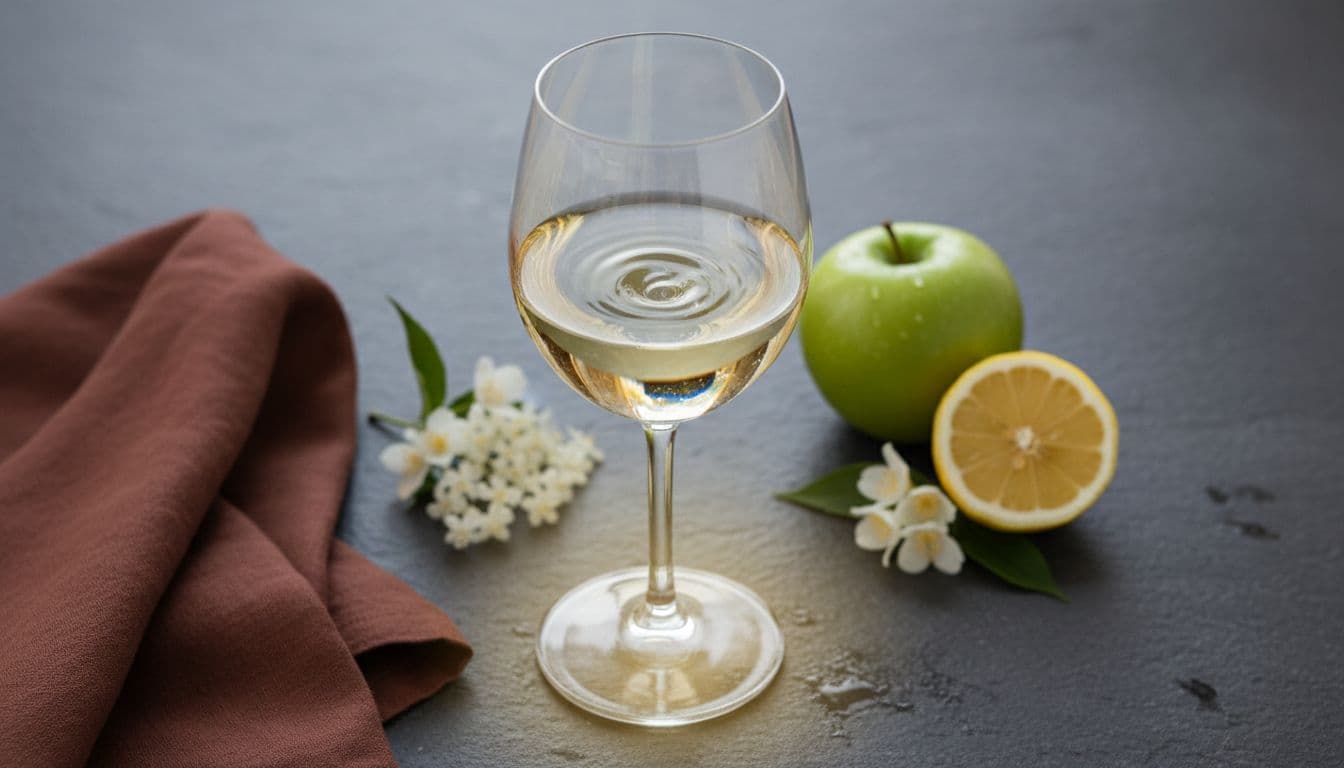
On the palate, unoaked Chardonnay tends to feel brisk and clean, with a finish that stops neatly instead of lingering on something creamy. Some bottles from warmer places taste of peach or melon, and they can have a bit of weight, which is fine because body comes from the grape and the ripeness rather than from the barrel. The thing to check is whether that weight stays fresh or turns creamy and sweet-smelling.
Which unoaked Chardonnays can you buy for under $25?
Kendall-Jackson Avant, Louis Jadot Mâcon-Villages, Mer Soleil Silver and La Chablisienne Pas si Petit are four widely sold bottles whose producers or importers state they're made without oak, and all four landed under $25 when we checked prices in October 2026. We picked them because the unoaked part is written down by the people who make the wine, not inferred from a tasting note.

Kendall-Jackson Avant is the easiest to find in American supermarkets. The Philadelphia Inquirer's review of Avant Unoaked Chardonnay describes grapes from California's coastal counties and a lemony, apple-and-pear profile, and lists it at $12.99 to $17.99 depending on the store. It's a smart bottle to try if your only experience of Kendall-Jackson is the richer Vintner's Reserve.
Louis Jadot Mâcon-Villages is the classic French answer at a similar price. Jadot's US site says its Mâcon-Villages Chardonnay is vinified with no oak contact and calls it a clean, vibrant unoaked Chardonnay. Retail listings we checked ran from $16.99 to $21.99. We think this is the best place to start if you want the Burgundy style without paying Chablis prices.
Mer Soleil Silver comes from Monterey County in California. The winery's tech sheet for the 2021 Silver says it has no exposure to oak and is aged in stainless steel and unlined concrete tanks, and the current release is still sold as the Silver Unoaked Chardonnay. One listing we checked had it at $19.99 with a sale price of $16.99, and it's a slightly fuller, rounder take on the style than the Chablis below.
La Chablisienne Pas si Petit is a Petit Chablis from a producer that, according to its importer, spans more than 200 winegrowing families, made entirely in steel as described above, and it was listed at $24.90 when we checked. If you want to taste what "Chablis" means before spending more, this is a fair first bottle.
If you're in the aisle squinting at a back label in a language you don't read, Label Scan in Sommy reads the bottle and returns the grape, region and tasting notes for aroma, palate and finish, and it merges a second scan of the back label with the front when the front alone isn't enough.
How do you ask for unoaked Chardonnay at a restaurant?
Ask for "a crisp Chardonnay with no oak, something like a Chablis or a Mâcon", which gives the server a style and two reference points in one sentence. Wine lists rarely print "unoaked", so listen for the words crisp, mineral, citrus, steel and fresh, and steer away from creamy, toasty, round or buttery. If you actually want the rich style instead, our guide to spotting buttery Chardonnay on a wine list is the mirror image of this one.
Food is the other reason to know the difference. Unoaked Chardonnay works with oysters, sushi, goat cheese, roast chicken and lighter pasta because its acidity acts like a squeeze of lemon. It's the style we'd point you toward in our guide to white wine for sushi, and it's the gentler of the two options in our take on the best white wine for shrimp scampi.
Frequently asked questions
Does Chardonnay have oak in it?
Oak isn't an ingredient, it's a container. Chardonnay is fermented and aged either in oak barrels or in neutral vessels like stainless steel tanks, and the barrel is what adds vanilla, toast and a deeper color. So some Chardonnay is oaked and some isn't, and the label or the producer's notes tell you which.
Is Josh Cellars Chardonnay unoaked?
No, Josh Cellars Chardonnay isn't unoaked. The winery describes its flavor as bright citrus, honey and juicy peach rounded with a hint of oak, which puts it in the lightly oaked middle of the range. If you want a bottle with no oak at that price, Kendall-Jackson Avant or Louis Jadot Mâcon-Villages are closer to what you're after.
What does unoaked Chardonnay taste like?
Unoaked Chardonnay tastes of lemon, green apple and pear, often with a stony or slightly salty finish, and it feels crisp rather than creamy. Warmer-climate versions can add peach or melon. What you won't find is vanilla, toast or the buttery richness that oak barrels bring.
What Chardonnay is good for cooking?
We'd reach for an inexpensive unoaked Chardonnay for cooking, since you want its acidity and clean fruit in a pan sauce or risotto without vanilla and toast following along. The rule that applies to any cooking wine applies here too, which is to use a bottle you'd be happy to drink.
Should unoaked Chardonnay be served colder than oaked?
Yes, unoaked Chardonnay shows best a little colder. Kendall-Jackson suggests serving unoaked Chardonnay around 45 to 50°F to keep it crisp and oaked Chardonnay around 50 to 55°F so its creamier aromas come through.
Is unoaked Chardonnay the same as Chablis?
They overlap a lot, but they aren't the same thing. Chablis is a region in northern Burgundy that grows only Chardonnay, and most of its wine is unoaked or very lightly oaked, but some Premier Cru and Grand Cru bottles see barrels. Unoaked Chardonnay is a style made all over the world, from California to Argentina to New Zealand.
Spotting unoaked Chardonnay comes down to trusting the label words in the right order: "unoaked" and "stainless" first, Petit Chablis and Chablis next, and anything saying "neutral oak" or "a hint of oak" set aside. Whether you'll actually prefer the crisp style over the creamy one is a question only your own glass can answer, and it's the question Sommy is being built for, so join the waitlist to hear when it launches.