
You’re at a restaurant, scanning the wine list. You see the words "full-bodied" under a few reds, but what does that actually mean? It’s a common term that can make wine feel confusing, but the idea behind it is surprisingly simple. You don’t need to be a wine expert to understand it, and you definitely don’t need to be one to choose a bottle you’ll love.
A full-bodied wine is simply a wine that feels heavier, richer, and more substantial in your mouth. The "body" of a wine has nothing to do with its flavor, but everything to do with its texture and weight on your tongue. Think of it like the difference between skim milk and whole milk; a full-bodied wine has a mouth-coating richness that lingers.
This feeling of weight comes from a couple of key factors, mainly a higher alcohol content and more intense flavors from the grapes. But you don't need to get bogged down in the science. Just remember this simple comparison:
Light-bodied wine feels like water.
Medium-bodied wine feels like 2% milk.
Full-bodied wine feels like whole milk or even cream.
This isn’t about which wine is "better." It’s about matching the wine's texture to your personal preference and what you're in the mood for. Sometimes a heavy, rich red is perfect, and other times a light, crisp white is just what you want. The goal is to feel confident choosing what you like, and understanding "full-bodied" is a big step in that direction.
Feeling the Difference in Wine Body
| Wine Body | Feels Like... | Common Examples |
|---|---|---|
| Light-Bodied | Skim Milk or Water | Pinot Grigio, Sauvignon Blanc, Gamay (Beaujolais) |
| Medium-Bodied | 2% Milk | Pinot Noir, Merlot, unoaked Chardonnay |
| Full-Bodied | Whole Milk or Cream | Cabernet Sauvignon, Malbec, oaked Chardonnay |
Remember, this is just about helping you decide what texture you prefer. For more help finding wines that fit what you enjoy, our beginner wine chart is a great tool for simplifying different styles.
How to Recognize a Full-Bodied Wine by Feel
So, you know "full-bodied" is about how a wine feels. But how can you tell when you’re taking a sip? The good news is, you already have all the tools you need. You just have to pay attention to what your senses are telling you.
The clearest signal is the sensation of weight or texture on your tongue. When you sip a full-bodied wine, it feels noticeably richer. It seems to coat your mouth and linger for a moment, like how a creamy sauce clings to a spoon, while a light broth would just run right off.
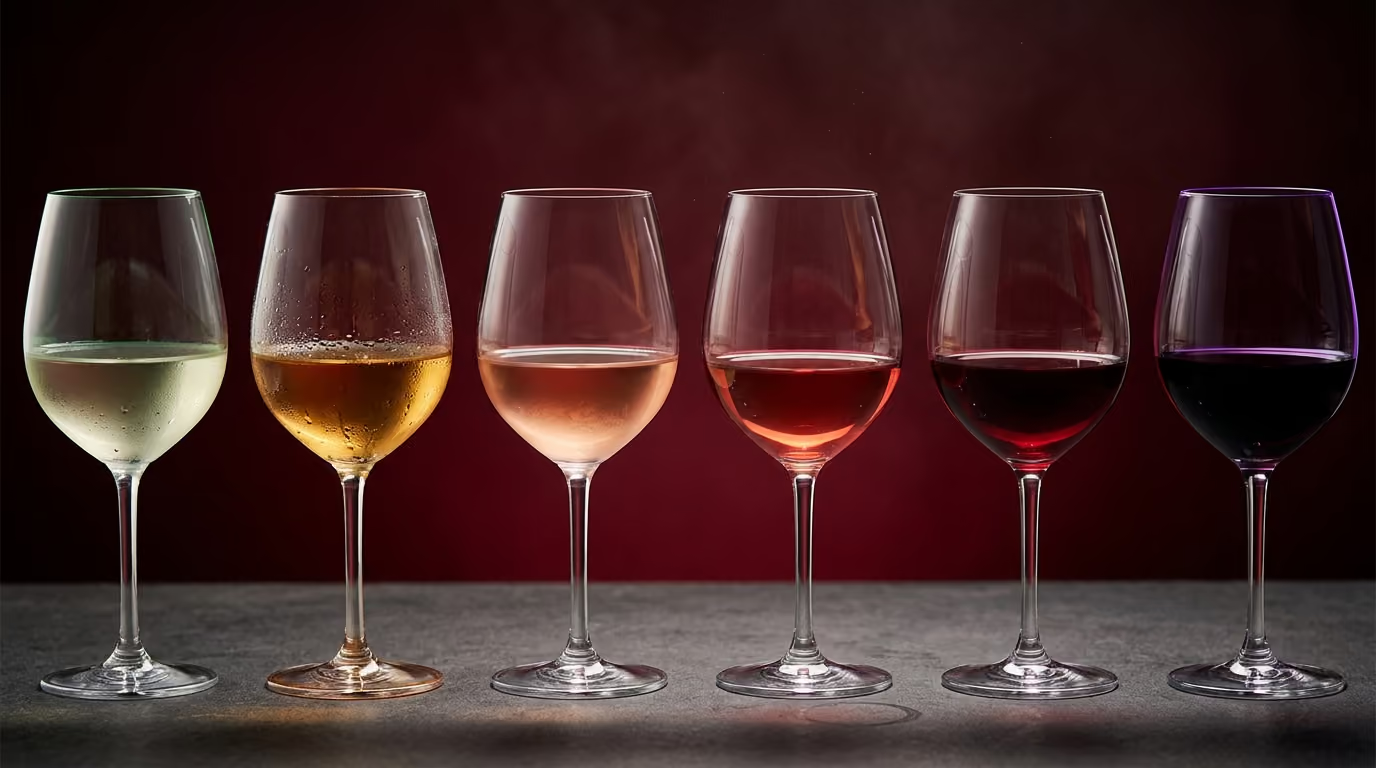
This is a great way to visualize the difference in texture you can expect from different wine bodies.
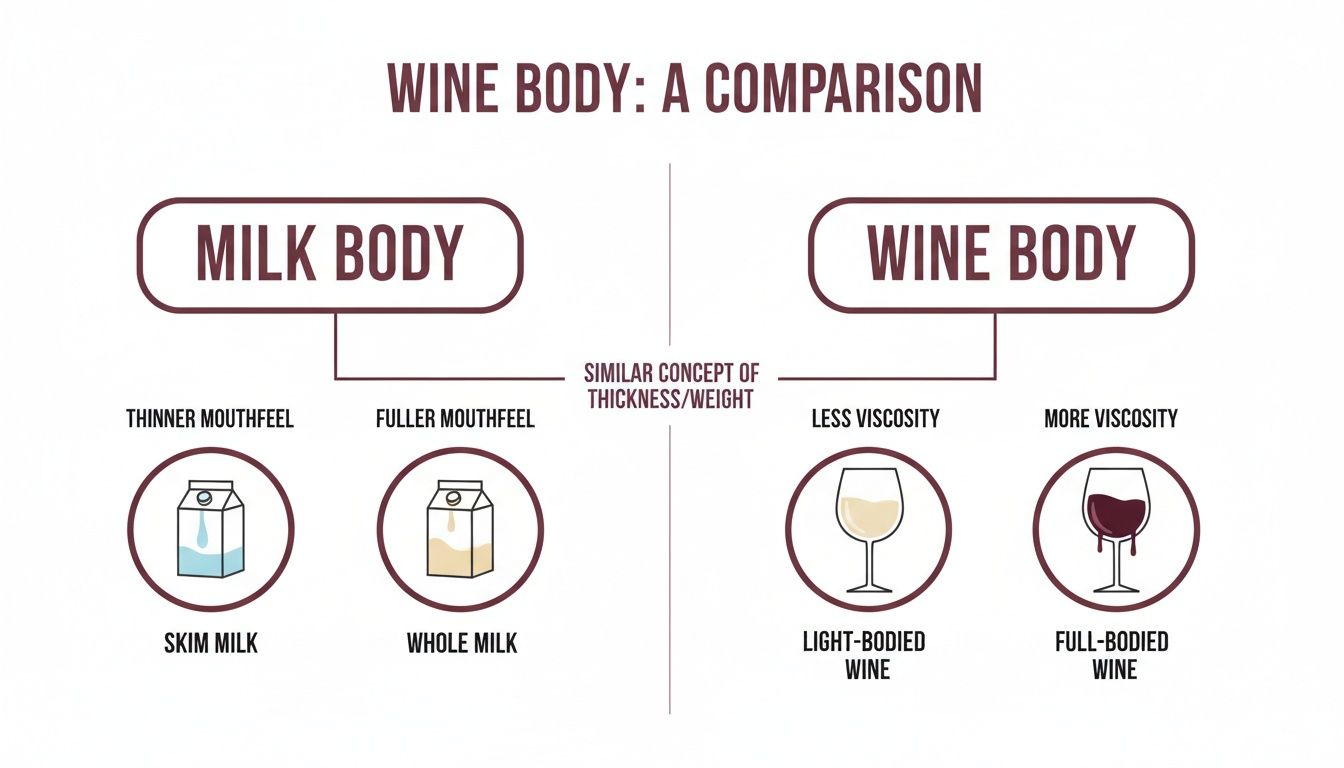
Just like the image shows, if a light-bodied wine feels like skim milk, a full-bodied one is much closer to whole milk. It has a richer, more substantial presence that you can’t miss.
Other Clues to Notice
Beyond that initial feeling of weight, there are two other physical hints that signal a full-bodied wine. Trusting your senses here is a simple way to build confidence in figuring out what you like.
- A Gentle Warmth: Higher alcohol is a key component of a full-bodied wine. You might notice a subtle, pleasant warmth in the back of your throat after you swallow. This isn't a harsh burn, but a gentle heat that speaks to the wine’s richness. Wines with an alcohol by volume (ABV) of 13.5% or higher often fall into this category.
- A Drying Sensation (in Reds): With many big red wines, you'll also feel a drying, slightly grippy sensation on your tongue and gums. This comes from tannins, which are natural compounds from grape skins and seeds. To get a better handle on this feeling, you can check out our simple guide on what is tannin in wine.
By simply noticing these physical cues (the weight, the warmth, and that drying feeling in reds) you are already doing what sommeliers do.You’re using your own senses to understand the wine in your glass, which is the most important skill you can have.
Common Full-Bodied White Wines You Will Find
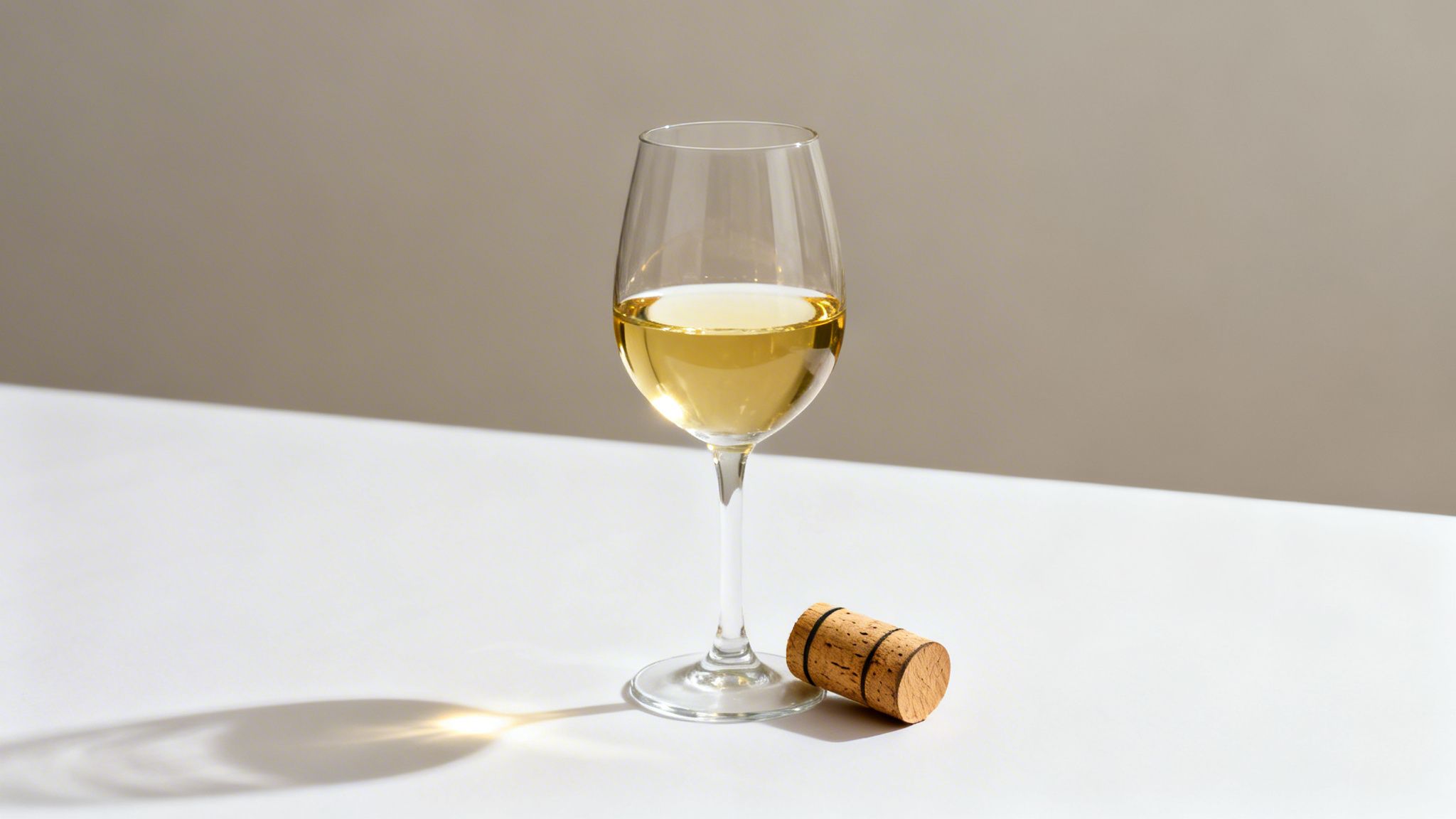
While most people automatically think of reds when they hear "full-bodied," some of the most luxurious and memorable white wines also pack that same satisfying weight. This rich, substantial texture often comes from how the wine is made, not just the grape itself.
Your most common encounter with a full-bodied white will almost certainly be Chardonnay, especially when it has been aged in oak barrels. This process adds layers of flavor and gives the wine a heavier, almost creamy mouthfeel. If you see words like "oaked," "barrel-fermented," or "creamy" on a label, chances are you're holding a full-bodied white.
How to Spot a Full-Bodied White
Keep an eye out for these easy clues on a menu or label:
- Chardonnay: Specifically, look for bottles from warmer climates like California or Australia. Not all Chardonnay is big and bold, so it helps to understand the differences between styles like Chablis and Chardonnay.
- Viognier: This grape naturally produces aromatic wines that often have a rich, slightly oily texture.
- "Buttery" or "Creamy" Notes: These words aren't just fluff. They point directly to a winemaking process that creates a richer texture, a classic technique for building body in white wines.
So when should you reach for a full-bodied white? It's the perfect choice when you want a wine with enough presence to stand up to richer foods: think roasted chicken, creamy pasta dishes, or flavorful seafood.
Common Full-Bodied Red Wines to Look For
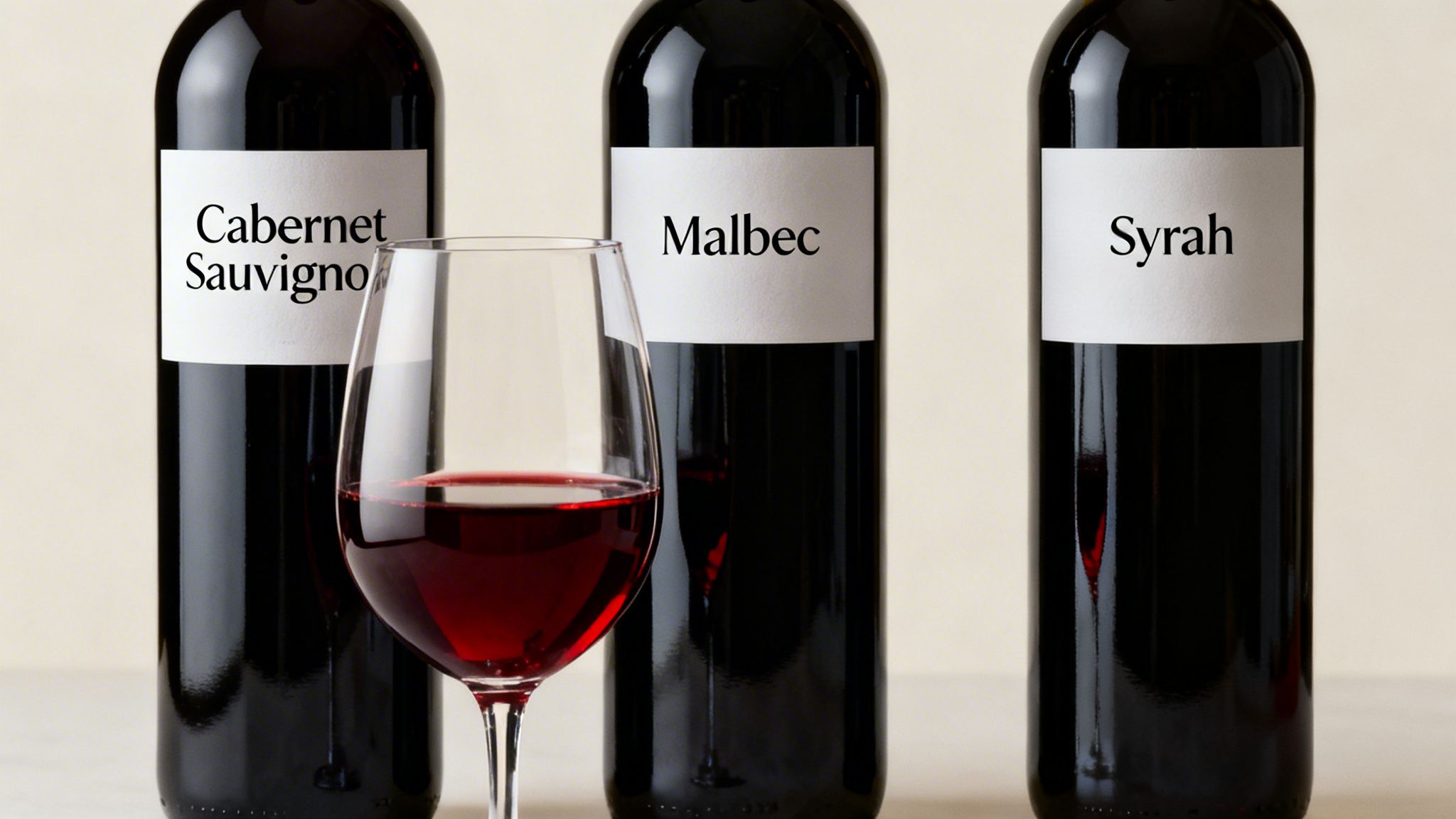
When people talk about a “big” or “bold” wine, they’re usually picturing a full-bodied red. These are the classic, powerful wines that feel substantial and rich in your mouth. You've definitely seen their names on menus and store shelves, and knowing just a few of them makes choosing your next bottle a lot less intimidating.
These wines get their powerful character from grapes that ripened fully in the sun, developing plenty of sugar which later ferments into higher alcohol. This creates a wine with a weighty texture and intense flavors that can confidently stand up to rich, savory meals like a juicy steak or a hearty pasta dish.
The Names to Know
You don’t need to memorize a long list. Just keeping an eye out for these three popular grapes will almost always lead you to a classic full-bodied red wine experience.
- Cabernet Sauvignon: Often called the king of red wines, it’s famous for its deep color, firm texture, and flavors of dark fruit like black cherry and blackcurrant. Think of it as the reliable, structured choice.
- Malbec: Originally from France but now a star in Argentina, Malbec is typically smoother and more plush, with ripe fruit flavors like blackberry and plum. It’s often a real crowd-pleaser.
- Syrah (or Shiraz): This grape delivers bold, dark fruit flavors, but often with an extra layer of spice, like black pepper. You'll see it called Syrah in France and most of Europe, and Shiraz in warmer climates like Australia.
The next time you're looking for a wine to pair with a rich meal, spotting one of these names is a safe bet. They deliver the weight and intensity you're likely craving.
Choosing one of these well-known bold red wines is a fantastic starting point. Once you find a style you enjoy, you can start exploring others that offer a similar powerful profile.
How to Choose the Right Bottle Confidently
Knowing what 'full-bodied' means is one thing. Actually finding a great bottle that fits your taste right now is another challenge. Whether you’re staring at a long restaurant wine list or standing in a crowded shop, that moment can be surprisingly stressful. You just want to feel good about your choice, not anxious about making a mistake.
This is exactly the kind of decision Sommy helps with. Instead of guessing based on a label, you can get a clear recommendation based on your personal taste.
Getting a Quick, Personalized Recommendation
Imagine you’re at a restaurant, ready to order a steak, and you want a big, full-bodied red to go with it. But you don't recognize a single name on the wine list.
With an AI-powered assistant like Sommy, you can scan the menu with your phone. The app can instantly give you personalized recommendations based on your unique taste profile. It removes the guesswork completely.
That little screen gives you a clear, confident "yes," showing you exactly how a specific wine aligns with bottles you already love. No more crossed fingers and hoping for the best.
This is especially helpful because some full-bodied wines can be more expensive. Making a confident choice really matters when the stakes are higher. A personal wine assistant helps you cut through the noise and find a perfect full-bodied gem that actually fits your budget.
The best part is how it learns. Eventually, you can just ask for a wine "full-bodied like that '19 Napa Cab I loved," and get a spot-on recommendation.
Ultimately, choosing wine confidently comes down to having the right information at your fingertips. Tools like Sommy, combined with a little practical knowledge, empower you to make choices you feel great about. For more tips on what to look for, check out our guide on how to read wine labels.
Quick Answers to Common Questions
Let's clear up a few common questions about full-bodied wines. These are the kinds of things people often wonder but might feel shy to ask. Think of this as your quick, practical cheat sheet.
Does Full-Bodied Mean the Wine Is Better?
Not at all. Think of it like the difference between whole milk and skim milk. ‘Full-bodied’ is just a description of the wine's weight and texture in your mouth. A delicate, light-bodied wine can be just as complex and delicious.
The only "better" wine is the one you actually enjoy drinking. It all comes down to personal taste, not a technical label.
Is a Full-Bodied Wine Higher in Alcohol?
Generally, yes. The things that give a wine a full body (like very ripe, sugar-rich grapes) also lead to higher alcohol levels during fermentation.That’s why you’ll often spot an ABV of 13.5% or more on the label.
That alcohol isn't just a number; it adds to that feeling of richness and warmth in your mouth, which is a big part of the full-bodied experience. It’s a really useful clue when you're browsing the aisle.
Remember: Higher alcohol isn't the only factor, but it’s a strong and reliable indicator. Grapes with more sugar produce more alcohol, which in turn creates a heavier, more viscous texture.
How Do I Ask for a Full-Bodied Wine at a Restaurant?
It’s way simpler than you might think. You don’t need any special vocabulary. Just use plain, descriptive language.
Try saying something like:
- "I'm in the mood for a richer, heavier red wine."
- "Could you recommend a full-bodied white for me?"
- "What's a good full-bodied red that goes with the steak?"
This gives your server or sommelier clear, helpful direction without putting you on the spot. Simple, honest words are always the best way to get a wine you'll love.
What Is an Easy Way to Find a Full-Bodied Wine at the Store?
The fastest shortcut is to look for a few key grape varieties known for their power. You don’t need to memorize a long list; just a couple of names will get you far.
- For Reds: Keep an eye out for Cabernet Sauvignon, Malbec, or Syrah/Shiraz. These are almost always powerful and rich.
- For Whites: Look for Chardonnay, especially if the label mentions it's "oaked" or "barrel-fermented."
And don't forget that alcohol trick. A quick glance at the back label for anything over 13.5% ABV is a strong hint that the wine inside will feel substantial and full.
Instead of feeling unsure at a restaurant or overwhelmed in a store, Sommy can help you find the perfect bottle in seconds. Just tell the AI what you're looking for, like a "full-bodied red that goes with lamb", and get a clear, confident recommendation based on your taste. To see how it works, check out Sommy.ai.