Syrah and Shiraz are the same grape, so the choice between them isn't really a choice between two wines. It's a choice between two styles that winemakers signal with the name they put on the label. Syrah usually points toward a fresher, peppery, savory red, while Shiraz usually points toward riper fruit, softer edges, and a fuller feel in your mouth. If you like black pepper on a steak, reach for Syrah. If you like dark chocolate and jammy berries, reach for Shiraz.
That's the whole shortcut, and it works in about eight cases out of ten. The rest of this piece is about the two cases where it doesn't, and how to tell which one you're holding before you spend the money.
Are Syrah and Shiraz actually the same grape?
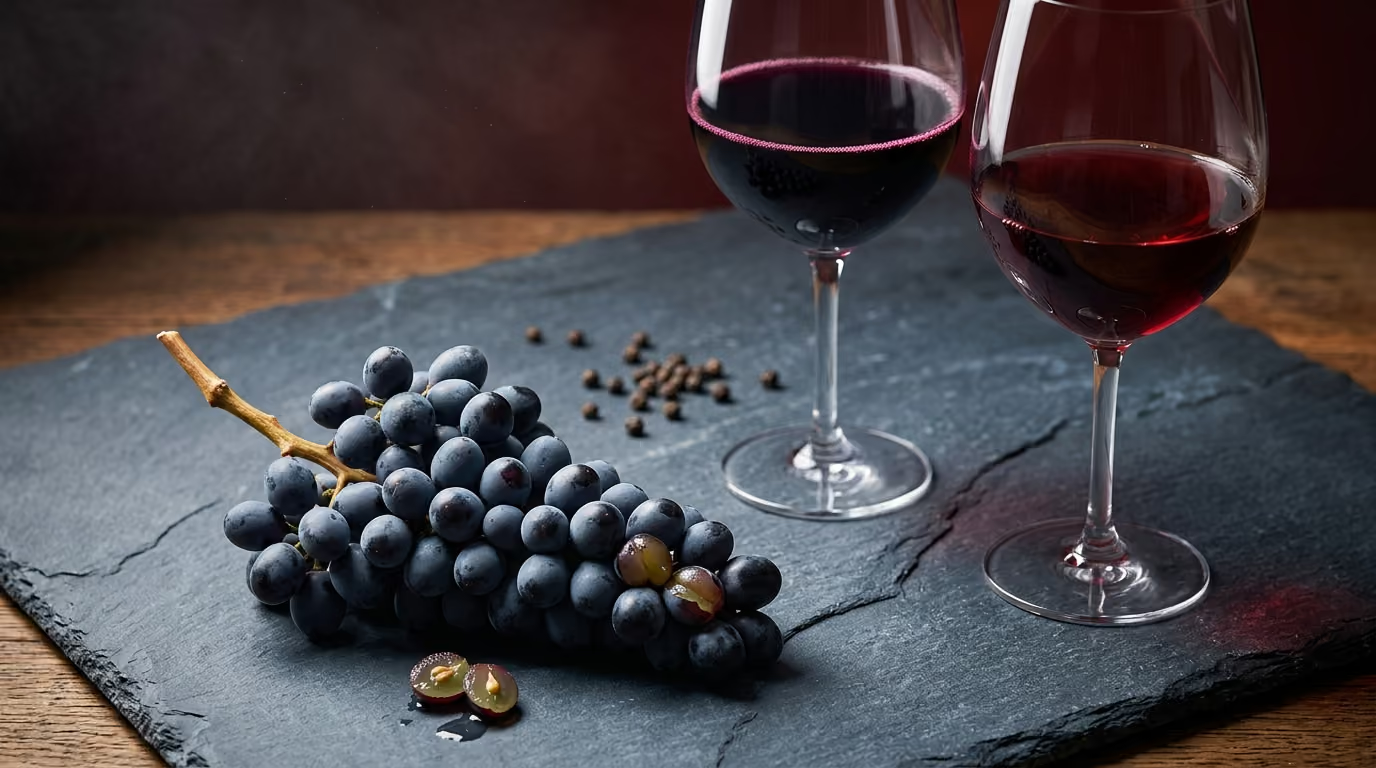
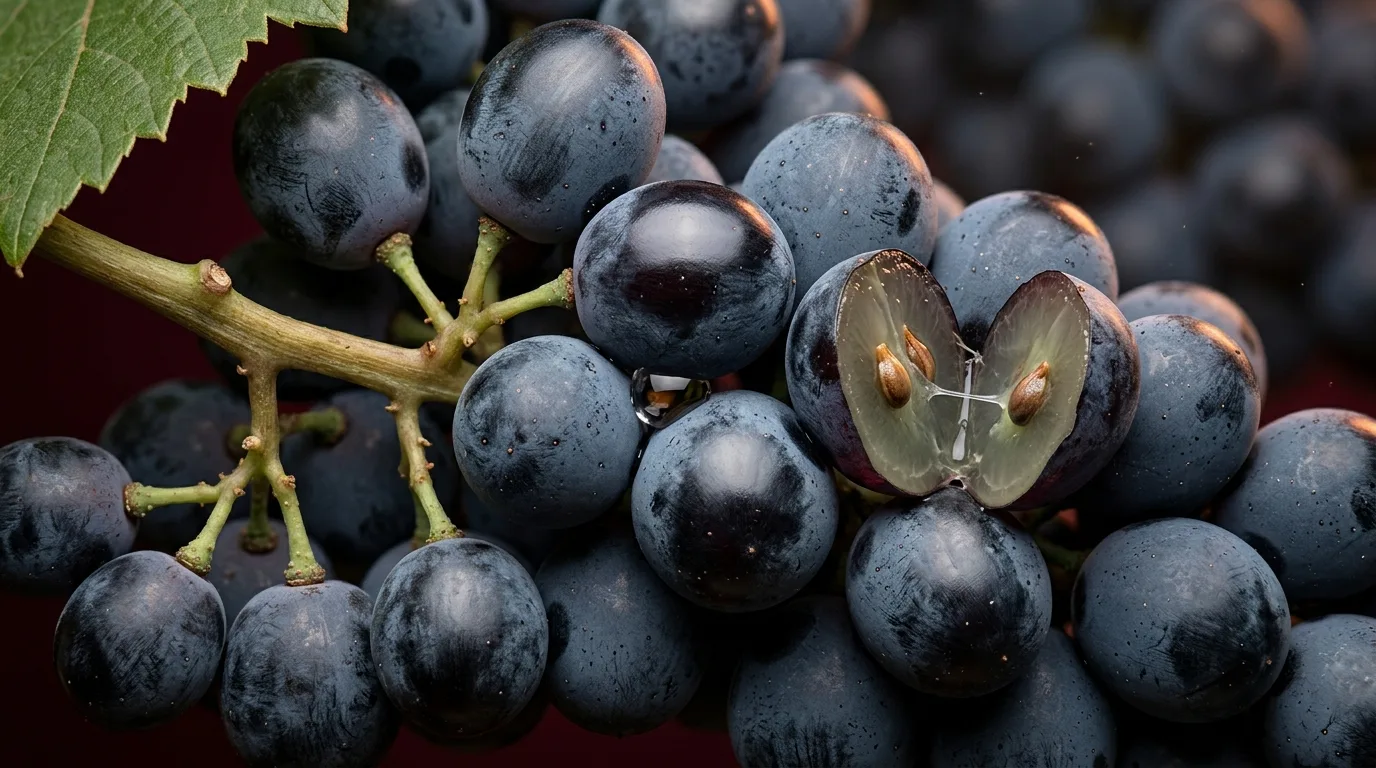
Yes, genuinely the same grape, and this isn't a marketing story or a case of two close cousins getting confused. The French national vine registry lists Syrah as the offspring of a crossbreeding between Mondeuse Blanche and Dureza, two old French varieties, and places its geographical origin in the northern Côtes du Rhône or the Dauphiné. There's no second grape hiding behind the second name.
You may have heard that the grape came from the Persian city of Shiraz and traveled west. It's a lovely story and the genetics don't support it. The parentage is French on both sides, which is why the registry entry reads the way it does.
So why do two names exist at all? Australia adopted "Shiraz" as its own, and the name stuck so hard that it became a style signal rather than a translation. When James Busby brought French vine cuttings to Australia in the 1830s, the plantings that followed grew into an identity that wanted its own word. French and most European producers kept "Syrah". Over time, producers everywhere started picking whichever name matched the wine they'd made, which is exactly why the name became useful to you.
A California winemaker who's made something lean and peppery will often put "Syrah" on the label. One who's made something plush and oaky will often choose "Shiraz". Neither one of them is lying to you, and both are telling you in a single word what they were going for.
Why does the same grape taste so different?
Climate does most of the work, and it does it through ripening speed. In a cool place the grapes ripen slowly, which holds onto acidity and lets savory, herbal and peppery notes develop. In a hot place they ripen fast, sugar climbs, and the wine comes out with more concentrated dark fruit and higher alcohol.
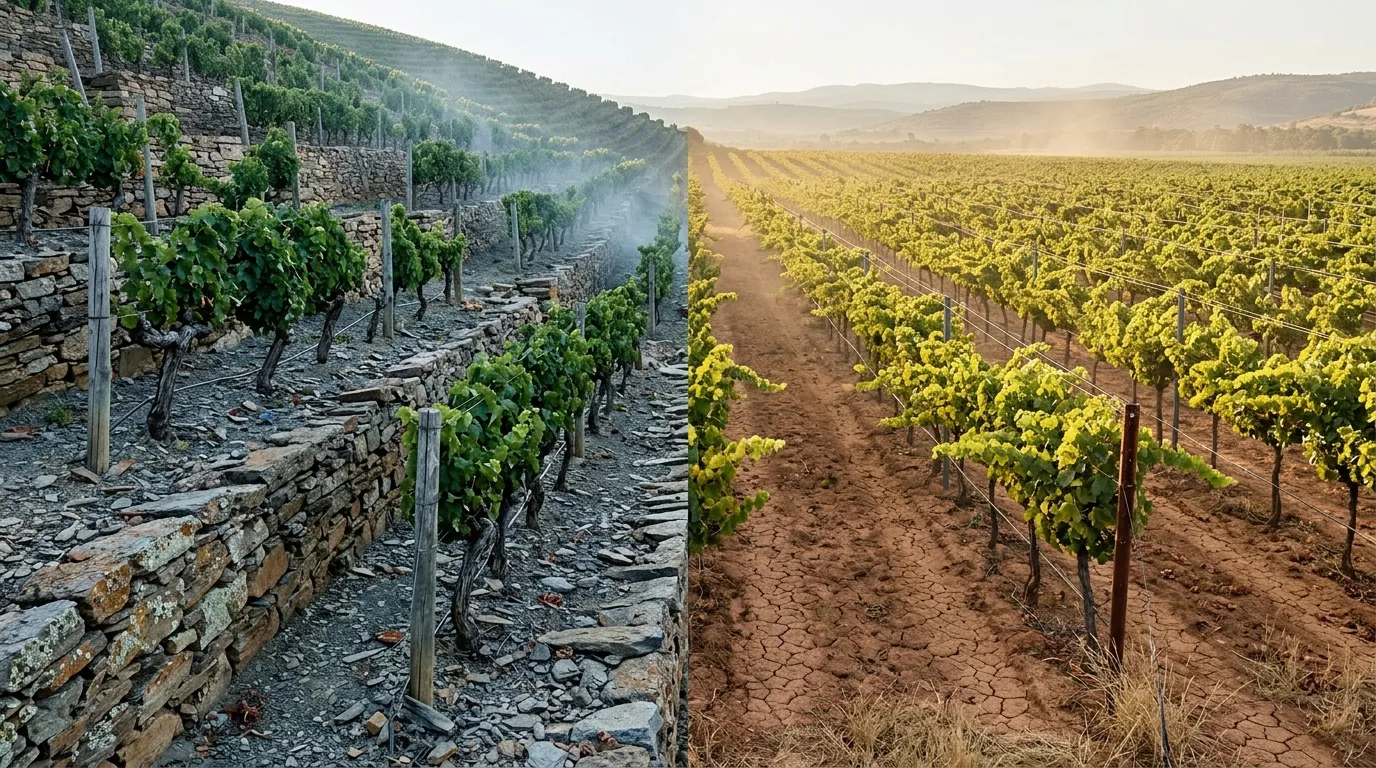
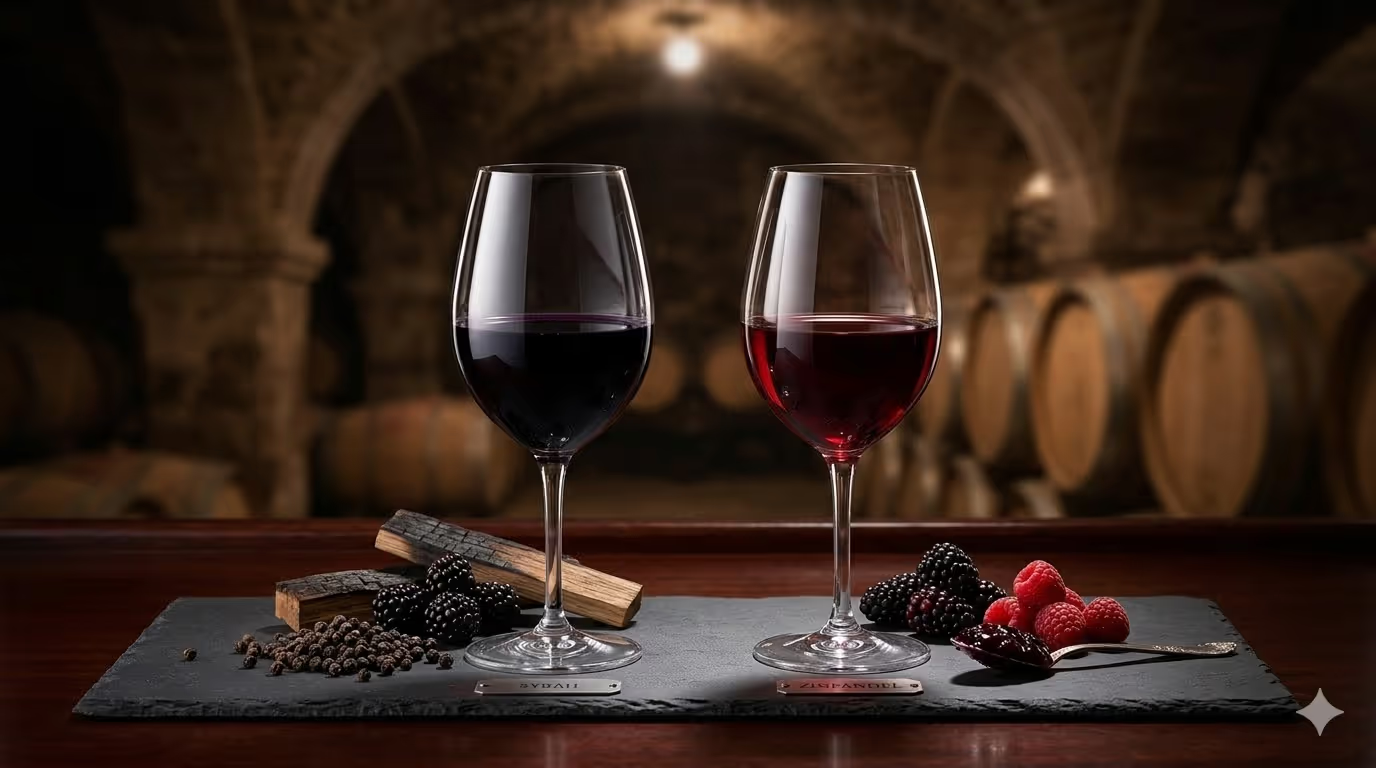
The Northern Rhône is the cool-climate benchmark, and its appellations are worth recognizing on a label: Côte-Rôtie, Hermitage, Cornas, Saint-Joseph, and Crozes-Hermitage. Wines from those steep slopes tend to show blackberry and plum wrapped in black pepper, violet, olive, cured meat and dried herbs. The acidity gives them lift alongside food, and young bottles can feel firm and tightly wound before they open up.
Barossa Valley and McLaren Vale in South Australia are the warm-climate benchmark, and they push the same grape somewhere else entirely. Expect blueberry, ripe blackberry, cocoa, licorice and sweet baking spice, with a rounder, fuller body and tannins that feel smooth rather than gripping. Alcohol usually runs higher, and that contributes to the impression of weight and warmth.
This split shows up beyond those two homelands. Cooler parts of Washington State and France's Languedoc lean savory. Warmer sites in California, South Africa and inland Australia lean rich. The name on the bottle is a shortcut for that split, not a law about it.
What does "peppery" actually mean in a Syrah?
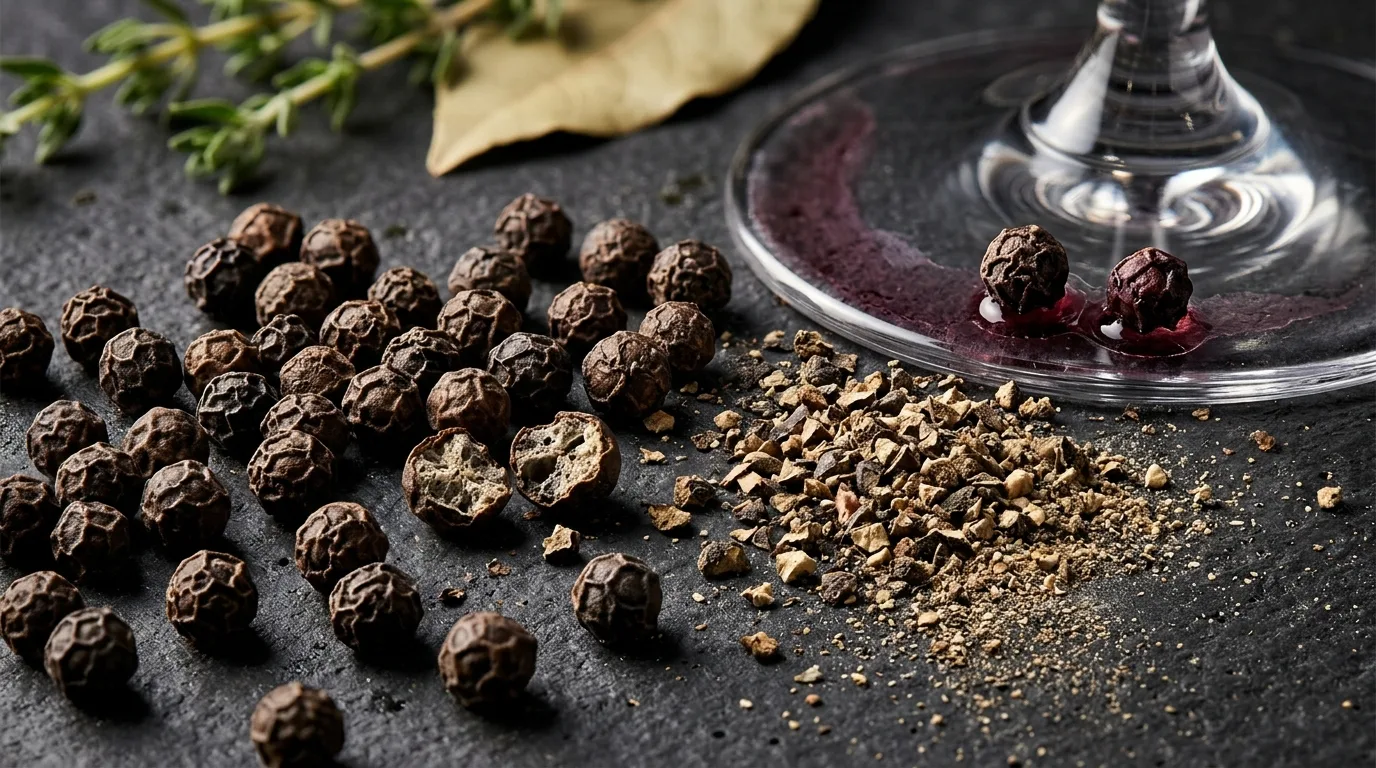
The pepper is a real, measurable compound, not a poetic flourish. It's called rotundone, and the Australian Wine Research Institute describes it as the potent, grape-derived compound responsible for the black pepper aroma in wine. Their research found that cooler regions like the Grampians and Pyrenees in Victoria produce noticeably more of it than the warmer Barossa and McLaren Vale.
Two things follow from that, and both are useful when you're shopping. Cooler sites give you more pepper, so a bottle from a cool appellation is a reasonable bet if pepper is what you're after. And people vary enormously in how strongly they detect rotundone, so if a friend raves about a wine's pepper and you smell mostly blackberry, neither of you is wrong. Our guide to how to spot a peppery red wine goes deeper on training yourself to catch it.
Here's how the two styles usually line up. Treat these as tendencies rather than guarantees, because a determined winemaker can push a wine anywhere.
| What you notice | Cooler-climate Syrah | Warmer-climate Shiraz |
|---|---|---|
| Fruit | Blackberry, plum, black cherry | Blueberry, ripe blackberry, blackberry jam |
| Other flavors | Pepper, olive, violet, smoke, cured meat | Cocoa, licorice, vanilla, sweet baking spice |
| Feel in the mouth | Fresh, structured, grippy | Broad, smooth, plush |
| Typical alcohol | 12.5% to 14% | 14% to 15.5% |
One thing that table can't show you is that both columns are dry wines. Ripe fruit reads as sweetness to a lot of people, and a jammy Barossa Shiraz can taste sweet while containing almost no residual sugar. If you want to understand why that happens, our explainer on what tannin does in wine covers how texture and fruit ripeness fool your palate.
How do oak and the label change the style?
Oak is the second lever after climate, and it can move a wine further in either direction. Traditional Northern Rhône producers often age in older French barrels or large wooden casks, which adds texture while leaving the pepper, herbs and dark berry in front. The wood is doing structural work rather than adding flavor.
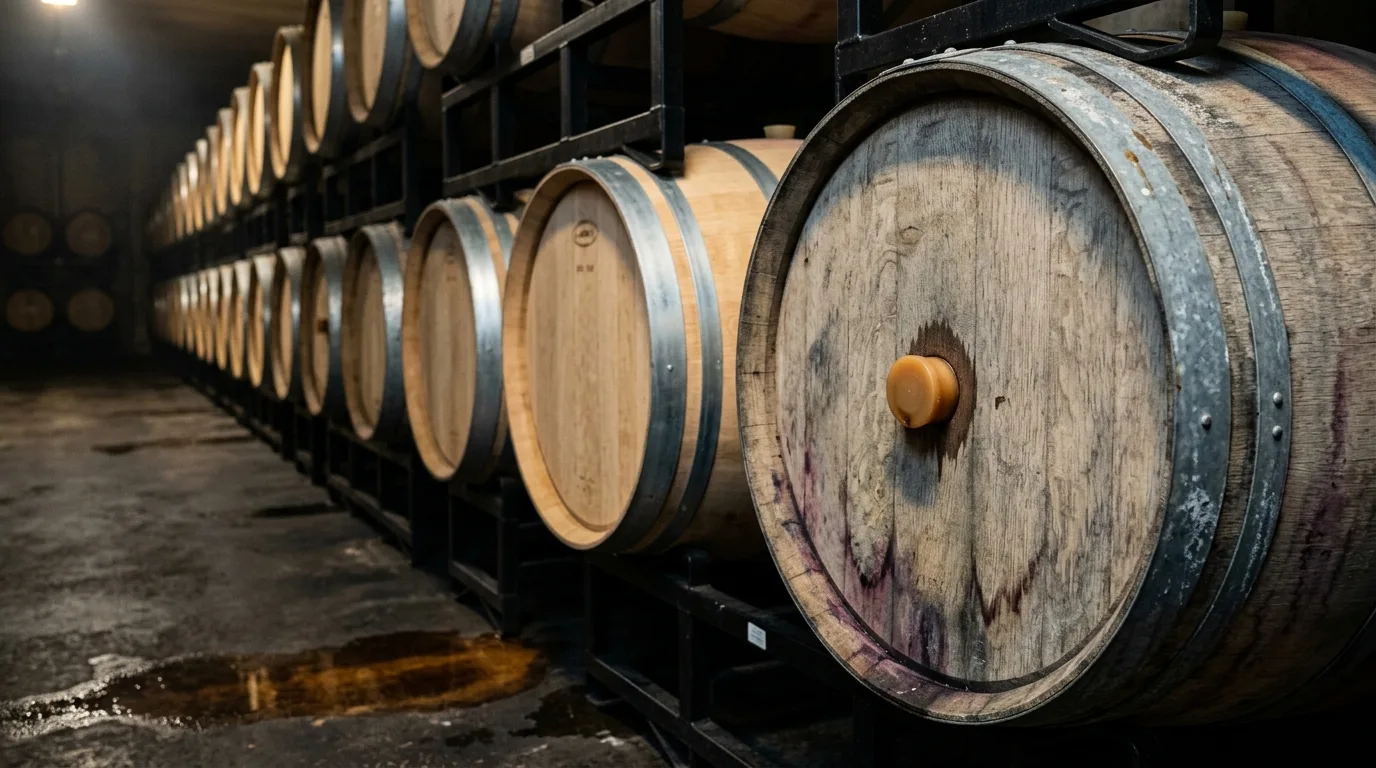
Plenty of Australian Shiraz sees new American oak instead, and that's a different ingredient. American oak contributes vanilla, coconut, sweet spice and sometimes a chocolate impression. Neither approach is better than the other. They produce different wines, and the question is only which one you want with dinner.
You can read most of this off the bottle before you buy. A label naming Barossa Valley or McLaren Vale, or using words like "reserve" and "barrel aged", usually points toward the bigger, oak-influenced end. A label naming Crozes-Hermitage or Saint-Joseph usually points toward the fresher, savory end. Alcohol is the other honest signal sitting right there in small print: a 13% Syrah from a cool region will almost always feel lighter across a meal than a 15% Barossa Shiraz.
None of that requires memorizing French geography. If label decoding is where you usually get stuck, our walkthrough on how to read wine labels turns the front and back into about four things worth checking.
One more label habit is worth knowing, because it trips people up in the supermarket. Australian producers often blend Shiraz with Cabernet Sauvignon and label the result "Shiraz Cabernet", which lands somewhere between the two styles: the Cabernet adds firmer tannin and a leafy, blackcurrant edge to the Shiraz fruit. In the Northern Rhône the blending partner is completely different, since a small proportion of the white grape Viognier is permitted in Côte-Rôtie and co-fermenting it lifts the aromatics into apricot and floral territory. Both blends are legitimate and neither is a downgrade, but they explain why a bottle can taste off-script for its name.
Which one should you buy tonight?
Start from what you're eating and how heavy you want the evening to feel, because those two answers decide it faster than any tasting note. Savory food with herbs, char or earth wants Syrah. Sweet, smoky or fatty food wants Shiraz.

Choose Syrah when dinner involves roast lamb with rosemary, grilled mushrooms, duck, aged cheese, olive tapenade or a pepper-crusted steak. Its acidity cuts through salt and fat, and its savory side echoes herbs and char instead of fighting them. If you're cooking a serious cut of beef, our notes on the best wine for prime rib explain why peppery reds work so well against a crust of cracked pepper and salt.
Choose Shiraz when you're dealing with barbecue ribs, burgers, sausages, glazed ham or anything with caramelized, sticky edges. Its dark fruit and sweet spice meet a sweet sauce halfway rather than clashing with it, which is why it holds up next to barbecue ribs and pulled pork when leaner reds get lost.
Very spicy food deserves a warning. High alcohol makes chile heat feel hotter and rougher, so a 15% Shiraz with a fiery curry will taste harsh. Either drop to a lower-alcohol bottle, chill it for twenty minutes, or pour the peppery Syrah instead and let the savory notes work with the spice.
If you're standing in a restaurant with a list in front of you and no time to think, describing the feeling you want works better than naming a grape. "I'd like a dry red with pepper and freshness" gets you a Syrah. "I'd like something rich and smooth with dark fruit" gets you a Shiraz. Servers understand that language immediately, and it saves you from pronouncing Côte-Rôtie under pressure.
This is also the moment where Sommy's Fit Check earns its place. You can type or scan a specific bottle and get a straight verdict on whether it fits your style before you commit to it, which is more useful than a general style rule when there's exactly one Syrah on the list and you want to know if it's your kind of Syrah.
Price behaves differently across the two names, and knowing that saves money. Australian Shiraz is one of the most reliable categories under fifteen dollars, because the warm climate delivers ripeness cheaply and the big producers have the scale to sell it inexpensively. Northern Rhône Syrah rarely gets that cheap, since the vineyards are steep, small and hand-worked, so the entry point tends to sit closer to twenty-five dollars for Crozes-Hermitage or Saint-Joseph. If you want savory, peppery character on a tight budget, look instead to the Languedoc, to Washington State, or to a cool-climate Australian region such as the Grampians, where the same style shows up for meaningfully less money.
Frequently asked questions
Are Syrah and Shiraz the same grape?
Yes, they really are one grape. They're two names for one dark-skinned grape variety whose documented parents are Mondeuse Blanche and Dureza. "Syrah" is standard in France and most of Europe, and "Shiraz" is standard in Australia and used elsewhere as a style signal.
Is Shiraz actually sweeter than Syrah?
Almost never in terms of actual sugar, since both are made dry. Shiraz often tastes sweeter because warm-climate ripeness produces jammy fruit and sweet spice notes, and higher alcohol adds a perception of richness that reads as sweetness.
Which is smoother, Syrah or Shiraz?
Shiraz usually feels smoother and rounder, especially from Barossa Valley or McLaren Vale with generous oak. Syrah tends to have firmer structure, brighter acidity and more grip, which some people read as smoother because it feels cleaner.
What food pairs well with Syrah and Shiraz?
Syrah suits roast lamb, rosemary, mushrooms, charcuterie and pepper-crusted steak. Shiraz suits barbecue ribs, burgers, sausages, glazed ham and smoky or sweet-sauced dishes.
Does Syrah vs Shiraz tell you the price?
The name tells you very little about price. Both spellings cover everything from ten-dollar supermarket bottles to Northern Rhône wines costing several hundred dollars. The appellation and producer set the price far more than the spelling does.
Should I chill Syrah or Shiraz?
A short chill helps both, and it helps high-alcohol Shiraz most. Twenty minutes in the fridge takes the alcoholic heat off a 15% bottle and tightens up a peppery Syrah nicely.
Pick the version that sounds like you
The Syrah versus Shiraz decision comes down to a preference you already have. If pepper, herbs, freshness and structure sound appealing, the French spelling is your signal. If dark fruit, sweet spice, warmth and a plush texture sound better, the Australian spelling is your signal.
What makes this worth remembering is that the same shortcut keeps working after tonight. When you find a bottle you love, note the spelling, the region and the alcohol level, then look for that combination again. Those three details predict your next bottle far better than a score or a shelf tag ever will, and they cost you nothing to write down.