A Super Tuscan is a high-quality red from Tuscany made outside the region's traditional appellation rules, usually by blending Cabernet Sauvignon, Merlot or Syrah with Sangiovese, or by leaving Sangiovese out entirely. The term has no legal definition at all, so it will almost never appear on the bottle. What you'll see instead is Toscana IGT and a name the producer invented, which is the actual signal you're looking for.
That gap between the phrase everyone uses and the words printed on the label is why the category confuses people. Most explanations of Super Tuscans tell you where they came from in the 1970s. Very few tell you how to recognize one while a server is waiting, or why the single most famous example doesn't carry the marking everybody says to look for.
What does Super Tuscan actually mean?
Super Tuscan describes a style and an attitude rather than a place or a legal category. The Wine and Spirit Education Trust puts it plainly in its explainer on what a Super Tuscan wine is: unlike Brunello di Montalcino, where the rules dictate the growing area, the permitted grapes and the aging, none of that applies to Super Tuscan, because the term has no fixed meaning and isn't legally defined.

The reason it exists at all comes down to one rule that looks absurd today. When the Chianti DOC was written, it required the wine to be a blend of 50 to 80% Sangiovese, 10 to 30% Canaiolo Nero and 10 to 30% Trebbiano Toscano or Malvasia, which meant a red wine had to contain white grapes and could never be pure Sangiovese. Those white grapes stripped color and flavor out of the finished wine, and the rules had been written around what happened to be planted at the time rather than around quality.
Ambitious producers who wanted to plant Cabernet Sauvignon, use small French oak barrels or make a pure Sangiovese had no way to do it inside the system. So they went outside it and accepted the lowest legal classification for their best wines. The category that eventually gave them a proper home, Indicazione Geografica Tipica, arrived in 1992, and Wine Folly's history of Super Tuscan wines traces the term itself to the early 1980s, when writers needed a name for wines that were obviously excellent and technically bottom-tier.
Antinori's Tignanello is the wine most often credited with defining the style, and it's still made to a blend of 80% Sangiovese, 15% Cabernet Sauvignon and 5% Cabernet Franc. Sassicaia is the other founding name, grown from Cabernet Sauvignon that Mario Incisa della Rocchetta planted at Bolgheri on the Tuscan coast in 1944 and kept for his own table until the first commercial release, the 1968 vintage, went on sale in 1971.
How do you spot a Super Tuscan on a shelf or a wine list?
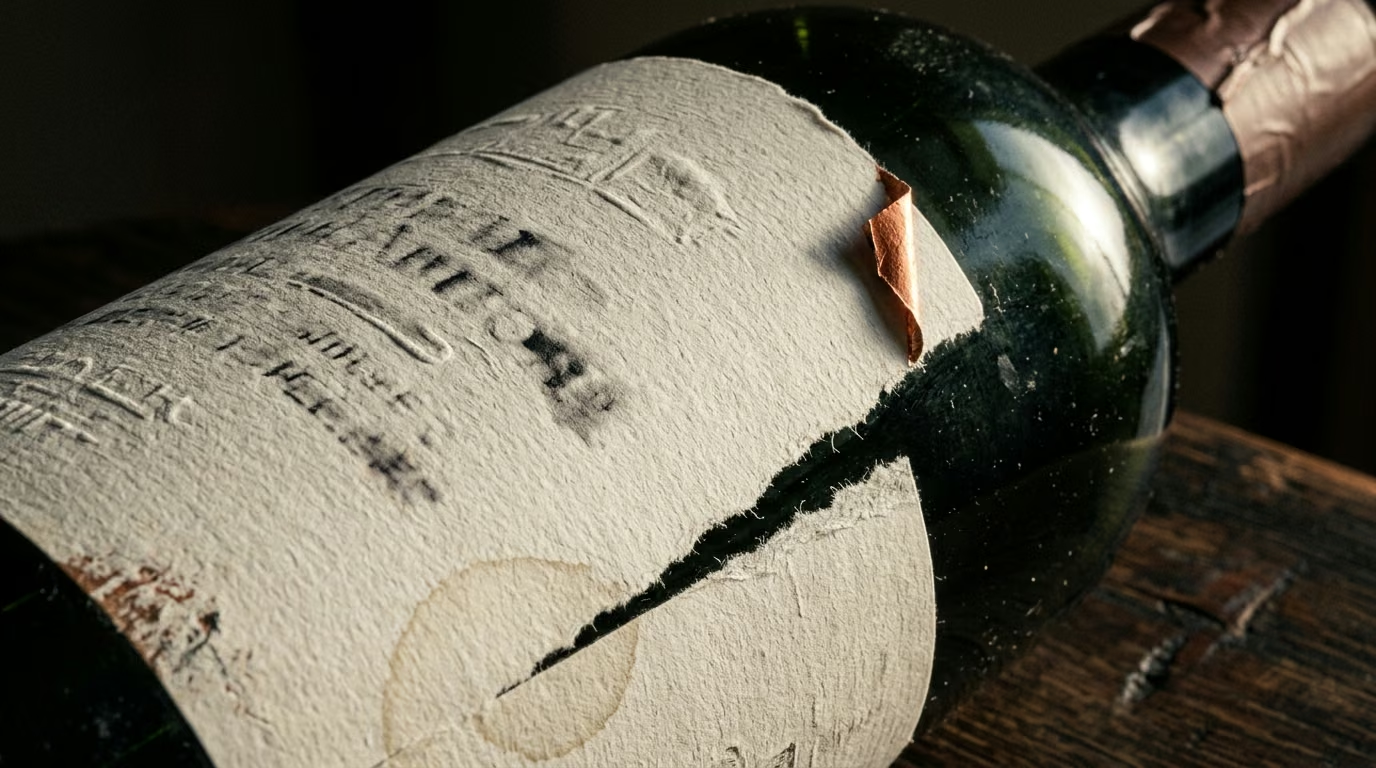
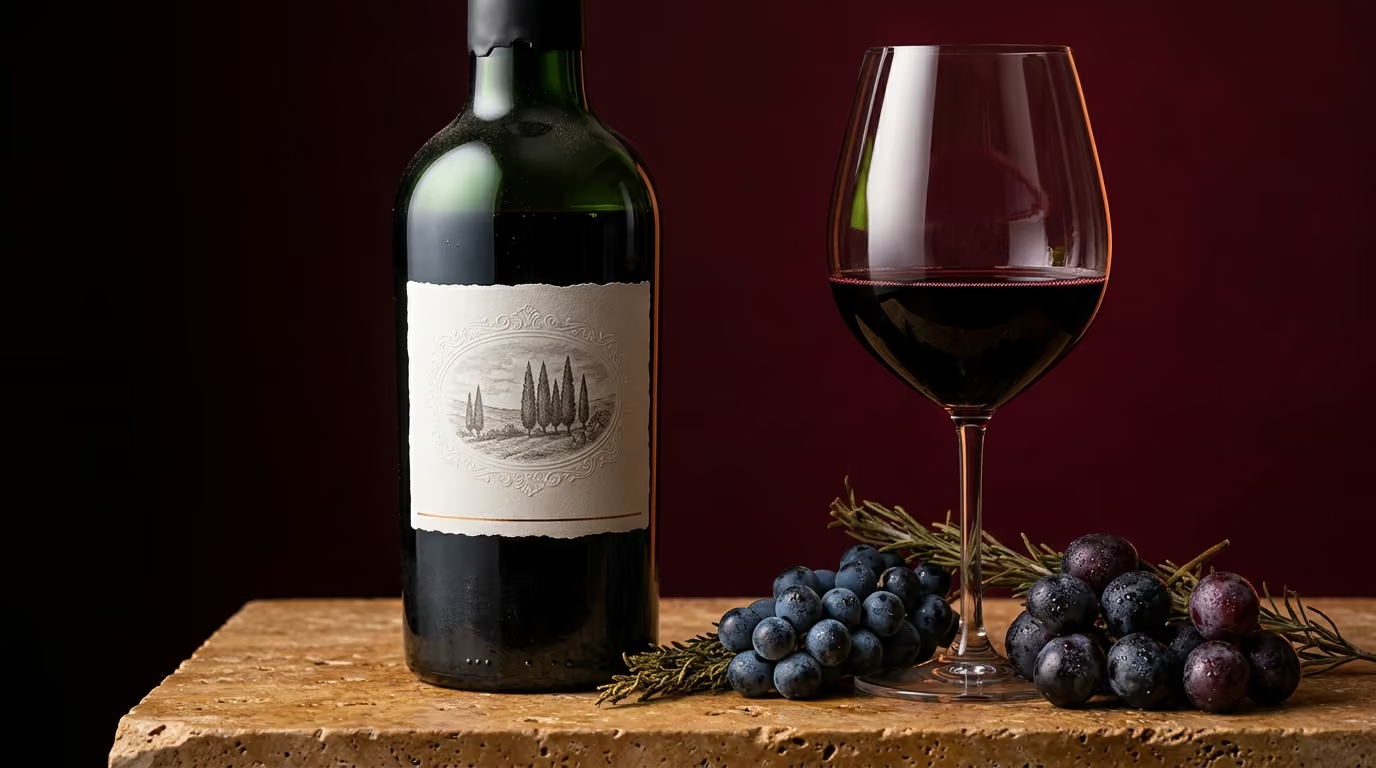
Three signals in combination will identify one, and you can run the check in about ten seconds. Look for Toscana IGT on the label, a proprietary name that isn't a grape or a place, and the absence of a classic Tuscan appellation like Chianti Classico or Brunello di Montalcino.
The proprietary name is the strongest tell of the three. Producers making these wines couldn't put a famous appellation on the front, so they invented names instead, which is how you get Tignanello, Lucente, Oreno, Siepi and Solaia. If the biggest word on a Tuscan red is a word you've never seen and can't map to a grape or a village, you're almost certainly holding one.
Toscana IGT is the second signal, and it's usually printed in smaller type near the bottom of the front label or on the back. Wine Folly makes the point that this notation is what ties the whole loose category together, since these wines have nothing else in common on paper. Our walkthrough of how to read an Italian wine label covers where IGT sits relative to DOC and DOCG, and the guide to what DOCG means covers the tier these producers walked away from.
The third signal is what's missing. A bottle that says Chianti Classico, Vino Nobile di Montepulciano or Brunello di Montalcino is playing inside the rules by definition, so it isn't a Super Tuscan no matter how good it is or how much it costs.
Region names on the front are worth learning too, because they narrow the style before you read anything else. Bolgheri and the wider Maremma on the Tuscan coast lean toward Cabernet and Merlot, so those bottles tend to be darker and rounder. A Toscana IGT from the inland Chianti hills is far more likely to be Sangiovese-led and tarter. If the front label offers you nothing but a proprietary name, our broader guide to reading a wine label without guessing covers the rest of what's printed there.
One warning about the grape listing. Many of these wines don't name their grapes on the front at all, which is deliberate, and it means you often can't tell a Sangiovese-led blend from a Bordeaux-style one without reading the back label or asking. That distinction matters more to how the wine tastes than the Super Tuscan label ever will.
If you'd rather not run that checklist standing in an aisle, Label Scan reads the bottle in front of you and tells you what's actually in it.
Why doesn't Sassicaia say Toscana IGT?
Because it outgrew the category it helped create. Sassicaia now has its own denomination, and Italian Wine Central's record of Bolgheri DOC shows how that happened: Bolgheri was established as a DOC for white wines in 1984, red and rosato wines were added in 1994, and Bolgheri Sassicaia split off as a separate DOC of its own in 2013.
That leaves the most cited Super Tuscan on earth wearing a classic appellation rather than an IGT, which quietly breaks the rule of thumb everyone repeats. Several of Bolgheri's other big names sit in the same position, labelled Bolgheri DOC or Bolgheri Superiore rather than Toscana IGT, because the appellation was eventually written around the style instead of against it. Bolgheri Rosso now permits any proportion of Cabernet Franc, Cabernet Sauvignon and Merlot, with up to half Sangiovese and up to half Syrah, which is close to a legal definition of the Super Tuscan blend.
The practical takeaway is worth holding onto. Toscana IGT reliably tells you a wine was made outside the traditional rules, but the reverse doesn't hold, because plenty of wines in the Super Tuscan style now carry a DOC. Treat IGT as a positive signal and never as a requirement.
What does a Super Tuscan taste like next to a Chianti?
Expect a rounder, darker and more polished wine than a classic Chianti, with softer edges and more obvious oak. Dark cherry, plum, cassis, dried herbs and a cedar or vanilla note from barrel aging show up in most of them, and the texture tends to be smoother because Merlot and Cabernet fill in the middle where Sangiovese alone can feel lean.

A traditional Chianti Classico usually tastes tarter and more savory, with sour cherry, tomato leaf and a firmer, drier finish. That's Sangiovese doing what it does, and our guide to Sangiovese covers the grape on its own terms. The Bordeaux grapes in a Super Tuscan smooth that profile out, which is exactly why the style took off with American drinkers and exactly why some Chianti loyalists find it less interesting.
Neither is the better wine, and which one suits you depends on what you want from a Tuscan red. If you like the tension and the tartness of a classic Chianti, a rich Bordeaux-style Super Tuscan can taste generic and overworked by comparison. If Chianti has always struck you as too austere, this is the version of Tuscany that fixes it.
The variation inside the category is genuinely wide, though, and that's the part the name hides. A 100% Sangiovese bottled as Toscana IGT and a Merlot-dominant blend from the coast are both Super Tuscans, and they taste nothing alike. Reading the grape breakdown on the back label tells you far more than the term itself does.
Is a Super Tuscan worth the money?
It depends entirely on which one, because the label covers an enormous price range without telling you where a given bottle sits. Checking Wine-Searcher on September 1, 2026, Tenuta Luce 'Lucente' Toscana IGT averaged $26 a bottle before tax, while Antinori's Tignanello averaged $185 for the same 750ml format.
Both are Super Tuscans by any reasonable definition. A seven-fold price gap inside a single category means the term carries almost no information about value, and that's worth knowing before you let it justify a markup on a restaurant list.
The $20 to $35 band is where the category is most useful. At that price you're buying a well-made, generously fruited Tuscan red that's easy to like and easy to pair, and there's a good argument that it delivers more everyday pleasure per dollar than a Chianti Classico at the same price, because the softer texture is more forgiving on its own.
Above roughly $100 you're paying for scarcity, track record and cellaring potential rather than for a wine that's straightforwardly nicer with dinner tonight. These bottles reward keeping, and many of them genuinely improve for a decade or more. Buying one to open on a Wednesday is a real waste of what you paid for.
Restaurant lists are where the term does the most damage to your wallet, because a menu can print Super Tuscan next to a wine that would look unremarkable described by its actual appellation and price. Ask which producer it is and what the blend is. A server who can answer both is describing a real wine, and one who can't is reading a category name off a distributor sheet.
Be a little skeptical when the phrase appears in a menu description with no producer or appellation attached. It has no legal force, so anyone can print it, and it's occasionally used to add prestige to a wine that would look ordinary described accurately.
What food goes with a Super Tuscan?
Grilled and roasted red meat is the natural home for these wines, since the tannin from Cabernet and the oak both want fat and char to work against. Bistecca alla Fiorentina is the regional answer and it isn't just tradition, because a thick grilled steak is close to a perfect foil for the style.
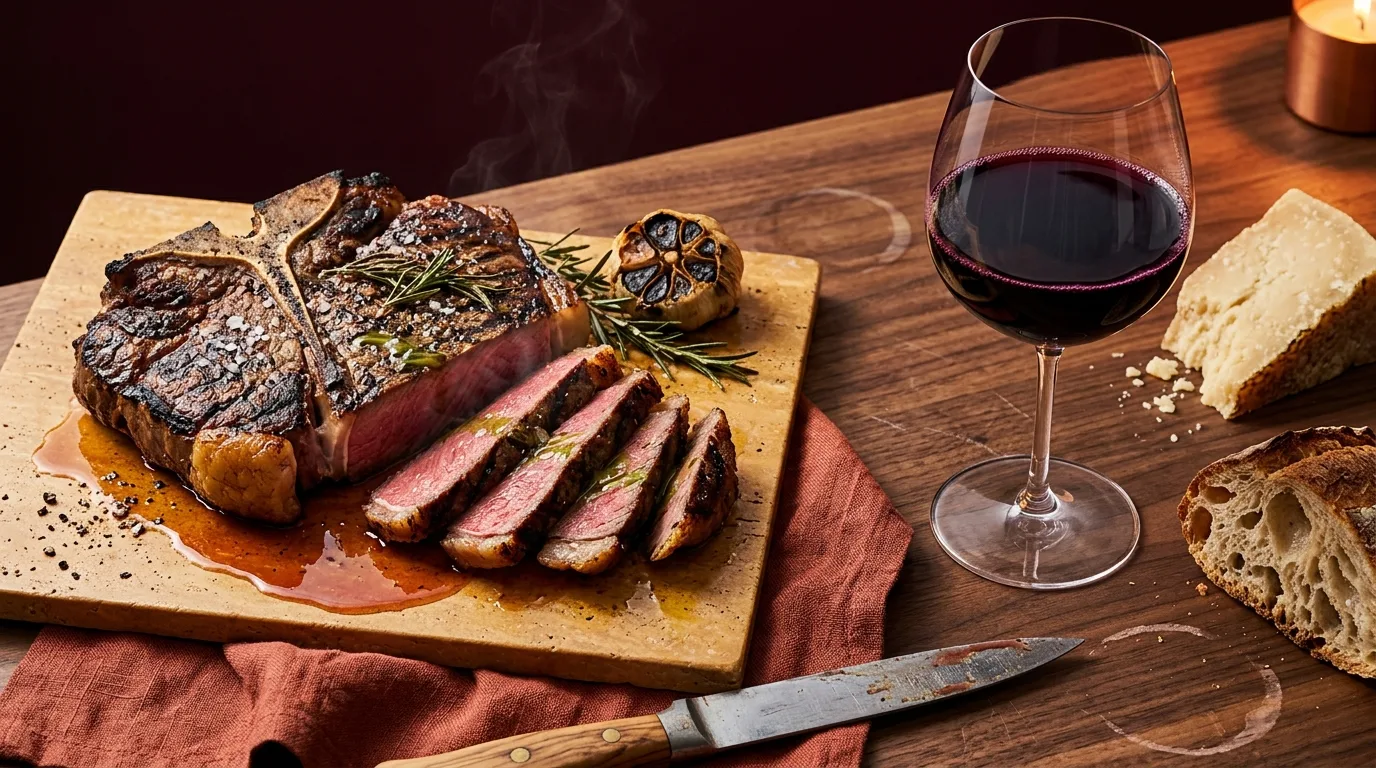
Lamb, venison, beef ragu, braised short ribs, mushroom risotto and aged pecorino all work well. Anything with rosemary, sage or black pepper picks up the herbal note that Sangiovese contributes even in a Cabernet-heavy blend. A Sangiovese-led Super Tuscan keeps enough acidity to handle tomato sauce, while a Merlot-heavy one can taste flat against it, so the grape breakdown on the back label is genuinely useful here.
The pairings to avoid are the light ones. Delicate fish, salads and simple chicken dishes get overwhelmed, and a $60 bottle spent on a plate it flattens is a poor evening for everyone. Our rundown of wine for Italian food covers what to pour when the menu is lighter than that.
Frequently asked questions
Is Super Tuscan an official wine classification?
No, it has no legal standing in Italian wine law, and the WSET notes that unlike Brunello or Chianti it carries no rules about grapes, growing area or aging. The phrase is a nickname coined by writers that simply stuck.
Do Super Tuscans always say Toscana IGT?
Most do, and it's the most reliable single marker. Some no longer do, because wines like Sassicaia now have their own appellation, and Bolgheri Sassicaia became a separate DOC in 2013.
What grapes go into a Super Tuscan?
Usually Sangiovese blended with Cabernet Sauvignon, Cabernet Franc, Merlot or Syrah, in any proportion the producer chooses. Some contain no Sangiovese, and some are 100% Sangiovese made outside the appellation rules.
Are Super Tuscans always expensive?
No, and the range is very wide. Bottles in the $20 to $35 band are common and often the best value in the category, while the famous names run into the hundreds.
Is a Super Tuscan better than a Chianti Classico?
Neither is better as a rule, and they aim at different things. Super Tuscans tend to be rounder and more oak-influenced, while Chianti Classico stays tarter and more savory.
How long can you keep a Super Tuscan?
The everyday bottles are best within about five years of the vintage. The serious ones are built for a decade or more, which is a large part of what their price reflects.
Why is it called Super Tuscan?
The name was coined by wine writers in the early 1980s, who needed a way to describe Tuscan wines that were plainly excellent but stuck in the lowest legal classification because they broke the appellation rules.
Using the term without being used by it
Super Tuscan is a useful shorthand and a poor specification. It reliably tells you a Tuscan red was made with freedom over the local rulebook, and it tells you nothing at all about the grapes, the price or whether the wine in your glass will be tart and Sangiovese-driven or dark and Bordeaux-shaped.
So use the label test to spot one, then ignore the phrase and read the back. The grape breakdown, the producer and the price will tell you far more about what you're about to drink than the two words everyone repeats.