You're at a restaurant, you've chosen the pork tenderloin, and now the wine list has arrived. Or maybe you're in a grocery store aisle, trying to pick a bottle for dinner tonight. A little wave of uncertainty hits. What wine won't mess this up?
That feeling is normal, but the answer is simple. For pork tenderloin, you want a light-to-medium-bodied wine with good acidity. Your safest and most delicious bets are a Pinot Noir for a red, a dry Riesling for a white, or a quality dry Rosé for a perfect in-between option. Any of these will make your meal better without you having to know a thing about wine theory.
This guide will show you how to pick the right style for your specific dish, so you can feel confident every time.
Your Go-To Wines for Pork Tenderloin

Let's make this easy. Pork tenderloin is lean, tender, and mild. It needs a wine that’s more of a graceful partner than a forceful one. Think of it as the "white meat" of the red meat world. The goal is a wine that cleanses your palate, not one that hijacks the meal.
Instead of getting overwhelmed by options, just decide which style you're in the mood for. You can't go wrong with one of these three.
Quick Pairing Cheat Sheet
Use this simple chart to make a fast, confident choice at a restaurant or in a store.
| Wine Style | Why It Works | Best For |
|---|---|---|
| Light Red (Pinot Noir) | Bright acidity and soft texture complement the meat without overpowering it. | Classic roast pork with herbs or mushrooms. |
| Crisp White (Dry Riesling) | High acidity cuts through richness and balances sweet or spicy sauces. | Pork with fruit glazes (apple, apricot) or Asian spices. |
| Dry Rosé | Offers the red fruit notes of a red with the crispness of a white. | Grilled pork tenderloin, especially in warmer weather. |
Pinot Noir is the classic for a reason. Its bright cherry notes and silky feel are a natural fit for this lean cut. But the real secret to great pairing isn't just about the meat—it’s about the sauce.
Once you understand that one simple trick, you'll see that a pork tenderloin wine pairing isn't complicated at all. For more ideas, see our guide to wines for pork dishes.
Match the Wine to the Sauce, Not the Meat

Here is the single biggest secret to making any wine pairing easier: stop focusing on the meat and start focusing on the sauce.
Pork tenderloin itself is delicate and clean. The flavor your wine actually needs to get along with is almost always the sauce, glaze, or seasoning. Think of the pork as a blank canvas. This one mental shift turns a confusing "meat pairing" problem into a simple "flavor matching" game.
This approach removes the pressure and makes choosing a great wine much less stressful. You can learn more about this simple framework in our guide on how to match wine with food.
Your Simple Sauce-Based Framework
Instead of trying to memorize dozens of wine names, just identify the main personality of your sauce. Most pork tenderloin dishes fall into one of these four categories. Once you know which one you're having, picking the right style of wine is a breeze.
- Earthy & Savory: Think mushroom gravy or rosemary-thyme crusts. These rich, savory flavors call for a wine with similar earthy notes. A light-bodied red like Pinot Noir is the classic, can’t-miss choice.
- Fruity & Sweet: This covers popular sauces like apple chutney, apricot glaze, or a cherry reduction. For these, you want a wine with its own fruit notes and enough crispness to balance the sweetness. A dry or off-dry Riesling is your best friend here.
This is the most important takeaway: The sauce is the boss. Match your wine to the dominant flavors in the sauce, and you'll create a delicious pairing every time, removing the fear of choosing wrong.
Spicy and Creamy Sauce Pairings
What about sauces with a little more punch or a richer, creamier texture? The same rule applies. Match the wine to the sauce's personality.
- Spicy & Tangy: For dishes with a kick, like a spicy mustard rub, you need a wine that can cool the heat. A fruity, low-tannin red like Gamay (Beaujolais) or a slightly sweet, aromatic Gewürztraminer works beautifully.
- Creamy & Rich: Think Dijon cream sauce. You need a wine with enough acidity to cut through that richness. An unoaked or lightly oaked Chardonnay has the body and crispness to slice through the cream perfectly.
By focusing on these four flavor profiles, you can confidently navigate any wine list and find a bottle that sings with your dinner.
Choosing the Right Red Wine With Confidence
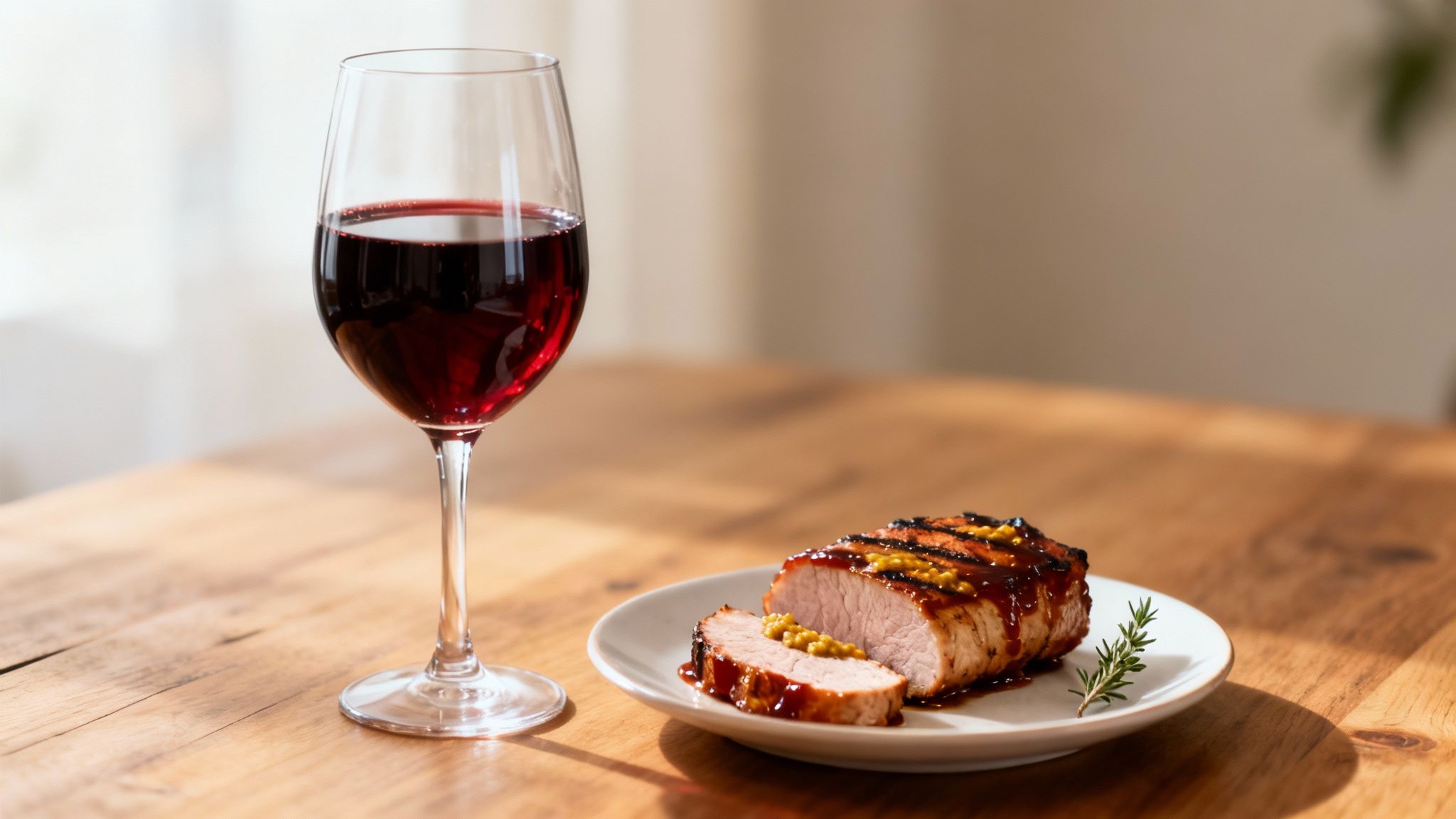
So you're in the mood for red. Great choice. But what if you want to try something new without the fear of picking a dud?
The plan is simple: find a red that’s more about bright fruit than heavy tannins or oak. This approach lets both the pork and the wine shine. Exploring different reds should be fun, not a chore. These suggestions are safe bets that take the guesswork out of trying something new.
For a Softer, Fruitier Red
If you already like Pinot Noir and want to explore that same style, grab a bottle of Gamay. This is the grape behind Beaujolais, a wine famous for its vibrant red berry flavors and silky-smooth feel.
A good Gamay is dynamite with pork that has an herb crust or a simple pan sauce. It has that same light-bodied, food-friendly vibe as Pinot Noir but often with a juicier, more playful personality. If you're ever stuck between styles, our guide on Merlot vs. Pinot Noir can help clarify the differences in lighter reds.
For Bolder Sauces and Flavors
But what if your pork tenderloin is dressed up with something richer, like a tangy mustard glaze or a savory barbecue rub? This is where a slightly gutsier red can step up. You don't need a heavy Cabernet, but a wine with a little more spice works wonders.
A Côtes du Rhône from France is a brilliant and often affordable pick. These wines usually offer a beautiful mix of ripe red fruit and a peppery spice that can stand up to bolder flavors without steamrolling the delicate pork.
These are simple frameworks, not rigid rules. Instead of getting lost in specific vineyards, you can walk into a store and confidently ask for a Gamay for something light, or a Côtes du Rhône for something with more spice. This is exactly the kind of in-the-moment decision Sommy helps with, guiding you to a great bottle based on your meal.
Finding the Perfect White Wine for Your Dish
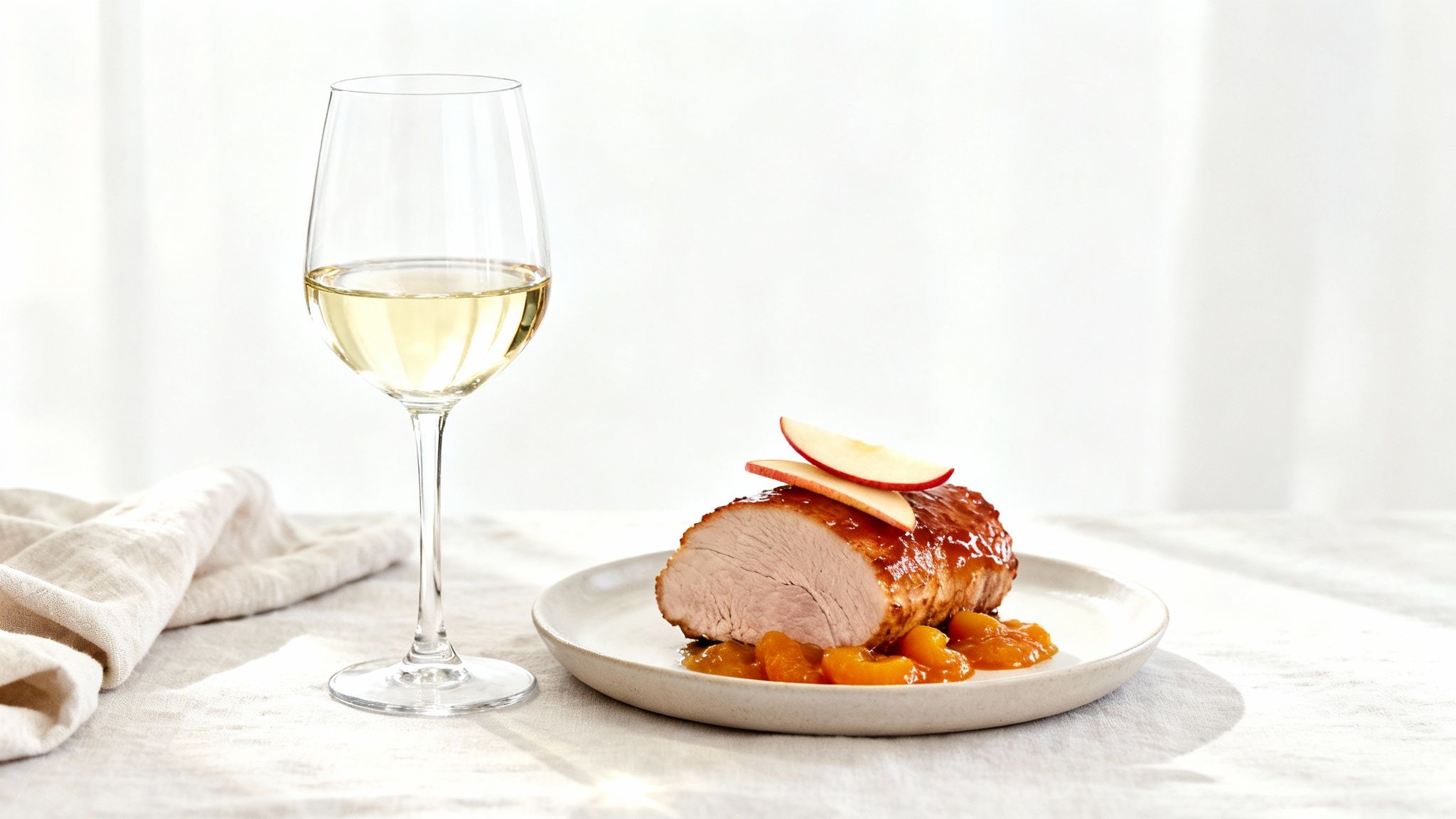
While red wine often gets the attention, a great white can be an absolutely brilliant partner for pork tenderloin, especially when your dish features brighter flavors like fruit glazes, a touch of spice, or a cream sauce.
The right white wine brings an acidity that cuts through richness, making every bite feel fresh.
Don't overthink it. Instead of getting lost in specific regions, just focus on the wine's personality. Is it crisp and zesty, or rich and textured? This simple approach makes finding the right bottle a breeze.
For Dishes with Fruit or Spice
When your pork tenderloin is served with apple chutney or an apricot glaze, you need a wine that can play on the same team. Your best friend here is a wine with bright acidity and its own fruity character.
A dry or off-dry Riesling is the classic choice for a reason. Its zippy acidity and notes of green apple and citrus create a perfect harmony with fruity sauces, balancing their sweetness. You can learn more about top white wine styles for pork from Decanter, but the main takeaway is that Riesling's crispness makes it a stellar partner.
For Creamy and Rich Sauces
If your recipe calls for a creamy mushroom sauce or a Dijon cream reduction, you’ll want a white wine with a bit more body. The goal is to find something that can stand up to the sauce without getting lost.
An unoaked or lightly oaked Chardonnay is a fantastic fit here. It has just enough weight to match the creamy texture, while its core acidity keeps the pairing feeling fresh and lively. If you want to dive deeper, our guide explains the key differences between styles like Chablis and other types of Chardonnay.
The key is to look for a Chardonnay that’s described as "bright" or "fresh" rather than "buttery" or "oaky." This ensures it has that crisp backbone needed to complement the dish.
The Wonderfully Versatile Option
Looking for a fantastic all-rounder? Look no further than Chenin Blanc. A dry style offers a beautiful balance of stone fruit flavor and sharp acidity, making it a wonderfully flexible pork tenderloin wine pairing. It's a confident choice when you want something a little different but just as delicious.
When Rosé Is the Best Answer
Sometimes the right call isn't red or white—it's the versatile space in between. If you've ever felt caught between choices, a dry Rosé is your stress-free solution. It’s a genuinely smart and sophisticated pick that just gets along with everything.
A good Rosé has the best qualities of both worlds for this dish. It brings the crisp, refreshing acidity of a white wine, which keeps your palate clean. At the same time, it has enough of the bright red berry notes from a light red, giving it the backbone to stand up to grilled or herb-crusted pork.
The Ultimate Crowd-Pleaser
This unique blend makes Rosé the perfect problem-solver in a few common situations:
- Group Dinners: One person wants red, another wants white? Rosé is the ultimate peacemaker.
- Outdoor Meals: Its refreshing quality makes it a natural for grilled pork tenderloin at a barbecue.
- When You're Unsure: If you don't know exactly how the pork is being prepared, a dry Rosé is one of the safest—and most delicious—bets you can make.
Choosing a Rosé isn't a fallback; it's a strategic move. It shows confidence and an understanding that the best pairing creates balance for the entire table.
This is exactly the kind of practical decision that Sommy nails. Instead of you debating red versus white, the app can quickly identify that a dry Rosé is the ideal middle ground for your meal and preferences, giving you a quick, confident answer.
Next time you're on the fence, remember that pink is a powerful choice.
Making a Confident Choice from a Wine List
All this advice is great, but now comes the real-world test: the restaurant wine list lands on the table. That flicker of panic is completely normal. Let’s make it disappear with a simple, stress-free process. The goal isn’t to become a wine expert; it's to make a great choice for your meal, right now.
By narrowing your focus, you can find a delicious pairing for your pork tenderloin without the guesswork.
Your Three-Step Restaurant Plan
Instead of trying to read the entire list, just scan it for a few key things. This mental shortcut saves time and wipes out decision fatigue.
- Scan for the "Safe Bets": Let your eyes drift down the list, looking for the styles we've talked about. You're hunting for Pinot Noir, Gamay (or Beaujolais), dry Riesling, or dry Rosé. One of them is almost always on the menu.
- Look for Clue Words: If a wine catches your eye, scan its description. Phrases like "light-bodied," "crisp," "juicy," or "bright acidity" are all green lights. They signal you're on the right track.
- Ask the Smart Question: Still feeling stuck? Ask your server for a recommendation in plain language. You can confidently say, "I'm looking for the lightest red you have by the glass," or "Which of your white wines is the driest and crispest?"
Don't let a long wine list intimidate you. By focusing on a few familiar styles and keywords, you can reduce the options from dozens to just two or three, making your final decision quick and easy.
If you want to feel even more comfortable with menus, our guide on how to read a wine list can give you an extra boost of confidence.
This is precisely what Sommy was built to solve. Instead of guessing, you can use the app to get an instant recommendation that perfectly matches your dish and personal taste. Just scan the list, and Sommy highlights the best choices, turning a moment of stress into a confident, easy decision.
Quick Answers for Last-Minute Questions
Even with a plan, a curveball can happen. A wine you were looking for isn't on the list, or the sauce is spicier than you thought. That's normal. Here are simple answers to common questions that pop up at the last minute.
What if I can't find the exact wines mentioned?
Don't worry. The goal is to match the style of the wine, not a specific name. Think about the feel of the wine—is it light and crisp, or fruity and smooth?
- If you can't find a Pinot Noir, ask for another light-bodied red like Gamay (Beaujolais) or a lighter-style Grenache.
- If there's no Riesling, look for another crisp, unoaked white like Sauvignon Blanc, Pinot Grigio, or a dry Chenin Blanc.
Does it matter if the wine is from France or California?
For tonight's dinner? Honestly, no. The most important thing for a great pairing is the grape (like Pinot Noir) and the wine's overall body. A light-bodied Pinot Noir from California will be just as fantastic as one from France. Focus on simple descriptions like "light" or "crisp."
What about pork tenderloin with a spicy BBQ sauce?
A spicy sauce changes the game a bit. Heat calls for a wine with a touch of fruitiness to cool things down and lower alcohol so it doesn't fan the flames.
An off-dry Riesling is your secret weapon here. Its hint of sweetness is like a cool breeze for your palate. A juicy, low-tannin red like a Beaujolais (Gamay) also works wonders.
What's the one wine to bring if I know pork is for dinner?
If you need a single, can't-miss bottle to bring to a dinner party, grab a quality dry Rosé. It's the ultimate peacemaker.
Rosé has the bright acidity of a white wine to cut through richness, but just enough red fruit character to stand up to the pork. It bridges the gap for both red and white wine drinkers, making it a smart, versatile pick.
This is exactly the kind of in-the-moment problem-solving Sommy was built for. Instead of juggling grape varieties in your head, you can get a clear, personalized recommendation that fits your meal and your taste. Learn more about making confident choices every time.

EntreprEngineur. Runs on lattes. Creates with the intensity of a downhill run. Fast, slightly chaotic, ideally followed by a glass of wine.