
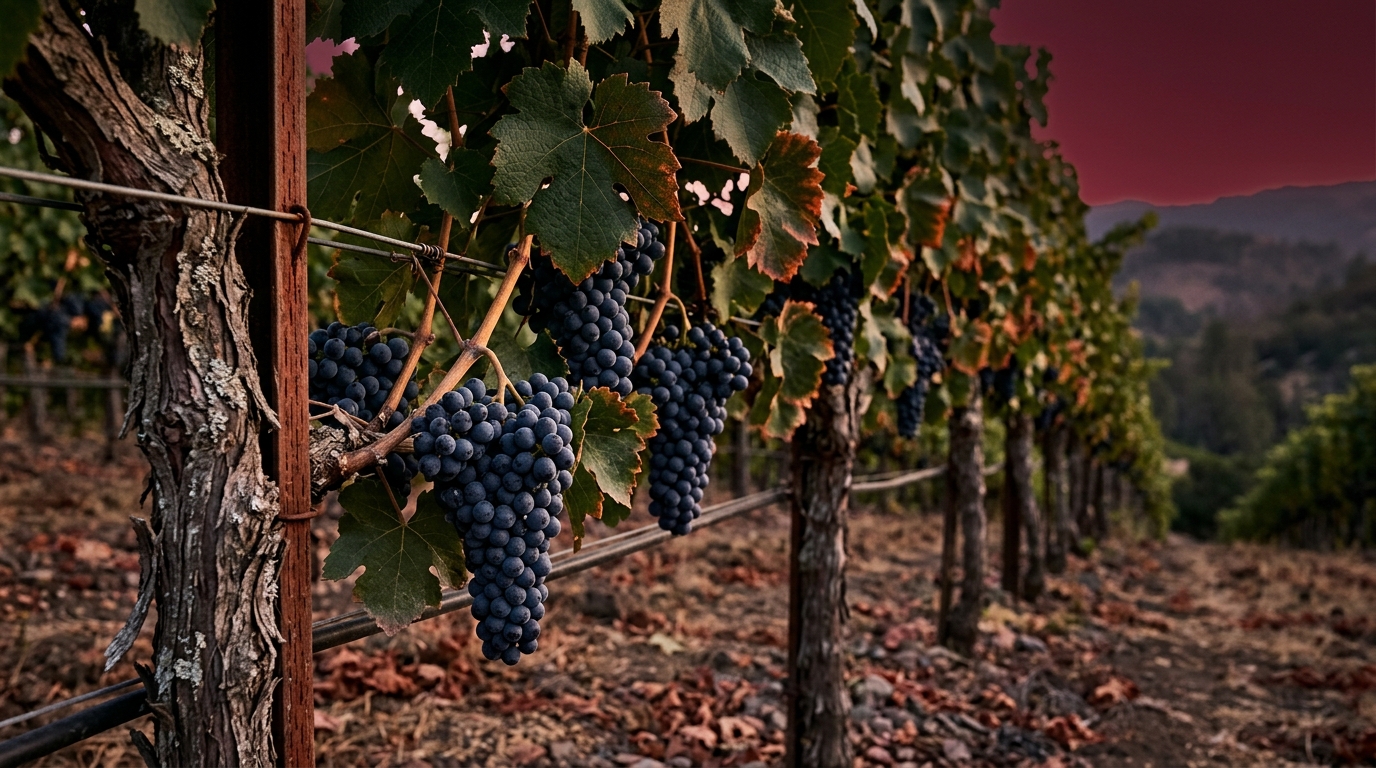

A Napa Valley Bordeaux blend is a dry red wine from Napa Valley, California, made from the same grapes that go into red Bordeaux in France: mostly Cabernet Sauvignon, rounded out with Merlot, Cabernet Franc, Petit Verdot and sometimes Malbec. Expect dark fruit, a full body and firm but polished tannins, which is why it tends to show up beside the steaks on a restaurant list. The phrase describes what's in the bottle, not how good the bottle is, so it tells you the style with real precision and tells you nothing about quality. If you like Napa Cabernet, you'll almost certainly recognize this as the same neighborhood with a few more grapes in the mix.
What is a Napa Valley Bordeaux blend?
It's a red wine grown in the Napa Valley appellation and built from the red Bordeaux grape set, with Cabernet Sauvignon almost always in the lead. The full set is Cabernet Sauvignon, Merlot, Cabernet Franc, Petit Verdot, Malbec and Carménère, though Carménère has nearly vanished from California and most Napa versions draw on the first four or five. Producers blend them because each one fixes something the others lack, and the finished wine is meant to be more complete than any single grape managed on its own that year.
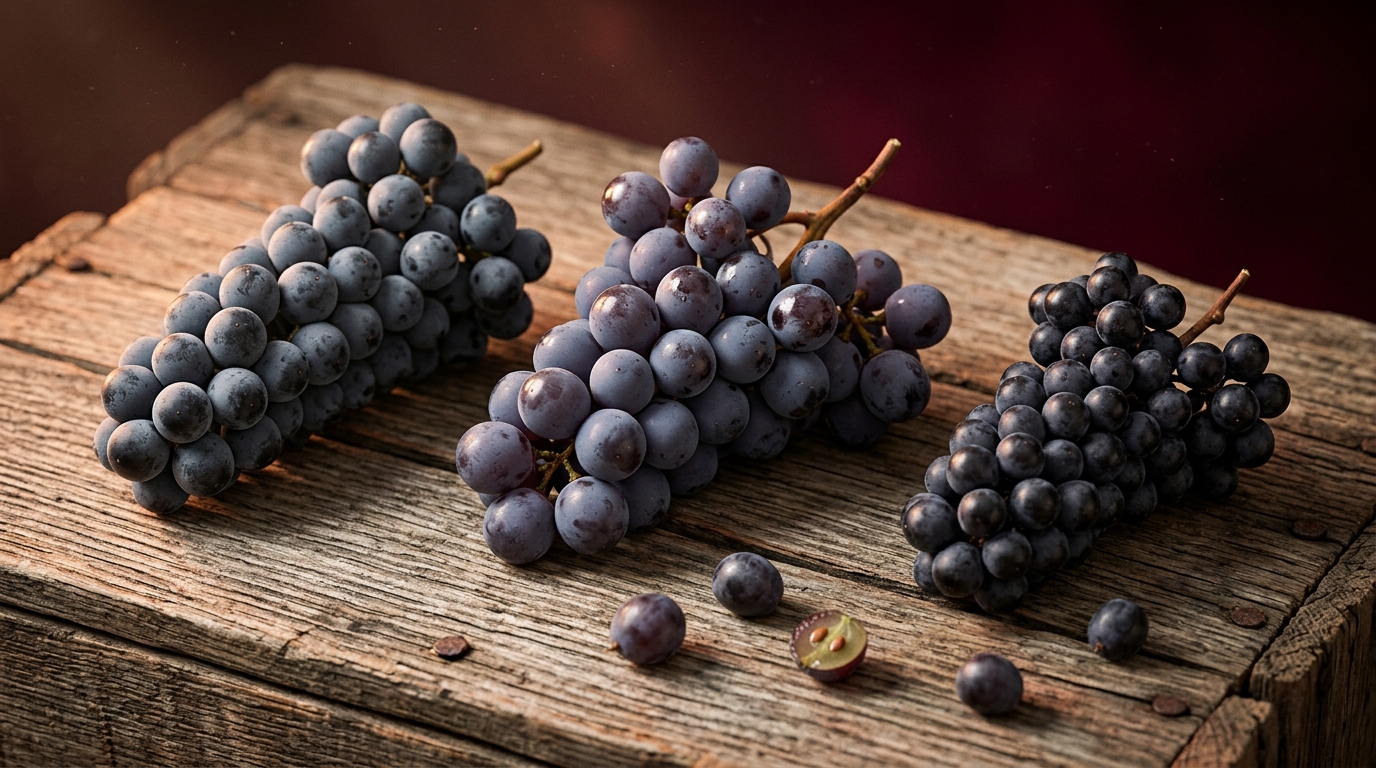
Each grape does a recognizable job in the glass. Cabernet Sauvignon supplies the frame, the dark cassis fruit and most of the tannin, which is the drying grip you feel along your gums. Merlot fills in the middle and softens the texture, and it's worth knowing how Cabernet Sauvignon and Merlot differ before you assume the blend tastes like either one alone. Cabernet Franc brings a lift of red fruit and a faintly herbal edge, Petit Verdot adds colour and extra grip, and Malbec pushes the fruit darker and plummier.
You may also see the word Meritage on an American label, which is a licensed trademark for a Bordeaux-style blend rather than a separate style of wine. Our explainer on what a red blend actually is covers where that term came from and how it sits alongside the ordinary red blends on the same shelf. For the purposes of ordering dinner, a Meritage from Napa and a Napa Bordeaux blend are asking you to expect the same kind of wine.
Why doesn't the label just say Cabernet Sauvignon?
Because federal labeling law won't let it, once the other grapes pass a certain share of the wine. A bottle can use a single grape name as its type designation only if at least 75 percent of the wine comes from that grape, and all of that 75 percent has to be grown in the labeled appellation, under 27 CFR 4.23. Put 30 percent Merlot and Cabernet Franc into the tank and the word Cabernet Sauvignon is no longer available to the winemaker, so the bottle needs another name.
That's the mechanism behind every invented proprietary name you've squinted at on a wine list. When a winery can't call the wine Cabernet Sauvignon, it calls the wine something of its own instead, and then tells you what's inside using the phrase Bordeaux blend, red blend or Meritage somewhere on the label. Opus One works exactly this way, and so do hundreds of far less famous bottles.
Many producers print the exact percentages on the back label, and those numbers are more useful to you than the tasting note above them. A wine listed at 85 percent Cabernet Sauvignon with a splash of the rest will taste close to a straight Cabernet, while one at 55 percent Cabernet Sauvignon and 30 percent Merlot is a meaningfully softer wine and will drink that way on the night. If the percentages aren't printed anywhere, the lead grape is Cabernet Sauvignon often enough that you can assume it and be right most of the time.
The Napa Valley part of the phrase carries its own legal weight. A wine can only claim a viticultural area on its label if at least 85 percent of the grapes were grown inside that area's boundaries, per 27 CFR 4.25. So the words Napa Valley are a real statement about where the fruit came from, and they're one of the few things on the front label that somebody checked. If you want more of this decoding, our guide to reading a wine label walks through the rest of the small print.
Is a Napa Valley Bordeaux blend sweet or dry?
It's dry, and that holds for essentially every bottle made in this style. The grapes are fermented until the sugar is gone, which is the tradition in Bordeaux and the practice in Napa, so the sweetness a reader worries about isn't part of the category.
People ask because these wines can taste sweet without being sweet, and that confusion is completely reasonable. Napa ripens fruit further than most of France does, so the blackberry and black cherry flavours arrive loud and jammy, and a glass of very ripe fruit reads as sweetness to a lot of palates. Add the vanilla and baking-spice notes that come from time in new oak barrels and the impression gets stronger still. The sugar isn't there, but the fruit is doing a convincing impression of it.
The practical version: if you drink Apothic or a supermarket red blend because you like the soft sweet finish, a Napa Bordeaux blend is a different experience and it may taste stern to you at first. If you drink Napa Cabernet and want a touch more flesh on it, this is the right shelf.
What does it taste like next to a straight Napa Cabernet?
Rounder in the middle, a little less angular, and usually easier to drink on its own without food. A Napa Cabernet Sauvignon is the same fruit with the corners left on, and the blend is that wine after Merlot has filled the gap between the first sip and the finish.

Neither one is the better wine, and anyone who tells you otherwise is describing their own taste rather than the bottles. What changes is where the wine feels full and where it feels tight, and that difference decides which one suits your dinner.
| If you want | Napa Cabernet Sauvignon | Napa Bordeaux blend |
|---|---|---|
| Fruit | Cassis and black currant, focused | Blackberry and plum, broader |
| Texture | Firmer, more tannic grip | Softer through the middle |
| With rare steak | The sharper match for the fat | Works, slightly gentler |
| On its own, no food | Can feel severe | Usually the easier glass |
| Across a mixed table | One clear style to like or not | Fewer people opt out |
It's worth being concrete about the word polished, because it gets used on every one of these labels and explained on none of them. Tannin is a texture rather than a flavour, and you feel it as a faint roughness or dryness across your tongue and gums after you swallow. Polished means that roughness arrives smoothly and fades without turning bitter or chalky, which is largely what the Merlot and the time in barrel are there to achieve. Unpolished tannin in a young red feels like the back of your mouth has been scrubbed, and it's the single most common reason somebody decides they don't like big reds at all.
That last row is why these wines end up on so many restaurant lists. A blend built from five grapes is designed to give a table of different drinkers something each of them recognizes, which makes it a low-risk order and a slightly less distinctive one.
How does Napa's version differ from red Bordeaux from France?
Napa gives you riper fruit and a fuller body, and French Bordeaux gives you a savoury, firmer wine that shows its structure before it shows its fruit. Same grapes, different climate, and the climate is doing most of the work.
Bordeaux sits near the Atlantic in a cooler, wetter place, so its Cabernet Sauvignon holds more acidity, lands leaner, and often carries cedar, graphite and dried-herb notes alongside the fruit. Napa gets reliable warmth and long dry summers, so the same grape arrives at the winery riper, with more sugar to turn into alcohol and softer tannins. A young Napa blend is generally the friendlier glass, and a young Bordeaux often wants food or a few more years. Our piece on the Old World and New World split covers how this pattern repeats across almost every grape you'll meet.
There's a labeling difference worth knowing too. French Bordeaux labels lead with the place, so you read Pauillac or Saint-Émilion and the grapes go unmentioned, because everyone local already knows what grows there. Napa labels lead with the grape or with a proprietary name and then tell you the blend, which is more helpful if you didn't grow up with a map of southwest France in your head.
What should you expect to pay, and what does the money buy?
The words Napa Valley cost money before the wine does, so this style starts higher than a California red blend from a broader appellation and climbs steeply from there. Land inside the appellation is expensive, the 85 percent rule means a producer can't quietly stretch the fruit with cheaper grapes from elsewhere, and both of those facts reach the shelf price.
The single biggest jump on the label is a sub-appellation. A bottle that says Napa Valley draws from the whole valley floor and its hillsides, while a bottle that says Oakville, Rutherford, Stags Leap District or Howell Mountain is naming a much smaller and more sought-after piece of it. That extra precision is usually real, because those places do make recognizably different wine, and it's also where the price stops being about farming and starts being about reputation.
The vintage year matters less here than it does on a French label, which saves you one whole layer of research. Bordeaux depends on an Atlantic climate that can rain through harvest, so its good and difficult years are genuinely far apart and people memorize them. Napa gets warm dry summers with enough reliability that a competent producer makes a decent wine most years, and the differences between vintages show up as small shifts in weight and ripeness rather than as a bottle you'd regret. Buy the producer and the appellation, and let the year be whatever the shop happens to be selling.
Above a certain point you're buying scarcity rather than flavour, and it's worth being honest with yourself about which one you wanted. A bottle made in tiny quantities and sold out on release is not automatically more to your taste than one made in reasonable volume, and plenty of people have paid for the former and quietly preferred the latter. Our rule of thumb is to spend at the level where the wine still feels like dinner rather than an event, and to treat anything above that as a purchase about the occasion.
What food goes with a Napa Bordeaux blend?
Grilled or roasted red meat, and the more char on the outside the better: ribeye, strip steak, lamb chops, short ribs. The tannin in the wine and the fat in the meat cancel each other out, so the steak tastes richer and the wine tastes smoother than either does alone.

Beyond the obvious cuts, roasted mushrooms are a genuinely good match because their savoury depth echoes the earthier notes in Cabernet Franc and Petit Verdot. A serious cheeseburger works, aged cheddar works, and a slow-braised beef dish works because the wine has enough grip to stand up to a long-cooked sauce. Our everyday red wine pairings guide has more of these if the meal isn't a steak night.
Skip it with delicate white fish, with sharply acidic tomato or citrus sauces, and with genuinely spicy food, where the alcohol and tannin amplify the heat and flatten the dish. Serve the bottle slightly cool rather than at room temperature, somewhere around 60 to 65 degrees Fahrenheit, because a warm big red tastes heavy and blurred. Our notes on wine serving temperatures explain why that single change makes the most difference of anything you can do at the table.
How do you order one without reading the whole list?
Find the Bordeaux blends grouped near the Cabernet section, then pick one by what you already know you like rather than by what the tasting note promises. A wine list description is written to sell every bottle on the page, so it can't tell you which of them suits you specifically.
That gap is the one thing an article like this can't close either, because we don't know your palate. It's also the moment Current Venue exists for: you point Sommy at the list in front of you, and it narrows that list to the bottles that fit the taste it has learned from what you've rated, so you're choosing between three plausible options instead of forty unfamiliar names. You can filter down to what's available by the glass, keep it inside a price you're comfortable with, and ask about any bottle on the list without leaving the table.
If you'd rather not use anything at all, one question to the server does most of the work. Ask which of the Bordeaux blends is the softest, or the firmest, depending on which you want, and you'll get a more useful answer than asking which is the best.
Frequently asked questions about Napa Bordeaux blends
Is a Napa Valley Bordeaux blend the same as a Meritage?
Nearly, with one difference that only matters on paper. Meritage is a licensed trademark for a Bordeaux-style blend from outside France, so a winery has to join the licensing body to print it, while Bordeaux blend is a plain descriptive phrase anybody can use. Both point you toward the same grapes and the same style of wine.
Is a Napa Valley Bordeaux blend better than Napa Cabernet Sauvignon?
Neither is better, and the choice comes down to texture. Pick the straight Cabernet Sauvignon when you want firmer tannins and a sharper edge against fatty meat, and pick the blend when you want something rounder through the middle or you're sharing one bottle across a table with mixed tastes.
Can you find a good Napa Bordeaux blend under $100?
Yes, and most of the category lives well below that line, because the bottles that climb above it are usually priced on scarcity and reputation rather than on being a better match for your dinner. A bottle labeled simply Napa Valley rather than with a specific sub-appellation is where the sensible value sits.
How long should you age a Napa Bordeaux blend?
Most of them are made to drink on release and taste good the night you buy them, so you don't need a plan. If the label names a hillside sub-appellation and the wine feels tight and grippy when you open it, giving it an hour in the glass or a decanter softens it more reliably than waiting years does.
What does Bordeaux blend mean if the wine isn't from Bordeaux?
It means the wine copies Bordeaux's grape recipe rather than its address. The phrase is shorthand for a red built from Cabernet Sauvignon, Merlot, Cabernet Franc, Petit Verdot and Malbec in some combination, and it gets used in California, Washington, Chile, South Africa and Australia for exactly that reason.
Picking one without second-guessing yourself
The phrase on the label is more informative than it looks and less impressive than it sounds. It tells you the wine is dry, Cabernet-led, full-bodied and grown inside Napa Valley, and those four facts are enough to know whether it belongs with your dinner. Everything else on the front of the bottle is the winery's choice of name.
So treat it as a style marker and not as a verdict. When the meal involves char and fat and the table can't agree on one grape, a Napa Bordeaux blend is a genuinely sensible order, and when you want the sharper, more particular version of the same fruit, ask for the straight Cabernet Sauvignon instead. The only question left after that is which one you'll actually enjoy, and that one nobody can answer from the label.
