An unopened bottle of wine lasts years rather than weeks, and the exact number depends far more on what's in it and where it sat than on the date printed on the label. Light whites, rosé and everyday sparkling wine are usually at their best within one to three years of purchase. Ordinary reds hold for two to five, and structured reds built on tannin can go a decade or longer. A cool, dark cupboard beats a sunny kitchen shelf by a wide margin.
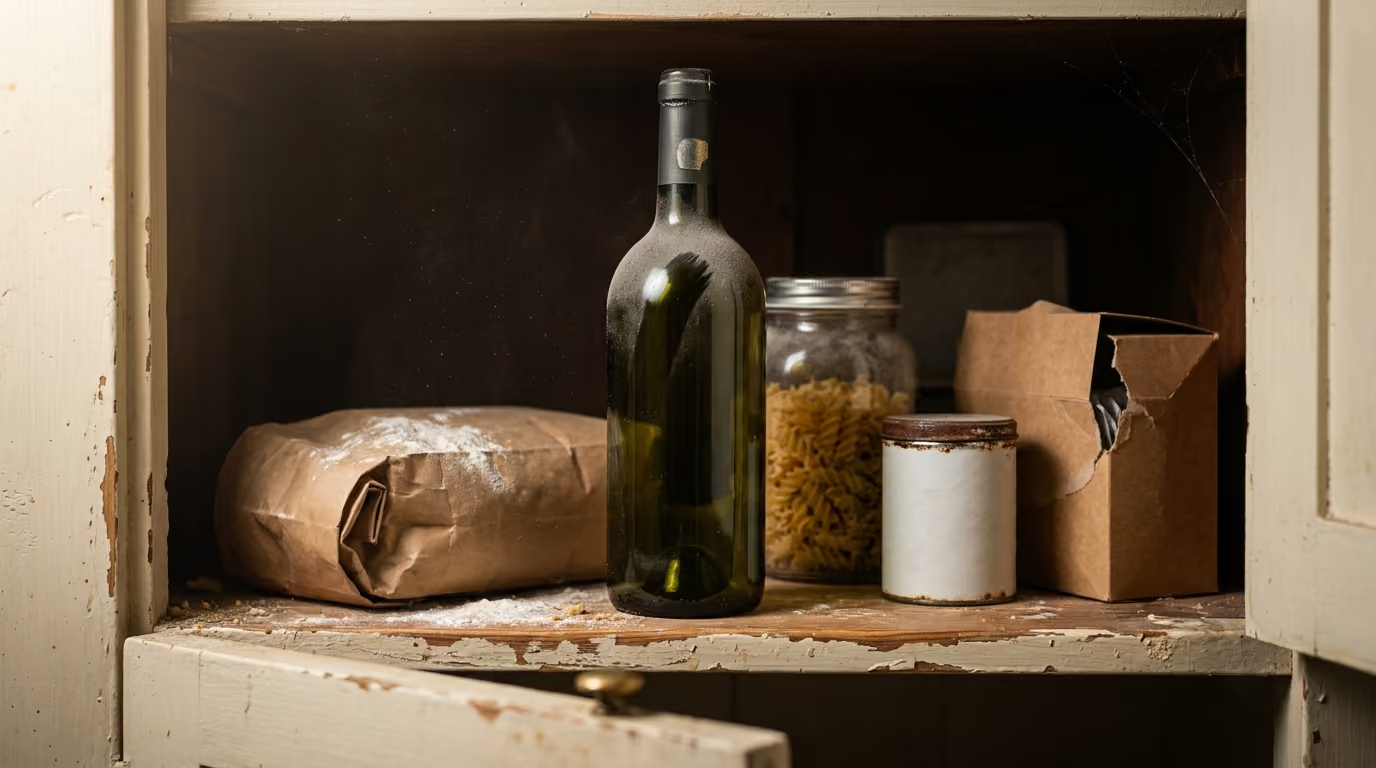
So the bottle you just found behind the flour is probably fine. Whether it's still good is a separate question from whether it's still safe, and the two get tangled together constantly. This walks through both, plus what to actually do with the thing tonight.
How Long Does Unopened Wine Last by Bottle Style?
Style is the single biggest predictor of how long a sealed bottle stays enjoyable, because tannin, acidity and sugar all slow the chemical changes that eventually flatten a wine out. The ranges below assume the bottle lived somewhere reasonable, which for most households means a cupboard away from heat rather than an actual cellar.
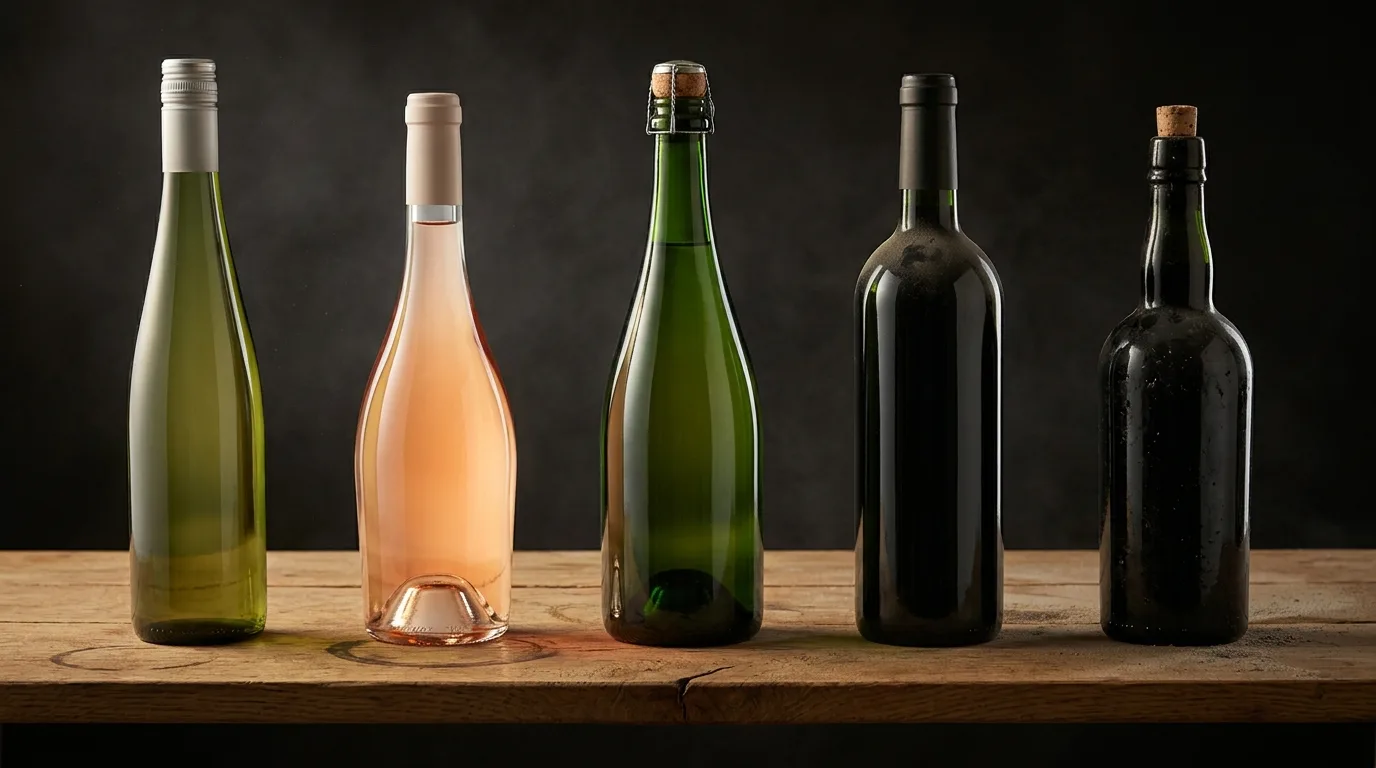
| Bottle style | Best window after purchase | What fades first |
|---|---|---|
| Light whites, rosé, everyday sparkling | 1 to 3 years | Fresh fruit aroma, then the bubbles |
| Richer whites and better sparkling wine | 3 to 5 years | Fruit softens, texture broadens |
| Everyday reds, including most Pinot Noir | 2 to 5 years | Bright berry fruit turns dried and savoury |
| Structured reds, such as Cabernet Sauvignon | 5 to 10+ years | Tannin softens slowly, which is the point |
| Dessert and fortified wine | 5 to 20+ years | Very little, given sugar and alcohol protect it |
Read those as guidance rather than deadlines. A bottle that spent eighteen months on a warm shop display has already used up part of its window before you carried it home, so lean toward the earlier end whenever the history is unclear. Price is a rough proxy at best. Plenty of excellent wine under $20 is built for freshness and meant to be drunk soon, and paying more buys aging potential only when the wine has the structure to use it.
Sturdy reds last longest because tannin and acidity both act as preservatives, slowing oxidation from the inside. That's why a serious Cabernet or Nebbiolo improves for years while a cheerful Beaujolais made for this summer does not. Neither fact makes one wine better than the other, and a red bought for Tuesday pasta belongs on the table this month rather than in a rack.
Does Wine Actually Expire?
Wine has no legal expiration date and almost never carries one, because it isn't a product that turns dangerous with age. The vintage year on the label identifies the harvest, not a use-by deadline, and a bottle can sail past it by years without any problem at all.
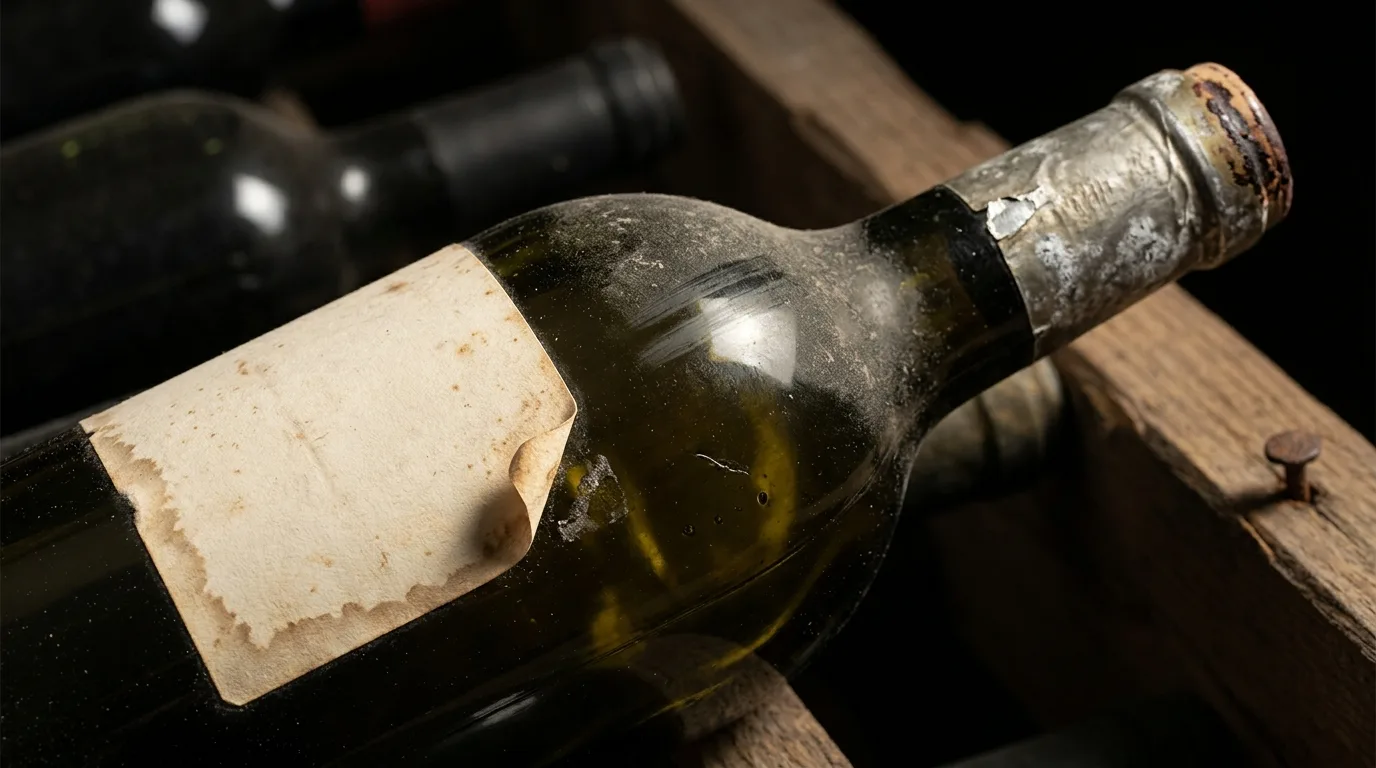
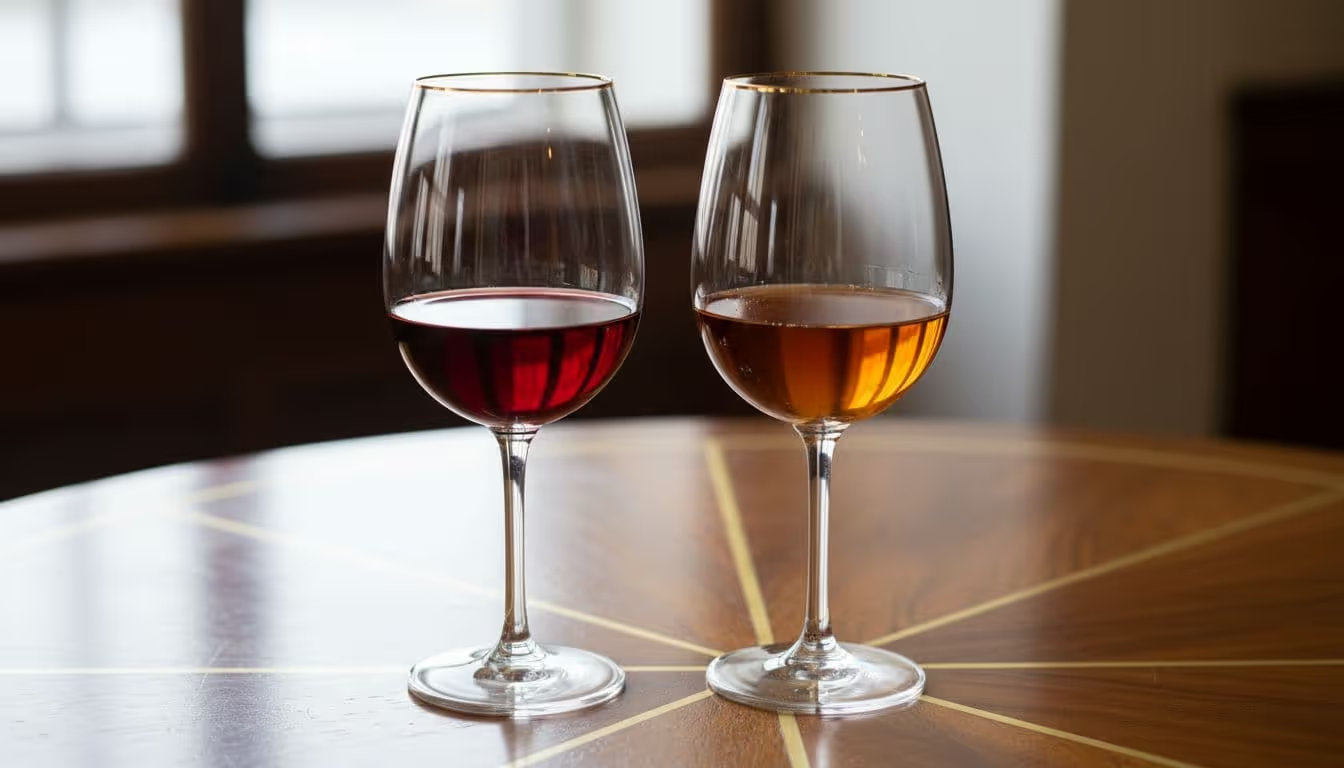
What happens instead is a slow decline in the things you liked about it. Oxygen creeps in over time, and the fruit flavors fade while nutty, sherry-like notes take their place. In whites, the color deepens from pale straw toward gold and eventually brown. In reds, the opposite happens, and a deep purple slides toward brick and then toward orange at the rim. That's a quality curve rather than a cliff, and it moves quickly only when something pushes it.
Boxed wine is the exception worth knowing. The plastic bladder inside a bag-in-box is far more permeable to oxygen than glass, so these wines aren't made for cellaring and carry a printed shelf life you should actually respect. Deterioration can be noticeable around twelve months after filling. Screw caps aren't a sign of cheapness either, since compared with cork they reduce the faults of oxidation and cork taint and have overtaken cork entirely in Australia and New Zealand. If the vintage year on your bottle is confusing you, non-vintage wine labels explained covers the bottles that deliberately carry no year at all.
What Storage Does to a Bottle You Forgot About
Heat is what actually kills wine, and it does far more damage in a year than age does in five. Warmth speeds up every chemical reaction inside the bottle, and repeated swings between hot and cold can push wine past the cork and let more oxygen in behind it.
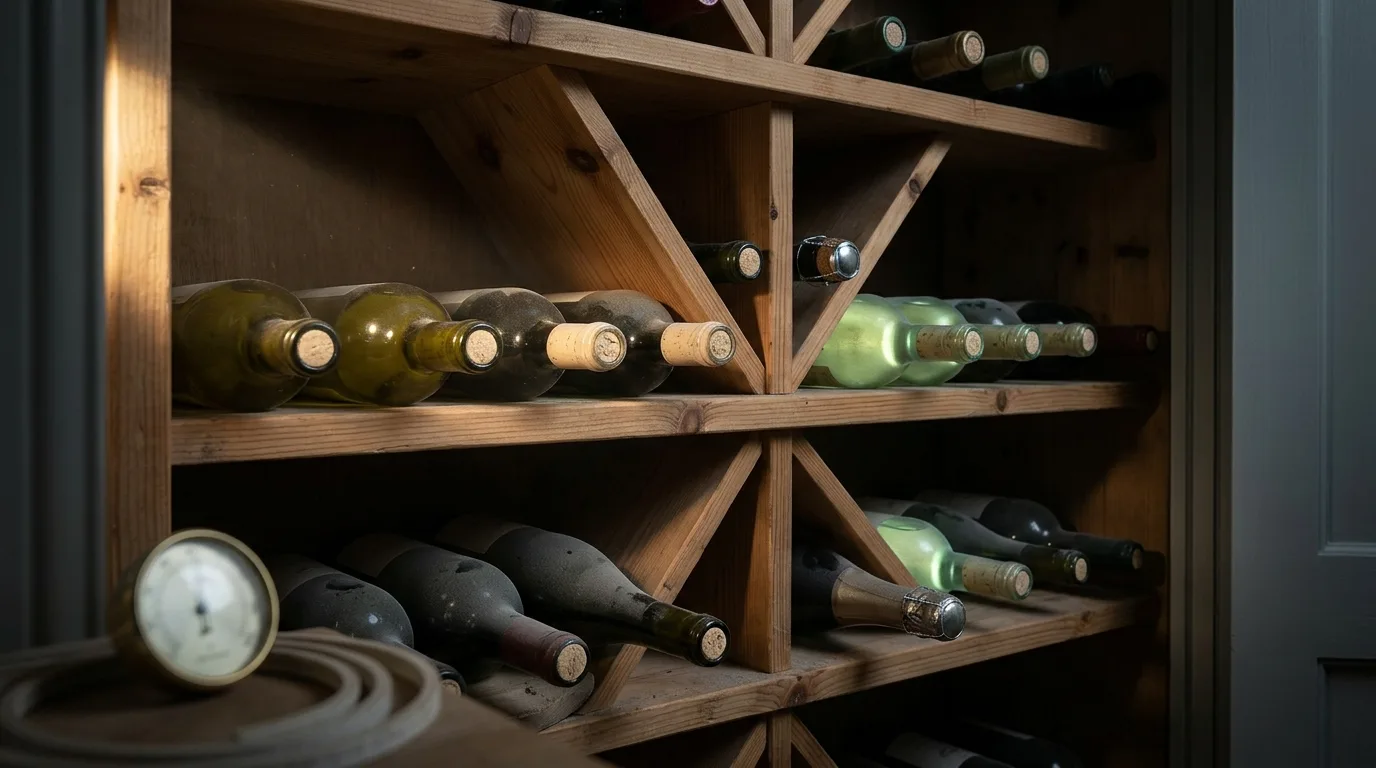
Wine Spectator puts the ideal storage range between 45 and 65°F, with 55°F often cited as close to perfect, and considers humidity anywhere from 50 to 80 percent safe. Its advice on the ordinary kitchen refrigerator is worth repeating, because that's where a lot of forgotten bottles end up. A fridge is fine for a few days of chilling and poor for months of storage, since the low humidity dries corks out and the door opens constantly.
A 2021 review of bottle aging published in Molecules explains why the seal matters so much: oxygen transfers steadily through cork stoppers, and closure type, temperature, humidity and light exposure all strongly shape how a wine develops in bottle. That gives you three practical rules. Keep natural-cork bottles on their sides so the wine stays in contact with the cork, keep every bottle away from windows and appliances, and pick the most temperature-stable spot you own rather than the coolest one. An interior closet usually beats a garage, and a garage in July is where wine goes to die. Our guide to storing wine at home covers what genuinely matters and what's marketing.
How Can You Tell if an Unopened Bottle Has Gone Bad?
You can spot heat damage from the outside, but you can't confirm a wine is still good until you open it. A calm inspection before you pull the cork will tell you how much hope to have, and it takes about thirty seconds.
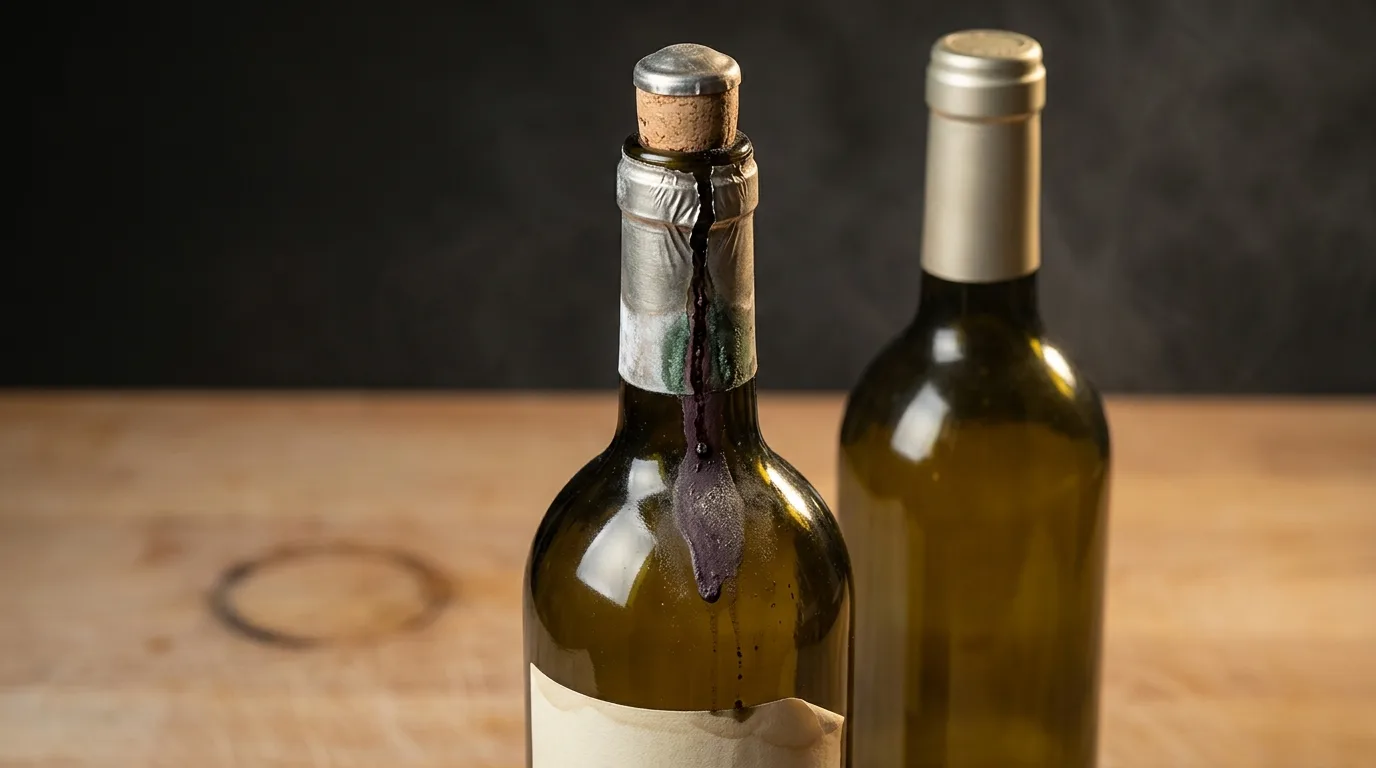
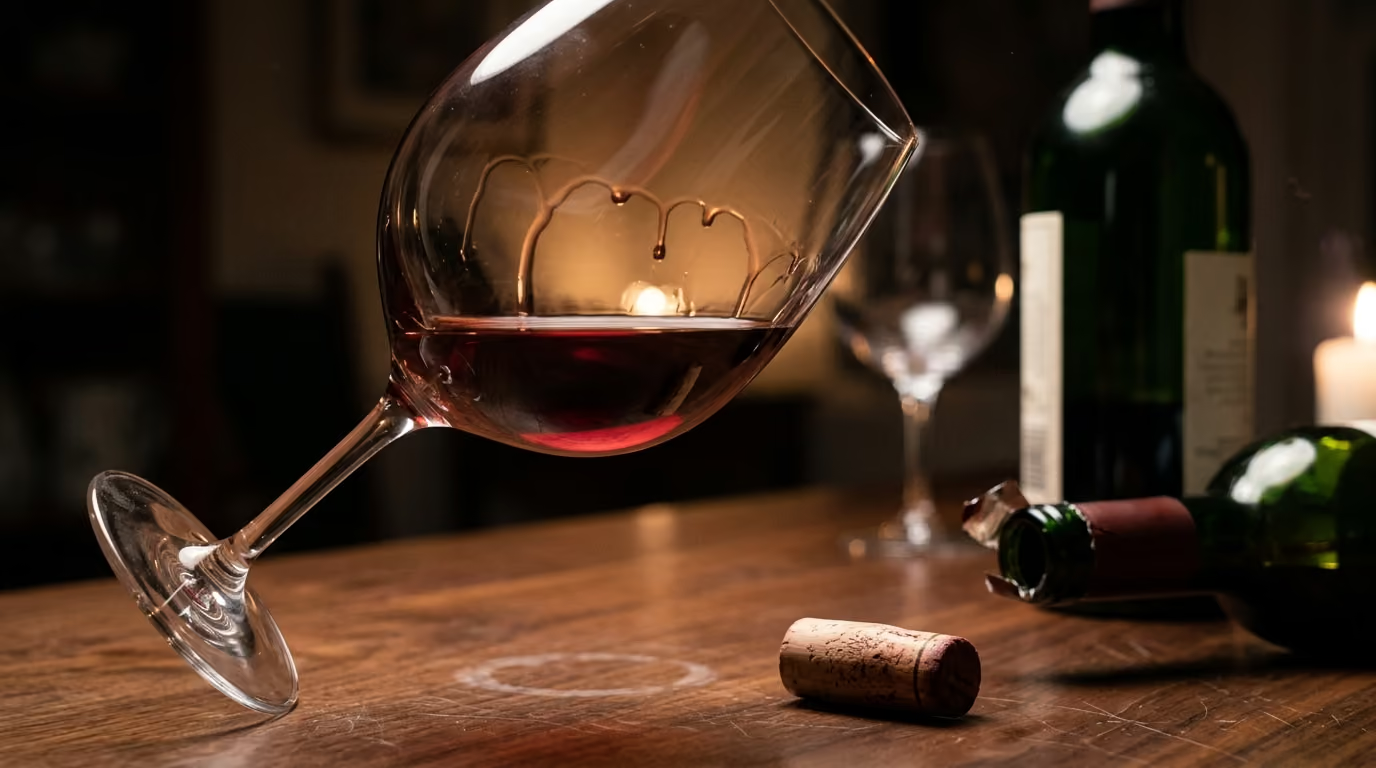
Start with the vintage and compare it against the table above, since a 2019 rosé and a 2019 Cabernet are completely different bets. Then look at the top of the bottle. A cork pushed up past the lip, wine seeping under the capsule, a stained foil or sticky glass all point at heat exposure, because warm wine expands and forces its way out. Check the fill level next, which should sit in the neck. Wine resting well below the shoulder has lost volume to leakage or evaporation, and that means air took its place. Finally, be honest about where it lived, because a cupboard above the oven tells you more than any of the other clues.
None of that catches cork taint, which stays completely invisible until the bottle is open and then smells of wet cardboard or a damp basement. Our thirty-second checks for corked wine and oxidized wine cover both faults. Pour a small taste before you build dinner around the bottle. Vinegar and nail-polish aromas, a flat bruised-apple flavor or a thin, hollow taste all mean the wine is past it.
Is Old Wine Safe to Drink?
An intact bottle of old wine is a quality question rather than a safety one, and that distinction is the part most people get backwards. A wine that has faded, oxidized or turned vinegary is disappointing to drink rather than hazardous, which is why the sensible test is a small taste rather than a hard rule about age.
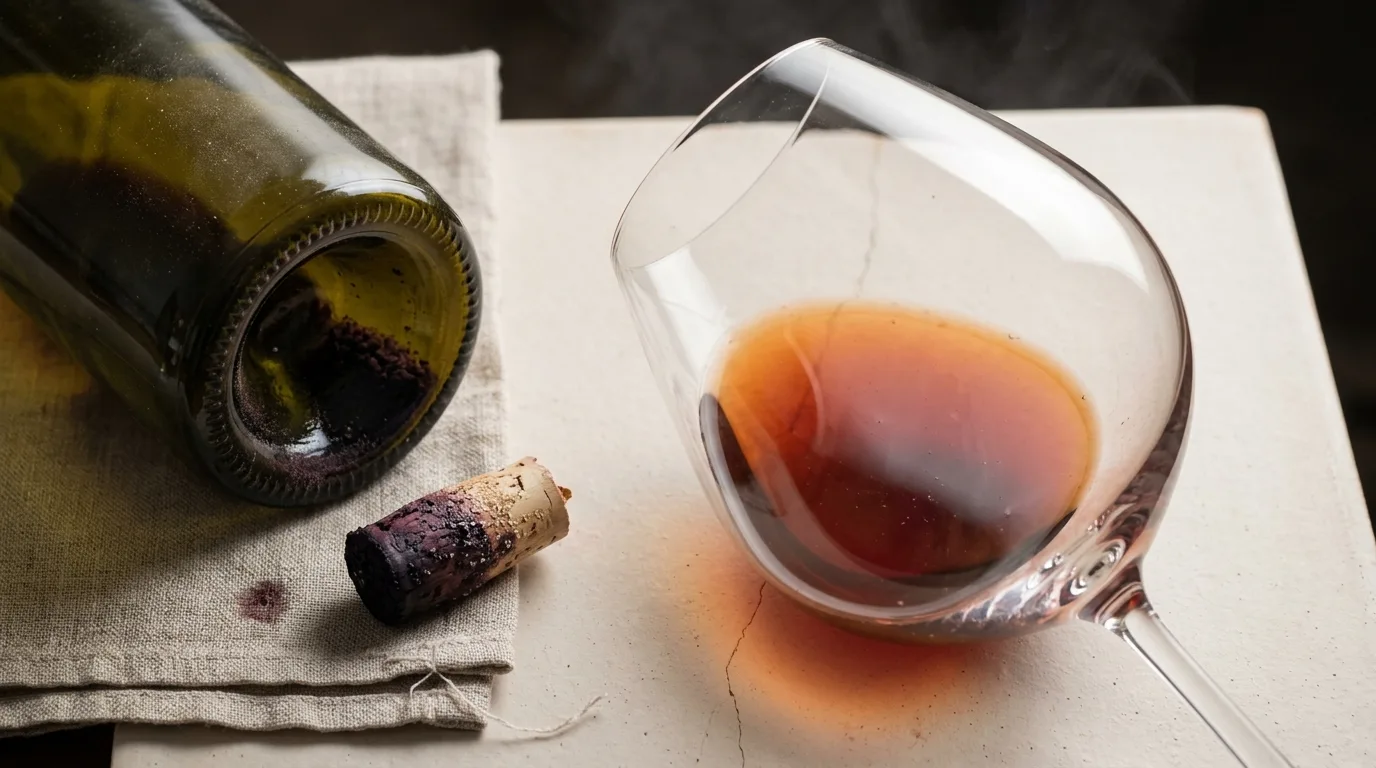
The genuine reasons to pour a bottle away are visible ones. Broken or cracked glass, debris floating in the wine, a badly compromised seal or any sign that something has gotten inside all mean the bottle goes in the bin without a taste test. Everything else is a judgement call about whether you'll enjoy it.
Sediment is not a warning sign. Older reds throw a fine, gritty deposit as tannins and pigments bind together over time, and that's a normal part of aging rather than spoilage. Standing the bottle upright for a day and decanting carefully leaves it behind, and when to decant wine covers which bottles benefit. Cloudiness in an unfiltered natural wine is likewise usually fine. A white that has turned deep amber or brown, on the other hand, has oxidized heavily, and while it won't hurt you it very likely won't be pleasant either.
What to Do With a Bottle That's Past Its Best
A tired bottle still has uses, so pouring it straight down the sink is often premature. Wine that's merely faded rather than faulty works well in cooking, where heat and other ingredients cover the gaps that make it disappointing to drink on its own.
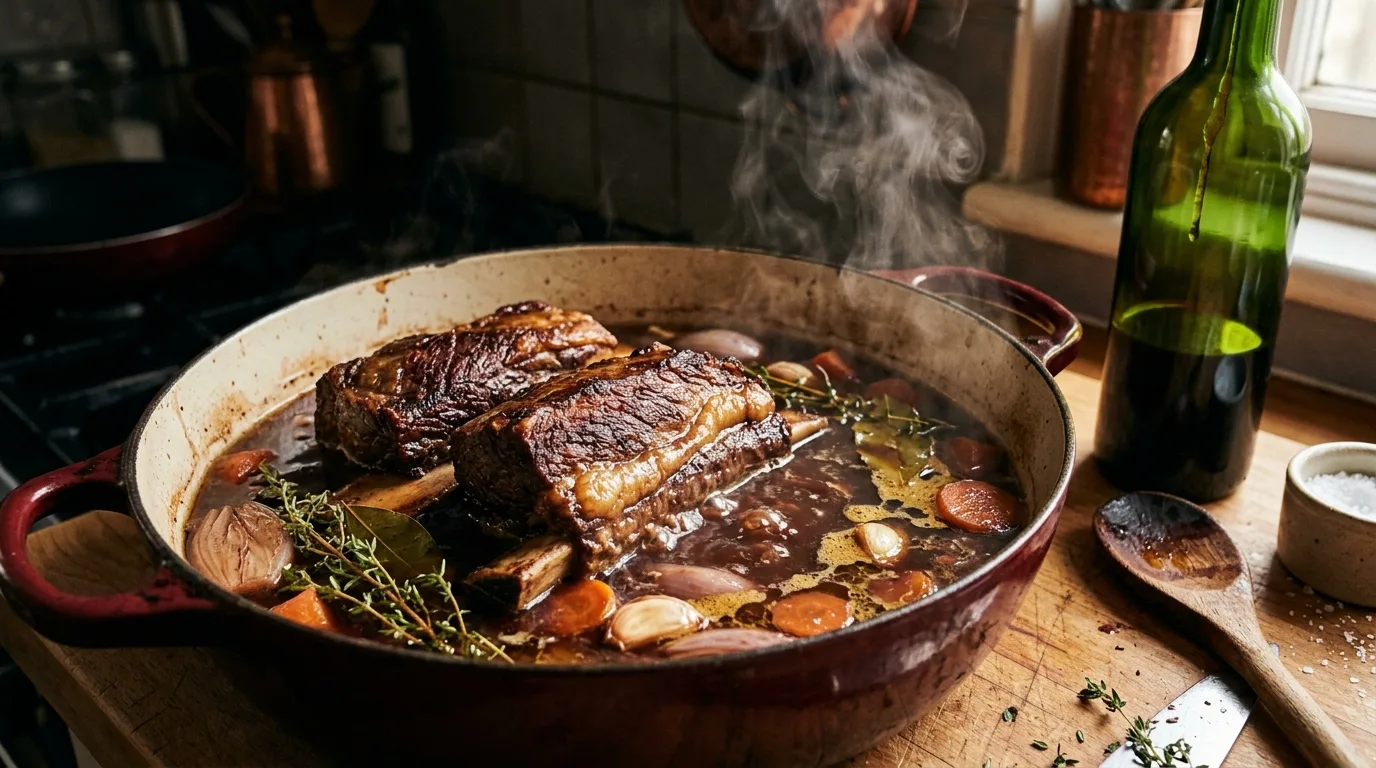
Reds that have lost their fruit make perfectly good braising liquid for short ribs, beef stew or a long ragù. Faded whites go into risotto, a pan sauce or steamed mussels without anyone noticing. A slightly oxidized red is fine in mulled wine or sangria, since the sugar and spice do the heavy lifting. The one wine you can't rescue is a corked one, because that musty character survives cooking and will spread through the whole dish.
Where the bottle is genuinely undrinkable and dinner is now short a wine, the useful move is picking a replacement that suits the meal rather than grabbing whatever's nearest. That's also the argument for keeping some record of what you own in the first place. Sommy's Cellar tracks your bottles so the ones with a short window get opened inside it, which is a more reliable system than rediscovering a rosé from four summers ago behind the flour.
Frequently Asked Questions
How long does unopened wine last?
Light whites, rosé and standard sparkling wines are usually best within one to three years of purchase. Everyday reds hold for two to five years, and structured reds, dessert wines and fortified wines can last considerably longer.
Does unopened wine expire?
Wine carries no legal expiration date and rarely prints one, but its quality declines gradually as oxygen works through the closure. Judge it by style, vintage and storage history instead of looking for a date.
Can you drink wine that's ten years old?
You can, and whether you'll enjoy it depends entirely on the wine. A structured red or a fortified wine at ten years old may be excellent, while a ten-year-old supermarket Pinot Grigio has almost certainly lost what made it appealing.
What's the best way to store unopened wine?
Keep it somewhere cool, dark and temperature-stable, ideally between 45 and 65°F, away from windows, ovens and laundry machines. Lay natural-cork bottles on their sides, and stand screw-cap bottles upright if that's easier.
How can you tell if unopened wine has gone bad?
Look for a pushed-up cork, seepage under the capsule, a stained foil, sticky glass or a fill level well below the neck, all of which suggest heat damage. After opening, vinegar aromas, wet-cardboard smells or a flat, hollow taste confirm it.
Is old wine dangerous to drink?
An intact old bottle is a quality risk rather than a health one, and a faded or vinegary wine tastes bad rather than doing harm. Discard it without tasting only if the glass is damaged, the seal is compromised or there's debris inside.
Does boxed wine last as long as bottled wine?
It doesn't, because the bag inside lets far more oxygen through than glass does. Boxed wine isn't made for cellaring and carries a printed shelf life, and deterioration can show up around twelve months after filling.
Let the Bottle Tell You
Wine ages far more gracefully than most people expect, and the bottle that turned up behind the flour deserves a proper look before anyone writes it off. Check the style against the ranges above, read the cork and the fill level for signs of heat, then pour a small taste and decide with your own mouth.
Ranges like these describe how bottles behave on average, and yours has a specific history in a specific cupboard that no average can account for. The only honest test is opening it and paying attention. What a table can never tell you is which of the bottles you already own is the one worth opening tonight.