
Almost every bottle in your house needs one thing: somewhere dark, reasonably cool and away from the stove. Everything past that is a refinement rather than a requirement. Storage advice gets complicated because it's usually written for people aging wine for years, and most wine sold today is made to be drunk within a year or two of buying it. If you'll open the bottle within a few months, a cupboard away from heat is genuinely enough, and the storage problem worth solving is what happens after you pull the cork.
What actually damages a bottle of wine
Five things do the damage, and knowing which ones apply to your situation saves you from worrying about the rest. Wine Enthusiast's education director Marshall Tilden III puts temperature at the top of that list, and names 55F as the sweet spot for storing everything, reds, whites, sparkling and fortified alike. What that number hides is how much latitude you have around it, because the damage comes from how far and how often the temperature moves rather than from being a few degrees off a target.
Heat is the one that ruins a bottle outright. Get wine warm enough for long enough and it maderizes, which means it takes on a cooked, stewed character that nothing can undo, and the cork can start pushing up out of the neck as the liquid expands. Repeated swings between warm and cool do a slower version of the same thing, which is why the worst spots in a house are the ones that heat and cool every day rather than the ones that are simply a bit warm.
Light does the damage people notice least. Ultraviolet light breaks down the compounds that protect wine, and because tannin does some of that protecting, white wines in pale bottles suffer faster than reds in dark green glass do. A wine that has taken too much sun is called light-struck, and it smells unmistakably wrong. Vibration matters mainly for older bottles with sediment, so a rack on top of a running fridge is a bad idea for reasons of heat as much as movement. Odors are the last one, since a cork breathes both ways, and a bottle stored next to paint, cleaning products or a litter tray will eventually take some of that with it.
Where to put wine in a normal home
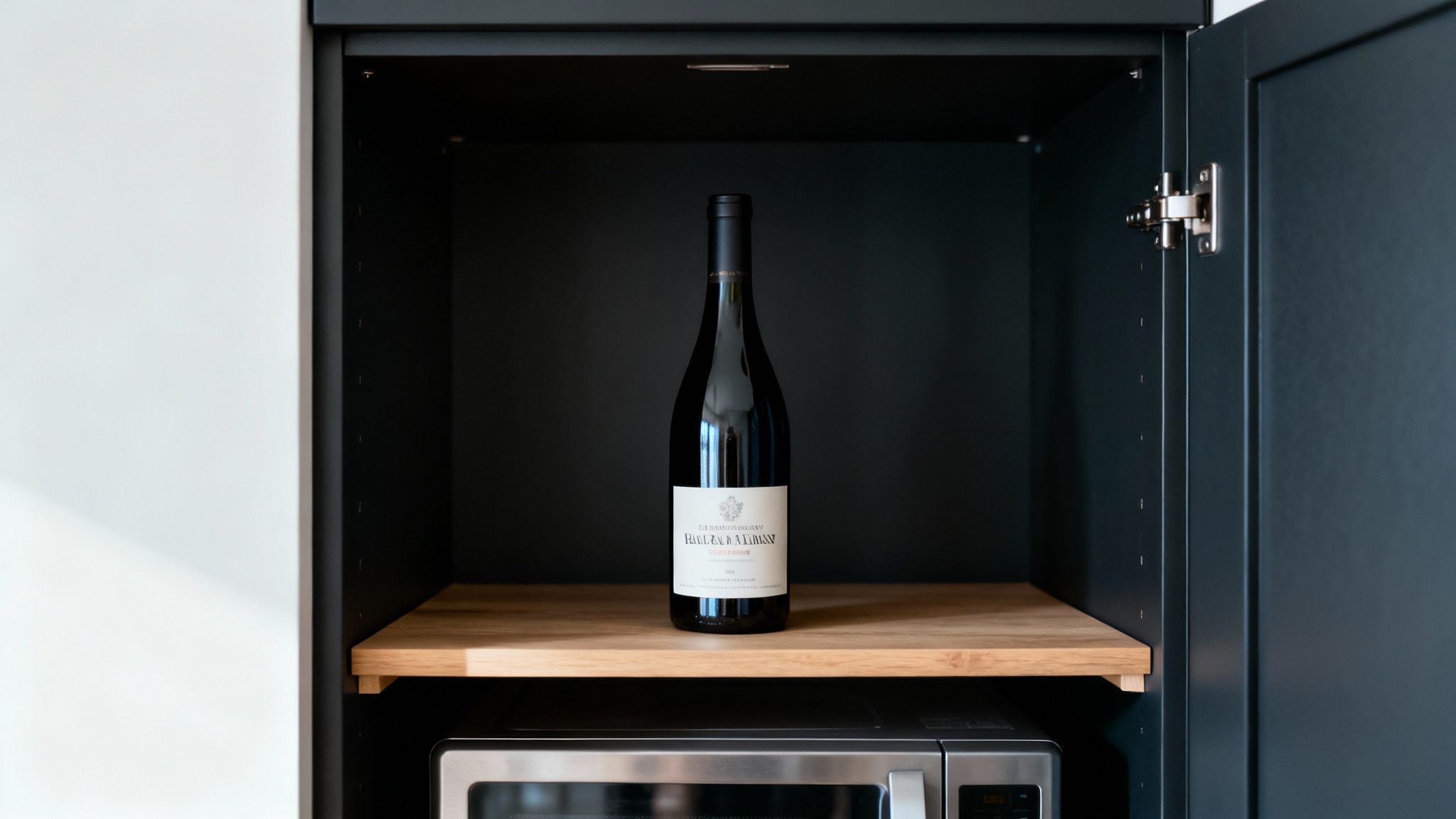
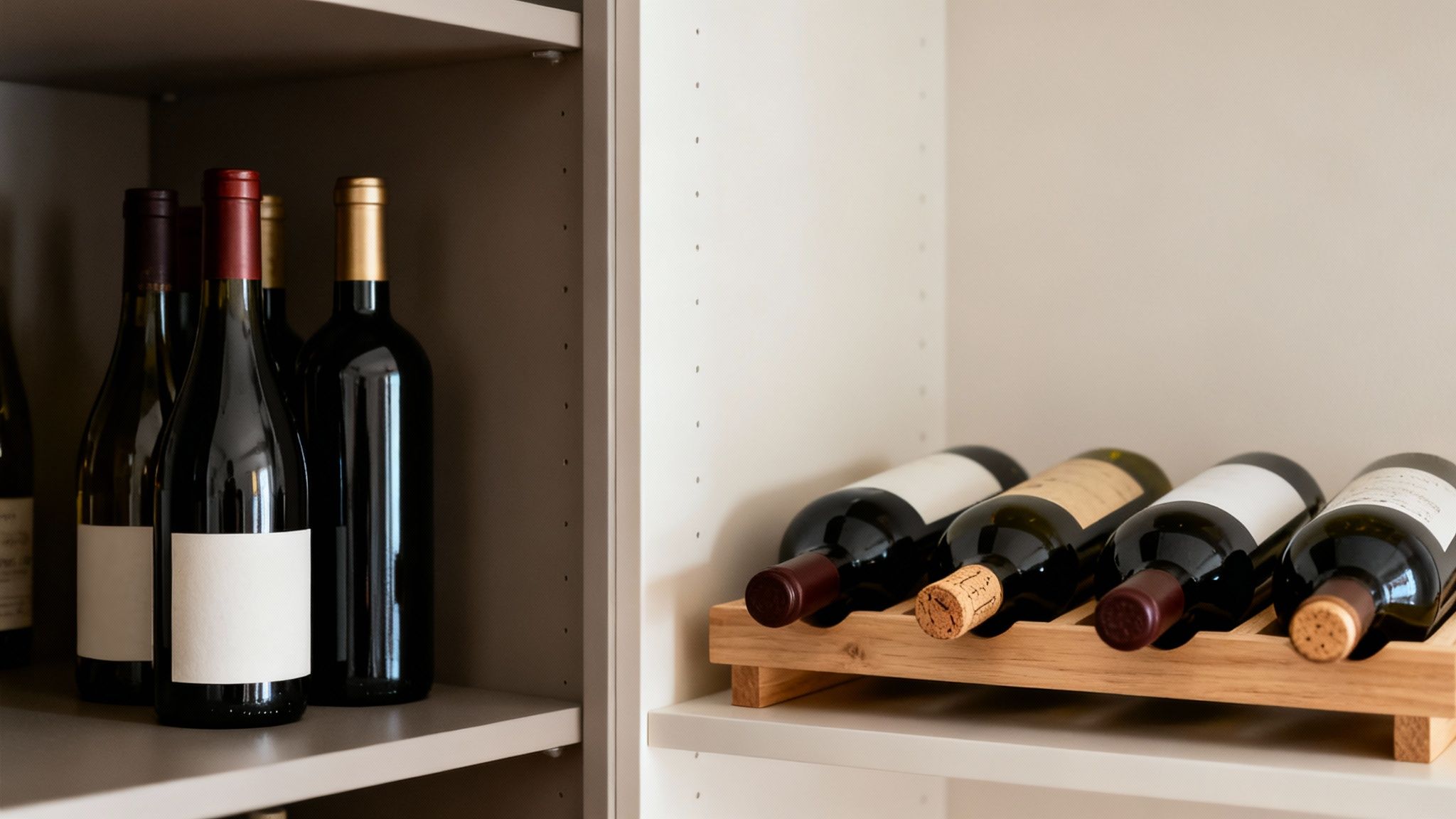
A cupboard or closet on an interior wall is the best storage most homes have, because interior walls hold a steadier temperature than exterior ones do. A dark pantry works just as well, and so does the bottom of a wardrobe, the space under the stairs, or any shelf in a room you don't heat much. None of that is a compromise for wine you plan to drink this year.
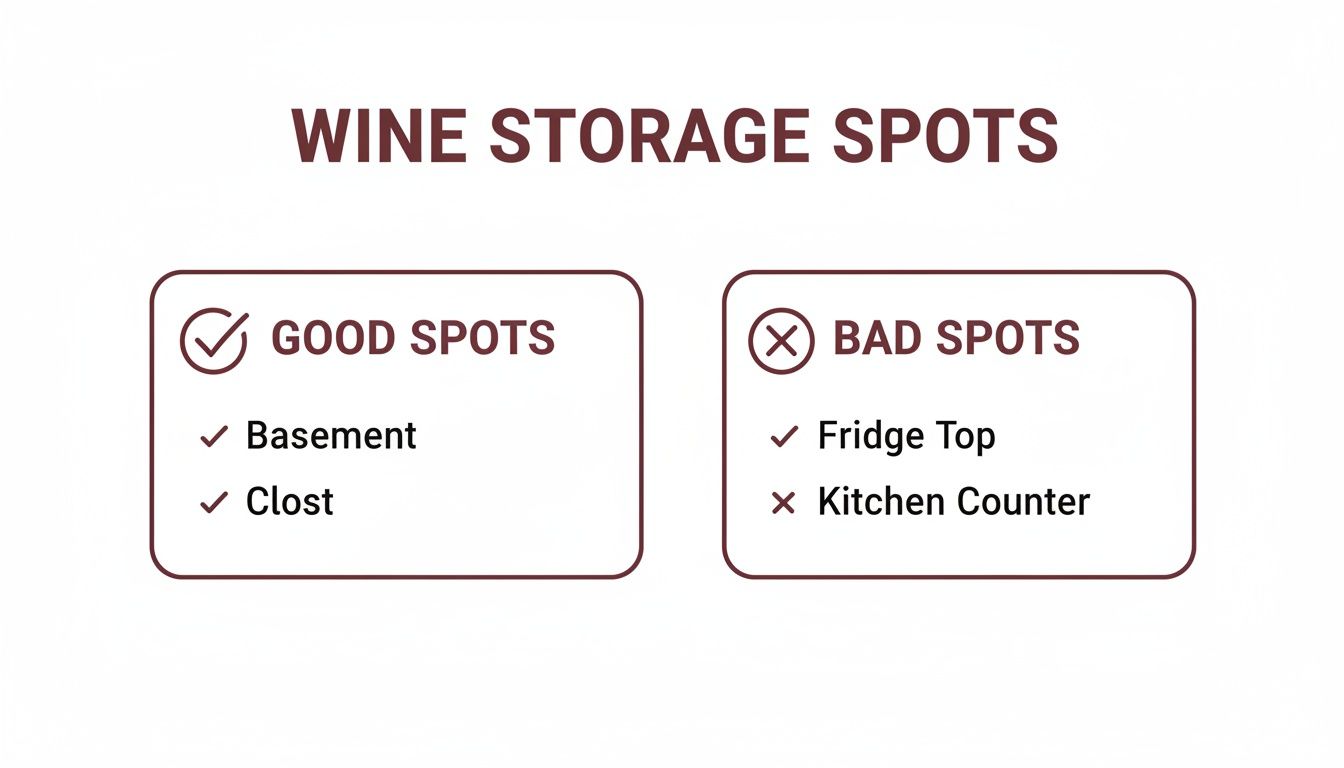
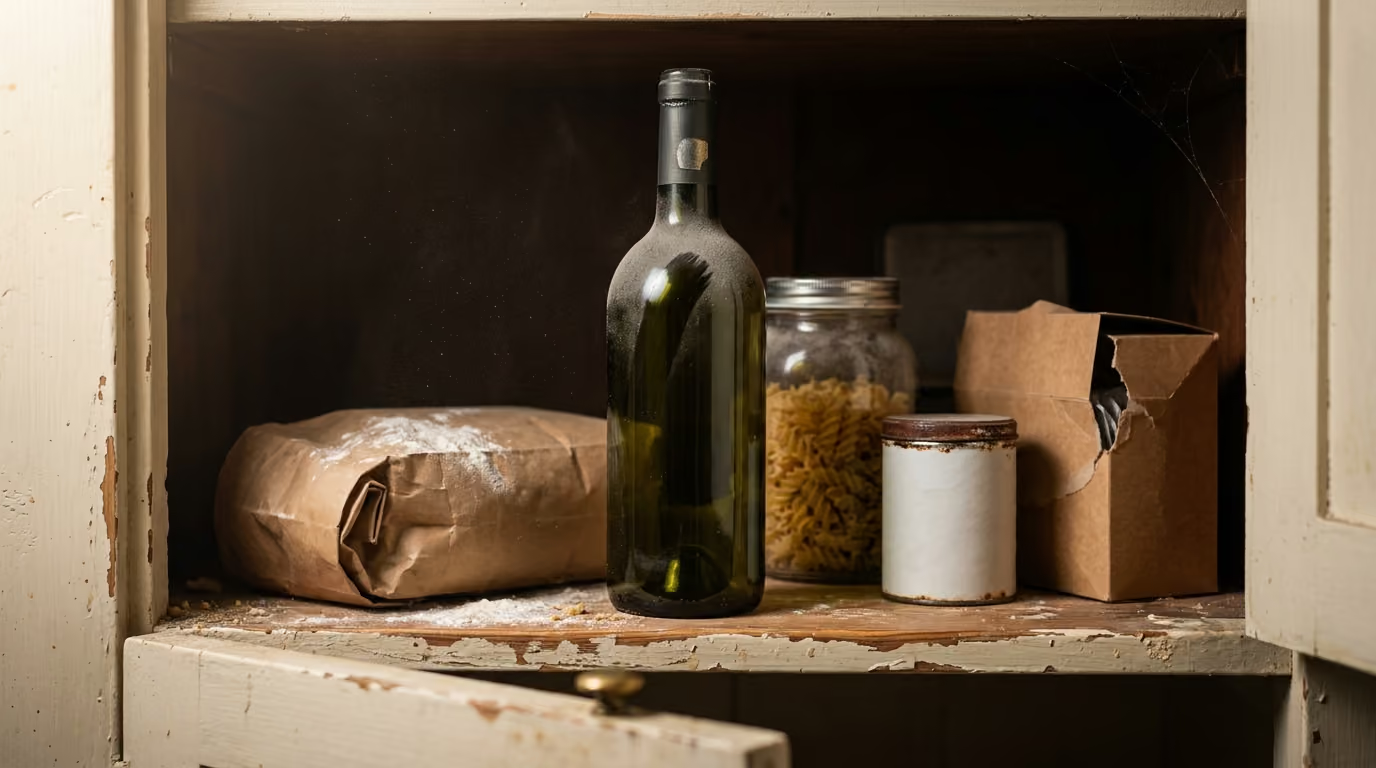
The bad spots are more specific and more common. On top of the refrigerator is the worst place in most kitchens, since it's warm, it vibrates and it swings in temperature all day. Above or beside the oven is just as bad. A decorative rack on a sunny countertop looks lovely and slowly cooks the contents. Garages and lofts run hot in summer and cold in winter, and that annual swing is harder on a bottle than a steady 70F would be. A car trunk in August will finish a wine off in a single afternoon.
If the bottle has a natural cork and you're keeping it more than about six months, lay it on its side so the wine stays in contact with the cork and the cork stays swollen. A dried-out cork lets air in. Screw caps and glass stoppers make no such demand, so those bottles can stand upright forever without coming to any harm. Standing a corked bottle up for a week before you open it is fine too, and it actually helps if there is sediment you would rather leave behind in the bottle.
Does humidity matter?
It matters for the cork rather than for the wine, and only over long stretches of time. A cork needs some moisture in the air to stay swollen against the neck of the bottle, and air that is very dry can shrink it enough to let oxygen creep in, which is the same slow spoilage that a badly seated cork causes. Tilden puts the useful range at somewhere between 50 and 80% humidity, which most homes sit inside anyway without anybody managing it.
Very humid storage has its own problem, and it isn't the wine. Labels lift and mold grows on them, so a bottle that spent two damp years in a basement can be perfect inside and unpresentable outside. None of this is worth a second thought for a bottle you'll drink this year, and it's the main reason a long-term collection wants something better than a kitchen fridge, which is dry as well as cold.
Which bottles are actually worth keeping
Very few, and that is the part the equipment guides leave out. The overwhelming majority of wine on a shop shelf was made to taste good the week it was bottled and will be a little duller in five years, not better, because aging trades fresh fruit for savory, leathery, mushroomy flavors that some people love and plenty of people don't.
The bottles that genuinely improve tend to share a few traits: firm tannin or high acidity to carry them, real concentration of flavor rather than pleasant lightness, and a price that reflects both. Classic examples are serious Bordeaux and Barolo, top Riesling, vintage Champagne and vintage Port. If you're spending under about $25 and the label doesn't tell you it's built to last, treat the bottle as ready now.
There's also a simpler test that has nothing to do with the wine. If you don't know what you already own and when you meant to drink it, no storage solution helps, because the bottles that get wasted are usually forgotten rather than badly kept. Writing down what you bought and roughly when you want to open it does more for your wine than an upgrade from a cupboard to a cabinet.
Should you put wine in the fridge?
For anything you'll drink within a few weeks, yes, and this is the piece of advice most guides bury. A kitchen fridge runs around 40F, which is colder and drier than a cellar, and over a year or two that dryness can shrink a natural cork. Over a few weeks it does nothing at all, and it protects the wine from every heat problem described above. Wine Enthusiast's own tasting director keeps about ten bottles in a normal fridge at all times, which tells you how seriously to take the warnings.
Storage temperature and serving temperature are separate questions, though. A white straight from the fridge is too cold to taste properly and a red kept in a warm room is too warm, so the fix most people need is the 20 minute rule: white comes out of the fridge 20 minutes before pouring, red goes in 20 minutes before pouring. Reds generally show best between 60 and 65F and whites between 50 and 55F. If you need one cold in a hurry, our guide to chilling wine fast has the method that actually works.
Does wine need to be stored in the dark?
Dark is better, and dark matters more for white and rosé wine in clear or pale bottles than for red wine in dark glass. The dark bottle itself is doing a job, filtering ultraviolet light the way sunglasses do, which is exactly why so many wines are packaged that way.
You don't need a blackout cupboard. Ordinary indoor lighting on a bottle for a few months is not the problem, and direct sunlight through a window for a few weeks is. If a bottle sits somewhere the sun reaches at any point in the day, move it, and if you like your wine on display, keep the display out of the sunbeam or accept that it's decoration rather than storage.
How to store wine after opening it
This is the storage question that affects almost everyone, and the honest answer is that an open bottle is on a clock no matter what you do. Air is what changes it, so everything useful comes down to reducing how much air the wine sits with and how fast it reacts.
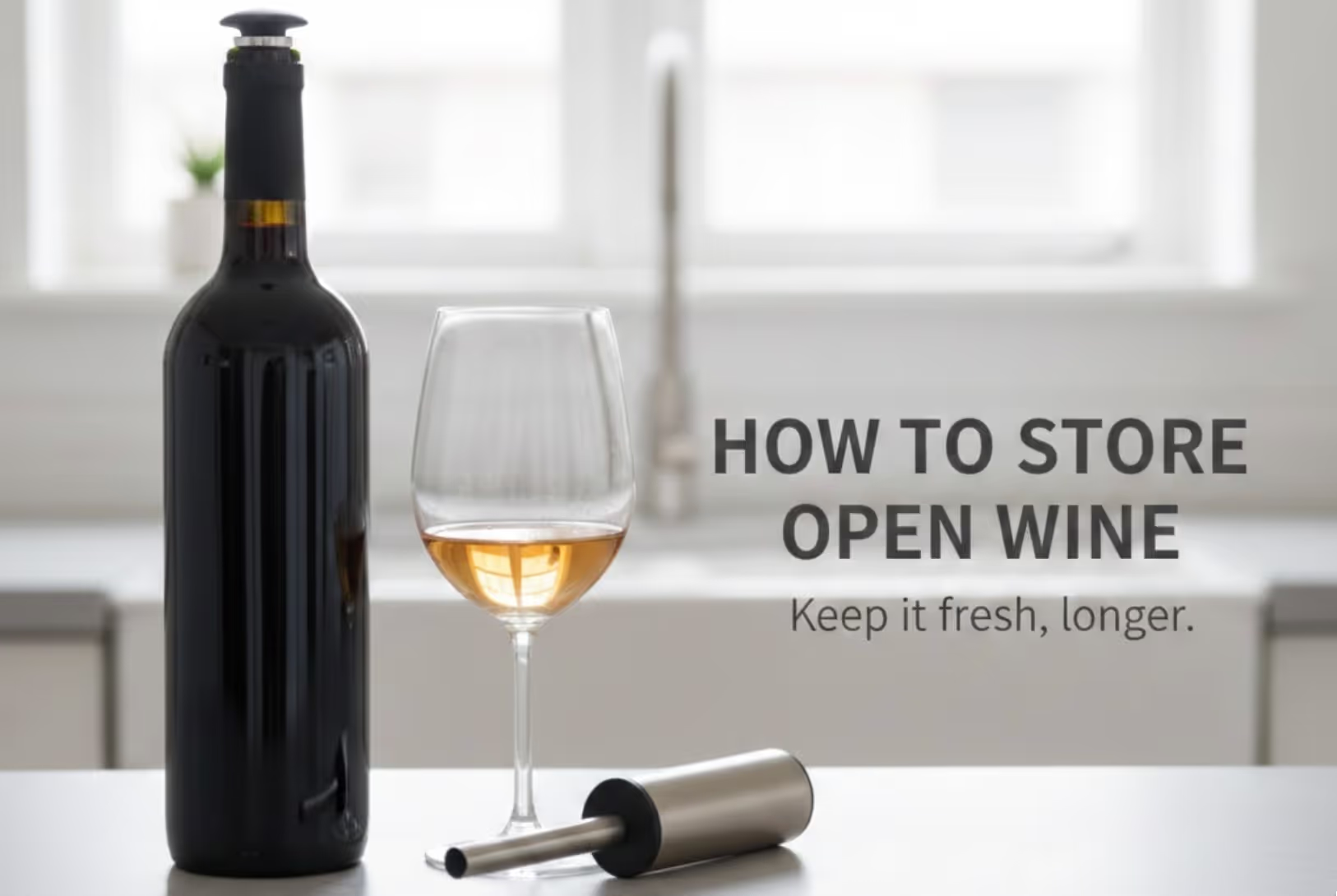
Re-cork it as soon as you've poured rather than leaving it open on the counter through dinner, and put it in the fridge, reds included, because cold slows the reaction down. A vacuum pump that draws the air out buys you longer, and pouring what's left into a smaller bottle works on the same principle for free. Most opened wine is still good for three to five days treated this way, sparkling wine is closer to one or two even with a proper stopper, and fortified wine like port or sherry keeps for weeks because it was made to survive air in the first place. Our guide to storing open wine goes through the trade-offs between each method in more detail.
When a wine fridge is worth buying
A wine fridge earns its money when you regularly keep more bottles than you can drink in a season, or when your home genuinely has nowhere cool and dark, which is common in apartments with no interior cupboard. It holds a steady temperature in the 50s rather than the 40s, keeps the humidity from stripping your corks and stops the odor problem, and those are real advantages over a kitchen fridge for anything you're holding for a year or more.
It is not worth buying because you own a dozen bottles of wine you like. Most wine on shop shelves reaches you ready to drink and will not improve in any cabinet, however good the cabinet is, so the money is usually better spent on better bottles. If you enjoy keeping track of what you own and when to open it, that part doesn't take hardware at all. Sommy's Cellar does it in the app, and Active Pour logs what's currently open so you know which bottle is on the clock. If the reason you're storing wine is that you keep buying more than you drink, our piece on what you're really paying for is a more useful read than any equipment guide.
Storing wine in an apartment with no spare cupboard
Small homes are where the standard advice falls apart, because a studio with one exterior wall and a radiator under the window has no cool dark corner to offer. The trick is to stop looking for a room and start looking for the coolest enclosed space you already have, which is usually lower down and against an interior wall. The bottom of a wardrobe on a shared wall, a drawer in a hallway unit, or the back of the lowest kitchen cupboard that isn't next to the oven will all hold a steadier temperature than a shelf at head height.
Avoid anything above waist height in a warm room, since heat pools at the ceiling and a top shelf can sit several degrees warmer than the floor of the same room all winter. If the only option left is genuinely warm, buy in smaller quantities and use the fridge, because a few weeks of cold storage costs the wine nothing and a summer at 80F costs it everything. Buying two bottles a week and drinking them is a better storage strategy than buying a case and hoping.
Common questions about storing wine
How should I store unopened wine?
Somewhere dark and cool that doesn't change temperature much, lying on its side if the bottle has a natural cork and you're keeping it past six months. An interior cupboard, a pantry or the fridge all qualify, and the closer you keep it to a steady 55F the better it will hold, though anything short of heat and sunlight will do for a bottle you'll open this year.
How long does unopened wine keep?
Most everyday wine is at its best within two or three years of the vintage on the label, and there's no benefit in waiting. Bottles built to age are the exception rather than the rule, and they tend to announce themselves in the price. A wine that has passed its window doesn't become unsafe, it just loses its fruit and starts tasting tired and flat.
What is the 20/20 rule for wine?
Reds go into the fridge 20 minutes before you serve them and whites come out of the fridge 20 minutes before you serve them. You'll also see it written as the 20/20/20 rule, and the part everyone agrees on is those two 20 minute adjustments, which get most bottles close to the right temperature without a thermometer.
How can I tell if a bottle has been heat damaged?
Look at the cork first, since one pushed slightly proud of the neck or a bit of sticky residue around the capsule means the wine expanded and something got out. In the glass, heat damage smells cooked or jammy, like stewed fruit rather than fresh fruit, and reds often look browner at the rim than their age would explain. If you're not sure whether a bottle is faulty or just not to your taste, our guide to tasting wine properly covers how to tell those two apart.