
Organizing a wine cellar is much more than just putting bottles on a shelf. It’s about creating a stable, protected sanctuary where your collection can age gracefully. A well-organized cellar not only protects your investment but makes it a genuine pleasure to find that perfect bottle right when you want it.
Building the Foundation for a Perfect Cellar
Before you even think about racking systems or fancy labels, you have to master the environment. If you haven't already done so, I recommend reading our article regarding the critical role of climate control for your cellar.
Choosing Your Racking and Cellar Layout
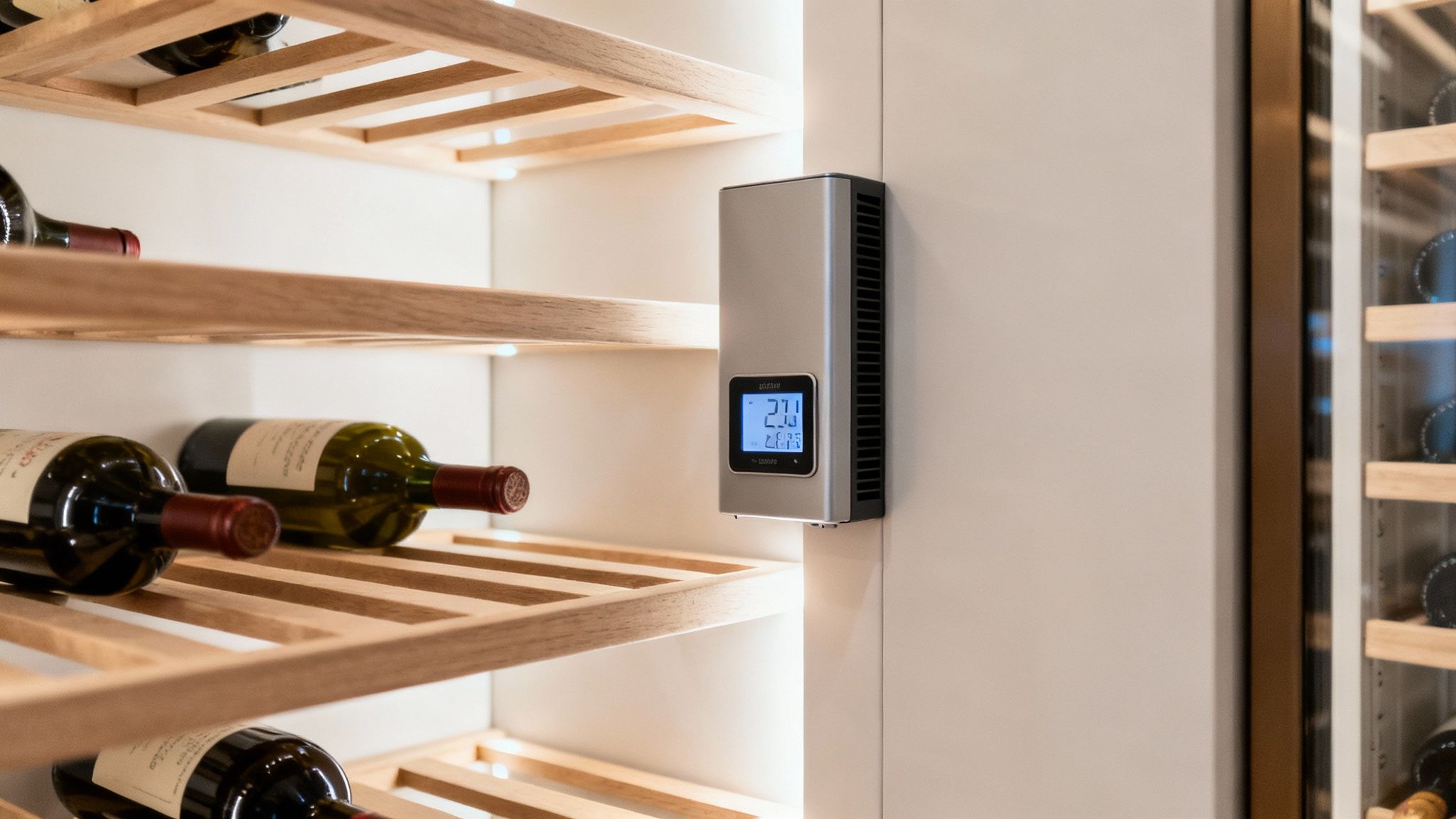
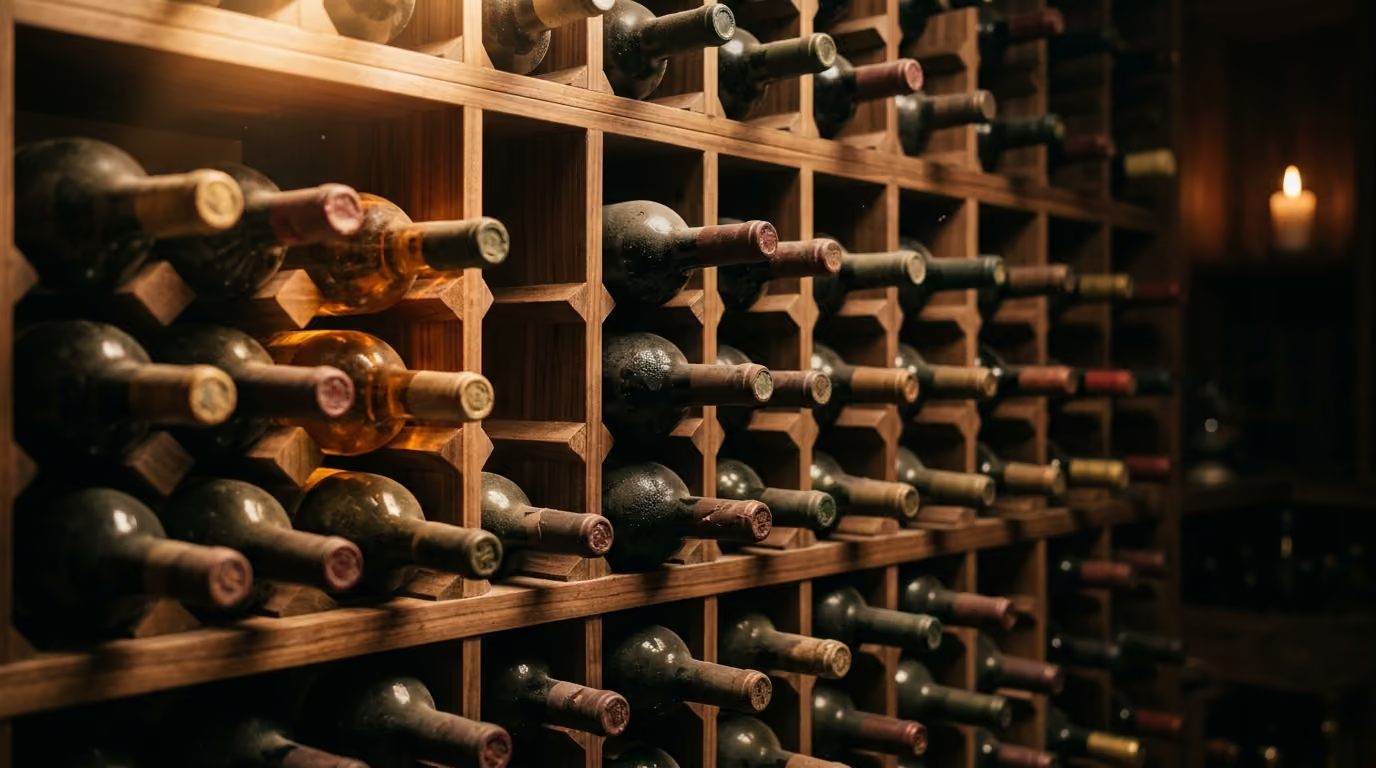
Once your cellar's environment is locked in, it's time for the fun part: shaping the space where your bottles will actually live. Choosing the right racking and layout is where function meets personal style, turning an empty room into a true wine sanctuary. This isn't just about looks; it dramatically affects how easily you can find and enjoy your collection.
The material you choose for your racking really sets the tone for the entire space. It’s a classic balancing act between aesthetics, durability, and budget.
Comparing Popular Racking Materials
Wood and metal are the two main players here, and each brings something different to the table. Classic wood racking gives a cellar that traditional, warm elegance. If you go this route, look for woods like redwood and mahogany—they're naturally resistant to the cool, damp conditions, so you won't have to worry about rot or warping. Plus, they're gentle on your bottle labels.
On the flip side, modern metal racking offers a sleek, minimalist look that’s perfect for more contemporary designs. Metal systems often take up less physical space, allowing for higher-density storage and creative displays like wall-mounted or cable-suspended racks. They’re incredibly durable and make the bottles themselves the star of the show.
Think about these points when you're deciding:
- Aesthetics: Are you going for the warm, traditional library feel of wood or the clean, modern lines of metal?
- Budget: Custom millwork in a premium wood is a serious investment. Modular metal kits or simpler pine racks can be much more wallet-friendly.
- Durability: Both high-quality wood and metal are built to last, but make sure the wood is rated for high humidity and the metal has a protective finish.
Exploring Different Racking Styles
Beyond the material, the style of racking determines how you store and display your wine. The best cellars almost always use a combination of styles to handle different parts of a collection.
For instance, individual bottle racking with scalloped slots is perfect for showing off your prized vintages where you want to see the label. But for the wines you buy by the case to age for years, high-density options like diamond bins or case storage are the workhorses. They pack a lot of bottles into a small footprint.
Pro Tip: A "display row" can completely change the feel of a cellar. It’s just a single, angled row of racking, usually at eye level, that breaks up the sea of corks. Use it to showcase your most beautiful labels or the bottles you’re planning to open soon.
Don't forget to consider a small tasting area or a tabletop for decanting and pouring. Even a simple ledge makes the space so much more functional. It turns it from just a storage room into a place you actually want to spend time in.
Maximizing Your Space with Cellar Mapping
No matter if you have a small closet or a sprawling basement, a smart layout is everything. The goal is to maximize your storage while keeping every single bottle accessible. The most effective way to do this is through cellar mapping.
Cellar mapping is just a fancy term for creating a simple grid system for your cellar. Think of it like a library's catalog. By assigning a location code to each rack, column, and row, you create a blueprint for your whole collection. A bottle might be at A-3-5, which means Rack A, Column 3, Row 5.
This system is the absolute foundation of an organized cellar. When you log a new bottle, you note its location. When you want that specific 2010 Bordeaux you've been saving, you're not hunting for it—you know exactly where it is. It completely eliminates the guesswork.
This grid becomes even more powerful when you pair it with a digital tool like the Sommy app. When you scan a new bottle to add to your collection, you can instantly assign it a location code like B-2-7. Months or even years later, a quick search in the app tells you precisely where that bottle is resting. Your beautifully designed cellar is now a perfectly organized, searchable library of wine.
Creating a Smart Wine Inventory System
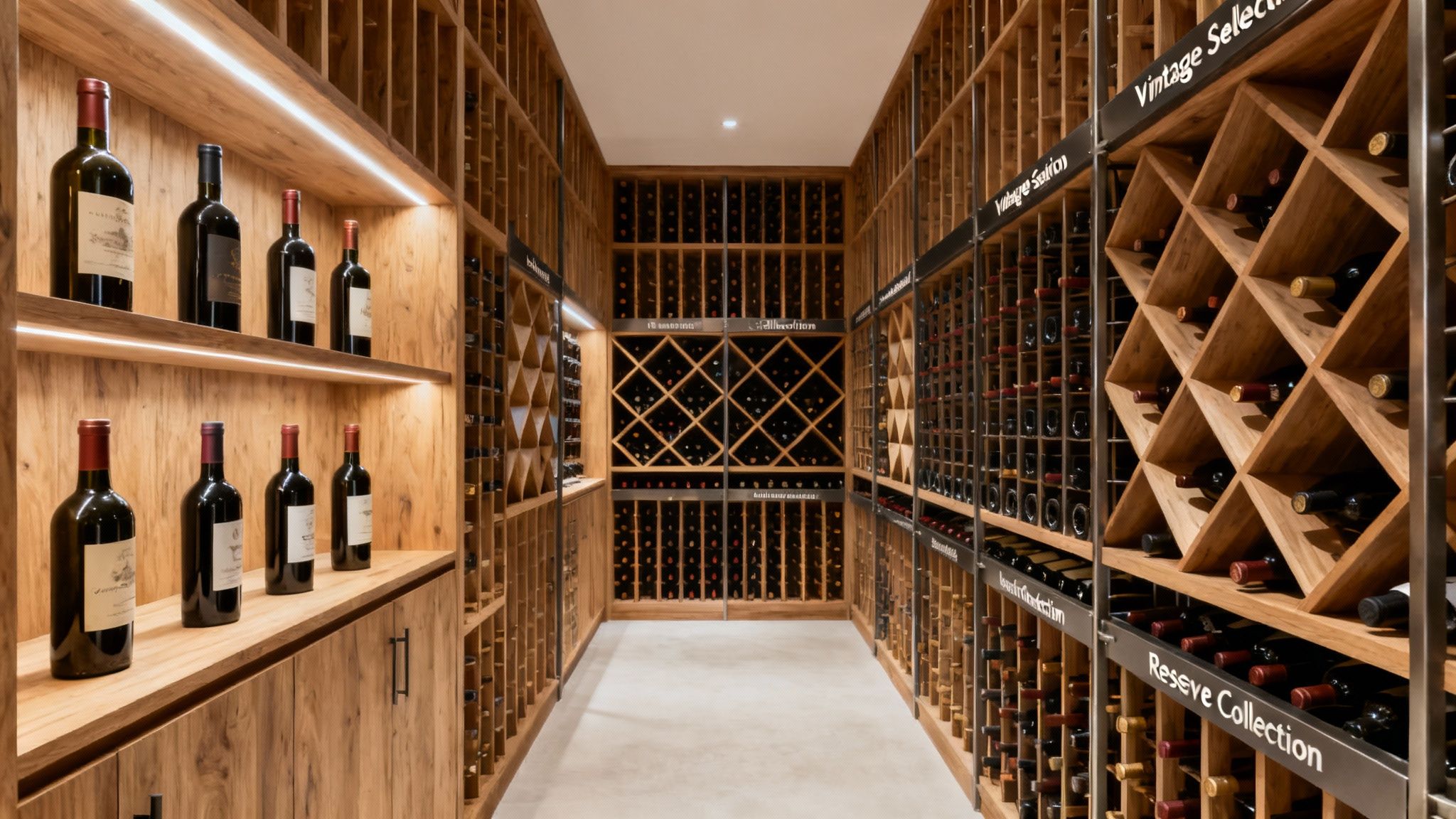
A cellar without a good inventory system isn't really a collection; it's just a room full of bottles. To get the most out of your wine, you need a way to know what you have, where it is, and when you should drink it. This is the step that turns a simple storage space into a dynamic, well-managed cellar you can actually use and enjoy.
Without a clear tracking method, it's way too easy to lose track of those hidden gems tucked away in the back. That special case of Bordeaux you bought to age can quietly slip past its prime, turning a prized asset into an expensive, vinegary mistake. A solid inventory is your best defense.
From Low-Tech to High-Tech Tracking
Getting started doesn't mean you need complicated software. Collectors have used simple, effective methods for decades, and they're a great place to begin.
- Neck Tags: Just hang these on the bottle's neck. You can jot down the wine's name, vintage, and its ideal drinking window for a quick, at-a-glance reminder. They're visual, straightforward, and perfect for smaller collections.
- Spreadsheets: A dedicated spreadsheet gives you a lot more power. Set up columns for producer, region, vintage, purchase price, and the bottle's location using your cellar map coordinates. It's free, completely customizable, and creates a searchable database.
These methods work, but they are manual. The real magic in modern cellar organization comes from digital tools that handle the tedious parts for you, so you can focus on the fun part—drinking the wine.
The Power of a Digital Inventory App
A good wine cellar app changes what owning a collection feels like. It rolls a database, a journal, and a personal sommelier into one powerful tool that lives on your phone. This is where an app like Sommy really shines by taking the manual labor out of logging each and every bottle.
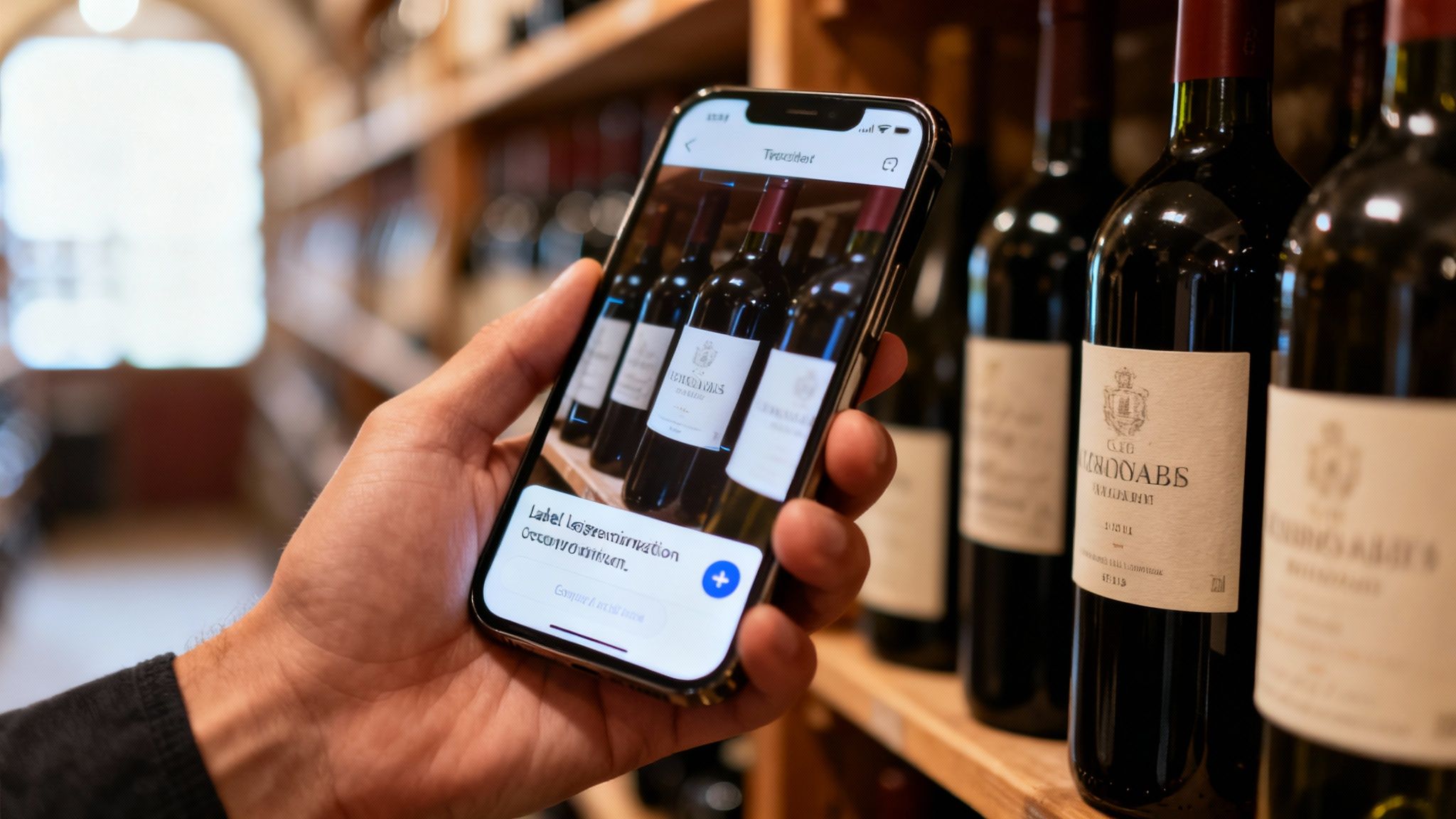
Instead of typing in all the details, you just scan the label with your phone's camera. The app instantly pulls up the wine’s info—producer, region, grapes, and often professional tasting notes. From there, you just add your personal details, like what you paid for it and its exact spot in the racking.
Taking inventory isn't just about counting bottles; it’s about protecting your investment. Proper management transforms a chaotic assortment into a curated asset, ensuring you drink every wine at its peak and avoid the waste of forgotten vintages.
The market for these management tools is booming for a reason. Industry audits show that effective inventory management can prevent the loss of 15-25% of a collection from bottles being forgotten past their prime. Reflecting this value, the wine cellar management services market is projected to hit USD 1.92 billion in 2024.
Logging the Data That Matters
Once you've picked your system, consistency is everything. Every time a new bottle comes into your cellar, log the essential details. A truly useful inventory goes beyond just the basics.
To really get the most out of your collection, make sure you're tracking these key data points:
- Wine Name, Producer, and Vintage: These are the non-negotiables.
- Region and Varietal: This helps you spot patterns in what you like and understand your own palate.
- Purchase Date and Price: Absolutely critical for tracking the value of your collection.
- Cellar Location: The grid coordinate (e.g., A-3-5) that points you straight to the bottle.
- Tasting Notes: Every time you open a bottle, log your own impressions. Over time, this becomes an incredible personal record of your wine journey.
- Optimal Drinking Window: Many apps pull in expert recommendations on when a wine will be at its peak. This might be the single most valuable piece of data for preventing waste.
This information does more than just keep you organized. It gives you the power to make smarter decisions, whether you're picking a wine for dinner or deciding what to buy next. A modern tool makes this process seamless. To see how it works, check out our guide on the benefits of a wine scanner app. It’s the fastest way to build a rich, detailed, and genuinely useful inventory.
Arranging Your Bottles for Easy Access
You've got the climate control humming and the racks installed. Now for the fun part: filling them up. Placing your bottles isn't just about making the cellar look good; it’s about creating a system that lets you find the right wine at the perfect moment.
How you arrange your collection should mirror how you think about and drink wine. There's no single "right" way to do it, so you'll want to land on a philosophy that fits your habits and goals.
Choosing Your Organizational Philosophy
Most collectors settle into one of a few tried-and-true methods, or sometimes a hybrid of a couple. Think about the wines you own and what you plan to buy, and see which of these clicks for you.
- By Region: This is the classic, old-school approach. You create sections for Bordeaux, Burgundy, Napa Valley, Tuscany, and so on. It’s perfect if you specialize in certain areas and love comparing vintages from the same terroir.
- By Varietal (Grape): Do you think in terms of grapes? This might be your method. All the Cabernet Sauvignon goes here, the Pinot Noir over there, and the Chardonnay in its own section. This system makes it a breeze to grab a specific style of wine to pair with dinner.
- By Producer: If you're loyal to certain winemakers, organizing by producer creates a personal "library" of their work. It’s a fantastic way to see how a winery's style evolves across different vintages, all lined up in one place.
Of course, any of these systems rely on knowing what’s on the bottle. If you're still getting the hang of deciphering labels, our guide on how to read wine labels will get you up to speed fast.
While these are all great starting points, they don't always answer the most important question: "What should I drink tonight?" That's where a more dynamic approach comes in handy.
The Practical Power of Drinking Windows
Honestly, the most useful way to organize a wine cellar is by a wine's drinking window—that sweet spot when it’s expected to be at its absolute peak. This method prioritizes access and stops you from accidentally letting a beautiful wine age past its prime. It’s a living, breathing strategy that keeps your collection exciting.
To make this work, you simply divide your cellar into zones. You might have a "Drink Now" section for wines ready to be opened in the next year—these are your go-to bottles for a Tuesday night or when friends drop by. Next to that, you could have a "Mid-Term" area for wines hitting their stride in 2-5 years, and a "Long-Term Aging" section for those special bottles you won’t touch for a decade or more.
Designating specific zones in your cellar for 'long-term aging' versus 'daily drinkers' is the key to a functional collection. It means you can grab a bottle for tonight's dinner without disturbing the fine wines you're patiently saving for a future milestone.
This is where your digital inventory becomes your best friend. An app like Sommy can track the recommended drinking window for every bottle, so you know exactly which wines need to be moved into your "Drink Now" zone. You can run a quick search for everything peaking this year and physically group them together.
This simple act transforms your cellar from a static library into a dynamic collection you can interact with. It’s the ultimate way to make sure every single bottle is opened at the perfect moment.
Maintaining and Curating Your Collection
Getting a wine cellar organized is a great first step, but it’s not a one-and-done project. Think of your collection as a living, breathing thing that grows and changes with your tastes. To really protect that investment and make sure every bottle hits its peak, you need a simple, consistent maintenance routine.
Beyond just basic upkeep, the real fun begins when you start actively curating your cellar. This is where all that data you've gathered pays off, helping you make smarter calls—from what to uncork for dinner tonight to which bottles you need to hunt down on your next buying trip.
Routine Cellar Maintenance Checklist
Think of this as a regular health checkup for your cellar's environment. A few quick tasks each month can stop small issues from turning into expensive disasters. After all, a stable environment is the absolute bedrock of a great cellar, so protecting it is priority number one.
Just get into the habit of running through these quick checks:
- Cooling Unit: Give it a listen. Are there any new hums, clicks, or rattles? Make sure the vents are clear of dust and gunk so it can breathe easy and run efficiently.
- Temperature Logs: Take a quick glance at your thermostat or digital thermometer. Is the temperature holding steady? Any weird fluctuations are a red flag.
- Humidity Levels: A simple digital hygrometer is your best friend here. If the humidity is consistently dropping below 50% or creeping above 75%, you might need to tweak your climate control.
- Bottle Inspection: Do a quick visual sweep of the racks. Look for any tell-tale signs of leaky corks or mold growing on labels—both can point to a humidity problem.
This whole process shouldn’t take more than five minutes, but it's an essential part of being a responsible cellar owner.
The Art of Active Curation
Once you've got your maintenance routine down, you can move on to the more rewarding job: curation. Your digital inventory is so much more than a list of bottles; it’s a powerful tool for understanding what you own and what you love. By taking a little time to review it periodically, you shift from being a collector to a true curator.
This is where logging all those details really starts to shine. For instance, a quick filter in an app like Sommy might show you've got a dozen bottles of Napa Cabernet but are completely out of crisp Sauvignon Blanc for the summer. Boom—your next shopping trip just got a clear mission.
Curation is the bridge between organization and enjoyment. It’s the process of using what you know about your collection to shape its future, ensuring it always has the right bottle for the right moment.
An active approach to curation helps you answer the kinds of questions that truly elevate your wine experience.
Using Your Data for Smarter Decisions
That inventory data you’ve been building is a goldmine. Digging into it helps you spot trends, fill gaps, and make your collection work better for you. This kind of active management is what separates a static collection from a dynamic one.
Here’s how to put that data to work:
- Identify Your Drinking Habits: Take a look at the wines you've actually consumed over the last six months. Wow, drinking more Italian reds than you thought? This helps you buy more of what you truly enjoy, not just what you think you should own.
- Spot Gaps in Your Collection: Filter your inventory by region or grape. You might suddenly realize you don't have a single bottle from the Rhône Valley or are dangerously low on celebratory bubbles.
- Manage Drinking Windows: This is the most crucial task. Regularly sort your collection by the "drink by" date to see which bottles are heading into their prime. Pull these bottles forward or move them to a "drink soon" section so they don't get lost in the back.
- Create a Wishlist: As you spot those gaps, add them to a wishlist inside your app. The next time a sale email hits your inbox, you’ll have a targeted list instead of just buying on impulse.
By also keeping a digital wine journal, you can track your tasting notes over time, which sharpens your palate and makes your future purchases even smarter. This is how a well-organized cellar becomes a personal, ever-evolving reflection of your journey in wine.
Common Questions On Cellar Organization
As you start dialing in your wine cellar, a few questions always pop up. Getting the right answers early can save you a ton of time, money, and—worst of all—ruined wine.
I’ve heard these questions from countless collectors over the years. Here’s the straightforward advice I always give to help you build and maintain a collection you’ll actually love to use.
How Often Should I Inventory My Wine Cellar?
A full, bottle-by-bottle physical inventory once a year is a great habit to get into. Think of it as an annual checkup. It’s your chance to make sure your digital records are spot-on, inspect the condition of your labels and corks, and find that one bottle you swear you put somewhere else.
But for day-to-day management, your inventory needs to be a living, breathing thing. The second a new bottle comes in, or you pull one out for dinner, log it. Immediately. Using a wine scanner app like Sommy makes this dead simple—a quick scan adds or "consumes" a bottle. This is the only way to have a constantly accurate picture of what you own.
What Is the Biggest Mistake People Make?
This one’s easy, and I see it all the time. By far, the most common and costly mistake is getting excited about beautiful racking before nailing down a stable environment. So many collectors drop thousands on custom mahogany shelves but stick them in a regular basement where the temperature and humidity are all over the place.
Without proper climate control, your gorgeous organizational system is completely useless.
Always, always establish and stabilize your cellar’s climate first. A rock-solid 55°F (13°C) and 60-70% humidity are non-negotiable. If you skip this foundation, the wine inside the bottles will spoil long before you ever get a chance to enjoy it.
What Is the Best Way to Organize Wine Bottles?
There's no single "best" way, because the right method is the one that fits how you collect and drink. The most successful cellars I’ve seen almost always use a hybrid approach that feels intuitive to the owner.
Think about mixing and matching these popular methods:
- By Region: This is the classic. Grouping all your Bordeaux, Tuscany, or Napa wines together is perfect for collectors who love specific areas. It just makes sense.
- By 'Drink-By' Date: This is probably the most practical approach. You create zones for "drink now" bottles versus those you’re aging for the long haul. It’s the best way to make sure nothing gets forgotten past its prime.
- By Varietal: Arranging by grape (all your Pinot Noir in one spot, all your Chardonnay in another) makes grabbing the right style for dinner incredibly fast.
A great system a lot of people land on is creating large zones by region, and then organizing the bottles inside each zone by vintage or drink-by date. You get the best of both worlds: geographical context and practical access.
Ready to turn that random assortment of bottles into a perfectly organized and accessible library?
Sommy is the tool that makes it simple. Scan labels to instantly create a digital inventory, track optimal drinking windows, and add personal tasting notes. Take control of your cellar and never lose track of a great bottle again. Start building your smart wine cellar with Sommy today!