
Organizing a wine cellar is much more than just putting bottles on a shelf. It’s about creating a stable, protected sanctuary where your collection can age gracefully. A climate-controlled cellar not only protects your investment but makes it a genuine pleasure to find that perfect bottle right when you want it.
Building the Foundation for a Perfect Cellar
Before you even think about racking systems or fancy labels, you have to master the environment. A cellar isn't just a cool, dark room; it's a carefully controlled space designed to shield your wine from its four main enemies: temperature swings, humidity problems, light, and vibration.
Get this foundation right, and everything else falls into place.
Think of your wine as a living, breathing thing. Just like us, it gets stressed out by sudden changes. Nailing down a consistent, cool temperature is the single most important factor in letting a wine mature properly. Without that, even the most meticulous organization system is worthless.
The Critical Role of Climate Control
The magic number for long-term aging (whether you're storing red, white, or sparkling wine) is a rock-steady55°F (13°C). This cool temperature slows down all the chemical reactions happening inside the bottle, allowing flavors to meld and develop complexity over years, not months.
But consistency is king. Wild temperature swings are far more damaging than being a few degrees off. Daily fluctuations of more than a couple of degrees can effectively 'cook' your wine, speeding up the aging process by as much as 10 times.
Humidity is the silent partner in this balancing act. You've probably seen old European cellars with their classic stone walls; those naturally maintain humidity around 60-70%. This is crucial because it keeps the corks from drying out. A dry cork can shrink by 1-2%, letting just enough air in to oxidize and ruin a bottle in a matter of months.
This diagram breaks down the key climate factors you need to control.
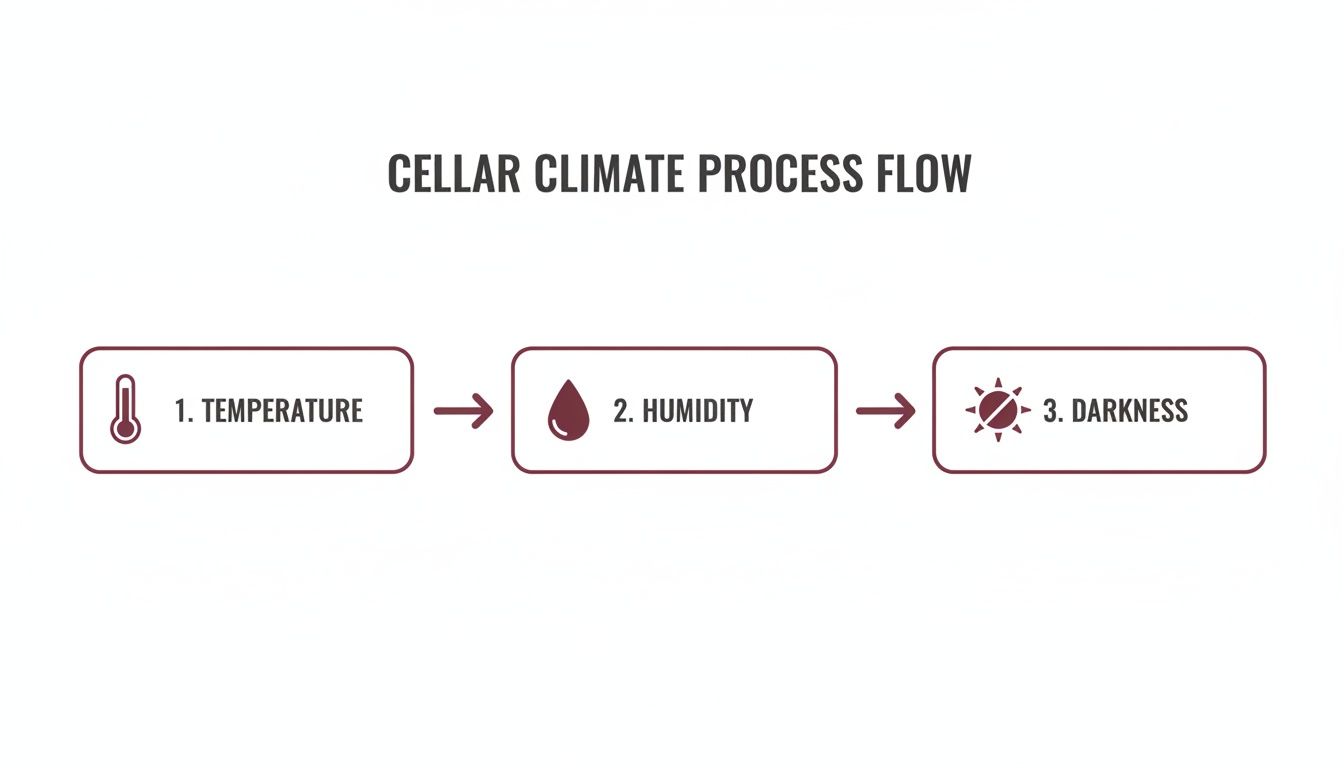
As you can see, it's all about creating a balanced, stable environment. Get these three elements right, and you're well on your way.
Beyond Temperature: Humidity, Light, and Vibration
While temperature gets all the attention, the other factors are just as important for protecting your collection.
- Humidity: The sweet spot is 60-70%. Too low, and your corks dry out. Too high, and you’re inviting mold to grow and ruin your labels, turning your prized collection into a mess of mystery bottles.
- Light: Keep it dark. UV light, especially from the sun, is a killer. It breaks down the delicate organic compounds that give wine its flavor and aroma, leaving it flat and tired. This is the whole reason most wine bottles are made of colored glass.
- Vibration: Wine likes to rest peacefully. Constant shaking or vibration (from a nearby laundry room, staircase, or generator) stirs up the fine sediment in older red wines and can disrupt the subtle chemistry of aging.
Your cellar’s environment is its immune system. A stable climate protects your wine from the ‘illnesses’ of premature aging, oxidation, and flavor degradation, ensuring every bottle you open is exactly what the winemaker intended.
To truly appreciate why all this matters, it helps to know what you like in a wine in the first place. If you're still figuring that out, our guide on building your personal wine profile without fancy jargon is a great place to start.
Here's a quick cheat sheet to keep these environmental factors top of mind.
Key Environmental Factors for Your Wine Cellar
| Factor | Ideal Range | Why It Matters & Risks of Neglect |
|---|---|---|
| Temperature | 55°F (13°C) | Slows aging for graceful maturation. Fluctuations can "cook" the wine, while heat ruins flavor and aroma. |
| Humidity | 60-70% | Keeps corks from drying out, preventing oxidation. Too much humidity can cause mold and damage labels. |
| Light | Total Darkness | UV light degrades organic compounds, leading to flat or "light-struck" flavors. |
| Vibration | Minimal to None | Prevents sediment from being disturbed and protects the delicate chemical aging process. |
Getting this balance right from the start saves a world of heartache later.
Choosing a cooling unit is a huge decision. Your options range from simple through-the-wall units for a small closet conversion to more complex split systems for a large, custom-built cellar. The right choice really depends on your space, budget, and the size of your collection.
But no matter which system you pick, proper insulation and a vapor barrier are non-negotiable. Skimp here, and you'll pay for it later with an inefficient system and costly climate swings. This initial investment in the environment is the most important one you'll make for your cellar.
In our follow-up article we will discuss racking and cellar layout, as well as tracking what's in your racks.
Can I Just Use a Regular Fridge or Basement?
It’s tempting, I know, but a standard kitchen fridge is a terrible place for wine long-term. It's way too cold, and more importantly, it’s far too dry. That lack of humidity will suck the moisture right out of your corks, causing them to shrink and let oxygen in. It can destroy a great bottle in just a few months.
An unfinished basement isn’t a reliable answer either. Basements suffer from huge swings in both temperature and humidity as the seasons change, the two biggest enemies of proper wine aging. It might be okay for a few months, but it lacks the stability needed for anything more.
A dedicated wine cooling unit is really the only way to guarantee the consistent, stable conditions your investment needs to mature gracefully.
Ready to turn that random assortment of bottles into a perfectly organized and accessible library?
Sommy is the tool that makes it simple. Scan labels to instantly create a digital inventory, track optimal drinking windows, and add personal tasting notes. Take control of your cellar and never lose track of a great bottle again. Start building your smart wine cellar with Sommy today!