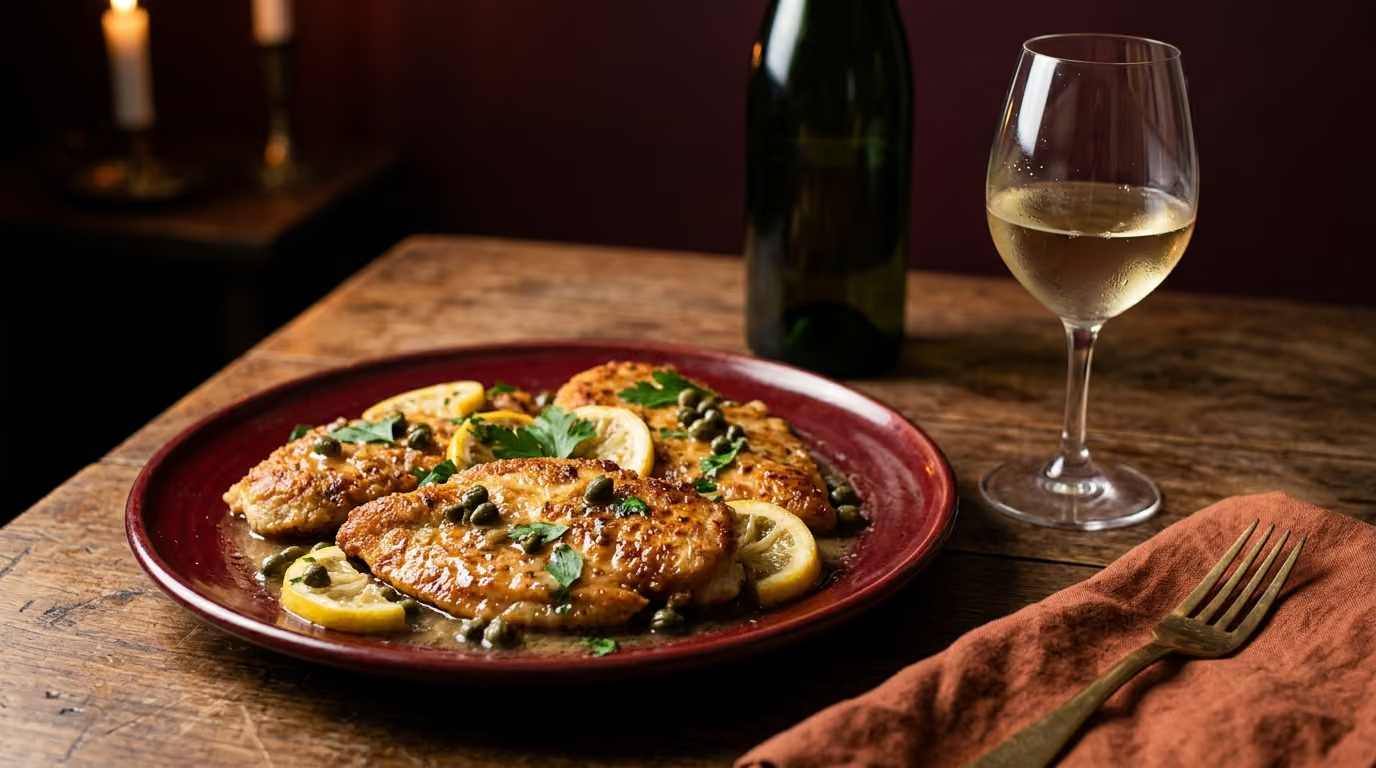
Chicken piccata needs a dry white wine with high acidity, because the sauce is already loaded with lemon and brine. Sauvignon Blanc, Vermentino, Pinot Grigio and Brut sparkling wine all hold their shape beside it. Anything oaky, buttery or sweet gets flattened by that first squeeze of lemon, and most soft reds turn bitter against the capers.
That single rule covers about ninety percent of piccata nights. The rest of this walks through why the sauce is so tough on wine, what changes when your version leans heavier on butter, whether a red can ever work, and which bottle belongs in the pan rather than the glass.
Why is chicken piccata harder to pair than plain chicken?
Because you're not pairing with chicken at all, you're pairing with the pan sauce. The cutlet itself is mild, floury and quiet, so it takes on whatever surrounds it. What surrounds it is lemon juice, capers packed in salt or brine, and a slug of butter swirled in at the end, which is three loud flavors sitting on top of something gentle.
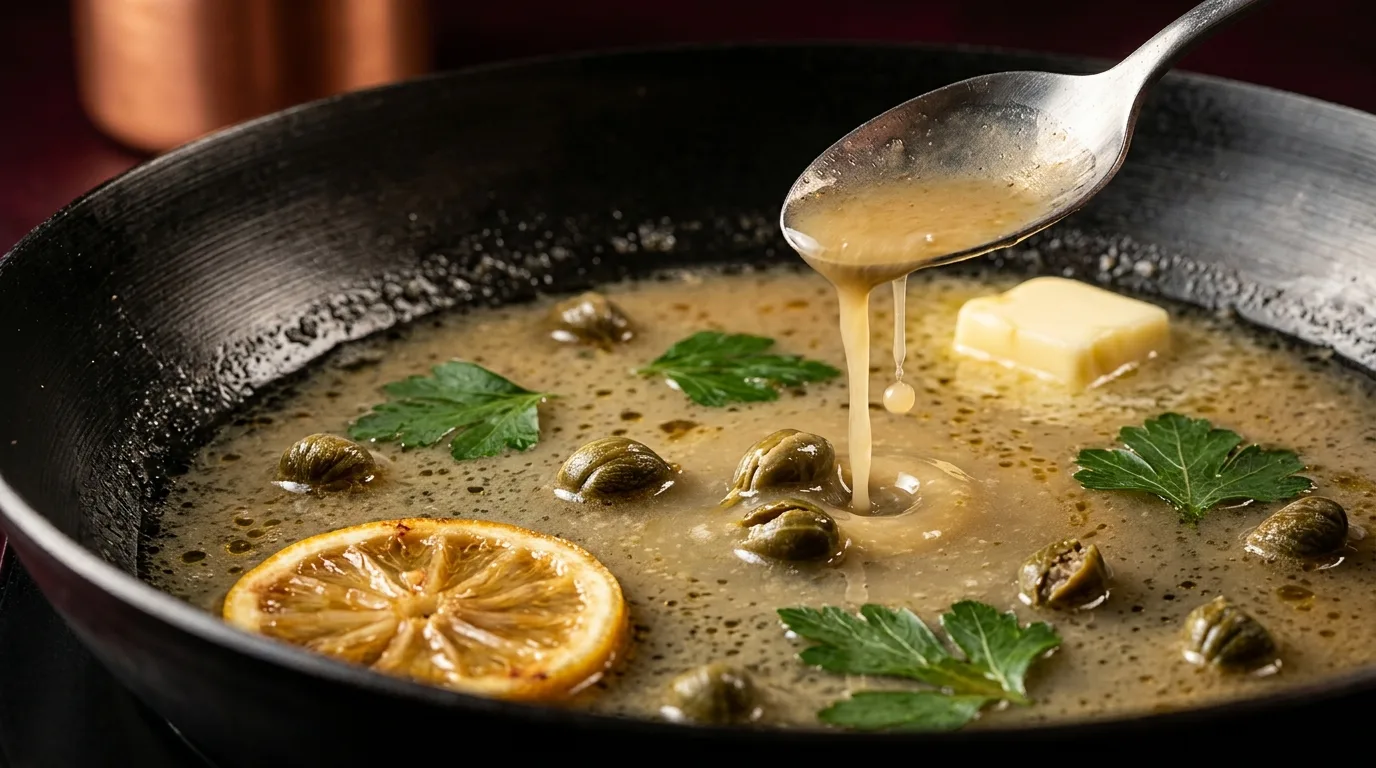
Acidity is the part that trips people up. When a dish is more acidic than the wine beside it, the wine tastes dull and flabby by comparison, as though someone drained the life out of it. A Chardonnay that seemed round and generous on its own can read as heavy and slightly sour once lemon has reset your palate. Matching the wine's acidity to the sauce keeps both sides tasting the way they did before they met.
Salt works in your favor here. Capers bring a concentrated hit of it, and salt suppresses bitterness, which is exactly what Paul Breslin and Gary Beauchamp reported in Nature in 1997 under the title "Salt enhances flavour by suppressing bitterness". The practical effect at the table is that a lean, high-acid white tastes almost generous next to piccata even though the same bottle reads as austere on its own.
The butter is the quiet complication. It adds weight without adding acidity, so a sauce that started sharp finishes rich and coating. You want a wine with enough freshness to cut through that film between bites, which is exactly the job carbonation and acidity do best.
Which wines work best with lemon caper sauce?
Start with dry, unoaked whites that lead with citrus rather than fruit or vanilla. Sauvignon Blanc is the safest single answer because its own lemon and green herb character runs parallel to the sauce instead of fighting it. Vermentino from Sardinia or the Tuscan coast is the more interesting pick, since it carries a faintly bitter, herbal edge that mirrors the capers.
| Wine | Why it works with piccata | What to look for on the label |
|---|---|---|
| Sauvignon Blanc | Its citrus and herb notes run alongside the lemon rather than under it | Loire Valley, Marlborough, or anything labeled dry and unoaked |
| Vermentino | Herbal, faintly bitter finish that echoes the capers | Sardinia, Bolgheri, or Liguria |
| Pinot Grigio | Light and neutral, so it refreshes without competing | Alto Adige or Friuli for the versions with real snap |
| Brut sparkling | Bubbles and acidity scrub the butter off your palate | Brut or Extra Brut, never Extra Dry |
| Verdicchio | Citrus with a subtle almond note that suits fried cutlets | Castelli di Jesi |
Brut sparkling wine deserves more attention than it usually gets here. Carbonation and acidity together do a better job on butter than acidity alone, so a Cremant, a Cava or a dry Prosecco can make a rich piccata feel lighter than any still white would. Check the sweetness term rather than trusting the word dry, because sparkling labels use their own scale where Extra Dry is sweeter than Brut. Our breakdown of what brut means on sparkling wine labels sorts that out in a couple of minutes.
Temperature matters more than the exact bottle. A white served too warm tastes broader and softer, which is the opposite of what this dish needs, so give it a proper chill and take it out of the fridge only when you sit down. Our notes on wine serving temperatures cover where each style actually shows best.
What to skip is easier to state. Oaked Chardonnay, Viognier, off-dry Riesling and anything described as buttery, creamy, tropical or lush will feel out of place, since they add richness to a plate that already has plenty and bring no acidity to balance the lemon.
What if your piccata isn't the classic version?
Adjust for whichever element you pushed hardest, because the pairing follows the sauce rather than the recipe title. Home cooks rarely make piccata exactly the same way twice, and the changes people make most often all pull the wine in a predictable direction.
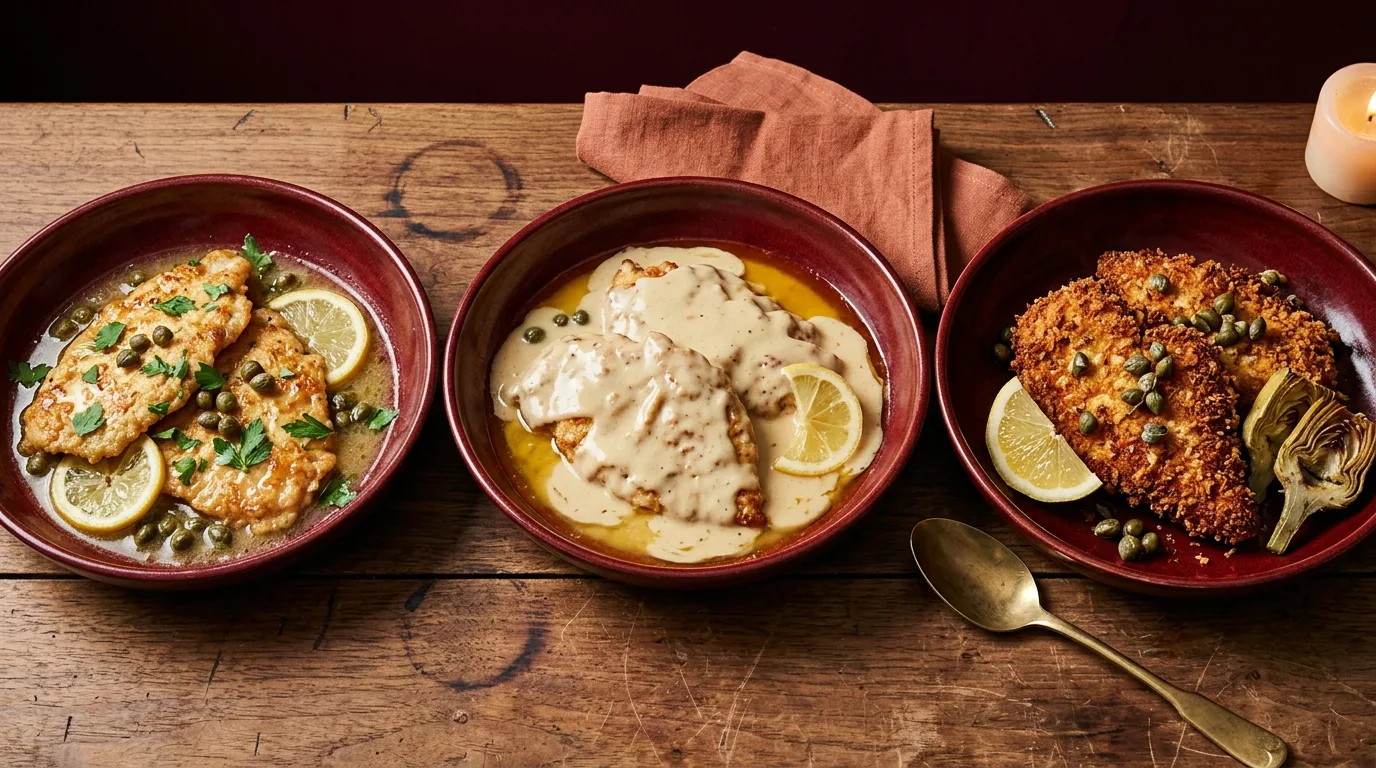
If you finished the sauce with extra butter or a splash of cream, move toward sparkling wine or a Vermentino with a bit of texture, because you now need something that scrubs rather than something that merely refreshes. If you doubled the capers or added chopped olives, Vermentino and Verdicchio handle that briny, slightly bitter edge better than Sauvignon Blanc does.
A heavier flour dredge or a panko crust pushes the dish toward fried food, and fried food loves bubbles above all else. Veal piccata behaves the same way as chicken for pairing purposes, though the meat is a touch richer, so a fuller white such as a Soave Classico or a dry Chenin Blanc from the Loire earns its place. Artichoke hearts, which turn up in plenty of piccata recipes, are genuinely difficult for wine. Linda Bartoshuk and her colleagues showed in Science in 1972 that eating artichoke makes plain water taste distinctly sweet afterward, and the same effect skews the wine in your glass toward sweeter and softer than it really is. High acidity is your defense there, so lean harder into Sauvignon Blanc or a bone-dry sparkling wine.
Serving piccata over pasta rather than beside vegetables adds bulk but not much flavor, so the sauce still leads. If your pasta night wanders toward cream instead, the logic shifts entirely, and our guide to wine for creamy pasta is the better starting point.
Can you drink red wine with chicken piccata?
You can, but you have to pick carefully, and most reds will make the dish worse. Tannin is the problem, since it binds with the lemon and the salt to produce a metallic, drying finish that overwhelms a delicate cutlet. Ripe, jammy reds cause a different failure, where the fruit reads as sweet and slightly cloying next to sour lemon.
The reds worth trying share low tannin and high acidity. A light Pinot Noir from the Loire or a cool corner of Oregon can work, as can Frappato from Sicily, Schiava from Alto Adige, or a young Gamay from Beaujolais. Chill any of them for about twenty minutes before pouring, since a lightly chilled red keeps its freshness forward and pushes its warmth back.
Dry rosé is the smarter compromise when the table is split. It brings the acidity of a white with enough red fruit to satisfy anyone reaching for a red, and a Provence or a dry Spanish rosado sits comfortably beside lemon and capers. On a mixed table it usually keeps everyone happier than picking a side would.
If you're pairing a different chicken dish and wondering whether the same logic transfers, it mostly doesn't. Cream and marsala change the answer completely, which is why chicken marsala and chicken cacciatore land on different bottles entirely.
Which wine should you cook chicken piccata with?
Use the same dry white you plan to drink, and use a real bottle rather than something labeled cooking wine. The pan sauce reduces, which concentrates everything in the wine, so any sweetness or off flavor gets amplified rather than cooked away.
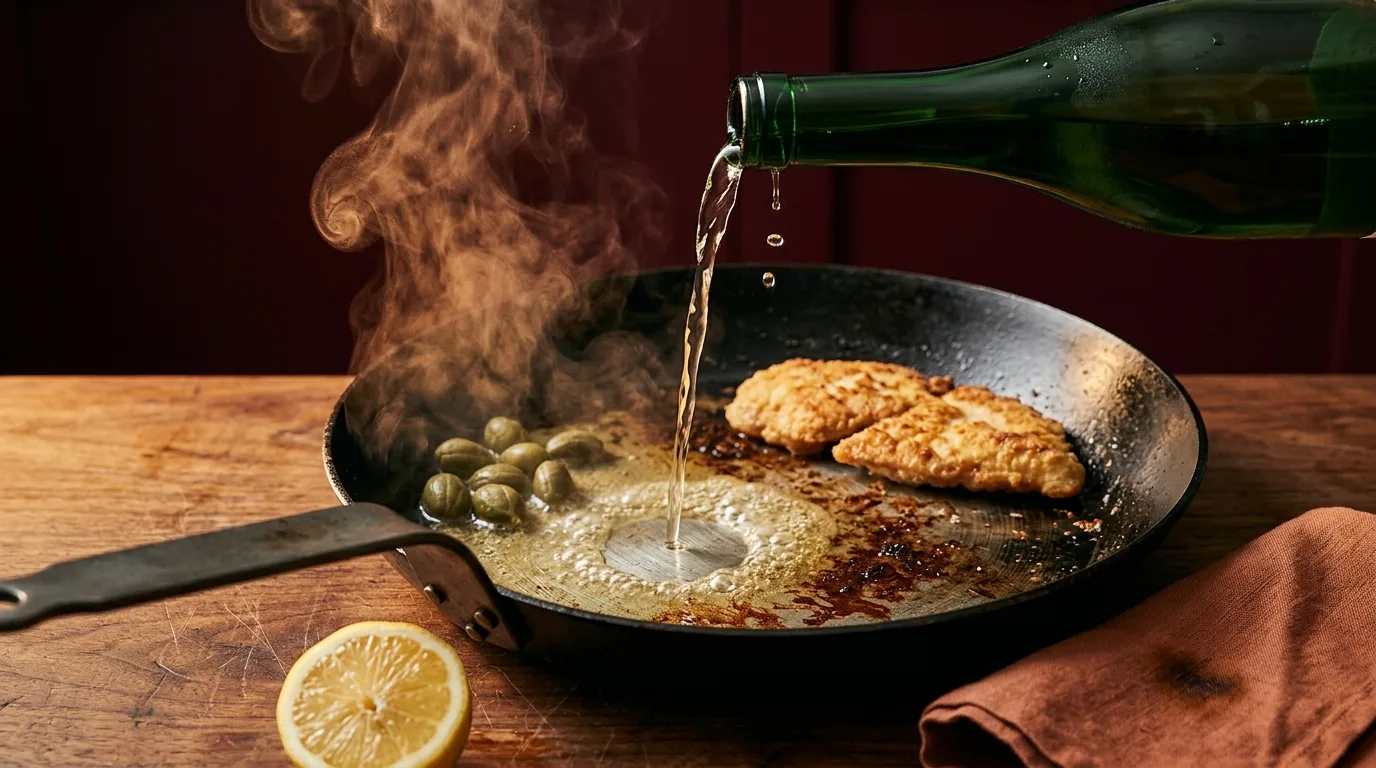
Bottles sold as cooking wine are built for the shelf rather than the pan. Holland House White Cooking Wine, one of the most widely stocked, lists salt among its ingredients along with invert sugar and two preservatives, and carries 190 mg of sodium per two tablespoon serving on its own product page. Since a piccata sauce reduces that liquid down by half or more, and capers are already salty, you can season the dish past the point of rescue before you've added any salt yourself.
An inexpensive dry white does the job properly. Pinot Grigio, Sauvignon Blanc and unoaked Chardonnay all work in the pan, and the wine only needs enough acidity to lift the sauce. Avoid anything sweet, since residual sugar concentrates as the liquid reduces and can leave the sauce tasting slightly candied against the lemon.
You don't have to cook with the identical bottle you drink, though it's an easy way to keep the flavors aligned. Pour the glass first, use a splash from the same bottle to deglaze, and the sauce and the wine end up speaking the same language without any extra thought.
How do you order the right bottle at a restaurant?
Describe the sauce rather than the dish, since servers can work with a style request far faster than they can guess. Asking for something dry and crisp with no oak, for a lemon and caper sauce, tells them everything they need in one sentence.
Scan the by-the-glass whites first, because those bottles turn over quickly and are usually the freshest thing on the list. Look for Sauvignon Blanc, Vermentino, Verdicchio, Albariño or Picpoul, all of which land in the right lane. If the list is heavy on Chardonnay, ask whether any of them see no oak, since an unoaked Chablis or a stainless Chardonnay from Italy works perfectly well here.
Wine lists that describe every white as crisp and refreshing tell you nothing useful, which is where a second opinion helps. Sommy's Current Venue filters a restaurant's actual list down to the bottles that fit your taste once you've arrived, so you're choosing among four plausible options instead of forty unfamiliar names. It's the same reasoning laid out here, applied to the specific list in front of you.
One glass first is a reasonable move when you're unsure. A single pour tells you more about whether the wine has enough lift for the sauce than any menu description will, and you can commit to the bottle after the first bite lands.
Frequently asked questions
What is the best wine pairing for chicken piccata?
Sauvignon Blanc is the most reliable chicken piccata wine pairing, because its citrus and herbal character matches the lemon and capers without adding weight. Vermentino, Pinot Grigio, Verdicchio and Brut sparkling wine all work for the same reason, which is high acidity and no oak.
Can I drink Chardonnay with chicken piccata?
Only the unoaked kind belongs here. A stainless steel Chardonnay or a Chablis has the acidity the dish needs, while an oaked, buttery Chardonnay adds richness to a sauce that already has butter in it and tastes flat once lemon hits your palate.
Does red wine go with chicken piccata?
Light, low tannin reds can work, including Pinot Noir, Gamay, Frappato and Schiava, ideally chilled for about twenty minutes. Tannic or jammy reds turn bitter or cloying against the lemon and capers, so they're worth avoiding here.
What white wine do you cook chicken piccata with?
Use a dry, inexpensive white such as Pinot Grigio, Sauvignon Blanc or unoaked Chardonnay. Skip bottles labeled cooking wine, since they contain added salt and sugar that concentrate as the pan sauce reduces alongside already salty capers.
Is sparkling wine a good chicken piccata wine pairing?
It's one of the best options, especially when your version leans heavy on butter or uses a thicker crust. Carbonation and acidity together clear richness from your palate between bites, so choose Brut or Extra Brut rather than Extra Dry, which is sweeter than its name suggests.
What wine should I avoid with chicken piccata?
Avoid oaked Chardonnay, Viognier, off-dry Riesling, Moscato and any full bodied red with firm tannin. Sweetness clashes with the lemon and tannin turns metallic against the capers, so both directions make the plate harder to enjoy.
The one thing to remember at the shelf
Buy for the sauce, not for the chicken. Every reliable chicken piccata wine pairing shares the same two traits, which are real acidity and no oak, and that pair of words will steer you correctly in any wine shop or restaurant even when the specific grapes are unfamiliar.
Start with Sauvignon Blanc if you want the safe answer, reach for Vermentino when you want the more interesting one, and open something sparkling when the butter has gotten away from you. Whichever way you go, keep it properly cold and let the first bite tell you whether you got the balance right.