
Pour something bright and medium-bodied, which in practice means a dry rosé, a Barbera, or a young unoaked Sangiovese. Tomato soup is unusually acidic for a dinner dish, so the wine has to be at least as acidic or it tastes flat and slightly sour beside it. The grilled cheese then adds fat and salt, which softens the wine and rounds off any hard edges. That pairing of high-acid wine against high-acid soup is the whole trick, and it's why a soft, low-acid red goes so badly wrong here.
What wine goes with tomato soup and grilled cheese?
A dry rosé is the single best answer, because it splits the difference between the two halves of the meal. It has the acidity to meet the tomato, enough red-fruit character to feel like a match rather than a contrast, and enough freshness to cut through melted cheese. A rosé from Provence, the Loire or Navarra all work, and any of them costs less than the wine you'd normally think of for a dinner this simple.
Barbera is the red to reach for if you want one. It's naturally high in acid and unusually low in tannin, which is exactly the combination tomatoes ask for. Young Sangiovese does the same job with a savoury, herbal edge that suits a soup finished with basil, and Chianti is the version of it most shops carry.
For a white, dry Italian whites are the safest choice, so Vermentino or a good Verdicchio both hold up. The one to skip is anything soft and low in acid, which will taste dull and sweetish next to the soup. Our broader picks for Italian food follow the same rule, since almost every tomato-based dish rewards the same kind of bottle.
Why is tomato soup difficult to pair?
Tomatoes are genuinely acidic, and acidity in food resets what a wine tastes like. A wine with lower acidity than the dish reads as flat, dull and faintly flabby the moment the two meet, which is why so many perfectly nice bottles seem to fall apart next to a bowl of soup. Matching or exceeding the food's acidity is the fix, and it's the single most useful rule for anything tomato-based.
There's a second problem hiding underneath. Most tomato soups carry a background sweetness, either from the tomatoes themselves, from carrot and onion cooked down at the start, or from a spoonful of sugar added to balance the acid. A very dry, austere wine can taste thin and slightly bitter against that sweetness, so you want fruit in the glass as well as acid.
Cream is the third variable in the equation. A creamy tomato soup is softer and rounder than a clear one, so it can carry a wine with more body without any trouble. A thin, bright, purely tomato soup needs the wine to stay light, or the glass starts to dominate a fairly delicate bowl.
What does the grilled cheese change?
The sandwich is the part that makes this pairing easier rather than harder, because fat and salt are a wine's two best friends. Fat softens tannin and makes a wine taste rounder and fruitier, while salt sharpens the impression of acidity and lifts the fruit. Between them, they let you pour something with a little more structure than the soup alone could handle.
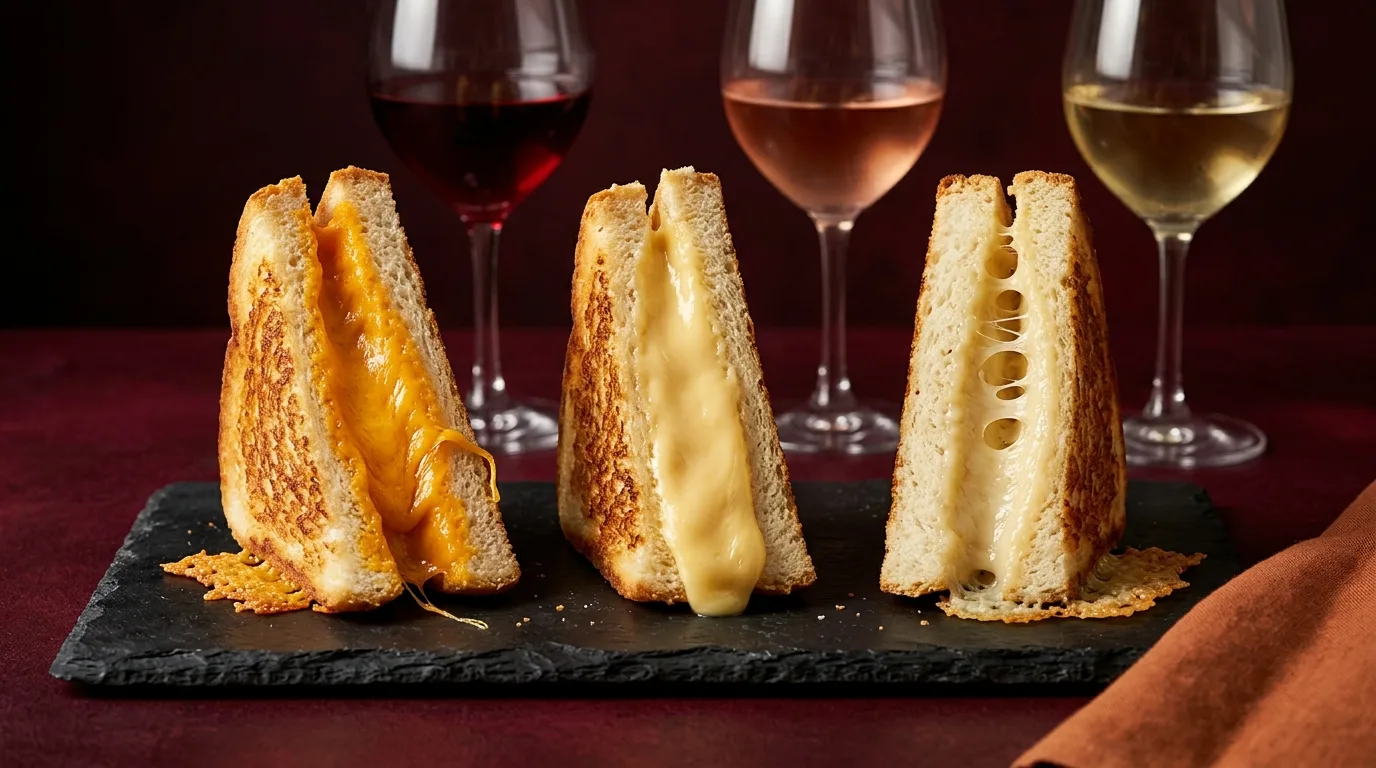
Which cheese you use shifts things noticeably. A sharp cheddar brings tang and a slight bite, which pairs happily with Barbera or an unoaked Sauvignon Blanc. A mild American cheese or a young Gouda is sweeter and creamier, so a fruitier rosé or a Beaujolais suits it better. Gruyere adds nutty depth, which is where a Chardonnay with a little oak finally earns a place at this table.
If your sandwich has extras, they matter more than the cheese does. Bacon pushes toward a smokier red, caramelised onion toward something with more ripeness, and a tomato slice inside the sandwich simply doubles down on everything the soup is already doing. Our notes on wine for mac and cheese cover the melted-cheese question in more depth if you cook that way often.
Does the bread and the butter matter too?
They do, and they're the part almost nobody accounts for. A grilled cheese is fried in butter or mayonnaise, so the outside of the sandwich carries a browned, nutty richness that goes well beyond the cheese inside. That toasted crust is another argument for acidity in the glass, since a wine that can cut through butter keeps every bite tasting as good as the first one.
Sourdough adds its own tang, which nudges you toward a wine with a bit more fruit to balance it. A soft white sandwich loaf is sweeter and much plainer, so the cheese and the soup do all the talking and almost any bright bottle works. Rye brings caraway and a savoury edge that suits a Gruner Veltliner or a peppery light red better than a fruity rosé.
The thickness of the bread changes the balance more than you'd expect. A thin, crisp, well-pressed sandwich stays light enough that a white keeps up easily, while a thick doorstop of a melt tips the meal firmly toward a red. Judge the plate in front of you rather than the recipe, since two grilled cheeses can be very different dinners.
Which bottles should you buy?
Choose by how your version of the meal is built rather than by grape alone. The table below sorts the reliable options by the thing that dominates your bowl and your plate.
| If your dinner is | Look for | Why it works |
|---|---|---|
| Classic bright tomato soup | Dry rosé, Barbera, Sangiovese | High acidity meets the tomato instead of collapsing under it |
| Creamy tomato soup | Chianti Classico, Cru Beaujolais, Vermentino | Enough body for the cream, still bright enough for the tomato |
| Roasted tomato and garlic | Cotes du Rhone, Montepulciano d'Abruzzo | Herbal, savoury reds match the caramelised, roasted flavours |
| Sharp cheddar sandwich | Barbera, unoaked Sauvignon Blanc | Tangy cheese and high-acid wine sharpen each other |
| Gruyere or a fancier melt | Lightly oaked Chardonnay, dry Riesling | Nutty cheese suits a rounder white with real acidity |
Montepulciano d'Abruzzo is worth singling out as the value pick. It's soft, dark-fruited, low in tannin and almost always cheap, and it handles a roasted tomato soup particularly well. Lambrusco is the fun answer if your shop stocks a dry one, since gently sparkling red with acidity and a little grip is an excellent thing to drink with melted cheese.
Sauvignon Blanc splits opinion here and is worth a note. A grassy, herbal Loire version picks up basil and works nicely, while a very tropical New Zealand example can clash with the soup's sweetness. If the label leans toward passionfruit and guava rather than grapefruit and grass, it's probably the wrong one for tonight.
Should you pour red, white or rosé?
Rosé is the safest, red is the most satisfying and white is the most situational. Rosé wins on flexibility, since it's the only one of the three that suits the acidic soup and the fatty sandwich equally without needing you to think about it. If you're cooking this for several people with different tastes, that's the bottle to open.
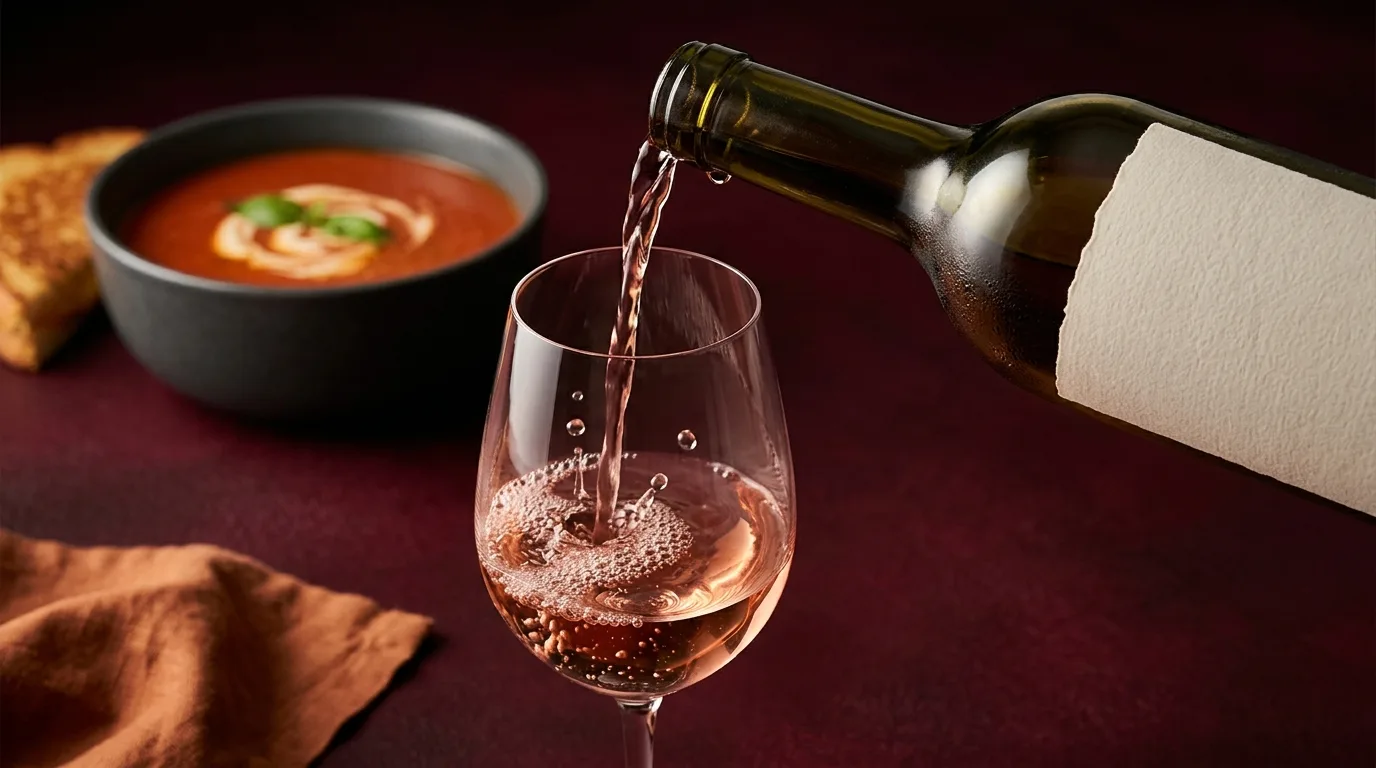
Red becomes the better call when the soup is roasted, creamy or heavily herbed, because those versions have enough depth to want a wine with some savoury character. Keep the tannin low and the acidity high, which points at Barbera, Sangiovese and Gamay rather than anything bold. Serving it slightly cool helps too, and our page on wine serving temperatures gives the ranges.
White works best when the sandwich is the star and the soup is a side. A crisp Italian white or a dry Riesling handles a cheese-forward plate nicely, and the acidity keeps the whole thing from feeling heavy. It struggles most against a very tomato-forward bowl, where a rosé or a light red simply has more to say.
What should you avoid opening?
Big tannic reds are the main thing to leave alone, so skip the Cabernet Sauvignon, the Malbec and anything described as bold or full-bodied. Tomato acidity strips the fruit out of those wines and leaves the tannin behind, which tastes metallic and drying. It's one of the most reliably unpleasant pairings in everyday cooking.
Heavily oaked Chardonnay is the second to avoid, since vanilla and toast against tomato acidity turns sour rather quickly. Soft, low-acid reds are the third group, which includes a lot of ripe warm-climate Merlot and most sweetish red blends. They taste dull and slightly cloying next to the soup, and the sandwich can't rescue them.
Anything with residual sugar belongs in the same bin here. The soup already carries a background sweetness, and doubling it makes the whole plate taste like ketchup. Our notes on wine for chicken parmesan run into the same problem, because a sweet red against a tomato sauce fails there for identical reasons.
How do you pick a bottle without overthinking it?
Head to the Italian shelf first, since it's the most reliable place to find high acidity and low tannin at a low price. Barbera, Chianti and Montepulciano d'Abruzzo all live there, and any of the three will suit this dinner. If the shop groups by colour instead, the rosé section is a shorter route to the same result.
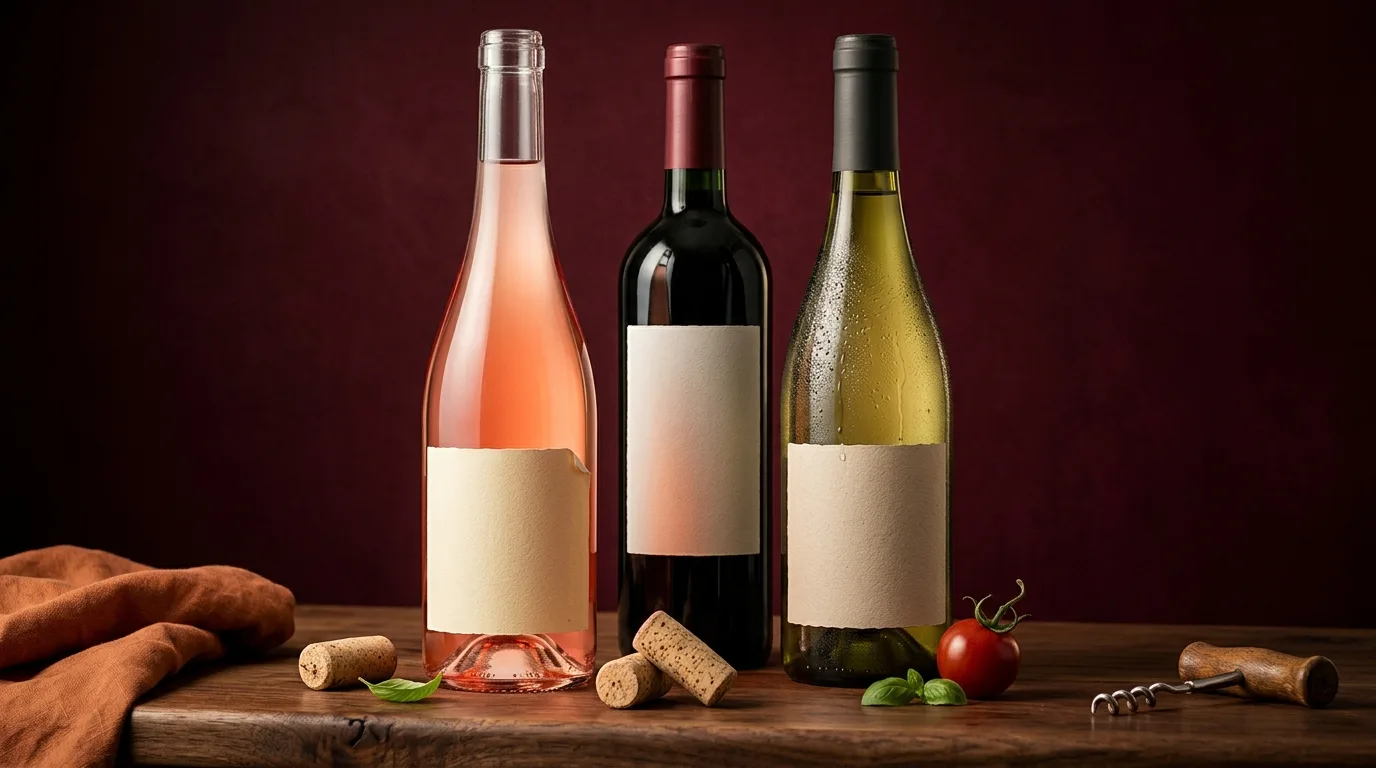
Read the back label for the words dry, crisp or fresh rather than rich, bold or smooth, since the first set describes what this meal wants and the second describes what it doesn't. Alcohol is a useful proxy too, and something between twelve and thirteen and a half percent is usually in the right zone for a weeknight bowl of soup.
If you're in the aisle holding a bottle you don't recognise, Label Scan will read it and tell you what style you're actually holding. That's more useful than the front label, which is designed to sell the bottle rather than describe it, and it takes about as long as squinting at the small print.
Frequently asked questions
What is the best wine for tomato soup?
A dry rosé or a high-acid Italian red such as Barbera is the best all-round choice. Both have the acidity to match the tomatoes, which is the single thing that decides whether this pairing works.
Does red wine go with grilled cheese?
Red works well, provided it's light and bright rather than big and tannic. Barbera, Beaujolais and young Sangiovese all suit melted cheese, since the fat softens the wine while the acidity keeps the sandwich from feeling heavy.
Why does Cabernet Sauvignon taste bad with tomato soup?
Tomato acidity strips the fruit out of a tannic red and leaves the tannin exposed, which reads as bitter and metallic. Cabernet's structure needs fat and protein to soften against, and a bowl of soup gives it neither.
What wine goes with creamy tomato soup?
Cream adds body, so you can move slightly heavier without losing the pairing. Chianti Classico, Cru Beaujolais and Vermentino all carry the extra weight while keeping the acidity that the tomatoes still demand.
Is white wine a good match for tomato soup and grilled cheese?
Dry Italian whites such as Vermentino and Verdicchio work nicely, especially when the sandwich is doing more work than the soup. Avoid anything soft or oaky, which will taste flat and slightly sour beside the tomatoes.
What should I drink with roasted tomato soup?
Roasting concentrates the sweetness and adds caramelised depth, which suits a savoury red. Montepulciano d'Abruzzo and Cotes du Rhone both handle it well, and either one stays cheap enough to suit the meal.
Pouring it tonight
Match the acidity and the rest takes care of itself. Tomato soup asks for a wine at least as bright as it is, the grilled cheese hands you fat and salt to soften whatever you pour, and between them they make a dinner that costs very little into something worth opening a bottle for.
Rosé is the pick if you want one answer that always works. Barbera is the pick if you'd rather drink red, and Montepulciano d'Abruzzo is the one to grab when you'd rather not spend much. The only genuine mistake here is reaching for something big and tannic, which is the instinct a bowl of soup will punish faster than almost any other dish.