

Open a white with body and real acidity, which usually means Chardonnay from a cooler place, Viognier, or a dry Chenin Blanc. The pastry and the cream sauce are the heavy part of this dish, so the wine has to carry some weight while still cutting through the fat. Light, lean whites vanish under it and big tannic reds argue with the chicken. If you'd rather drink red, keep it soft and pale, which points at Pinot Noir or a Cru Beaujolais.
What wine goes best with chicken pot pie?
A medium to full-bodied white with good acidity is the answer almost every time, and lightly oaked Chardonnay is the benchmark. Chardonnay works because it has enough body to match a buttery crust and enough acidity to keep the cream sauce from feeling heavy after a few bites. That combination of weight plus freshness is the whole specification, and it's why lean whites and flabby whites both fail here.
Viognier is the more interesting choice, bringing a rounder, almost oily texture and aromas of peach and honeysuckle that lift a fairly beige-tasting dish. Dry Chenin Blanc from the Loire or South Africa does something similar with more acidity and less perfume. Gruner Veltliner is the pick if your filling is loaded with carrots, peas and celery, since its white-pepper snap suits root vegetables.
Pinot Noir is the red that works, provided you pick a lighter one and serve it slightly cool. It has the acidity and the low tannin the dish needs, and its savoury earthiness picks up the thyme, mushrooms or leeks that most recipes include. Our notes on wine for roast chicken follow the same logic, since a pot pie is essentially a roast chicken dinner assembled under pastry.
Why does the crust change the wine?
Pastry is fat and starch, and both of them blunt a wine's acidity while coating your palate. That means a wine that seems bright and lively on its own can taste dull halfway through a slice. It also means the crust, rather than the chicken, is usually the thing setting the weight of the pairing, which is why a delicate white struggles so much with this dish.
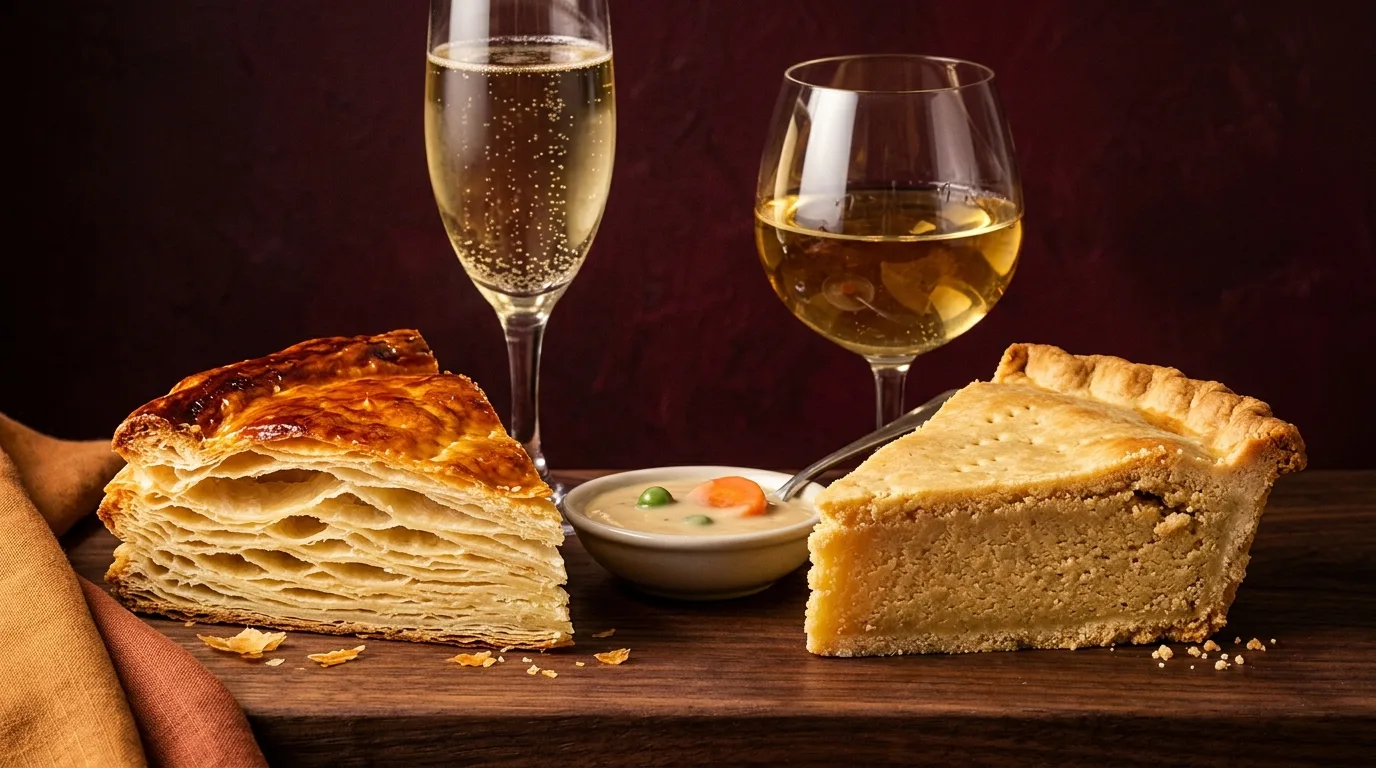
Different crusts push in different directions, and it's worth paying attention to yours. Puff pastry is the richest, with dozens of butter layers that ask for the most acidity you can find, so an unoaked Chablis or a crisp Chenin earns its place. A shortcrust or pie-dough lid is denser and less buttery, which leaves more room for a rounder, oaked Chardonnay or a Viognier without the plate feeling greasy.
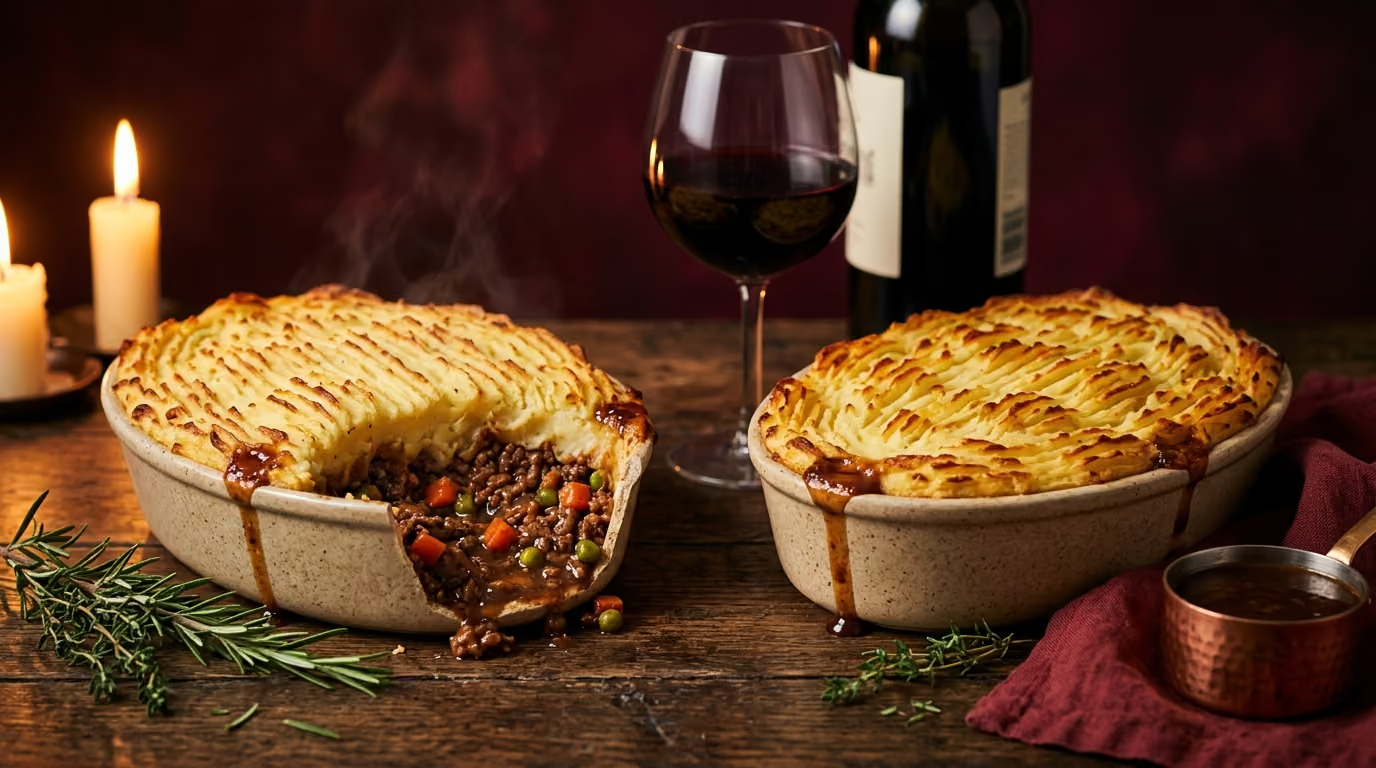
A biscuit or scone top, common in American versions, adds a faint sweetness from the dairy and the leavening. That's where a touch of ripeness in the wine helps, so a warmer-climate Chardonnay or a Viognier lands better than something austere. The same reasoning applies to the pastry-topped pies in our guide to wine for shepherd's pie and cottage pie, where the topping does more work on the pairing than the filling does.
Which bottles should you actually buy?
Match the wine to what your pie emphasises rather than picking a grape and hoping. The table below sorts the reliable options by the part of the dish that dominates, which is the thing you can judge by looking at what's in front of you.
| If your pot pie is | Look for | Why it works |
|---|---|---|
| Puff pastry, very buttery | Chablis, dry Chenin Blanc, Champagne | High acidity slices through layered butter and resets the palate |
| Shortcrust, creamy filling | Lightly oaked Chardonnay, white Burgundy | Body matches the sauce while oak echoes the pastry |
| Loaded with root vegetables | Gruner Veltliner, dry Riesling | Peppery, citrus-driven whites lift carrots, peas and celery |
| Biscuit-topped and richer | Viognier, warmer-climate Chardonnay | Ripe stone-fruit aromatics suit the slight sweetness of a scone top |
| Made with beef or game | Pinot Noir, Cru Beaujolais, Barbera | Soft tannins and bright acidity handle darker meat without drying it |
Sparkling wine deserves a mention on its own, because it's genuinely one of the best matches for anything wrapped in pastry. The bubbles and the acidity scrub away fat between bites in a way still wine can't quite manage, and a dry Cremant or a decent Cava costs far less than Champagne while doing the same job. It also makes a midweek pie feel like an occasion, which is not nothing.
If your shop has a white Burgundy shelf, that's the shortcut worth taking. Macon-Villages and Saint-Veran are the affordable end of it, both giving you the lightly oaked Chardonnay profile this dish wants without the price attached to the famous villages.
Does red wine ever work with chicken pot pie?
It does, though it needs to be the right kind of red, and the wrong one spoils the plate quickly. Tannin is the problem, since a firm, drying red turns bitter against a delicate cream sauce and makes the chicken taste papery. That rules out Cabernet Sauvignon, Malbec, Syrah and most young Bordeaux for this particular dinner.
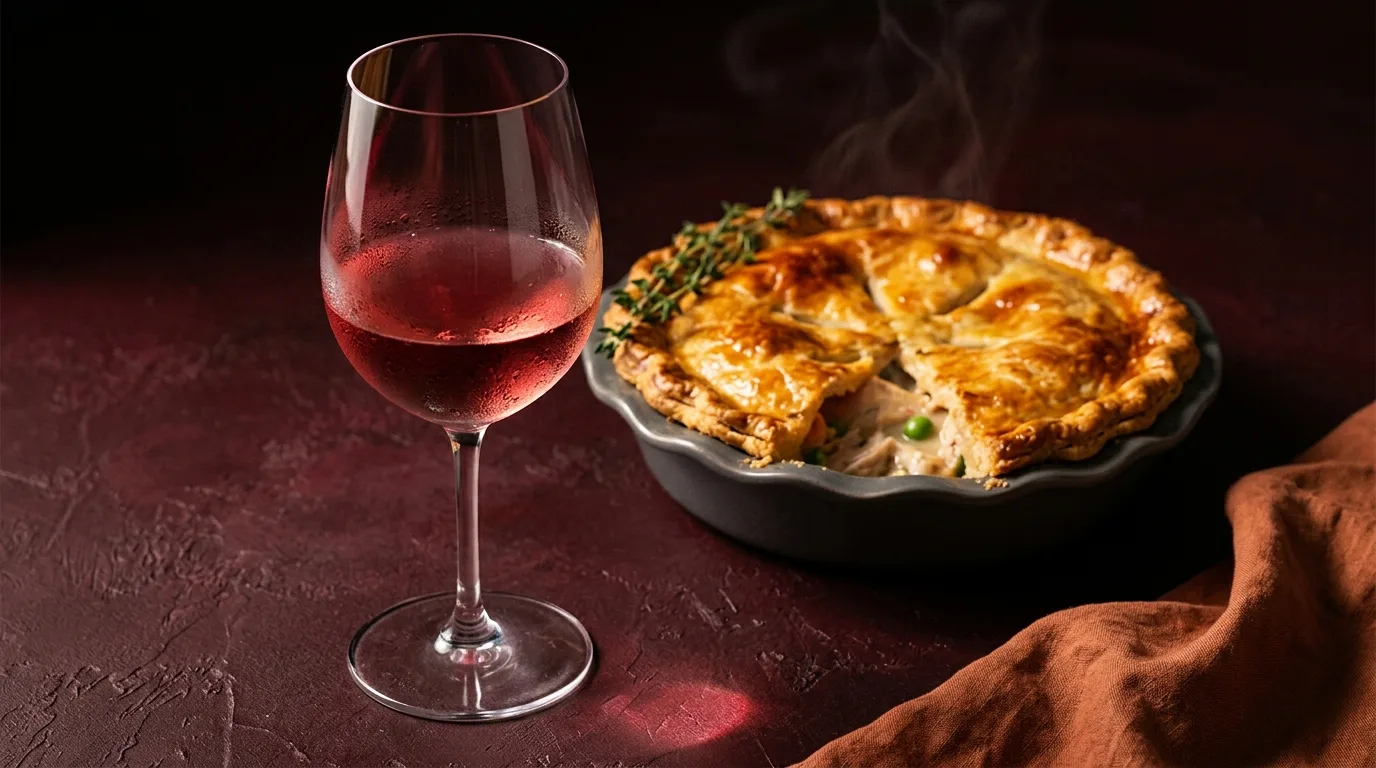
What works is a pale, high-acid red with soft tannins, so Pinot Noir, Gamay from Beaujolais and lighter Italian reds like Dolcetto all fit. Serve any of them slightly chilled, closer to a cellar temperature than a warm kitchen, and the pairing improves noticeably. Our page on wine serving temperatures has the ranges if you want to be precise.
Red becomes the better choice when the pie isn't chicken. A beef, venison or steak-and-ale pie has enough savoury depth to want structure back in the glass, and at that point Barbera, Chianti or a Cotes du Rhone all become sensible rather than reckless.
What does the filling add to the pairing?
The filling is quieter than the crust, though it decides which of the good options is best. Thyme, sage and parsley are the usual herbs, and their green, slightly resinous character is picked up neatly by Gruner Veltliner and dry Chenin Blanc. If your recipe leans on tarragon, which several classic French versions do, Chenin Blanc becomes the standout because the aniseed note in the herb and the quince note in the wine agree with each other.
Leeks and onions cooked down slowly add a gentle sweetness, and that's the moment a rounder wine helps rather than hurts. Peas and carrots do the same thing on a smaller scale. Mushrooms pull hardest in the opposite direction, since their savoury depth flatters earthy, savoury wines and makes a light Pinot Noir a genuinely good idea rather than a novelty.
The sauce itself is usually a roux thickened with stock and cream, which is why a lot of the same reasoning applies to any dish built that way. Our picks for creamy pasta night land in similar territory, because a cream and butter base sets the pairing whether it's under pastry or over noodles.
Salt matters more than most pairing advice mentions. A well-seasoned filling makes a wine taste fruitier and softer, so a bottle that seemed slightly austere on its own will usually come alive next to the pie. That's a good reason to taste the wine with a forkful before deciding you've picked wrong.
What should you avoid pouring?
Very light, neutral whites are the most common misstep, so leave the Pinot Grigio and the Muscadet for a lighter dinner. They get flattened by pastry and cream, and you'll finish the glass without having tasted much of anything. Sauvignon Blanc is a borderline case, since a leaner Loire version can feel thin here while a riper, fuller example does fine.
Big tannic reds are the second group to skip, for the reasons above. Heavily oaked, high-alcohol Chardonnay is the third, which sounds contradictory given that Chardonnay is the headline recommendation. The distinction is that a lightly oaked wine complements the crust while a heavily oaked one piles butter on butter until everything tastes the same and slightly cloying.
Sweet wines are the last to avoid at the table, though a small glass of something off-dry can work if your filling is unusually sweet with corn and carrot. That's an edge case rather than a rule, and dry is the safer default.
How do you pick a bottle in the shop?
Go to the white Burgundy or the Chardonnay shelf first, and look for a French or cool-climate bottle rather than a very ripe warm-climate one. If the label mentions oak ageing, that's fine here as long as it isn't the main event, so a wine described as lightly oaked or partially barrel-aged is closer to what you want than one promising rich vanilla and toast.
Failing that, the Loire section gives you dry Chenin Blanc under names like Vouvray Sec, Savennieres and Anjou Blanc, and any of them will handle a buttery crust well. Austria's shelf gives you Gruner Veltliner, which is the best answer for a vegetable-heavy filling. Checking the alcohol on the back label helps as a final filter, since something between twelve and a half and thirteen and a half percent usually has the body this dish needs without tipping into heaviness.
If your pie is a variation rather than the classic, that's the moment to ask rather than guess. Describing what's actually in it to Sommy Chat gets you an answer for your puff-pastry-and-leek version rather than the average pot pie, which is the version every article including this one has to write about.
Frequently asked questions
What is the best wine to serve with chicken pot pie at a dinner party?
A lightly oaked white Burgundy is the most reliable choice, since it flatters the dish and needs no explanation to guests. If you want something people will remember, a dry sparkling wine against a puff-pastry pie is one of the most enjoyable pairings on the table.
Does Chardonnay go with chicken pot pie?
Chardonnay is the classic match, because its body keeps up with the crust and its acidity cuts the cream sauce. Choose a lightly oaked or unoaked style rather than a heavily oaked one, which can make an already rich dish feel overwhelming.
Can I drink red wine with chicken pot pie?
Yes, provided the red is pale, low in tannin and high in acidity, so Pinot Noir and Cru Beaujolais are the safe picks. Serve it slightly chilled, and skip anything bold or tannic, which will taste bitter against the cream sauce.
What wine goes with a beef pot pie instead of chicken?
Darker meat shifts the answer toward soft reds with a bit more structure, so Barbera, Chianti Classico or a Cotes du Rhone all work well. The pastry still argues for acidity, which is why those three beat a big Cabernet here.
Does the wine change if the pie has puff pastry?
It does, and puff pastry is the version that most rewards high acidity. Chablis, dry Chenin Blanc and sparkling wine all handle the layered butter better than a rounder, oakier white.
What wine works with a vegetarian or mushroom pot pie?
Mushrooms push you toward savoury, earthy wines, so a white Burgundy or a light Pinot Noir both suit a meat-free version. If the filling leans heavily on root vegetables, Gruner Veltliner is the sharper and more interesting call.
Pouring it tonight
Judge the crust before you judge the filling, since the pastry is doing more to your palate than the chicken is. Buttery and layered wants acidity, so reach for Chablis, a dry Chenin or something sparkling. Denser and creamier wants a little more body, which is where a lightly oaked Chardonnay or a Viognier earns its keep.
If red is what you want, keep it pale and serve it cool, and the pairing works fine. And if you're cooking a beef or game version instead, everything shifts one notch toward structure, at which point Barbera and Chianti stop being a compromise and start being the point.