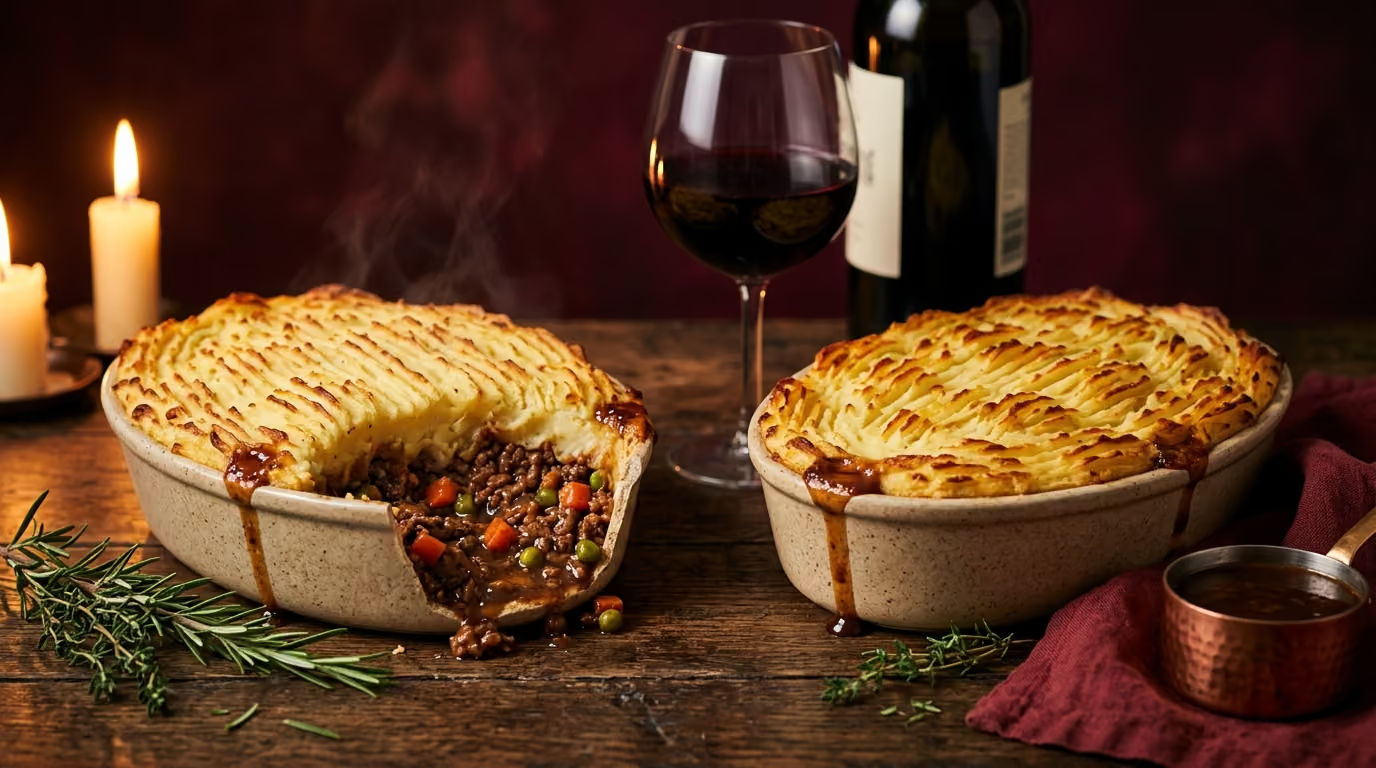
Pour Syrah, Rioja Crianza or Malbec with shepherd's pie, and Merlot, Malbec or a soft Cabernet blend with cottage pie. If you're buying one bottle for a table eating both, make it Malbec. The lamb in a shepherd's pie wants a red with a savory, peppery edge, and the beef in a cottage pie is rounder and sweeter, so it does better with softer fruit.
There's a second question hiding inside this one, and it's actually the more common search. Plenty of people arriving here want to know which wine goes into the pie, not which one to drink beside it. We'll answer both, because they have different answers and the cheap bottle you cook with is not automatically the one you want in your glass.
Which wine should you drink with shepherd's pie?
Syrah is the first pick for a real shepherd's pie, the one made with ground lamb. Lamb has a deeper, slightly gamey character than beef, and Syrah meets it with black pepper and a savory, almost meaty edge of its own. The wine doesn't try to sweeten the dish or cover it, which is what makes the match feel natural rather than engineered.
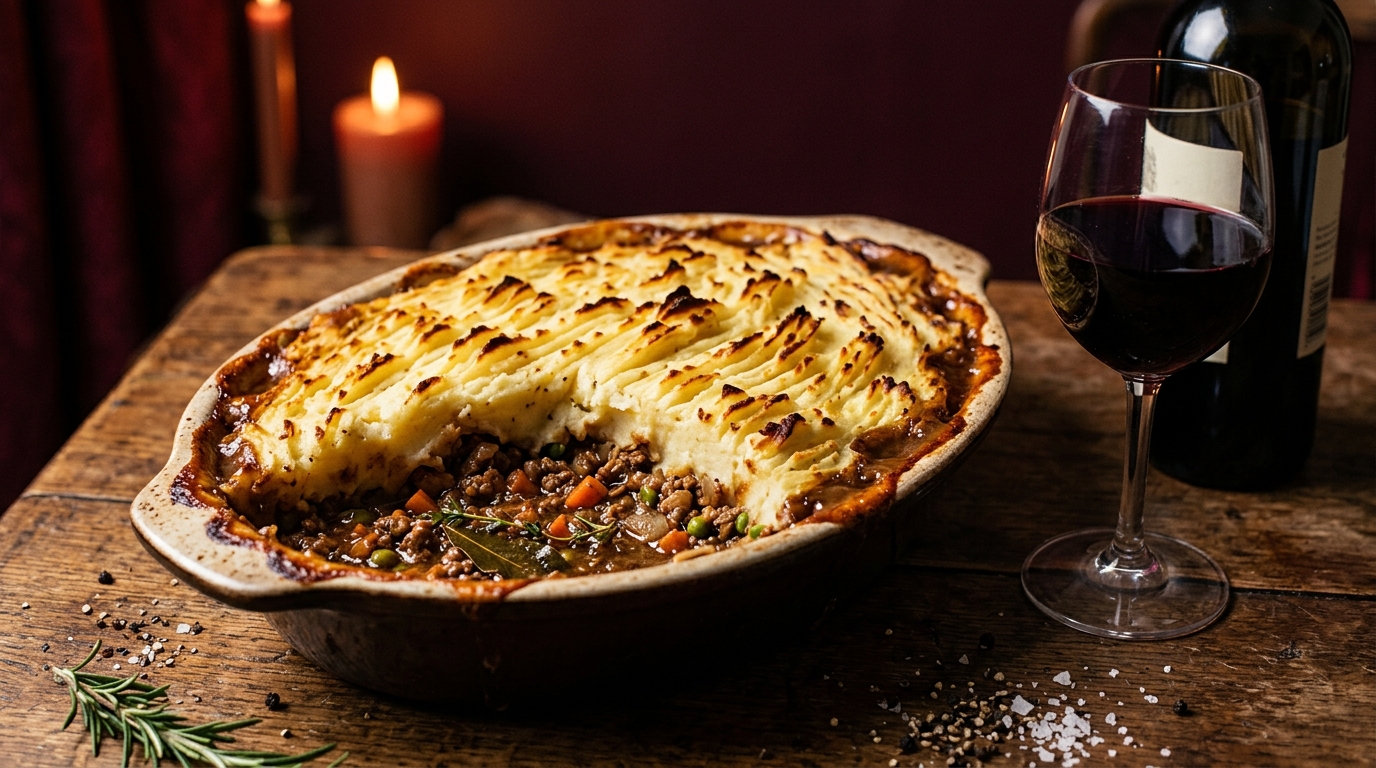
Rioja Crianza is the alternative we'd reach for just as happily, and on some nights it's the better of the two. Red Rioja Crianza has to spend at least a year in oak and a second year aging before it can be released, which gives it gentle vanilla and a softened texture while keeping the red fruit and freshness intact. That freshness matters more than it sounds, because a shepherd's pie is a heavy plate of lamb, gravy and mashed potato, and a wine with some acidity keeps the third forkful tasting as good as the first.
The herbs in the recipe are quietly steering this choice too. Rosemary, thyme and bay are the standard aromatics in a lamb pie, and both Syrah and Tempranillo have savory, herbal notes that run alongside them instead of clashing. That's why the pairing tends to feel obvious once you try it, even if the reasoning isn't. If you want the wider view on lamb, our guide to what wine goes with lamb covers roasts, chops and stews in more detail.
There are two things worth avoiding here. A big, oaky Cabernet Sauvignon grips too hard against creamy mashed potato and can taste harsh, and a very light, tart red gets lost entirely once the lamb and gravy arrive. Pinot Noir is the borderline case: it works with a lighter, more vegetable-heavy pie, and it disappears under a rich one.
What wine goes with cottage pie?
Merlot is the calm, reliable answer for cottage pie, which swaps the lamb for ground beef. Beef is rounder and slightly sweeter than lamb, with less of that wild edge, so the wine doesn't need the same savory bite to keep up. Merlot brings plush dark fruit and soft tannin, and it settles into the meal rather than competing with it.
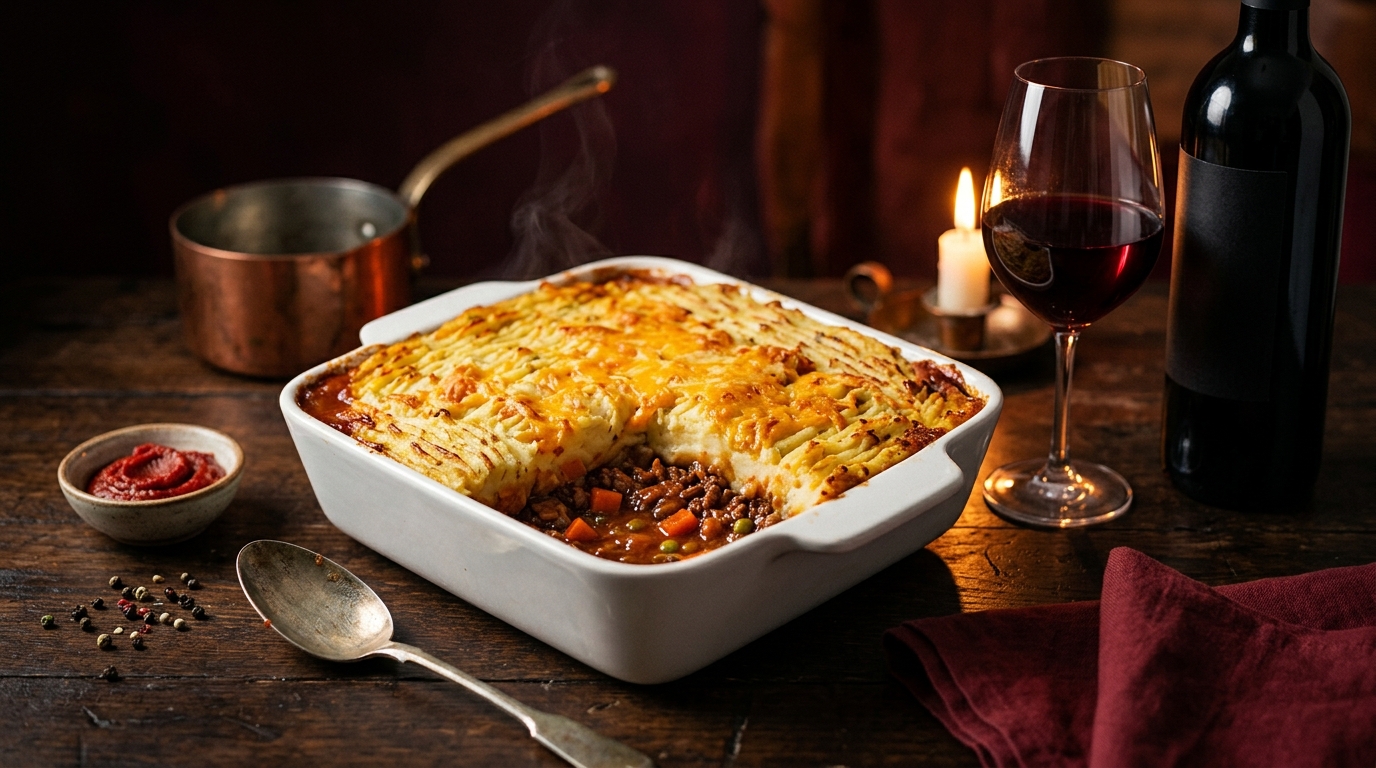
Malbec does the same job with a bit more color and fruit, and it's the safer choice when the filling is rich or tomato-heavy. Tomato paste is a standard ingredient in cottage pie, and it brings acidity that a stern, structured red will fight with, tasting hard and slightly sour beside it. A wine with ripe, generous fruit smooths that over. Add cheddar to the mash on top and Malbec becomes an even easier call.
A Cabernet and Merlot blend is worth knowing about as the third option, because it keeps a little more structure than straight Merlot without turning severe. That suits a cottage pie made with a dark, reduced gravy and a good hit of Worcestershire sauce, where there's enough savory depth on the plate to give the wine something to push against. What you want to skip is heavy oak, since toasty vanilla crowds beef and potato instead of lifting them.
The Wine Society, pairing for the same dish, points toward full reds with sweet, jammy fruit, and toward Rioja for a dinner-party version. That's the same instinct we'd follow, though we'd hold the line at medium-bodied for a weeknight, since the mash softens a wine's edges less than people assume.
| Your pie | Best style | Why it works |
|---|---|---|
| Shepherd's pie, ground lamb | Syrah or Shiraz | Peppery and savory, matches lamb's gamey edge |
| Shepherd's pie, rich herby gravy | Rioja Crianza | Earthy red fruit and gentle oak, with acidity to spare |
| Cottage pie, ground beef | Merlot | Soft dark fruit settles into beef and mash |
| Cottage pie, tomato-heavy filling | Malbec | Ripe fruit smooths the acidity of tomato paste |
| Cottage pie with cheddar mash | Malbec or Cabernet blend | Enough fruit and body for the richer topping |
| One bottle for a mixed table | Malbec | Comfortable with both meats, hard to get wrong |
Which wine should you cook a pie with?
Use a dry, medium-bodied red you'd actually be willing to drink, and don't spend much on it. A splash of red wine in the gravy is standard in both pies, and its job is to add acidity and depth as it reduces, not to contribute a flavor you'd recognize on its own. Almost anything dry and unoaked does that well.
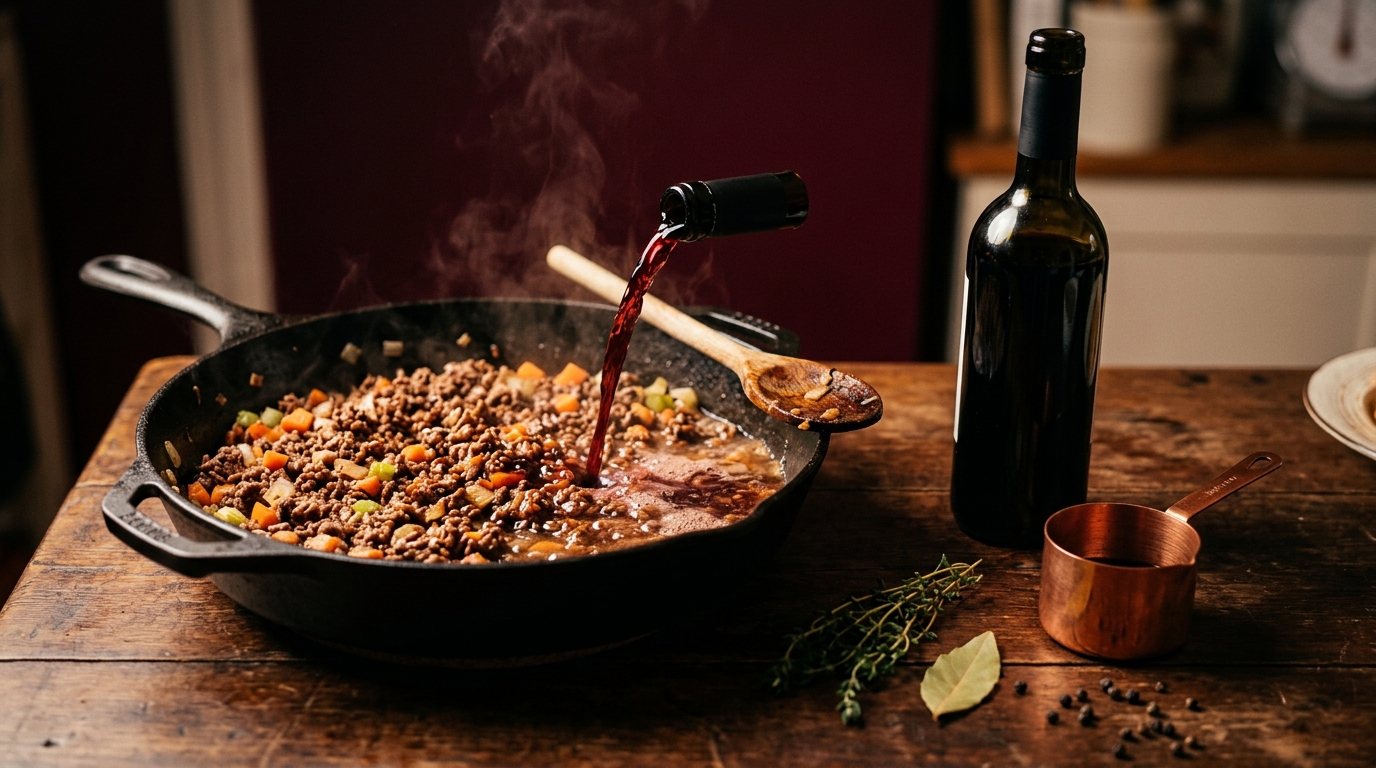
What matters is what you avoid. Bottles labeled "cooking wine" in the vinegar aisle are salted, sometimes heavily, and that salt concentrates as the gravy reduces, which is how a pie ends up inedibly salty for reasons the cook can't identify. Sweet or off-dry reds are the other trap, because reducing them turns the residual sugar into something jammy that sits oddly against savory lamb. A dry Merlot, an inexpensive Côtes du Rhône or a basic Tempranillo all work.
You don't have to cook with the same bottle you drink, and the common advice that you should is only half right. The useful version is that you shouldn't cook with anything you'd refuse to drink, which is a much lower bar. Buying a modest bottle to cook with and a better one to pour is a perfectly sensible way to run pie night, and it's what most people actually do.
Whether the finished dish needs the wine at all is a fair question. It doesn't, and plenty of good recipes leave it out, using stock and Worcestershire sauce for depth instead. The wine mostly buys you acidity, which brightens a filling that can otherwise taste flat and one-note, and a spoonful of tomato paste plus a splash of vinegar gets you a surprising amount of the way there.
How do you tell shepherd's pie from cottage pie?
Shepherd's pie is made with lamb and cottage pie with beef, and that's the whole distinction. The names are used loosely almost everywhere outside Britain and Ireland, so a menu or recipe promising shepherd's pie may well arrive full of ground beef, which is worth checking before you commit to a bottle. Neither one is topped with pastry, which is the line between both of these and a chicken pot pie, where a buttery crust changes the pairing again.
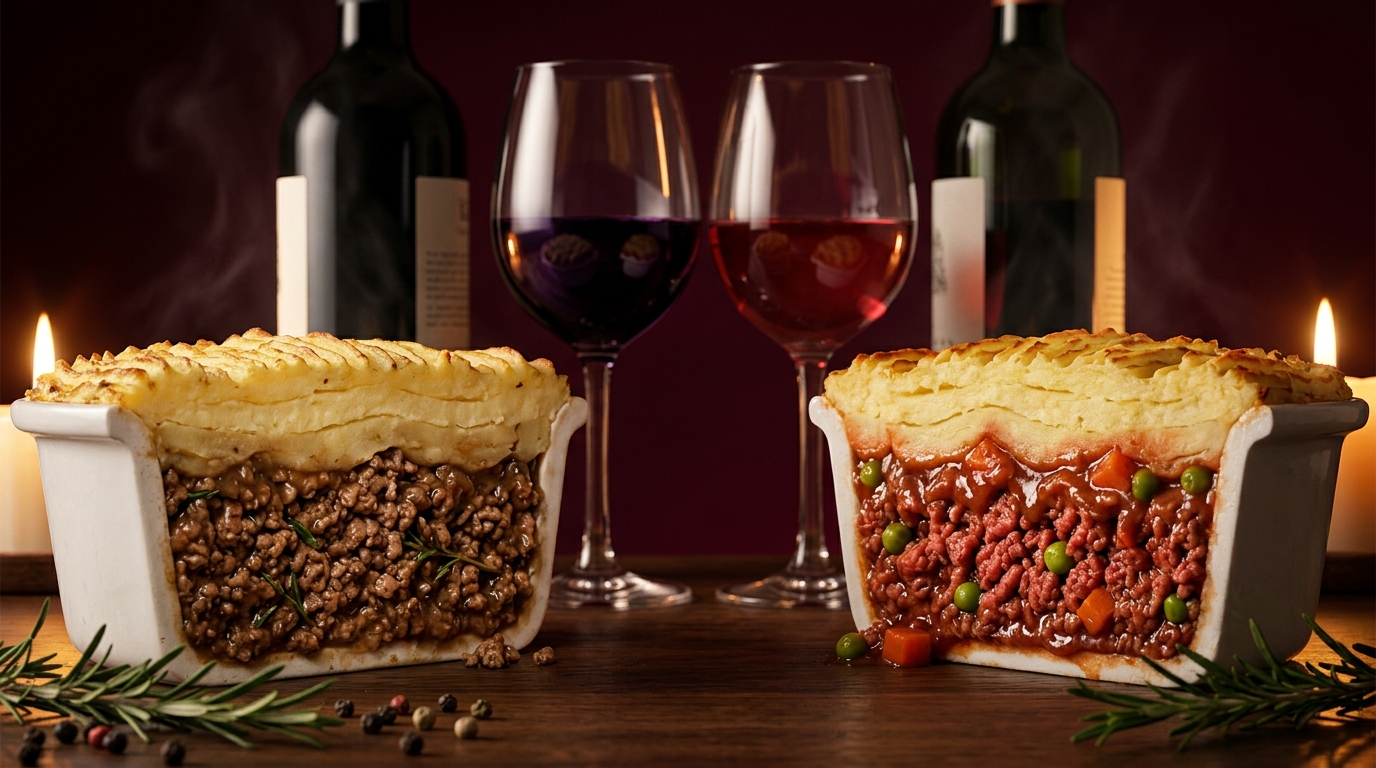
The practical move is to pair to the meat you can see rather than the name on the menu. If you're at a restaurant and it isn't clear, ask, because it changes the recommendation more than anything else on the plate. Lamb pushes you toward Syrah and Rioja, beef toward Merlot and Malbec, and getting that one fact right matters more than choosing correctly within either group.
Everything else in the recipe moves the answer less than you'd think. Carrots and peas add a little sweetness, which nudges you toward the fruitier end of whichever red you've chosen. A heavier hand with Worcestershire or a long-reduced gravy adds savory depth and can carry a slightly bigger wine. Neither shifts you from one meat's shortlist to the other's.
If a mixed table is the real situation and half of it is eating something else entirely, Malbec is the bottle that causes the fewest problems. It's fruit-forward enough for beef, has enough spine for lamb, and stays comfortable with the sort of comfort food that turns up alongside these pies. The same reasoning drives our picks for wine on chili night, which is the same kind of low-stakes, high-comfort dinner.
What should you ask for at a restaurant or a store?
Say what the food is and what you want the wine to feel like, and skip the grape names entirely. "A smooth red for lamb" or "something medium-bodied and not too oaky for a beef pie" gives a server everything they need, and it works just as well on a shop assistant. Neither sentence requires you to know a single region.
Scanning a list yourself, the words that predict a good match here are peppery, savory, juicy and smooth. The words that predict a bad one are lean, mineral, structured and firmly tannic, all of which are polite ways of saying the wine will feel hard next to mashed potato. Anything described as big, powerful or heavily oaked belongs with a steak instead, and our steakhouse pairings is where those bottles actually shine.
In a supermarket the back label tells you more than the front. Front labels sell a mood, but the back usually names the style in plain words, and a bottle that describes itself as smooth, ripe or medium-bodied is telling you the truth about how it will behave with mash. Alcohol is the other quick read: something at 15 percent or above will feel warm and heavy against a rich pie, and a bottle in the 13 percent range is generally the more comfortable dinner companion.
Comfort food is forgiving, which is the genuinely reassuring part. A shepherd's pie is not a dish that punishes a slightly imperfect bottle, and the difference between the ideal wine and a decent one is smaller than the difference between a wine you like and one you don't. Buy something in roughly the right style and then buy the version of it that sounds good to you.
Frequently asked questions
What is the best wine for shepherd's pie?
Syrah, sometimes labeled Shiraz, is the strongest match for a lamb shepherd's pie, because its pepper and savory character meet the lamb directly. Rioja Crianza is an equally good alternative with more red fruit and a fresher finish.
What wine goes best with cottage pie?
Merlot suits cottage pie's ground beef filling, since beef is rounder and sweeter than lamb and pairs better with soft, plush fruit. Malbec is the better choice when the filling is tomato-heavy or the mash is topped with cheddar.
What red wine should I use in shepherd's pie?
Any dry, medium-bodied red you'd be willing to drink, such as an inexpensive Merlot, Côtes du Rhône or Tempranillo. Avoid salted "cooking wine" from the vinegar aisle, because the salt concentrates as the gravy reduces and can ruin the dish.
Can you drink white wine with shepherd's pie?
It's not the natural match, but a full-bodied white with real texture, such as an oaked Chardonnay, can work with a lighter, vegetable-heavy version. With a rich lamb filling and gravy, a medium-bodied red is the more satisfying choice.
Do shepherd's pie and cottage pie need different wines?
Yes, because they use different meats. Lamb in shepherd's pie suits savory, peppery reds like Syrah and Rioja, while beef in cottage pie is better with softer, fruitier reds like Merlot and Malbec. Malbec is the compromise if you're serving both.
Choose the bottle, then sit down
For shepherd's pie, pour Syrah or Rioja Crianza and let the pepper and savory notes meet the lamb. For cottage pie, open a Merlot or a Malbec and let the softer fruit settle into the beef. Cook with something dry, cheap and unsalted, and keep the good bottle for the table.
The best pairing here is the one that keeps a plate of lamb, gravy and mashed potato tasting comfortable right through to the last bite, rather than the most impressive wine on the shelf. That comfort is the entire point of making a pie in the first place.