
Staring at a restaurant menu or a crowded wine aisle can feel like a test you didn't study for. The fear of choosing the "wrong" bottle is real, but you don't need to be an expert to pick a wine you'll love. The secret is knowing a few simple wine tasting tips that help you understand your own taste. These are not rules for becoming a sommelier; they are practical steps to help you decide calmly, quickly, and confidently what you enjoy drinking.
This guide provides straightforward tips to demystify the wine tasting process. We’ll focus on what matters most: your personal preference. You'll learn simple ways to taste, find flavor clues on a label, and remember your favorites so you can make confident choices every time. Whether you're at a restaurant, a friend's house, or picking a bottle for a quiet night in, these tips are designed to remove the guesswork and help you feel relieved, not anxious.
1. A Simple Tasting Method: See, Swirl, Smell, Sip, Savor
Instead of just taking a gulp and deciding "yes" or "no," using a simple, five-step method helps you notice why you like a wine. This structured approach, sometimes called the "Five S's," breaks the experience down into manageable moments. It makes tasting less intimidating and gives you a reliable way to understand your own preferences. This is one of the most effective wine tasting tips for building confidence.
This process gives you a consistent script to follow every time you try a new wine, which helps you compare them more accurately. For a deeper look at each step, our detailed guide can show you how to taste wine properly.
How to Use the Five S's
- See: Look at the wine against a white background. Notice its color and clarity.
- Swirl: Gently swirl the wine in your glass. This adds oxygen and helps release its aromas.
- Smell: Put your nose in the glass and take a short sniff. Do you notice fruits, flowers, or spices?
- Sip: Take a small sip and let it coat your mouth. Notice its basic feel is it sweet, sharp, or drying?
- Savor: Pay attention to the aftertaste. Does the flavor linger or disappear quickly? This "finish" is a key part of the experience.
Quick Tip: To avoid overwhelming your senses, always taste wines from lightest to darkest (like from a light white to a heavy red). Taking a quick note in your phone or an app like Sommy helps you remember what you noticed, which helps the AI learn your taste.
2. Find Clues on the Label Before You Taste
A wine label is like a cheat sheet, giving you hints about the wine’s flavor before you even pour a glass. Knowing a little about where a wine comes from, its grape, and its producer helps set your expectations. It turns a simple sip into a more informed experience. This is one of the most practical wine tasting tips because it connects the wine in your glass to its story.
For example, the region (like "Napa Valley" or "Bordeaux") can tell you about the general style of the wine. You don't need to memorize these details. An app like Sommy.ai can scan a label or wine list and instantly give you this context, removing the guesswork. For a complete breakdown, our simple guide explains how to read wine labels.
How to Use Label Information
- Check the Region: The region gives you a hint about the wine's style. For example, a Sauvignon Blanc from France's Loire Valley is often crisper than one from California.
- Note the Producer: A quick search can tell you if a producer is known for a certain style, like modern and fruity or traditional and earthy.
- Look at the Year (Vintage): The vintage tells you which year the grapes were harvested. This can affect the flavor, especially in places with changing weather.
- Scan for Alcohol Content: The ABV (Alcohol by Volume) often hints at the wine’s body. Higher alcohol can suggest a fuller, more intense wine.
Quick Tip: Don't feel like you need to become an expert on regions or vintages. Using a tool like Sommy to scan a label delivers this information instantly, along with food pairing ideas, so you can focus on enjoying the wine.
3. Serve Wine at the Right Temperature for Better Flavor
One of the most impactful yet simple wine tasting tips is serving it at the right temperature. Temperature dramatically changes how a wine smells and tastes. Serving a wine too warm can make it taste harsh and alcoholic, while serving it too cold can hide its flavors. Getting the temperature right helps the wine show its true character.
For example, a red wine like Pinot Noir served at a warm room temperature will taste boozy, but at its ideal slightly-chilled temperature (around 60°F), its fruit flavors shine. Similarly, a crisp white wine served ice-cold will taste watery, but letting it warm up a little reveals its minerality and complexity. For a detailed breakdown, explore our guide on wine serving temperatures.
How to Manage Wine Temperature
- Reds: Serve most red wines slightly cool, between 60-65°F (15-18°C). A quick 15 minutes in the fridge before opening is often perfect.
- Whites & Rosés: Lighter white wines and rosés are best chilled to 45-50°F (7-10°C). Fuller-bodied whites like Chardonnay are better slightly warmer, at 50-55°F (10-13°C).
- Sparkling Wines: These should be well-chilled, around 40-45°F (5-7°C), to keep their bubbles crisp.
- Quick Chilling: Need to chill a bottle fast? A bucket of ice and water works much faster than a fridge. Submerge the bottle for 15-20 minutes.
Quick Tip: The old advice of "room temperature" for reds is misleading, as modern homes are often too warm. When in doubt, it’s better to serve a red wine slightly too cool than too warm; you can always let it warm up in the glass.
4. Reset Your Palate to Taste Each Wine Clearly
When you taste more than one wine, flavors from the last glass can linger and interfere with the next one. This "palate fatigue" can make it hard to get an accurate impression. Resetting your palate is a simple but crucial step that acts as a reset button for your senses, ensuring you taste each wine fairly. This is one of the best wine tasting tips for anyone comparing different bottles at once.
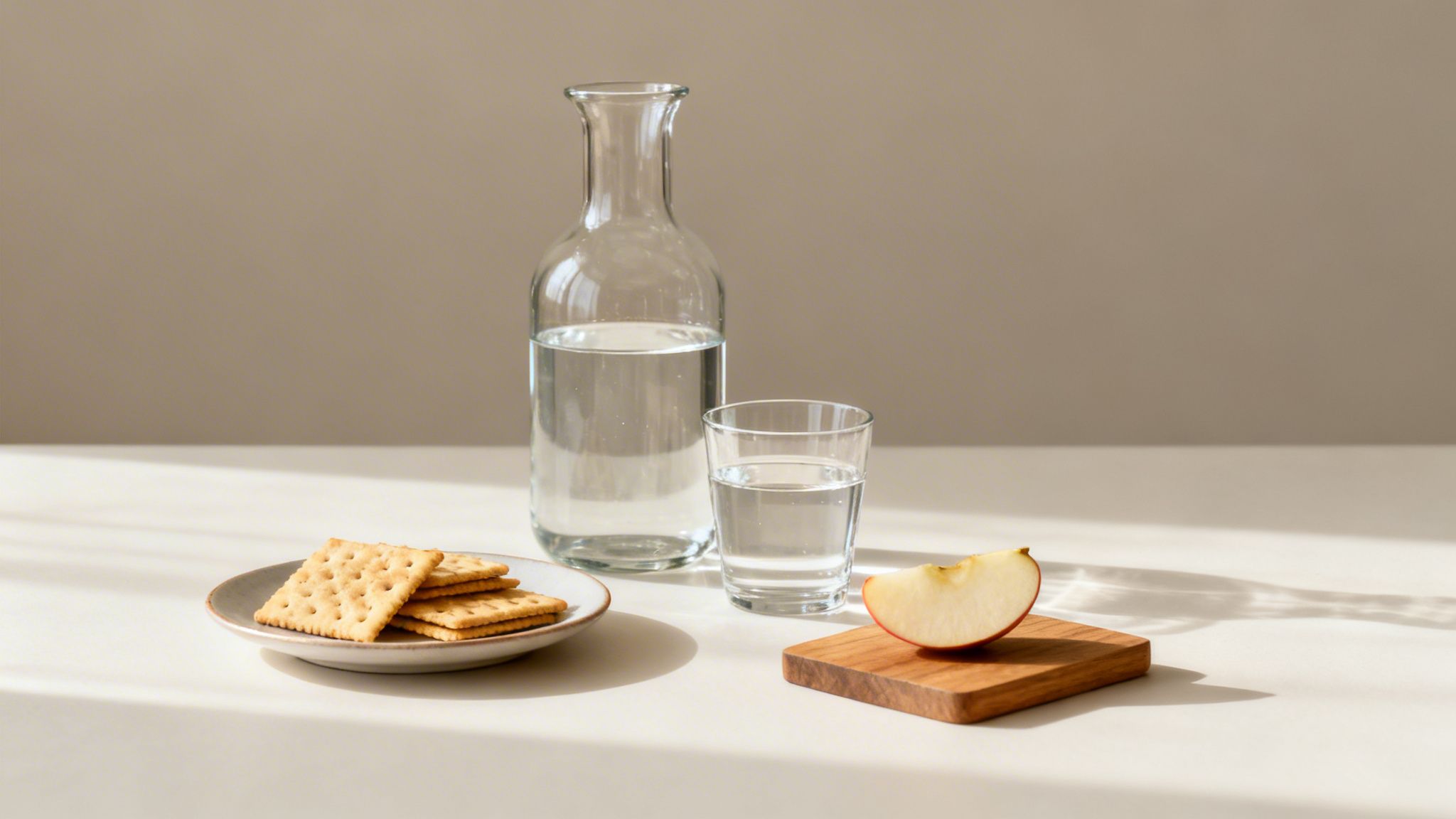
A wine shop offering samples should provide water or crackers to help customers decide what they like. Similarly, if you are logging different wines in an app like Sommy, cleansing your palate between each one ensures your ratings are accurate, which helps the AI learn your taste more effectively.
How to Cleanse Your Palate
- Use still water: Room-temperature still water is your best tool. Sip and swirl it around your mouth for a few seconds between wines.
- Eat neutral crackers: Plain, unsalted crackers or simple bread are great for clearing out lingering flavors. Avoid anything with strong seasonings.
- Take a short break: Just pausing for a minute between wines gives your taste buds time to recover before you move to the next glass.
- Sniff some water: Some tasters find that smelling water can help reset their sense of smell between aromatic wines.
Quick Tip: The goal is to give each wine a clean slate. This simple habit makes your tasting notes more reliable and helps you build a clearer picture of your preferences over time.
5. Use Simple Words to Describe Flavors
You don't need a poet's vocabulary to describe what you taste. Building a simple list of words that make sense to you is a powerful way to turn a vague feeling ("I like this") into a specific observation ("I like the blackberry flavor in this red"). This clarity helps you recognize patterns in what you enjoy and get better recommendations.
Instead of trying to sound like an expert, just use words that come to mind. For example, a note for a red wine might be: "Tastes like dark cherries, feels smooth, not too heavy, and the flavor lasts for a bit." This simple description is a perfect blueprint of your experience, making it easier to find similar wines or avoid styles you dislike. As you log more of these simple notes, you’ll start to see your own preferences emerge.
How to Build Your Flavor Vocabulary
- Start with Broad Categories: Is the fruit flavor like red berries or dark berries? Is it citrusy or more like a peach? Is the wine's texture smooth or does it have a drying feel?
- Connect to Familiar Scents: Does the wine remind you of something? Leather, vanilla, coffee, or fresh-cut grass? Trust what your nose is telling you.
- Log Your Notes: Consistently write down your thoughts in a journal or an app like Sommy. The AI can analyze these simple notes to find patterns in what you like.
- Trust Your Own Words: The most important thing is consistency. If a wine always reminds you of a specific flavor, write it down. Our guide to writing wine tasting notes provides a great template to get started.
Quick Tip: The goal is to create a personal language that works for you, not to impress anyone. This consistent vocabulary is what helps an AI assistant like Sommy learn your unique taste and make better recommendations.
6. Match the Wine to the Moment (and the Food)
Wine is rarely enjoyed in a vacuum. The food you eat, the people you're with, and the occasion all shape the experience. Recognizing how food can change the taste of wine is one of the most practical wine tasting tips for making confident choices, especially when ordering at a restaurant. It simplifies your decision and can make a good meal great.
Instead of memorizing strict rules, just think about balance. A light dish usually goes best with a light wine, while a rich, heavy dish can handle a bold wine. The goal is to make the combination of food and wine better than either would be alone. It's why a crisp white wine makes seafood taste fresher, or a bold red wine pairs so well with a steak.
How to Practice Pairing Awareness
- Match the Weight: Pair light-bodied wines (like Pinot Grigio) with delicate dishes (like a salad or fish) and full-bodied wines (like Cabernet Sauvignon) with rich dishes (like a burger or lasagna).
- Use Acidity to Cut Richness: A wine with noticeable crispness, like a Sauvignon Blanc, can cut through fatty or creamy foods, cleansing your palate with each sip.
- Soften with Protein: The drying sensation in some red wines (called tannin) binds with protein and fat. This is why a steak tastes so good with a big red wine, the wine feels softer and the meat tastes more flavorful.
- Consider the Sauce: Often, the sauce is the strongest flavor. Match your wine to the sauce, not just the main ingredient.
Quick Tip: Your personal preference is always the most important rule. If you want red wine with fish, go for it. If you’re unsure in a restaurant, an app like Sommy can give you an instant pairing suggestion based on what you're eating and what you like.
7. Taste Wines Side-by-Side to Learn Faster
One of the quickest ways to sharpen your palate and understand what you like is to taste two or more wines at the same time. This highlights differences you might miss if you were just drinking one glass. By placing wines side-by-side, you can easily spot variations in flavor, style, or quality. This is one of the most effective wine tasting tips for learning quickly.
For example, tasting a $15 Cabernet next to a $50 one can make the impact of things like oak aging or fruit quality immediately obvious. Or, you could taste a Pinot Noir from California next to one from France to understand how the same grape can taste completely different depending on where it's grown. It’s not about judging, but about discovering what you prefer.
How to Set Up a Comparative Tasting
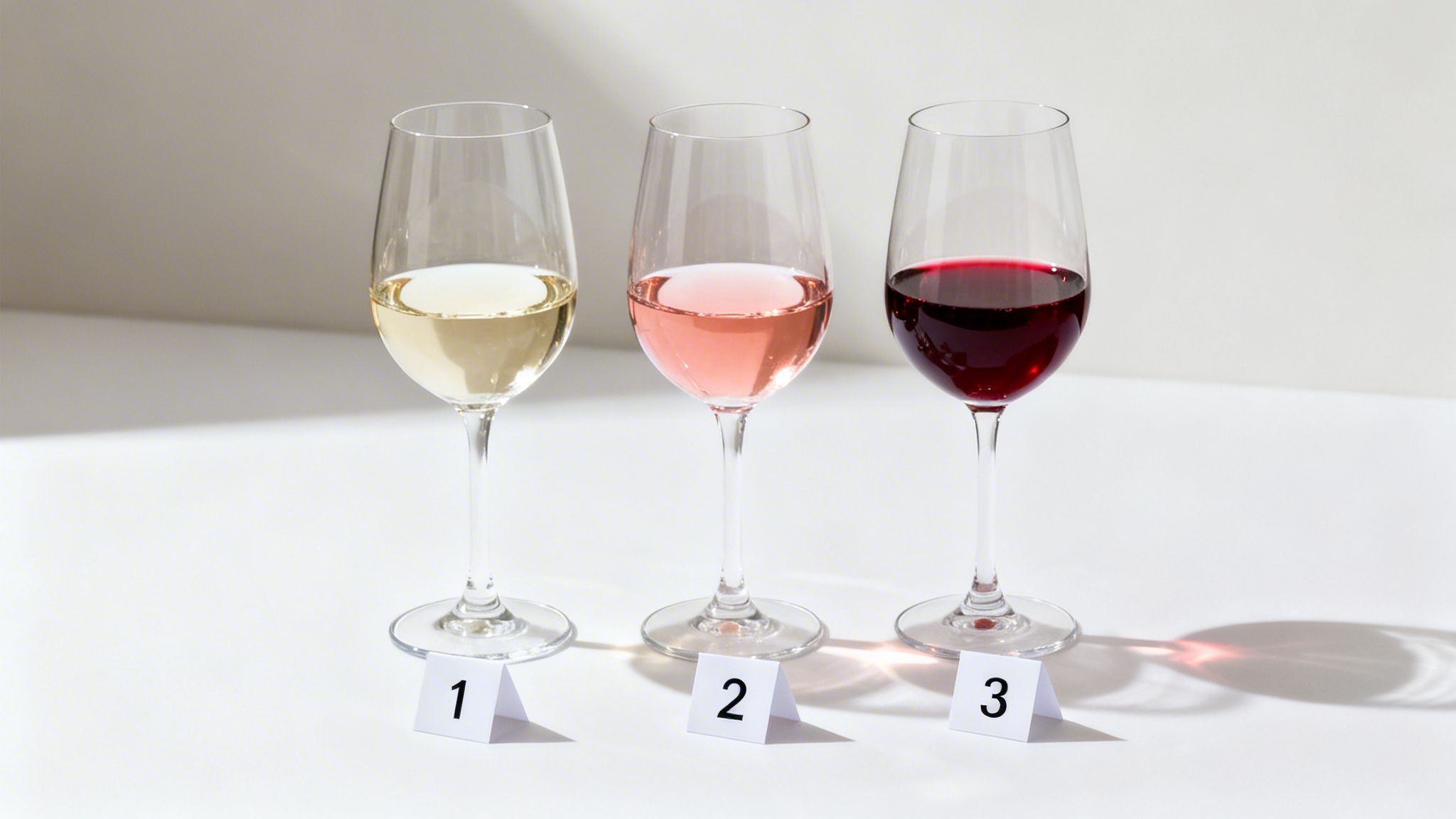
- Choose a Theme: Start with a clear comparison. For example, taste two different types of white wine, or the same wine from two different years.
- Keep it Simple: To avoid getting overwhelmed, start with just two or three wines.
- Serve Fairly: Pour each wine into the same type of glass. Taste them in order from lightest to heaviest to give your palate a fair chance.
- Taste and Take Notes: Evaluate each wine on its own first, jotting down a few thoughts in an app like Sommy. Then, go back and taste them against each other to pinpoint specific differences.
Quick Tip: Make it a fun activity with friends. Tasting together and sharing notes can show you different perspectives. You can use what you learn to better understand what to buy for your next get-together.
8. Focus on Value, Not Just Price
A high price tag doesn't guarantee you'll love a wine, and a low price doesn't mean it's bad. A truly practical wine tasting tip is to learn how to find good value, which simply means finding a wine you enjoy at a price you feel good about. A winery's fame, marketing, and location can all drive up the price, sometimes more than the quality of the wine itself.
It's not about being cheap; it's about being smart. Finding a delicious $12 bottle that tastes as good as a $25 one is a huge win. This helps you avoid overpaying for a famous name when a lesser-known gem might offer a better experience for less. Apps like Sommy can also help by letting you filter recommendations by your budget.
How to Find Great Value Wines
- Explore Value Regions: Look for wines from places known for great quality at a good price, like Spain, Portugal, Argentina, and Chile.
- Look Past the Obvious: At restaurants, the most famous wines often have the biggest markups. Ask for a recommendation for something similar but less well-known.
- Ask for Help: In a wine shop, tell the staff your budget and what flavors you generally like. They often have fantastic recommendations that provide great value.
- Set a Budget: When searching for wine, set a price limit. This helps you find great options that fit what you're willing to spend.
- Track Your Wins: When you discover a great value wine, log it. Keeping a personal list of go-to bottles saves you time and money.
Quick Tip: Judge the wine based on how much you enjoy it, not how much it costs. A wine's real value is personal. Your favorite $15 bottle is a better choice than a $50 bottle you don't care for.
9. Notice the Feel of a Wine: Tannin, Acidity, and Body
Beyond just flavor, a wine has a structure you can feel in your mouth. This is built from a few key things: tannins, acidity, and alcohol. Understanding these elements is a great wine tasting tip that helps you understand a wine's character. It's less about science and more about paying attention to the physical sensations.
For example, tannins create a drying feeling on your gums, like strong black tea. Acidity is what makes a wine feel crisp and makes your mouth water. Alcohol provides a sense of warmth and contributes to the wine's "body" or weight. Noticing these sensations helps you describe why you like or dislike a wine. For a closer look at one of these, you can learn more about tannins in wine.
How to Identify Structural Components
- Tannins: Notice a drying, slightly puckering feeling on your gums and cheeks. This is most common in red wines.
- Acidity: Feel this as a mouth-watering sensation. High acidity makes a wine feel zesty and refreshing.
- Alcohol/Body: This feels like warmth in the back of your throat. It also makes the wine feel heavier or lighter on your palate.
Quick Tip: The best wines have a good balance of these elements—none of them should feel overwhelming. When you log a wine in an app like Sommy, making a quick note like "smooth, not drying" or "bright and crisp" helps the AI learn the wine structure you prefer.
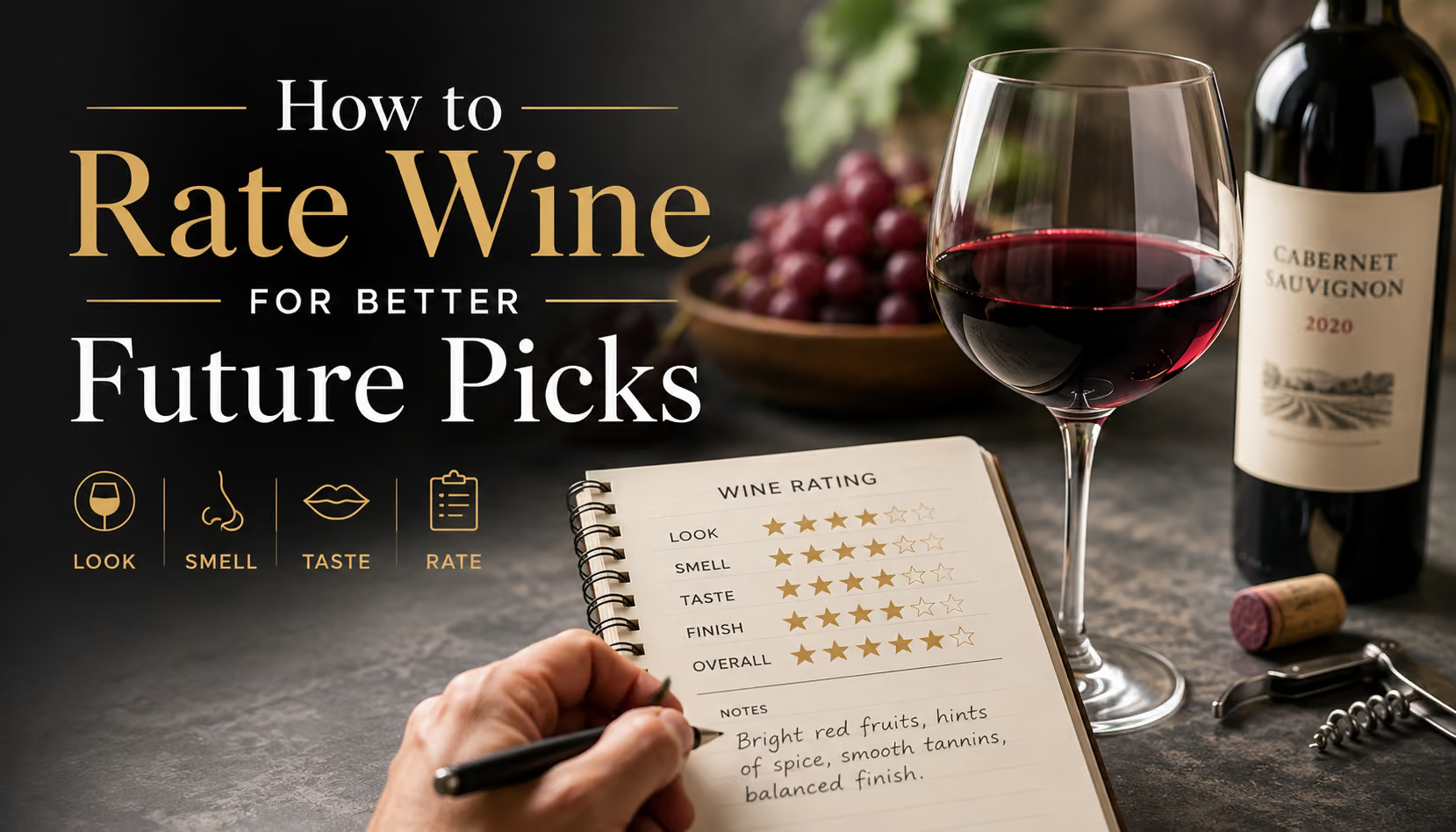
10. Remember What You Like with Simple Notes
The single most powerful way to make confident choices in the future is to keep a simple record of what you’ve tasted. You don’t need a fancy journal, just a note in your phone or an app. Over time, this personal taste profile allows an AI tool like Sommy to understand your unique palate and give you recommendations that take the guesswork out of choosing a bottle.
This method shifts the focus away from memorizing wine facts and onto your personal enjoyment. Imagine scanning a restaurant wine list and instantly seeing which options are similar to wines you’ve loved before. It’s about creating a reliable guide in your pocket so you can stop worrying about choosing the "wrong" wine and start exploring with confidence. If you are weighing the options first, our guide to picking a wine tasting app covers which one fits how you actually drink.
How to Build Your Personal Taste Profile
- Record Every Tasting: Use a wine app like Sommy to log the wine’s name and your quick rating. Note what you liked or disliked in plain language.
- Rate Consistently: Stick to a simple scale, like 1-5 stars. This consistency is key for helping an AI spot patterns in your preferences.
- Note the Context: Did you have it with a spicy meal? At a party? Add a quick note about the food or occasion, as it can affect how you experience a wine.
- Let the AI Learn: The more you rate, the smarter the recommendations get. Sommy’s AI uses your notes to find new bottles you’re likely to enjoy.
Quick Tip: You can ask an AI assistant like Sommy simple questions, like, "Find me a red wine under $20 that's smooth like the one I had last week." It will use your tasting history to give you a helpful answer.
10-Point Wine Tasting Tips Comparison
| Tip | What it does | What you need | Try it when |
|---|---|---|---|
| See, swirl, smell, sip, savor | Breaks tasting into steps so you notice why you like a wine, not just whether you do | A glass and a quiet minute | You want more than a yes or no |
| Read the label first | Grape, region and producer set your expectations before you pour | The bottle, or a label scanner | Buying or ordering something unfamiliar |
| Serve at the right temperature | Too warm reads harsh and alcoholic, too cold hides the flavors entirely | A thermometer, or a fridge and a clock | Before you pour anything you care about |
| Reset your palate | Stops the last glass interfering with your read on the next one | Water and plain crackers | Tasting more than one wine in a sitting |
| Use simple words | Turns I like this into I like the blackberry, which is something you can look for again | A short list of words that mean something to you | You find one you want to find again |
| Match the wine to the moment | Food changes how a wine tastes, so the meal matters as much as the bottle | Nothing beyond what you are already eating | Ordering at a restaurant |
| Taste side by side | Differences you would miss in a single glass become obvious next to each other | Two bottles and two glasses | Working out which style you prefer |
| Judge value, not price | Fame and marketing drive price, so cost is a poor guide to whether you will enjoy it | A few minutes of price research | Standing in front of a shelf |
| Notice the feel | Tannin, acidity and body are structure you feel rather than flavors you taste | Two contrasting bottles | Two wines taste alike but feel different |
| Keep simple notes | A record of what you liked is what makes the next choice easy | A note on your phone | After any bottle worth remembering |
Your Next Wine Choice, Made with Confidence
Making sense of wine isn't about memorizing a textbook or adopting a secret language. It’s about building a quiet confidence in what you already know: your own taste. The wine tasting tips we've explored are simply methods to help you pay closer attention to your senses and articulate what you enjoy. You don’t need to become an expert to choose a great bottle; you just need to trust your own palate.
The journey starts with simple, deliberate actions. By embracing the “Five S” method (Sight, Swirl, Smell, Sip, Savor), you turn a simple drink into an experience. This systematic approach allows you to notice details you might have otherwise missed, from a wine's color hinting at its age to its aroma revealing notes of fruit, spice, or earth. Preparing your palate and serving wine at the correct temperature are not fussy rules for experts; they are practical steps that ensure the wine tastes exactly as the winemaker intended, giving you the most accurate impression.
From Tasting to Deciding
The real power of these wine tasting tips comes when you connect them to your decisions. Understanding the basics on a label, recognizing how context and food pairings influence flavor, and comparing wines side-by-side are all skills that demystify the selection process. This knowledge isn't about passing a test. It's about feeling relief, not anxiety, when you’re handed a restaurant wine list or browsing a crowded store aisle.
Key Takeaway: The goal is not to judge wine like a critic, but to discover what you personally prefer. Keeping a simple journal of what you liked or disliked, and why, is the single most effective tool for building this personal preference map.
Ultimately, these techniques are meant to reduce decision friction. They give you a framework, so you never feel like you're just guessing. Whether you're setting a budget, trying to match a wine to a steak, or simply looking for a new bottle to try at home, the confidence you gain from mindful tasting empowers you. You begin to see wine not as a complex puzzle, but as a world of flavors waiting for you to explore on your own terms. Each bottle becomes a low-stakes opportunity for discovery, making your next choice an exciting prospect rather than a stressful one.
If you want to make confident wine choices without the guesswork, Sommy.ai is designed for exactly that. It acts as your personal wine assistant, helping you scan a menu or bottle and get an instant, personalized recommendation based on your taste, meal, and budget. Instead of trying to remember every detail, let Sommy.ai help you find the perfect wine in the moment.