
Forget the rulebook. Great wine pairing isn’t about memorizing charts; it's about balance. It’s about making the food taste better and the wine sing. Think of it less as a stuffy science and more of an exciting flavor adventure.
Making Wine Pairing Simple and Fun
Ever stared at a wine list, feeling a wave of panic? You're not alone. The endless options, unfamiliar names, and fear of picking something that clashes with dinner—it’s a common anxiety. Most of this stress comes from the old myth that wine pairing is some exclusive club with a secret handshake.
The truth is way simpler. Good pairing is all about synergy. You want the combination of food and wine to be more delicious than either would be on its own. It's an art, not a science, and your personal taste is the most important ingredient.
Your Path to Confident Pairings
This guide will give you a solid foundation for making great choices every time. We’ll focus on two core strategies that sommeliers use on the floor every single night:
- Congruent Pairings: This is the “like with like” approach. You match shared flavors to amplify them. A great example is an earthy Pinot Noir with a mushroom risotto—the earthiness in both just clicks, making everything richer.
- Complementary Pairings: Here, you create balance with contrast. The classic move is a crisp, high-acid Sauvignon Blanc with a creamy goat cheese. The wine’s acidity cuts right through the richness of the cheese, cleaning up your palate and getting you ready for the next bite.
Getting these two ideas down is the first step. The next, and most crucial, is figuring out what you actually like. Knowing your own taste is everything. You can get a head start with our beginner's guide to building your personal wine profile without fancy jargon.
The real goal isn't to follow old traditions, but to make your meal better. When you start focusing on how flavors play together, any dinner can become a memorable experience.
This whole journey is about playing around and finding what works for you. And with tools like Sommy, your personal AI sommelier, getting an expert-level recommendation for any dish is instant. You can walk up to any menu with total confidence, ready to find your next favorite combo.
Get to Know the Building Blocks of Flavor
To get really good at pairing wine, you first have to learn to speak the language of flavor. Forget memorizing a bunch of rigid rules. The real skill is in understanding why certain combinations click, and it all comes down to a few basic building blocks in both the wine and the food. Think of it like cooking—once you know what each ingredient does, you can start creating your own recipes instead of just following someone else's.
There are six key players that make or break almost every pairing: Acidity, Sweetness, Tannin, Alcohol, Fat, and Salt. Once you get a feel for how these interact, you can instantly tell why a certain combination sings (or falls flat). This foundation is everything when it comes to training your palate, a skill you can sharpen with our essential wine tasting tips for beginners.
The Six Pillars of Pairing
Let's break these down. Each component has a job to do, and the way they work together—or against each other—is what creates either magic or a mess in your mouth.
Acidity is that zesty, mouth-watering quality you get from things like lemon juice or a crisp Sauvignon Blanc. In a pairing, it acts like a spotlight, cutting through rich, heavy foods and making everything taste cleaner and brighter. A high-acid wine with a creamy pasta dish is the perfect example—the wine cleanses your palate so every bite feels as good as the first.
Sweetness shows up in ripe fruit, desserts, and of course, in off-dry wines like a German Riesling. The golden rule here is simple: your wine should always be at least as sweet as your food. If the food is sweeter, the wine will suddenly taste sour and unpleasant.
Tannin isn't a taste, but a feeling. It’s that drying, slightly fuzzy sensation you get from strong black tea or the skins of red grapes. Tannins are what give many red wines their structure, and they absolutely love to dance with rich, fatty proteins like a ribeye steak. The fat in the food latches onto the tannins, smoothing them out and making the wine feel lush and velvety.
A great pairing happens when the wine and food either mirror each other's flavors to make them bigger (congruent) or contrast in a way that creates a refreshing balance (complementary).
Alcohol gives a wine its body and weight, often creating a little warmth in the back of your throat. But be careful—high-alcohol wines can pour gasoline on the fire of spicy food. That’s why a slightly sweet, lower-alcohol wine is a much better friend to a fiery Thai curry.
Fat is all about richness and texture, whether it comes from cheese, butter, olive oil, or marbled meat. As we saw, fat is tannin's best friend. But it also needs acidity to keep it in check, preventing a dish from feeling heavy or greasy.
Salt, while not found in wine, is a secret weapon in food. It's a natural flavor booster that makes wines taste fruitier and less bitter. This is the magic behind classic pairings like salty Pecorino cheese with a bold, tannic Chianti. The salt softens the wine's rough edges, letting the delicious fruit flavors shine through.
Bringing It All Together
Understanding these pieces is the first step. The fun begins when you see how they connect. You're generally aiming for one of two things: a congruent pairing where flavors match up, or a complementary pairing where they contrast.
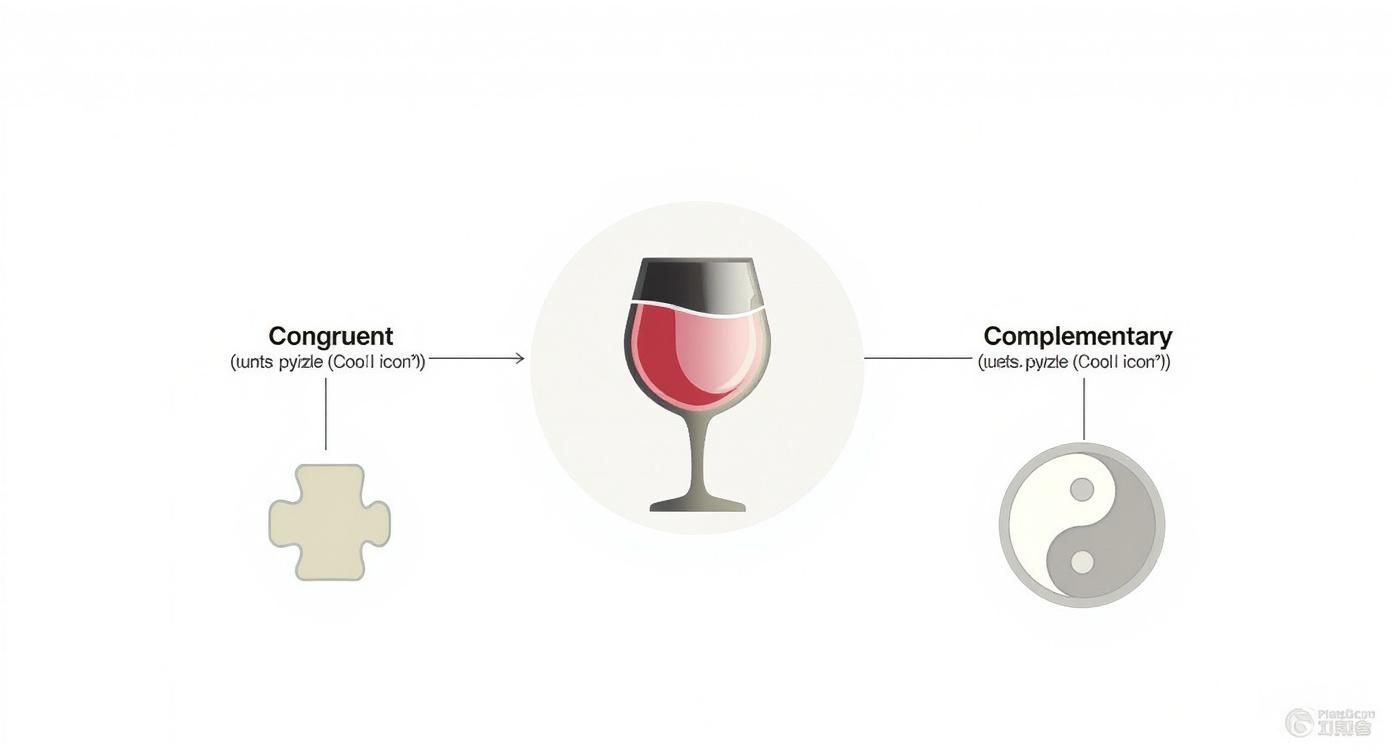
Think of it this way: a congruent pairing is like fitting two puzzle pieces together to intensify an experience. A complementary pairing is more like a yin-yang, creating balance out of opposites. This is the simple logic behind every great match, from a Tuesday night pizza to a fancy tasting menu. It's also exactly how a tool like Sommy thinks, analyzing these core elements to find the perfect bottle for whatever you're eating.
The Essential Principles of Wine Pairing
Okay, you’ve got the building blocks of flavor down. Now it's time to put that knowledge into action. Mastering just a few core principles will completely change your intuition, giving you the confidence to make great picks no matter where you are. These aren't stuffy rules; they're the time-tested strategies behind every great food and wine experience.
One of the oldest and most reliable guides is beautifully simple: what grows together, goes together.
This idea comes straight from centuries of real-world tradition. Picture a rustic, tomato-heavy pasta dish in Tuscany. What do the locals drink? A local Sangiovese, like Chianti. The wine’s bright acidity and earthy cherry notes are a perfect match for the regional food because they literally grew up together.
This isn’t just a romantic notion. The French call it terroir—the idea that food and wine from the same place have a natural affinity. A 2019 study that looked at 12,000 pairings in European restaurants found that a whopping 68% of the best matches followed this exact principle. It just works.
Match the Wine's Weight to the Food's Weight
Beyond geography, this is probably the single most important rule to get right. Think of it like a conversation: you don’t want one person shouting over the other. A delicate dish needs a delicate wine, and a big, bold dish needs a partner that can hold its own.
Get this balance right, and you create harmony. Get it wrong, and one will completely overpower the other.
- Light-bodied wines (think Pinot Grigio or Beaujolais) are made for light dishes. Their crisp, subtle flavors are perfect for fresh salads, steamed fish, or simple chicken appetizers.
- Medium-bodied wines (like Sauvignon Blanc or Merlot) are your all-rounders. They have enough structure for things like roasted chicken, pork loin, or richer pasta dishes without stealing the show.
- Full-bodied wines (your Cabernet Sauvignon or oaked Chardonnay) are for the heavy hitters. You need their bold flavors and firm structure to stand up to a hearty steak, a rich lamb stew, or dishes with creamy, decadent sauces.
A simple rule of thumb: If the food is light and delicate, choose a wine that is also light and delicate. If the food is rich and robust, you need a wine that can stand up to it.
Use Flavor Profiles to Create Harmony
Finally, let’s talk about the actual flavors. As we covered earlier, you can either aim for a congruent pairing (matching flavors) or a complementary one (contrasting flavors). This is where you can get really creative, and it’s a key part of our guide on how to choose the right wine for any occasion.
A congruent pairing is all about finding common ground. Think about how the peppery notes in a Syrah echo the black pepper crust on a steak—it makes both feel more intense and focused. Or how the buttery, creamy texture of an oaked Chardonnay can perfectly mirror a creamy lobster bisque.
A complementary pairing, on the other hand, creates balance through contrast. The classic example is a sweet dessert wine like Sauternes with a salty, funky blue cheese. The wine's luscious sweetness cuts right through the cheese's saltiness, creating a thrilling push-and-pull on your palate that’s absolutely delicious.
Trying to juggle all these principles in the moment—at a restaurant or in a crowded wine shop—can feel like a lot. This is exactly where a tool like Sommy comes in handy. It can scan a menu, instantly analyze the dish you’re considering, and suggest wines that hit all the right notes—matching weight, flavor, and even regionality. It’s like having an expert whisper the perfect choice in your ear, right when you need it.
Exploring Global Food and Wine Pairings
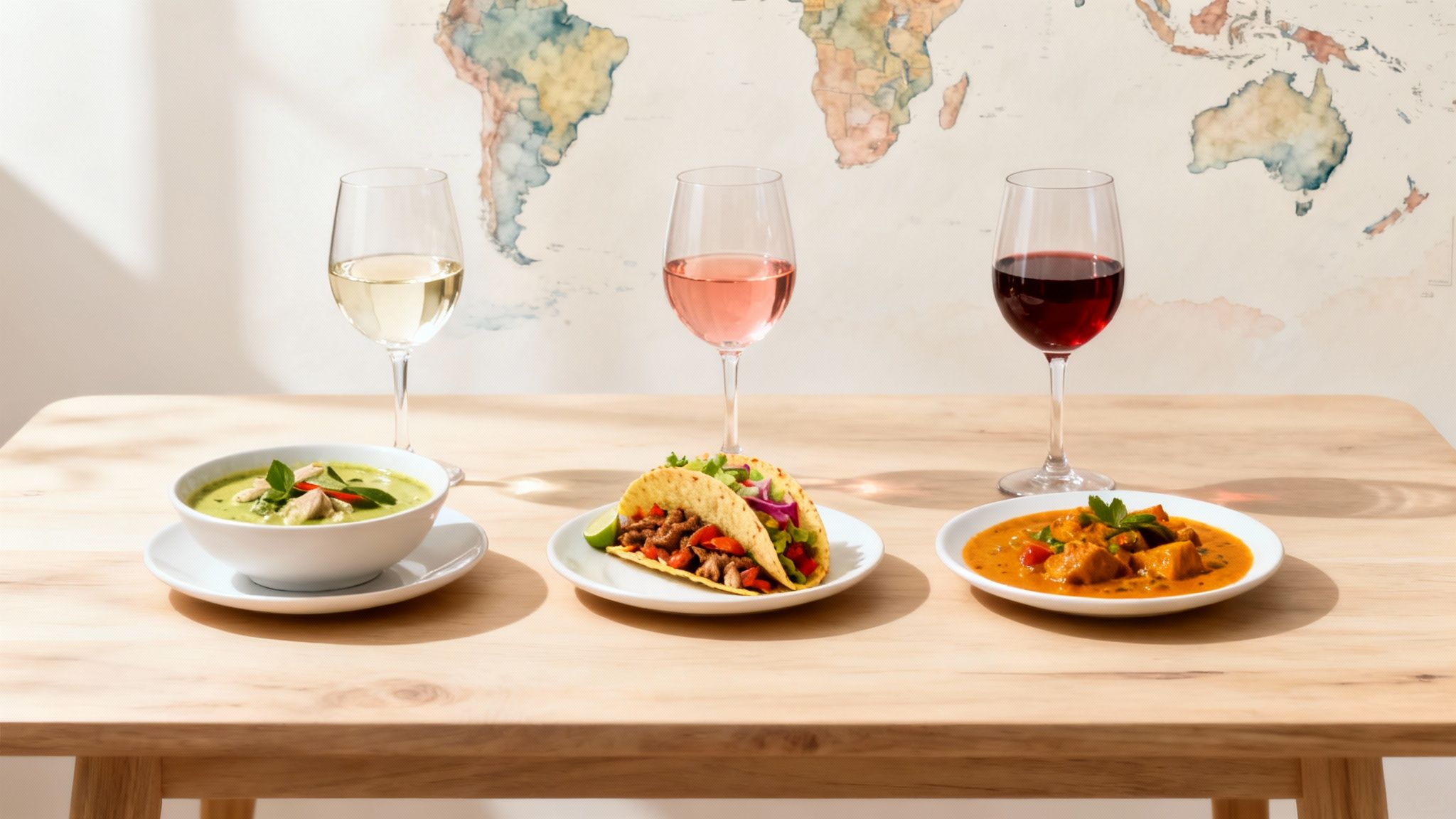
The classic rules of pairing are your passport to a world of flavor. We all know Italian Sangiovese and pasta are a match made in heaven, but the real fun starts when you take those same ideas and apply them to the vibrant, complex cuisines from all over the globe.
It doesn’t matter if you’re eating tacos in Mexico City or curry in Mumbai. The core concepts of matching weight and balancing flavors are universal. This is where pairing gets truly exciting and can lead to some of the most memorable meals of your life. It’s all about using what we’ve learned to find a wine that elevates, rather than clashes with, bold profiles like spice, heat, and fragrant herbs.
Pairing with Asian Cuisines
Asian food can feel tricky to pair with wine because of its incredible balance of sweet, sour, salty, and spicy notes. But there's a simple trick: look for wines with high acidity, a touch of sweetness, and lower alcohol. High-alcohol wines will just fan the flames of any chili heat, and you don’t want that.
Thai Food: That creamy, spicy Thai green curry you love? It’s a perfect dance partner for an off-dry Riesling. The wine’s subtle sweetness is like a fire extinguisher for the spice, while its zesty acidity cuts right through the richness of the coconut milk. It’s a beautiful reset for your palate with every sip.
Vietnamese Food: For the bright, herb-driven flavors of something like pho or a banh mi, a crisp Sauvignon Blanc is your best friend. Its citrus and herbal notes perfectly echo the cilantro, mint, and lime in the dish, creating a wonderfully refreshing and harmonious pairing.
Japanese Food: When sushi and sashimi are on the menu, you need a clean, mineral-driven wine that won't steamroll the delicate fish. A dry sparkling wine like Prosecco or a crisp, unoaked Pinot Grigio works wonders. Their sharp acidity and subtle flavors make the freshness of the seafood sing.
Navigating Latin American Flavors
From the smoky chilies of Mexico to the epic grilled meats of Argentina, Latin American cuisine brings a bold spectrum of tastes to the table. The right wine can take these dishes from delicious to unforgettable.
An earthy Spanish Tempranillo, for instance, is a brilliant partner for savory tacos al pastor. The wine's cherry and tobacco notes complement the marinated pork beautifully, while its moderate tannins are just enough to stand up to the richness without being overbearing.
If you’re tackling a dish with more complex spice, like a mole, a fruit-forward, lower-tannin Zinfandel can be a fantastic match. Its jammy character plays off the savory heat in a way that just works.
The secret to pairing with complex global dishes is to identify the dominant flavor—be it spice, sweetness, or acidity—and choose a wine that either cools it down or matches its intensity.
This is exactly where an AI-powered tool like Sommy shines. Instead of getting stuck in a guessing game, you can just tell it you’re having 'Pad Thai' or 'Chicken Tikka Masala'. It instantly figures out the core flavors and gives you a few curated options, making adventurous pairings easy and accessible right from your phone.
Tackling Tricky Pairings
Some foods have a reputation for being wine-killers, but I promise you, there’s a match for almost anything. Spicy food is the most common challenge. The golden rule is to avoid high-alcohol or high-tannin wines, which only make the burn worse. Your safest bet is always a wine with lower alcohol and a bit of residual sugar, like a Gewürztraminer or an off-dry Riesling.
Vegetarian and vegan dishes present a whole different landscape. Instead of focusing on a protein, you match the wine to the cooking method and the sauce. A rich mushroom Wellington practically begs for an earthy Pinot Noir, while a light, citrusy quinoa salad would be fantastic with a zesty Albariño.
And yes, the same principles apply to classic comfort food! To see how different sauces completely change the game for a simple plate of pasta, check out our guide on what wine goes with pasta.
To help you on your next culinary journey, I’ve put together a quick cheat sheet.
Global Cuisine Wine Pairing Cheat Sheet
Here’s a simple reference table to get you started. Think of it as a launchpad for your own delicious experiments.
Don't be afraid to try something new. The worst that can happen is you learn what doesn't work, and the best that can happen is discovering a pairing that makes you ridiculously happy.
How to Find Great Pairings on Any Budget
Let’s bust the biggest myth in wine: that a memorable pairing has to cost a fortune. It doesn’t. A fantastic food and wine experience is about finding balance and harmony, not about dropping a ton of cash.
Uncovering High-Value Wine Regions
The real secret to drinking well on a budget is knowing where to look. Sure, famous spots like Napa Valley and Burgundy come with hefty price tags, but there are countless other regions making outstanding wines that offer incredible bang for your buck. Think of these places as your treasure map to affordable excellence.
Keep an eye out for these value-packed varietals and regions:
- Spain: Go beyond Rioja and look for Garnacha (Grenache). It’s often juicy, bursting with red fruit, and pairs beautifully with everything from roasted meats to hearty vegetable dishes.
- Portugal: Vinho Verde is a famously affordable white that is light, crisp, and has a slight, delightful fizz. It's a slam-dunk match for seafood and summer salads.
- Chile: Carménère is a national star. It’s a red grape with soft tannins and delicious notes of spice and dark fruit, making it a fantastic partner for grilled meats and savory stews.
And that's just a starting point. Lesser-known regions in Southern Italy, France's Languedoc, and even parts of South Africa are hotspots for finding delicious, well-made wines that won't make your wallet cry.
Smart Shopping Tips for Your Next Wine Run
Walking into a wine shop can feel like stepping into a library where you can’t read the titles. Don't let it intimidate you. A little strategy goes a long way.
First, learn to read the label for clues. Look for simple descriptions—words like "crisp," "earthy," or "bold" can point you in the right direction. And don't be shy about talking to the staff. They’re your best resource. Just tell them what you're cooking and what your budget is, and they can point you toward some hidden gems.
A great pairing is an experience, not an expense. The most memorable food and wine moments often come from discovering a delicious, affordable bottle that perfectly complements a simple, well-made meal.
This is where modern tools completely change the game. Instead of guessing in the aisle, you can use an app like Sommy to get instant, personalized recommendations right on your phone. Its budget filters are a lifesaver. Just set your price range, mention your meal—whether it’s Tuesday night tacos or a special occasion steak—and Sommy will show you the best options that respect both your palate and your wallet.
It takes all the pressure off and lets you explore new wines with confidence, knowing you’re getting great value every single time.
Pairing Wine Confidently in the Real World
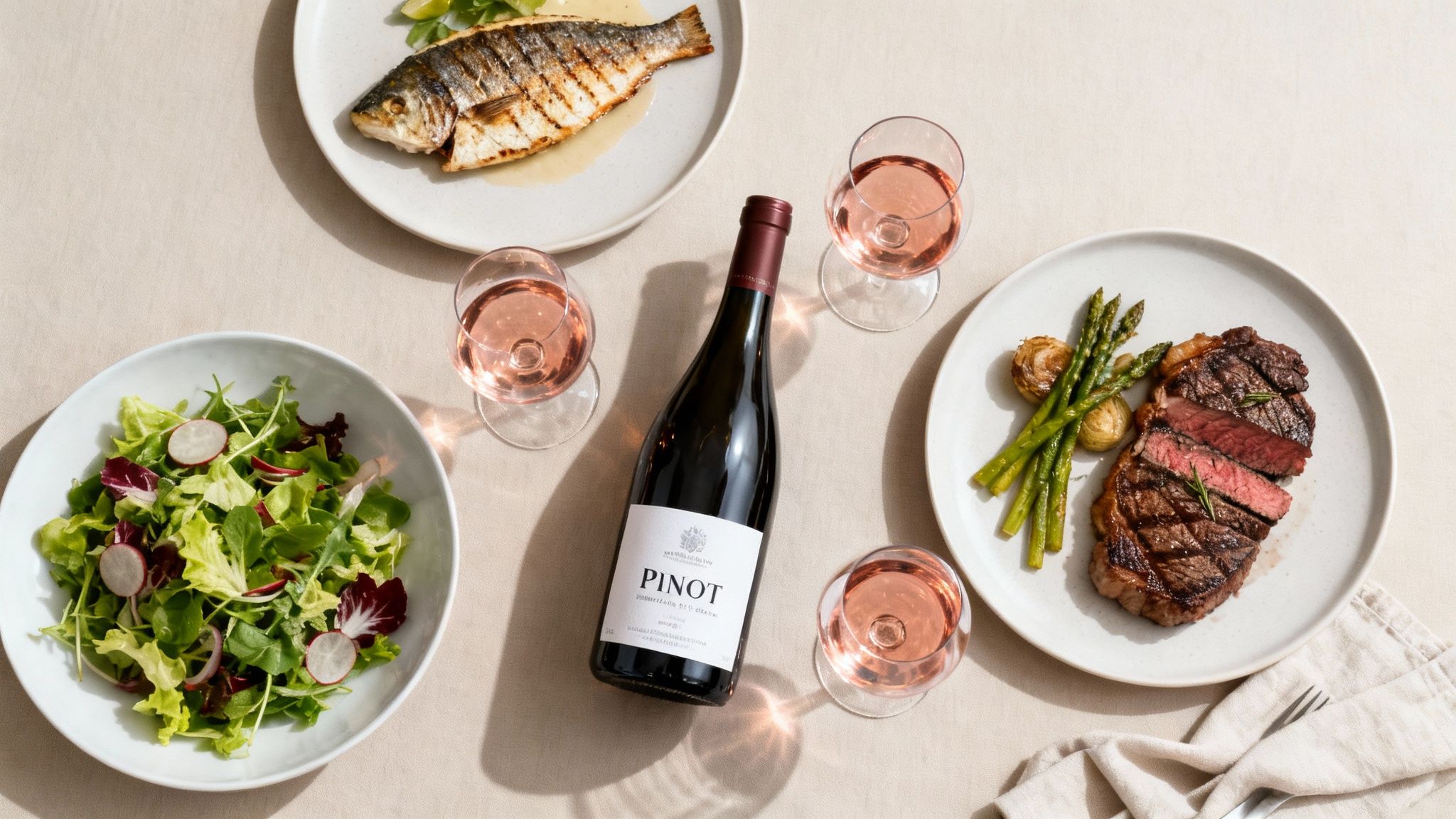
Knowing the rules is one thing. Putting them to work in a busy restaurant with a complicated menu and a table of friends all ordering different things? That's the real test.
It's the classic restaurant puzzle: one person orders the steak, another gets the fish, and a third is craving vegetarian pasta. Do you give up and order separate glasses for everyone? Or is there a magic bottle that can actually make the whole table happy?
Good news: that magic bottle absolutely exists. The secret is finding a versatile, food-friendly wine that can act as a bridge between all those different dishes.
Finding the Perfect Crowd-Pleaser Wine
Your goal is to find a wine with moderate tannins, bright acidity, and balanced fruit. It needs to be interesting enough to stand on its own, but not so powerful it steamrolls delicate dishes or gets lost next to richer ones. These are your go-to options when navigating a diverse menu.
Dry Rosé: People call this the ultimate food wine for a reason. A good dry rosé has the crisp, refreshing acidity of a white wine but with the gentle fruit character of a red. It's light enough for a salad or grilled fish, yet has just enough body to hang with pork or chicken.
Pinot Noir: This light-bodied red is famous for its flexibility. Its high acidity, low tannins, and earthy red-fruit notes make it a fantastic match for everything from salmon and duck to mushroom risotto. It's the Swiss Army knife of red wines.
Sparkling Wine: Never, ever underestimate the power of bubbles. A dry sparkling wine like Prosecco or Cava has a zesty acidity that acts like a reset button for your palate, making it a brilliant companion for a huge range of appetizers and main courses.
This same logic works for big holiday dinners and parties where a dozen different dishes are on the table. You don’t need a separate wine for the turkey, the ham, and the sweet potatoes. Instead, a few well-chosen, versatile bottles will make sure everyone has a great pairing for whatever they pile on their plate.
The most stressful pairing decisions happen in groups. The trick isn't finding a 'perfect' match for every single dish, but a 'harmonious' match for the entire table.
Let Technology Solve the Puzzle
This is where an AI assistant like Sommy becomes your secret weapon. Instead of trying to mentally juggle every flavor profile at the table, you can hand off the problem.
Just type the different dishes into the app—say, "Ribeye Steak," "Grilled Salmon," and "Mushroom Risotto."
Sommy analyzes the core components of each dish and finds a single bottle that creates the most harmony across the board. It might suggest a specific Pinot Noir that has enough oomph for the steak but won’t crush the delicate fish. This turns a potentially stressful group decision into a simple, confident choice, letting you get back to what matters: enjoying the meal with your friends.
Your Top Wine Pairing Questions, Answered
Even after you get the hang of the basics, real-world situations pop up. What do you do with spicy food? Can you really drink red wine with fish?
Think of this as your go-to cheat sheet for those moments when you're standing in a wine shop or staring at a menu and need a quick, clear answer.
What's the One Wine That Goes with Almost Anything?
While no single bottle is a magic bullet, if you have to pick one, go for a dry Rosé or a high-acid, low-tannin red like Pinot Noir. These are the Swiss Army knives of the wine world.
A good dry Rosé has the zesty crispness of a white wine but with the fruit character of a red. That makes it a dream for everything from salads and seafood to grilled chicken or pork.
Pinot Noir is the other hero. Its earthy notes and gentle structure mean it can hang with poultry, mushrooms, and even richer fish like salmon without steamrolling the food. They’re true team players.
How Do I Pair Wine with Spicy Food?
This is a big one. The golden rule is to avoid high-alcohol or high-tannin wines. Think of them like fuel on a fire—they just make the heat feel more intense.
What you want is a wine with a little bit of sweetness, bright acidity, and lower alcohol to cool things down. An off-dry Riesling is the classic go-to for a reason; its touch of sugar is like a fire extinguisher for your palate, while the acidity keeps every sip feeling fresh. A floral Gewürztraminer or a fruity, low-tannin red served with a slight chill, like a Beaujolais, also works beautifully.
Can I Really Drink Red Wine with Fish?
Yes, absolutely! The old "white wine with fish, red wine with meat" rule is dead. It was always too simple anyway. Today, it’s all about matching the weight of the dish, not just the protein.
The real guideline isn't about color, but about structure. A light-bodied, low-tannin red like Pinot Noir or Gamay is a fantastic match for richer, meatier fish such as salmon or tuna.
The wine's bright, earthy fruit plays off the richness of the fish perfectly. It avoids that funky, metallic taste you sometimes get when heavy, tannic reds clash with fish oils.
What Wine Works When Everyone's Eating Something Different?
Ah, the classic restaurant dilemma. You've got a few great moves here. The easiest is to find a "bridge" wine—something versatile that can please everyone. A dry Rosé, a crisp sparkling wine, or a flexible Pinot Noir will get the job done nicely.
Another simple option is to have everyone order by the glass. That way, each person gets a perfect pairing for their own meal. Or, if you want to get a bottle for the table, you can use an app like Sommy to find a happy medium. Just tell it the main dishes, and it will find a bottle that harmonizes with all the different flavors on the table.
Ready to stop guessing and start enjoying? With Sommy, you can scan any menu or wine list and get instant pairing recommendations that fit your taste and your meal. Find your next favorite bottle with total confidence. Start your flavor adventure at https://sommy.ai.