
You see a bottle of wine from Morocco on a menu and pause. You're curious, but a little unsure. Is it good? What will it taste like? Will you regret ordering it?
That feeling is completely normal. The good news is that you don’t need to be a wine expert to confidently choose a great Moroccan wine. The best wines from Morocco are delicious, approachable, and often a fantastic value. This guide will show you how to pick one you’ll enjoy, without any guesswork.
How to Choose a Moroccan Wine
Choosing a wine from a new region shouldn’t feel like a test. The goal is to find something delicious you'll genuinely like. Here’s how to do it confidently.
Moroccan wine offers unique character and excellent quality, often at a great price. It’s a low-risk, high-reward choice once you know what to look for.
A Hidden Gem You Can Actually Find
While it might seem like a new discovery, Morocco has one of the oldest winemaking histories in the world. Today, the country's wine industry is thriving.
Morocco is the 36th largest wine producer globally, making about 40 million bottles each year. This makes it the second-biggest producer in Africa. You can see the latest production numbers on Morocco World News.
Here's the key part: only a tiny 5% of that wine is exported. The rest is enjoyed locally, making it a true hidden gem for the rest of us. This guide is your map to finding these delicious, hard-to-find wines.
Trying a wine from a new place doesn't have to be a gamble. Think of it as a low-risk adventure. With a few simple pointers, you can skip the anxiety and find a new favorite.
Instead of getting lost in complex details, we’ll stick to practical advice you can use tonight. Whether you’re staring at a wine shop shelf or a digital menu, you’ll have a clear idea of how to pick a bottle that suits your taste. This is exactly the kind of in-the-moment decision Sommy helps with, giving you a confident choice with a quick scan of your phone.
The Story Behind Moroccan Wine Today
To understand what's in the bottle, it helps to know its comeback story. The taste of Moroccan wine today is shaped by a dramatic history of boom, bust, and a modern revival focused on quality.
Winemaking in Morocco started thousands of years ago with the Phoenicians and was later cultivated under Roman rule. This tradition was established long before many famous European wine regions even existed.
The industry hit an industrial-scale peak under French influence in the 20th century. But just as quickly as it boomed, it nearly disappeared.
From Collapse to Comeback
At its height in 1956, Morocco had a staggering 55,000 hectares of vineyards. By 1967, however, new European trade quotas closed off its main export market, causing production to collapse.
This near-death experience forced a crucial pivot. Instead of making huge volumes of simple table wine, the focus shifted to quality over quantity.
Starting in the 1990s, a revival led by King Hassan II brought new investment and winemaking talent to the country. They paired modern techniques with Morocco's sunny climate, and the results have been fantastic.
This visual timeline captures that roller-coaster journey.
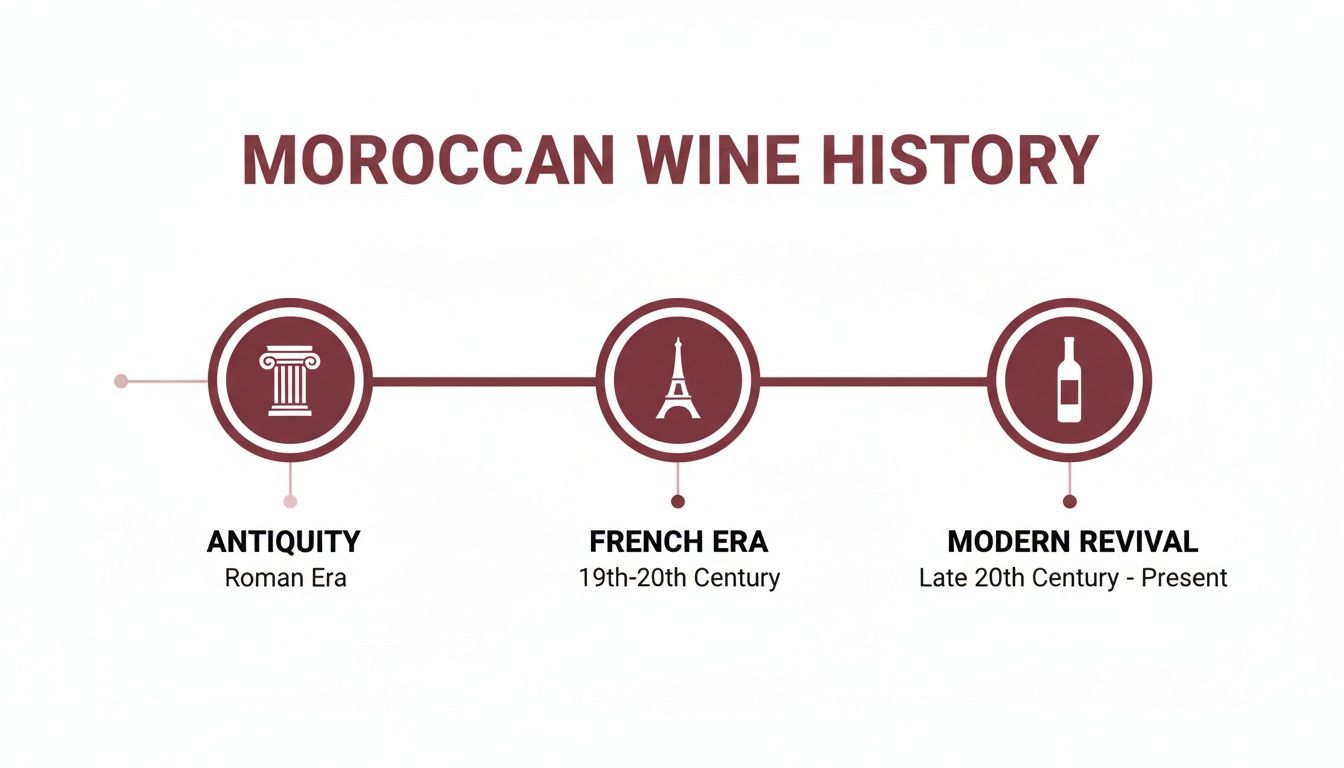
This table shows the dramatic rise, fall, and revival of Moroccan wine production, highlighting the key turning points that shaped the industry today.
Moroccan Wine Production Timeline
| Era | Key Event | Impact on Wine Production |
|---|---|---|
| French Protectorate | Peak production in 1956 reaches 55,000 hectares. | Morocco becomes a major global supplier of bulk table wine. |
| Post-Independence | European Economic Community (EEC) introduces trade quotas in the late 1960s. | Production collapses as the primary export market vanishes. |
| The Revival | King Hassan II initiates a quality-focused revival in the 1990s. | Focus shifts from quantity to quality, attracting foreign investment and modern expertise. |
| Modern Era | Today, vineyard area stabilizes around 12,000 hectares. | Production is geared toward high-quality wines with a strong sense of place. |
What this history gives us is a wine culture that feels both ancient and modern at the same time. You can explore how this unique background fits into the global wine scene in our guide to Old World vs. New World wines.
It's a story of resilience you can taste in the bottle, a blend of deep history and a fresh drive for excellence that delivers surprising quality and fantastic value.
What Moroccan Wines Taste Like

Let's skip the confusing descriptions and get straight to what's in the glass. Moroccan wine benefits from a climate that gives you the best of both worlds: plenty of sun for ripe fruit flavors, and cool air from the Atlantic Ocean and Atlas Mountains to keep things fresh.
This balance makes the wines very approachable. If you already enjoy a good Merlot or Syrah from France, you'll feel right at home with a Moroccan red. Expect juicy, medium-to-full-bodied reds with familiar flavors of dark cherry, plum, and a gentle touch of spice. They aren’t trying to be strange; they’re just delicious.
Common Moroccan Wine Styles
While the country has seven wine regions, a few key styles dominate. Red wines are the star, making up about 70% of all production. A specific style of rosé called Vin Gris accounts for another 20%.
Here are the main styles you’ll see in a shop or on a menu:
- Hearty Reds: This is the backbone of the industry. Expect smooth, rich, dark-fruited wines that are great with food. They pair beautifully with everything from tagine to grilled meats.
- Vin Gris: This isn't just any rosé. It's a uniquely Moroccan style: a very pale, bone-dry, and incredibly crisp wine made for warm weather. It’s perfect for an afternoon or with appetizers.
- Bright Whites: Though less common, the whites are often zesty and citrusy. If you like Sauvignon Blanc, you’ll appreciate their bright, refreshing character.
The point is to connect these unfamiliar bottles to flavors you already know. This removes the guesswork and gives you the confidence to pick a Moroccan wine you'll actually enjoy.
By focusing on these simple style profiles, you can explore a new region without feeling lost. If you want to get better at putting words to what you're tasting, check out our simple guide on how to describe wine taste.
How to Choose a Moroccan Wine With Confidence
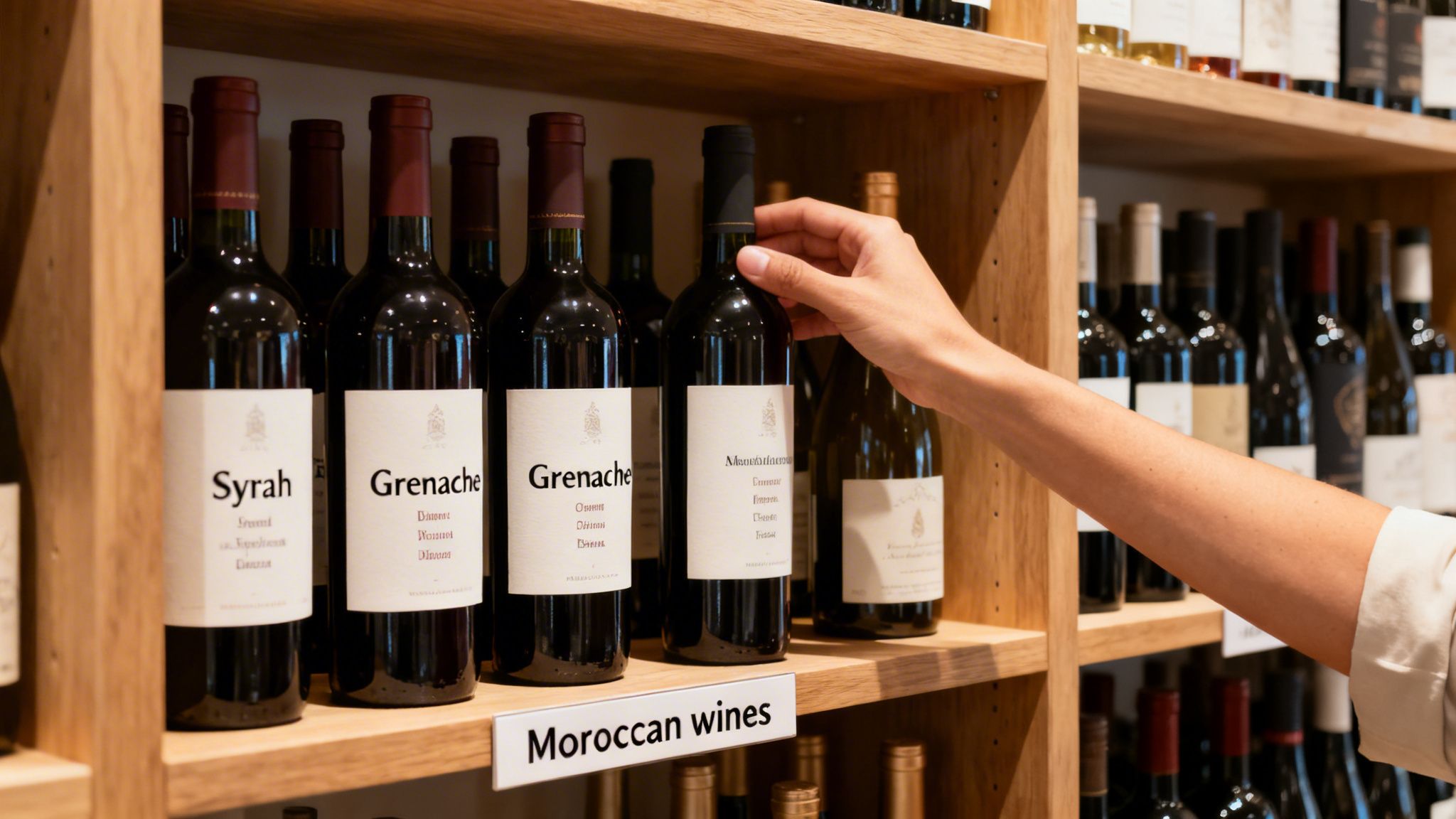
You’re in the wine aisle, looking at a few bottles from Morocco. It can feel like a shot in the dark. Don't worry. Picking a great wine from Morocco is much easier than you think.
You don't need to memorize a map or become an expert. All you need is a simple game plan to find a bottle you'll enjoy.
Your 3-Step Decision Guide
- Choose a Color. What fits your mood or meal? For a rich lamb tagine or grilled meats, a Moroccan red is a perfect choice. For a sunny afternoon or light appetizers, the country's signature Vin Gris is a reliable go-to.
- Look for Familiar Grapes. Many Moroccan wines use international grapes you already know. Seeing these on the label gives you a reliable clue about what’s inside:
- Syrah
- Cabernet Sauvignon
- Grenache
- Cinsault
If you spot "Vin Gris," you can count on it being a dry, crisp, and delicate rosé.
- Use Price as a Guide. You can find fantastic Moroccan wines that deliver a lot of character without a high price tag. Many of the best bottles fall in the $15-$25 range, making this an easy region to explore.
Simple Moroccan Wine Pairing Cheat Sheet
To make it even easier, use this quick-reference table to match your wine to your food without stress.
| Wine Style | Tastes Like... | Perfect For... |
|---|---|---|
| Vin Gris | Dry, crisp, light red fruit, citrus zest | Salads, grilled fish, seafood appetizers, sunny afternoons |
| Moroccan Red (Syrah/Grenache) | Dark berries, spice, earthy notes, medium to full body | Lamb tagine, grilled meats, hearty stews, roasted vegetables |
| Moroccan White (Chardonnay/Faranah) | Fresh apple, citrus, sometimes a creamy texture | Roast chicken, lighter fish dishes, creamy pasta, fresh cheeses |
This cheat sheet covers the most common styles and gives you a great starting point for any meal.
If you're still feeling unsure, this is the perfect moment for a personal wine assistant. A tool like Sommy can look at the menu or shelf and give you an instant recommendation based on your personal taste, taking all the guesswork out of the equation.
With these simple pointers, you can start exploring this exciting wine country with real confidence. For more general advice on making smart picks, check out our complete guide on how to choose wine.
Top Moroccan Wine Names to Look For
Walking into a wine shop and seeing rows of unfamiliar labels can be overwhelming. But recognizing a trusted producer’s name makes the choice much simpler.
When it comes to wine from Morocco, you can feel confident grabbing a bottle from two major producers who consistently deliver quality. Think of this as your cheat sheet.
You are very likely to see wines from Celliers de Meknès. As the country’s largest producer, they make a wide variety of reliable and affordable wines, often found under their popular “Guerrouane” label. If you want something a bit more special, look for their Château Roslane brand, which is a fantastic premium option.
Other Names to Know
Another highly respected name is Domaine des Ouled Thaleb. As Morocco’s oldest active winery, their name is a sign of quality and tradition. They are especially known for their excellent Syrah, so if you see their name on a bottle, it's a great choice.
Instead of trying to memorize a long list, just remember these two key producers: Celliers de Meknès and Ouled Thaleb. They are widely available and offer a consistently great introduction to Moroccan wine.
Recognizing these producers helps you skip the guesswork and choose with confidence. It’s a simple shortcut, much like knowing a few key grape names helps you navigate a wine list. You can build more confidence by reading our simple guide on what wine varietals are.
Focusing on trusted producers is one of the smartest ways to find a bottle you’ll enjoy.
Let an AI Assistant Be Your Personal Wine Guide
If trying to remember new names and regions feels like too much, you're not alone. The goal is to enjoy exploring Moroccan wine, not study for a test. This is where a smart tool in your pocket makes all the difference.
Imagine having a personal wine guide who already knows your taste. That’s what Sommy does. When you see an unfamiliar wine from Morocco on a shelf or menu, you just scan the name with the app.
The AI instantly compares that bottle against your personal taste profile. It calmly tells you if it’s a good match for the flavors you love: whether that's bold, jammy reds or crisp, dry rosés.
Sommy takes the guesswork out of picking a bottle. It gives you a clear, confident recommendation right when you need it, so you can dive into new regions like Morocco without any anxiety. Every choice feels like a smart one.
Instead of memorizing dozens of producers, you get a simple 'yes' or 'no' based on what you actually enjoy. This is the kind of on-the-spot help an AI wine assistant provides, making wine discovery feel easy and exciting. You can learn more about how Sommy works and get your own personal guide at https://www.sommy.ai.
Common Questions About Moroccan Wine
Even with a guide, a few questions often pop up. That’s a great sign. It means you’re curious. Here are quick, straight answers to common questions about Moroccan wine.
Is Wine From Morocco Any Good?
Yes, it's surprisingly good. The quality of modern Moroccan wine is much higher than most people expect, especially for the price. Thanks to new investment and modern winemaking, these bottles deliver serious value.
The climate gives them an edge, providing sunshine for ripe fruit and cool breezes for balance. Don't let the unfamiliar label fool you; the best Moroccan wines can easily stand up to their European counterparts.
What Is Moroccan Vin Gris?
Vin Gris, or "grey wine," is Morocco's signature style of rosé. It’s known for its incredibly pale, almost silvery-pink color and its bone-dry, crisp finish.
Think of it as a lighter, more delicate cousin to the famous rosés of Provence. It’s the perfect bottle for a hot day, fantastic with light bites and salads, or great on its own. If you like dry rosé, you’ll almost certainly love Vin Gris.
Are Moroccan Wines Expensive?
Generally, no. One of the best parts about exploring Moroccan wine is the value. Because the region is still a hidden gem for most of the world, you can find delicious, well-made bottles in the $15-$25 range.
This makes it a fantastic category to explore without spending a lot. You’re paying for quality, not hype.
Can I Find Moroccan Wines in the United States?
You can, but you might have to look. While they aren't as common as bottles from France or Italy, Moroccan wines are appearing more often in the U.S.
Your best bet is to check specialty wine shops in larger cities or browse online wine retailers. If your local shop doesn’t have any, don't be shy about asking if they can order some for you. They are often happy to bring in something new for curious customers.
Instead of trying to remember all this in a busy wine aisle, you can let Sommy do the work. Just scan a bottle of Moroccan wine, and the AI-powered assistant will instantly tell you if it’s a good fit for your taste. It turns a moment of guesswork into a confident choice. Find your next favorite bottle, minus the risk, at https://www.sommy.ai.
