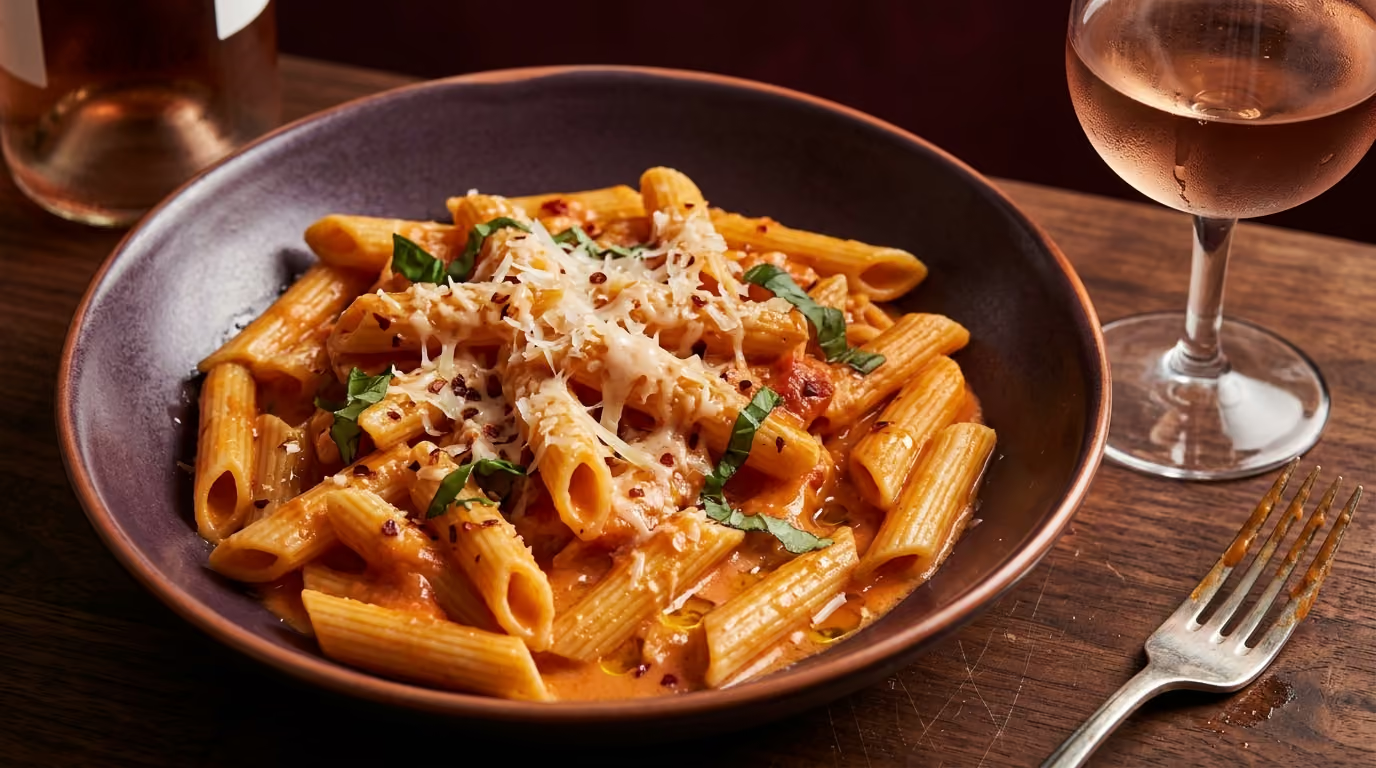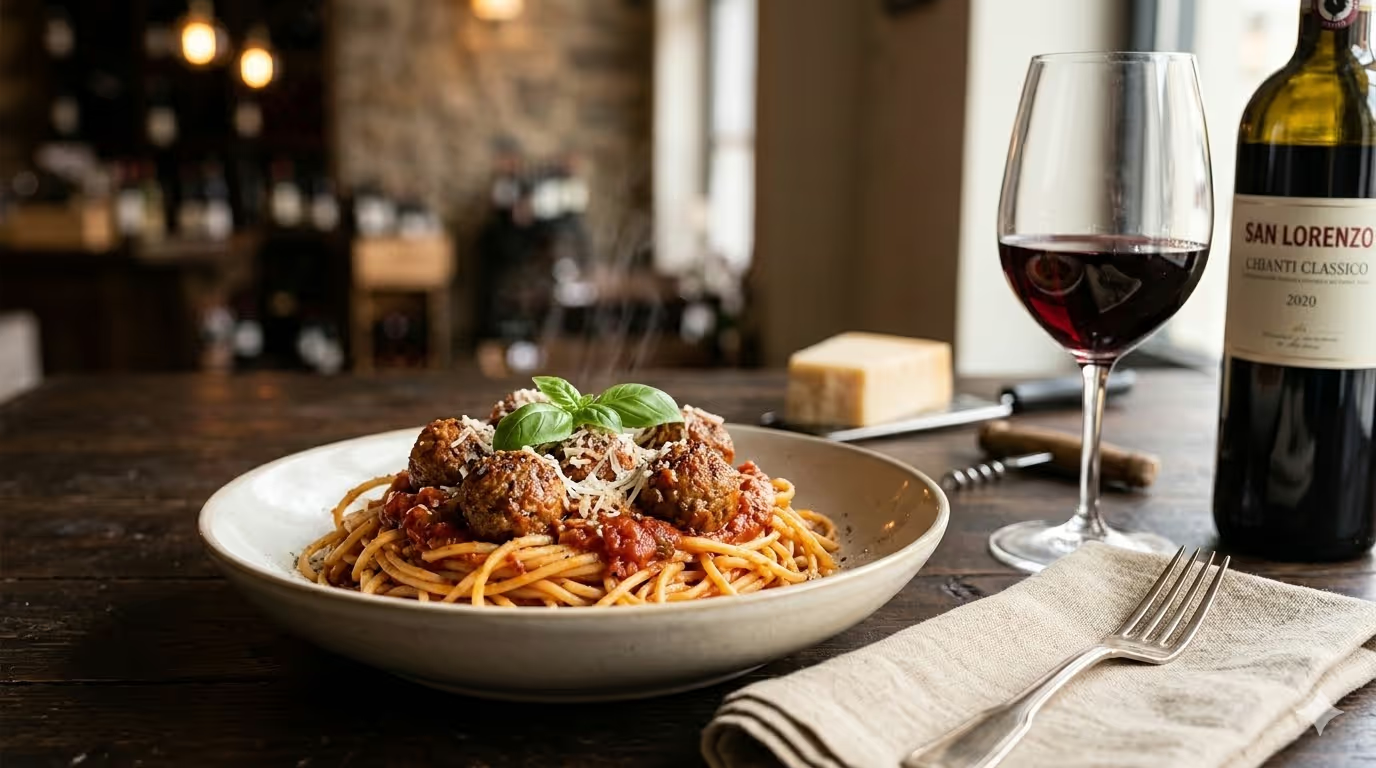


Figuring out what wine to serve with pasta comes down to one simple secret: match the wine to the sauce, not the pasta shape. Once you get that, everything clicks into place. A rich, meaty bolognese practically begs for a robust red, while a delicate seafood linguine shines with a crisp white.
This single rule is your North Star for perfect pairings, every single time.
The Simple Secret to Perfect Pasta and Wine Pairings
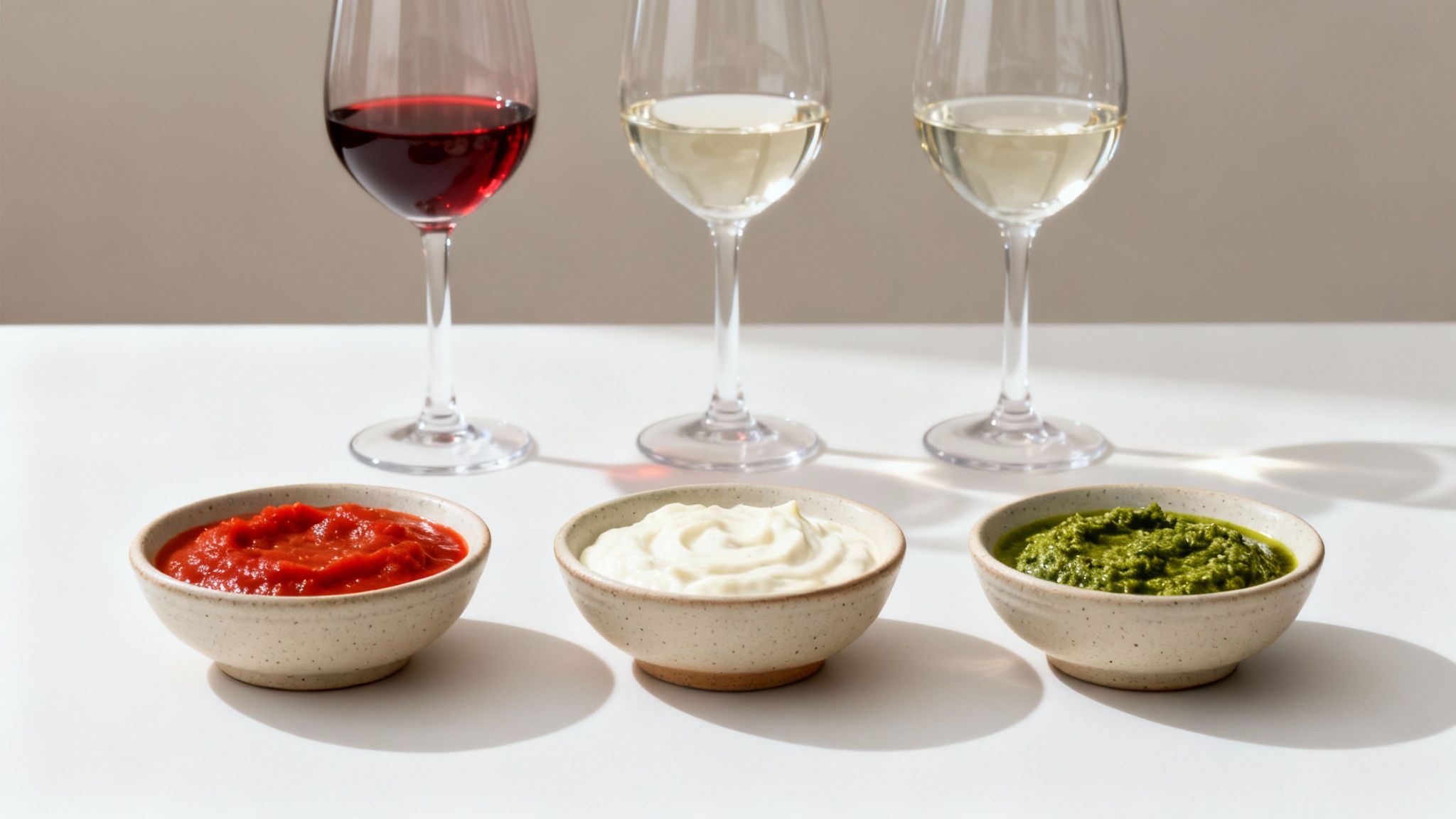
The world of wine can feel complicated, but pairing it with your favorite pasta dish doesn't have to be. The most common mistake people make is getting hung up on the pasta itself—whether it’s spaghetti, penne, or rigatoni. But let's be honest, the pasta is just the canvas.
The sauce is the star of the show, and that’s where all the flavor lives. It’s what dictates the dish's personality—its weight, its texture, and its dominant tastes.
Think about it. A hearty, tomato-based meat sauce brings high acidity and a ton of richness to the table. It needs a wine that can stand up to all that action without getting lost. On the flip side, a light, olive oil-based sauce with fresh veggies is far more delicate and requires a gentle touch. The core principles of how to match wine with food always come back to creating a sense of balance.
The goal is harmony, not competition. A great pairing makes both the food and the wine taste even better than they did on their own.
To get started, let’s break down the two big ideas you’ll need.
- Acidity: Acidity in wine acts like a squeeze of lemon over a rich dish. It cuts through fat, cleanses your palate, and keeps things feeling fresh. Tomato sauces are naturally high in acid, so you need a wine with enough acidity to match.
- Body: You wouldn't pair a heavyweight boxer with a featherweight, right? Same idea here. Light sauces need light-bodied wines, and heavy, rich sauces need full-bodied wines. You're trying to match the "weight" of the drink to the "weight" of the food.
Why Certain Wine Pairings Just Work
Have you ever squeezed a lemon over a rich, savory dish and noticed how it suddenly tastes brighter and more alive? That’s exactly what the right wine does for your pasta. It’s not about memorizing a bunch of stuffy rules; it’s about understanding a few simple ideas that make everything click.
The single most important concept to get your head around is acidity. Just think of the acidity in wine as that refreshing squeeze of lemon. It cuts right through richness, cleans up your palate between bites, and keeps a heavy sauce from feeling, well, heavy. This is the magic behind why a crisp white wine and a creamy Alfredo are such a classic combo—the wine slices through the fat, making every bite taste as good as the first.
Matching Weight and Intensity
Next up is the idea of body, which is really just a fancy word for how heavy or rich a wine feels in your mouth. You wouldn't pair a delicate salad with a thick, heavy dressing, right? Same idea here. You want the body of the wine to match the weight of the sauce.
- Light-Bodied Wines: Think skim milk. These are crisp and feel light on the tongue, perfect for delicate seafood or simple vegetable pastas.
- Medium-Bodied Wines: More like whole milk. They have a bit more presence and are workhorses for things like tomato-based sauces or pesto.
- Full-Bodied Wines: Think heavy cream. These are rich, weighty wines that can stand up to hearty, slow-cooked meat sauces without getting lost.
The best pairings don't invent new flavors. They just turn up the volume on the ones that are already there, making the whole meal feel more complete.
Finally, when we talk about reds, we have to talk about tannins. Tannins are natural compounds that give red wine that slightly dry, grippy feeling in your mouth. The cool part? They love to bind to protein and fat. This is why a big, tannic red like a Cabernet Sauvignon is so incredible with a rich, fatty bolognese. The tannins latch onto the fat, softening the wine and balancing the richness of the sauce perfectly.
Figuring out how these pieces fit together is the key. It's the first step toward really understanding the difference between dry vs sweet wine and making pairings that truly sing.
Mastering Pairings for Tomato-Based Sauces
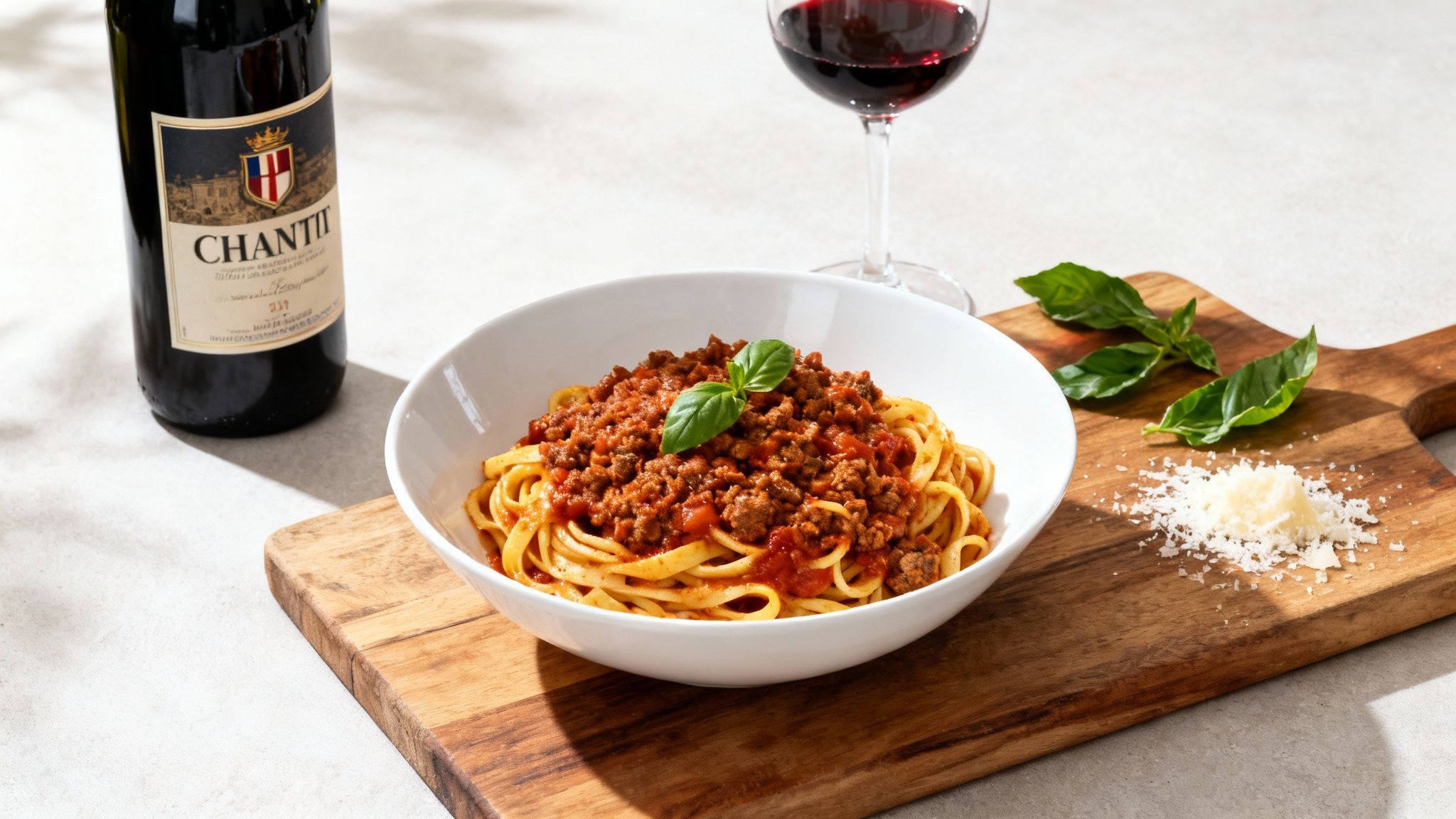
Tomato-based sauces are the heart and soul of so many classic pasta dishes, from a simple marinara to a rich, slow-simmered bolognese. When you’re trying to figure out what wine to serve with pasta, this is the pairing you’ll face most often.
The key to getting it right is all about acidity. Tomatoes are naturally high in acid, and your wine needs to keep up.
Think of it like this: if you pour a wine that isn't acidic enough, the sauce will make it taste disappointingly flat and lifeless. But a wine with the right kind of bright acidity will sing alongside the tomatoes, making the whole dish pop. This is exactly why so many Italian reds feel like they were born to be paired with pasta.
It’s no accident, really. Italy is the world's top pasta consumer, and since these pairings grew up together over centuries, they developed a natural harmony. You can see how these deep-rooted traditions still shape our dinner tables by checking out these global pasta consumption trends.
The Best Wines for Classic Red Sauces
For the vast majority of tomato sauces—whether it's a basic marinara or a fiery arrabbiata—your go-to grape should be Sangiovese. It’s the star of Tuscany and the main grape in Chianti, delivering bright cherry flavors, earthy notes, and that critical acidity that mirrors tomatoes perfectly.
Another fantastic and often wallet-friendly choice is Montepulciano d'Abruzzo. It’s a rustic, medium-bodied red with softer tannins and plenty of dark fruit character, which helps it stand up beautifully to richer meat sauces like bolognese.
A great pairing for a tomato sauce should feel like a supporting actor—it enhances the main character (the sauce) without stealing the spotlight. The wine’s job is to balance, not overpower.
If you’re standing in the wine aisle feeling lost, an AI tool like Sommy can act as your personal guide. Just tell it you’re having spaghetti bolognese, and it can sift through options to find a Sangiovese that fits your budget, taking all the guesswork out of the decision.
Pairing Tips for Tomato Sauces
To nail the perfect bottle every time, just keep these simple guidelines in mind:
- For Simple Marinara: You can't go wrong with a Chianti Classico. Its vibrant acidity and savory undertones are a flawless match.
- For Hearty Bolognese: You'll want a wine with a bit more body and tannin to cut through the richness of the meat. A Montepulciano or a Barbera d'Asti works like a charm.
- For Spicy Arrabbiata: The heat from the chili can make high-tannin wines taste bitter. Instead, grab a fruit-forward, lower-tannin red like a Primitivo (the Italian cousin of Zinfandel) to cool things down.
Pairing Wines with Creamy Cheese and Pesto Sauces

Let's move past the red sauce world for a minute. This is where we bust the myth that pasta night automatically means red wine. Creamy, cheesy, and bright green pesto sauces demand a totally different playbook, and honestly, this is where crisp white wines get to shine.
When you've got a rich, decadent sauce like Alfredo, fettuccine, or carbonara on the table, your main job is finding a wine that can slice through all that glorious fat. Without it, the dish just feels heavy.
This is where a bright, zesty white wine becomes your best friend. An unoaked Chardonnay is a classic go-to, bringing its own creamy notes that play nice with the sauce while its acidity keeps your palate from getting tired. Think of a crisp Italian Pinot Grigio or a zippy Sauvignon Blanc as a squeeze of lemon over the dish—it just wakes everything up.
Finding the Perfect Match for Cheese and Pesto
For those beautifully simple cheese-bombs like cacio e pepe, the sharp, salty Pecorino is the star of the show. You need a wine with enough personality to stand up to that flavor without steamrolling it. A white with a clean, mineral backbone, like a Vermentino or a Gavi, is magic here. If you really want to go deep on this, our complete wine and cheese pairing guide has you covered.
Pesto is a whole other beast. That vibrant mashup of basil, garlic, pine nuts, and Parmesan needs a wine that can meet its energetic, herbaceous vibe head-on.
For pesto, think "green meets green." An herbaceous white wine will amplify the fresh basil notes in the sauce, creating a seamless and vibrant pairing.
- Sauvignon Blanc: This is your slam dunk. A cool-climate Sauv Blanc with those classic grassy, citrusy notes feels like it was made for pesto.
- Vermentino: This Italian favorite often has a slightly bitter almond or salty finish that hooks into the nuttiness of the pesto beautifully.
If you’re ever standing in the wine aisle staring at a wall of bottles, just open the Sommy app. Tell it you’re having pesto, and it’ll point you straight to a perfect Sauvignon Blanc or Vermentino for your budget. No guesswork needed.
Choosing Wines for Seafood and Vegetable Pastas

When your pasta takes a turn toward the sea or a garden harvest, your wine-pairing strategy needs to shift. For these lighter, brighter dishes, the goal is to complement, not conquer.
A big, jammy red would steamroll the subtle sweetness of fresh clams or spring peas. Instead, we reach for crisp, clean whites that act as a gentle supporting act, letting those delicate ingredients shine.
Perfect Pairings for Ocean Flavors
For a timeless classic like linguine alle vongole (linguine with clams), you want a wine that tastes like a coastal breeze. A dry, crisp white with a bit of minerality or a saline kick is a perfect match.
- Vermentino: Often grown in Sardinia and Tuscany, this wine sings with zesty citrus notes and a subtle, salty finish. It beautifully echoes the natural brininess of clams, shrimp, or mussels.
- Pinot Grigio: A good quality Italian Pinot Grigio is your friend here. It brings crisp acidity and clean notes of green apple and pear that cleanse the palate without getting in the way.
Think of the wine as the final seasoning for your seafood pasta. The right white adds a splash of acidity and a hint of salinity, elevating the dish just like a fresh squeeze of lemon.
Wines for Garden-Fresh Vegetable Pastas
When your sauce is built around vibrant green ingredients, like in a Pasta Primavera, the same rules apply. You need a wine that can match that garden-fresh energy.
An aromatic and zesty Sauvignon Blanc is an ideal partner. Its signature notes of green bell pepper, herbs, and citrus will amplify the flavors of asparagus, peas, and fresh basil in the sauce.
If you’re ever feeling unsure in a wine shop, the Sommy app is a great resource. You can simply input your dish, like "Pasta Primavera," and Sommy will analyze thousands of wines to suggest a bottle with the perfect flavor profile, taking the guesswork out of the equation.
How to Make Smart Choices at Restaurants and Wine Shops
Alright, you've got the basics down. The next time you step into a wine shop or stare down a long restaurant menu, that feeling of being overwhelmed should be gone. Now you have the core concepts to make a great choice.
Instead of just defaulting to "a glass of red," you can walk the walk. Try telling the sommelier, "I'm having the bolognese and would love a medium-bodied red with good acidity to cut through it." That single sentence gives them everything they need to find you the perfect glass. When in doubt, let the region be your guide—Italian pasta and Italian wine are a classic for a reason. For a deeper dive, our guide on how to read a wine list has you covered.
Navigating a wine list isn't about knowing every single bottle. It's about knowing how to describe what you're looking for based on your meal.
When you're faced with dozens of options and just want a quick, solid answer, a tool like the Sommy app acts like a sommelier in your pocket. Just scan the wine list or a bottle's label, and you'll get instant, personalized pairing suggestions that cut right through the noise. It’s the fastest way to find a delicious answer to "what wine goes with pasta?" and make every choice a confident one.
Your Pasta and Wine Pairing Questions, Answered
Alright, let's tackle a few of those tricky situations that always seem to come up at the dinner table. Here are some quick answers to the most common pasta pairing questions.
What If My Group Orders a Mix of Different Pasta Dishes?
This is the classic restaurant dilemma. When everyone zigs and zags, your best friend is versatility.
Look for a friendly, medium-bodied red like a Barbera. It has enough zip to handle tomato sauces but won't overpower a creamy carbonara or a simple cacio e pepe. If you're leaning white, you can't go wrong with a crisp, dry Italian like Soave. It’s a fantastic all-rounder that cleanses the palate without stealing the show.
Is It Ever Okay to Serve White Wine with a Red Sauce?
Absolutely! In fact, sometimes it's an even better choice.
A high-acid white wine can cut right through the richness of a tomato sauce in the most refreshing way. Think about a bone-dry rosé or a zesty Sauvignon Blanc. They offer a bright, clean counterpoint that feels especially great with a lighter marinara. Don't let old-school rules hold you back.
Does the Shape of the Pasta Matter for Wine Pairing?
Not really. While a sommelier might get nerdy about it, for the rest of us, there's one golden rule: always pair the wine with the sauce, not the pasta itself. The sauce is where all the flavor, fat, and acidity live, and that's what the wine is going to interact with.
Ready to take the guesswork out of every bottle? Sommy is your personal AI sommelier, giving you instant pairing recommendations right from your phone. Find your perfect bottle at https://sommy.ai.